

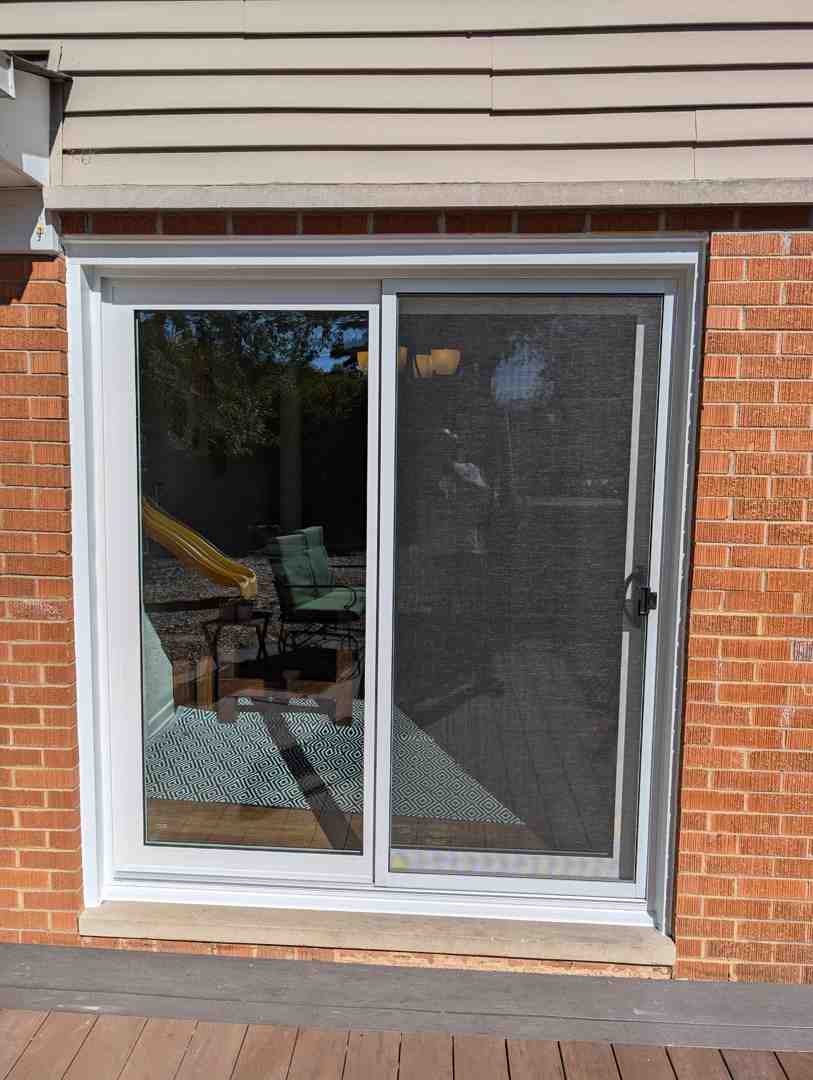
Are Double Glazed Sliding Doors Worth It in Chicago?
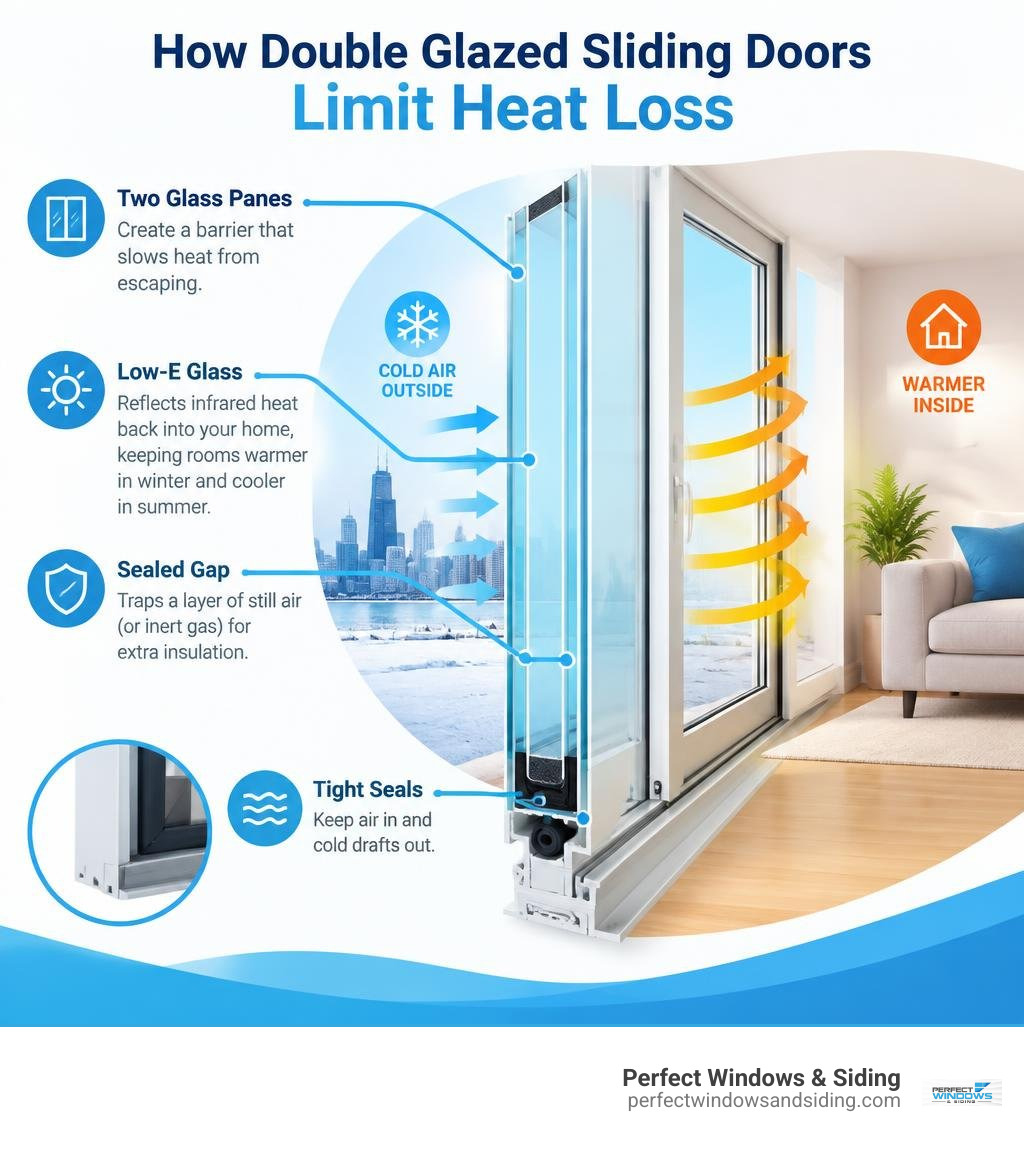
Double glazed sliding doors are a practical upgrade from single-pane doors for Chicago-area homes. Their two panes and sealed gap slow heat loss, while low-E glass and good seals can help keep rooms warmer and reduce drafts. When comparing doors, check the whole-door U-factor and air-leakage rating, not just the glass. Triple glazing can provide more insulation, but it may add weight.
I’m Voytek Glab, owner of Perfect Windows & Siding, with over 20 years of hands-on window and door installation experience in Chicagoland. I’ll help you understand what matters when choosing double glazed sliding doors, starting with how they limit heat loss.
Must-know double glazed sliding doors terms:
Why Double Glazed Sliding Doors Are the Ultimate Choice for Energy Efficiency
When exterior temperatures drop below freezing across Des Plaines, Park Ridge, and Morton Grove, traditional patio openings often become the largest source of thermal loss in a home. Large expanses of glass can radiate cold directly into your living space, forcing heating systems to work overtime. Modern sliding glass doors engineered with dual-pane insulating glass units (IGUs) create an unbroken thermal barrier between indoor comfort and outdoor elements.
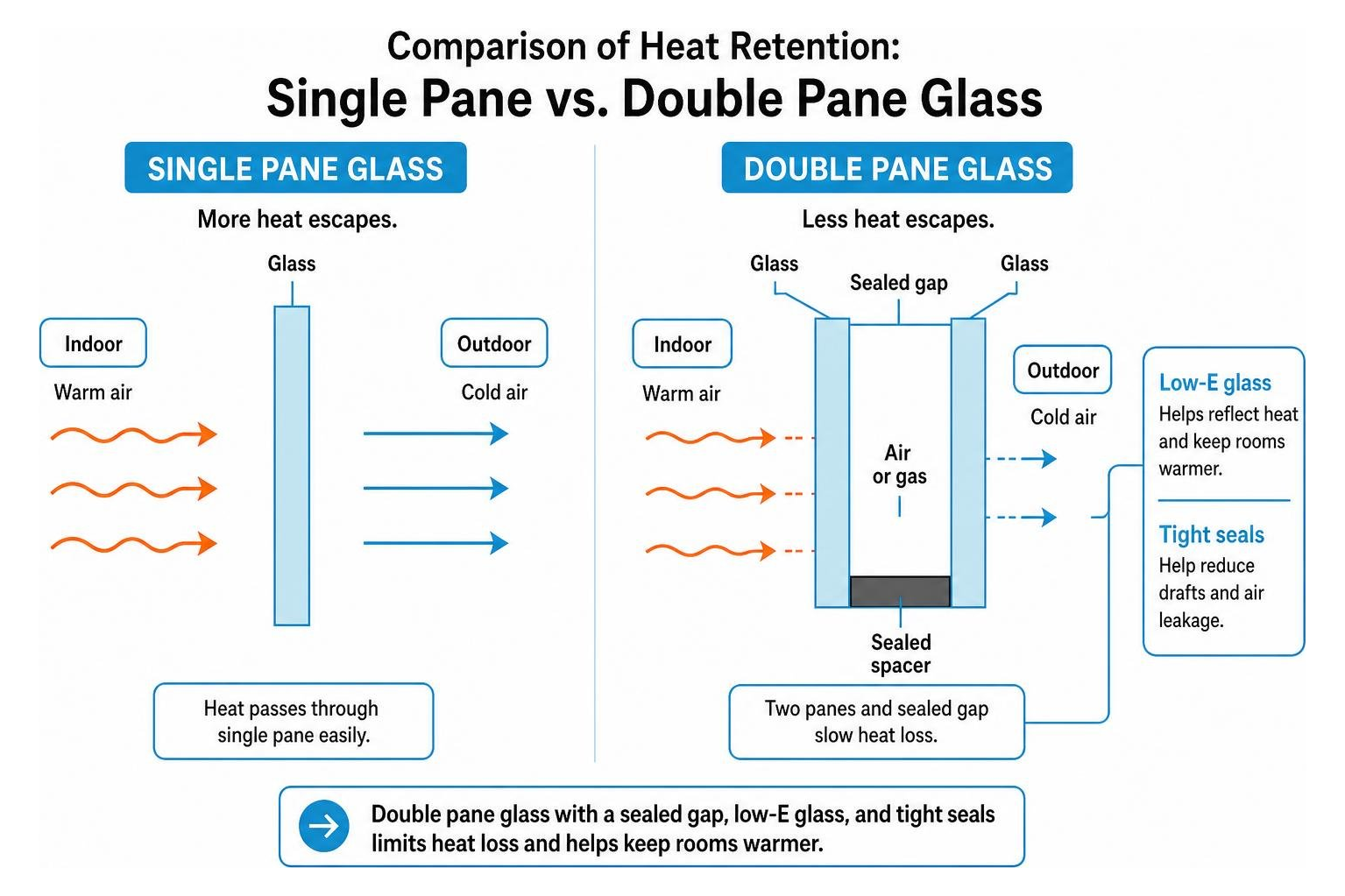
The primary efficiency advantage comes from the dead-air or gas-filled space trapped between the two lites of tempered glass. This sealed chamber slows convective heat transfer dramatically. In older single-pane setups, indoor humidity hits cold glass, turning into heavy condensation that rots surrounding finishes and causes perimeter drafts. By contrast, an insulated glass unit stays much warmer on the room side, virtually eliminating interior condensation while maintaining a balanced indoor temperature year-round.
Selecting high-efficiency doors certified under Department of Energy guidelines ensures your building envelope remains resilient against intense winter freezes and humid summer heatwaves.
Understanding U-Values and Solar Heat Gain
Thermal performance in sliding doors is measured using standardized metrics that describe heat loss and solar radiation transfer:
- U-Value (or U-Factor): Measures the rate of non-solar heat flow through the entire door assembly. Lower numbers mean better insulation and higher resistance to heat escaping your home.
- Solar Heat Gain Coefficient (SHGC): Measures the fraction of solar radiation admitted through the glass. In cold northern climates, a moderate SHGC helps capture beneficial passive solar warmth during winter months.
- Air Infiltration (Air Leakage): Measures how many cubic feet of air pass through a square foot of door frame per minute. Tight construction keeps drafts out during windy Chicago afternoons.
To get the full picture of how these ratings protect your home, explore our comprehensive double pane sliding door replacement guide. Premium systems frequently achieve overall U-values ranging from 1.1 to 1.7 W/m²K (or roughly 0.22 to 0.30 in imperial ratings), keeping your furnace cycles steady even during polar vortex events.
Double Glazed Sliding Doors vs. Single Glazing
Single-pane units have no insulating barrier and offer minimal structural resistance against heavy wind pressures. Upgrading to an insulated dual-pane setup transforms thermal performance, acoustic comfort, and structural durability.
| Performance Metric | Single Glazed Sliding Doors | High-Performance Double Glazed Sliding Doors |
|---|---|---|
| Average Whole-Door U-Value | 5.0 to 5.8 W/m²K (High heat loss) | 1.1 to 1.7 W/m²K (Superior retention) |
| Sound Attenuation (Acoustics) | 20 to 25 dB (Street noise penetrates) | Up to 41 dB (Substantial noise dampening) |
| Condensation Resistance | Poor (Frequent frost/sweat buildup) | Excellent (Warm inside surface) |
| Draft Protection | Basic brush seals (High air leakage) | Multi-fin compression seals (Low air infiltration) |
| Glass Strength | Standard monolithic glass | Dual tempered or laminated safety glass |
High-Performance Frame Materials and Structural Integrity
The glass makes up the majority of the surface area, but the perimeter frame determines the door’s long-term strength, alignment, and airtight seal. Because heavy dual-pane panels require rigid structural support, selecting the right framing material is essential for smooth operation in Midwest climates.
Thermally Broken Aluminum Systems
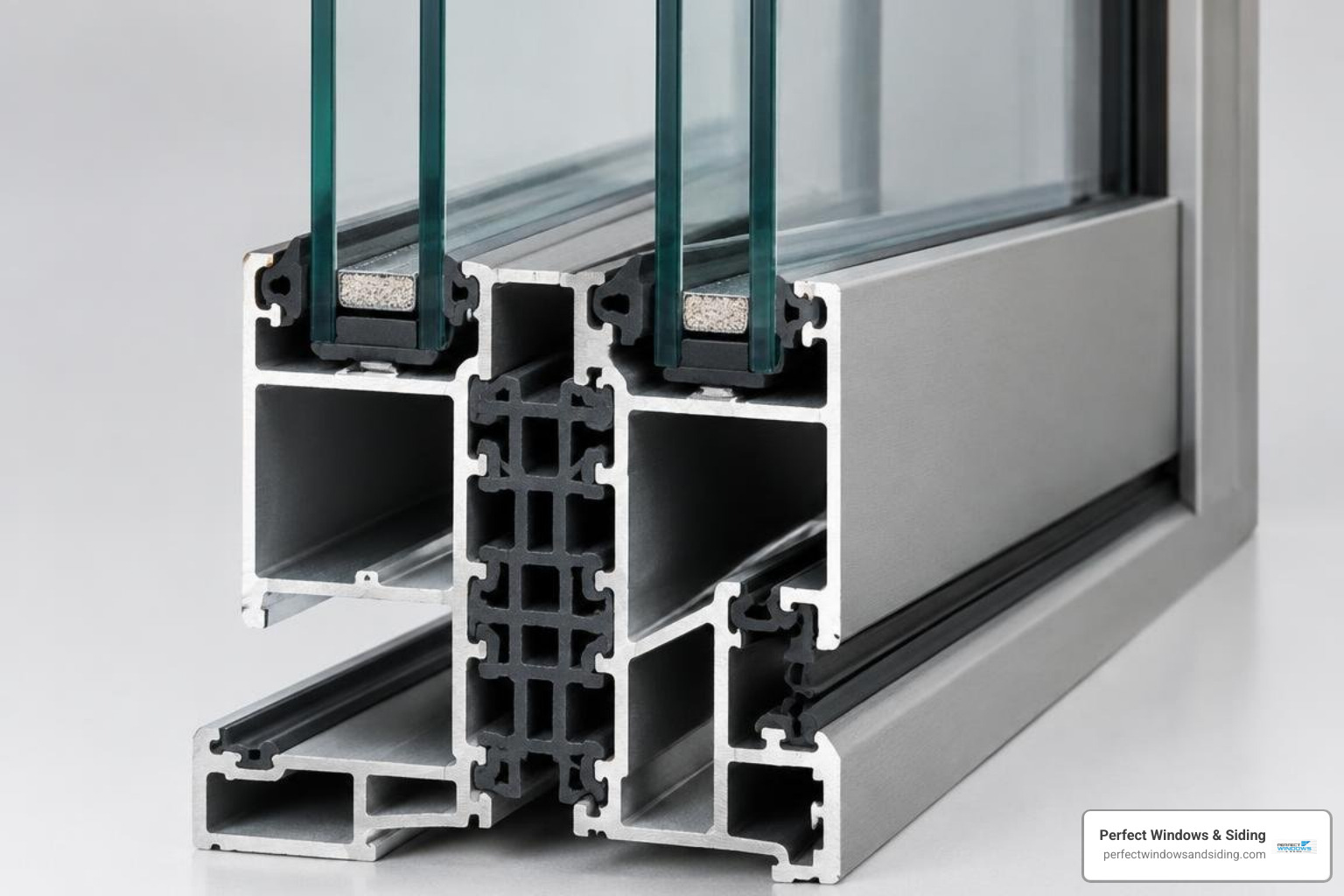
Architectural aluminum offers unmatched strength, allowing for expansive glass panels and narrow perimeter sightlines. However, standard aluminum transfers heat quickly. High-end modern systems overcome this by inserting a reinforced polyamide insulating strip between the exterior and interior aluminum extrusions.
This thermal break halts thermal conduction, keeping the inside frame warm to the touch. Homeowners upgrading to durable aluminum patio sliders gain sleek profiles with sightlines as slim as 20mm to 21mm while retaining excellent thermal performance. Precision engineering in modern thermally broken systems achieves U-values as low as 1.3 W/m²K while handling panel weights of several hundred kilograms with effortless glide.
Insulated Vinyl and Fiberglass Profiles
For homeowners prioritizing high thermal resistance with minimal maintenance, multi-chambered vinyl and pultruded fiberglass are outstanding choices.
Multi-chamber vinyl frames use internal air pockets to block thermal bridging, preventing cold air from penetrating the room. Pultruded fiberglass provides exceptional structural stability and expands and contracts at nearly the identical rate as glass, ensuring seals remain intact through decades of severe temperature swings. Understanding the benefits of fiberglass patio door systems helps homeowners match their structural and architectural goals with maximum weather resistance.
Advanced Glass Technologies and Weatherproofing Options
A double-glazed panel is a high-tech assembly designed to manage radiation, reflection, and air sealing.
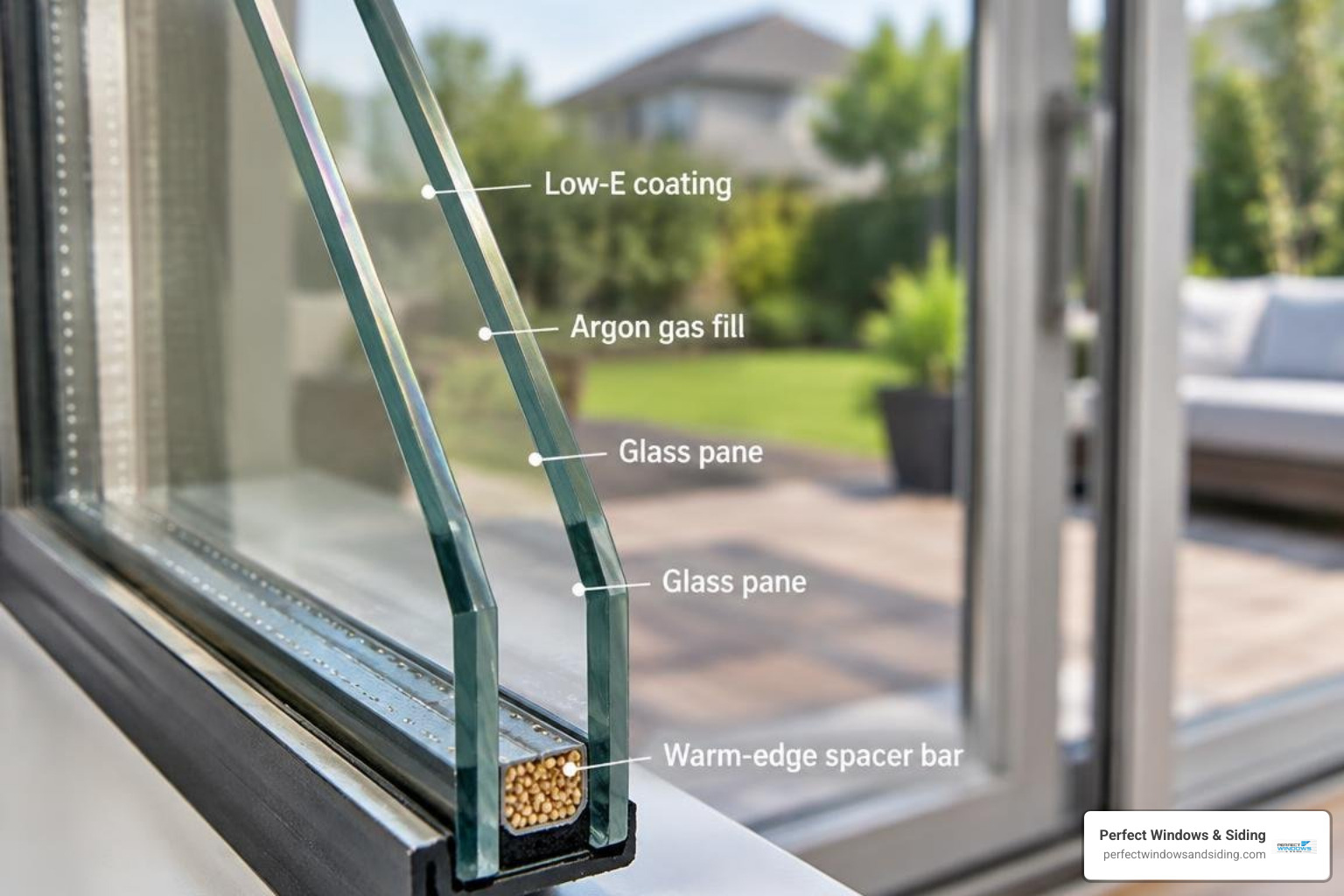
Low-E Coatings and Argon Gas Fills
Microscopically thin layers of metal oxide applied to the internal glass surfaces—known as Low-Emissivity (Low-E) coatings—reflect long-wave infrared heat back into your home during winter while reflecting solar heat away in the summer.
Between the panes, replacing standard air with dense, non-toxic argon gas slows conductive heat transfer by an additional 15% to 30%. Warm-edge composite spacer bars separate the panes, isolating the glass edges to prevent condensation. Pairing these advanced glass packages with proper patio door weather stripping creates an airtight defense against driving rain and freezing drafts. High-efficiency configurations with low-E argon units keep indoor spaces comfortable through the coldest seasons.
Impact Resistance and Multi-Point Security
Safety and security are built directly into high-grade sliding assemblies. High-performance double glazed doors use fully tempered safety glass, which is up to four times stronger than standard glass and crumbles into small, dull granules if broken. For enhanced acoustic performance and security, laminated glass layers can be specified on the outer or inner lite.
Modern sliders also feature robust multi-point locking mechanisms. Instead of a single latch, multi-point systems drive steel shoot bolts or continuous hook locks into the jamb at multiple positions along the frame. Homeowners focused on home protection often review upgrading patio door lock security to ensure their entrance resists forced entry while maintaining full perimeter compression against drafts.
Custom Sizing, Configurations, and Architectural Styles
Whether you are updating a standard 6-foot opening or creating a wide wall of glass, modern manufacturing allows for precise tailoring. Standard residential heights typically range from 80 inches (6’8″) to 96 inches (8’0″), with custom systems reaching up to 10 to 12 feet tall.
Consulting our custom patio door dimensions and sizing guide ensures your opening is measured correctly for head, jamb, and threshold clearances before manufacturing begins.
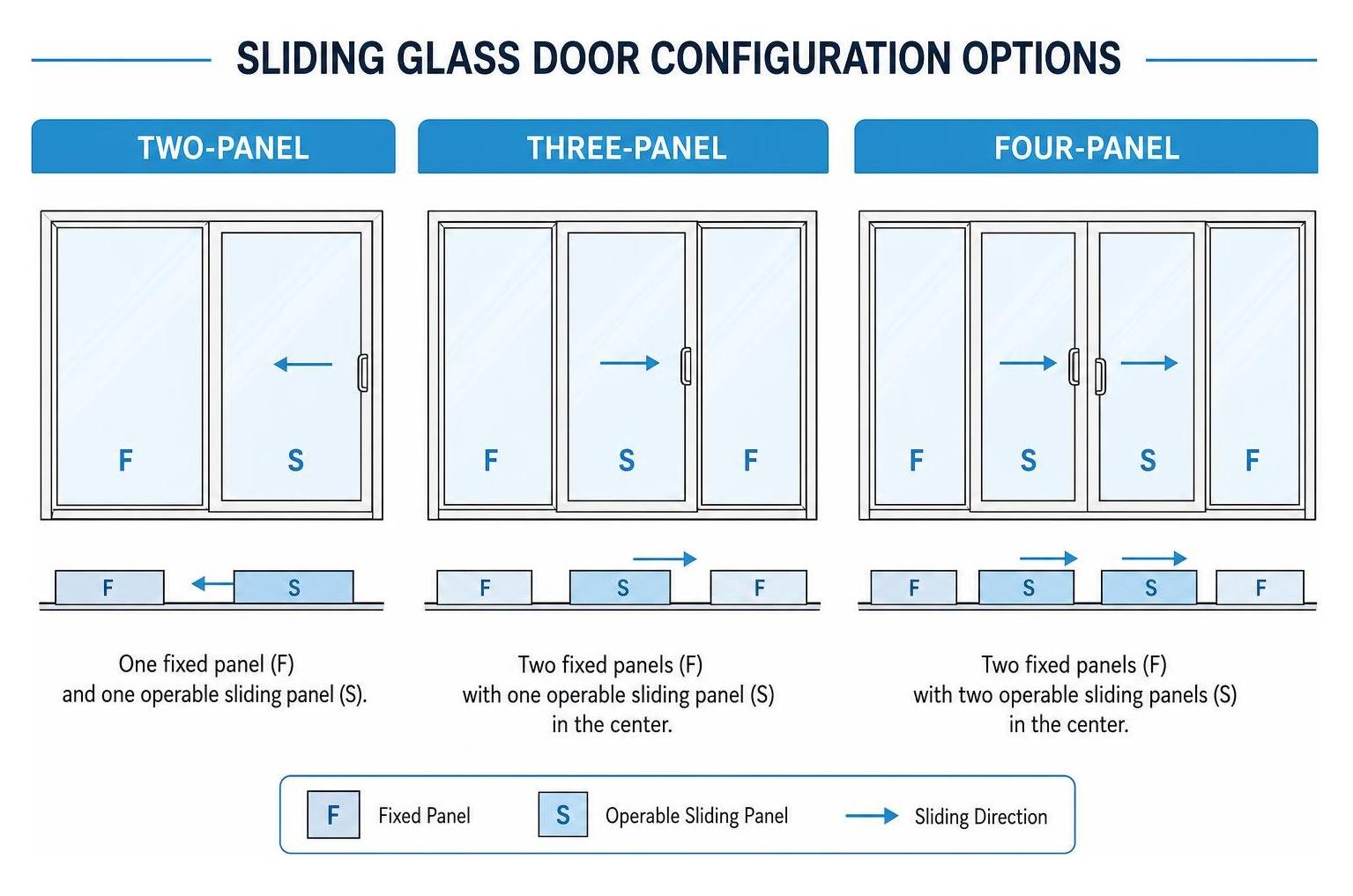
Multi-Panel Stacking and Pocket Systems
Sliding door engineering has expanded far beyond traditional two-panel patio sliders:
- Standard Two-Panel Gliders: One fixed panel and one operable sliding sash; ideal for tight layouts and classic patio walkouts.
- Multi-Panel Stacking Systems: Three to six panels operating on multi-track frames that stack neatly behind one another, opening up two-thirds or more of the total opening width.
- Pocket Door Integrations: Panels slide entirely into wall cavities, creating a completely open doorway between living areas and outdoor decks.
Exploring space-saving double sliding door layouts or hidden pocket door glass systems allows you to maximize usable floor area and bring extensive natural light deep into the home. For modern architectural projects, minimal sliding door systems with slim sightlines offer open-corner configurations that slide open with no fixed corner post, providing uninterrupted panoramic views.
Maintaining Smooth Operation in Double Glazed Sliding Doors
Because double glazed insulated glass units carry significant weight—often between 150 to over 300 kilograms depending on size—the tracking hardware must be robust. Heavy-duty tandem stainless steel rollers and precision-extruded aluminum or stainless sill tracks ensure quiet, smooth gliding.
Keeping your tracks clear of dirt and checking roller height adjustments ensures the door seals evenly against weatherstripping. If panels ever feel stiff or misaligned, following our step-by-step sliding door roller maintenance helps restore effortless, one-finger operation.
Frequently Asked Questions About Glazed Patio Sliders
What is the expected lifespan of high-performance insulated sliding doors?
When built with commercial-grade framing materials, heavy-duty tandem rollers, and dual-sealed insulated glass units, high-performance sliding doors have an expected operational lifespan of 20 to 30 years or more. Choosing durable finishes, such as powder-coated aluminum or pultruded fiberglass, prevents warping, corrosion, and seal failure over decades of use.
Can insulated glass sliding doors significantly reduce exterior noise?
Yes. Quality double-glazed systems can reduce external noise by up to 41 decibels (dB). The combination of differing glass pane thicknesses, an insulating gas barrier, and tight multi-fin weather seals dampens acoustic vibrations from traffic, sirens, lawnmowers, and wind, making your home significantly quieter.
How do these systems help homes meet modern energy conservation codes?
Modern building codes require verified, low U-factors and strict air infiltration limits to minimize home energy waste. High-performance double glazed patio doors easily meet and exceed local energy standards and ENERGY STAR criteria by combining warm-edge spacers, low-emissivity glass coatings, and multi-chambered or thermally broken frames that block unwanted thermal transfer.
Conclusion
Upgrading to double glazed sliding doors delivers long-term comfort, enhanced security, and substantial energy efficiency for your home. By stopping drafts and keeping winter heat inside, an insulated patio system transforms cold living rooms into bright, comfortable gathering spaces throughout the year.
At Perfect Windows & Siding, our licensed and insured installation specialists bring more than 20 years of exterior remodeling experience to homeowners across Chicagoland, including Glenview, Mount Prospect, Arlington Heights, and surrounding suburbs. We back our custom door and window installations with industry-leading craftsmanship and comprehensive lifetime warranty coverage.
Ready to enhance your home’s comfort and eliminate seasonal drafts? Schedule your consultation or get a free estimate with our experienced team today.