

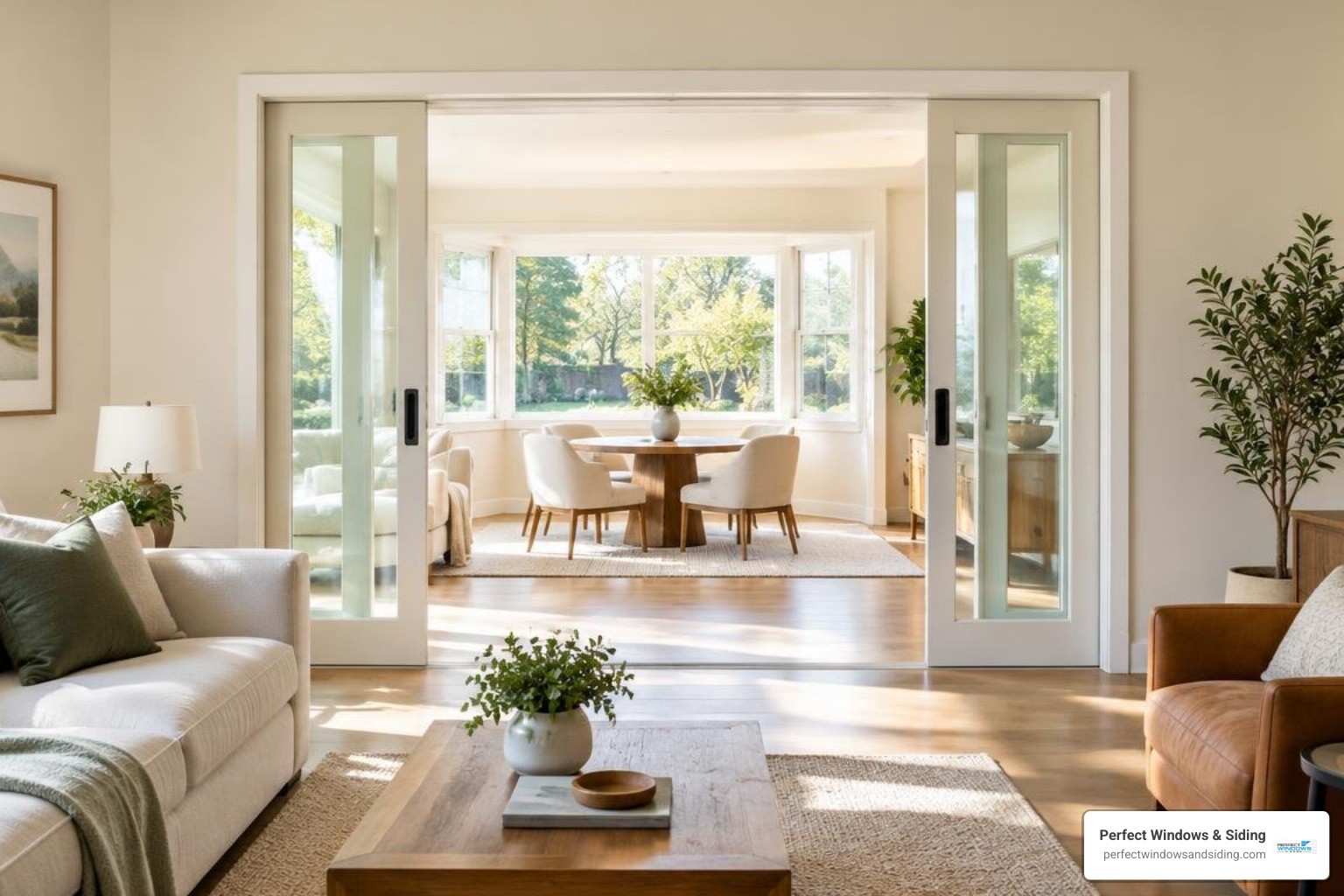
Choosing Double Glass Pocket Doors for Your Home
Double glass pocket doors are a good fit when you want two rooms to feel open without giving up a way to close them off. Both panels slide into the walls, saving the floor space that swinging doors need. To choose a set, start with the glass: clear glass lets you see between rooms, while frosted glass adds privacy. Then check that the walls have room for both pockets and that the frame and track can support the doors.
I’m Voytek Glab, owner of Perfect Windows & Siding. My 20-plus years in carpentry and door installation help me explain what Chicago-area homeowners should check before choosing double glass pocket doors.
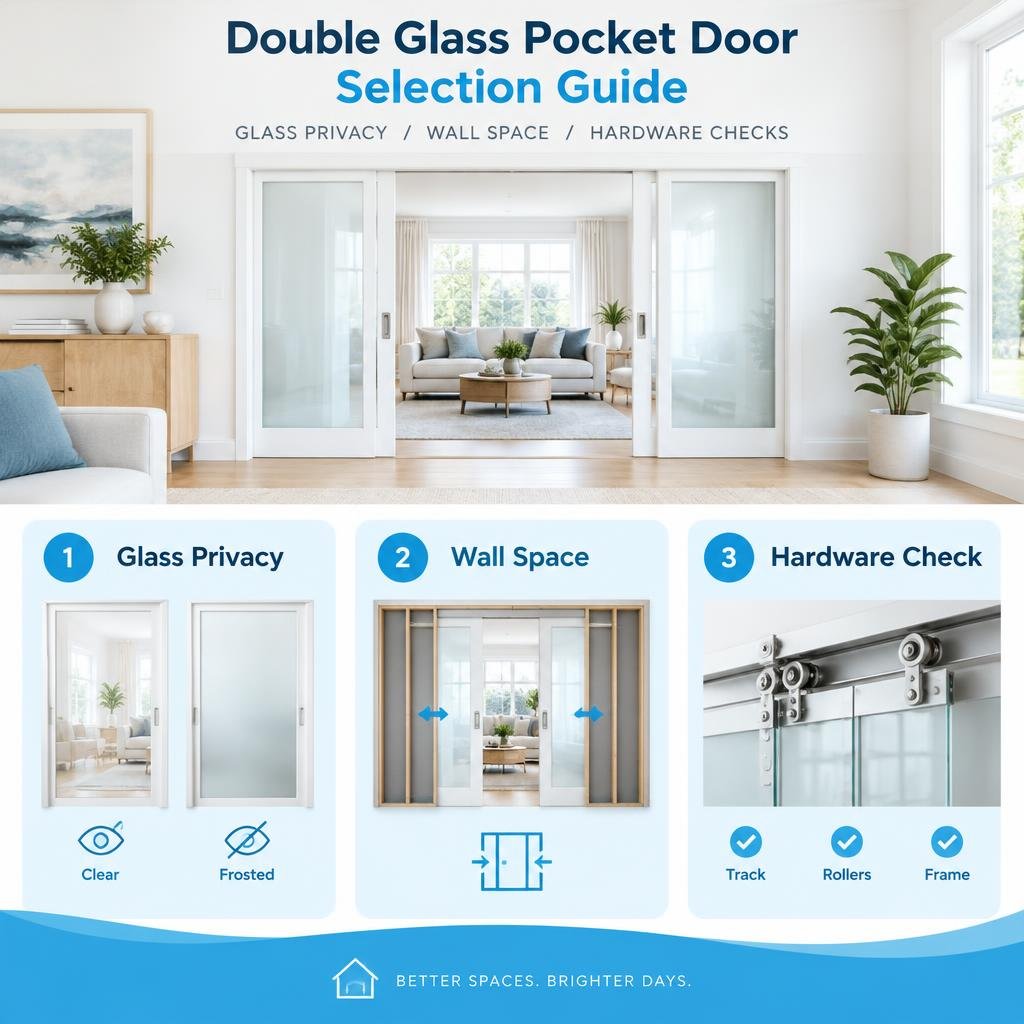
Double glass pocket doors terms explained:
5 Major Benefits of Double Glass Pocket Doors
Pocket door architecture dates back to the 19th century, when sliding partitions were widely incorporated into grand American and European homes to create flexible entertaining parlors. Modern engineering has elevated these historic fixtures into state-of-the-art entryways that marry clean aesthetics with exceptional space optimization.
When you install hidden sliding glass systems, you reclaim valuable square footage that conventional hinged swing doors waste. A standard swinging double door requires a wide clearance arc that dictates furniture placement, obstructs walkways, and cuts off floor plans. By sliding seamlessly into hidden wall cavities, double pocket doors free up perimeter areas and allow for versatile interior layouts.
Beyond spatial advantages, these systems transform your home’s ambiance. When you need to open up cramped floorplans with smart double sliding doors, dual-panel glass units let natural sunlight flow deep into interior hallways, home offices, and living spaces while preserving structural room divisions whenever acoustic separation is preferred.
Seamless Room Transitions with Bi-Parting Operation
Bi-parting mechanisms operate on dual synchronized or independent tracks, allowing two door panels to glide smoothly in opposite directions into dedicated left and right wall cavities. This dual-pocket construction creates expansive, grand openings between common living areas, such as connecting a dining room to a formal living area or opening a kitchen into a sunroom.
Many homeowners draw inspiration from traditional living room transformations, such as the Classic Hide Away Double Pocket Doors – Living Room project, where wide entryways effortlessly disappear into finished drywall to host large family gatherings.
Enhanced Daylight and Acoustic Comfort
Natural light enhances daily living, makes smaller rooms feel expansive, and reduces reliance on artificial lighting throughout the daytime. Incorporating tempered glass panels into your interior doorways allows illumination to travel effortlessly from sunlit exterior windows across adjacent hallways and dens.
Just as exterior sliding glass doors brighten home perimeters, interior glass pocket doors distribute ambient brightness indoors. When closed, substantial composite glass doors offer up to 30 percent noise reduction compared to standard hollow-core doors, providing the acoustic separation needed for working from home or reading quietly.
Top Styles and Glass Types to Consider

Finding the right balance between openness and privacy depends on the style of glass you select for your pocket panels. The choice of glazing defines both the functionality and the visual character of the room.
Choosing Glass Styles for Double Glass Pocket Doors
- Clear Tempered Glass: Ideal for spaces where unobstructed sightlines are desired, such as between an open kitchen and an adjoining sunroom, maximizing light distribution.
- Frosted / Satin Glass: Acid-etched or sandblasted finishes obscure views while diffusing bright daylight evenly, making them an excellent choice for master bathrooms, laundry rooms, and primary suites.
- Striped Satin & Decorative Patterns: Subtle etched horizontal stripes, geometric accents, or organic motifs add custom designer elegance while providing semi-private light transmission.
- Tinted Glazing: Arctic Blue, Bronze, or Smoke Grey tones lend a contemporary architectural aesthetic to modern dens, offices, and entertainment rooms.
Lite Patterns and French Door Configurations
Divided-lite configurations bring structural rhythm and architectural charm to interior pocket systems:
- Full-Lite Panels: A single, expansive pane of safety glass set into a minimalist border delivers a sleek, contemporary appearance that complements transitional spaces.
- 3-Lite Designs: Three stacked horizontal or vertical glass lites strike a balanced aesthetic, fitting seamlessly into both mid-century modern and contemporary interior schemes.
- 6-Lite and 9-Lite French Grids: Reminiscent of historic French doors, multi-lite grid layouts evoke classic craftsmanship. For homeowners who appreciate traditional detailing, exploring our french door installation complete guide showcases how divided lites bring symmetry and enduring style to any home layout.
Core Materials and Frame Construction
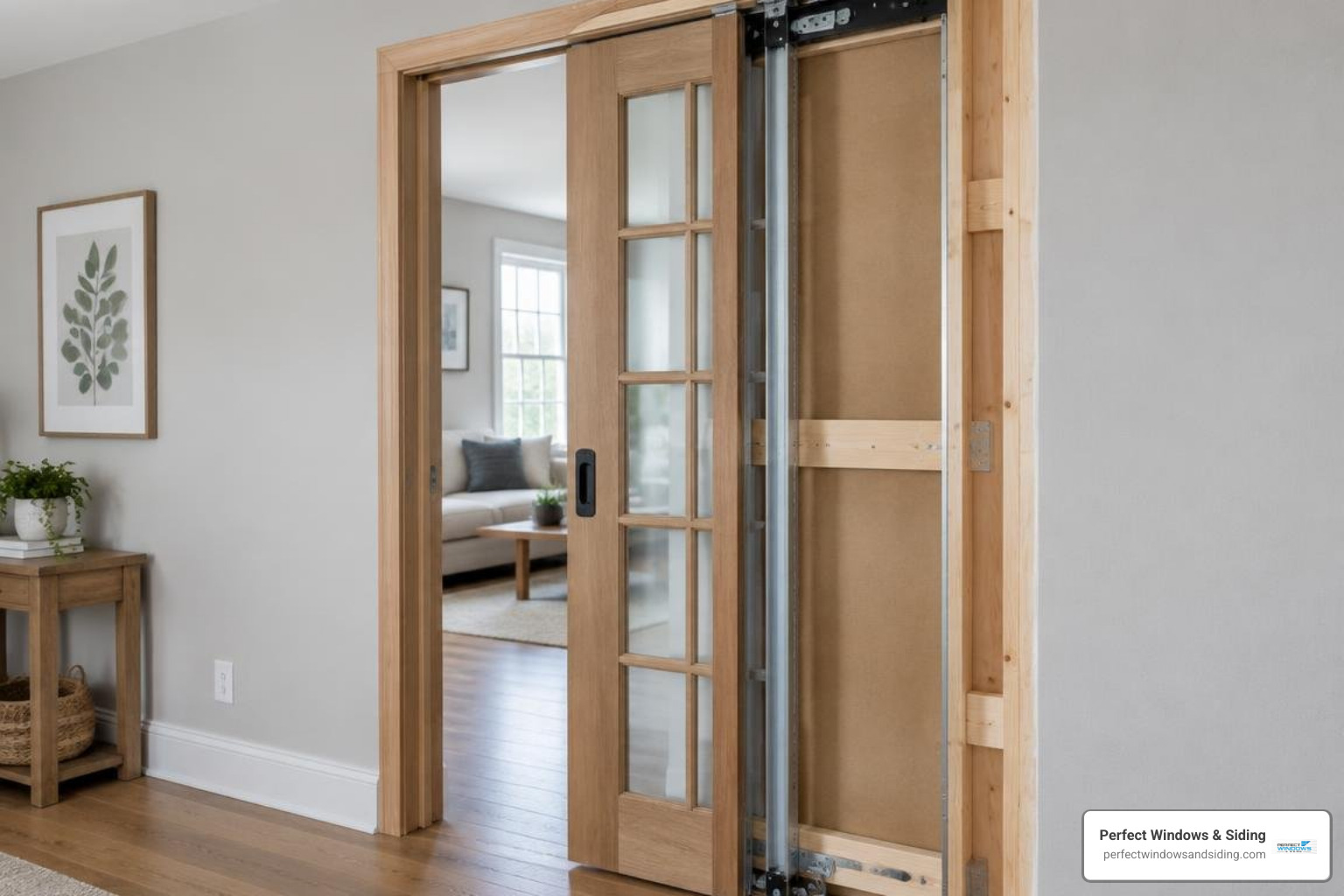
A high-performing pocket door relies on rigid framing materials that resist bowing, warping, and seasonal humidity shifts. Because the door slab travels inside a concealed wall cavity, dimensional stability is paramount to prevent binding or scraping against internal studs.
Framing Materials for Custom Double Glass Pocket Doors
- Solid Engineered Pine & Hardwood: Delivers superior structural heft, exceptional fastener-holding strength, and a solid feel during daily operation.
- Solid-Core Paint-Grade MDF: Engineered to resist temperature fluctuations and humidity changes, paint-grade MDF offers an ultra-smooth, uniform substrate for custom paint finishes without checking or joint separation.
- Eco-Veneer Composite Construction: High-performance composite cores wrapped in durable, eco-friendly veneers provide high resistance to daily wear, scratches, and moisture, making them ideal for high-traffic corridors and busy households.
Glass Thickness and Safety Standards
Interior pocket doors must withstand daily movement, which is why safety glass is an essential standard:
- 1/4-Inch (6mm) to 5/16-Inch (8mm) Glass: Standard for residential wood-framed and multi-lite pocket doors, balancing lightweight operation with excellent rigidity.
- 3/8-Inch (10mm) to 1/2-Inch (12mm) Heavy Glass: Specifically engineered for frameless or ultra-minimalist sliding systems, offering substantial weight, enhanced sound deadening, and smooth glide mechanics.
- Safety Tempering: All quality interior pocket door glass undergoes heat tempering, increasing impact resistance up to five times over standard annealed glass. Just as exterior glazing relies on advanced safety ratings—as detailed in the ultimate guide to double pane sliding glass door replacement—interior tempered safety panels ensure that in the rare event of severe breakage, the glass crumbles into small, blunt granules rather than sharp shards.
Essential Hardware, Tracks, and Modern Accessories
The longevity and feel of a pocket door depend entirely on its internal track system, carriage rollers, and operating hardware.
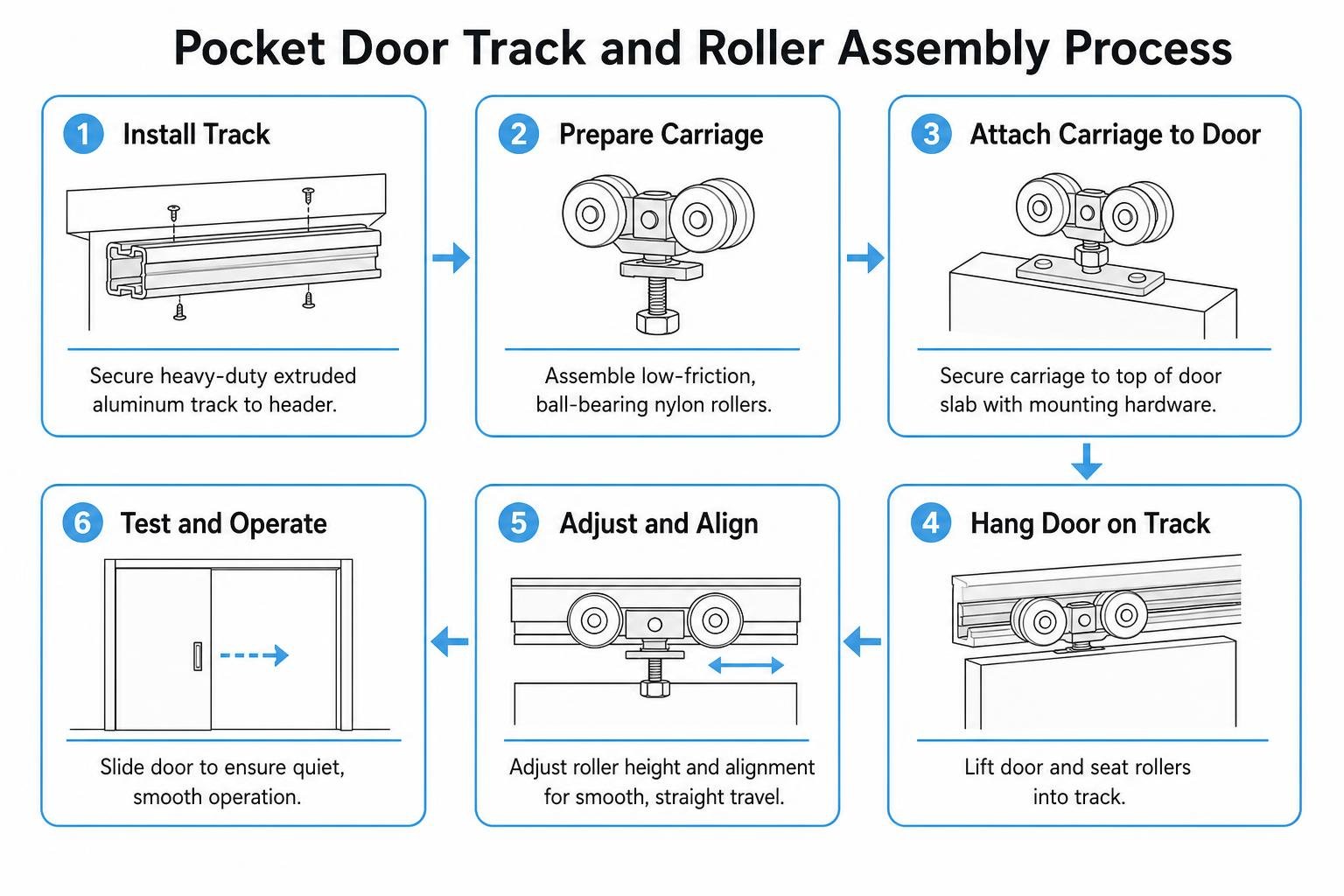
Soft-Close Mechanisms and Track Systems
Modern double pocket systems utilize heavy-duty extruded aluminum tracks paired with low-friction, ball-bearing nylon rollers to deliver whisper-quiet operation. Integrated soft-close and soft-open dampening devices catch the moving doors inches before full travel, gently decelerating each slab to prevent harsh slamming, wall vibration, and roller derailment. Specialized joining kits link two single frames together at the center header, creating a perfectly aligned bi-parting run.
Flush Pulls and Recessed Locking Systems
Because pocket doors slide completely flush into their structural wall pockets, surface-mounted knobs and levers cannot be used. Instead, precision-machined hardware provides effortless access:
- Recessed Flush Pulls: Fitted flush against the door faces to maintain full clearance inside the wall cavity.
- Edge Pulls & Pop-Out Rings: Spring-loaded buttons or recessed edge rings installed on the leading edge allow you to extract the door smoothly from its pocket with a simple press.
- Integrated Privacy Latches: Snug mortise locks with thumb turns provide secure latching for home offices, bedrooms, and guest baths.
Key Installation Requirements and Rough Opening Dimensions
Installing a double pocket door frame requires careful structural planning, particularly when retrofitting existing partition walls.
Measuring Rough Openings and Wall Thickness
To accommodate two pocket doors sliding into opposing cavities, the rough opening must be framed wide enough to hold both door slabs, both pocket cages, and the center converging clearance.
- Rough Opening Width Formula: Multiply the total combined door width by 2, then add 1 to 2 inches for framework clearance. For example, a pair of 30-inch doors (60-inch total clear passage) requires a rough opening of approximately 121 to 122 inches.
- Rough Opening Height Formula: Door panel height plus 4-1/2 inches to accommodate the upper aluminum track, header bracket, and floor guide clearance.
- Wall Thickness: Standard interior 2×4 framing (with 1/2-inch drywall on both sides producing a 4-1/2-inch finished wall) accommodates most pocket kits. For heavier glass slabs or specialized acoustic insulation, 2×6 framing provides extra structural rigidity and wider cavity clearance.
Structural Planning, Wiring, and Wall Finishes
When planning your pocket door project across Chicagoland homes, keep these structural details in mind:
- Plumbing and Ductwork: Wall sections housing the pocket cages must remain completely free of plumbing pipes and HVAC ducts.
- Electrical Wiring: Standard electrical junction boxes cannot sit inside the pocket cavity because the doors travel directly through that space. If switches or outlets are required on that wall segment, shallow gang boxes and armored surface conduits must be incorporated.
- Stud Reinforcement: Modern pocket cages utilize steel-wrapped or steel-clad wood studs. These prevent wall bowing, allow easy drywall screw attachment, and provide the structural stability needed if you plan to install ceramic tile or wainscoting across the exterior wall surface.
Premium Craftsmanship vs. Standard Framing
Investing in heavy-duty pocket framing and precision-crafted glass panels delivers noticeable daily dividends in smooth operation, structural stability, and long-term durability.
| Feature / Component | Standard Hollow-Core Pocket Door | Premium Double Glass Pocket System |
|---|---|---|
| Door Core Material | Lightweight corrugated cardboard core | Solid engineered pine, dense MDF, or solid composite |
| Glazing Type | None (solid flush panel) | 8mm to 10mm tempered safety glass (clear, frosted, satin) |
| Acoustic Dampening | Minimal sound absorption | Up to 30% noise reduction via heavy composite & glass |
| Track Construction | Thin stamped steel track | Extruded heavy-duty aluminum track with ball-bearing rollers |
| Movement Control | Standard hard bumpers | Dual-action soft-close and soft-open dampening dampers |
| Wall Reinforcement | Standard loose wooden split studs | Steel-clad or heavy-gauge steel uprights to prevent bowing |
| Natural Daylight | Completely blocks light transmission | Maximizes light flow while providing spatial division |
Frequently Asked Questions about Double Pocket Doors
What is the difference between double pocket doors and bi-parting pocket doors?
In residential architecture, the terms are often used interchangeably. A double pocket door system refers to any setup featuring two pocket panels. A bi-parting configuration specifically describes two doors that meet in the center of the doorway opening when closed and pull apart into opposite left and right wall cavities when opened.
Can electrical switches be installed on a pocket door wall?
Yes, but special installation techniques are required. Because the door slab occupies the hollow space between the studs, standard deep junction boxes cannot be used. Licensed professionals install shallow gang boxes and run electrical wiring along the outer perimeter of the pocket frame to prevent the door from catching on cables.
How thick should the glass be for interior pocket doors?
Standard wood-framed pocket doors typically feature 1/4-inch (6mm) to 5/16-inch (8mm) tempered safety glass panels, which balance structural strength with manageable weight. Modern frameless glass pocket systems utilize thicker 3/8-inch (10mm) or 1/2-inch (12mm) safety glass to ensure rigid, rattle-free sliding.
Conclusion
Double glass pocket systems bring refined architectural style, flexible open-concept living, and generous natural daylight to your home without sacrificing valuable floor space. Whether you are remodeling a mid-century home in Park Ridge, updating a classic residence in Des Plaines, or designing a modern floor plan in Morton Grove or the surrounding Chicago suburbs, precision-engineered pocket doors add lasting functionality and beauty to your interior living areas.
At Perfect Windows & Siding, our licensed and insured craftsmen bring over 20 years of hands-on expertise to every custom door and window project, backing our workmanship with lifetime warranty protection and dedicated customer care.
Ready to enhance your home’s layout with custom-fitted sliding systems? Schedule your consultation or get a free estimate with our experienced local installation team today.