
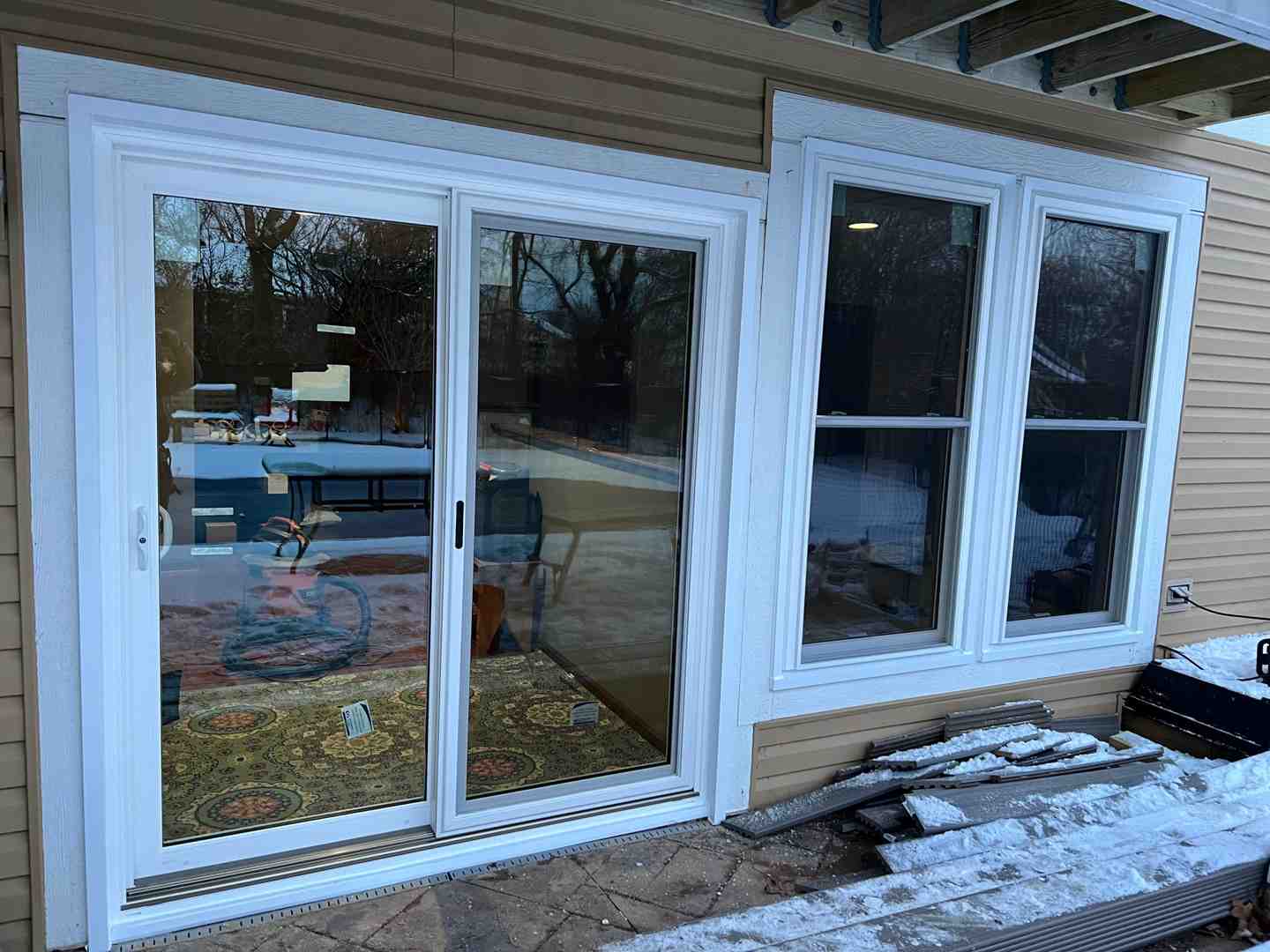
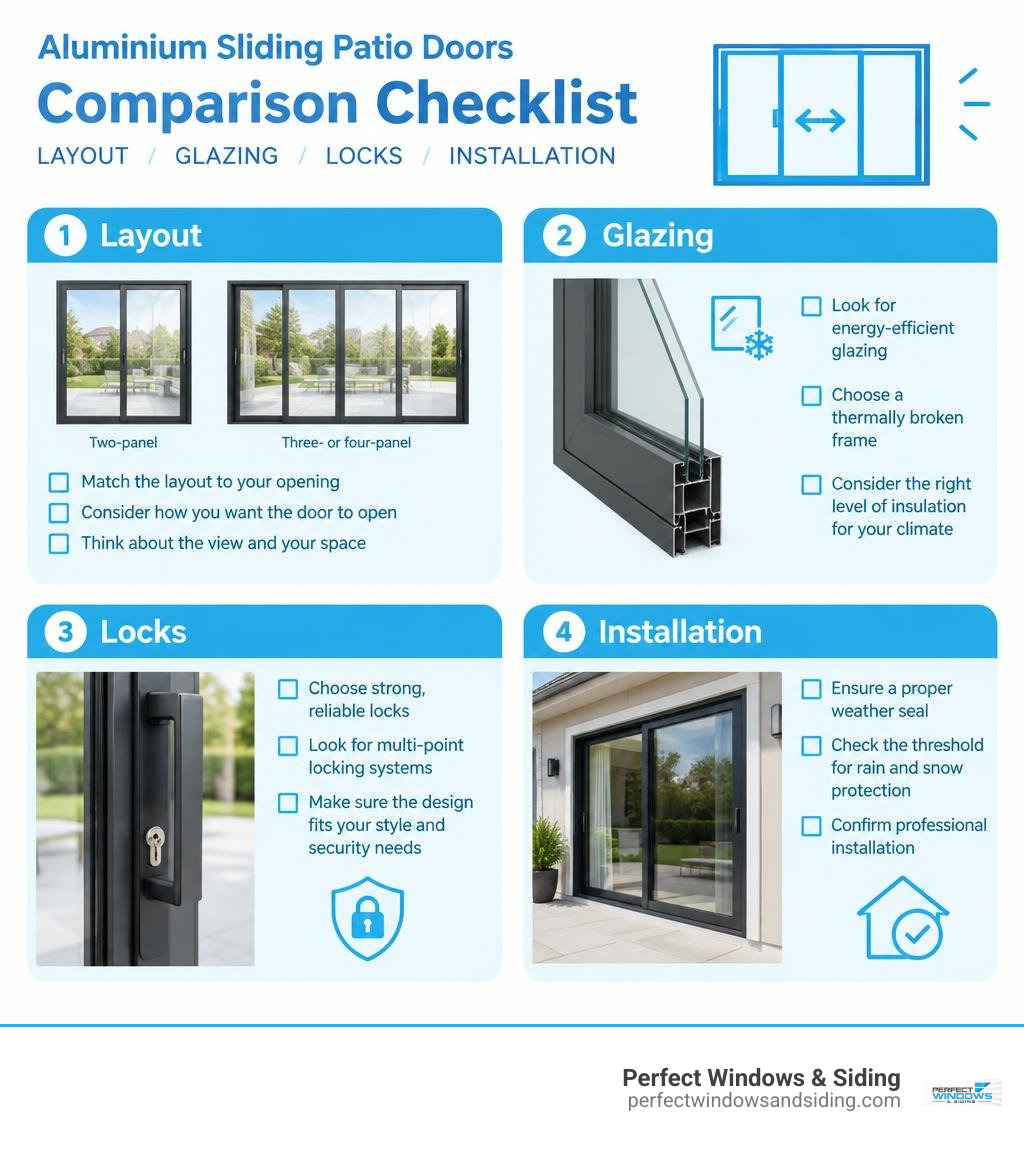
How to compare aluminium sliding patio doors
Start with the opening, then compare the doors. A two-panel aluminium slider suits a smaller opening; three- or four-panel layouts can give a wider view and more ways to open the door. For a home in Morton Grove or Park Ridge, look for a thermally broken frame, a strong whole-door energy rating, secure locks, and a threshold that manages rain and snow. Sliding panels also need no swing space, making them practical near furniture or on a tight patio.
I’m Voytek Glab, owner of Perfect Windows & Siding. I’ve spent over 20 years working on door and window installations across Chicagoland, and this guide will help you compare aluminium sliding patio doors before choosing a layout and installer.
Aluminium sliding patio doors helpful reading:
Aluminium sliding patio doors: styles and configurations to compare
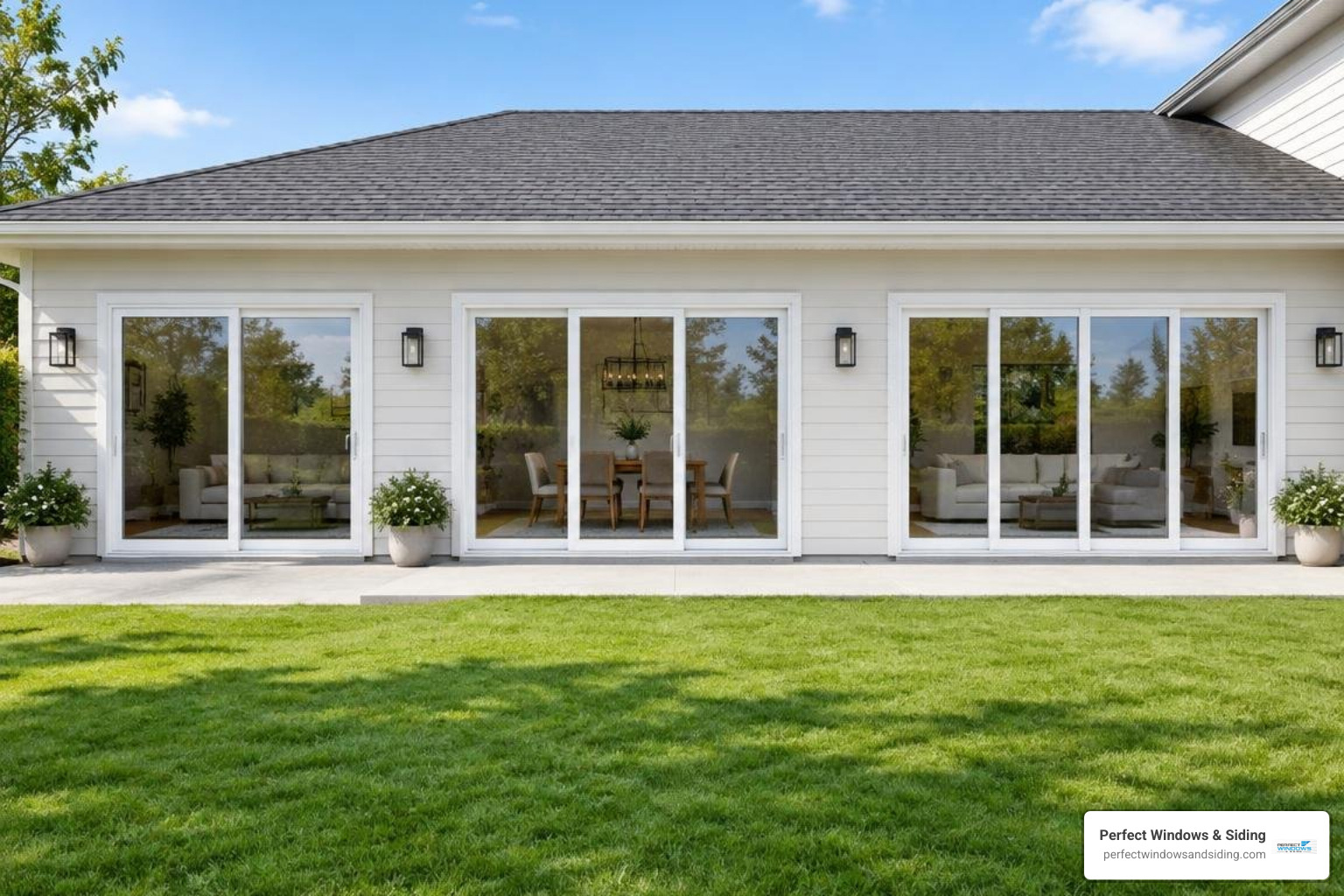
Panel count, fixed versus sliding panels, track layout and opening direction decide how a door looks and lives. Each choice changes how much of your garden you see, how much air you can let in, and how the door works with your furniture. Our guide to sliding glass doors covers the basics if you are new to the category.
Which aluminium sliding patio doors configuration suits your opening?
Match the layout to the structural opening first.
- 2-panel: One panel slides while the other stays fixed, or both slide. This is the simplest layout and suits standard openings.
- 3-panel: Often a centre panel slides, or panels stack on a triple track. This gives a wider view and a larger usable gap.
- 4-panel: Two pairs of panels can meet in the centre for a symmetrical, wide opening. Our 4-pane patio door layouts guide goes deeper.
- 6-panel: Reserved for very wide openings. Some bespoke systems reach widths of nearly 7 metres, which is about 22 feet.
Track type matters too. A twin track has two lanes, so panels overlap in pairs. A triple track adds a third lane, letting panels stack behind one another for a wider clear opening. An inline slider keeps panels sliding in the same plane of travel, while a lift-and-slide system raises the panel slightly when you turn the handle. That makes very large, heavy panels glide easily, and it lets you leave the door part-locked for ventilation. Panels on premium systems can reach about 2.5 metres wide and 2.7 metres high, and thermally improved panels from one major US manufacturer can reach 50 square feet.
Always have the opening measured professionally. Panel weight, header support and floor level all influence which layout is realistic.
Are sliding doors a practical choice for small spaces?
Yes. Because panels glide along a track, there is no door arc to protect. That is helpful in compact living rooms, kitchens with tables near the glass, or a narrow patio where a swinging door would collide with chairs. A flush or low threshold also makes the move from floor to patio smoother for strollers, wheelchairs and everyday traffic. For more ideas, see these double sliding doors for compact floorplans.
Compare frame materials, thermal performance and comfort
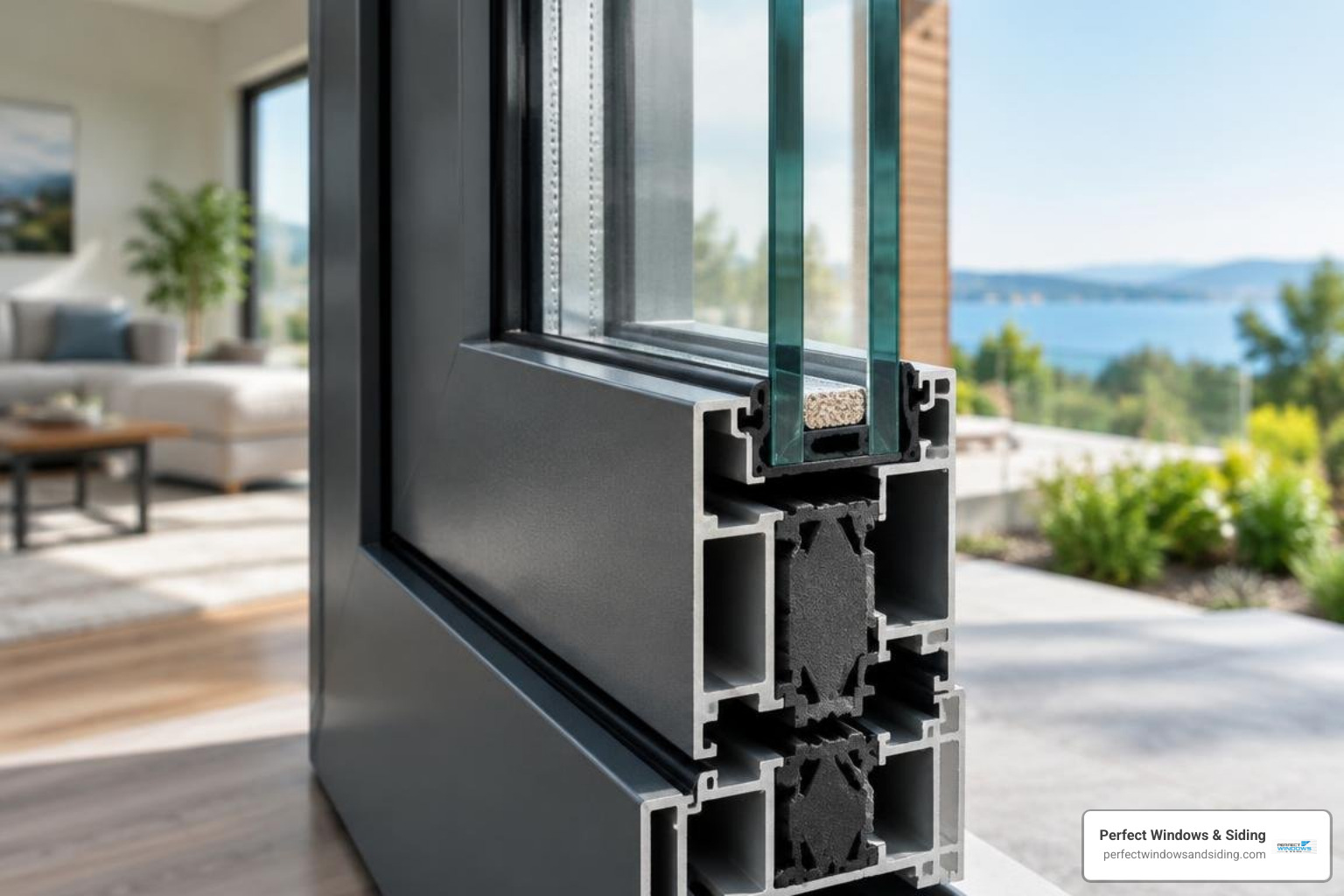
Aluminium, uPVC and timber each have a place. Aluminium is the strongest of the three, so it holds large panes in slim frames. uPVC is practical on smaller openings. Timber offers warmth and character but needs regular finishing. For sliding doors, where panels are heavy and spans are wide, frame rigidity is a major advantage.
Comfort depends on the whole assembly, not just the frame. Double glazing is the standard starting point, and triple glazing can help in very exposed spots. Low-emissivity coatings reflect heat back into the room, and argon gas between panes slows heat transfer. These upgrades also help with condensation and reduce outside noise. For a broader look at how glass choices affect year-round comfort, read about the best sliding glass doors for smooth gliding and year round comfort. The U.S. Department of Energy also explains how to evaluate ratings in purchasing energy-efficient residential windows, doors, and skylights.
Why choose aluminium sliding patio doors over uPVC?
- Frame rigidity: Aluminium resists flexing and warping, so large panels stay square and track smoothly.
- Larger panels, narrower sightlines: Interlocks on quality systems can be as slim as 25 to 50 mm, which means more glass and less frame.
- Colour retention: A powder-coated finish resists fading, rotting and peeling, so repainting is not needed.
- Durability: Aluminium holds its shape over many years of daily use and harsh Chicagoland seasons.
For smaller openings where slim sightlines matter less, uPVC can still be a sensible option. For wide openings and long-term performance, aluminium usually wins.
What U-values can aluminium sliding doors achieve?
U-value measures how quickly heat passes through a material, and lower is better. The figure that counts is the whole-door U-value, which combines glass, frame, spacer and seals. Thermally broken aluminium systems can reach U-values as low as 1.1 W/m²K with the right glazing, while other quality sliders list figures of about 1.5 to 1.6 W/m²K. The spread depends on glazing specification, track type and configuration, since more frame and more joints affect results. In the US, you will also see ratings from NFRC labels, so ask for those on any door we discuss. For a deeper look at performance upgrades, see these high-performance glazed sliders.
Customisation, security and everyday operation
Aluminium takes finishes very well. Popular choices include anthracite grey (RAL 7016), black (RAL 9005) and white, and many systems offer any RAL colour. Dual-colour options let you pair a dark exterior with a white interior. Powder coating can be smooth, textured or anodised in effect. Doors can be made to measure, so they fit your opening rather than forcing the opening to fit the door.
Glass is just as flexible:
- Toughened safety glass for impact safety.
- Laminated glass for added security and sound control.
- Solar-control glass to reduce glare and heat on sunny elevations.
- Privacy glass for rooms facing neighbours.
- Integral blinds sealed between panes, with no cords or dust.
How secure are aluminium sliding patio doors?
Security comes from the system as a whole. A rigid aluminium frame is a strong start. Then look for:
- Multi-point locking that engages the frame at several spots.
- Anti-lift protection so panels cannot be lifted off the track.
- Internally glazed beads, so glass cannot be removed from outside.
- Laminated glazing, which holds together if struck.
- A keyed cylinder with a recognised security rating.
Some UK systems meet the PAS 24:2022 standard when paired with laminated glass, which is a useful benchmark when you compare products. Even the best lock only works if the door is fitted square, so professional installation matters. If your current lock is worn, our guide to sliding door lock upgrades explains the options.
What should homeowners check when choosing glazing and thresholds?
- Safety glass: Toughened glass is the baseline for large patio doors.
- Thermal performance: Confirm the whole-door rating, not only the glass.
- Threshold height: A low threshold helps accessibility but must still shed water.
- Weather seals: Look for continuous brush or gasket seals along every panel.
- Water management: Ask how drainage channels carry rain and melting snow away.
- Opening clearance: Confirm furniture, screens and railings will not block the sliding panel.
Installation, maintenance, lead times and warranty
A good door can still perform poorly if it is installed badly. Our licensed, insured crew confirms opening measurements, checks structural support, aligns the frame, sets the track level, and seals the perimeter against drafts and water. We also check drainage paths and local building requirements in Park Ridge, Morton Grove and surrounding suburbs. For a closer look at the process, read about fitting sliding patio doors.
What maintenance do aluminium sliding doors need?
Very little. Aluminium will not rot or warp, and powder coating needs no repainting. A simple routine keeps things smooth:
- Wipe frames with a damp cloth and mild soap.
- Vacuum and wipe the bottom track so grit does not wear the rollers.
- Inspect rollers for wear or noise.
- Clear drainage slots so water can escape.
- Check seals for gaps or cracking.
- Apply a suitable lubricant to hardware and locks.
If a panel starts to drag, worn rollers are the usual cause, and our guide to sliding door roller replacement shows what is involved.
What should a bespoke-door warranty and delivery schedule cover?
Made-to-measure doors are built after you order, so ask for a written lead-time estimate. Many manufacturers quote roughly two to four weeks, with non-stock colours taking longer. Lead times vary by system, so confirm yours in writing. Also plan delivery access, because glass and panels often arrive separately and need careful handling.
A solid warranty should spell out:
- Frame coverage, including finish and corrosion.
- Glazing coverage, including seal failure.
- Hardware coverage for rollers, locks and handles.
- Installation exclusions and who is responsible for them.
- Warranty duration, which commonly runs from five to ten years on product guarantees.
- The claim process, so you know who to call.
At Perfect Windows & Siding, our work is backed by a lifetime warranty.
Frequently Asked Questions about Aluminium Sliding Patio Doors
Are aluminium sliding patio doors energy efficient?
Yes, when the door has a thermal break and quality glazing. Efficiency depends on the whole-door U-value and on careful installation, since gaps around the frame can undo good ratings.
Which configuration and finish should I choose?
Start with the patio size and room layout. Two panels suit standard openings, while three, four or six panels suit wide walls. Choose the opening direction based on furniture and traffic, pick a twin or triple track, then match the RAL colour to your windows and trim.
How long do bespoke doors take, and what does the warranty cover?
Production and delivery commonly take a few weeks, and we coordinate the schedule with installation. Get the warranty in writing, check which components it covers, and confirm who handles installation issues.
Conclusion
Choosing aluminium sliding patio doors comes down to the right layout, a thermally broken frame, secure locking and careful installation. For homes in Morton Grove, Park Ridge and nearby suburbs, that combination delivers natural light, comfort and lasting durability. Our team brings over 20 years of craftsmanship, quality materials, personalized service and a lifetime warranty to every custom door installation. Ready to start? Get a free estimate or schedule your consultation with Perfect Windows & Siding.