

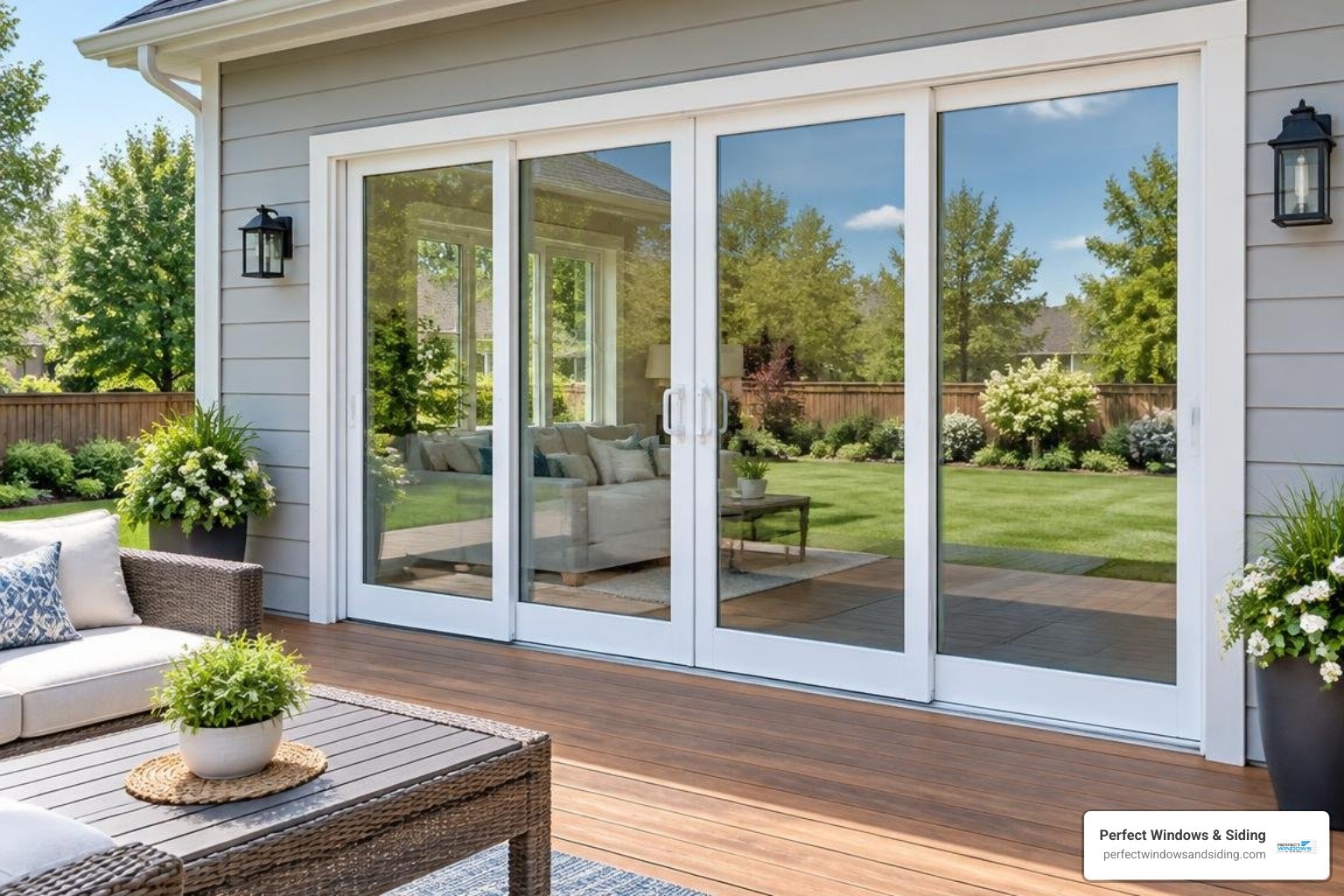
Everything You Need to Know About 4-Pane Sliding Patio Doors
How to Choose 4-Pane Sliding Patio Doors
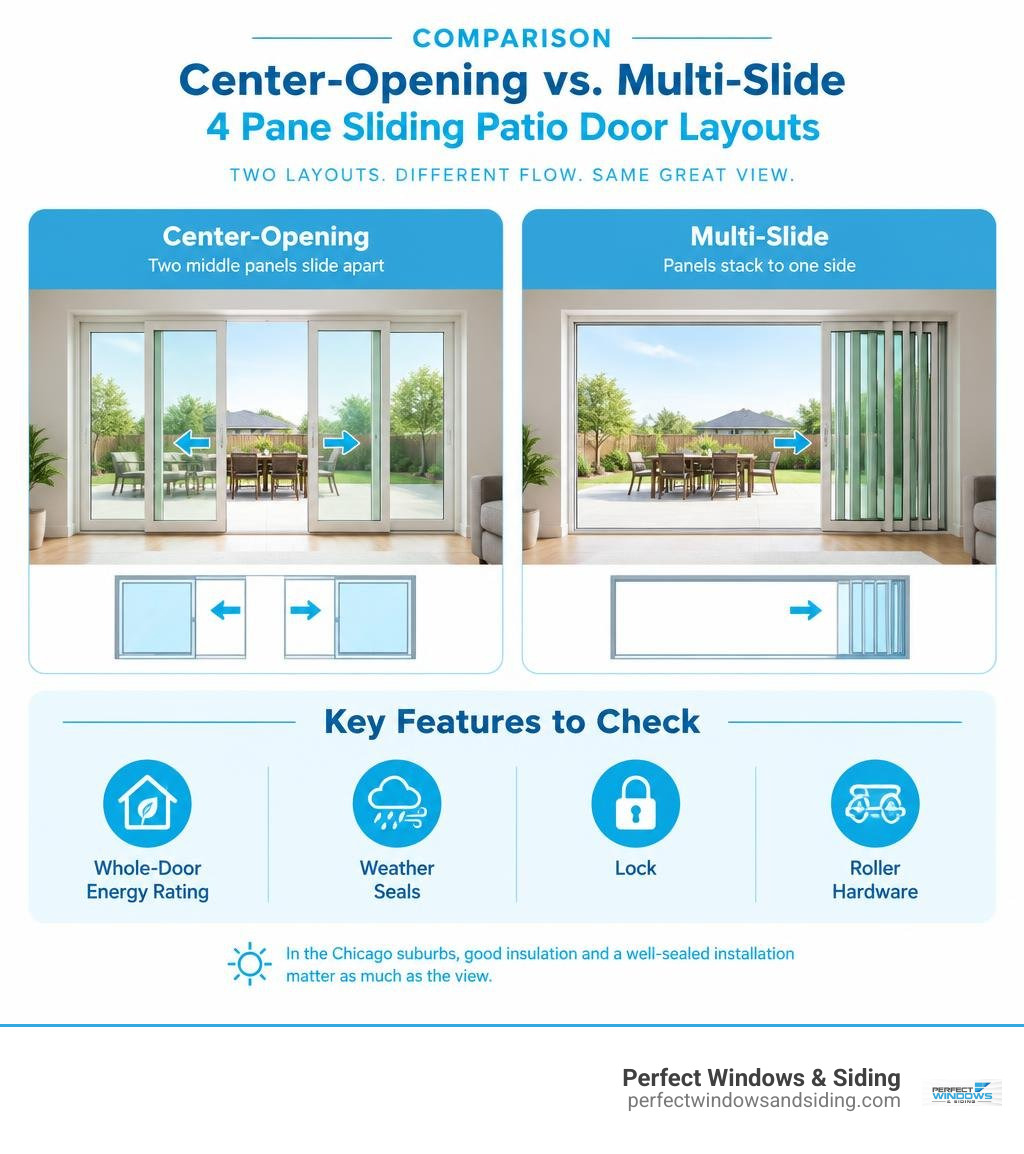
Start with the opening you want. A center-opening door lets two middle panels slide apart. A multi-slide door stacks panels to one side for a wider clear path, but needs room for the panels to stack. Then compare the whole-door energy rating, weather seals, lock, and roller hardware – not just the glass or frame material. In the Chicago suburbs, good insulation and a well-sealed installation matter as much as the view. For a broader look at how these systems fit into common patio door styles, our sliding glass door overview explains configurations and terminology, while the Wikipedia overview of sliding glass doors provides additional background on the general door type.
I’m Voytek Glab, owner of Perfect Windows & Siding. With over 20 years of window and door installation experience in Chicagoland, I help homeowners weigh practical choices like these when considering 4 pane sliding patio doors.
Easy 4 pane sliding patio doors glossary:
Key Configurations and Sizing for 4 Pane Sliding Patio Doors

When upgrading a wide exterior wall, selecting the right door layout transforms how your living area functions. A four-panel system delivers expansive panoramic views while providing flexible ventilation and seamless indoor-outdoor traffic flow. Homeowners throughout Des Plaines and Park Ridge often turn to wide-span sliding glass doors to merge modern open-concept kitchens and family rooms directly with outdoor entertaining spaces.
Center-Opening (OXXO) vs. Multi-Slide Configurations
Understanding panel operation helps determine which system complements your floor plan:
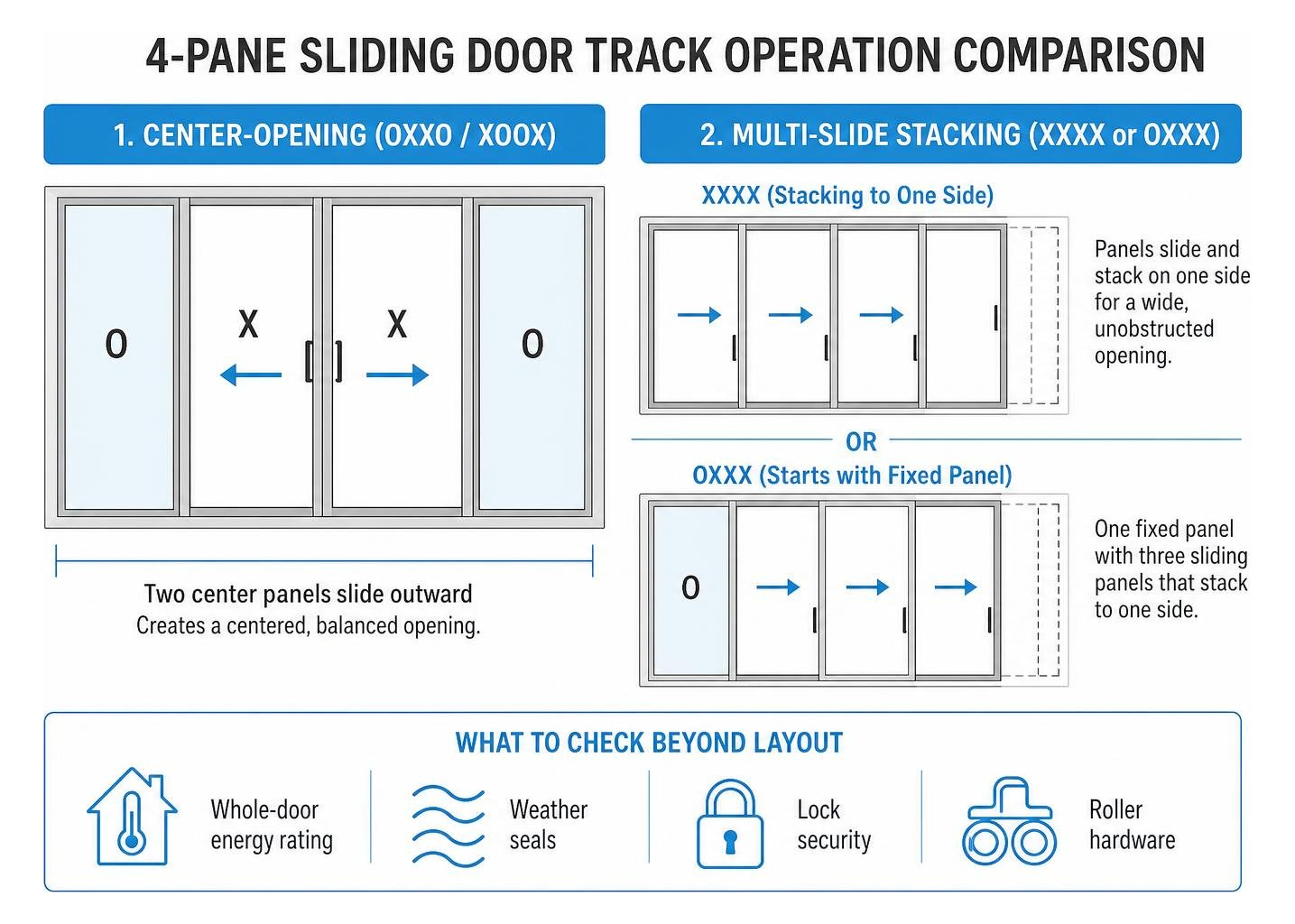
- Center-Opening (OXXO / XOOX): In this classic setup, the two outer panels remain fixed (O), while the two central active panels (X) glide outward toward the edges. This creates an expansive, centered walkthrough opening that feels balanced and symmetrical. It operates smoothly on a standard twin-track profile without requiring deep wall pockets.
- Multi-Slide Stacking (XXXX or OXXX): Multi-slide configurations allow panels to slide along multi-track systems, stacking neatly over one another on one side or sliding into recessed wall pockets. This design maximizes clear span width, creating a virtually seamless boundary between your interior living room and exterior deck.
Typical Dimensions and Structural Sizing Limits
Four-panel sliding patio units are engineered to accommodate significant wall spans. Standard systems typically accommodate widths starting around 3,068 mm (approx. 10 feet) up to structural maximum spans of 5,928 mm (nearly 19.5 feet). Standard heights typically reach up to 2,360 mm (around 8 feet).
Because these wide spans carry substantial weight—especially when configured with heavy insulating glass units—proper architectural framing and a level header are vital. An experienced installation team calculates rough opening requirements precisely to ensure zero header sag over the operating tracks.
Material Comparisons: Aluminum vs. Vinyl vs. Fiberglass
Choosing the best frame material depends on your structural needs, architectural preferences, and thermal performance requirements.
| Material | Structural Strength | Thermal Performance | Maintenance Profile | Sightline Profile |
|---|---|---|---|---|
| Thermally Broken Aluminum | Exceptional (supports massive spans) | High (1.3–2.5 W/m²K rating) | Low (durable powder coat) | Ultra-slim contemporary |
| Multi-Chamber Vinyl (uPVC) | Moderate-High (steel reinforced) | Outstanding (1.0–1.3 W/m²K) | Minimal (wipe clean) | Classic balanced |
| Pultruded Fiberglass | Superior (minimal expansion) | Excellent (stable thermal core) | Low (paintable/durable) | Sleek modern |
Contractors frequently highlight vinyl sliding patio doors for their outstanding balance of multi-chambered insulation, durability, and virtually zero maintenance needs.
Durability and Thermal Break Technology
Standard hollow aluminum frames conduct outdoor temperatures rapidly. Modern architectural aluminum units utilize 6063-T5 structural alloy combined with an engineered polyamide thermal barrier.
This thermal break separates the interior and exterior aluminum profiles, significantly improving insulation: thermally broken aluminum achieves thermal transfer ratings of 1.3 to 2.5 W/m²K compared to roughly 5.8 to 7.5 W/m²K for non-insulated profiles. Combined with multi-stage powder-coated finishes, these frames resist chalking, fading, and moisture wear across decades of changing seasons.
Comparing Value Across 4 Pane Sliding Patio Doors Materials
Selecting the ideal door system requires balancing initial material benefits with long-term performance:
- Vinyl (uPVC) Systems: Features multi-chamber profiles with internal galvanized steel reinforcing. They deliver stellar energy efficiency and robust insulation without requiring painting or refinishing.
- Thermally Broken Aluminum Systems: Ideal for homeowners seeking slim sightlines, contemporary aesthetics, and maximum glass area on oversized structural spans.
- Fiberglass Profiles: Excellent dimensional stability in extreme temperature swings with long-term rigidity.
Energy Efficiency, Glazing, and Weather Performance
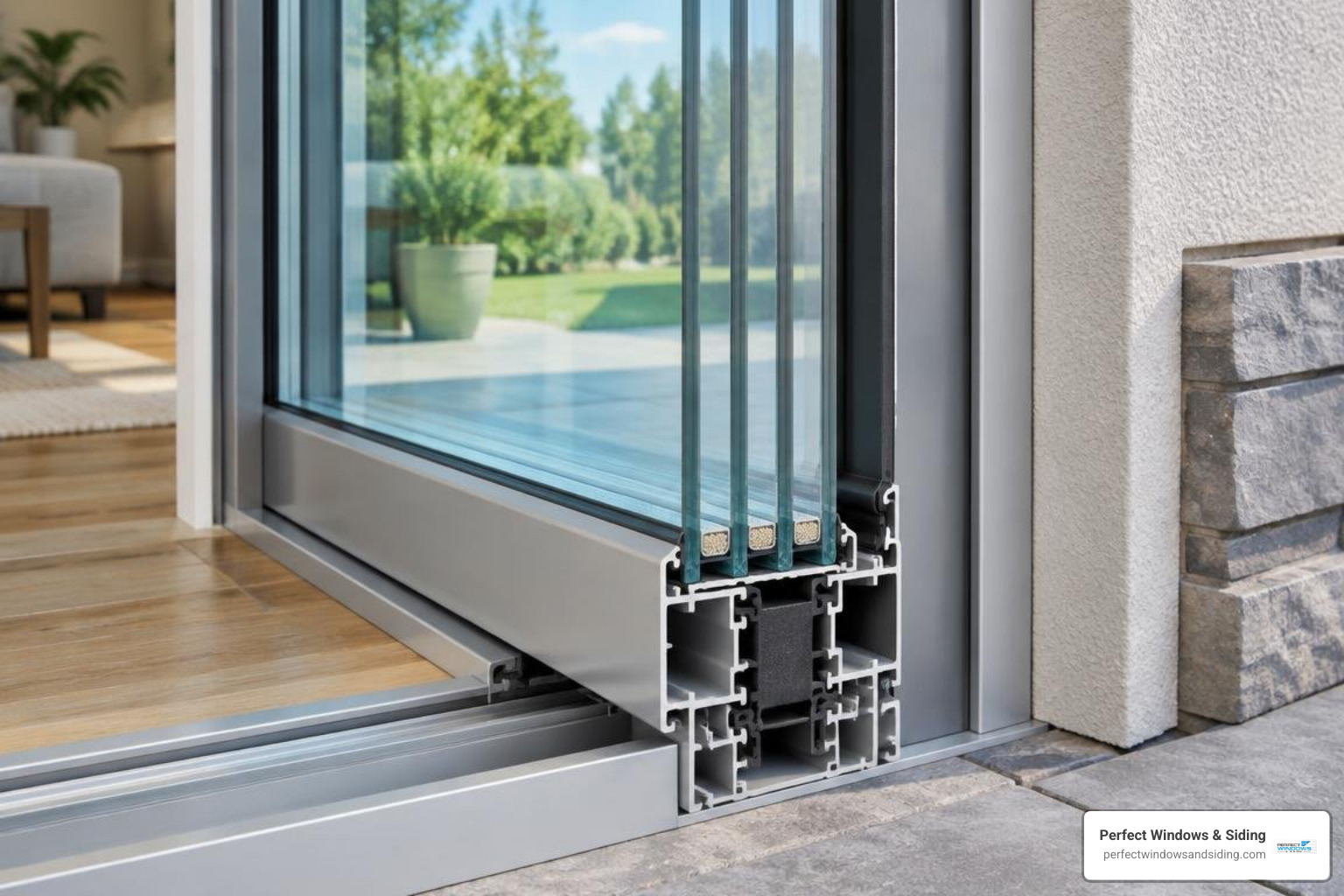
A massive wall of glass must perform efficiently against seasonal weather swings. Selecting proper glazing packages prevents draftiness in the winter and heat buildup during warm summer afternoons.
U-Values, Low-E Coatings, and Acoustic Insulation
A door’s overall thermal efficiency depends largely on glass configuration:
- Insulated Glazing: Modern four-panel assemblies achieve an overall U-value of 1.3 W/m²K with dual-pane setups, dropping down to 1.0 W/m²K with argon-filled triple glazing, reaching an A+ Energy Rating.
- Low-E Coatings: Spectrally selective coatings reflect radiant interior warmth back inside during cold months while blocking solar heat gain during summer.
- Acoustic Performance: Heavy laminated and multi-pane glass packages deliver sound insulation ratings between 36 dB and 44 dB, creating a serene indoor environment even near busy roadways. Homeowners planning an upgrade can review our double pane sliding glass door replacement guide and our detailed energy efficient windows guide for comprehensive insights into high-performance glazing.
Weather Tightness in Extreme Climates
Large sliding doors must withstand severe wind-driven rain and temperature extremes. Premium four-panel systems achieve certified weather-test ratings including:
- Air Tightness: Class 2 (300 Pa) barrier protection.
- Water Tightness: Class 6A (250 Pa) driven-rain resistance.
- Structural Wind Loading: Class A3 (1200 Pa) to Class A4 (1600 Pa) deflection stability.
Continuous perimeter weatherstripping, interlock seals on meeting stiles, and engineered sill drainage channels prevent air leakage and water pooling during heavy storms.
Security Hardware, Installation, and Maintenance
Large sliding panels require robust hardware to guarantee effortless operation and dependable home security.
Multipoint Locking Systems and Track Rollers
- Multipoint Locking: Premium doors feature multi-hook systems (such as 6-point or 10-point locks) that anchor the active panels firmly into the jamb at multiple vertical points. Anti-lift blocks within the upper track prevent panels from being forced out of their frame.
- Bottom-Hung Precision Rollers: Heavy glass panels glide best when supported from below. Bottom-hung tandem stainless steel rollers distribute panel weight evenly along durable sill tracks, ensuring smooth, one-finger operation without placing excessive downward stress on top frame headers.
Best Practices for Installing 4 Pane Sliding Patio Doors
Proper installation requires meticulous attention to structural details:
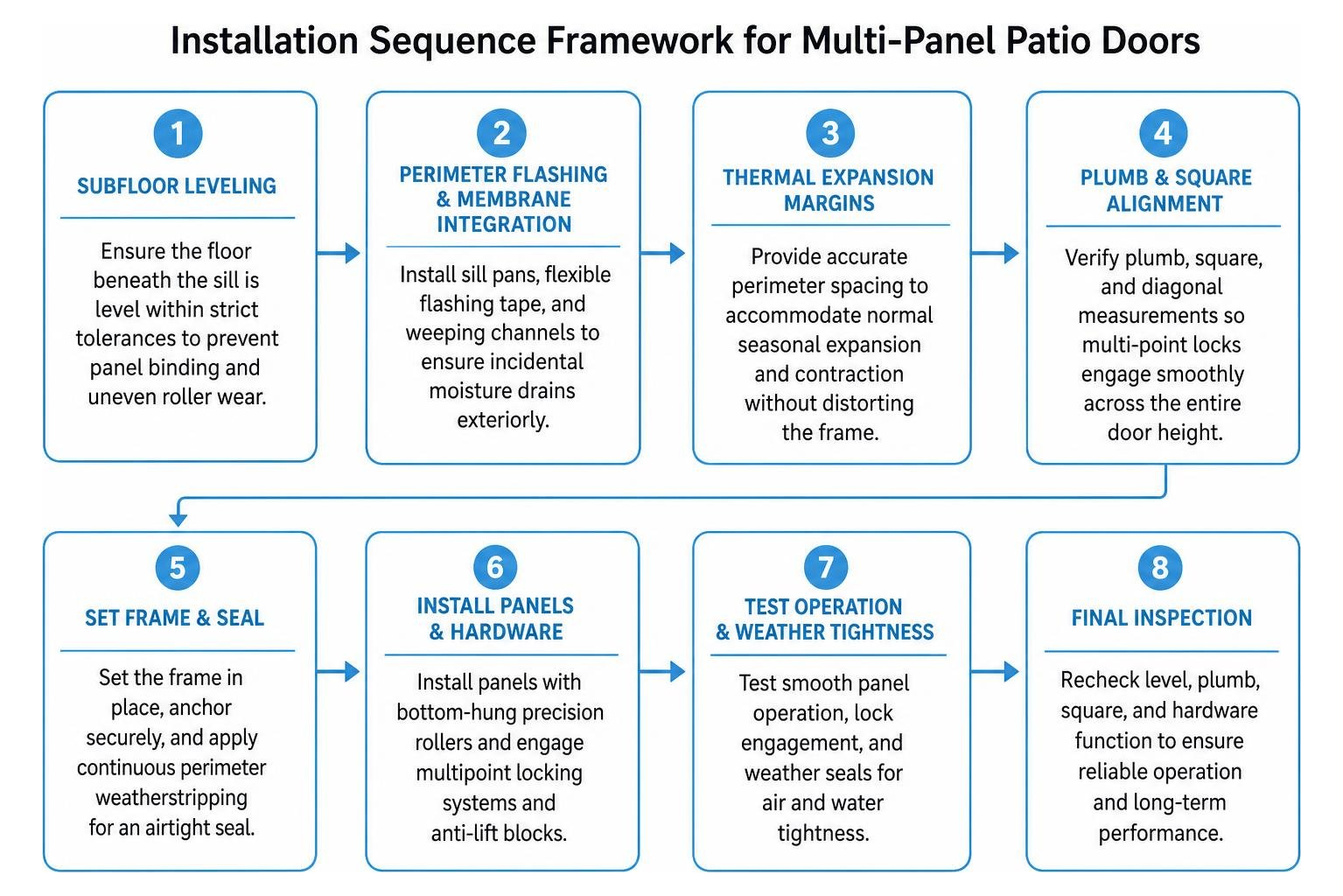
- Subfloor Leveling: The floor beneath the sill must be level within strict tolerances to prevent panel binding or uneven roller wear.
- Perimeter Flashing & Membrane Integration: Proper sill pans, flexible flashing tape, and weeping channels ensure any incidental moisture drains exteriorly.
- Thermal Expansion Margins: Accurate perimeter spacing accommodates normal seasonal expansion and contraction without distorting the frame.
- Plumb & Square Alignment: Verifying diagonal measurements ensures multi-point locks engage smoothly across the entire door height.
Long-Term Track and Seal Maintenance
Keep your sliding system operating smoothly with simple periodic care:
- Clear debris, sand, and dust from the bottom sill track using a vacuum and damp cloth.
- Inspect weep holes annually to confirm moisture drains freely.
- Lightly lubricate stainless steel roller assemblies with dry silicone spray (avoid heavy oil-based lubricants that attract dirt).
- Clean perimeter rubber weatherseals with mild soap and water to preserve seal flexibility.
Frequently Asked Questions About 4-Panel Patio Doors
How much wider is the opening with a 4-panel system compared to a 2-panel door?
A conventional 2-panel sliding door only opens to half of the total frame width because one panel is fixed. A 4-panel center-opening system allows both middle panels to slide back over the fixed end panels, creating a central walkthrough opening that is double the width of a standard single-slider opening.
What U-value should I look for in energy-efficient patio doors?
For optimal thermal comfort and energy efficiency, look for whole-door U-values between 1.0 and 1.3 W/m²K (or U-factors around 0.22 to 0.28). Units with argon-filled low-emissivity glass and insulated frame chambers easily achieve top-tier A+ energy ratings.
Can 4-panel sliding doors withstand high winds and severe weather?
Yes. Quality four-panel sliding doors engineered with heavy-duty structural frames, steel reinforcement, and tempered safety glass meet Class A3 (1200 Pa) and Class A4 (1600 Pa) wind-loading standards, keeping your home fully protected against severe storms.
Conclusion
A 4-panel sliding patio door provides exceptional natural lighting, smooth indoor-outdoor connectivity, and refined architectural appeal. By pairing thermally efficient glazing with robust multi-point security hardware and professional craftsmanship, you can elevate your home’s comfort and long-term value.
At Perfect Windows & Siding, our licensed and insured team brings over 20 years of exterior renovation experience to homeowners across Chicagoland, including Morton Grove, Park Ridge, and surrounding suburbs. We back our workmanship with lifetime warranty protection and customized installations tailored to your home.
Schedule your consultation or Get a free estimate with our exterior specialists today to explore the perfect sliding door solution for your home.