
The Best Sliding Glass Doors for Chicago-Area Homes
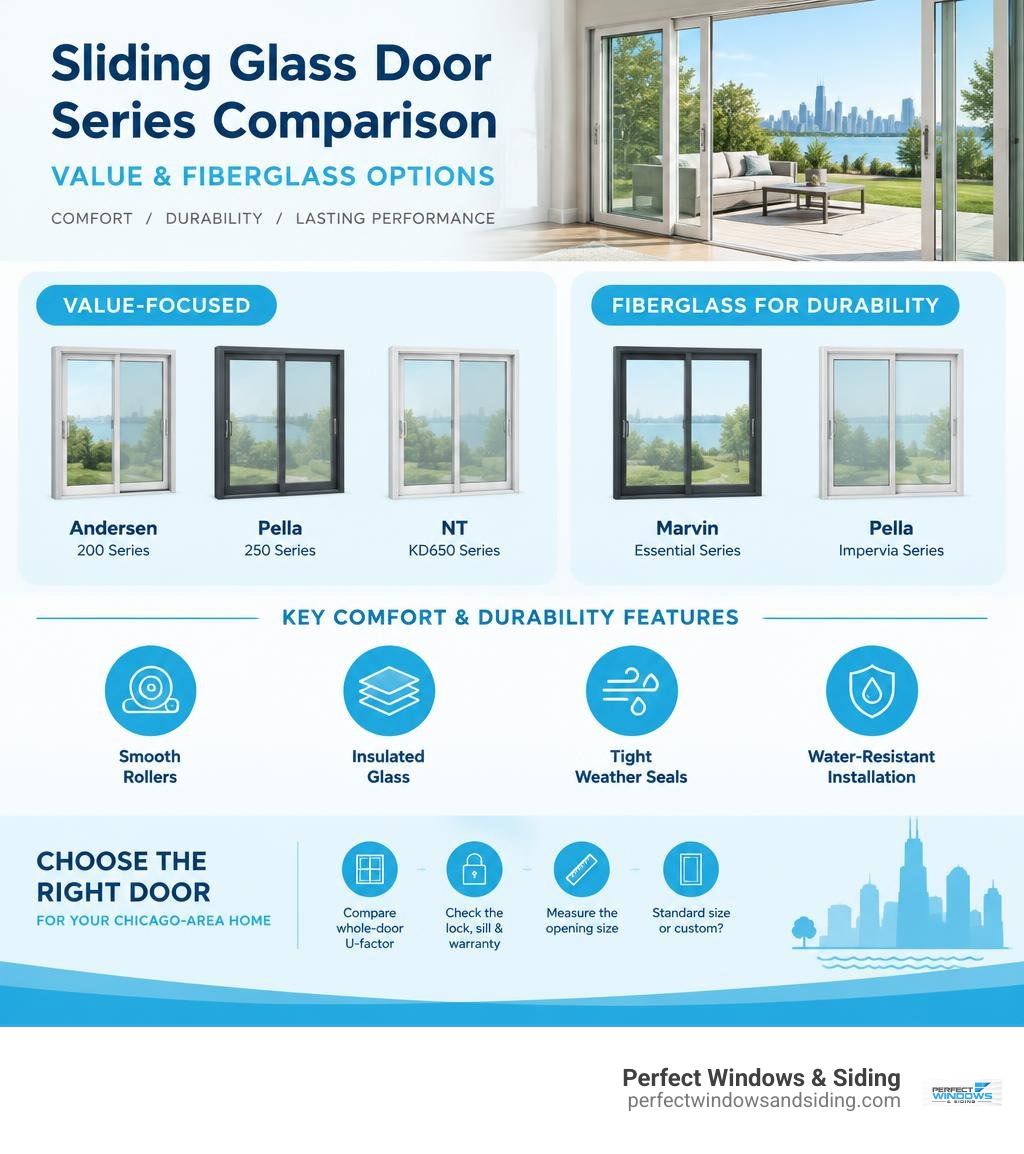
For a value-focused door, compare the Andersen 200, Pella 250, and NT KD650 series. If durability is your top priority, consider fiberglass options such as Marvin Essential and Pella Impervia. The best sliding glass doors also need smooth rollers, insulated glass, tight weather seals, and installation that keeps water out.
For Chicago-area homes, compare the whole-door U-factor for insulation, then check the lock, sill, and warranty. Measure the opening before choosing a series: a standard size may be easier to get than a custom door.
I’m Voytek Glab, owner of Perfect Windows & Siding, with more than 20 years of experience in window and door installation across Chicagoland. I’ll help you weigh the best sliding glass doors by comfort, durability, and fit.
Best sliding glass doors terms you need:
Door Series and Configurations: Comparing the Best Sliding Glass Doors
Choosing among the best sliding glass doors involves looking beyond surface aesthetics. The operational feel, weatherproofing integrity, and engineering tolerances determine whether a patio door glides effortlessly for decades or becomes a source of winter drafts. Across our two decades serving homeowners in Des Plaines, Park Ridge, and Morton Grove, we have evaluated how various product lines withstand intense seasonal shifts—from sub-zero winter winds off Lake Michigan to humid summer heatwaves.
When selecting a door series, structural rigidity and manufacturing standards are vital. Entry-level builder models often rely on lightweight framing that can flex over time, leading to air leaks and sticking rollers. In contrast, well-engineered units maintain squareness within the rough opening, protecting the perimeter weatherstripping and insulated glass seals.
Composite and Vinyl Patio Door Options
Composite and multi-chambered vinyl doors deliver exceptional insulation and moisture resistance without demanding frequent exterior maintenance. Modern engineering has elevated these materials significantly:
- Andersen 100 and 200 Series: The 100 Series utilizes Fibrex composite material, which provides twice the structural stability of basic vinyl and resists thermal expansion during extreme temperature swings. The 200 Series pairs low-maintenance vinyl exteriors with classic interior aesthetics.
- Pella 250 and Encompass Series: Pella 250 Series doors feature multi-chambered vinyl extrusions with internal reinforcement, significantly reducing heat transfer and eliminating the draftiness common in older sliding designs.
- NT Windows KD650 and Studio: Engineered for reliable weather protection, these vinyl units provide deep multi-point locking systems and welded corner seams that block driving rain.
These collections provide robust custom sizing options, ensuring a precise fit for older architectural openings throughout Chicago suburbs where non-standard rough openings are common.
Fiberglass and Clad-Wood Patio Door Options
For unmatched structural strength and refined sightlines, pultruded fiberglass and extruded aluminum clad-wood patio doors represent the gold standard in exterior engineering:
- Marvin Essential and Elevate: Marvin’s Ultrex pultruded fiberglass is up to eight times stronger than basic vinyl. It expands at virtually the same rate as the insulated glass unit itself, preventing seal failure and air infiltration under direct UV exposure. The Elevate series pairs this durable exterior with a warm, natural wood interior.
- Pella Impervia: Built from proprietary thermoset fiberglass composite, Impervia doors handle high wind loads and severe cold without warping, sagging, or fading.
- Andersen 400 Series and A-Series: These architectural-grade doors combine rich interior wood craftsmanship with exterior weather-resistant cladding, offering traditional French-style wide stiles alongside narrow contemporary gliding profiles.
Additional Performance Options
Upgrading your patio entryway with performance-tuned components enhances everyday usability. Homeowners frequently integrate between-the-glass blinds, which seal blinds hermetically between two panes of glass to protect them from dust, pets, and mechanical damage.
Low-profile sills provide an accessible, seamless transition between your indoor living space and outdoor patio, lowering the step-over threshold by up to 45% without compromising the sill pan drainage system. Exploring sliding door models recognized for reliability allows you to match specific mechanical features with your household’s daily lifestyle.
Premium Architectural Series: The Best Sliding Glass Doors for Luxury Homes
Large-format patio doors transform living rooms, dining spaces, and master suites into bright, open environments:
- Multi-Panel and Telescoping Sliders: These systems allow three, four, or more panels to slide effortlessly behind a fixed panel, creating an expanded opening for hosting and fresh-air ventilation. Explore custom 4-pane patio door installations to understand how wide spans are structurally configured.
- Hidden Pocket Glass Door Systems: By gliding panels directly into a concealed wall pocket, hidden pocket glass door systems make the physical boundary between indoors and outdoors vanish entirely.
- Marvin Signature Modern and Ultimate: Designed with ultra-narrow stiles and robust aluminum or wood cores, these systems support massive glass lites that provide unobstructed panoramic views while maintaining tight thermal performance.

Frame Materials Compared: Vinyl, Fiberglass, Wood, and Composites
Every door frame material presents distinct thermal, structural, and aesthetic advantages. Selecting the right composition depends on your home’s exterior exposure, architectural design, and insulation needs.
| Material | Structural Strength | Thermal Insulation | Maintenance Requirement | UV and Heat Expansion Resistance |
|---|---|---|---|---|
| Pultruded Fiberglass | Exceptional (8x stronger than vinyl) | Excellent | Minimal | Superior (low thermal movement) |
| Composite (Fibrex) | Very High (2x stronger than vinyl) | Excellent | Minimal | High (resists warping) |
| Clad-Wood | High (solid wood structural core) | Outstanding | Low exterior / moderate interior care | Excellent (extruded aluminum exterior) |
| Reinforced Vinyl | Moderate to High | Excellent | Minimal | Moderate (requires shade for dark colors) |
Vinyl and Composite Door Frames
Extruded vinyl and composite frames are engineered for moisture resistance and reliable thermal efficiency. Multi-chambered vinyl profiles trap dead air within the frame walls, acting as a natural thermal barrier that inhibits frost formation and interior condensation during freezing winter months.
Composites, such as wood-thermoplastic blends, offer enhanced dimensional stability. They resist softening under intense summer sun and do not contract during extreme cold snaps, ensuring the door sash glides smoothly within the frame track across all four seasons. Homeowners looking to upgrade can evaluate the top sliding doors for Chicago homes to select options that withstand our regional weather patterns.
Fiberglass and Clad-Wood Door Frames
Fiberglass frames represent the pinnacle of durability and thermal resilience. Because fiberglass is composed of continuous glass fibers saturated in thermoset resin, its rate of thermal expansion matches glass perfectly. This structural synchronization prevents the weatherstrip gapping and operational sticking that can occur in fluctuating climates.
Clad-wood systems deliver the classic beauty of interior architectural woodwork—such as oak, pine, or maple—shielded externally by heavy-gauge extruded aluminum. This exterior shell resists UV degradation, peeling paint, and hail impacts, eliminating exterior painting while preserving indoor warmth. Reviewing custom replacement door options helps you select wood species, finishes, and protective exterior claddings that enhance your home’s architectural character.
Performance and Design: Sliding Doors vs. French Doors and Efficiency Upgrades
The choice between a sliding glass patio door and a hinged French door often centers on spatial layout, natural light, and energy efficiency. French patio doors feature classic swinging operation, but their door swing demands up to 30 square feet of clear floor space inside or out to avoid colliding with furniture, curtains, or patio seating.
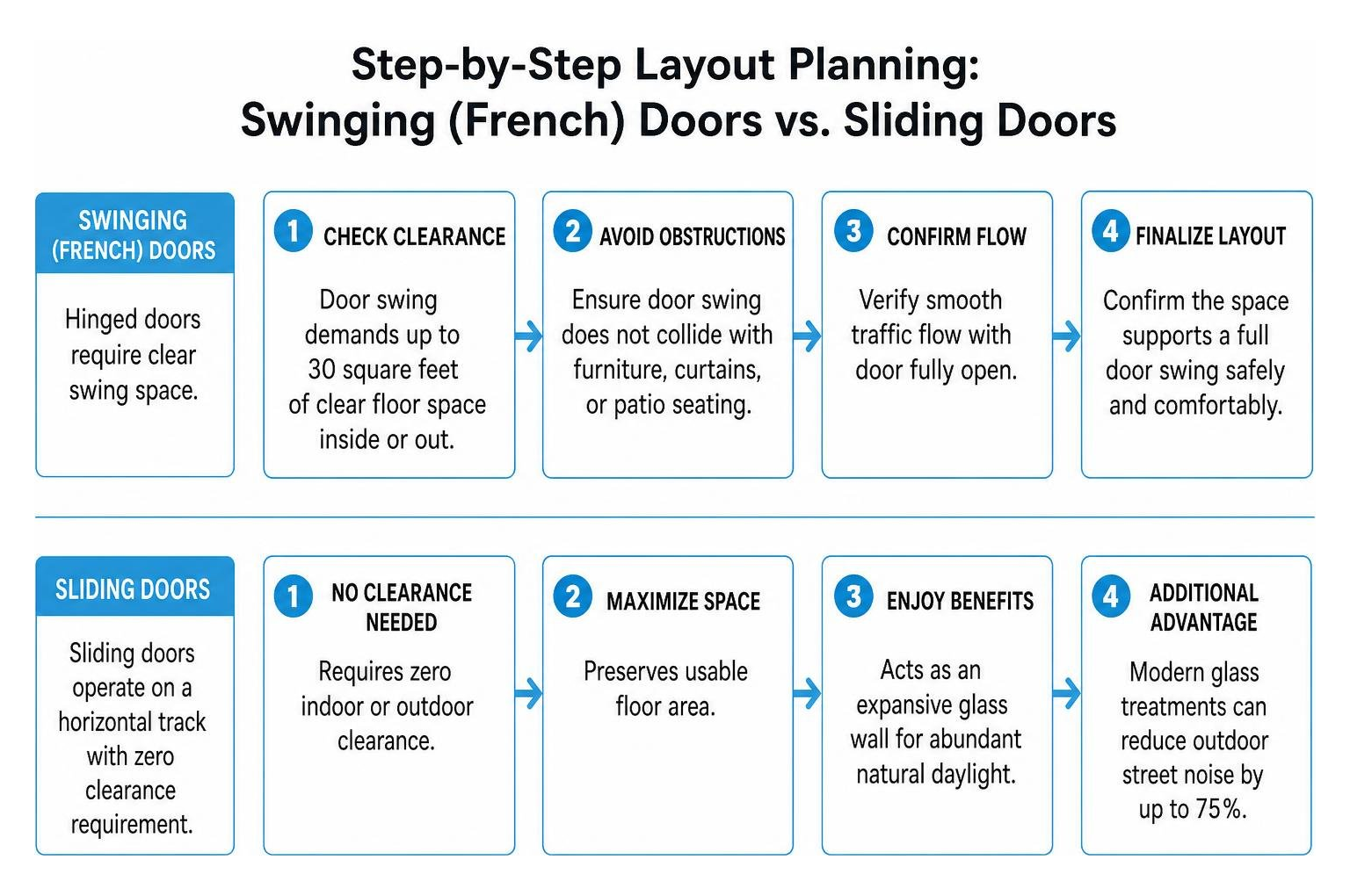
Sliding glass doors operate along a horizontal track, requiring zero indoor or outdoor clearance. This design maximizes usable floor area while functioning as an expansive glass wall that invites abundant natural daylight into your living spaces. Modern glass treatments can also create a soundproof barrier, reducing outdoor street noise by up to 75% for a quieter indoor environment. Detailed structural comparisons are outlined in guides evaluating French Doors vs. Sliding Glass Doors.
Energy-Efficient Glass Packages: Choosing the Best Sliding Glass Doors for Cold Climates
Because glass makes up over 80% of a sliding patio door’s surface area, advanced glazing is crucial for maintaining year-round indoor comfort. High-performance glass packages employ several layers of thermal engineering:
- Multi-Pane Construction: Double-pane and triple-pane insulated glass units (IGUs) create sealed insulating air spaces between panes.
- Low-E Coatings: Microscopically thin metallic coatings reflect interior radiant heat back into your home during winter while reflecting solar heat away during summer.
- Inert Gas Fills: Argon or krypton gas fills placed between the glass panes offer higher density than air, reducing convective heat transfer.
- Warm-Edge Spacers: Non-conductive structural spacers around the glass perimeter prevent edge condensation and frost buildup.
Investing in high-efficiency double pane glass replacement keeps interior glass surfaces warm to the touch, preventing drafts and maintaining consistent indoor temperatures. Selecting advanced glazed sliders for heating efficiency provides sustained protection against high heating demands throughout our northern winters.
Sizing, Security, and Weather Resistance
Home security and weather defense are essential considerations when selecting an exterior door. Modern sliding glass doors incorporate multi-point locking systems that secure the moving panel at multiple points along the jamb with a single turn of the handle. Additional security options include integrated keyed footbolts and laminated impact-resistant security glass.
Proper installation is just as critical as manufacturing quality. Even top-tier doors will leak if the rough opening lacks adequate sill flashing, a sloped subfloor pan, and high-grade silicone sealants. Following patio door replacement best practices ensures that your subfloor is fully inspected for hidden water damage before the new door is leveled and sealed.
Frequently Asked Questions About Sliding Patio Doors
How do sliding glass doors compare to French patio doors for space and functionality?
Sliding glass doors operate entirely within their own track frame, making them ideal for rooms where interior furniture or outdoor patio features prevent a door from swinging open. They also provide wider views and let in more daylight because of their slimmer frame profiles. French doors offer a wide operable opening when both panels swing outward, but they require substantial clearance that can restrict room layouts.
What should homeowners do to avoid common track and leak problems?
Track sticking and perimeter water leaks typically stem from two root causes: dirty roller tracks or improper subfloor preparation. To maintain smooth gliding, periodically vacuum debris from the bottom track and wipe down the stainless steel track rails.
To prevent leaks, ensure your door is installed by experienced professionals who use a pre-sloped sill pan, comprehensive exterior flashing tape, and premium silicone sealant. Correct leveling ensures that water drains outward away from your subfloor.
How can I ensure short lead times without sacrificing door quality?
Custom architectural patio doors can require 6 to 16 weeks for custom fabrication. To minimize delays, select standard call sizes—such as 60×80 inches (5-foot) or 72×80 inches (6-foot)—which are often prioritized in manufacturing schedules.
Working with established local contractors who partner directly with authorized distributors streamlines the supply chain, ensuring you receive a high-performance door without settling for inferior, uninsulated stock alternatives.
Conclusion

Investing in a high-performance sliding patio door elevates your home’s architectural elegance, flood your interiors with natural light, and delivers dependable thermal comfort through every season. Whether you select durable pultruded fiberglass, composite framing, or rich clad-wood, quality engineering and precision installation safeguard your home against drafts, moisture infiltration, and premature wear.
With over 20 years of dedicated home improvement experience across Des Plaines, Park Ridge, Morton Grove, and the greater Chicago area, our licensed and insured team at Perfect Windows & Siding provides customized exterior door solutions backed by a lifetime warranty. Visit our team for expert sliding glass door installation in Chicago and let us help you find the ideal patio door for your home.
Schedule your consultation today, or get a free estimate to start your exterior renovation project.