

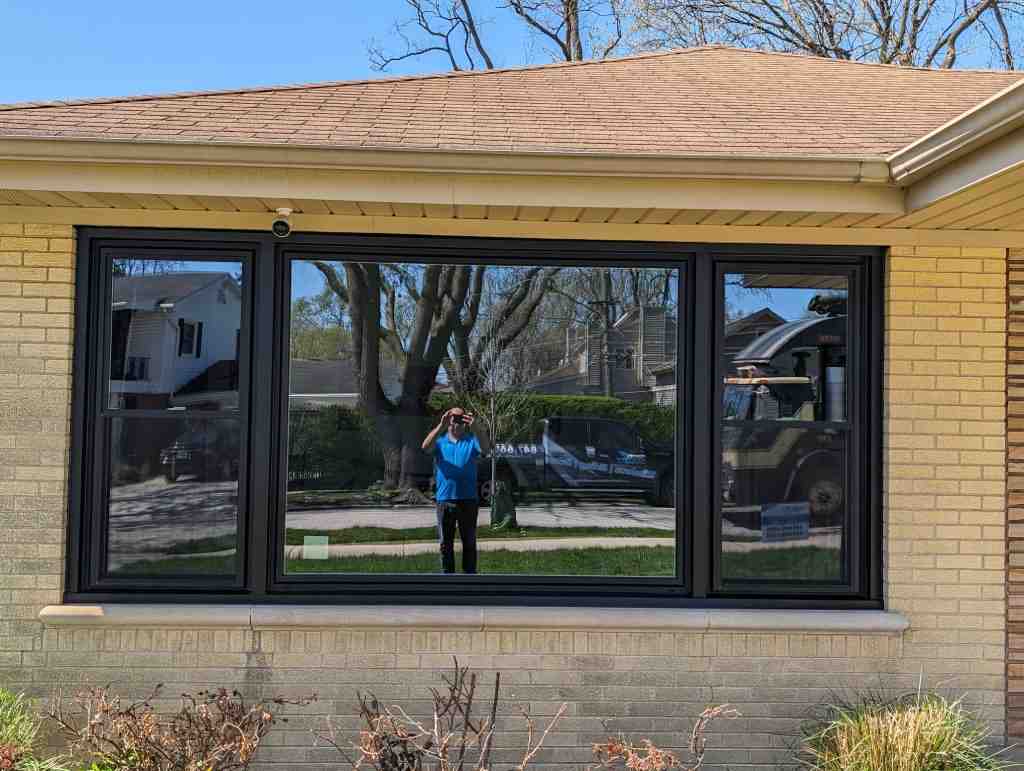
Choose the Right Residential Window Solution for Your Home
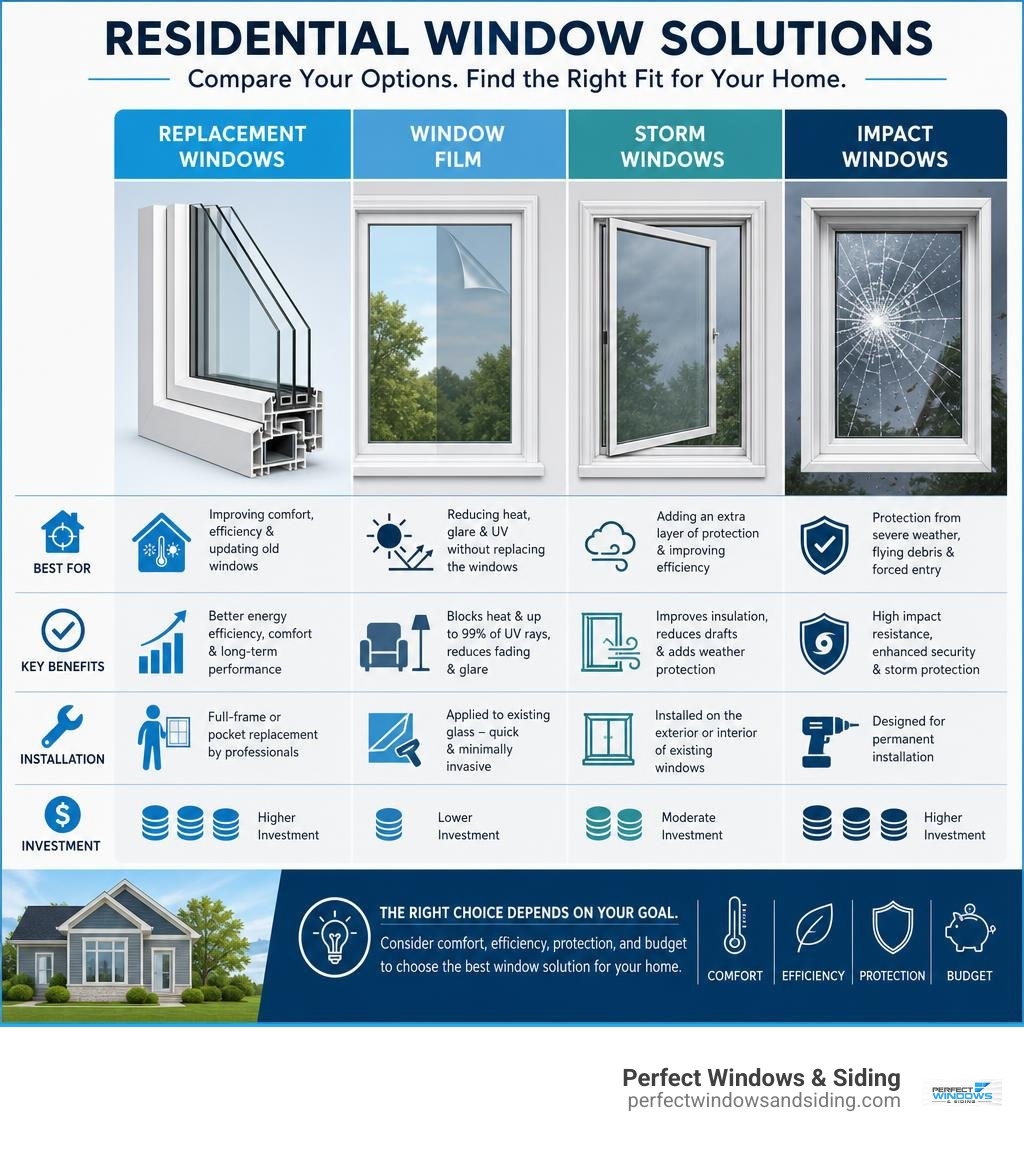
Residential window solutions range from full-frame and pocket replacement windows to storm windows, impact-resistant glass, and window film. The right choice depends on what is failing now: drafts and frame damage often call for replacement, while excess sun, glare, and fading may be improved with window film or interior treatments.
Start by matching the solution to your main goal:
- Improve comfort and efficiency: Look for well-installed double- or triple-pane windows with low-E glass, a low U-factor, and an Energy Star label suited to Chicago’s climate.
- Preserve sound frames: Pocket replacement windows fit inside an existing frame and can limit disruption.
- Repair hidden damage or update the opening: Full-frame replacement removes the old frame, allowing installers to address rot, leaks, and insulation gaps.
- Reduce summer heat, UV exposure, or glare: Window film can reject significant solar heat and block up to 99% of UV rays without replacing the glass.
- Add protection: Storm or impact-rated windows may be appropriate where severe weather, security, or flying debris is a concern.
Window performance is not only about the product. Precise measurement, correct flashing, air sealing, and experienced installation help prevent drafts, water intrusion, and early wear.
I am Voytek Glab, owner of Perfect Windows & Siding, and I have spent more than 20 years installing Residential window solutions for homeowners across Chicagoland. My carpentry background helps me evaluate the full opening, not just the visible window, so the next sections will help you compare options with confidence.
Simple guide to Residential window solutions terms:
Comprehensive Residential Window Solutions: Full-Frame, Pocket, and Specialized Upgrades

Every home presents its own architectural character and thermal challenges. Whether you live in a classic brick bungalow in Chicago, a historic property in Park Ridge, or a contemporary home in Schaumburg, choosing the correct method of installation and glass technology ensures lasting performance, year-round comfort, and superior weather protection.
Full-Frame vs. Pocket Window Replacement Options
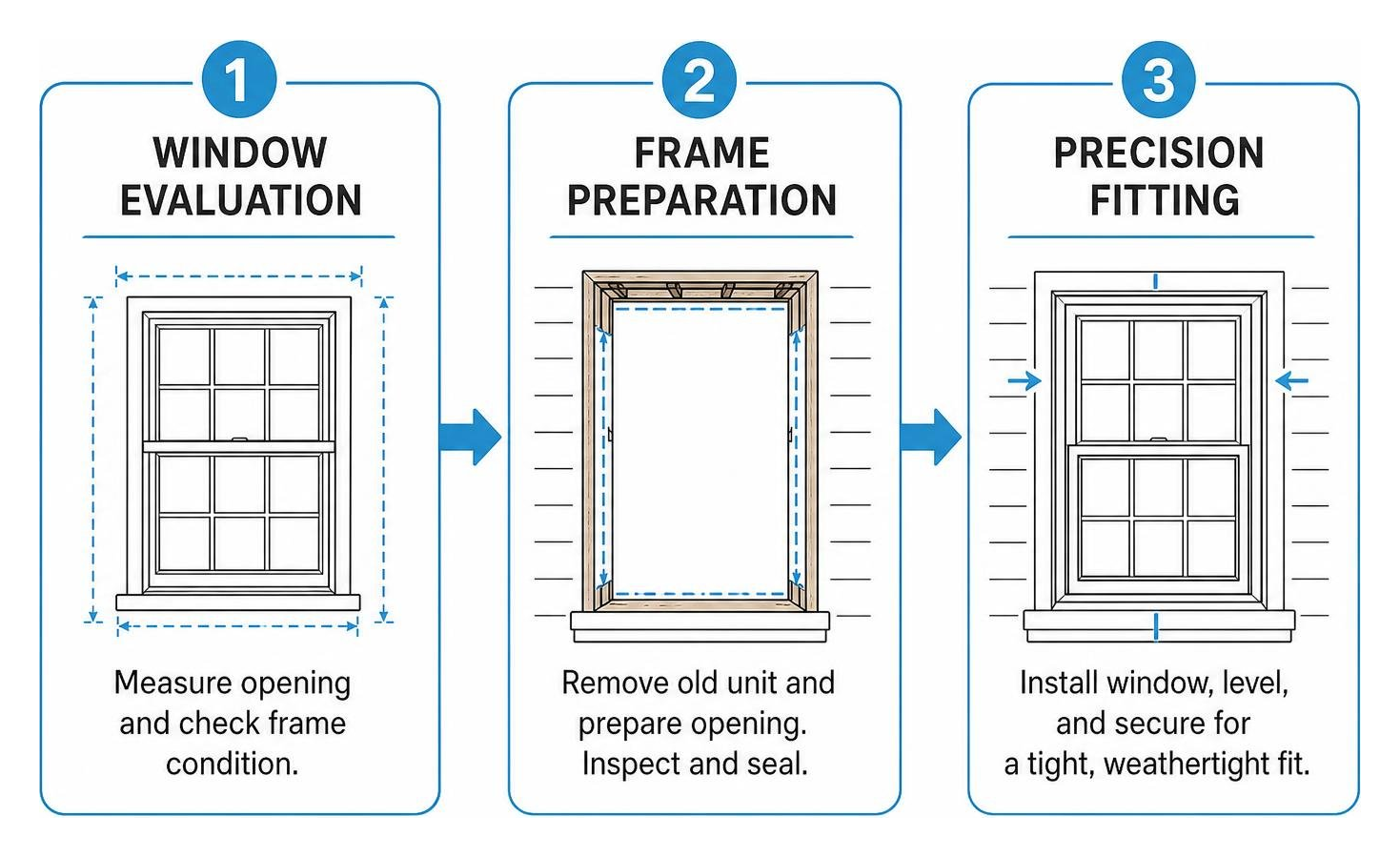
When upgrading your home’s exterior envelope, the two primary installation pathways are full-frame replacement and pocket (insert) replacement.
- Pocket Replacement: If your existing window frames, exterior casing, and interior trim are structurally sound, square, and free of moisture damage, pocket units slide directly into the existing opening. This minimizes disruption to interior plaster or drywall and preserves original architectural moldings.
- Full-Frame Replacement: When frames exhibit rot, structural sagging, or persistent air leakage around the perimeter, a full tear-out down to the rough opening is required. This method allows our craftsmen to insulate the hidden shim spaces, install fresh flashing tape, replace damaged sills, and guarantee a completely weather-sealed envelope.
For homes suffering from severe solar heat gain, pairing your installation with high-performance glass provides vital UV defense, protecting interior hardwood flooring and fine furnishings from premature fading while maintaining bright daylight transmission. Selecting an Energy Efficient Window Replacement ensures that every layer of the assembly—from the rough opening insulation to the multi-pane glass unit—functions seamlessly to stabilize indoor temperatures.
Sound Reduction and Impact-Resistant Upgrades
Living near active transit corridors, vibrant downtown centers, or busy suburban parkways requires robust acoustic control. Specialized Noise Cancelling Windows utilize dissimilar glass thicknesses, laminated sound-dampening interlayers, and wider airspace gaps to disrupt sound waves, creating a peaceful indoor sanctuary.
For properties exposed to severe storms, high wind loads, or flying debris, impact-resistant window assemblies combine reinforced structural frames with heavy-duty laminated glass. This technology prevents envelope penetration during extreme weather events, strengthens home security against forced entry, and provides lasting peace of mind.
Evaluating Window Frame Materials and Glazing Technologies
Selecting the right frame material determines your home’s long-term maintenance requirements, thermal barrier performance, and architectural appeal.
| Frame Material | Thermal Efficiency | Maintenance Level | Durability & Strength | Aesthetic Versatility |
|---|---|---|---|---|
| Premium Vinyl | Exceptional (multi-chamber insulated) | Minimal (wipe clean, never paint) | High (moisture & rot immune) | Modern profiles, rich color palettes |
| Natural Wood | High (natural organic insulator) | Moderate to High (requires sealing/staining) | Excellent when maintained | Timeless architectural warmth |
| Fiberglass / Composite | Superior (minimal thermal expansion) | Minimal (factory-baked finishes) | Maximum rigidity & impact strength | Slim sightlines, paintable surfaces |
Comparing Vinyl, Wood, and Composite Frames
Each frame material brings distinct physical characteristics to residential openings:
- Vinyl Windows: Modern vinyl profiles utilize multi-chambered extrusion designs with optional foam insulation cores. A professional vinyl window installation delivers outstanding resistance to seasonal temperature swings without warping, peeling, or requiring repainting.
- Natural Wood Frames: For historic homes and homeowners who value organic texture, solid wood windows offer unrivaled traditional beauty and natural insulating properties. Exploring tailored Wood Window Replacement Options to Elevate Your Homes Value allows you to match existing architectural millwork, stain finishes, and authentic divided-lite patterns.
- Composite and Fiberglass: Engineered for maximum structural strength, composite materials exhibit virtually zero expansion and contraction during severe Midwest freeze-thaw cycles. This rigidity supports expansive glass areas and ultra-slim frame profiles.
Understanding Energy Performance: U-Factor, SHGC, and Glazing Levels
To evaluate how a window assembly performs against the elements, check the National Fenestration Rating Council (NFRC) label:
- U-Factor: Measures the rate of non-solar heat flow through the window assembly. The lower the U-factor, the better the window retains interior heat during bitter winter months.
- Solar Heat Gain Coefficient (SHGC): Measures how much solar radiation enters through the glass. In cold northern climates, a moderate SHGC allows beneficial passive solar warmth during winter, while specialized low-E coatings block unwanted radiant heat during hot summers.
- Inert Gas Fills: Argon or krypton gas fills placed between insulated glass panes slow thermal convection far better than plain air.
Upgrading to advanced Triple Pane Windows with multiple low-E metallic coatings creates an impenetrable thermal barrier against extreme Midwest drafts. Investing in modern Energy Efficient Windows certified under the most stringent Energy Star standards ensures your living spaces remain comfortable regardless of exterior weather conditions.
Long-Term Value and Project Planning

A successful window project requires thorough planning, expert diagnostic measurements, and flawless craftsmanship. The long-term return on your investment comes through enhanced indoor comfort, reduced load on HVAC systems, increased curb appeal, and elevated resale value.
Maximizing Efficiency and ROI for Residential Window Solutions
Replacing aging, single-pane units with certified multi-pane technology delivers immediate comfort upgrades and measurable utility reductions. Studies demonstrate that replacing drafty windows with Energy Star certified models saves homeowners an average of 13 percent on annual home heating and cooling demands. In northern climates, replacing ten single-pane assemblies can reduce annual heating and cooling expenditures by roughly 12 percent, keeping homes significantly warmer in winter and cooler in summer.
Furthermore, high-efficiency vinyl and wood window replacements consistently recoup substantial value in home equity, boosting overall structural integrity and curb appeal. To understand the full scope of structural options and replacement requirements for your home, review our detailed guide on window replacement project planning.
Safety, Building Codes, and Warranties for Residential Window Solutions
Window installation is a precision craft governed by rigorous safety regulations and municipal building standards:
- EPA Lead-Safe Compliance: Homes constructed prior to 1978 require specialized containment, HEPA filtration, and certified disposal methods to prevent lead dust contamination during frame removal.
- Egress Requirements: Finished basements and sleeping quarters must adhere to local emergency egress size codes to ensure safe escape routes.
- Permits and Local Codes: Navigating municipal building permits across Des Plaines, Morton Grove, Glenview, and neighboring communities ensures code compliance.
- Comprehensive Warranties: Look for robust lifetime warranty coverage that covers both material integrity (glass seals, hardware, frame finish) and professional labor.
Before partnering with an installation team, review these essential 10 Questions to Ask Your Window Contractor to verify licensing, insurance, and installation master certifications.
Frequently Asked Questions About Residential Windows
How much can Energy Star certified windows save on heating and cooling bills?
Installing Energy Star certified windows saves homeowners an average of 13 percent on their annual utility heating and cooling bills. In the EPA Northern Climate Zone, replacing ten inefficient single-pane windows can save an average of 12 percent in annual thermal conditioning energy, while replacing older double-pane units still yields around a 6 percent annual energy reduction.
What is the primary difference between pocket windows and full-frame replacement?
Pocket window replacement preserves the existing window frame, interior trim, and exterior brick mold, sliding a new self-contained unit into the existing opening. Full-frame replacement involves removing the entire assembly down to the rough structural studs, allowing contractors to repair concealed frame rot, add high-performance insulation, and apply fresh perimeter weather barriers.
How do Low-E glass coatings improve energy efficiency compared to standard glass?
Low-emissivity (low-E) coatings consist of microscopically thin, non-toxic metallic oxide layers applied to glass surfaces. These coatings reflect invisible infrared thermal energy—keeping furnace heat inside during winter and reflecting solar heat away in summer—while simultaneously filtering up to 99 percent of harmful UV rays to reduce interior fading and glare without compromising natural daylight.
Conclusion
Upgrading your home with advanced residential window systems transforms your living environment, eliminating frustrating drafts, enhancing acoustic tranquility, and strengthening curb appeal. At Perfect Windows & Siding, our licensed and insured craftsmen bring over 20 years of dedicated exterior remodeling experience to every home across Chicago and the surrounding suburbs. We take pride in delivering custom-tailored installations backed by our comprehensive lifetime warranty coverage.
Ready to elevate your home’s comfort, architectural beauty, and thermal efficiency? Contact our team today to Schedule your consultation or Get a free estimate with our local specialists.