


Why Understanding Your Window Options Matters for Your Home
Triple pane windows are advanced window systems featuring three layers of glass with two insulating gas-filled chambers between them, offering significantly better energy efficiency, noise reduction, and comfort compared to traditional double-pane windows. Here’s what you need to know:
- Energy Efficiency: Up to 40% more efficient than standard double-pane windows, with U-Factors as low as 0.20
- Cost: Typically 10-15% more expensive than double-pane windows upfront
- Energy Savings: Field studies show daily HVAC savings of 3-18% in heating season and 23-41% in cooling season
- Noise Reduction: Reduces sound infiltration by 8-10 decibels compared to double-pane windows
- Best For: Cold climates like Chicago, homes near busy streets, and high-performance energy-efficient homes
Have you noticed your windows sweating on cold winter mornings? Or maybe you’re tired of hearing every car that drives past your home? If you’re like most Chicago homeowners, you’ve probably wondered whether upgrading your windows is really worth the investment—and which type makes the most sense for your specific situation.
The window industry has come a long way since the basic single-pane windows of decades past. Today’s homeowners face a choice between double-pane and triple-pane technology, each with distinct advantages. While double-pane windows became the industry standard after the 1970s energy crisis, triple-pane windows represent the next evolution in home comfort and efficiency.
Understanding the real differences between these options matters because windows are often the weakest link in your home’s energy efficiency. They impact not just your heating and cooling bills, but also your daily comfort, your home’s quietness, and even its long-term value. For Chicago homeowners dealing with harsh winters and humid summers, making the right choice can mean the difference between a comfortable, energy-efficient home and one that constantly battles the elements.
This guide will walk you through everything you need to know about single, double, and triple-pane windows—from how they’re constructed to how they perform in real-world conditions. We’ll break down the costs, benefits, and practical considerations to help you make an informed decision for your home.
I’m Voytek Glab, owner of Perfect Windows & Siding, and over the past 20 years I’ve helped hundreds of Chicagoland homeowners steer the window replacement process. I’ve seen how triple pane windows transform homes in our harsh climate, delivering measurable improvements in comfort, energy bills, and peace of mind. Let me share what I’ve learned so you can make the best choice for your home.
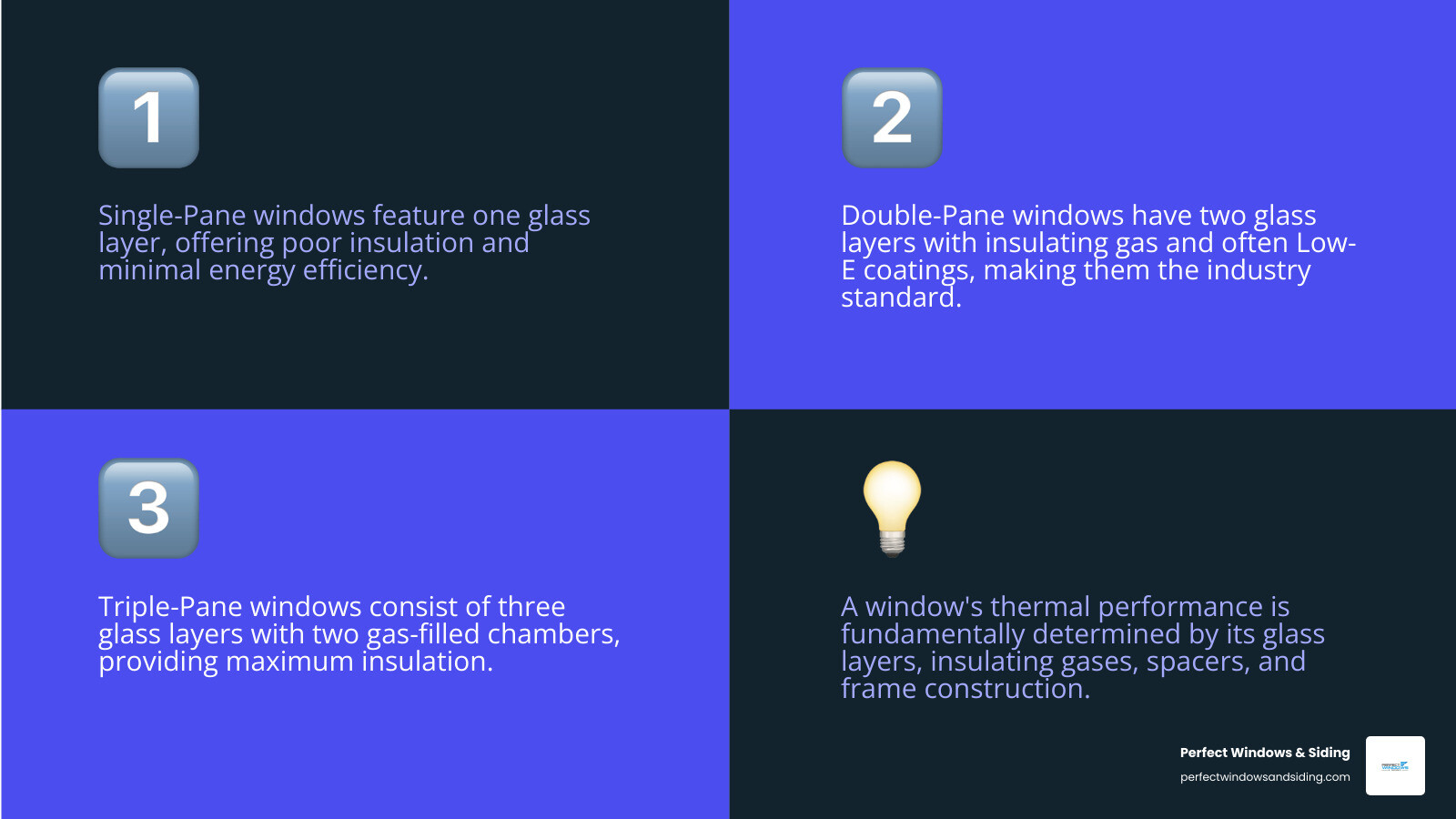
Deconstructing the Panes: Single vs. Double vs. Triple
At its core, a window’s thermal performance hinges on its construction—specifically, the number of glass layers, the spaces between them, and the materials used. Think of it like layers of clothing for your home; the more layers, the better the insulation.
Modern windows are complex systems involving multiple components: the glass panes themselves, the spacers that separate them, the insulating gases filling the gaps, and the frame that holds it all together. Each element plays a crucial role in the window’s overall energy efficiency and durability. The thermal insulation of a window system is calculated for the entire unit, including glazing, spacers, and frames, not just the glass.
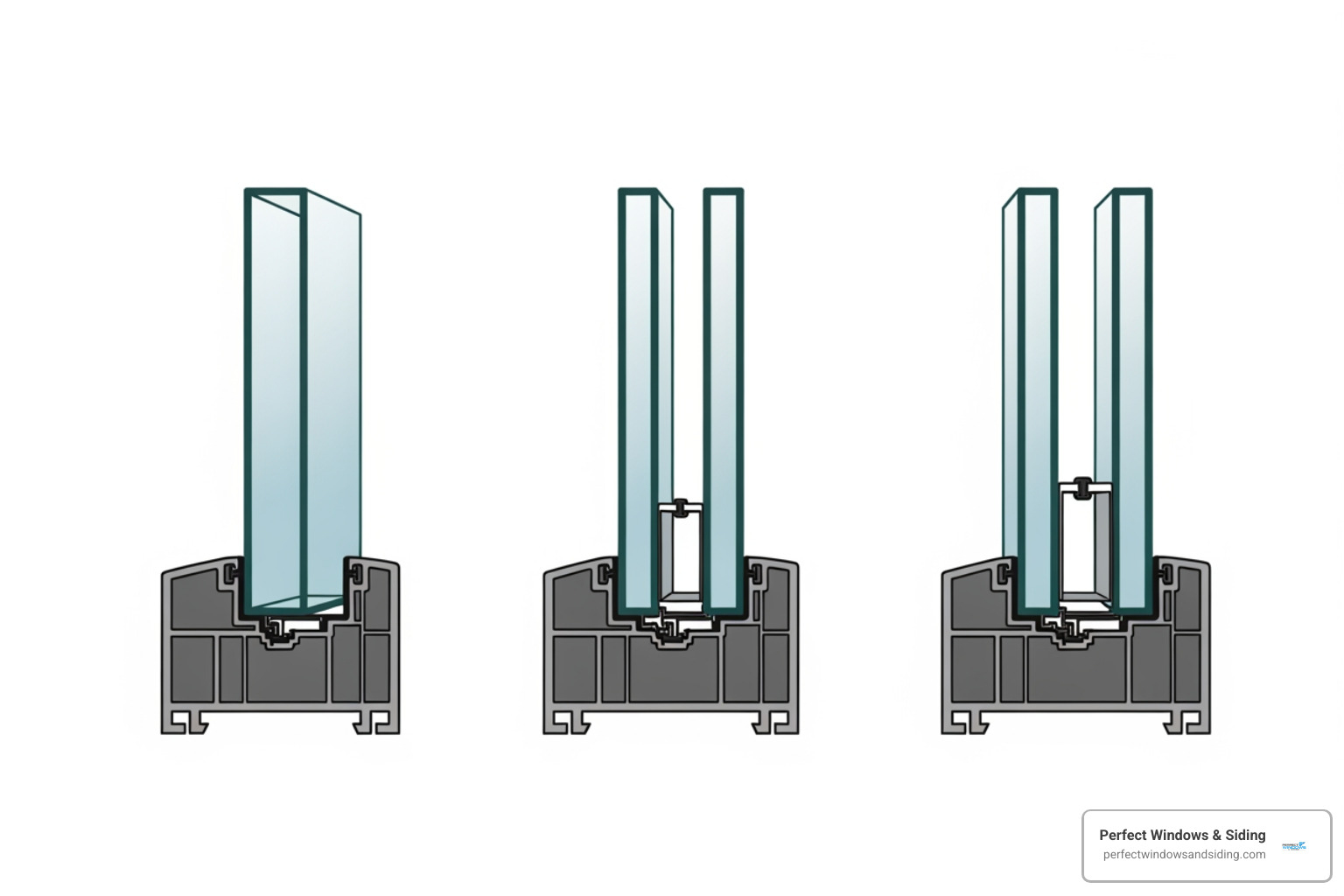
Single-Pane Windows
Imagine a chilly Chicago winter day, and the only thing separating your warm living room from the frosty outside is a single, thin sheet of glass. That’s a single-pane window. These windows feature just one layer of glass, offering minimal insulation. They were common in homes built before the 1970s, but their poor energy performance became glaringly obvious during the oil embargo when the federal government pushed for drastic reductions in U.S. energy consumption. This effort highlighted the inefficiencies in buildings and launched a movement towards better insulated windows.
Single-pane windows are notorious for allowing significant heat transfer, meaning heat escapes rapidly in winter and infiltrates easily in summer. This leads to uncomfortable drafts, cold spots near windows, and high energy bills. They also offer virtually no soundproofing and are prone to condensation, which can lead to moisture damage and mold growth.
Double-Pane Windows
Following the energy crisis of the 1970s, double-pane windows emerged as a significant improvement and quickly became the industry standard. These windows feature two layers of glass, separated by a sealed air space. This air space acts as an insulating barrier, slowing down heat transfer much more effectively than a single pane.
To further improve their performance, this gap is often filled with an invisible, inert gas like argon. Argon is denser than air, providing superior insulation by reducing convection and conduction between the glass panes. Many double-pane windows also incorporate Low-E (low-emissivity) coatings, which are microscopically thin, transparent layers applied to the glass that reflect radiant heat. This helps keep heat inside during winter and outside during summer, boosting energy efficiency year-round.
Double-pane windows offer a good balance of energy efficiency, comfort, and cost-effectiveness for many homeowners. They reduce energy bills, improve comfort by minimizing drafts, and offer some level of noise reduction. For homeowners looking to upgrade from single-pane windows, double-pane options like our Double Hung Windows represent a substantial leap in performance.
Triple-Pane Windows
Now, let’s add another layer of defense against the elements: triple pane windows. These advanced windows take insulation a step further by incorporating three layers of glass, creating two distinct insulating chambers. Each of these chambers is typically filled with insulating gases like argon or, for even greater performance, krypton. Krypton is more expensive but offers superior insulation in thinner gaps.
This additional layer of glass and gas provides maximum insulation, drastically reducing heat transfer. Triple pane windows are designed for superior thermal performance, noise reduction, and increased durability. The multiple layers and gas fills create an incredibly effective barrier against temperature fluctuations and external noise.
Beyond the glass, the spacers separating the panes and the frame material are also critical. Advanced spacers minimize heat transfer at the edges of the glass unit, while robust frames (often PVC or wood with multiple chambers) ensure the entire window system performs optimally. Even high-quality options like our Picture Windows can be improved with triple-pane glass for ultimate performance.
The Performance Powerhouse: Key Benefits of Triple Pane Windows
Upgrading to triple pane windows isn’t just about getting new glass; it’s about investing in a comprehensive solution that transforms your home’s environment. From slashing energy bills to creating a tranquil sanctuary, the benefits extend far beyond what you might expect. This is why we often recommend them for Energy Efficient Window Replacement projects in Chicagoland.
Best Energy Efficiency and Thermal Performance
This is where triple pane windows truly shine. The additional pane of glass and extra gas-filled chamber dramatically improve a window’s insulating capabilities. Studies have shown that triple pane windows can increase a home’s window energy performance by 40 percent compared to standard double-pane, Low-E windows.
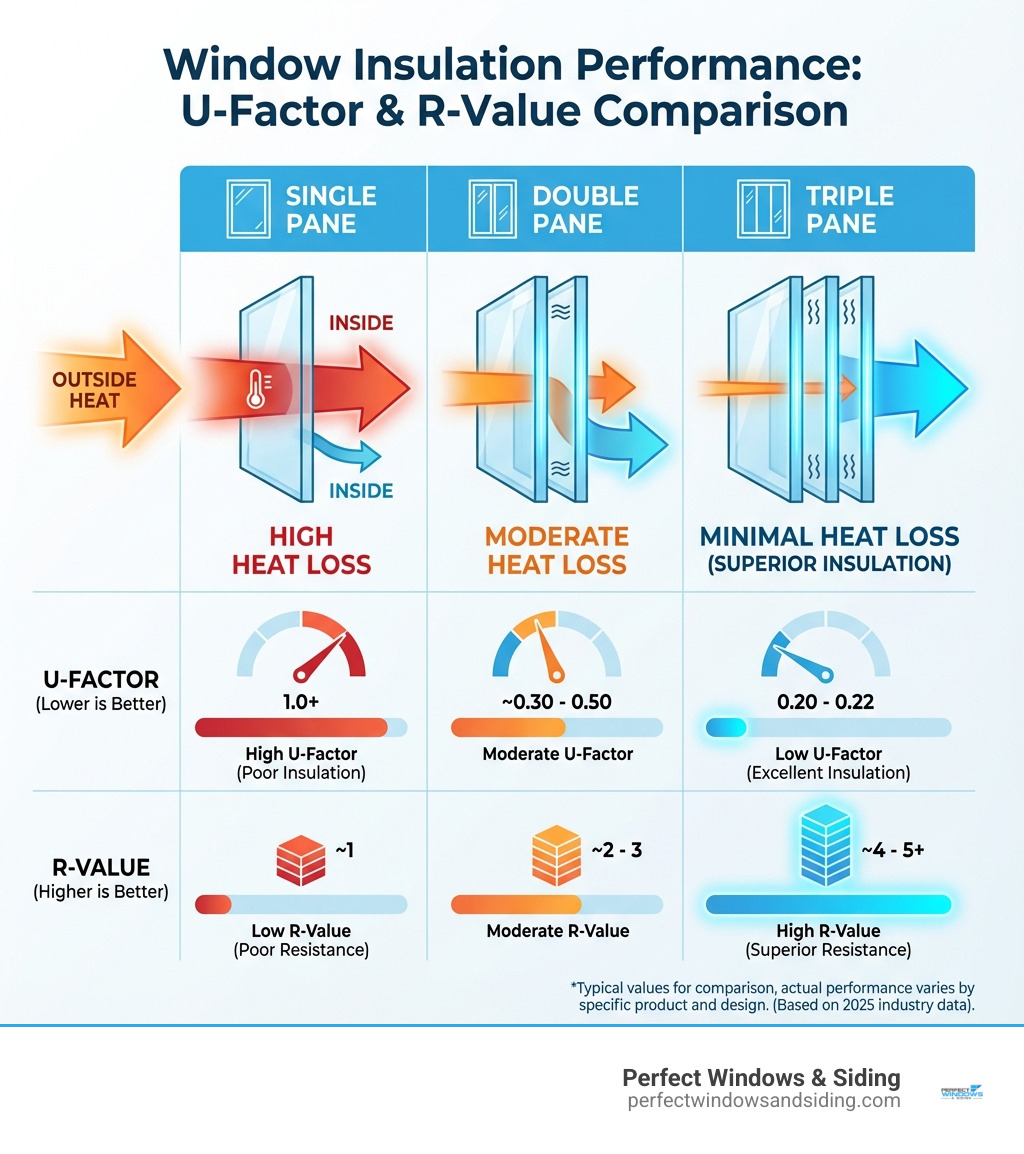
To understand this better, we look at two key metrics:
- U-Factor: This measures how well a window prevents heat from escaping. A lower U-Factor indicates better insulation and less heat loss. For instance, while double-pane windows might have a U-factor of 1.2-1.4, triple pane windows often achieve a heat transfer coefficient of less than 1, with some modern designs reaching U-Factors as low as 0.20-0.22. It’s important to look at the “whole unit” U-Factor, which accounts for the entire window assembly (glass, frame, spacers), rather than just the “center of glass” U-Factor.
- R-Value: This measures a material’s resistance to heat flow. A higher R-Value means better insulation. It’s essentially the inverse of the U-Factor.
What does this mean for your home? Significant energy savings. The Pacific Northwest National Laboratory (PNNL) conducted studies demonstrating impressive HVAC savings with triple pane windows. Daily HVAC savings ranged from 0.2 to 18.7 kWh (3%–18%) during the heating season and from 2.5 to 8.0 kWh (23%–41%) during the cooling season. For Chicago homeowners, this translates directly into noticeably lower utility bills, especially during our extreme summers and winters. Upgrading to ENERGY STAR certified windows not only lowers energy bills but also reduces your home’s carbon footprint, contributing to a more sustainable future.
Superior Indoor Comfort and Condensation Resistance
There’s nothing quite like the feeling of a draft creeping in from a window on a cold day, or seeing condensation drip down the glass. Triple pane windows virtually eliminate these common discomforts. Their superior insulation means the interior surface of the glass stays much closer to your indoor air temperature. This reduces:
- Cold Spots and Drafts: You’ll no longer feel a noticeable temperature drop when standing near your windows. The heat stays where it belongs – inside your home.
- Consistent Room Temperature: Heat is distributed more evenly throughout your home, eliminating the uncomfortable temperature variations that can occur with less efficient windows.
- Condensation Potential: By keeping the interior glass surface warmer, triple pane windows significantly reduce the likelihood of condensation forming, even in high-humidity areas like bathrooms and kitchens. This is a crucial benefit, as persistent condensation can lead to mold growth and damage to window sills and frames. PNNL Lab Homes experiments validated that triple pane windows reduced condensation potential on the interior surface during winter months.
These factors combine to create a more comfortable and healthier indoor environment for your family.
A Quieter, More Peaceful Home
Do you live near a busy street, a busy park, or perhaps under a flight path in Chicagoland? External noise pollution can severely impact your quality of life at home. Triple pane windows offer exceptional noise reduction capabilities.
The three panes of glass, separated by two gas-filled chambers, create a highly effective barrier against sound waves. The different thicknesses of the glass and the air/gas gaps disrupt sound wave patterns, dampening outside noises more effectively than double-pane windows. Studies have shown that triple pane windows can reduce sound infiltration by 8 dB to 10 dB over baseline double-pane windows. To put that in perspective, a 10 dB reduction can halve the perception of external noise!
To measure this performance, we look at:
- Sound Transmission Class (STC): This measures how well sound travels inside a building, useful for evaluating internal noise.
- Outdoor-to-Indoor Transmission Class (OITC): This measures outdoor-to-indoor sounds, providing a more relevant metric for external noise reduction.
For homeowners in noisy urban environments across Chicago, from busy downtown to suburban thoroughfares, triple pane windows can transform your home into a quieter, more peaceful sanctuary. You can learn more about these ratings and window performance documents here.
Improved Durability and Security
While their primary benefit is energy efficiency, triple pane windows also offer improved durability and security. The multiple layers of glass make the window unit inherently more robust and resistant to impact compared to single or double-pane options. This means they are generally more durable than single or double-pane windows and can better withstand accidental impacts or extreme weather conditions.
Furthermore, the increased weight of triple pane windows often necessitates stronger, more substantial frames, which contributes to the overall longevity and structural integrity of the window. This robust construction also acts as an added layer of security, making it more difficult for intruders to break through. For us, ensuring your home is safe and secure is paramount, and triple pane windows contribute significantly to that peace of mind.
Making the Right Choice: Is Triple Pane Worth It for Your Home?
Deciding whether triple pane windows are the right choice for your home involves weighing several factors: your budget, your local climate, your specific needs, and your long-term goals for your property. It’s a significant investment, but one that can offer substantial returns.
The Financial Equation: Cost vs. Long-Term Value
Let’s address the elephant in the room: cost. Triple pane windows typically come with a higher upfront price tag, often costing about 10-15% more than double-pane windows of the same size. This increased cost is due to more materials, more complex manufacturing processes, and sometimes higher installation costs because they are heavier.
However, it’s crucial to view this not as an expense, but as an investment. The superior energy efficiency of triple pane windows translates into significant long-term savings on your heating and cooling bills. While the payback period can vary depending on your home’s existing insulation, energy usage habits, and local energy prices, some estimates suggest it could take around 10 years for triple pane windows to pay off their increased cost through energy savings.
Beyond energy savings, new windows, especially highly efficient ones, can increase your home’s property value. Buyers are increasingly prioritizing energy-efficient homes, and triple pane windows are a clear indicator of a well-maintained and energy-conscious property. We can help you understand the full scope of the investment and potential returns; learn more about How Much Do New Windows Cost?
Climate and Home-Specific Considerations for Triple Pane Windows
While triple pane windows offer universal benefits, they are most impactful and cost-effective in specific situations:
- Cold Climates: Chicago’s harsh, prolonged winters make triple pane windows an exceptionally wise investment. In northern climate zones like ours, where more energy is spent on heating, the superior U-Factor of triple pane windows makes a dramatic difference in retaining warmth and reducing heating costs.
- Noisy Environments: If your home is located near a busy road, a commercial area, or any source of constant external noise, the improved sound attenuation of triple pane windows can significantly improve your indoor comfort and peace.
- High-Performance Homes: For homeowners building or renovating to achieve higher energy performance standards, such as Passive House principles, triple pane windows are often a foundational component. They are essential for creating an airtight, super-insulated building envelope.
- Homes with Condensation Issues: If you frequently battle condensation on your existing windows, especially in high-humidity rooms, triple pane windows can solve this problem by keeping the interior glass surface warmer.
For homeowners across Chicagoland, from Chicago IL to Park Ridge IL, and everywhere in between, these benefits are particularly relevant. We understand the unique challenges our local climate presents, and we’re here to help you choose the best solution for your Windows and Siding Chicago IL project.
Navigating Building Codes and ENERGY STAR® Standards
The landscape of energy efficiency is constantly evolving, with building codes and standards becoming increasingly stringent. Triple pane windows are at the forefront of meeting and exceeding these requirements:
- ENERGY STAR® Certification: ENERGY STAR certified windows are independently tested and certified to meet strict energy performance standards. By replacing old windows with ENERGY STAR certified ones, households can save an average of 12% on energy bills. The new ENERGY STAR version 7.0 criteria, which took effect in October 2023, are a leading indicator for where mandatory building codes are headed, especially in northern climate zones. These new standards increasingly favor the higher performance offered by triple pane windows. You can explore ENERGY STAR certified windows to find options that meet these rigorous criteria.
- National Fenestration Ratings Council (NFRC): The NFRC is a non-profit organization that provides independent ratings for window energy performance. They establish standardized rating systems for U-Factor, Solar Heat Gain Coefficient (SHGC), Visible Transmittance (VT), and Air Leakage (AL). When you see a window with an NFRC label, you can trust its performance claims. Triple pane windows consistently achieve excellent NFRC ratings, signifying their superior efficiency.
- Future-Proofing Your Home: Investing in triple pane windows today means your home will be better positioned to meet future energy codes and standards, protecting your investment and ensuring long-term energy savings.
Potential Drawbacks and Modern Solutions
While the advantages are compelling, it’s important to acknowledge some historical and perceived drawbacks of triple pane windows, and how modern advancements are addressing them:
- Weight and Frame Requirements: Traditionally, triple pane windows were heavier and thicker than their double-pane counterparts, sometimes requiring more robust frames or posing challenges in retrofit installations. This could lead to increased labor costs if interior drywall or trim needed modification.
- Cost: As discussed, the initial investment is higher.
- Reduced Solar Heat Gain: In some climates or window orientations, too much solar heat gain can be a problem. However, in cold climates like Chicago, passive solar gain can be beneficial. Some triple pane windows with specific Low-E coatings can be designed to optimize solar heat gain in winter while still providing excellent insulation.
The most exciting development addressing these concerns is the rise of ‘Thin Triples’. Thanks to advancements in glass manufacturing, thin triple-pane windows are now available that are manufactured with a thickness similar to standard double-pane windows. This innovative design means:
- Fits Conventional Frames: Thin triples can often be incorporated into existing double-pane window frames, either in the factory or by glazing them into an existing home’s frame. This significantly eases retrofit challenges.
- Reduced Weight: While still heavier than double-pane, thin triples are much lighter than traditional triple pane windows, minimizing concerns about structural integrity and handling.
- Affordable High Performance: The U.S. Department of Energy is sponsoring testing of thin triple-pane windows to validate their thermal performance and installation requirements. Replacing clear glass double-pane windows with thin triple-pane windows provided year-round energy savings and reduced peak demand in both heating and cooling seasons. They also offer reduced condensation potential, more even temperatures, and significant acoustic benefits (8-10 dB reduction). Thin triples expand the affordable high-performance window options for retrofit projects. You can read more about these advancements in the Thin Triples Expand the Affordable High-Performance Window Options For Retrofit research.
These advancements make triple pane windows a more accessible and practical choice for a wider range of homes, including many older properties in Chicagoland.
Frequently Asked Questions about Triple Pane Windows
We often hear similar questions from homeowners considering an upgrade to triple pane windows. Here are some of the most common ones, answered by our experts.
How much more do triple-pane windows cost than double-pane?
As we’ve discussed, triple pane windows typically cost about 10-15% more than double-pane windows of the same size. This is a general estimate, and the actual price can vary based on several factors:
- Window Style and Size: Larger or custom-shaped windows will naturally cost more.
- Frame Material: Vinyl, wood, or fiberglass frames each have different price points.
- Low-E Coatings and Gas Fills: Advanced coatings and specific gas fills (like krypton) can add to the cost.
- Installation Complexity: While modern triple pane windows are designed for easier installation, complex projects (e.g., structural modifications) can increase labor costs.
While the initial investment is higher, remember the long-term energy savings and improved comfort can make them a very worthwhile investment over time, especially in a climate like Chicago’s. For a more detailed breakdown, check out our guide on Window Replacement Cost Near Me.
Are triple-pane windows too heavy for my house?
This is a valid concern, especially for older homes. Historically, triple pane windows were significantly heavier than double-pane units. However, modern manufacturing techniques, particularly the development of ‘thin triples,’ have largely mitigated this issue.
Thin triple-pane windows are designed to have a thickness similar to standard double-pane windows, allowing them to be installed in conventional frames without extensive modifications. While they are still slightly heavier than double-pane, most modern home structures can easily accommodate this difference.
For absolute peace of mind, our team at Perfect Windows & Siding always conducts a thorough assessment of your home’s existing structure and window openings. We ensure that any new windows, including triple pane windows, are appropriately sized and supported for safe and durable installation. Our Residential Window Installation Services prioritize structural integrity and long-term performance.
Will I see a difference in my energy bills right away?
Yes, you should absolutely see a difference in your energy bills, though the exact amount and immediacy can vary. The superior thermal performance of triple pane windows means your heating and cooling systems won’t have to work as hard to maintain comfortable indoor temperatures.
Factors influencing your immediate savings include:
- Your Home’s Overall Insulation: Windows are a critical component, but your walls, roof, and doors also play a role.
- Your Energy Usage Habits: How often you adjust your thermostat, open windows, etc.
- Chicago’s Weather: Savings will be most noticeable during extreme hot and cold spells.
As mentioned earlier, PNNL studies showed daily HVAC savings ranging from 3%-18% during the heating season and a more dramatic 23%-41% during the cooling season. These are significant improvements that will accumulate over time, leading to substantial long-term financial benefits. Beyond the numbers, you’ll feel the difference immediately in improved comfort, reduced drafts, and a more consistent indoor climate.
Conclusion: Your Best Investment for a Comfortable Chicago Home
Choosing the right windows is one of the most impactful decisions you can make for your home. While single-pane windows are a relic of the past and double-pane windows offer a solid foundation of energy efficiency, triple pane windows stand out as the superior choice for maximizing comfort, reducing energy costs, and enhancing the overall quality of your living space.
For homeowners in Chicago and throughout Chicagoland, where we experience both frigid winters and sweltering summers, the benefits of triple pane windows are particularly pronounced. Their ability to drastically cut down on heat transfer, create a quieter indoor environment, and resist condensation makes them an invaluable upgrade. With advancements like ‘thin triples’ addressing previous concerns about weight and installation, these high-performance windows are more accessible than ever.
At Perfect Windows & Siding, we believe in providing custom solutions that meet the unique needs of your home and family. With over 20 years of experience serving our community, we’re dedicated to helping you make an informed decision and ensuring a professional, seamless installation.
Ready to transform your home with the ultimate in window performance? Contact us for your window installation project today, and let’s discuss how triple pane windows can make your Chicago home more comfortable, energy-efficient, and peaceful.