

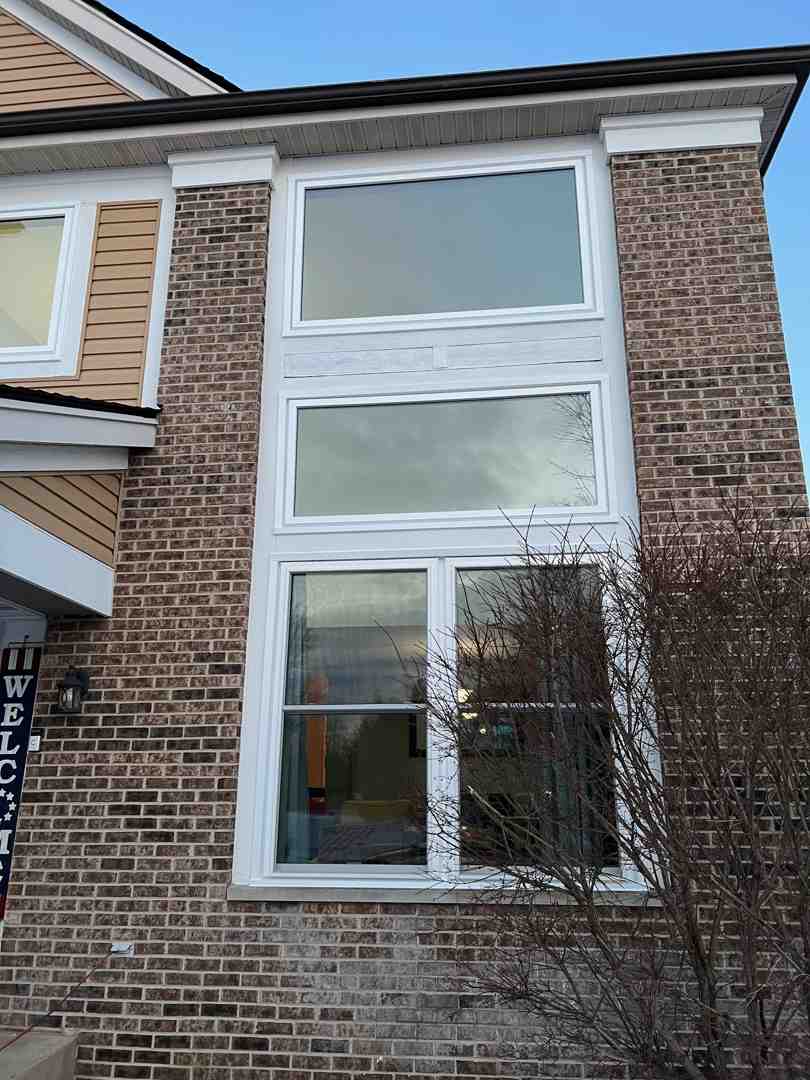
Why Every Chicago Homeowner Should Care About Energy Efficient Installation
Energy efficient installation is one of the smartest upgrades a homeowner can make — and one of the most overlooked.
Here’s a quick snapshot of what it means and why it matters:
| What It Is | Why It Matters |
|---|---|
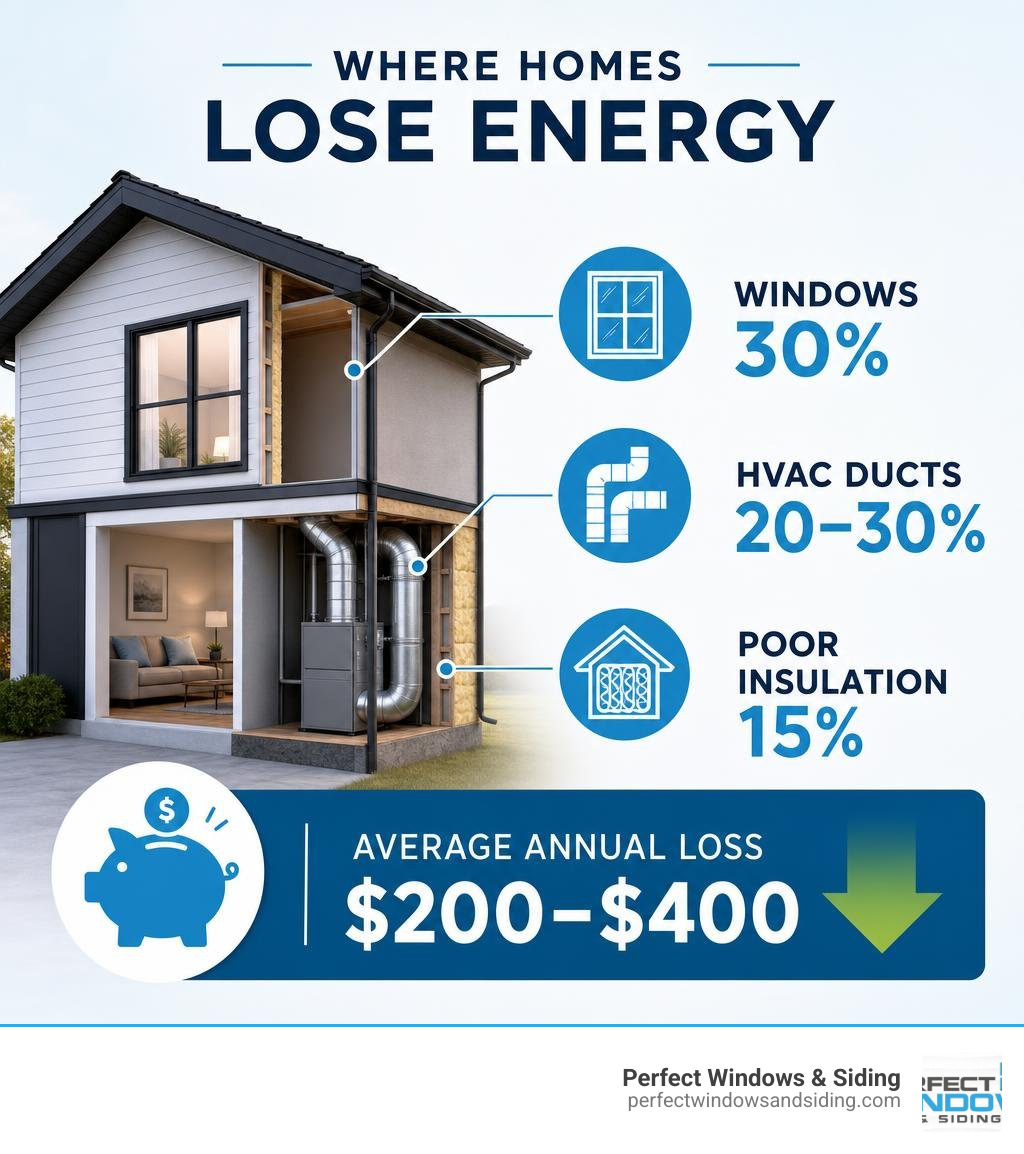
| Installing windows, doors, siding, or HVAC systems designed to minimize energy loss | Homes and buildings account for 40% of all US energy use — much of it wasted |
| Products certified to meet strict EPA or ENERGY STAR standards | The average homeowner loses $200–$400 per year to energy inefficiency |
| Professional installation that seals the building envelope properly | Poor installation can void product warranties and eliminate efficiency gains |
| Upgrades that may qualify for federal tax credits up to $3,200/year | 30% of heating and cooling is lost through windows alone in a typical home |
The truth is simple: even the best energy-efficient product underperforms when it’s installed incorrectly. A drafty window frame, a poorly sealed door, or a gap in your siding can quietly drain hundreds of dollars from your wallet every single year — without you ever noticing.
Chicago winters are brutal. Chicago summers aren’t much kinder. And if your home’s exterior isn’t working as a proper thermal barrier, your HVAC system is fighting a losing battle.
This guide walks you through the most impactful upgrades, the incentives available to you, and what a proper installation actually looks like.
I’m Voytek Glab, owner of Perfect Windows & Siding, and I’ve spent over 20 years helping Chicagoland homeowners get energy efficient installation right — from windows and doors to full exterior remodels. In that time, I’ve seen how much of a difference proper installation makes compared to just buying a quality product.
Basic Energy efficient installation vocab:
Why an Energy Efficient Installation is the Ultimate Home Upgrade
When we talk about upgrading your home, it is easy to focus entirely on visual aesthetics. A gorgeous new bay window or striking modern siding certainly boosts your curb appeal. However, the real magic happens beneath the surface. An energy efficient installation targets your home’s thermal envelope, transforming how your house handles Chicago’s extreme temperature swings.
By prioritizing energy-efficient upgrades, you are protecting your home from structural wear, reducing strain on your heating and cooling systems, and locking in long-term value. Local initiatives like the Energy Efficiency and Renewable Energy programs highlight how critical structural upgrades are to building sustainable, comfortable communities across Cook County.
The High Toll of Energy Waste
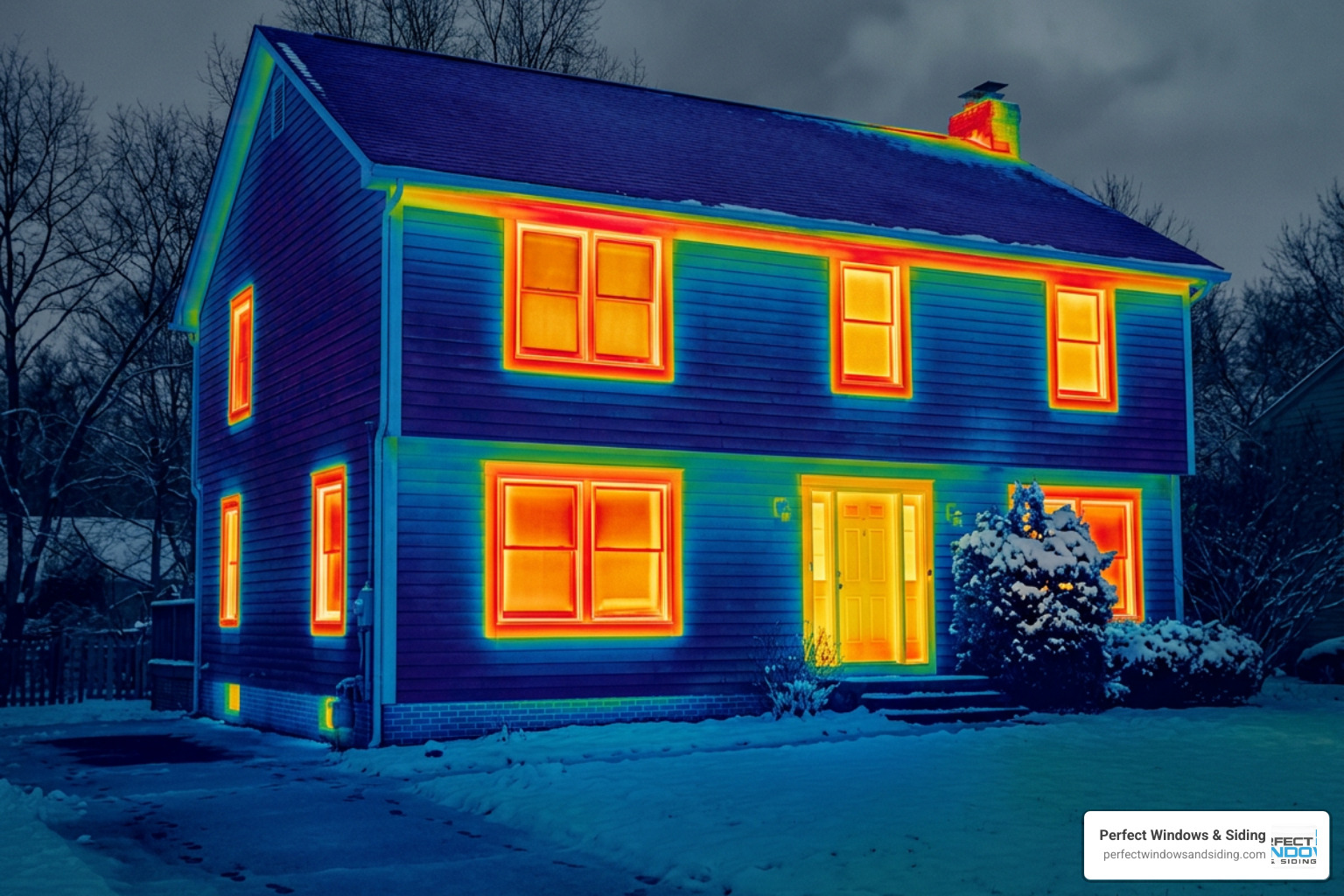
Many homeowners accept drafty rooms and soaring winter heating bills as a normal part of living in older Chicago suburbs like Wilmette, Park Ridge, or Hinsdale. But those drafts are actually warning signs of extensive energy waste.
When cold air seeps into your living room during a January blizzard, your furnace has to work twice as hard to maintain a comfortable temperature. This continuous HVAC strain does more than just drive up your monthly utility bills; it accelerates mechanical wear and tear, leading to premature system failures.
Furthermore, drafty building envelopes contribute to unnecessary residential emissions. When your home is properly sealed and insulated, your heating and cooling systems run more efficiently, reducing both energy waste and your home’s overall environmental impact.
The Role of the Thermal Envelope
To understand how to stop wasting energy, we must look at the “thermal envelope.” This is the physical barrier—consisting of your roof, walls, windows, outer doors, and foundation—that prevents heat transfer between the interior of your home and the outdoors.
- Insulation: High-quality insulation acts as a blanket, keeping warm air inside during the winter and hot air outside during the summer. Upgrading your insulation can save you up to 15% on heating and cooling bills.
- Air Sealing: Sealing gaps around plumbing penetrations, wiring, and structural joints keeps drafts out and prevents moisture from creeping into your walls.
- Structural Integrity: A robust thermal envelope protects your framing from rot, mold, and pest infestations, ensuring your home remains structurally sound for decades.
- Consistent Comfort: No more freezing corners or sweltering second floors. A secure thermal envelope keeps your indoor temperatures stable from room to room.
High-Impact Upgrades for Maximum Efficiency
If you want to make a noticeable dent in your energy usage, you have to look at the areas where heat escapes most easily. Exterior remodeling projects that focus on your windows, doors, and siding offer the highest return on investment in terms of comfort, durability, and craftsmanship.
To help you visualize the difference that modern technology makes, let’s look at how different window types stack up against each other:
| Window Type | Average Energy Loss | Key Performance Features | Peak Performance Benefit |
|---|---|---|---|
| Single-Pane Windows | Up to 30% of home heating/cooling | Single layer of standard glass; no insulation; highly drafty | Minimal protection; prone to heavy condensation |
| Double-Pane Windows | Significantly reduced compared to single-pane | Two glass layers; insulated gas fill (argon); low-e coatings | Solid thermal barrier; cuts down external noise |
| Triple-Pane Windows | Lowest energy loss (up to 50% more efficient than single-pane) | Three glass layers; dual gas chambers; advanced multi-layer low-e coatings | Maximum thermal performance; virtually eliminates drafts and condensation |
Advanced Window Technologies
When exploring Energy Efficient Windows, you will encounter a few key technical terms. Understanding these ratings will help you choose the best custom solutions for your home:
- U-Factor: This measures how well a window prevents heat from escaping. The lower the U-factor, the better the window is at keeping heat inside. For our harsh local winters, look for a U-factor of 0.30 or lower.
- Solar Heat Gain Coefficient (SHGC): This measures how much solar radiation passes through the window, warming your home. In the Midwest, a balanced SHGC is ideal to allow some warmth from the sun in the winter while blocking excess heat in the summer.
- Low-E Coatings: Low-emissivity (low-e) coatings are microscopic metal oxide layers applied to the glass. They reflect infrared heat back to its source, keeping your home warm in winter and cool in summer. Adding a low-e coating provides as much extra insulation as adding an entire extra pane of glass!
- Gas Fills: High-performance double and Triple Pane Windows do not just contain regular air between the panes. Instead, they are filled with dense, non-toxic inert gases like argon or krypton, which slow down heat transfer much better than air.
If you are planning your next home improvement project, checking out an Energy Efficient Windows Chicago Guide or exploring Energy Efficient Window Upgrades can help you select the exact specifications required to handle our local climate.
Insulated Siding and Exterior Doors
Your windows are only part of the equation. If your walls and entryways are uninsulated, heat will still find a way out.
- Insulated Siding: Standard siding can allow heat to escape through a process called thermal bridging, where heat bypasses insulation by traveling through the wooden studs of your walls. By opting for a premium insulated siding system, you wrap your entire home in a continuous layer of thermal protection. Learn more about this by reading Why an Energy Efficient Siding Upgrade is the Coolest Thing You Can Do for Your Home.
- Exterior Doors: Old doors are notorious for warping, cracking, and leaking air. A proper Energy Efficient Door Installation utilizes doors built with polyurethane foam cores and robust weatherstripping. These materials provide up to five times the insulating value of traditional wood doors.
- Siding Installation: Combining a high-quality Siding Installation with new doors ensures that your home’s exterior acts as a seamless shield against the elements.
Navigating Incentives and Tax Credits
Making your home energy-efficient is a major investment, but federal and local incentive programs are designed to help offset your expenses. By choosing qualified products and working with certified contractors, you can take advantage of substantial financial incentives.

Federal Tax Credits for Energy Efficiency
The Energy Efficient Home Improvement Credit (Section 25C) allows taxpayers to claim a nonrefundable tax credit equal to 30% of qualified expenses for energy-efficient upgrades installed after January 1, 2023. This credit has no lifetime limit, meaning you can plan and spread out your installations over multiple years to maximize your annual tax savings!
The maximum annual credit limits include:
- $1,200 Per Year for general energy-efficient property expenses and building envelope components.
- $600 Total specifically for qualified exterior windows and skylights (which must meet “ENERGY STAR Most Efficient” standards).
- $250 Per Door ($500 total) for exterior doors that meet ENERGY STAR requirements.
- $150 for a professional home energy audit.
- $2,000 Per Year for qualified heat pumps, heat pump water heaters, biomass stoves, or biomass boilers.
To claim these credits, you must file IRS Form 5695 (Residential Energy Credits) with your federal tax return for the year the upgrades were actually installed. While labor expenses qualify for heating and cooling systems, they are excluded for building envelope components like windows, doors, and insulation.
Local Utility Programs and Rebates
Chicagoland homeowners can also access regional incentives through local utility providers. Programs from ComEd, Peoples Gas, and Nicor Gas offer rebates for qualifying energy-efficient upgrades, including smart thermostats, high-efficiency heating and cooling systems, and professional duct sealing.
- ComEd Rebates: ComEd offers rebates for installing high-efficiency central air conditioners and smart thermostats.
- Peoples Gas & Nicor Gas: These providers offer incentives for upgrading to high-efficiency furnaces and improving attic insulation.
- Chicagoland Programs: Multi-family property owners can explore the Retrofit Chicago Multi-Family Residential Partnership for specialized efficiency programs.
- Local Resources: Homeowners looking to assess their energy usage can consult Home Energy Solutions to find professional auditing services.
If you are planning heating and cooling upgrades, you can coordinate with qualified HVAC contractors in your specific suburb. For example, you can find localized expertise through:
- Heat Pump Installation in Glenview, IL – 2025
- Professional Heating And Cooling Services | Hinsdale, IL
- Expert HVAC Services In Park Ridge, IL | Install, Repair & More
- Mount Prospect HVAC Services: Installation & Repair
- Norridge HVAC Contractor | Commercial & Residential
Professional Standards for Exterior Upgrades
Even the most advanced triple-pane window or insulated siding panel will fail to save energy if it is installed poorly. Precision, craftsmanship, and local experience are the absolute keys to ensuring your new products perform exactly as they were designed to.

Key Steps for a Proper Energy Efficient Installation
A high-quality installation is a meticulous, multi-step process. When our experienced crews install windows or doors, they follow strict industry best practices:
- Preparation and Inspection: We inspect the rough opening for any signs of water damage, rot, or structural settling. Any damaged wood is replaced before the new unit is set.
- Flashing and Water Management: We apply specialized flashing membranes to the sill and jambs. This directs any potential water infiltration away from your home’s framing and safely out to the exterior.
- Precision Alignment: We shim the window frame to ensure it is perfectly plumb, level, and square. If a window is even slightly out of alignment, it won’t seal tightly when closed, leading to air leaks and operational issues.
- Low-Expansion Foam Insulation: We fill the gap between the window frame and the rough opening with professional-grade, non-expanding foam. Standard expanding foam can warp window frames, while skipping this step entirely leaves a massive gap for drafts to enter.
- High-Quality Caulking: We apply premium, flexible exterior sealants to the exterior trim to prevent wind-driven rain and air from bypassing the window frame.
For a deeper dive into what to expect during this process, read our Window Replacement in Chicago the 2026 Homeowners Guide or learn more about why precision matters in Professional Window Installation Why Precision Matters Most.
Choosing the Right Partner for Your Energy Efficient Installation
To guarantee your home remodeling project is a success, you need to work with a contractor you can trust. Here is what you should look for when choosing an installation partner:
- Licensed and Insured: Always verify that your contractor holds the proper state and local licenses and carries comprehensive liability and worker’s compensation insurance.
- Local Family-Owned Business: A local company understands the unique challenges of the Chicago climate. We live and work in the same communities as you, from Des Plaines and Niles to Morton Grove and Schiller Park.
- 20+ Years of Experience: Decades of hands-on experience mean your installers have seen—and solved—every structural quirk that older Chicago homes can throw at them.
- Lifetime Warranty: A company that stands behind its work will offer a robust warranty on both the products and the installation itself, giving you peace of mind for as long as you own your home.
- Unmatched Customer Satisfaction: Look for a partner with a proven track record of clear communication, clean jobsites, and personalized service.
Frequently Asked Questions about Energy Efficiency
How much energy is lost through old windows and doors?
In a typical home, roughly 30% of all heating and air conditioning is lost directly through the windows and doors. Old, single-pane glass provides virtually no insulation against Chicago’s freezing winters.
Additionally, as homes settle, gaps open up around window frames and entryways. These gaps allow drafty air to bypass your HVAC system entirely, forcing your furnace and air conditioner to run constantly. Upgrading to ENERGY STAR certified windows can slash your energy bills by up to 13%, while upgrading attic insulation can save an additional 15% on heating and cooling bills.
What are the requirements for the Energy Efficient Home Improvement Credit?
To qualify for the federal tax credit, your upgrades must meet specific efficiency criteria:
- Windows and Skylights: Must be certified as “ENERGY STAR Most Efficient” for the climate zone where you live.
- Exterior Doors: Must meet standard ENERGY STAR requirements.
- Primary Residence: The upgrades must be installed in an existing home that serves as your primary residence. New construction homes and rental properties do not qualify.
- Qualified Manufacturers: Starting in 2025, products must be produced by a registered, qualified manufacturer and include a unique product identification number on your tax return.
Why is professional installation critical for energy-efficient products?
Buying a top-tier energy-efficient window is only half the battle. If it is installed out of square, or if the installer fails to seal the gaps around the frame, air and water will leak into your walls.
Poor installation can lead to:
- Voided Warranties: Most major window and door manufacturers will not honor their warranties if the product was installed incorrectly.
- Air and Water Leakage: Drafts will ruin your energy savings, while water infiltration can lead to mold, rot, and expensive structural repairs.
- Poor Operation: Windows and doors that are not perfectly aligned will stick, squeak, or fail to lock securely, compromising your home’s security.
Conclusion
Stop letting your hard-earned money slip through the cracks of drafty windows, uninsulated siding, and poorly sealed doors. Investing in an energy efficient installation is the single best way to protect your home from the elements, lower your energy usage, and enjoy a more comfortable living space all year round.
At Perfect Windows & Siding, we have spent more than 20 years providing the highest standard of craftsmanship to homeowners across Chicago and the surrounding suburbs—including Addison, Elk Grove Village, Wood Dale, Franklin Park, and Bensenville. As a local, family-owned business, we back our custom solutions with a lifetime warranty and a commitment to personalized customer service.
Ready to transform your home’s comfort and efficiency? Get a free estimate or schedule your consultation with our expert team today!