

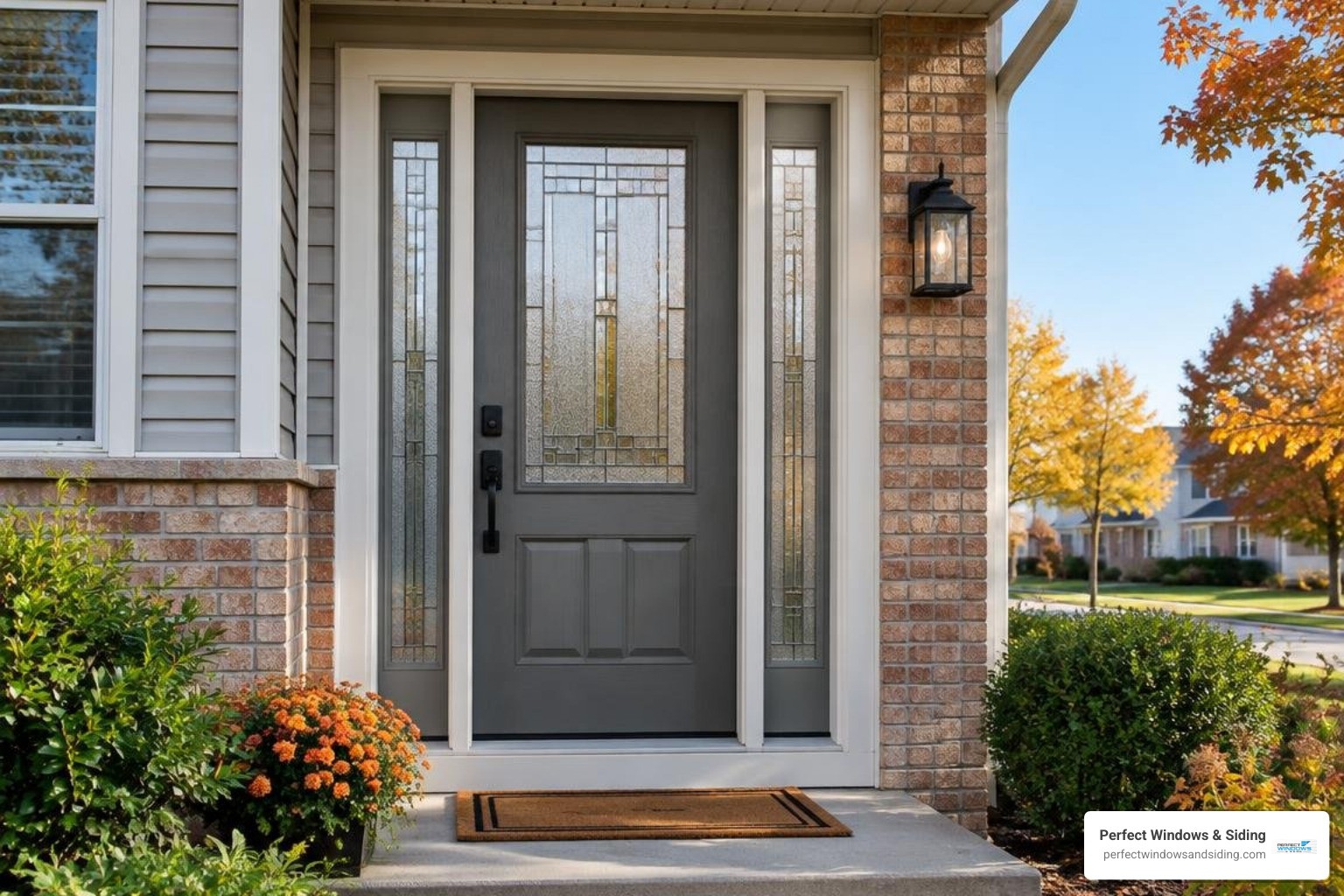
Why Choose a Fiberglass Front Door in Skokie?
For a Skokie fiberglass front door, look for an insulated core, tight weatherstripping, and a frame that resists moisture. Fiberglass gives you the look of painted wood or wood grain with less upkeep than wood and no risk of rust like steel. In Skokie’s cold winters and humid summers, a well-fitted door and a good seal matter as much as the door material.
Choose the finish and glass you like, then check the opening size and swing direction before ordering. A pre-hung door includes a frame and can make it easier to replace an entry that no longer seals well.
I’m Voytek Glab, owner of Perfect Windows & Siding, and I’ve spent over 20 years installing entry doors and other exterior upgrades across Chicagoland. I’ll walk you through what matters when choosing a Skokie fiberglass front door, from curb appeal to a proper fit.
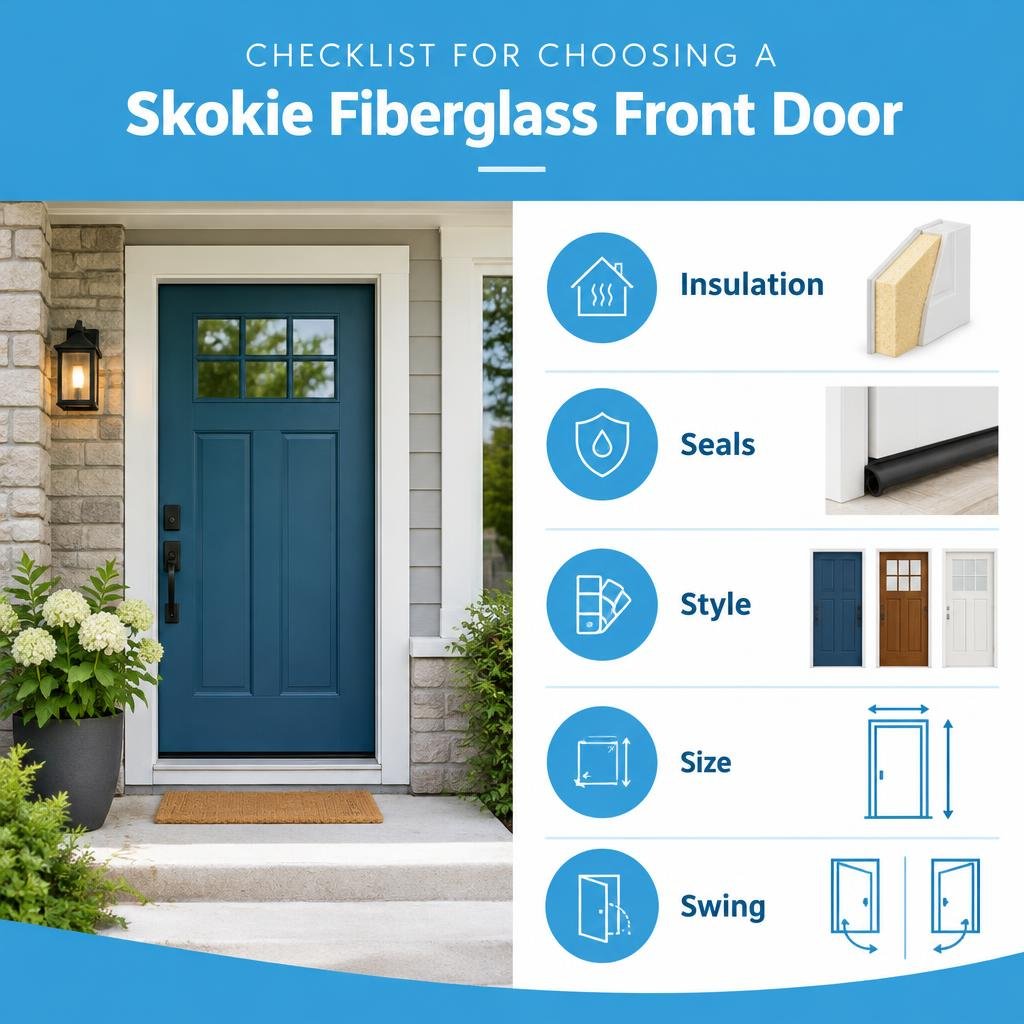
Key Skokie fiberglass front door vocabulary:
Why Choose a Skokie Fiberglass Front Door Over Wood and Steel?
When selecting an entryway upgrade for a home in northern Cook County, homeowners often weigh the classic warmth of traditional timber against the sheer security of heavy metal. However, composite fiberglass engineering captures the visual depth of natural grain while delivering the high structural integrity of heavy-duty materials.
Unlike organic lumber, fiberglass never absorbs moisture, eliminating seasonal swelling that causes doors to stick in humid July weather or draft heavily come January. Unlike steel, it will not dent from errant soccer balls or rust along the bottom threshold when winter road salt tracks onto your front porch.
| Feature / Benefit | Molded Fiberglass Entryway | Traditional Solid Wood | Heavy-Duty Galvanized Steel |
|---|---|---|---|
| Thermal Insulation | Polyurethane or polystyrene core blocks drafts | Minimal inherent thermal barrier | Conducts outside chill unless fully thermally broken |
| Moisture Resistance | 100% waterproof exterior skin; zero rot risk | Absorbs humidity; prone to warping and rot | Prone to oxidation and rust if finish scratches |
| Surface Durability | Resists impacts, scratches, and harsh salt air | Scratches easily; requires regular resealing | Dents permanently under moderate impact |
| Maintenance Level | Occasional wash with mild soap and water | Periodic sanding, staining, or repainting | Touch-up painting required to prevent corrosion |
| Aesthetic Versatility | Cast woodgrain textures or sleek modern smooth | Authentic natural lumber grain | Typically flat, industrial smooth profile |
Investing in an energy-efficient door installation ensures that your home benefits from advanced thermal boundary performance engineered specifically for unpredictable Midwestern weather.
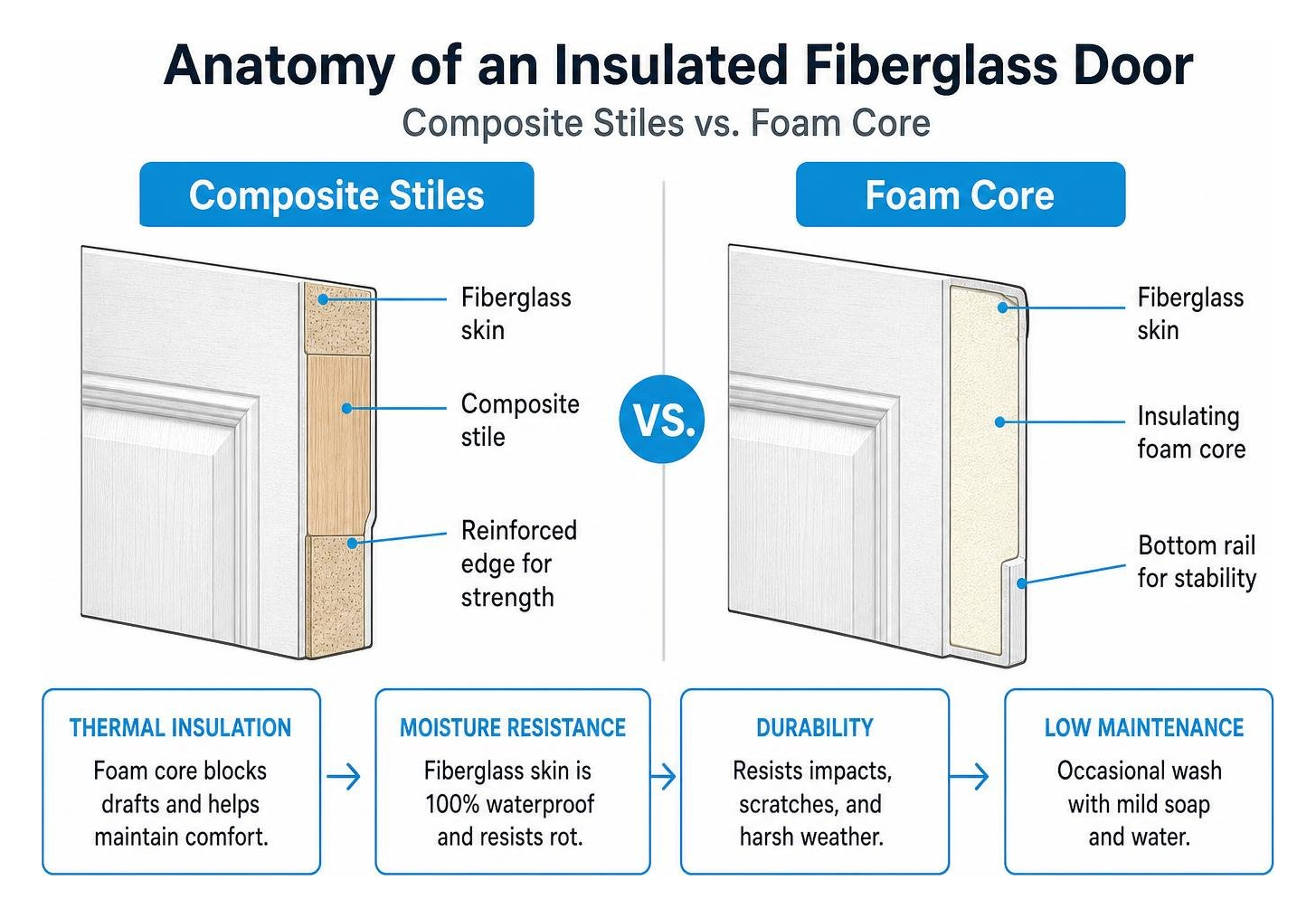
Thermal Performance for Chicagoland Winters
Sub-zero wind chills sweeping off Lake Michigan demand exceptional thermal resistance at your threshold. Standard wood doors lose significant heat across their solid slab, while steel skins readily conduct freezing temperatures straight into your foyer.
In contrast, modern fiberglass doors feature high-density insulating foam cores—such as molded polystyrene or injected polyurethane—encapsulated between reinforced composite layers. This layered engineering creates a dependable thermal barrier that prevents room heat from escaping, stops winter drafts at the perimeter, and eliminates interior surface condensation that could otherwise damage interior flooring.
Durability Against Lake Michigan Humidity and Freeze-Thaw Cycles
Our regional climate brings intense summer humidity followed closely by months of snow and ice. When moisture penetrates a standard wooden frame, freeze-thaw cycles cause the fibers to expand, crack, and splinter.
Composite fiberglass entry systems utilize solid composite poly-fiber frames and heavy-duty structural stiles that repel water entirely. Because these components do not expand or contract when temperatures swing from 85 degrees down to below zero, your door maintains its factory alignment, keeping compression seals firmly engaged year after year.
Architectural Styles, Finishes, and Glass Customization
Whether your home is a classic brick Georgian in Morton Grove, a mid-century ranch in Niles, or a traditional two-story in Park Ridge, fiberglass provides broad aesthetic versatility. The exterior skins can be cast in detailed molds crafted from real hardwood pieces—reproducing the deep pore patterns of mahogany, oak, or cherry.
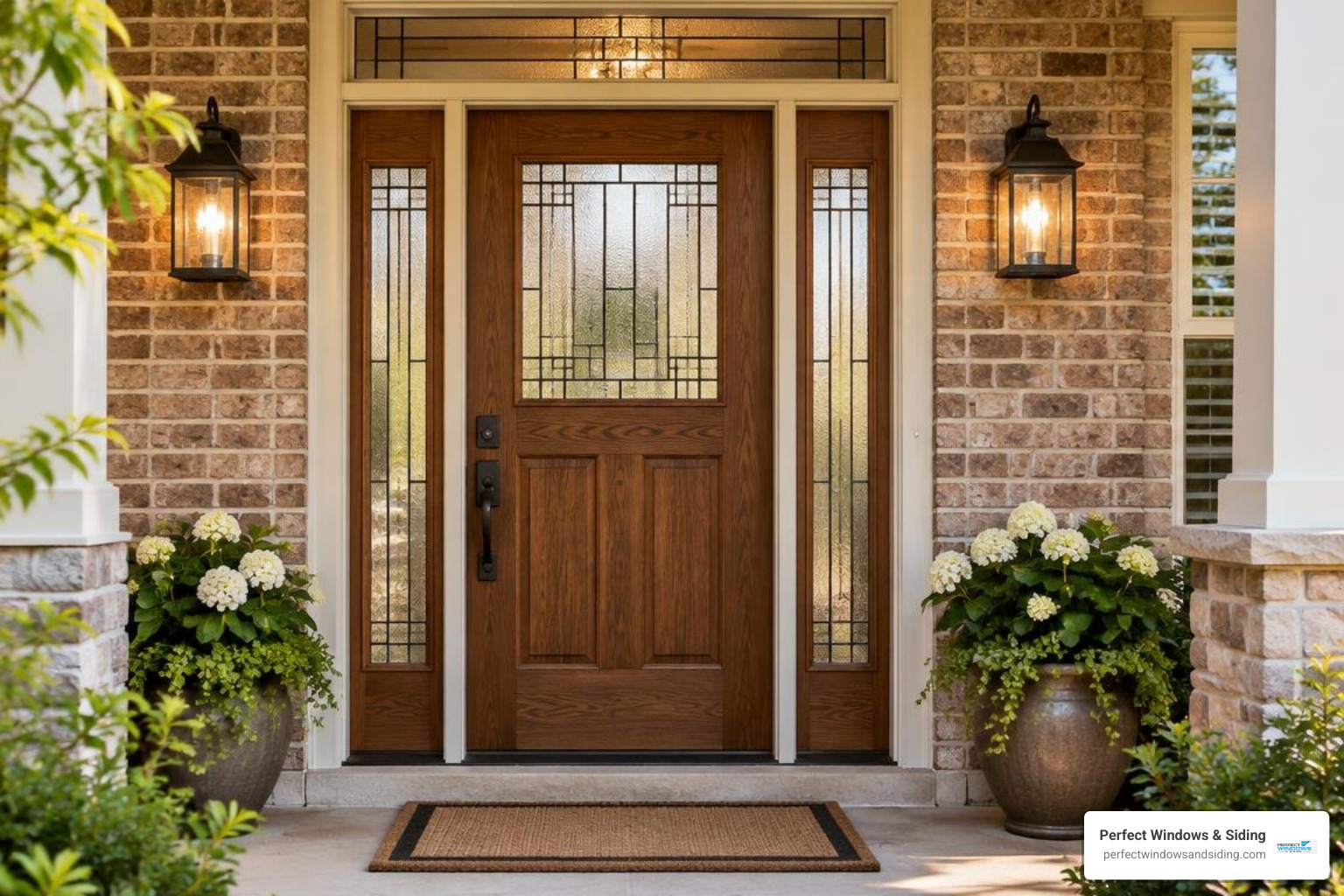
For homeowners desiring a tailored entryway, exploring custom residential entry doors allows you to select unique panel profiles, sidelites, transoms, and architecturally accurate details that elevate overall curb appeal.
Selecting Finishes and Glass for Your Skokie Fiberglass Front Door
Personalizing your entryway involves choosing between factory-applied low-VOC stains, smooth contemporary enamel colors, or primed surfaces ready for custom hues.
- Woodgrain Textures: Detailed cherry, oak, and fir textures accept specialized stains that highlight natural-looking grain variations while resisting UV fading.
- Smooth Painted Profiles: Clean, ultra-smooth surfaces provide a crisp aesthetic ideal for modern and transitional home architecture.
- Insulated Glass Packages: Options range from full-lite clear glass to decorative multi-pane configurations. Models featuring decorative privacy glass or frosted panels offer natural daylighting while maintaining an exceptional privacy rating inside your entryway.
- Durable Construction: Factory-assembled units, such as high-performance decorative models, utilize double-pane insulated tempered glass engineered to prevent thermal bridging while resisting high winds.
Decorative Hardware and Security Enhancements
A strong door panel requires equally robust hardware to keep your home protected and operating smoothly:
- Multi-Point Locking Mechanisms: Secure the door at the top, center, and bottom of the frame simultaneously for enhanced defense against forced entry.
- Heavy-Duty Ball-Bearing Hinges: Eliminate hinge squeaks and prevent heavy insulated slabs from sagging over decades of daily operation.
- Reinforced Composite Sills: Feature adjustable bronze thresholds that let you dial in an airtight seal against your bottom door sweep.
- Heavy Deadbolt Reinforcement: Extended strike plates anchor directly into the rough wall studs, reinforcing the latch area against sudden impacts.
Sizing, Pre-Hung Systems, and Installation Considerations
Achieving an airtight, draft-free entryway depends heavily on precise measurement and structural preparation. Even the most advanced door slab will leak conditioned air if it is hung out of square or sealed with low-grade weatherstripping.
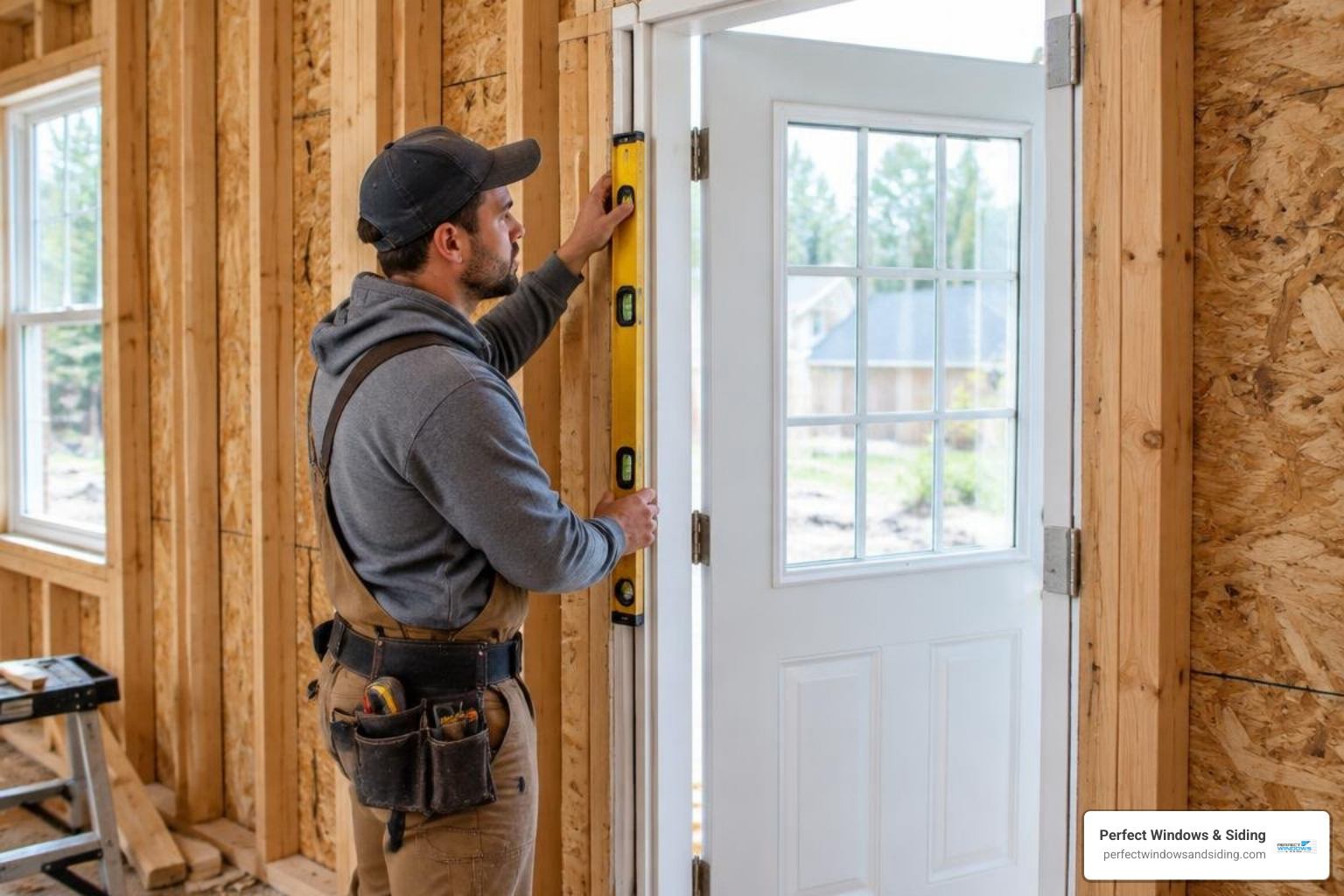
Following a comprehensive entry door installation guide helps homeowners understand the technical tolerances necessary for structural framing, flashing, and perimeter insulation.
Proper Sizing and Swing for a Skokie Fiberglass Front Door
The standard entry dimension for residential homes is 36 inches wide by 80 inches tall (a 3/0 by 6/8 door). However, the actual rough opening in your wall framing must provide adequate clearance—typically requiring roughly 38 inches of width and 82 inches of height—to accommodate the door jambs, sill system, and shim space.
Determining the correct hand orientation is essential before fabrication:
- Left-Hand Inswing: Facing the door from the outside of your home, the hinges are on the left side, and the door swings inward into your foyer.
- Right-Hand Inswing: Facing the door from the outside, the hinges are on the right side, and the door pushes inward away from you.
Ensuring ample interior foyer clearance prevents the swinging door slab from colliding with interior walls, light switches, or hallway closets.
Pre-Hung Assemblies vs. Slab Replacement
When updating your entryway, you can either replace just the swinging slab or install a complete pre-hung system:
- Slab-Only Replacement: Reuses your existing wooden jambs. This only works if the original frame is structurally sound, perfectly plumb, square, and completely free of wood rot.
- Pre-Hung Entry Systems: Replaces the slab, side jambs, top header, hinges, and threshold as a single factory-sealed unit. Pre-hung systems integrate high-performance compression weatherstripping and adjustable sill plates, ensuring a truly airtight thermal envelope.
Understanding why professional entry door installation in Chicago matters ensures you avoid common issues like misaligned latches, warped jambs, or hidden water leaks behind exterior trim.
Frequently Asked Questions About Fiberglass Entry Doors
How long does a fiberglass front door last in the Chicago climate?
A high-quality fiberglass door system installed with a rot-resistant composite frame typically lasts 25 to 30 years or longer with minimal upkeep. Because composite skins do not absorb moisture or react to humidity shifts, the door does not deteriorate from seasonal freeze-thaw cycles.
Can a fiberglass front door be painted or stained to look like real wood?
Yes. Smooth fiberglass slabs arrive pre-primed and ready for exterior-grade acrylic latex paint in any color. Woodgrain textured models can be finished with professional wiping stains and UV-protective clear coats, creating a deep, authentic timber appearance that resists peeling and fading.
Are fiberglass entry doors ENERGY STAR certified?
Most modern fiberglass entry doors achieve ENERGY STAR qualification when properly paired with an insulated composite frame and high-performance weather seals. Their low U-factor ratings and dense foam cores significantly outperform uninsulated solid wood doors, keeping conditioned air inside your home throughout the year.
Conclusion
Upgrading your entryway with an advanced composite system delivers the rich, welcoming appearance of natural hardwood alongside the robust security and stability of steel. For homeowners across Skokie, Des Plaines, Park Ridge, and the surrounding Chicago suburbs, fiberglass provides dependable insulation against bitter winter freezes and humid summer afternoons.
At Perfect Windows & Siding, our family-owned team brings over 20 years of local installation craftsmanship and lifetime warranty protection to every custom exterior project. When you are ready to enhance your home’s curb appeal, comfort, and security, explore our complete exterior door installation services and connect with our licensed specialists.
Schedule your consultation today to find the perfect fiberglass entryway for your home, or reach out to our team to get a free estimate.