

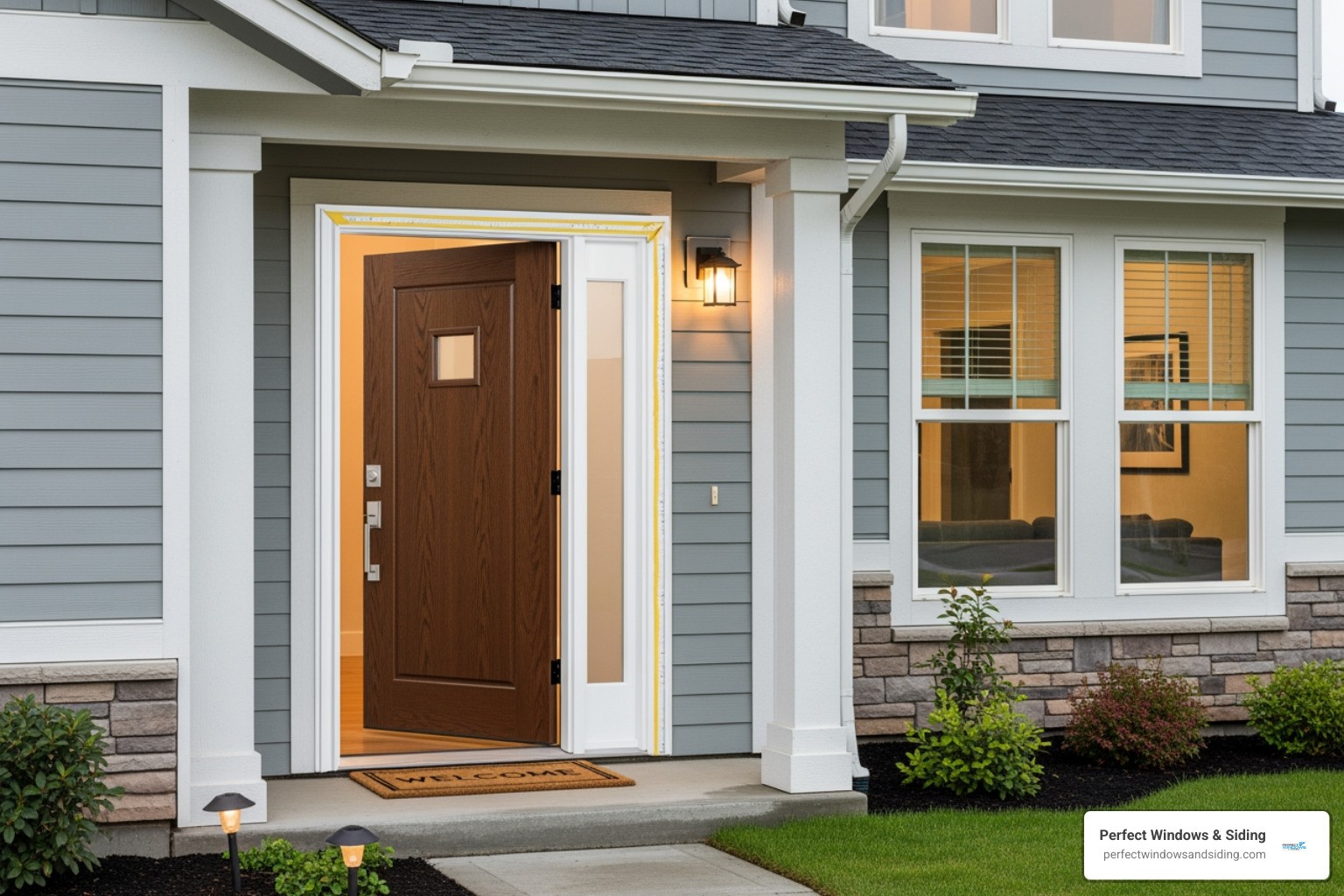
Why Energy Efficient Door Installation Matters for Chicago Homeowners
Energy efficient door installation is the process of replacing your old, drafty doors with modern, insulated models designed to keep heat in during winter and out during summer—cutting your energy bills and improving home comfort year-round.
Quick Answer: What Makes a Door Energy-Efficient?
An energy-efficient door includes:
- Core Materials: Fiberglass or steel with dense polyurethane foam insulation
- Quality Glass: Double or triple panes with Low-E coatings and argon gas fills
- Proper Sealing: High-quality weatherstripping, door sweeps, and insulated thresholds
- Professional Installation: Correct shimming, flashing, and sealing to prevent air leaks
- ENERGY STAR® Certification: U-Factor ≤ 0.17-0.30 and SHGC ratings appropriate for your climate zone
If your home feels drafty, your heating bills are climbing, or you hear every gust of wind rattling your front door, you’re not alone. Many Chicago-area homes lose significant energy through poorly sealed or outdated doors. Research from the National Fenestration Rating Council shows that the average American household spends $1,500 to $2,500 on energy bills each year, with around 40% going to heating and cooling. Your doors play a bigger role in those costs than you might think.
The good news? Replacing old doors with ENERGY STAR-certified models can reduce your energy bills by 7% to 15% annually. But here’s the catch: even the most efficient door on the market won’t perform if it’s not installed correctly. Gaps, poor sealing, and improper flashing can turn a premium door into an expensive draft.
I’m Voytek Glab, owner of Perfect Windows & Siding, and I’ve spent over 20 years helping Chicagoland homeowners maximize their home’s efficiency through professional energy efficient door installation. In this guide, I’ll walk you through exactly what makes a door energy-efficient, how to choose the right one for your home, and why proper installation is the key to open uping real savings.
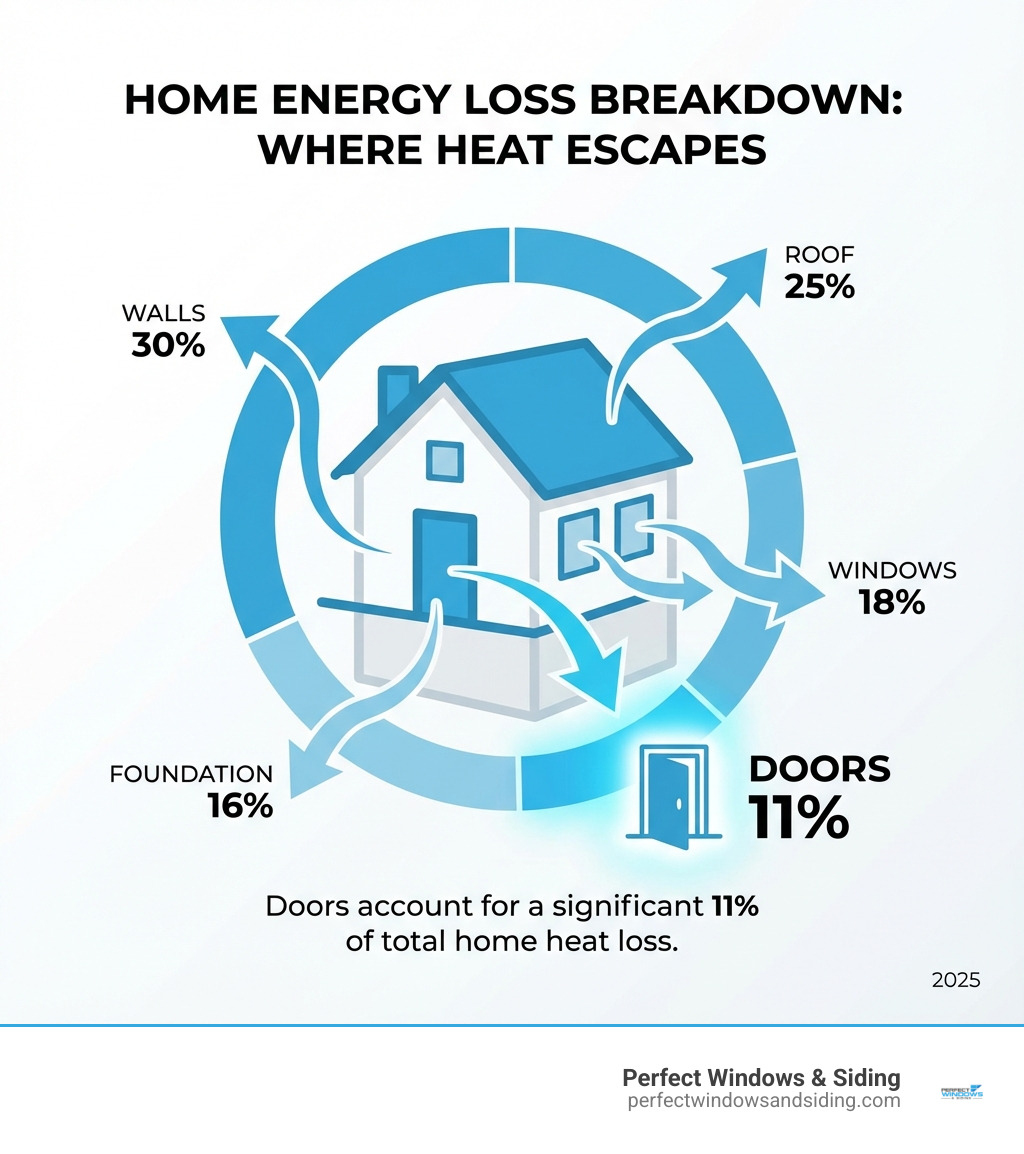
Understanding the Anatomy of an Energy-Efficient Door
When we talk about an energy-efficient door, we’re not just talking about a slab of wood or metal. We’re talking about a carefully engineered system designed to create a robust barrier against the elements, keeping your comfortable indoor air where it belongs. It’s the sum of its parts, all working in harmony to maximize thermal performance.
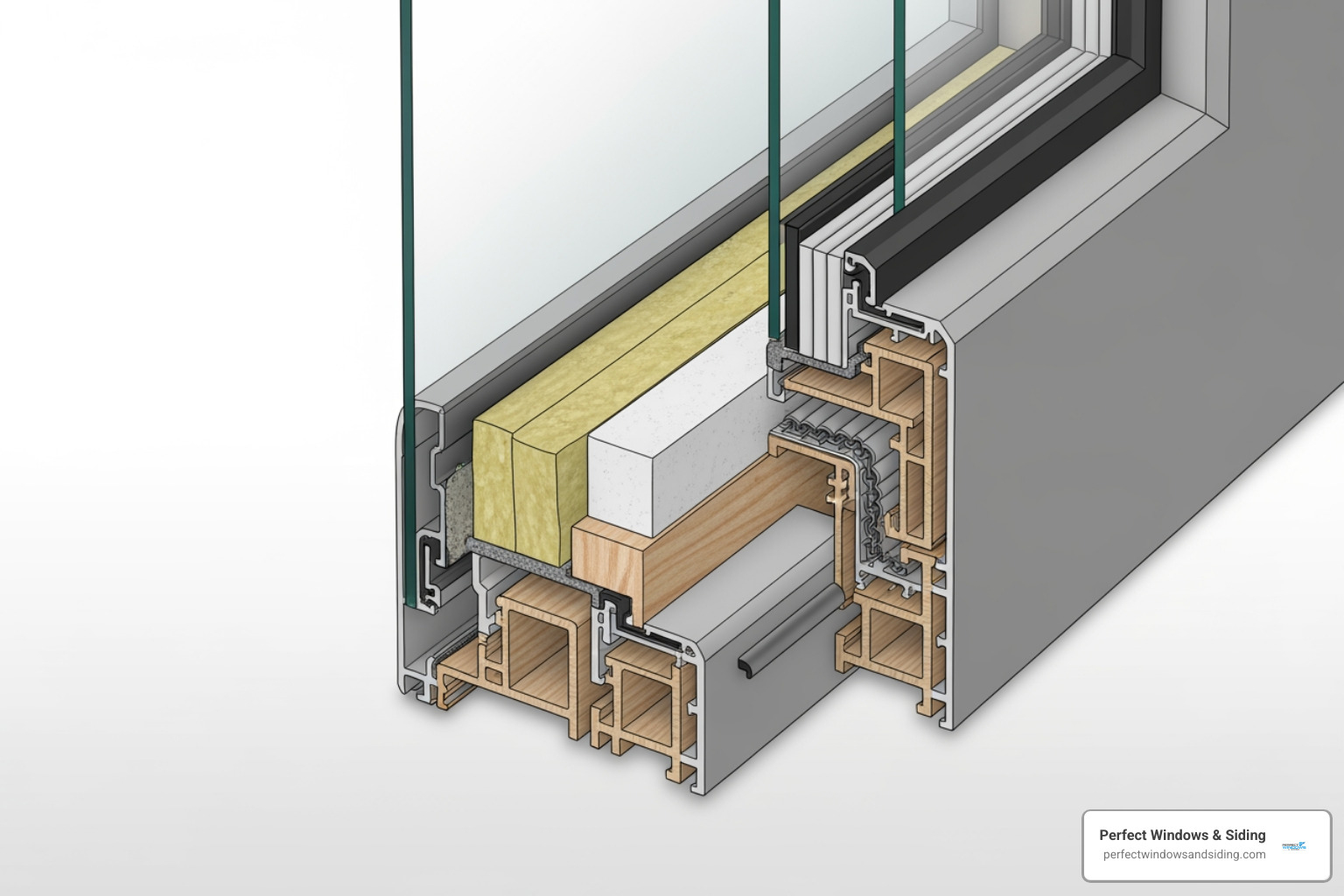
Core Materials: The First Line of Defense
The material your door is made from forms the backbone of its energy efficiency. Different materials offer unique advantages in terms of insulation, durability, and aesthetics.
- Fiberglass Doors: These are often considered some of the best for energy efficiency. Fiberglass doors feature a dense polyurethane foam core, which provides exceptional insulation. They’re also incredibly durable, resisting warping, swelling, and cracking—common issues with less robust materials, especially in Chicago’s fluctuating temperatures. Plus, they can be designed to mimic the look of natural wood, offering beauty without the high maintenance.
- Steel Doors: Steel doors can also be very energy efficient, typically featuring a thick foam center similar to fiberglass. They offer superior security and can incorporate magnetic weather stripping to create a remarkably tight seal against air leaks. While metal is a good conductor of energy, the insulated core and advanced sealing systems in modern steel doors effectively mitigate this.
- Wood Doors: While natural wood offers classic beauty and can provide some insulation, it’s generally less energy-efficient than fiberglass or insulated steel unless specifically engineered with an insulated core. Traditional solid wood doors can be prone to warping or swelling with changes in humidity and temperature, leading to air leaks. If you desire the aesthetic of wood, modern fiberglass options can achieve a similar look with superior energy performance.
For more information on selecting the right materials for your home, you can explore the Department of Energy’s guidance on [More info about the right materials](https://www.energy.gov/energysaver/design/windows-doors-and-skylights/doors). We also offer a range of [Custom Entry Doors](https://perfectwindowsandsiding.com/custom-entry-doors-residential/) custom to your home’s unique style and efficiency needs.
The Power of Insulation and Glass
Beyond the core material, several other components contribute significantly to a door’s energy performance:
- Double-pane and Triple-pane Glass: Unlike traditional single-pane glass, which is a poor insulator, modern energy-efficient doors often feature double or even triple panes of glass. These multiple layers create insulating air spaces.
- Inert Gas Fills: To further improve insulation, the spaces between glass panes are often filled with inert, non-toxic gases like argon. These gases are denser than air and slow down heat transfer, significantly improving the door’s thermal performance.
- Low-Emissivity (Low-E) Coatings: These microscopic, transparent metallic coatings are applied to the glass surfaces. Low-E coatings reflect radiant heat, keeping your home warmer in winter by reflecting indoor heat back inside, and cooler in summer by reflecting outdoor heat away. The type of Low-E coating can be optimized for specific climates; for example, some are designed to allow more solar heat in during cold Chicago winters (Low E1), while others are better at rejecting solar heat in warmer climates (Low E3).
- Weatherstripping: This flexible material seals the gaps around the edges of the door when it’s closed, preventing air from leaking in or out. High-quality weatherstripping is crucial for an airtight seal.
- Door Sweeps and Thresholds: A door sweep is attached to the bottom of the door and seals the gap between the door and the threshold. An insulated threshold works with the sweep to create a tight seal, preventing drafts and moisture intrusion at the bottom of the door.
These innovations in glass and sealing technology are also key for energy-efficient windows. You can learn more about these features on our page about [Tips for Buying Energy Efficient Windows](https://perfectwindowsandsiding.com/tips-for-buying-energy-efficient-windows/).
Decoding ENERGY STAR® and NFRC Ratings
To help homeowners make informed decisions, organizations like ENERGY STAR® and the National Fenestration Rating Council (NFRC) provide standardized ratings for energy performance.
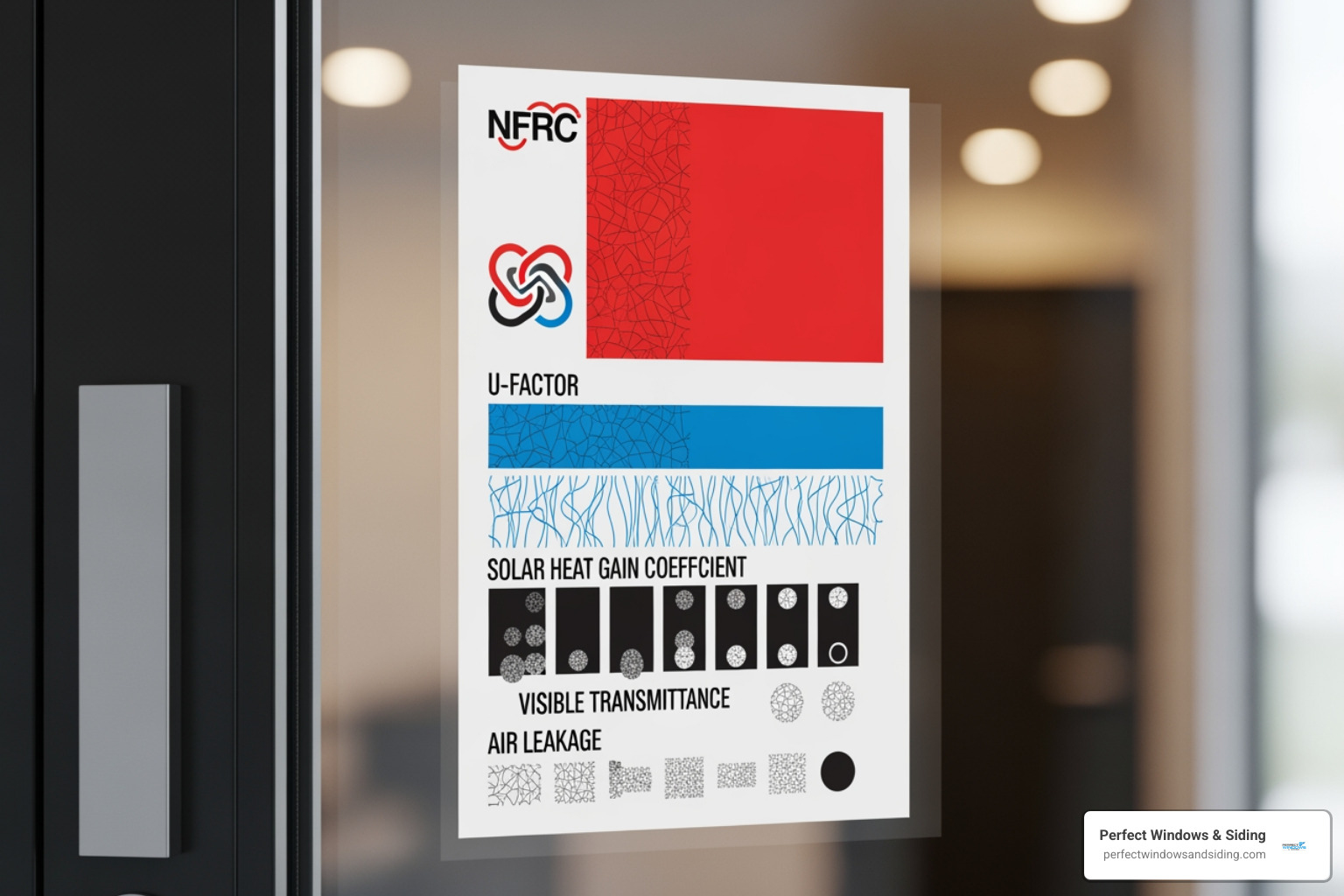
- U-Factor: This rating measures how well a window or door insulates, specifically how much heat escapes through it. A lower U-Factor indicates better insulation and less heat loss. In colder climates like Chicago, a U-Factor of 0.30 or lower is generally recommended.
- Solar Heat Gain Coefficient (SHGC): This measures how much of the sun’s heat passes through the door’s glass. A lower SHGC means less solar heat gain. While a low SHGC is crucial for warmer climates to reduce cooling costs, in Chicago, we need to balance this. A slightly higher SHGC on south-facing doors can allow for some beneficial passive solar heating in winter, but too high will lead to overheating in summer.
- Air Leakage (AL): This measures the amount of air that infiltrates through the door assembly. Lower numbers mean less air leakage, which directly translates to fewer drafts and better energy efficiency.
An ENERGY STAR® certified door has met a set of strict criteria, verified by the NFRC, to ensure it provides significant energy savings. For homeowners in our Northern Climate Zone (which includes Chicago), the ENERGY STAR® Version 6.0 requirements for doors are:
- U-Factor:
- Opaque doors (no glass): ≤ 0.17
- Doors with ≤ ½-Lite (up to half glass): ≤ 0.25
- Doors with > ½-Lite (more than half glass): ≤ 0.30
- Solar Heat Gain Coefficient (SHGC):
- Doors with ≤ ½-Lite: ≤ 0.40
- Doors with > ½-Lite: ≤ 0.40
- Air Leakage:
- Swinging doors: ≤ 0.5 cfm/ft²
- Sliding doors: ≤ 0.3 cfm/ft²
Understanding these ratings helps you compare products and ensure you’re getting a truly energy-efficient door. You can learn more about these requirements directly from [Learn about ENERGY STAR requirements](https://www.energystar.gov/).
The Tangible Benefits of Upgrading Your Doors
Investing in energy efficient door installation isn’t just about a new look for your home; it’s about making a smart investment in your comfort, finances, and even the planet. Here’s what you stand to gain:
Lower Energy Bills and Increased Home Comfort
This is often the most immediate and appreciated benefit. Old, drafty doors can be silent energy vampires, allowing your expensive conditioned air to escape and outdoor air to sneak in.
- Significant Energy Savings: By replacing older doors with ENERGY STAR-certified models, you can realistically expect to reduce your annual household energy bills by 7% to 15% or more. For a Chicago household, where heating and cooling costs can be substantial, these savings add up quickly.
- Reduced Drafts: Say goodbye to those chilly spots near your doors in winter and hot, stuffy areas in summer. Energy-efficient doors, properly installed, create an airtight seal that eliminates uncomfortable drafts, leading to a more consistent and pleasant indoor temperature throughout your home.
- Consistent Indoor Temperature: With less heat loss in winter and less heat gain in summer, your HVAC system won’t have to work as hard to maintain your desired temperature. This not only saves energy but also extends the life of your heating and cooling equipment.
- Noise Reduction: The improved construction, insulation, and tight seals of energy-efficient doors also act as an effective sound barrier, reducing outdoor noise pollution and creating a quieter, more serene indoor environment.
- UV Protection for Furnishings: Doors with Low-E glass coatings can filter out a significant portion of harmful ultraviolet (UV) rays. This protects your furniture, flooring, and artwork from fading and degradation, preserving their beauty and extending their lifespan. In fact, Low-E glass can protect furnishings from UV-induced fading by as much as 75%.
For more insights into making your entire home more efficient, check out this resource on [More about making your home energy-efficient](https://www.nachi.org/increasing-home-energy-efficiency-client.htm).
Financial Incentives and Home Value
Beyond the day-to-day savings, upgrading your doors can also provide substantial financial benefits in the long run.
- Federal Tax Credits: The U.S. government offers incentives to encourage energy-efficient home improvements. If you make qualified energy-efficient improvements to your home after January 1, 2023, you may qualify for the Energy Efficient Home Improvement Credit, offering a tax credit up to $3,200 annually. For exterior doors that meet applicable ENERGY STAR® requirements, the credit is limited to $250 per door and $500 total per year. This can significantly offset the initial cost of your new doors.
- Increased Home Resale Value: Homebuyers are increasingly prioritizing energy efficiency. A home with modern, energy-efficient doors is more attractive on the market, potentially leading to a higher resale value. On average, homeowners recoup about 78% of the cost of new windows and doors when the home is sold. This means your investment is not just about comfort; it’s a tangible asset that improves your property’s value.
- Financing Options: We understand that home improvements are an investment. That’s why we offer flexible
[Siding and Window Financing](https://perfectwindowsandsiding.com/siding-window-financing/)solutions to make your energy-efficient door upgrade accessible and affordable.
To ensure you qualify for available incentives and to get a comprehensive understanding of your home’s energy performance, considering a [home energy audit](https://www.energy.gov/energysaver/articles/energy-saver-101-infographic-home-energy-audits) is a great first step.
The Ultimate Guide to Energy Efficient Door Installation
Even the most technologically advanced, ENERGY STAR® certified door will fall short of its potential if not installed perfectly. This is where professional energy efficient door installation truly shines. It’s not just about fitting a door into an opening; it’s about creating a seamless, airtight, and weather-tight boundary for your home.
Key Considerations Before Your Energy Efficient Door Installation
Before we even touch a tool, there are crucial steps we take with you to ensure your new door is the perfect fit for your home and lifestyle.
- Home Assessment: We start by assessing your current door’s efficiency and the overall energy performance of your home. This helps us understand specific problem areas like drafts or moisture intrusion, and recommend the best solutions.
- Choosing Door Style: The type of door you choose also impacts installation. Whether it’s a standard entry door, a patio door, or even
[Custom Entry Doors with Sidelights](https://perfectwindowsandsiding.com/custom-entry-doors-with-sidelights/), each has unique installation considerations. - Window and Door Orientation: Believe it or not, the direction your door faces plays a role in its energy performance. For instance, in our Chicago climate, we typically recommend a door with a low U-factor for all orientations to minimize heat loss in winter. For south-facing doors, a moderate SHGC can allow beneficial solar heat gain during colder months, while minimizing west-facing windows and doors can reduce unwanted heat gain in summer. This strategic placement helps us
[design a home to take advantage of the sun](http://energy.gov/energysaver/energy-efficient-home-design). - Lead Paint Safety for Pre-1978 Homes: Many homes in Chicago and the surrounding suburbs were built before 1978. If your house falls into this category, it likely contains lead-based paint. When replacing doors in these homes, strict lead-safe work practices are essential to prevent lead dust hazards. We adhere to all EPA guidelines to
[protect your family from lead](https://www.epa.gov/lead)during the installation process.
The Professional Energy Efficient Door Installation Process
This is where our 20+ years of experience truly make a difference. While some homeowners consider DIY, the precision required for maximum energy efficiency makes professional installation highly recommended.
| Feature | DIY Installation | Professional Installation |
|---|---|---|
| Airtight Seal | High risk of air leaks and drafts | Guaranteed precise fit and weather-tight seal |
| Warranty | Often voids manufacturer warranties | Preserves and validates manufacturer warranties |
| Time & Effort | Time-consuming, steep learning curve | Efficient, quick, minimal disruption |
| Tools & Skills | Requires specialized tools, specific expertise | Uses professional-grade tools and extensive experience |
| Long-term Value | Potential for ongoing energy loss and repairs | Maximizes energy savings, improves home value and comfort |
Our meticulous installation process ensures your new door performs exactly as it’s designed to:
- Removing the Old Door: We carefully remove your existing door and frame, taking precautions against lead paint if applicable. We inspect the rough opening for any damage or rot and make necessary repairs to ensure a stable foundation.
- Preparing the Rough Opening: The opening is cleaned thoroughly, and any material that might hinder a proper seal is removed. We then seal the rough opening to your home’s air and thermal boundary with non-expanding sealants, a critical step often overlooked in DIY projects.
- Flashing and Water Management: Proper flashing is installed around the opening to direct any water away from your home, preventing moisture intrusion and potential damage.
- Setting and Shimming the New Door: The new door frame is carefully placed, leveled, and plumbed. Shims are strategically used to ensure a perfectly square and flush fit, which is vital for smooth operation and an effective seal.
- Insulating Gaps with Low-Expansion Foam: Once the door is set, we use low-expansion foam to insulate the gaps between the door frame and the rough opening. This foam expands gently to fill voids, creating an additional thermal barrier without distorting the frame.
- Sealing and Caulking: We apply high-quality sealants and caulk around the exterior of the door frame, creating a weather-tight barrier against air and moisture.
- Final Adjustments: The door rail (bottom sweep) and threshold are adjusted for a tight yet operable fit, ensuring a complete seal when the door is closed. We verify the safe operation of the door and all its components, including locks and hinges.
This comprehensive approach is why we stand by our [Exterior Door Installation](https://perfectwindowsandsiding.com/exterior-door-installation/) services, providing peace of mind and lasting energy efficiency for your Chicago home.
Maintaining Your Investment for Lasting Performance
Once your new energy-efficient door is professionally installed, a little routine care goes a long way in ensuring it continues to perform optimally for years to come. Think of it as protecting your investment!
Routine Checks and Cleaning
- Inspecting Seals and Weatherstripping: Regularly check the weatherstripping around the door frame and the door sweep at the bottom. Look for any cracks, tears, compression, or gaps. If you feel a draft, it’s a sign the seal might be compromised. Replacing worn weatherstripping is a simple yet effective way to maintain energy efficiency. We even have a guide on
[How to Replace Door Weather Stripping](https://perfectwindowsandsiding.com/how-to-replace-door-weather-stripping/)if you’re inclined to tackle it yourself. - Cleaning the Door and Glass: A mild soapy water solution is usually sufficient for cleaning both the door surface and any glass inserts. Regular cleaning prevents dirt and debris buildup that can affect seals or hardware.
- Lubricating Hinges and Locks: Occasionally, apply a silicone-based lubricant to hinges and locks to ensure smooth operation. This prevents unnecessary wear and tear and helps the door close properly, maintaining its tight seal.
- Seasonal Adjustments: Doors can sometimes shift slightly with seasonal temperature and humidity changes. A quick check of the latch and strike plate can ensure the door continues to close securely and maintain a tight seal.
When to Call for Service
While routine maintenance can prevent many issues, some problems indicate a need for professional attention to preserve your door’s energy efficiency.
- Signs of Seal Failure: If you notice persistent drafts, water leaks, or excessive condensation between the glass panes (not just on the surface), it’s a strong indicator that the insulating glass unit’s seal has failed.
- Condensation Between Panes: This is a clear sign that the inert gas fill has escaped and moisture has entered the unit, significantly reducing its insulating properties. This requires professional repair or replacement of the glass unit.
- Difficulty Operating: If your door is sticking, difficult to open or close, or doesn’t latch securely, its alignment might be off. This can compromise the weatherstripping and lead to energy loss.
- Visible Damage: Cracks in the frame, significant dents, or warping can all impact a door’s structural integrity and energy performance.
If you encounter any of these issues, it’s best to consult with experts. We’re always ready to assist with [Door and Window Replacement Near Me](https://perfectwindowsandsiding.com/door-and-window-replacement-near-me/) services in the Chicagoland area.
Frequently Asked Questions about Energy-Efficient Doors
What is the most energy-efficient material for a front door?
For front doors, fiberglass and insulated steel are generally considered the top performers for energy efficiency. Fiberglass doors, with their dense polyurethane foam cores, offer exceptional insulation and resist warping or swelling, making them highly durable in Chicago’s climate. Insulated steel doors also feature a thick foam core and often include magnetic weather stripping for an incredibly tight seal. Both materials can provide excellent thermal performance and security. The key to maximizing their efficiency, however, always lies in a high-quality product combined with a professional energy efficient door installation.
How much can I really save with an ENERGY STAR® certified door?
Replacing an older, inefficient door with an ENERGY STAR® certified model can lead to significant savings on your energy bills. Homeowners typically see a reduction of 7% to 15% or more annually on their heating and cooling costs. In a climate like Chicago’s, with its cold winters and hot summers, these savings are especially impactful, contributing to a more comfortable home and a healthier wallet year-round.
Can a door with a lot of glass still be energy-efficient?
Absolutely! Modern advancements in glass technology mean that doors with large glass areas, such as patio doors or [Front Entry Doors with Sidelights](https://perfectwindowsandsiding.com/front-entry-doors-with-sidelights-installation-near-me/), can be highly energy-efficient. This is achieved through features like double or triple panes of glass, inert gas fills (such as argon) between the panes, and specialized Low-E coatings that reflect heat. These technologies ensure that even expansive glass surfaces meet strict ENERGY STAR® performance standards, allowing you to enjoy natural light and views without compromising on thermal performance.
Conclusion: Open the Door to a More Efficient Chicago Home
As we’ve explored, your doors are much more than just entry and exit points; they are critical components of your home’s energy envelope. Investing in energy efficient door installation offers a wealth of benefits, from significantly lower energy bills and a more comfortable indoor environment to increased home value and a reduced carbon footprint.
For homeowners in the Chicagoland area, making smart door choices and ensuring professional installation is paramount. With over 20 years of experience, we at Perfect Windows & Siding understand the unique challenges and needs of local homes. We’re committed to providing custom solutions and quality installations that stand the test of time, backed by our lifetime warranty.
Don’t let another season pass with drafty doors and escalating energy costs. It’s time to open the door to savings and comfort. [Contact us for your Chicago door replacement project](https://perfectwindowsandsiding.com/door-replacement-chicago/) today, and let us help you transform your home with a beautiful, secure, and energy-efficient door.