

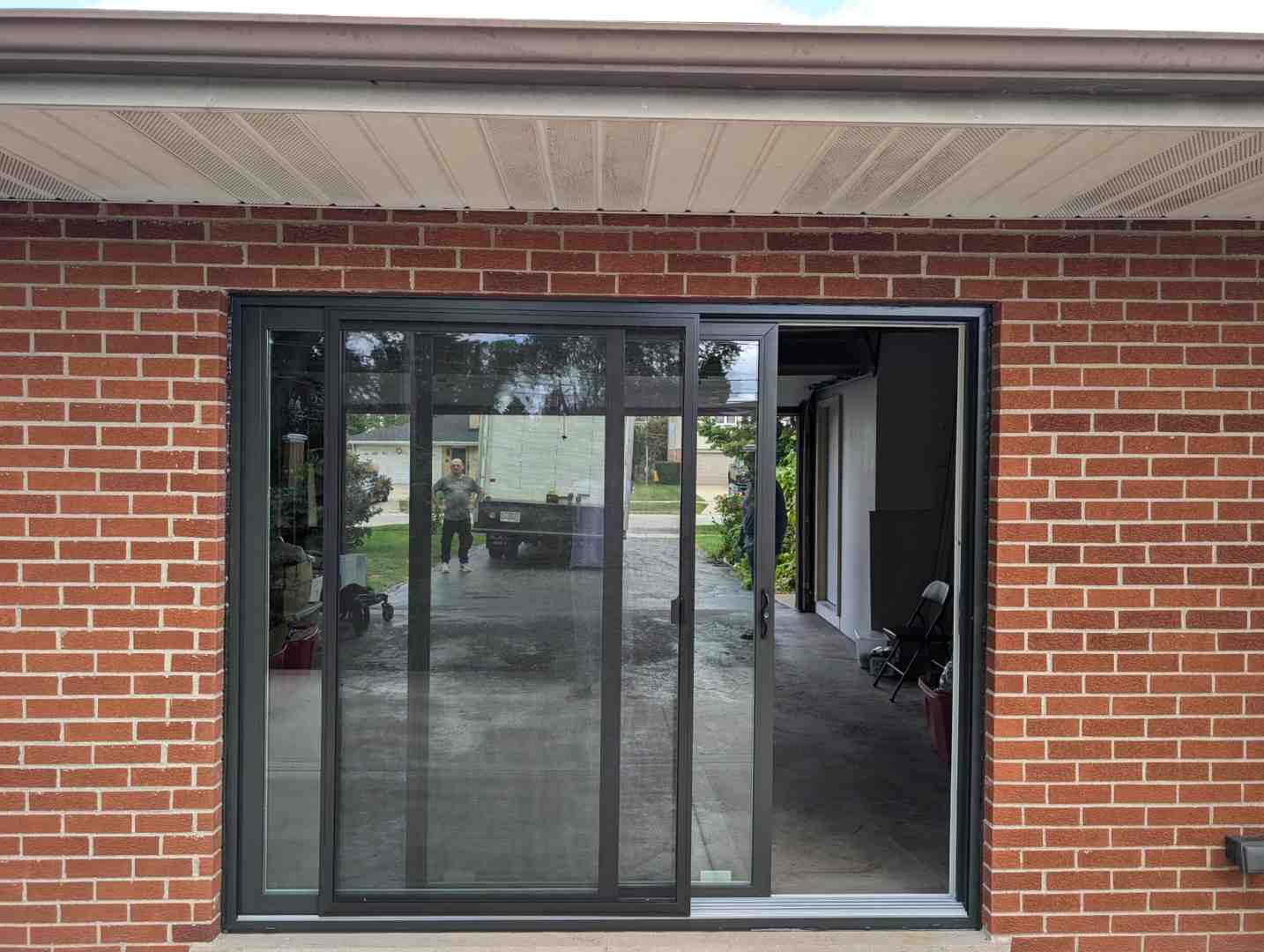
Is It Time for a Patio Door Replacement?
Patio door replacement is the process of removing an old, worn, or inefficient patio door and installing a new one — improving your home’s energy efficiency, security, comfort, and curb appeal.
Quick answer — you likely need a patio door replacement if you notice:
- Drafts or cold air coming through the frame or threshold
- Foggy or condensation between the glass panes
- A door that sticks, drags, or is hard to lock
- Visible frame damage like rot, warping, or cracks
- Rising heating or cooling bills with no other cause
Most standard patio door replacements in the Chicago area are completed in a single day by a professional installer.
Your patio door is one of the hardest-working parts of your home. It opens and closes dozens of times a day, takes the full force of Chicago’s winters and humid summers, and is one of the largest sources of heat loss in the house.
When a patio door starts to fail — whether it’s letting in drafts, fogging up between the panes, or just grinding on its track — it affects everything: your comfort, your energy bills, and even your home’s security.
The good news? A replacement patio door is one of the most impactful upgrades you can make. Modern doors with energy-efficient glass, durable frames, and smooth hardware perform far better than doors from even 10–15 years ago.
I’m Voytek Glab, owner of Perfect Windows & Siding, and I’ve spent over 20 years helping homeowners across the Chicagoland area with patio door replacement — from choosing the right style and material to making sure every installation is done right the first time. In this guide, I’ll walk you through everything you need to know to make a confident decision.
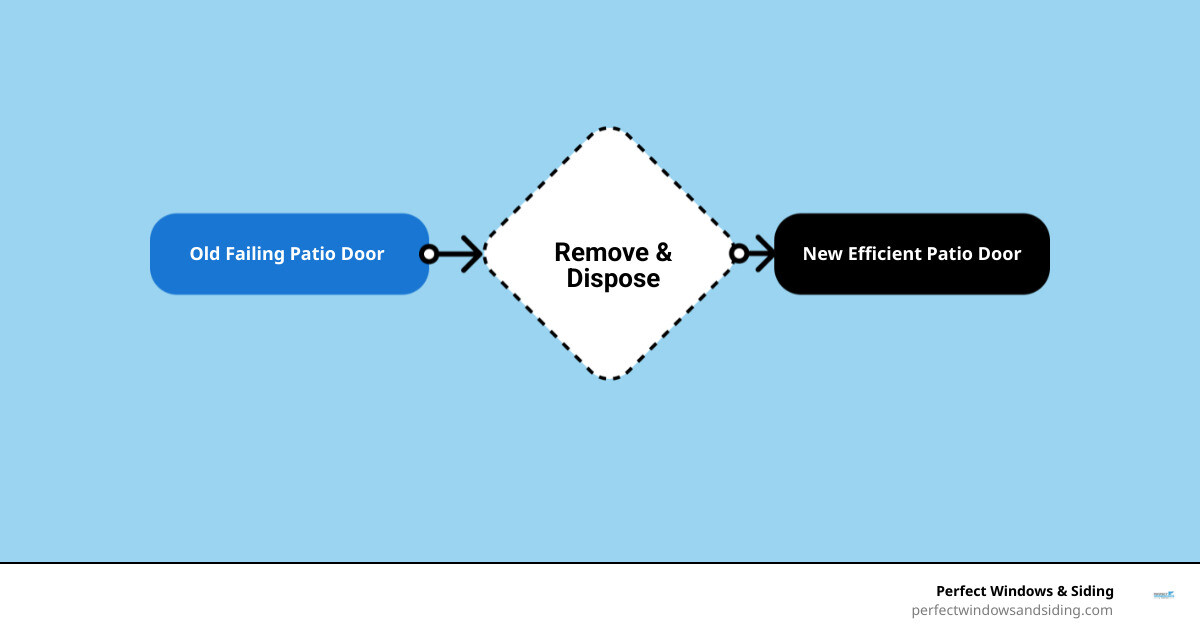
When It’s Time for Patio Door Replacement
A failing patio door usually gives you warnings before it completely gives up. Sometimes those warnings are obvious, like cracked glass or rotted wood. Sometimes they are subtle, like a room that always feels colder near the door.
In Chicagoland, we pay extra attention to doors because freeze-thaw cycles, wind, humidity, and heavy use can speed up wear. A patio door that was merely “annoying” a few years ago can become an air leak, security issue, or water-intrusion problem today.
Common signs your patio door needs replacement
Here are the biggest red flags we look for:
- Condensation or fog trapped between panes, which usually means the insulated glass seal has failed
- A sliding panel that drags, jumps, or requires a full-body shove
- Locks that no longer engage properly
- Rot, swelling, warping, or soft spots in the frame
- Cracked or chipped glass
- Air leaks around the sash, frame, or threshold
- Water staining, damp drywall, or signs of leakage around the opening
- Worn weatherstripping that no longer seals tightly
- An outdated door that hurts comfort, appearance, or resale appeal
One useful rule of thumb: if your patio door is around 15 to 20 years old and has multiple issues, replacement often makes more sense than chasing repair after repair.
Repair or full Patio Door Replacement?
Not every problem means you need a full new door. Sometimes a repair is enough. For example:
- Worn rollers can sometimes be replaced
- Damaged weatherstripping may be serviceable
- Some locksets or handles can be swapped out
- Screens can often be repaired without replacing the main unit
But a full Patio Door Replacement is usually the smarter move when you have:
- Failed insulated glass seals
- Repeated sticking from frame movement
- Threshold damage
- Rot or structural deterioration
- Water infiltration around the frame
- Multiple failing parts on an older unit
There are also two replacement approaches:
- Insert replacement: keeps an existing frame if it is square, sound, and dry
- Full-frame replacement: removes the entire unit and is better when the frame, flashing, or surrounding structure has issues
In our experience, homeowners in Chicago and nearby suburbs often benefit from full-frame replacement when the old opening has hidden water damage or poor insulation. It is less glamorous than shopping for hardware finishes, but it matters a lot more.
Patio Door Replacement Options: Styles, Layout, and Space Planning
Choosing the right patio door is not just about looks. It affects furniture placement, traffic flow, ventilation, and how your room feels every day.

The main replacement styles include:
- Sliding patio doors
- Hinged patio doors
- French patio doors
- Center-hinged doors
- Folding or bifold doors
- Multi-slide doors
Sliding vs. hinged Patio Door Replacement
Sliding patio doors move on a track, so they do not need swing clearance. That makes them ideal for:
- Smaller rooms
- Tight walkways
- Areas near dining tables or kitchen islands
- Homes where you want maximum glass and daylight
Hinged patio doors swing in or out, so they need clear floor space. They are great for:
- Wider openings
- More traditional home styles
- Homeowners who want a grander entry feel
- Spaces where ventilation and full opening width matter
Inswing doors protect exterior space, but they take up interior floor area. Outswing doors preserve inside space, but you need exterior clearance and proper weather-resistant details.
If your sofa, breakfast table, or favorite dog bed lives near the opening, sliding doors may make life easier. If you want a more classic look and have room for the swing, hinged or French-style doors can be beautiful.
For homeowners comparing styles, it also helps to understand how sliding glass doors are commonly used in residential design and how they differ from swinging patio systems.
Best patio door styles for different homes
A few quick matches we commonly recommend:
- Sliding doors: best for everyday practicality, narrow rooms, and modern layouts
- French doors: ideal for traditional architecture and a more formal look
- Center-hinged doors: useful when you want one active panel and one fixed panel
- Three- and four-panel doors: great for wider backyard openings
- Folding and multi-slide doors: best for large custom projects that blur indoor-outdoor living
Screen options also matter. Depending on the style, you may have:
- Standard sliding screens
- Retractable screens
- Full insect screens for hinged units
If you want more inspiration, see our guide on patio and sliding doors for Chicago homes and our French door installation complete guide.
Standard and custom sizing basics
The most common stock patio door sizes you will see in stores and catalogs are:
- 60 x 80
- 72 x 80
- 96 x 80
Those are common, but they are not the whole story. A proper replacement also needs the right:
- Jamb depth
- Rough opening fit
- Panel configuration
- Wall thickness
- Handing and swing direction
Many big-box listings emphasize standard sizes because they are widely available. But older homes in Chicago, Park Ridge, Wilmette, Glenview, and surrounding suburbs often need custom sizing for the best fit and performance.
If you are specifically comparing narrower options, our article on 5 ft sliding glass doors is a helpful place to start.
Choosing the Right Material and Glass Package
Material affects durability, maintenance, energy performance, appearance, and long-term satisfaction. In Chicago’s climate, that decision matters.
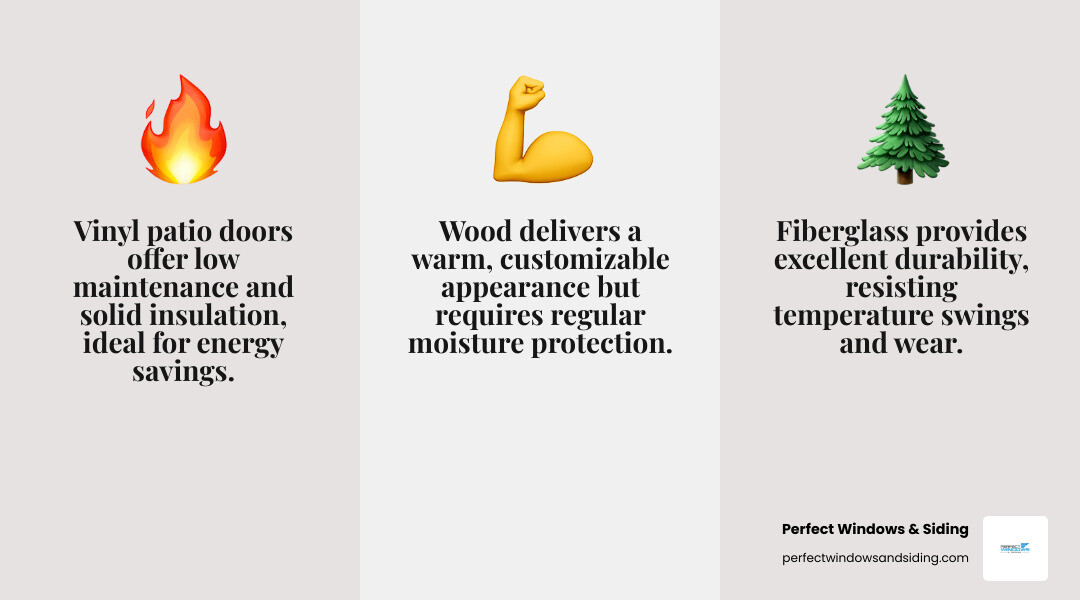
How patio door materials compare
Here is the simple version:
| Material | Strengths | Watchouts |
|---|---|---|
| Vinyl | Low maintenance, solid insulation, popular for replacement | Quality varies, lower-end units can expand or warp |
| Fiberglass | Excellent durability, strong in temperature swings, low maintenance | Fewer ultra-budget options, style selection can vary |
| Wood | Warm appearance, strong customization, classic look | Requires more maintenance, vulnerable to moisture if neglected |
| Steel | Strong security, durable in some applications | Can dent, may be less common for full-glass patio configurations |
Fiberglass deserves special mention in our area. It handles cold winters and hot, humid summers very well, which is one reason many local homeowners prefer it. If that sounds like your priority, read why Kildeer homeowners are switching to fiberglass patio doors.
You may also see aluminum and composite options. Aluminum can be sleek, but thermal performance depends heavily on design. Composite products vary by manufacturer, so we evaluate them case by case.
Why energy-efficient glass matters
Glass is not just glass anymore. Modern patio doors can include:
- Low-E coatings
- Argon gas fill
- Dual-pane or triple-pane glass
- Warm-edge spacers
- Tempered safety glass
- ENERGY STAR qualified configurations
For Chicago-area homes, U-factor is especially important because it measures how much heat the door loses. Lower is better in cold climates. SHGC, or Solar Heat Gain Coefficient, matters too, especially if you get intense afternoon sun.
Why homeowners notice the difference:
- Fewer drafts near the glass
- Better indoor comfort in winter and summer
- Less strain on heating and cooling systems
- Reduced UV fading on floors and furniture
- Less condensation risk when the system is well designed
Low-E glass reflects heat energy, while argon helps reduce heat transfer between panes. Warm-edge spacers improve the edge-of-glass performance, which is often where older doors struggle most.
Features worth considering for security and convenience
Today’s patio doors can be customized with practical upgrades, not just cosmetic ones:
- Built-in blinds between the glass
- Multi-point locking systems
- 3-point lock options
- Footbolts or vent locks
- Tempered or impact-resistant glass packages
- Retractable screens
- Pet door options
- Grilles between glass
- Low-profile sills
- Noise-reducing glass packages
If you have kids, pets, or frequent backyard traffic, smooth rollers and a low sill can make daily use much easier. If privacy is a concern, built-in blinds are popular because they are protected inside the glass rather than collecting dust like traditional blinds. Your blinds should not need their own cleaning schedule and emotional support.
How to Measure and Prepare for Installation Day
Accurate measuring is one of the biggest keys to a successful replacement.

How to measure for a replacement patio door
For a preliminary measurement, we recommend checking:
- Width in three places:
- Top
- Middle
- Bottom
- Height in three places:
- Left
- Center
- Right
- Diagonal measurements:
- Corner to corner both ways
- Jamb depth:
- Interior face to exterior face of the frame
Also note:
- Whether the unit is square and plumb
- Whether the frame shows rot or water damage
- Which panel is active
- Whether you are measuring the existing unit or the rough opening
If the numbers vary, that tells you something important about the condition of the opening. A professional measurement is still the safest path before ordering, because even small errors can turn a promising project into a very expensive lesson in patience.
What to expect during professional installation
Most standard patio door replacements are completed in one day, though trim work, structural repairs, or custom conditions can add time.
A typical professional install includes:
- Protecting floors and nearby furnishings
- Removing the old door and components
- Inspecting the opening for damage
- Correcting minor irregularities
- Shimming and leveling the new frame
- Flashing and sealing the opening
- Insulating gaps properly
- Installing interior and exterior trim as needed
- Adjusting panels, rollers, and locks
- Cleaning the area and hauling away debris
Proper flashing and air sealing are critical in Chicago’s weather. A patio door can look fantastic on day one and still fail early if those hidden details are skipped.
How homeowners should prepare
You do not need to rebuild your house before installation day, but a little prep helps a lot:
- Clear furniture away from the door area
- Remove fragile decor and wall items nearby
- Take down blinds or curtains if requested
- Secure pets away from the work zone
- Create a clear path for installers
- Be ready with any questions about hardware, trim, or operation
If you are also comparing entry and exterior door projects, our exterior door replacement guide may help you plan.
Buying, Customizing, and Maintaining Your New Patio Door
A new patio door should fit your home both visually and functionally. This is where product selection, customization, and long-term care come together.
Where to buy replacement patio doors and how to compare options
Homeowners generally shop in three places:
- Big-box retailers with in-stock sizes
- Brand showrooms and specialty dealers
- Local installation companies that help with product selection and custom ordering
Big-box stores can be useful for browsing common sizes and comparing broad style categories. Research shows there are many patio door listings online at major home improvement retailers, with especially common sizes like 60 x 80 and 72 x 80. That is helpful for research, but stock inventory does not guarantee the best fit for an existing older opening.
When comparing options, look beyond the product photo. Evaluate:
- Material quality
- Glass package
- Warranty coverage
- Hardware durability
- Lead times for custom orders
- Installation requirements
- Whether the door is suited to a cold-weather climate
It also helps to work with an experienced local company that understands how patio doors perform in Chicago-area weather and how to identify the right fit for older homes in places like Des Plaines, Park Ridge, Glenview, and nearby suburbs. For a local overview of our own service area, visit our door replacement Chicago page, door replacement near me page, or replacement doors Chicago guide.
For additional context on how patio doors function as part of your home’s building envelope, the U.S. Department of Energy’s guide to doors offers helpful background on energy performance standards and selection criteria.
Customization options that change the final look
This is where your new door starts to feel like it belongs in your home rather than in a warehouse.
Popular customization options include:
- Black, white, or custom-color frames
- Interior woodgrain or painted finishes
- Traditional or contemporary profiles
- Grille patterns
- Decorative hardware finishes
- Privacy glass options
- Custom dimensions
- Two-, three-, or four-panel layouts
Some homeowners want a clean, modern wall-of-glass look. Others want a classic French-door appearance with divided lites and richer interior finishes. Both can work beautifully if the style fits the house.
Maintenance tips by patio door type
Good patio doors are low maintenance, not no maintenance.
For sliding doors:
- Vacuum and wipe tracks regularly
- Keep rollers free of grit
- Check locks and handles for smooth operation
- Inspect weatherstripping seasonally
For hinged doors:
- Lubricate hinges as needed
- Check alignment and latch engagement
- Inspect sweep and threshold seals
For wood doors:
- Watch for finish wear
- Repaint or reseal when needed
- Monitor for moisture exposure
For all patio doors:
- Clean glass with non-abrasive cleaner
- Check screens for tears
- Inspect caulk and exterior sealants
- Review warranty terms so you know what maintenance is expected
One reason some brands stand out is long-term parts support. Reliable access to compatible replacement parts and accessories can help extend the service life of a patio door over time.
DIY vs professional Patio Door Replacement
Can a handy homeowner replace a patio door? Sometimes. Should they? That is a different question.
DIY replacement is hardest when the project involves:
- Out-of-square openings
- Rot or hidden water damage
- Exterior cladding or trim integration
- Flashing details
- Heavy multi-panel units
- Code-related safety requirements
- Warranty conditions tied to proper installation
A patio door is not just a large piece of glass. It is part of the building envelope. If it is not leveled, sealed, flashed, and insulated correctly, the problems can include drafts, leaks, sticking panels, poor locking, and shortened lifespan.
Professional installation helps protect:
- Energy performance
- Smooth operation
- Water resistance
- Manufacturer warranty coverage
- Long-term structural integrity
That is why many homeowners who start with “maybe we can do this ourselves” eventually arrive at “maybe we enjoy dry floors and functioning locks.”
Frequently Asked Questions About Patio Door Replacement
How long does patio door replacement usually take?
For a standard opening, professional replacement is often completed in one day. More time may be needed if:
- The opening needs repair
- Interior or exterior trim is extensive
- The project involves custom structural changes
- Weather affects exterior finishing
The ordering timeline is separate from installation day. Custom-sized doors usually take longer to manufacture than stock sizes.
What warranties are commonly offered on replacement patio doors?
Warranty terms vary, but the most common categories are:
- Frame warranty
- Glass warranty
- Hardware warranty
- Screen warranty
- Installation workmanship warranty
Always read the details. Some coverage is transferable, some is prorated, and some depends on proper maintenance or professional installation. At Perfect Windows & Siding, quality and long-term support matter to us, which is why we back our work with a lifetime warranty.
What tools help visualize a new patio door before ordering?
Visualization tools can make decision-making much easier. Helpful options include:
- Online visualizers that let you upload a photo of your home
- Showroom samples
- Finish swatches
- Glass and grille mockups
- Side-by-side comparisons of frame colors and hardware
Some manufacturers offer online visualizer tools specifically for patio doors, which can be useful if you are torn between sliding and hinged designs or between white and black frames.
Conclusion
A successful Patio Door Replacement is about much more than replacing old glass. It is about choosing the right style, the right material, the right glass package, and the right installer for your home and our Chicago-area climate.
At Perfect Windows & Siding, we help homeowners across Chicago and the suburbs find custom patio door solutions that improve comfort, security, and curb appeal for the long run. As a local, family-owned company with more than 20 years of experience, we focus on quality craftsmanship, personalized service, and lasting results backed by a lifetime warranty.
If you are starting to notice drafts, sticking, fogged glass, or worn-out hardware, now is the right time to take a closer look. Learn more about door replacement in Chicago or schedule your consultation to get a free estimate.