

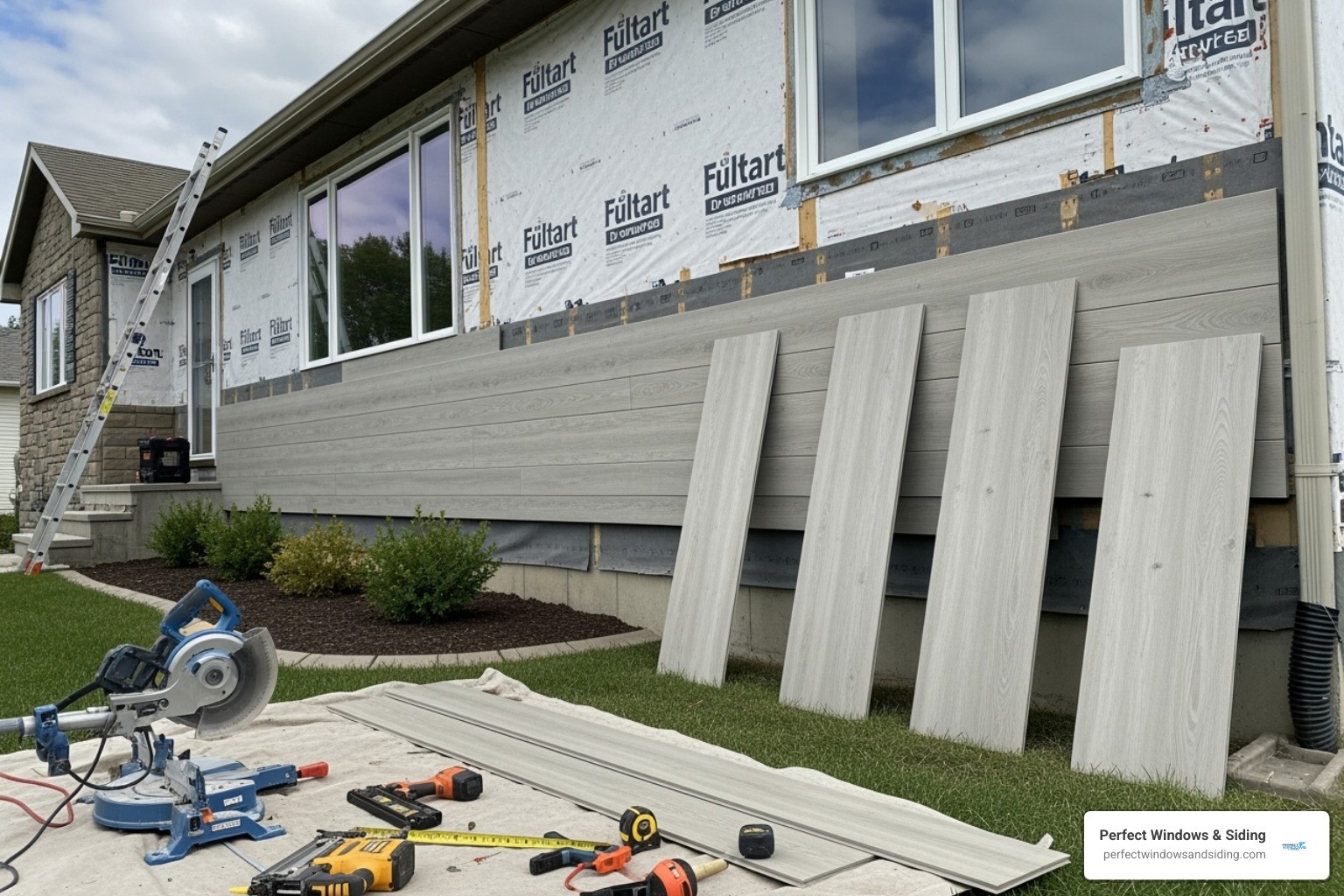
Why Understanding Fiber Cement Siding Costs Matters for Your Home Investment
The fiber cement siding replacement cost typically ranges from $7 to $18 per square foot installed, with most homeowners paying between $10,000 to $25,000 for a complete project. Here’s what you need to know:
Average Costs by Home Size:
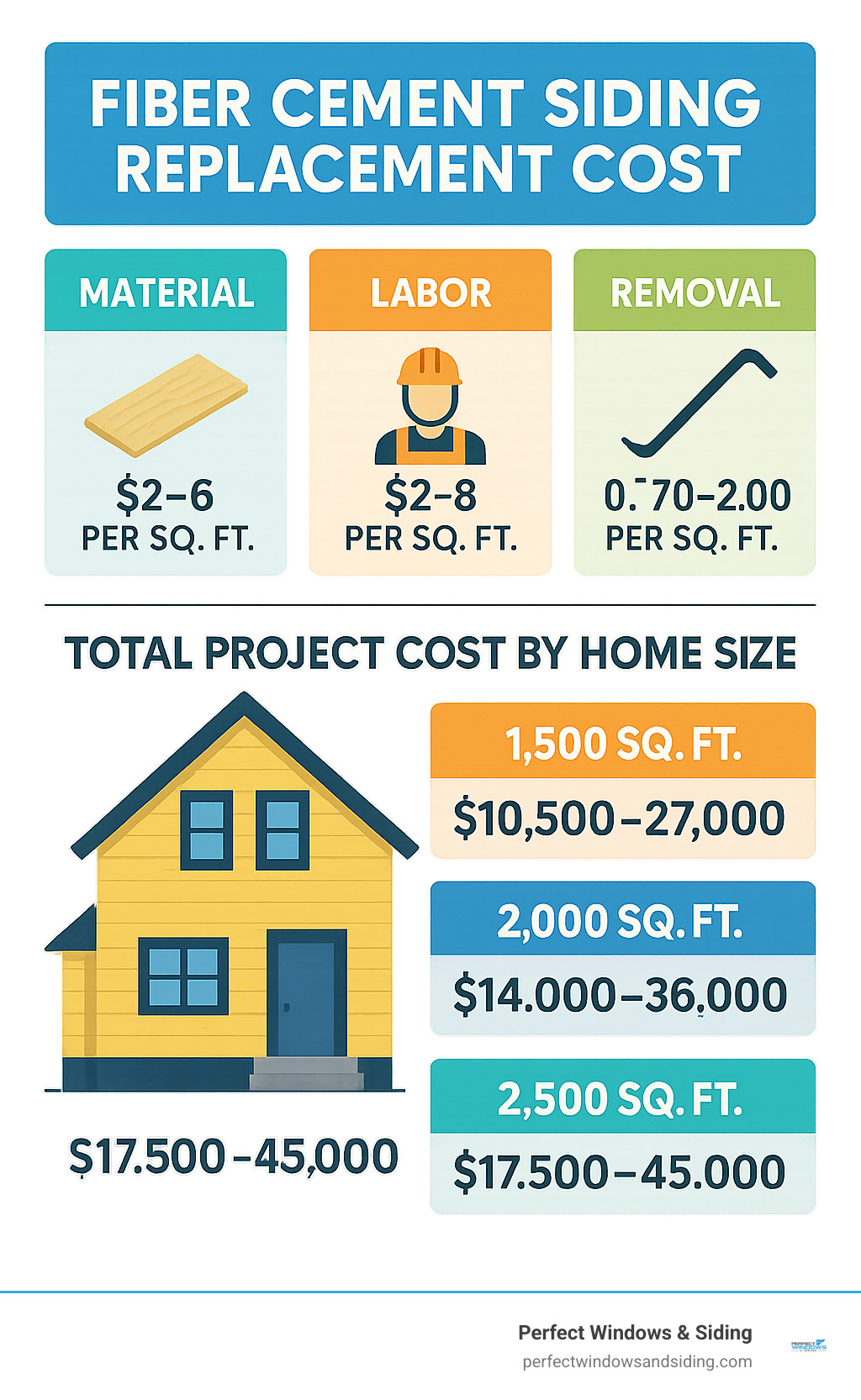
- 1,500 sq ft home: $10,500 – $27,000
- 2,000 sq ft home: $14,000 – $36,000
- 2,500 sq ft home: $17,500 – $45,000
Key Cost Factors:
- Material costs: $2-$6 per sq ft
- Labor costs: $2-$8 per sq ft
- Old siding removal: $0.70-$2.00 per sq ft
- Home complexity (stories, dormers, gables)
- Geographic location and local labor rates
When you’re planning a major home exterior upgrade, understanding these costs upfront helps you make informed decisions and budget properly. Fiber cement siding offers exceptional durability – lasting 30 to 50 years – and provides an impressive 80% return on investment according to industry data.
The material itself is made from cement, sand, and cellulose fibers, creating a product that resists fire, moisture, pests, and extreme weather while mimicking the authentic look of wood. However, proper installation requires specialized tools and expertise, making professional installation strongly recommended.
I’m Voytek Glab, owner of Perfect Windows & Siding, and I’ve helped hundreds of Chicagoland homeowners steer fiber cement siding replacement cost decisions over the past 20 years. My experience shows that while the upfront investment is significant, the long-term value and minimal maintenance requirements make it one of the smartest exterior upgrades you can make.
Key fiber cement siding replacement cost vocabulary:
Understanding the Total Fiber Cement Siding Replacement Cost
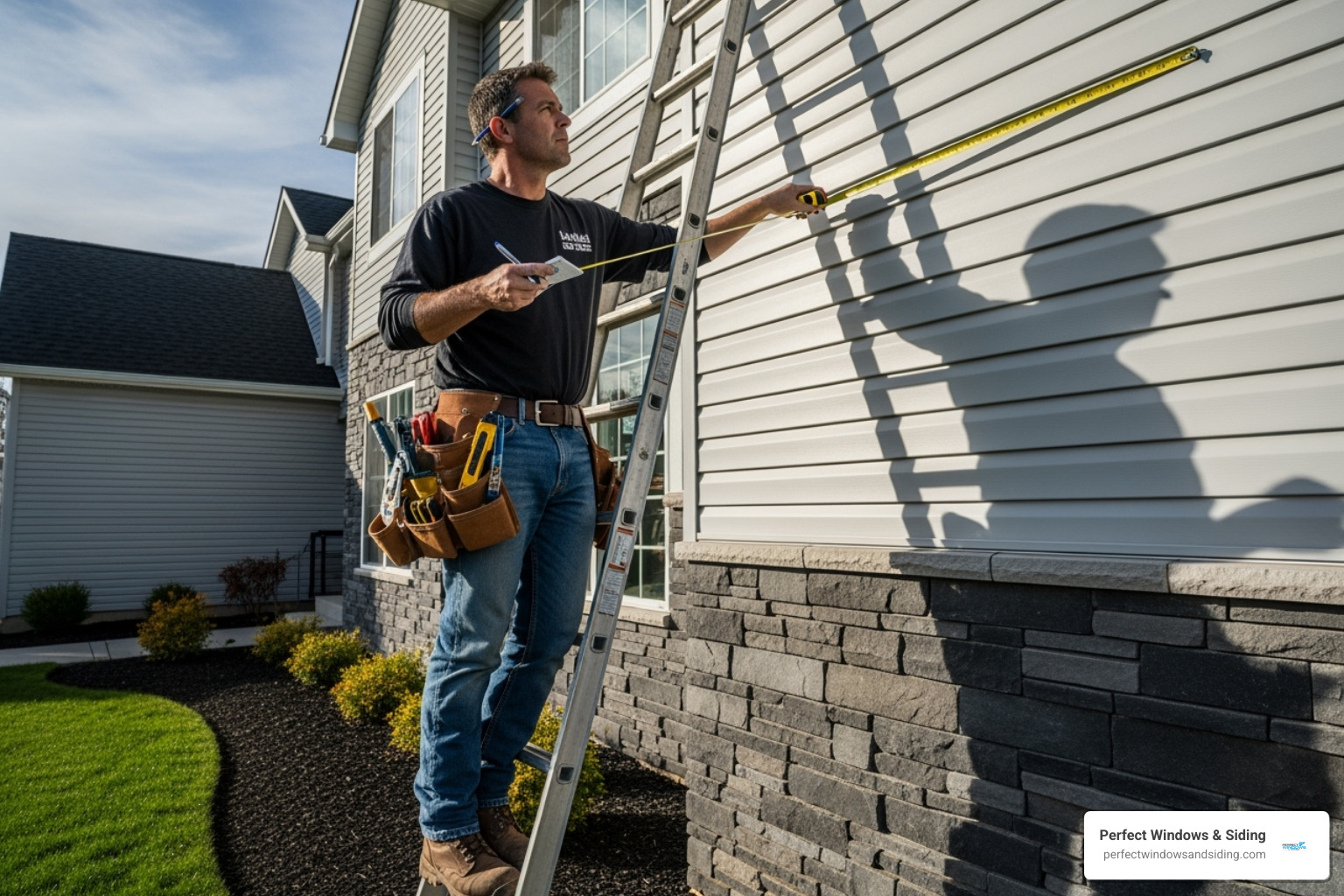
When you’re ready to transform your home’s exterior, understanding the complete picture of fiber cement siding replacement cost helps you plan and budget with confidence. The national average for a complete fiber cement siding project sits around $14,674, though this number tells only part of the story.
Most homeowners find their total project costs falling somewhere between $6,612 and $23,172, depending on their home’s size and complexity. The cost per square foot typically ranges from $5 to $14, making fiber cement a premium choice that delivers exceptional long-term value.
For perspective, an 800 square foot section averages about $7,496, which works out to roughly $9.37 per square foot. This might seem like a significant investment upfront, but when you consider fiber cement’s 30-50 year lifespan, the math starts looking pretty attractive.
The total project cost of $10,000 to $25,000 that most homeowners experience includes everything: materials, professional installation, and often the removal of your old siding. Regional differences can push these numbers higher or lower, with some areas seeing costs reach up to $54,000 for larger homes.
Cost Breakdown by Home Size
Your home’s square footage is the biggest factor in determining your final fiber cement siding replacement cost. Think of it simply: more house equals more materials and more labor hours.
Here’s what homeowners typically spend based on their home size:
| Home Size (Square Feet) | Estimated Total Cost Range |
|---|---|
| 800 (large section) | $7,496 – $13,000 |
| 1,000 | $7,000 – $18,000 |
| 1,500 | $10,500 – $27,000 |
| 2,000 | $14,000 – $36,000 |
| 2,500 | $17,500 – $45,000 |
| 3,000 | $21,000 – $54,000 |
Small homes (under 1,500 square feet) often fall on the lower end of these ranges, especially if they have simple, straightforward designs. Average-sized homes around 2,000 square feet represent the sweet spot where you get the best balance of cost and impact. Large homes over 2,500 square feet require a bigger investment, but they also see the most dramatic change.
These figures cover everything from start to finish – materials, professional installation, and typically the removal of your existing siding. While a small repair might only cost a few hundred dollars, a complete replacement is a substantial investment that pays dividends in durability, energy efficiency, and curb appeal.
How Location Affects Your Siding Budget
Just like buying a house, location plays a huge role in your siding costs. Labor rate variations across the country can be dramatic – what costs $15,000 in one state might run $22,000 in another.
Material availability also impacts pricing. Areas with limited suppliers or challenging delivery logistics often see higher material costs. Weather patterns affect installation schedules too, which can influence labor pricing during peak seasons.
Here in the Midwest, we enjoy more reasonable pricing trends compared to coastal areas. Chicago area costs tend to align well with national averages, though they can run slightly higher due to our skilled labor market. For that same 800 square foot project that averages $7,496 nationally, Chicago homeowners might expect around $10,518.
After two decades serving Chicagoland families, I’ve seen how local market conditions affect pricing. Our established relationships with quality suppliers and experienced local crews help us keep costs competitive while maintaining the high standards our customers expect.
Understanding these regional differences helps you set realistic expectations for your project budget. If you’re ready to explore what fiber cement siding could cost for your specific home, our team provides detailed, no-pressure estimates that account for all these local factors. Check out our siding companies Chicago page to learn more about our local expertise and services.
Key Factors That Influence Your Final Price
When I meet with homeowners about their fiber cement siding replacement cost, they’re often surprised by how many factors can influence their final price. Let me walk you through the key elements that will shape your investment.
Material vs. Labor: The Core of Your Fiber Cement Siding Replacement Cost
Here’s the thing about siding projects – you’re really paying for two main components: the materials themselves and the skilled hands that install them properly.
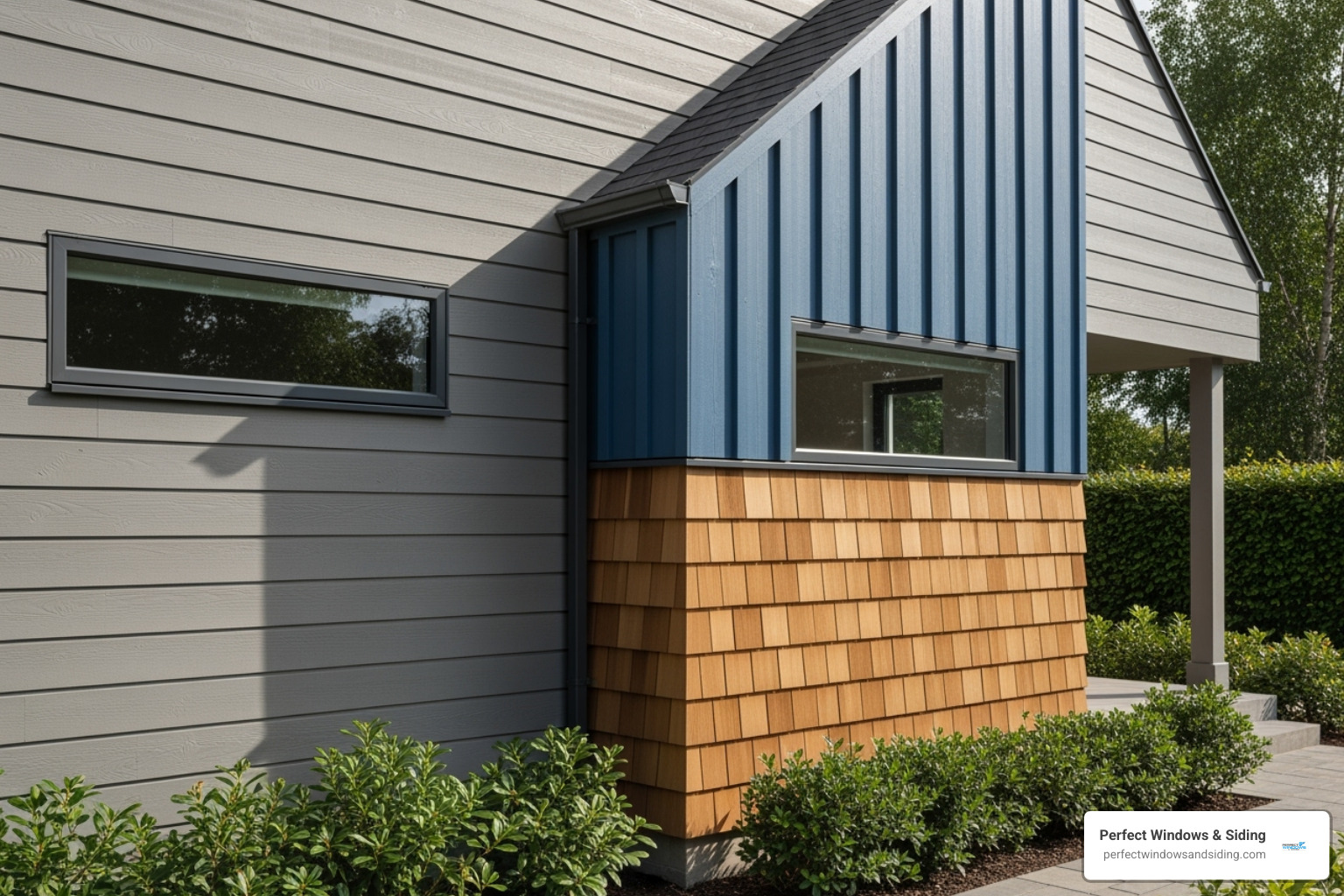
Material costs can vary dramatically based on your choices. Fiber cement planks are the most popular option, mimicking traditional lap siding at $0.70 to $6 per square foot. They give you that classic look most homeowners love. If you’re drawn to a more modern aesthetic, fiber cement panels range from $2.50 to $15 per square foot and can beautifully imitate stucco or even brick. For those wanting that rustic charm, fiber cement shingles typically run $2 to $6 per square foot and create a gorgeous shake appearance.
Now, here’s where things get interesting. Custom finishes and textures can really make your home stand out, but they’ll add thousands to your project. Think of it as the difference between a basic car and one with all the premium features – both get you where you’re going, but one definitely turns more heads.
You’ll also need to decide between pre-primed and pre-painted options. Pre-primed siding costs less upfront but requires painting after installation. Pre-painted siding with baked-on color costs more initially, but you’ll save on painting labor and often get a longer finish warranty. It’s one of those “pay now or pay later” decisions.
Labor costs typically represent the biggest chunk of your fiber cement siding replacement cost – usually 20% to 70% of your total project. Professional installation adds $2 to $8 per square foot, and trust me, this isn’t where you want to cut corners.
Installation complexity can really impact your costs. If your home has multiple stories, dormers, gables, or lots of windows, expect higher labor charges. These features require precise cuts, specialized scaffolding, and extra safety measures. It’s like the difference between painting a simple rectangle and painting a detailed portrait – both require skill, but one demands significantly more time and expertise.
Additional Factors Influencing Your Fiber Cement Siding Replacement Cost
Beyond the basics, several other factors can influence your final investment. Old siding removal typically costs $0.70 to $2.00 per square foot, but here’s a heads-up – if we find your existing siding contains asbestos, that removal cost can triple due to specialized handling requirements.
Debris disposal adds another $0.50 to $0.56 per square foot to haul away all that old material. Most municipalities also require permit fees ranging from $500 to $2,000 to ensure your project meets local building codes.
Here’s what keeps me up at night as a contractor – underlying damage. Once we remove your old siding, we sometimes find hidden water damage, mold, or dry rot. Mold remediation can cost $9 to $23 per square foot, while dry rot repair might add $100 to $2,000 to your project. I know it’s frustrating when these surprises pop up, but addressing them is crucial for your home’s long-term health.
If you choose pre-primed siding, factor in painting costs around $2.50 per square foot, or roughly $1,700 to $3,700 for an entire house. Professional painting ensures your beautiful new siding gets the finish it deserves.
At Perfect Windows & Siding, we believe in transparent pricing. We’ll discuss every potential cost upfront so there are no surprises down the road. You can explore our comprehensive siding options to see how we approach each project with custom solutions custom to your home’s unique needs.
Is Fiber Cement Siding a Worthwhile Investment?
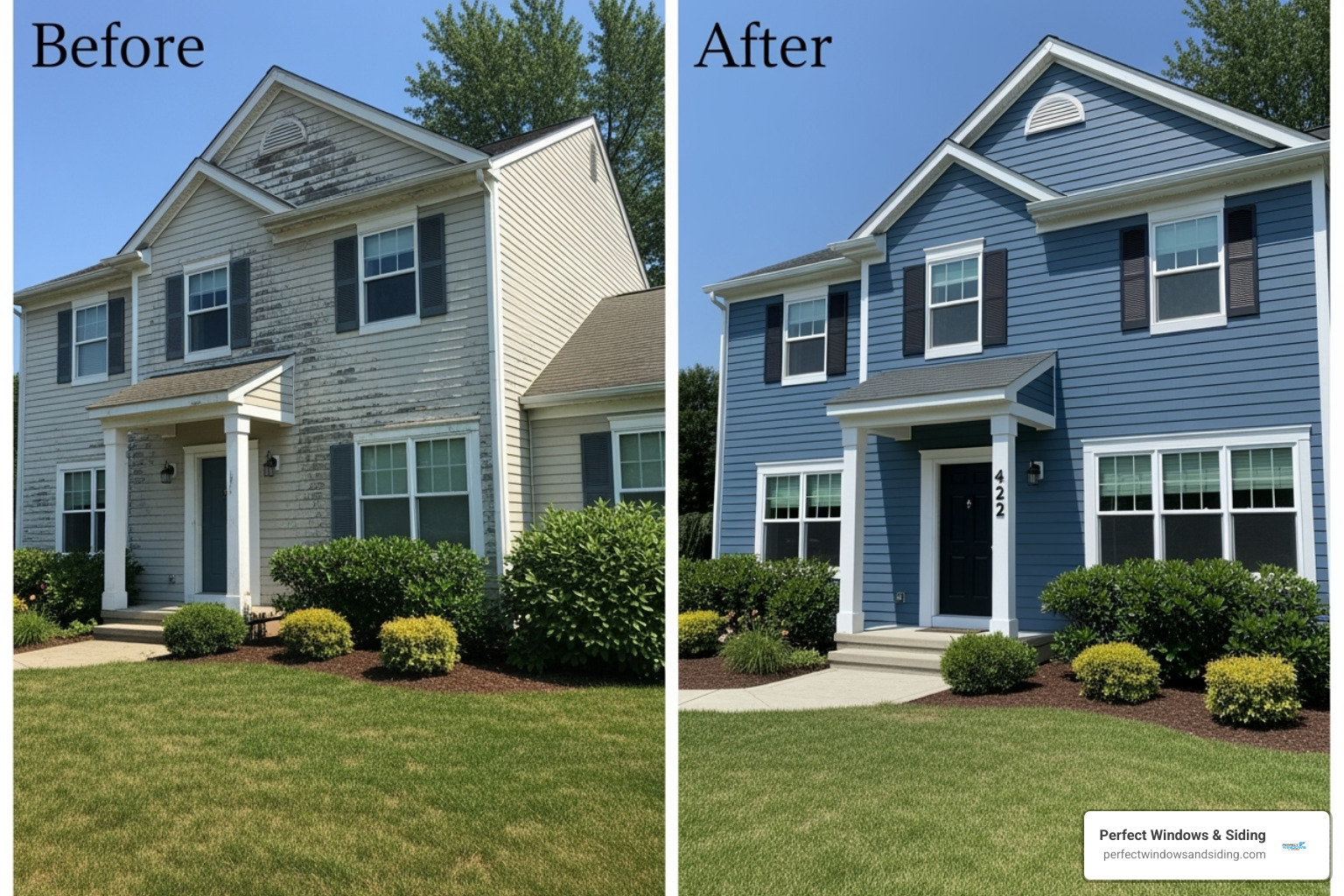
After seeing hundreds of siding projects over the past two decades, I can confidently say that despite the higher fiber cement siding replacement cost, this material delivers exceptional long-term value. The question isn’t whether you can afford to install fiber cement siding – it’s whether you can afford not to.
The numbers speak for themselves. When you invest in fiber cement siding, you’re getting a material that can last 50 years or more with minimal maintenance. Compare that to vinyl siding that might need replacement in 20-30 years, or wood siding that requires constant upkeep, and the value proposition becomes crystal clear.
Pros and Cons Compared to Vinyl and Wood
Let me be honest about what makes fiber cement siding special – and where it falls short. The biggest advantage is its incredible fire resistance with a Class A rating. I’ve seen too many homes damaged by fires, and knowing your siding won’t fuel the flames provides real peace of mind.
The pest resistance is another game-changer, especially here in Illinois. While wood siding attracts termites and woodpeckers, fiber cement simply isn’t appetizing to these destructive visitors. It’s also remarkably weather-resistant, standing up to our harsh Chicago winters and severe storms without warping, cracking, or rotting.
What really impresses homeowners is the authentic wood look. Modern fiber cement is five times thicker than vinyl, allowing for deep, realistic wood grain textures that fool even close inspection. You get the beauty of wood without the headaches.
Now for the drawbacks. The higher initial cost is real – fiber cement typically runs 2 to 3 times more than vinyl siding upfront. It also requires professional installation because it’s heavy (about two and a half pounds per square foot) and can crack if handled incorrectly. The cutting process creates fine dust that needs proper safety equipment, making DIY installation risky.
When comparing to vinyl, vinyl might cost as little as $0.75 per square foot while fiber cement starts around $2 per square foot for basic materials. However, vinyl can fade, crack, and look plastic-like over time. You can learn more about the benefits of vinyl siding for Illinois homes if you’re considering that option.
Wood siding presents its own challenges. While material costs might be similar ($4.70 to $7.50 per square foot), wood demands constant maintenance – painting, staining, and sealing every few years. Fiber cement eliminates most of this ongoing work and expense.
Return on Investment (ROI) and Lifespan
Here’s where fiber cement siding really shines. According to the Remodeling Cost vs. Value report, fiber cement siding delivers an impressive 77.6% to 80% return on investment. This material has ranked among the highest ROI home improvements for 11 straight years.
What does this mean in real dollars? If you invest $14,886 in a typical fiber cement siding project, you can expect to recoup about $11,900 in increased home value. That’s not just theoretical – it’s what buyers actually pay for homes with quality fiber cement siding.
The lifespan factor makes the math even more compelling. With proper installation and basic maintenance, fiber cement siding can last 30 to 50 years, with some manufacturers offering warranties up to 50 years. Some sources even suggest it could last 100 years under ideal conditions.
Think about it this way – you’ll likely never need to replace your siding again. While neighbors with vinyl or wood siding face expensive replacements or constant maintenance, your fiber cement siding will keep protecting and beautifying your home decade after decade.
This longevity transforms what seems like a high upfront fiber cement siding replacement cost into one of the smartest long-term investments you can make. That’s exactly why new siding is worth the investment – it’s not just an expense, it’s a strategic upgrade that pays dividends for years to come.
Professional Installation vs. DIY: Risks, Rewards, and How to Save
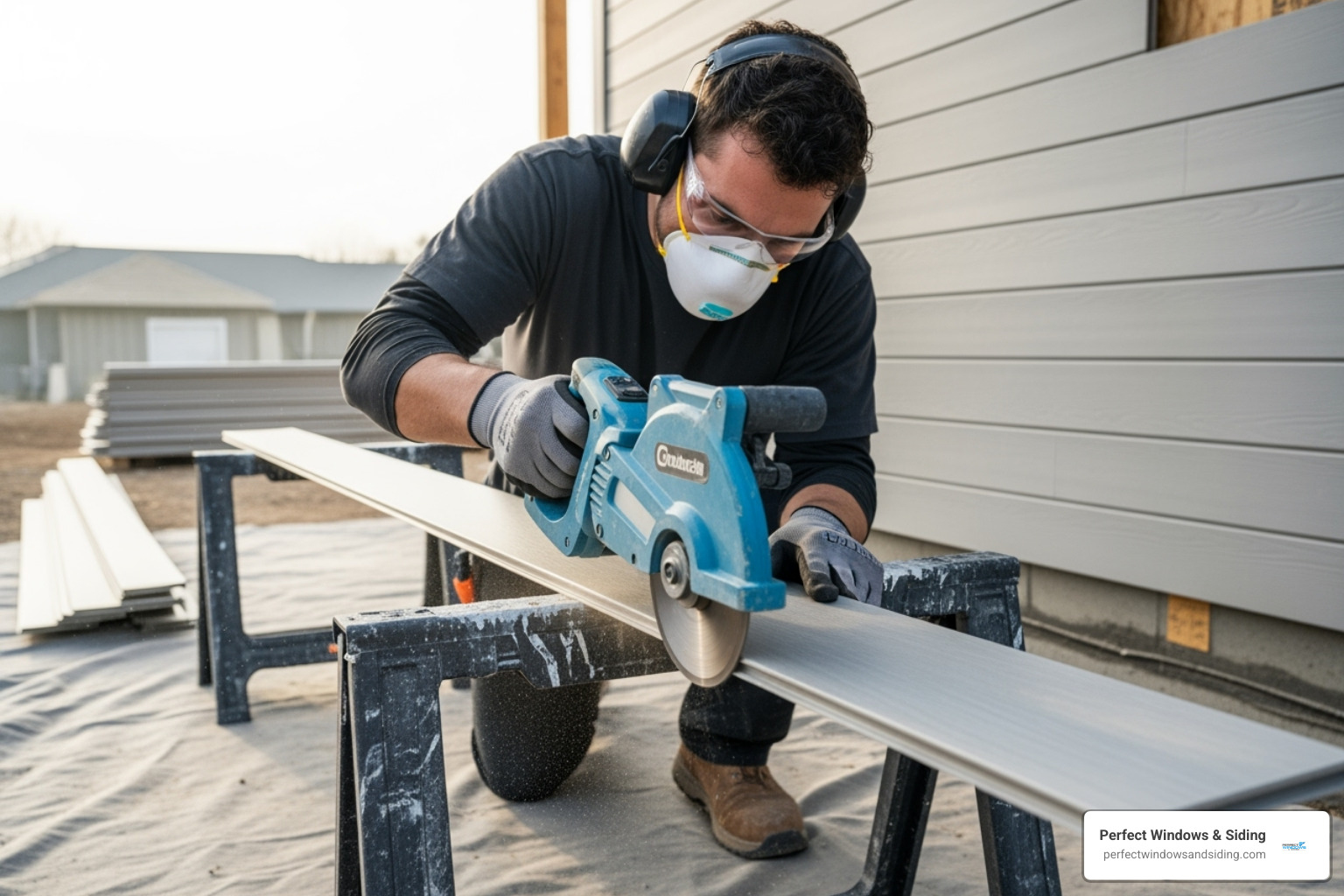
I get it – when you see that fiber cement siding replacement cost estimate, the idea of tackling it yourself to save a few thousand dollars sounds pretty tempting. After all, how hard could it be, right? Well, let me share some hard-earned wisdom from two decades in this business: fiber cement siding is definitely not a weekend DIY project.
Unlike vinyl siding that you might be able to handle with basic tools and some YouTube tutorials, fiber cement is a whole different beast. The material itself weighs about two and a half pounds per square foot, making it heavy and surprisingly fragile at the same time. Drop a piece wrong, and it’ll crack faster than your enthusiasm for the project.
Then there’s the dust issue. When you cut fiber cement, it creates fine silica dust that’s genuinely dangerous to breathe. We’re talking about serious respiratory protection here – not just a basic dust mask from the hardware store. Professional crews use specialized ventilation systems and industrial-grade respirators because this isn’t something to mess around with.
The specialized tools alone can cost you $1,000 to $1,500 just for pneumatic shears, plus another $50 to $100 for proper cutting blades. Add in the nail guns, scaffolding, and safety equipment, and you’re looking at a significant investment before you even touch your first board.
But here’s the real kicker – improper installation can void your warranty. Most fiber cement manufacturers require professional installation to honor their guarantees. One mistake with sealing or flashing, and you could end up with water damage that costs far more than any labor savings.
Why Professional Installation is Recommended
After seeing countless homes over the years, I can tell you that proper installation makes all the difference in how your siding performs and looks. Our team doesn’t just nail boards to your house – we’re ensuring warranty compliance by following every manufacturer specification to the letter.
The most critical aspect is proper sealing and flashing. Water is your home’s biggest enemy, and if moisture gets behind your siding, you’re looking at mold, rot, and structural damage that can cost tens of thousands to repair. Our experienced crews know exactly how to create those crucial moisture barriers.
We also understand the structural integrity requirements. Fiber cement needs to be fastened correctly to handle Chicago’s infamous wind storms and temperature swings. Too loose, and panels can blow off. Too tight, and they’ll crack from thermal expansion.
The efficiency factor is huge too. What might take you several weekends (and probably a few choice words) takes our trained crews just a few days. We have the right tools, the muscle memory, and the teamwork to get it done right the first time.
Most importantly, you get peace of mind. Our lifetime warranty on workmanship means if something goes wrong with the installation, we’ll make it right. You can’t put a price on sleeping well at night knowing your home is properly protected.
Our expertise in fiber cement siding installation means we handle everything from the initial measurements to the final cleanup, leaving you with beautiful, durable siding that will protect your home for decades.
Smart Ways to Save on Your Project
Just because professional installation is essential doesn’t mean you can’t be smart about managing your fiber cement siding replacement cost. Over the years, I’ve learned several strategies that can help homeowners get the best value.
Getting multiple quotes is absolutely crucial, but make sure you’re comparing apples to apples. The cheapest bid might skip important steps or use inferior materials. Look for detailed estimates that break down materials, labor, and any additional work needed.
Choosing cost-effective styles can save you significant money without sacrificing quality. Basic lap siding and plank styles typically cost less than decorative panels or shake-style shingles. The material performs the same – you’re just paying extra for the fancier appearance.
Project timing can be your friend. We’re typically less busy in late fall and early winter, and we sometimes offer discounts to keep our crews working during these slower months. Plus, you’ll have your beautiful new siding ready to show off when spring arrives.
If you’re working on a tight budget, consider standard finishes and colors. Custom textures and unique paint colors can add hundreds or even thousands to your material costs. Factory-standard options still look great and perform just as well.
We also understand that a siding project is a major investment, which is why we offer flexible siding window financing options. This allows you to get the quality installation you need while spreading the cost over manageable monthly payments.
The bottom line? Professional installation isn’t just recommended for fiber cement siding – it’s essential. But with smart planning and the right contractor, you can manage the costs while ensuring your home gets the protection and beauty it deserves.
Frequently Asked Questions about Fiber Cement Siding
Let’s address the most common questions I hear from homeowners considering fiber cement siding. These answers will help you make an informed decision about whether this investment makes sense for your home.
How long does fiber cement siding last?
This is probably the first question every homeowner asks, and for good reason. Fiber cement siding is built to last an impressive 30 to 50 years or even longer with proper care. I’ve seen installations from the early days that are still going strong after decades.
The secret to reaching this lifespan lies in two key factors: quality installation and consistent maintenance. When we install your siding correctly – with proper flashing, sealing, and fastening – we’re setting the foundation for decades of protection. Most manufacturers back up their confidence with warranties ranging from 30 to 50 years, and some sources suggest the material can last up to 100 years under ideal conditions.
Your role in achieving maximum lifespan is simple: annual cleaning with a garden hose or low-pressure power washer, plus addressing any small issues promptly. This minimal maintenance routine helps ensure you’ll get every year of life from your investment.
Does fiber cement siding need to be painted?
The answer depends on which type you choose, and this decision significantly impacts your fiber cement siding replacement cost over time.
Pre-primed siding comes with a primer coat and requires painting within 6 months of installation. While this option costs less upfront, you’ll need to repaint every 10 to 15 years at approximately $2.50 per square foot. Professional repainting for an entire house typically runs $1,700 to $3,700.
Pre-finished siding (often called ColorPlus) has the color baked on at the factory. Yes, it costs more initially, but it eliminates immediate painting needs and often includes a 15-year finish warranty. Even this option will eventually need touch-ups after about 15 years, but you’re saving significantly on initial labor costs.
Regardless of which finish you choose, your siding will benefit from annual cleaning. A gentle wash with mild detergent and a soft brush keeps it looking fresh and helps extend its life. It’s honestly one of the easiest maintenance routines you’ll ever have.
Is fiber cement siding more expensive than vinyl?
Yes, the fiber cement siding replacement cost is definitely higher than vinyl upfront. Vinyl materials can start as low as $0.75 per square foot, while fiber cement typically begins around $2 to $5 per square foot. When you include professional installation, fiber cement can cost 2 to 3 times more than vinyl.
But here’s where the math gets interesting. That higher initial investment pays dividends through superior durability – fiber cement resists impact, fire, pests, and extreme weather far better than vinyl. While vinyl might last 10 to 15 years, your fiber cement siding will protect your home for 30 to 50 years or more.
The return on investment tells the real story. Fiber cement consistently delivers 77.6% to 80% ROI compared to vinyl’s 74.7%. Plus, fiber cement’s thickness allows for deeper, more realistic textures that simply look more premium than vinyl’s sometimes plastic-like appearance.
When you factor in the longer lifespan, reduced maintenance, and higher home value increase, fiber cement often proves more cost-effective over its lifetime. It’s the difference between a short-term expense and a long-term investment in your home’s future.
Conclusion
When you’re considering a fiber cement siding replacement cost, you’re not just buying new siding – you’re making a smart investment in your home’s future. Yes, the numbers can feel overwhelming at first glance. With costs ranging from $7 to $18 per square foot and total projects averaging around $14,674, it’s definitely a significant financial decision.
But here’s the thing: those upfront costs tell only part of the story. When you factor in fiber cement’s 30 to 50-year lifespan and that impressive 80% return on investment, the math starts looking pretty attractive. Your neighbors will notice the improved curb appeal immediately, and potential buyers will appreciate the durability and low maintenance requirements down the road.
What really sets fiber cement apart is its incredible resistance to fire, pests, and Chicago’s unpredictable weather. While vinyl might save you money today, fiber cement’s authentic wood-like appearance and superior durability make it the clear winner for long-term value.
Of course, all these benefits depend on one crucial factor: proper installation. This isn’t a material you want to trust to just anyone. The specialized tools, safety requirements, and precise installation techniques required mean that choosing the right contractor is just as important as choosing the right siding.
That’s where our experience really matters. Over the past 20 years, we’ve helped hundreds of Chicagoland families transform their homes with beautiful, long-lasting fiber cement siding. We understand the local climate challenges, we know the permit requirements, and we stand behind our work with a lifetime warranty on workmanship.
As a local, family-owned business, we’re not going anywhere. When you choose Perfect Windows & Siding, you’re choosing a partner who’ll be here for the long haul – just like your new siding.
Ready to see what fiber cement siding can do for your home? Get a professional quote for your Chicago siding replacement project and let’s start planning your home’s change today.