

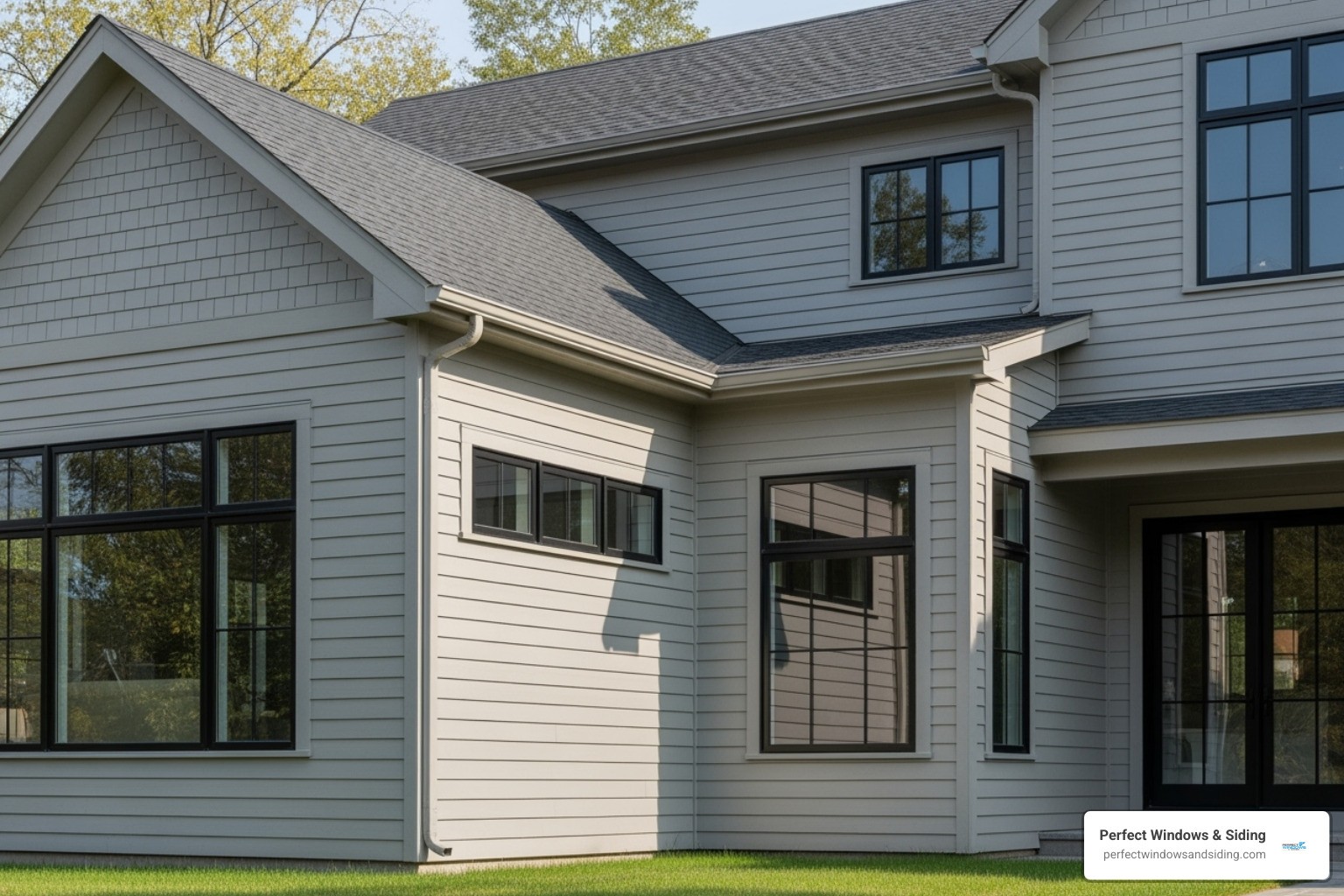
Should damaged Hardie planks be repaired or replaced?
A localized damaged plank may be replaceable when the surrounding siding, flashing and wall remain sound. Widespread damage or moisture behind the siding calls for an assessment of the whole assembly before choosing a repair. Match the replacement product and follow the applicable James Hardie instructions rather than assuming one fastening detail fits every plank.
Why Hardie Plank Replacement Is Essential for Chicago Homeowners
Hardie plank replacement is necessary when your fiber cement siding shows signs of damage, wear, or age. Here’s what to look for:
Key Signs You Need Replacement:
- Cracks, chips, or holes in the siding
- Fading or discoloration from UV exposure
- Water damage or moisture infiltration
- Loose or missing planks
- Age exceeding 20-30 years with poor maintenance
Replacement Benefits:
- 30-year warranty protection
- Fire and pest resistance
- Low maintenance requirements
- Increased home value and curb appeal
- Energy efficiency improvements
For Chicago homeowners with cracked or damaged fiber cement siding, replacement often makes more financial sense than repeated repairs. James Hardie is the #1 brand of fiber cement siding in the U.S., trusted by over 10 million homeowners for its durability and long-lasting protection.
The replacement process involves removing damaged planks, preparing the surface, installing new siding, and sealing all joints for weather protection. While some homeowners tackle single-plank repairs, larger replacements require professional installation to maintain warranty coverage and ensure proper weatherproofing.
DIY vs. Professional Installation:
- Small repairs: Manageable for experienced DIYers.
- Full sections: Best handled by certified contractors.
- Warranty requirements: Professional installation is often required.
I’m Voytek Glab, owner of Perfect Windows & Siding. With over 20 years of experience, my hands-on carpentry background ensures every replacement is done right, protecting your investment for decades.
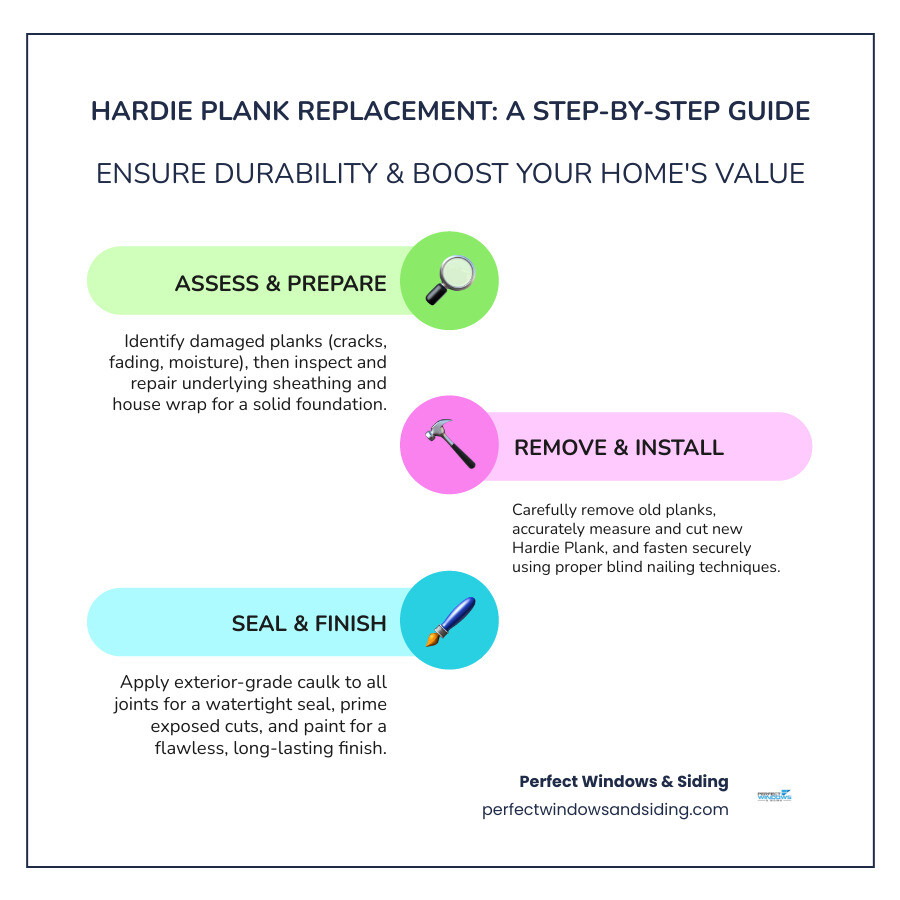
Is It Time for a Change? Recognizing the Signs for Replacement
Even the toughest materials show their age, and Hardie plank replacement becomes necessary when siding can no longer protect your home. The good news is that Hardie Plank gives you plenty of warning signs.
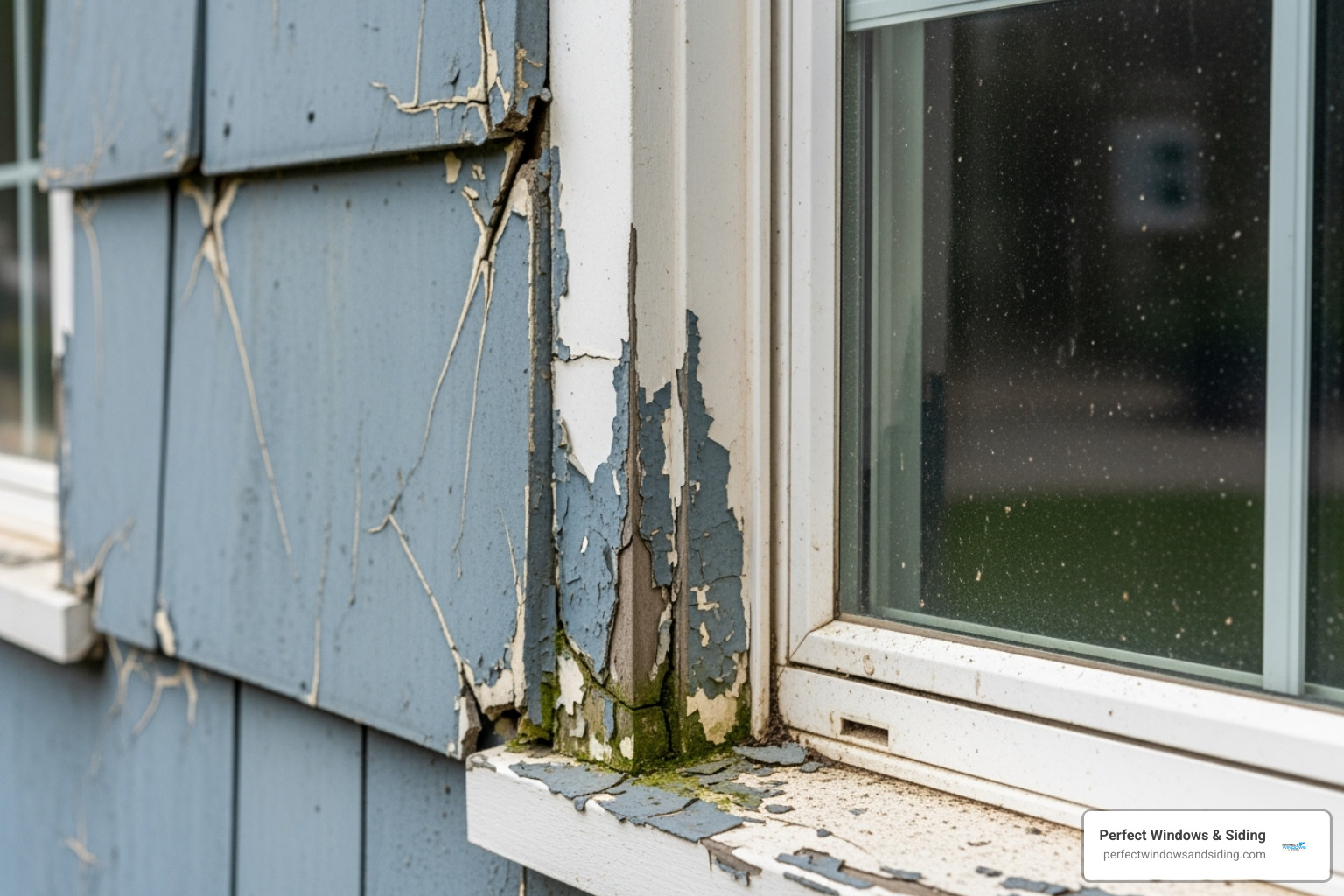
Visible damage like cracks and chips is a primary red flag, as these openings invite moisture and pests into your walls. Warping or swelling is another telltale sign that water has found its way behind the siding. Over time, even James Hardie’s durable ColorPlus® Technology can experience fading color, indicating the protective finish is wearing thin. The most serious sign is moisture damage, which often appears as mold or mildew near windows and doors. Finally, unexplained increases in energy bills can point to a failing weather barrier in your siding.
Hardie Plank is built to last through Chicago’s weather swings, unlike vinyl that can crack or wood that can rot. That’s why new siding is worth the investment when you choose quality materials.
Common Reasons for Siding Failure
Understanding why siding fails helps you spot problems early.
- Improper installation is a top cause. Planks must be nailed correctly according to James Hardie’s specific guidelines to withstand the elements.
- Storm damage from hail or flying debris can compromise even the best-installed siding.
- Age-related wear is inevitable, though Hardie Plank ages gracefully with proper maintenance.
- Pest damage is rare but can occur if insects attack the home’s underlying wood frame.
- Lack of maintenance, such as skipping re-caulking, can accelerate the need for Hardie plank replacement.
Long-Term Value of Fiber Cement
Choosing fiber cement is a smart investment that will serve you faithfully for decades.
- Durability: Made of Portland cement, sand, water, and cellulose fibers, it’s up to five times thicker than vinyl and built to handle Chicago’s climate.
- 30-Year Warranty: James Hardie offers a 30-year, non-prorated warranty, showing confidence in the product’s longevity.
- Fire Resistance: Fiber cement won’t ignite when exposed to direct flame or contribute to a fire, offering critical peace of mind.
- Pest Resistance: The material is unappealing to pests like termites and woodpeckers.
- Low Maintenance: It requires repainting only every 10-15 years, saving time and money compared to wood.
- High ROI: Quality siding is a recognized feature that adds significant value when selling your home.
Gearing Up: Tools and Materials for Your Project
Proper preparation is key for a successful Hardie plank replacement. Having the right tools and materials on hand prevents delays and ensures a quality result.
Safety is paramount. Fiber cement work creates silica dust, so personal protective equipment (PPE) is non-negotiable. Essential PPE includes an N95 respirator (dust mask), safety glasses, and heavy-duty work gloves.
For the job itself, you’ll need a pry bar to gently lift planks and a hammer for general tasks. A circular saw with a specialized fiber cement blade is crucial for clean cuts and minimal dust; a standard wood blade will dull quickly and chip the siding. A siding nailer ensures consistent nail depth, though hand-nailing is also an option. You will also need a caulk gun for sealing joints.
Key materials include:
- Replacement planks that match your existing siding’s profile and texture.
- Siding nails that meet the manufacturer’s recommendations (e.g., 16-gauge galvanized nails).
- House wrap to repair the weather barrier if it’s damaged during removal.
- Flashing tape for patching the house wrap and sealing joints.
- Exterior-grade caulk that is high-quality and compatible with fiber cement.
Having everything ready before you start your Hardie plank replacement allows you to focus on the task without interruptions.
The Complete Guide to Hardie Plank Replacement
Replacing Hardie Plank requires precision, whether for a single plank or a whole section. The goal is to maintain your home’s protective envelope against moisture. While a single plank may be a manageable DIY project, larger jobs often benefit from professional attention.
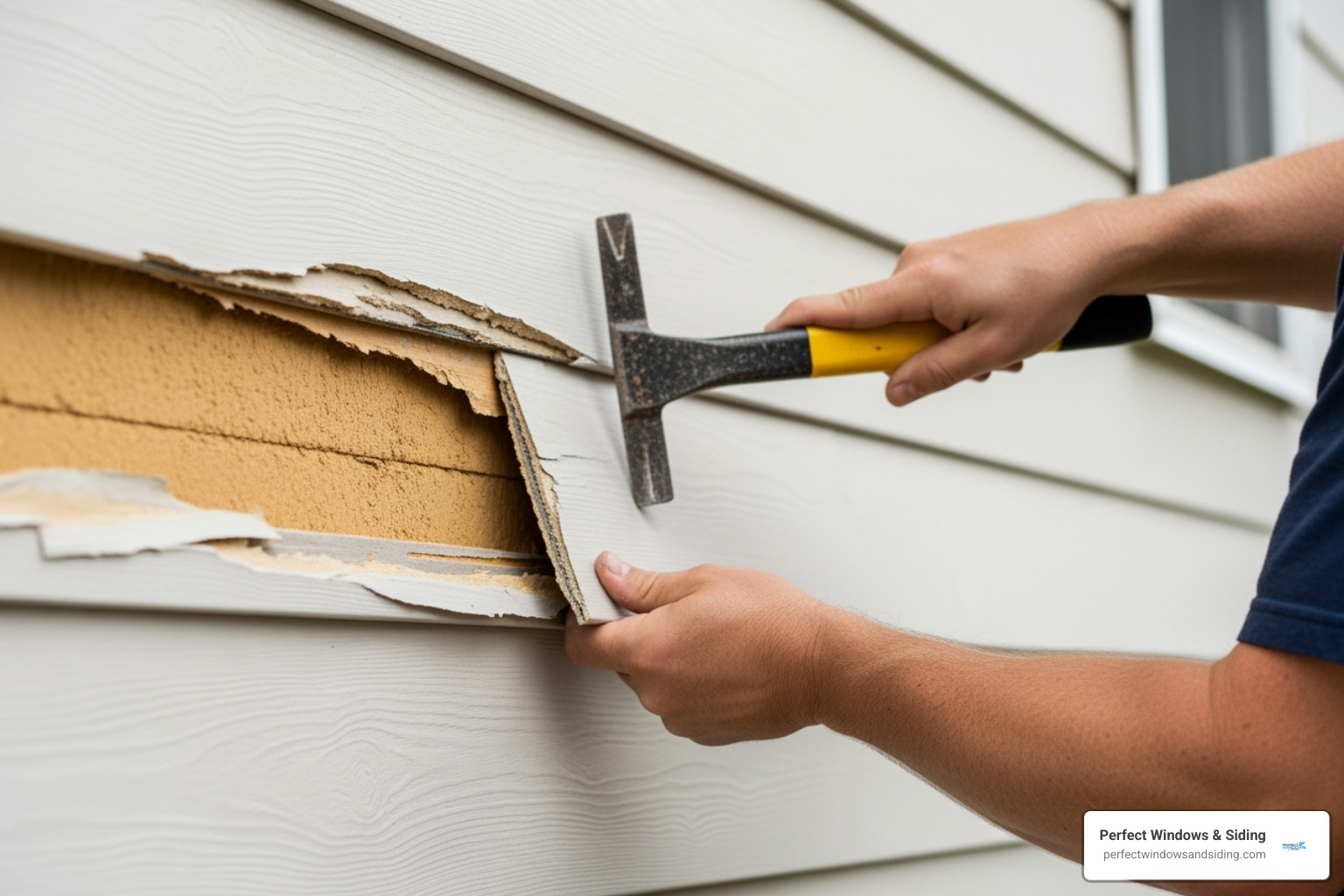
Step 1: Removing the Damaged Siding
Start by scoring the caulk around the damaged plank with a utility knife. Carefully use a pry bar to lift the plank’s bottom edge. To release it, you must cut the hidden “blind nails” holding the top of the plank, often with a multi-tool with a metal-cutting blade. Once the plank is removed, inspect the underlying sheathing and house wrap for water damage, rot, or tears. Repair any damaged sheathing and patch torn house wrap with flashing tape before proceeding. This step is crucial for long-term protection.
Step 2: How to Properly Measure and Cut Replacement Hardie Plank Siding
Measure the removed section accurately and mark cut lines on the new plank. Use a circular saw fitted with a fiber cement blade for clean cuts. Always wear an N95 mask and work outdoors to manage silica dust. Cut the plank to fit snugly, maintaining the same exposure (the visible surface of the plank) as the existing siding for a seamless look.
Step 3: Best Practices for a Flawless Hardie Plank Replacement
Ensure the surface is clean and dry. Slide the new plank into position, aligning it with the existing siding. Fasten it according to Hardie’s guidelines. Most planks are “blind nailed” at the top where the next plank will hide the nail. However, replacement pieces may require “face nailing” through the front. Place nails correctly to avoid cracking, typically every 16 inches into studs. Use butt joint flashing behind seams where two planks meet. The final installation must create a watertight seal.
Hardie Board Siding Installation
Step 4: Finishing, Sealing, and Painting
Finish the job by applying high-quality, paintable exterior-grade caulk to all joints and seams, then smooth the beads with a tool or gloved finger. Prime any cut edges of the fiber cement before painting. For a perfect finish, color-match the paint to your existing siding. If the siding is significantly faded, consider painting the entire section for a uniform appearance. Apply paint in dry, moderate weather for the best results.
Preventive maintenance is key to avoiding future replacement needs.
DIY vs. Hiring a Professional Siding Contractor
Deciding between a DIY repair and hiring a professional for Hardie plank replacement depends on the project’s scope, your skill level, and budget. While not impossible for a handy homeowner, it’s more complex than it appears.
| Feature | DIY Hardie Plank Replacement | Professional Hardie Plank Replacement |
|---|---|---|
| Project Complexity | Best for small, isolated repairs. | Ideal for multiple planks, full sections, or whole-house replacement. |
| Tool Costs | Requires purchasing or renting specialized tools (fiber cement blade, siding nailer, dust mask). | Contractor owns all necessary tools and equipment. |
| Time Commitment | Can be very time-consuming, especially for novices. | Efficient completion due to experience and proper staffing. |
| Installation Warranty | No professional installation warranty. James Hardie does not warrant installation. | Many reputable contractors offer an installation warranty (we offer a lifetime warranty!). |
| Safety Risks | Higher risk of injury (cutting, falls, silica dust exposure) if proper precautions aren’t taken. | Professionals are trained in safety protocols and insured. |
| Building Codes | Requires research into local building codes and permit requirements. | Contractors are knowledgeable about local codes and permits. |
| Results | Can be satisfactory for small repairs, but matching existing siding can be challenging. | Consistent, high-quality finish, ensuring a seamless look. |
| Cost | Lower upfront labor cost, but potential for costly mistakes or re-dos. | Higher upfront cost, but long-term value and peace of mind. |
When to DIY
A DIY approach can work for small repairs, like a single cracked plank that is easily accessible. It’s a viable option if you have a tight budget, the right tools, and previous experience with carpentry. Remember to factor in the cost of tool rentals and your valuable time when weighing the costs.
Why Hire a Professional
For most projects, hiring a professional is the recommended route for several key reasons:
- Large-Scale Projects: Professionals can efficiently handle replacing multiple planks or entire sections, which can be overwhelming for a DIYer.
- Ensuring Warranty Compliance: Proper installation is required to maintain the James Hardie material warranty. Certified contractors know the exact manufacturer specifications.
- Access to Specialized Tools: Pros have the right equipment, including dust extraction systems and scaffolding, making the job safer and more efficient.
- Guaranteed Quality: Experienced installers ensure a seamless, watertight repair that matches your existing siding, providing long-term value.
- Safety and Insurance: Professionals are trained in safety protocols for handling silica dust and working at heights. They are also insured, protecting you from liability.
Considering professional siding replacement in Chicagoland? Discuss the condition of your siding and the scope of your project.
Frequently Asked Questions about Hardie Plank
How long does Hardie Plank siding last?
James Hardie provides a 30-year, non-prorated warranty, but with professional installation and regular maintenance (cleaning, re-caulking), the siding can last 50 years or more. Lifespan is influenced by climate and the quality of the installation and upkeep.
Can you repair small cracks instead of replacing the whole plank?
Yes, small, non-structural cracks and holes can be repaired. Use a high-quality, cementitious patching compound designed for fiber cement. After applying and letting it dry, sand the area smooth, prime, and paint to match. However, for large cracks, warping, or any signs of moisture damage behind the plank, a full Hardie plank replacement is necessary to ensure a proper, long-term fix.
Are there rebates for replacing siding with Hardie Plank?
Yes, James Hardie often offers rebates, particularly for homeowners in certain Illinois counties (including Cook, DuPage, and Lake) who are replacing failed siding from other brands. Programs and amounts vary, so it’s best to check the official Hardie promotions website for current offers before starting your project. These rebates can provide significant savings on your investment.
Click here to learn about potential rebates
Protect Your Investment with Expert Siding Replacement
Your home is your most significant investment. Choosing Hardie plank replacement is a smart decision that protects its structural integrity and market value for decades.
The durability of Hardie Plank is best. With a 30-year warranty and a potential 50+ year lifespan, it’s built to withstand Chicago’s harsh weather. New Hardie Plank siding provides an instant boost to your home’s curb appeal, changing its exterior with clean lines and rich textures.
Professional installation offers excellent long-term value, as new siding consistently ranks as a top home improvement for return on investment. When potential buyers see quality fiber cement siding, they know they’re looking at a well-maintained and protected home.
At Perfect Windows & Siding, we are Chicago’s trusted siding experts with over two decades of experience helping families transform their homes with durable Hardie Plank. Our lifetime warranty on installation sets us apart. We stand behind our work because we build it to last. As a local, family-owned business, your satisfaction is our reputation.
Don’t let failing siding put your investment at risk. Whether you need a small repair or a complete replacement, our team provides the expertise, quality materials, and attention to detail your home deserves.
Contact us for your Chicago siding replacement project
Sources and next steps
James Hardie installation and technical resources. Choose the guide for the exact lap siding product. The document library supports installation decisions, not a diagnosis of an unseen wall.
Related reading: How Much Does It Really Cost to Replace Hardie Siding?; Get It Right: How to Install 4×8 Hardie Panels Like a Pro.
For help with a Chicago-area project, explore our fiber cement siding services.