

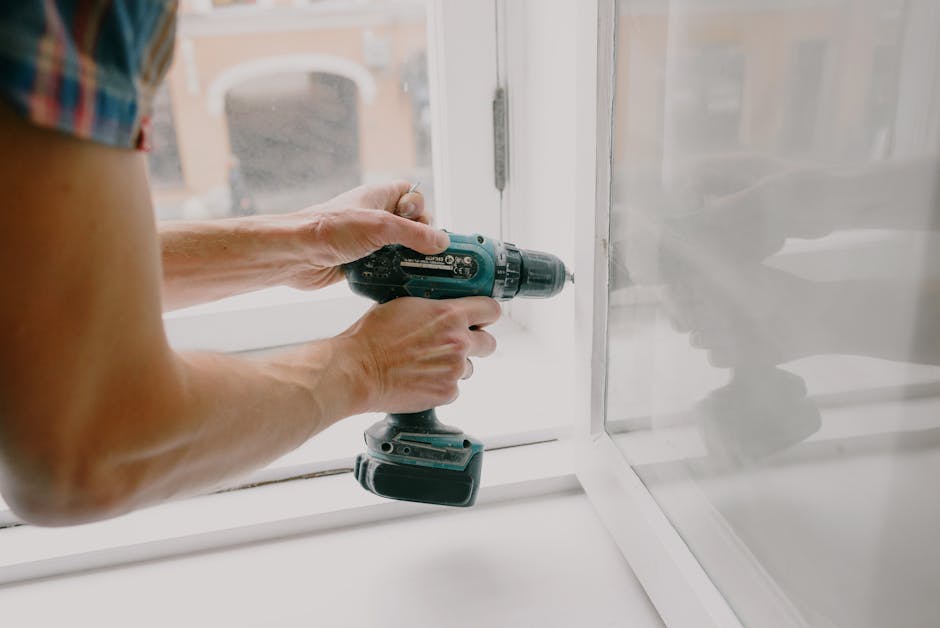
Why Window Installation Quality Matters More Than You Think
Window Installation is a crucial home improvement project that affects your energy bills, comfort, and home value. Understanding the process helps you spot quality work and avoid expensive errors.
Key Window Installation Methods:
- Full-Frame (Stud-to-Stud): Complete removal of the old window and frame down to the studs. Best for damaged frames or changing window size.
- Brick-to-Brick: The most extensive method, removing everything to the brick opening. Ideal for older brick homes needing full restoration.
- Pocket/Retrofit: A new window is installed into the existing frame. A cost-effective option if the original frame is sound.
What to Expect:
- Professional measurement and consultation
- Old window removal and opening inspection
- New window positioning, leveling, and securing
- Flashing, sealing, and insulation
- Finishing and cleanup
Typical Timeline: 1-2 hours for standard windows; 6-8 hours for bay or bow windows.
Average Cost: $800-$4,000 per window, depending on size, type, and complexity.
Improperly installed windows can lead to water damage, high energy costs, security risks, and mold. Even the best windows will fail if the installation is poor. My name is Voytek Glab, owner of Perfect Windows & Siding. With over 20 years of experience in Window Installation across Chicagoland, I ensure every job is done right. This guide will show you what defines a truly professional installation.
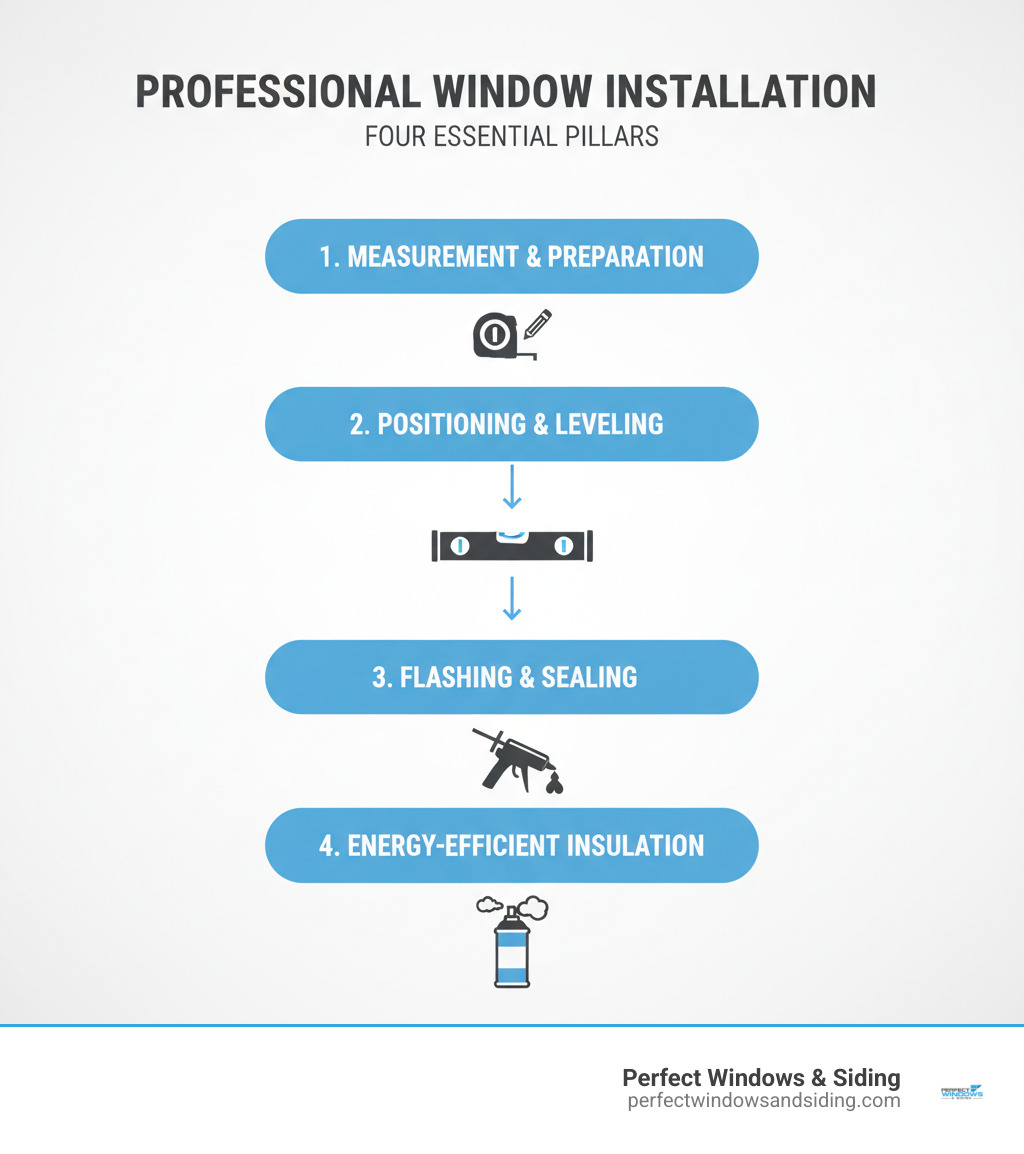
Basic Window Installation vocab:
Understanding Foundational Window Installation Methods
Not all window replacements are the same. The right Window Installation method depends on your home’s condition, budget, and goals. A top-tier provider will assess your needs and recommend the best solution.
Full-Frame vs. Pocket Replacement
Full-frame installation (or stud-to-stud) involves removing everything—the old window, frame, casing, and jamb—down to the wall studs. We then build a new window system, integrating aluminum flashing for superior water protection. This method is necessary when existing frames have rot or water damage, or if you want to change the window opening’s size. While it costs more and takes longer, it provides a fresh start, addresses hidden issues, and ensures a solid, properly sealed result.
Brick-to-brick installation is an even more extensive method for homes with brick exteriors. It removes everything down to the brick opening and includes new brick mould trim for a seamless finish. It’s the most comprehensive and often most expensive approach, ideal for older brick homes needing a complete and lasting restoration.
Pocket replacement (or retrofit installation) is a more streamlined option where the existing window frame remains. We remove the old sashes and hardware, then slide a new window unit into the opening. This is a fast, affordable choice when your frames are square, solid, and free of rot. The only trade-off is a slight reduction in glass area. For many homeowners with sound frames, it’s a smart, budget-friendly solution.
We always begin with a thorough assessment to determine the best method. To learn more about how these methods affect pricing, see our guide on How Much Do New Windows Cost?.
How Window Type Affects Installation
The window style you choose also impacts the installation process. Some are straightforward, while others require more time and expertise.
- Double-hung and Casement Windows: These common styles require careful alignment and precise sealing to ensure smooth operation and energy efficiency. Our teams have perfected this process.
- Picture Windows: As these don’t open, the challenge lies in safely handling large, heavy glass units and creating a perfect, airtight seal.
- Bay and Bow Windows: These are in a different league. They project outward, requiring substantial structural support, including a roof and foundation. A standard Window Installation might take 1-2 hours, but a bay or bow window often requires 6-8 hours for structural framing, load support, and meticulous weatherproofing. The stunning result, however, is worth the effort. See an example of our work on a Bay Window Park Ridge project.
Every window style demands precision, proper sealing, and attention to detail to ensure long-term performance.
The Anatomy of a Flawless Window Installation Process
A quality Window Installation is a methodical process where every step is critical. Cutting corners can lead to drafts, water damage, and high energy bills. At Perfect Windows & Siding, we follow a proven approach to ensure your windows perform for decades.
Step 1: Meticulous Measurement & Preparation
A successful Window Installation begins long before the new window arrives. It starts with a professional consultation to understand your needs and help you select the right windows for your home’s style and budget.
Next, we take precise measurements at multiple points of each opening, as few are perfectly square. We order custom windows based on the smallest measurement for a snug fit. On installation day, we carefully remove the old window, protecting your property in the process. For full-frame jobs, this means taking everything down to the rough opening.
With the old window out, we inspect the rough opening for hidden water damage, rot, or mold. If we find any structural issues, we repair them before proceeding. Installing a new window on a compromised frame is a recipe for failure, so we ensure it has a solid, dry foundation. Learn more in our guide on How to Measure a Window for Replacement.
Step 2: The Core of a Professional Window Installation
With a prepared opening, we move to positioning and securing the new window. This is where craftsmanship truly shows.
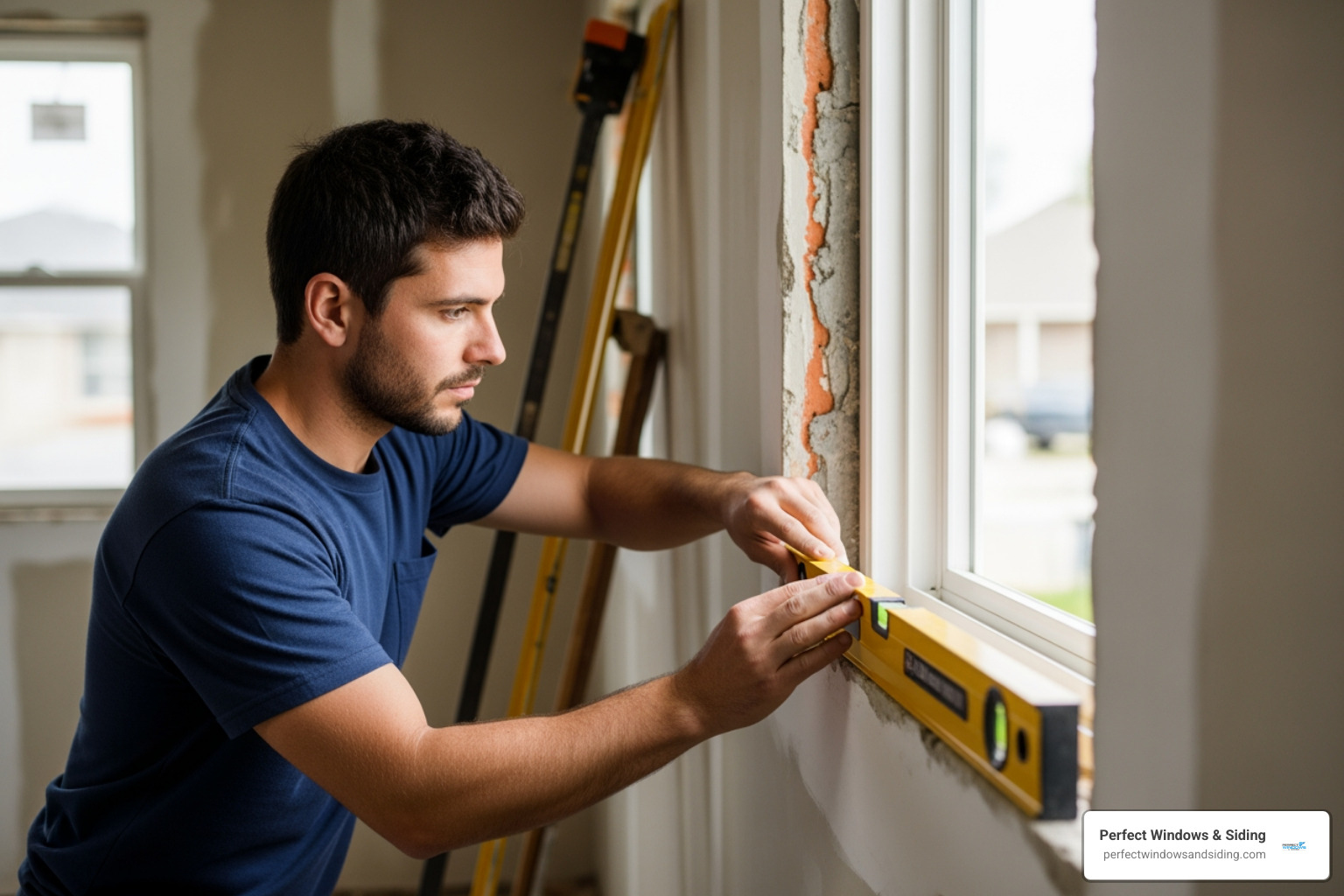
We place the new window unit in the opening and use quality shims to make fine adjustments until it is perfectly level and square. A window that is even slightly off-kilter will stick, leak air, and wear out prematurely. Once positioned, we secure the window frame with screws, taking care not to overtighten them, which can distort the frame and hinder operation.
Our installers are trained to avoid common pitfalls like incorrect shimming or over-tightening screws. These small errors can compromise a window’s performance. We detail these issues in our guide on Top 5 Window Installation Mistakes.
Step 3: The Critical Role of Flashing, Sealing, and Insulation
This final stage provides your home’s protection against the elements, which is non-negotiable in Chicagoland’s climate.
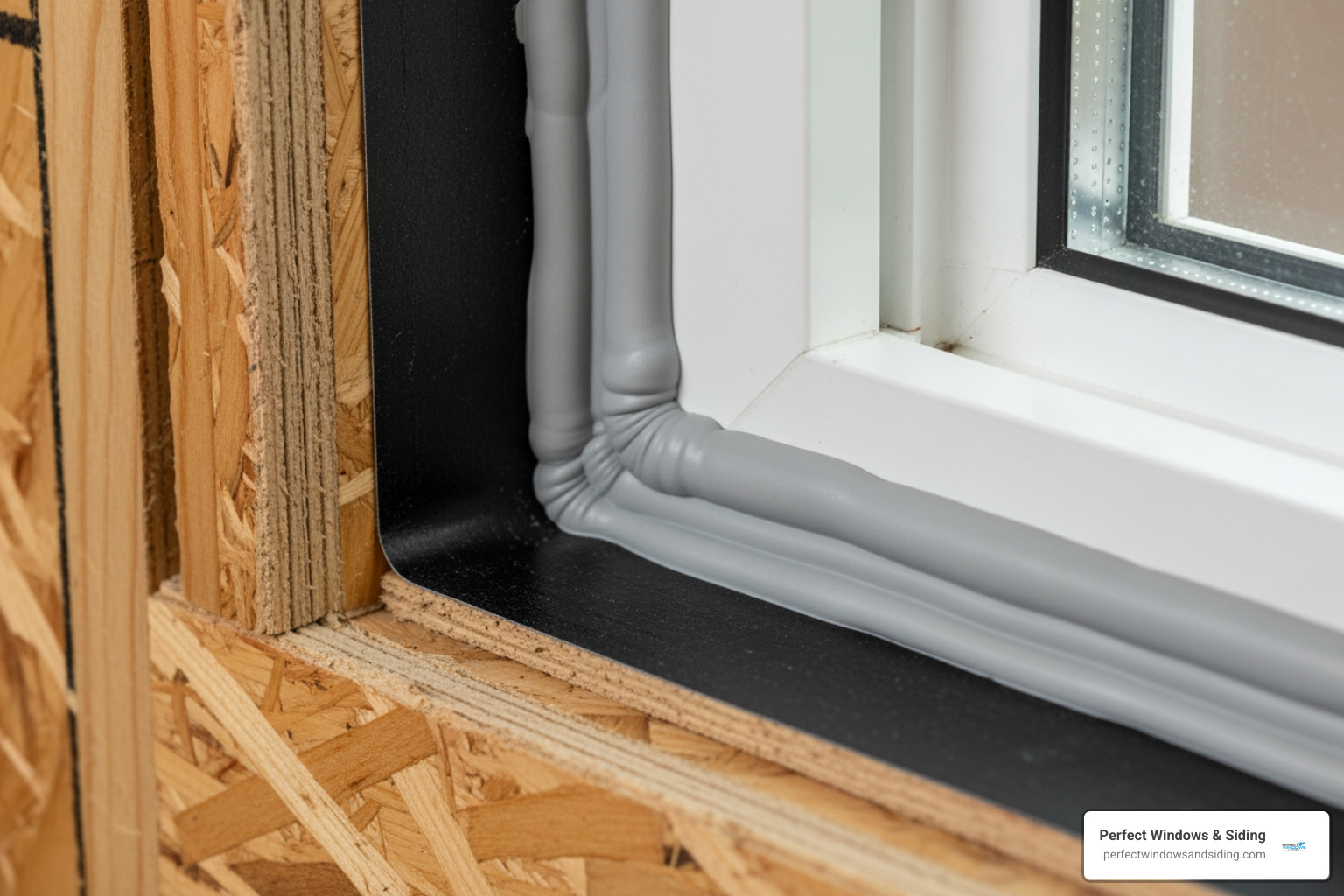
We begin with flashing integration, applying specialized tape to create a continuous weather-resistant barrier that directs moisture away from the wall system. Next, we fill gaps with low-expansion foam insulation, which creates an airtight seal without bowing the window frame. Finally, we apply high-quality silicone caulk for a watertight seal on the exterior. We also ensure proper drainage to prevent trapped water.
The energy efficiency impact of this comprehensive approach is significant, leading to fewer drafts, more consistent indoor temperatures, and lower utility bills. This is why our installations excel in energy performance, a topic we cover in our Energy Efficient Window Replacement guide.
Professional vs. DIY: Evaluating the Benefits and Risks
When facing a drafty window, you might wonder: hire a pro or do it myself? While a DIY Window Installation seems tempting, the decision involves more than just the initial cost.
The Case for Professional Installation
Window Installation is deceptively complex. The steps between removing the old window and installing the new one are where quality is determined.
- Expertise and Experience: Professionals have seen it all, from settled homes to hidden water damage. We can solve problems on the spot, preventing costly mistakes.
- Specialized Tools: We use professional-grade levels, flashing tools, and low-expansion foam guns to ensure precision. An error of just an eighth of an inch can cause leaks and energy loss.
- Safety and Liability: Installation can involve working at heights and handling heavy glass. Our crews are trained, insured, and equipped to work safely, protecting you and your property.
- Efficiency and Speed: What takes a DIYer a full weekend, our experienced installers can often finish in a few hours per window, minimizing disruption to your life.
- Quality Assurance: We stand behind our work. Improper installation leads to water damage, high energy bills, and security issues. To vet contractors effectively, use our guide on 10 Questions to Ask Your Window Contractor.
Essential Tools for a Quality Job
A professional Window Installation requires more than basic hand tools. Here are some essentials we use on every job:
- Level
- Tape Measure
- Caulk Gun
- Pry Bar
- Hammer
- Power Drill
- Shims
- Flashing Tape
- Sealant
- Safety Glasses
This is just a partial list. Specialized saws, insulation applicators, and professional-grade weatherproofing materials are also crucial for a job done right.
Understanding Warranties and Guarantees
This is where professional installation provides significant value. There are two types of warranties: the product warranty from the manufacturer, which covers defects in the window itself, and the labor warranty, which covers the installation work.
A DIY project has no labor warranty. At Perfect Windows & Siding, we offer a lifetime warranty on our labor because we are confident in our craftsmanship. If an issue arises from our installation, we fix it. This protection is invaluable, as water damage from a poor seal can cost thousands to repair.
Certifications like the Window Wise program also establish important industry standards for proper installation techniques. You can learn more about these standards at the Information on the Window Wise certification program. Professional installation isn’t just about convenience—it’s about protecting your investment and ensuring your home is sealed against Chicago’s weather for years to come.
Key Factors Influencing Your Project
When planning a Window Installation in Chicagoland, it’s natural to have questions about the timeline and budget. Several variables shape the cost and duration of your project.
What Determines the Cost of Window Installation?
Window Installation pricing is customized to each project. Here are the key factors that drive the cost:
- Window Size and Type: A standard double-hung window is less expensive than a large bay window or a custom shape.
- Frame Material: Vinyl is typically the most budget-friendly option. Wood offers classic beauty at a higher price and with more maintenance. Fiberglass is a premium choice known for its strength and energy performance.
- Glass Package: Double-pane windows are standard, while triple-pane options offer superior insulation and noise reduction. Add-ons like Low-E coatings and argon gas fills further boost efficiency at an increased cost.
- Labor Costs: These reflect the skill and time required. A full-frame installation is more labor-intensive than a simple pocket replacement. You’re investing in expertise that prevents costly errors.
- Project Complexity: Finding and repairing rot, making structural modifications, or meeting egress codes will add to the project’s scope and cost.
Industry-wide, costs can range from $800 to $4,000 per window. For a more specific estimate, see our guide on Window Replacement Cost Near Me.
How Long Does Installation Take?
Modern Window Installation is faster than most people think. The timeline depends on the project’s complexity.
| Window Type | Typical Installation Time (per window) |
|---|---|
| Standard Window (e.g., Double-Hung) | 1-2 hours |
| Complex Window (e.g., Bay/Bow) | 6-8 hours |
| Full Home Project (multiple windows) | 1-3 days |
Our goal is to minimize disruption while delivering quality craftsmanship that lasts for decades.
Preparing Your Home for Installation Day
A little preparation helps the Window Installation process go smoothly:
- Clear the Work Area: Please remove curtains, blinds, and window treatments. Move furniture and decor at least three to five feet away from the windows, both inside and out.
- Handle Security Systems: If you have security sensors on your windows, please have them removed by your security company before we arrive. We cannot reinstall them.
- Secure Pets and Children: For their safety and to prevent escapes, please keep pets and children away from the work zones.
- Ensure a Clear Path: A clear path from our vehicles to the work areas allows us to move materials safely and efficiently.
Frequently Asked Questions about Window Installation
With over two decades of experience in Chicagoland, I’ve answered nearly every Window Installation question. Here are the most common ones to help you make informed decisions.
What are the signs my windows need to be replaced?
Your windows will often show clear signs when they are failing. Look for these red flags:
- Visible Damage: Warping, cracking, or soft, rotting spots on the frame compromise your home’s weather resistance.
- Condensation Between Panes: Fog or moisture trapped between the glass layers indicates a failed seal, which means the window has lost its insulating value.
- Drafts or Air Leaks: Feeling cold air in winter or warm air in summer near your windows means they are no longer sealing properly, leading to higher energy bills.
- Difficulty Operating: Windows that stick or won’t lock securely are not just an annoyance but also a security risk.
- Rising Energy Bills: Unexplained increases in heating and cooling costs are often due to inefficient, leaky windows.
- Excessive Outside Noise: If you hear too much street noise, your windows are not providing adequate sound insulation. Modern windows can significantly quiet your home.
If you notice these issues, it’s time for a professional assessment.
What are common mistakes to avoid during window installation?
Even the best windows will fail if installed incorrectly. Here are the most common and costly mistakes we see:
- Incorrect Measurements: A window that’s the wrong size will either have gaps that leak or won’t fit at all, causing delays and reorders.
- Not Leveling the Window: An unlevel window won’t operate smoothly and will put uneven stress on the frame, leading to premature failure.
- Improper Flashing and Sealing: This is the most critical error. Without a proper weather barrier, water can seep into your walls, causing rot, mold, and major structural damage.
- Over-tightening Fasteners: Screws that are too tight can warp the window frame, preventing a proper seal and making the window difficult to operate.
- Using the Wrong Insulation or Sealant: High-expansion foam can bow a window frame, and using the wrong type of caulk will cause it to fail quickly when exposed to the elements.
- Not Repairing the Rough Opening: Installing a new window over a rotted or damaged frame ensures the new window will also fail.
Our professional Window Installation process is designed to prevent every one of these mistakes.
How does wall construction (brick, siding) affect installation?
Your home’s exterior significantly impacts the Window Installation process. Different materials require different techniques.
- Brick Homes: A brick-to-brick installation is the most involved method. We remove the old window down to the brick opening and install a new window with a brick mould trim to create a weather-tight seal. This requires specialized masonry skills.
- Siding Homes: For homes with vinyl, wood, or fiber cement siding, we carefully remove siding around the window to properly integrate the new flashing with the home’s weather-resistant barrier. We then reinstall the siding for a seamless finish.
In all cases, integrating the window’s flashing with the home’s weather-resistant barrier is crucial for creating a layered defense against water intrusion. We also use different anchoring techniques depending on whether we are fastening into wood studs or masonry, ensuring the window is stable and secure.
Conclusion
The quality of a Window Installation is just as important as the window itself. A professional installation ensures an airtight seal, prevents moisture damage, reduces energy bills, and protects your investment. In contrast, even a premium window will fail if the installation is subpar. Choosing the right partner is critical.
For homeowners in the Chicago area, Perfect Windows & Siding offers over 20 years of hands-on experience. As a local, family-owned business serving communities from Park Ridge to Glenview and beyond, we understand the unique demands of Chicagoland homes. We are committed to quality craftsmanship and back our work with a lifetime labor warranty.
When you partner with us for your Window Installation, you’re not just getting new windows; you’re getting the peace of mind that comes from knowing experienced professionals are protecting your home with meticulous attention to detail. You’re investing in lasting quality that will serve your family for decades.

Ready to experience the difference that professional installation makes? Learn more about our professional Window Installation services and find how we can transform your home.