

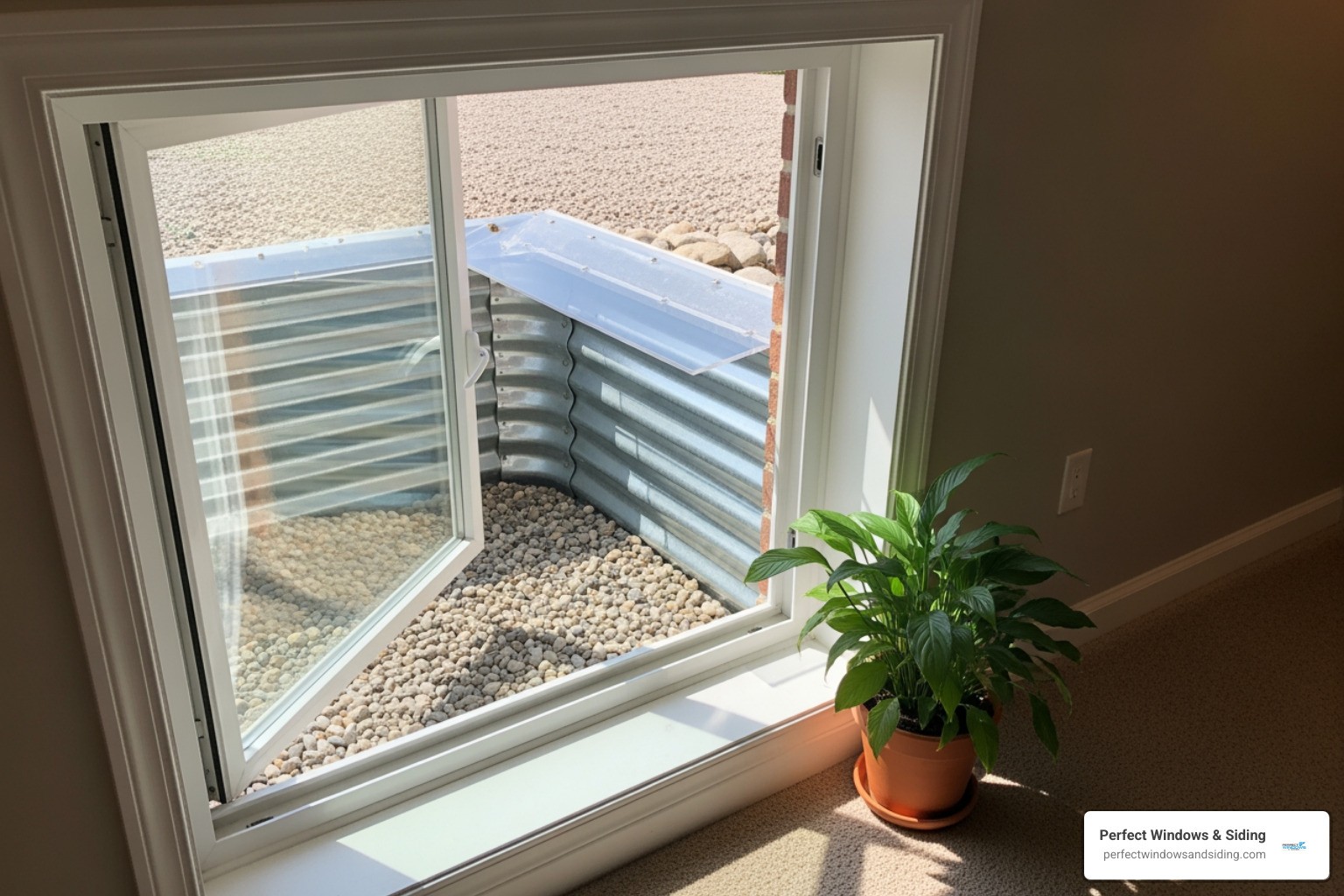
Why Egress Windows Are Essential for Your Chicago Basement
Egress window installation turns your basement from simple storage into safe, legal living space. Here’s a quick overview:
Quick Answer: Egress Window Installation Overview
- What it is: A code-compliant basement window for emergency escape.
- Typical cost: $3,000 to $8,000 per window.
- Installation time: 1-2 days per window.
- Key requirements: 5.7 sq. ft. opening, 24″ height, 20″ width, sill no higher than 44″ from the floor.
- Process: Excavation, foundation cutting, window and well installation, and waterproofing.
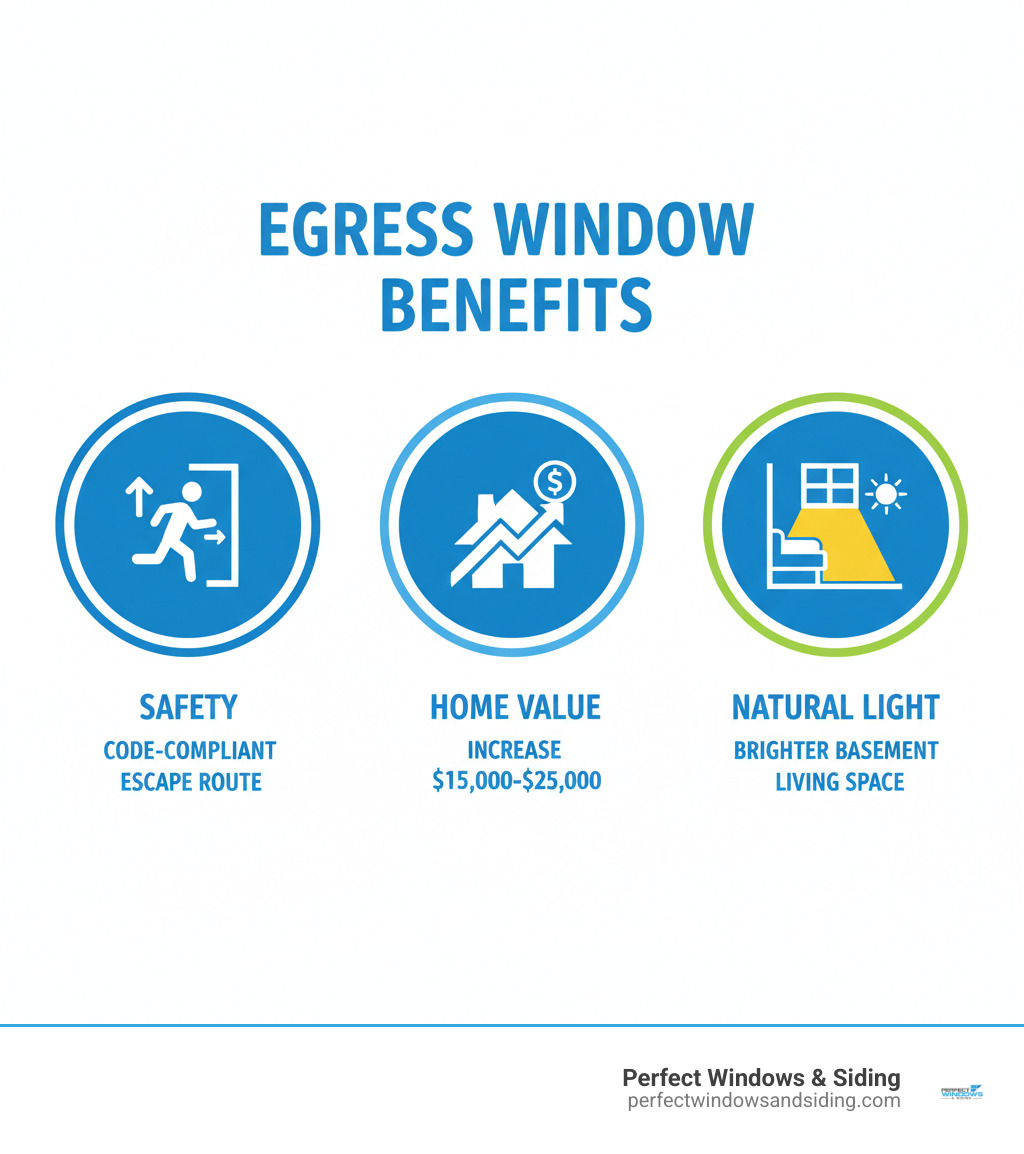
- Benefits: Creates legal bedrooms, adds natural light, and increases home value by $15,000-$25,000.
An egress window does more than meet building codes; it transforms a dark basement into a bright, usable area. Homeowners find the investment worthwhile not just for safety, but for the added sunlight and resale value. The process involves cutting your foundation, excavating a window well, and ensuring proper drainage, which is why it’s a job best left to professionals.
I’m Voytek Glab, owner of Perfect Windows & Siding. With over 20 years of experience in egress window installation across Chicagoland, I’ll guide you through the process, costs, and the DIY vs. pro decision.
Egress window installation vocabulary:
Planning Your Project: Codes, Costs, and Benefits
Before cutting into your foundation, it’s crucial to understand the building codes, costs, and benefits. Egress window installation is a safety upgrade that must meet strict legal requirements, but it also adds significant value to your home.
Building codes, like the International Residential Code (IRC), exist to keep your family safe. However, local municipalities like Chicago, Naperville, or Evanston may have additional rules. We always verify local codes before starting any project. Meeting these requirements transforms your basement with natural light and proper ventilation, making it feel like a true part of your home.
Financially, adding a legal basement bedroom can return 50-70% of your above-grade equivalent value. For example, if homes in your area sell for $122 per square foot, a 350-square-foot basement bedroom could add over $21,000 to your home’s resale value. Most importantly, an egress window provides a vital secondary escape route in an emergency.
Here’s what the IRC requires for egress windows:
| Requirement | Minimum Specification |
|---|---|
| Net Clear Opening | 5.7 square feet (5.0 sq ft for first-floor egress) |
| Opening Height | 24 inches |
| Opening Width | 20 inches |
| Sill Height | No more than 44 inches from the floor |
| Window Well Clearance | 3-ft. x 3-ft. clear space when window is open |
| Ladder Requirement | For wells deeper than 44 inches (permanently attached) |
For the most current code information, check the International Code Council’s Digital Codes.
Understanding Egress Window Requirements
These requirements are critical for safety and functionality:
- The net clear opening is the actual crawl-through space when the window is open, requiring at least 5.7 square feet for a safe exit.
- The minimum opening height (24 inches) and width (20 inches) are based on the dimensions an average adult needs to fit through.
- The maximum sill height of 44 inches from the floor ensures that even a child can reach the window in an emergency. We often aim for 42 inches or less for an added safety margin.
- A window well is required for below-grade windows and must have a clear space of at least 3 feet by 3 feet to provide a landing zone for escape.
- If a window well is deeper than 44 inches, a permanently attached ladder or steps are mandatory for climbing out.
How an Egress Window Boosts Your Home’s Value
An egress window installation is a smart financial investment. The key is creating a “legal bedroom,” which in Chicagoland requires adequate size, a heat source, and two means of egress (one being the egress window). By meeting these criteria, you officially add a bedroom to your home’s listing, increasing its appraisal value and appeal on the MLS.
Buyers often filter searches by bedroom count, so adding one puts your home in front of a larger audience. The return on investment of 50-70% is realistic because you’re increasing marketable square footage and bedroom count. Beyond the numbers, the natural light and improved livability make the basement a more desirable space, adding real, tangible value.
Want to understand more about window-related costs and investments? Check out our guide on how much do new windows cost to see how different window projects compare.
The Complete Egress Window Installation Process
Understanding the egress window installation process helps set realistic expectations. It’s a carefully sequenced project where each step builds on the last, from permitting and utility marking to excavation, cutting, and waterproofing. Rushing or skipping steps can lead to serious issues like water damage or structural problems.

Step 1: Site Preparation and Excavation
Proper preparation is key. We start by laying down plywood to protect your lawn and landscaping. We then mark the window location, considering sunlight, utility lines, and your interior layout. The most critical pre-excavation step is calling 811 (JULIE in Illinois) to have underground utility lines marked. This is required by law and prevents dangerous accidents.
Excavation creates space for the window well, digging about 19 inches deeper than the planned window sill. This extra depth is filled with pea stone for drainage. We dig to the foundation footing to connect a new drain riser to your home’s existing perimeter drain system (weep tile or sump pump). This is essential for preventing water from pooling in the well. Finally, we grade the topsoil to slope away from the foundation, directing surface water away from your home.
Step 2: Cutting and Reinforcing the Foundation Opening
Cutting a foundation wall requires specialized equipment and expertise. We use track-mounted concrete saws for straight cuts and chain saws for precise corners, performing all work from the exterior to minimize interior dust and mess. The process varies for poured concrete vs. concrete block walls, but the goal is a clean rough opening slightly larger than the window unit for proper sealing.
After cutting, we address structural support. If required by code or the window’s width, we install a header (lintel) above the opening to redistribute the structural load. This might involve reinforcing the rim joist or adding a steel header. This step is non-negotiable for maintaining your home’s structural integrity.
Step 3: The Egress Window Installation Itself
With the opening prepared, we install the window. We start by test fitting the unit to ensure a perfect fit. Next, we apply a high-quality sealant to the rough opening’s perimeter as a primary water barrier.
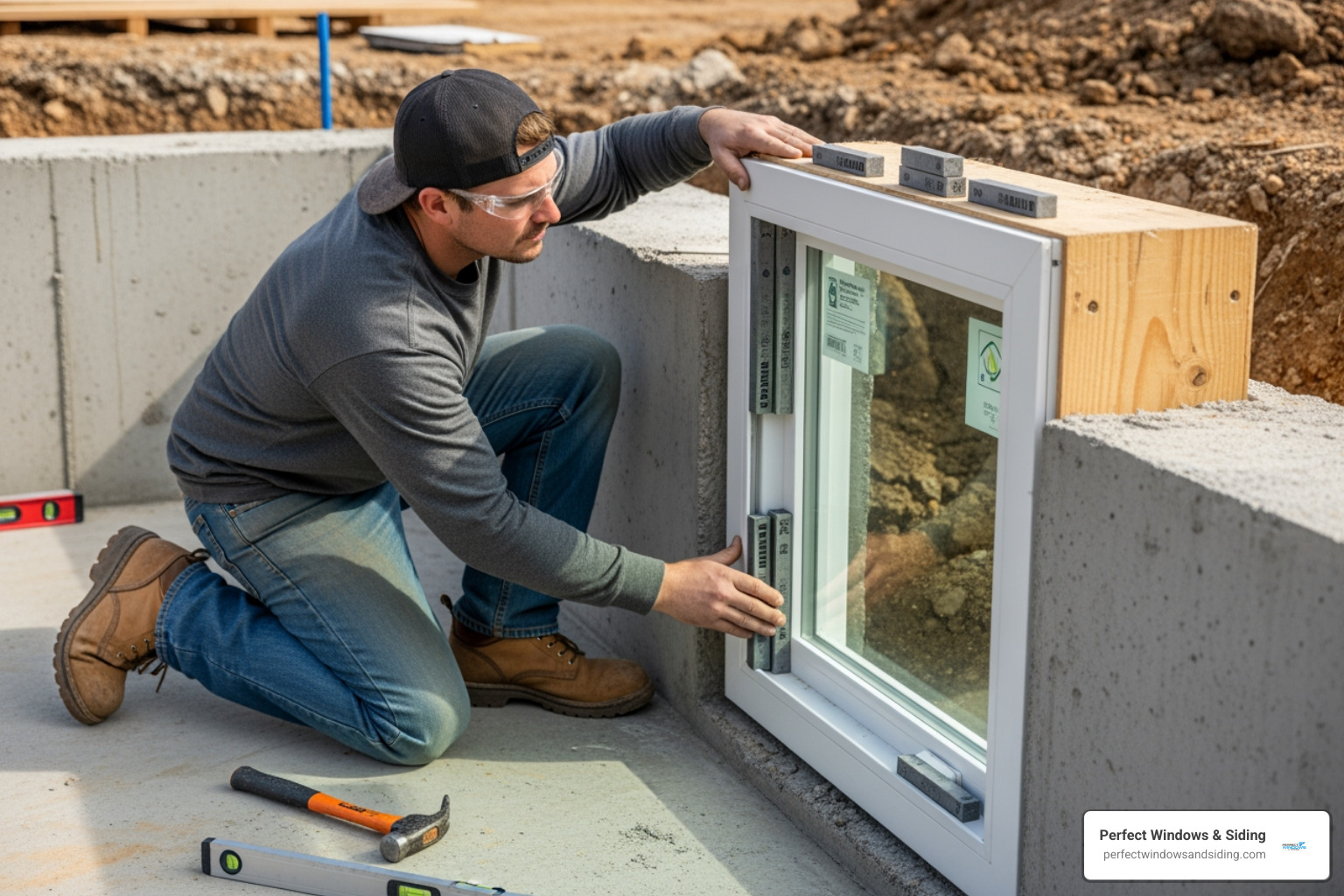
Using shims, we position the window so it is perfectly plumb, level, and square, ensuring smooth operation. The window is then fastened securely into the opening. For concrete block walls, we typically attach the window to a pressure-treated wood frame. For poured concrete, we use robust concrete anchors. Finally, we fill the gap between the window frame and the foundation with low-expanding foam for insulation and an airtight seal.
Step 4: Installing the Window Well and Drainage System
The window well is a key part of your home’s drainage system. We position the well flush against the foundation and secure it with anchor bolts. The bottom of the excavated area is filled with several inches of pea stone, which allows water to flow freely. This gravel layer connects to the drain riser installed earlier, channeling water to your drain tile or sump pump.
We then backfill around the well with more gravel and top it with soil graded to slope away from the house. This comprehensive system is your best defense against water buildup and potential basement leaks.
DIY vs. Professional Installation: Making the Right Choice
Egress window installation is a complex project involving structural changes, excavation, and strict code adherence. The choice between DIY and hiring a professional is a critical one.
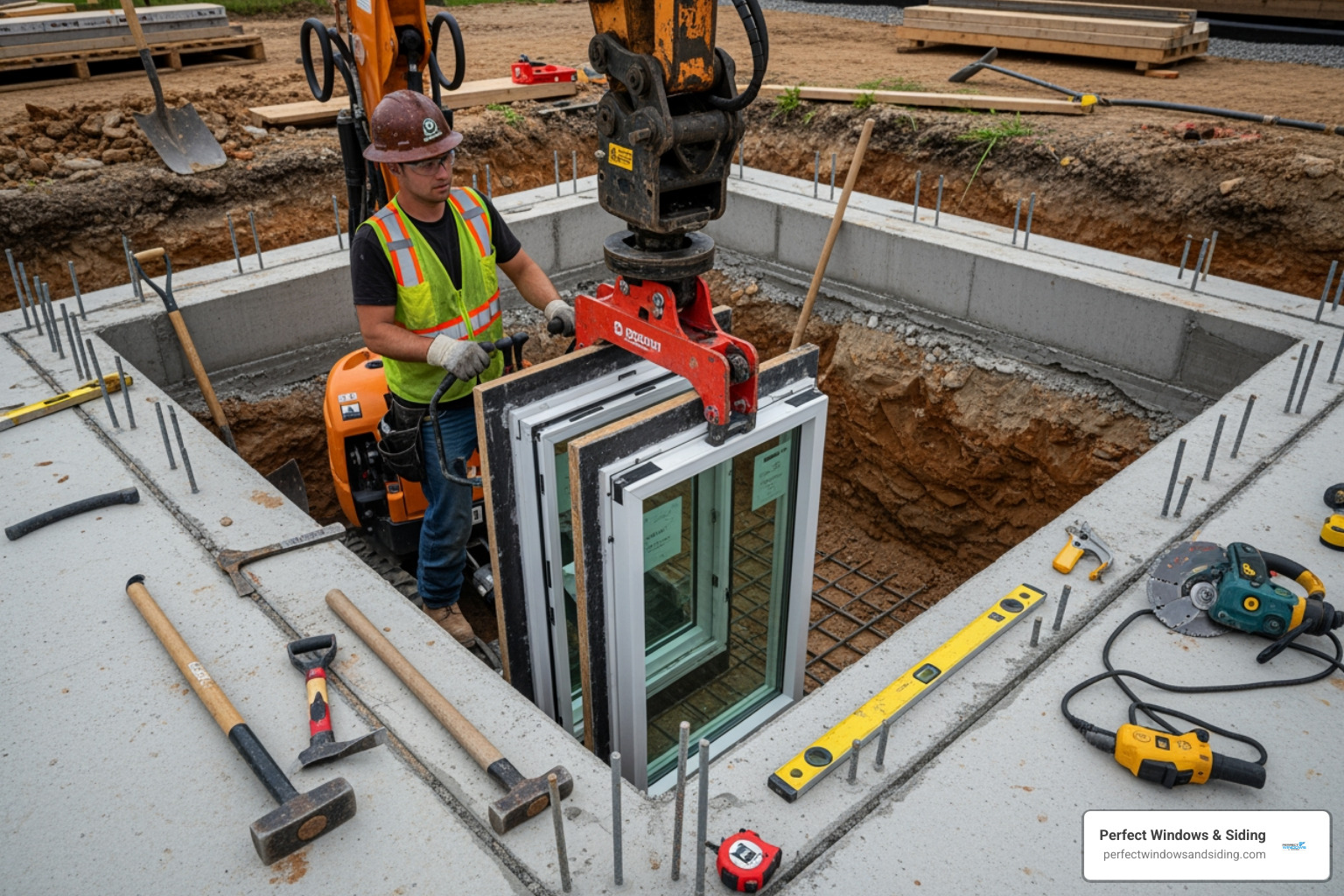
This is not a typical weekend project. It requires skills in foundation cutting, structural reinforcement, and waterproofing that most homeowners don’t possess. The necessary tools—concrete saws, excavators, etc.—are expensive to rent and require expertise to operate safely. The risks are significant: a mistake could compromise your foundation, leading to costly repairs. Furthermore, navigating local building codes and passing inspections can be challenging.
An experienced crew can finish in 1-2 days, whereas a DIY project could stretch over multiple weekends, causing considerable stress and disruption.
When to DIY
A DIY approach is only advisable for highly experienced contractors who already own the necessary equipment and understand structural engineering. A potential scenario might be replacing a small, existing window in a wood-frame wall where no foundation cutting is needed. For nearly everyone else, the risks and challenges far outweigh the potential savings.
Why Hire a Professional for Egress Window Installation
Hiring a professional is an investment in expertise, safety, and peace of mind. Here’s what you get:
- Expertise: Professionals understand how to cut foundations without compromising structural integrity and how to install proper reinforcement like headers.
- Waterproofing: A pro will design and install a robust drainage system connected to your home’s existing infrastructure, preventing future water damage.
- Permits and Codes: We handle all permit applications and ensure the project meets all local Chicagoland codes, saving you time and hassle.
- Warranty: We stand behind our work with a lifetime warranty, offering protection you don’t get with a DIY job.
- Efficiency: An experienced crew works quickly, minimizes disruption, and handles all cleanup, completing the job in a fraction of the time.
Before hiring anyone, use our guide on 10 questions to ask your window contractor. When you choose Perfect Windows & Siding for your Chicago window installation services, you’re choosing local experts with over 20 years of experience serving Chicagoland families.
Choosing Your Egress Window and Well
Once you decide on a professional egress window installation, you can select the window and well that best fit your home’s style and your needs. These choices impact natural light, curb appeal, and overall functionality.
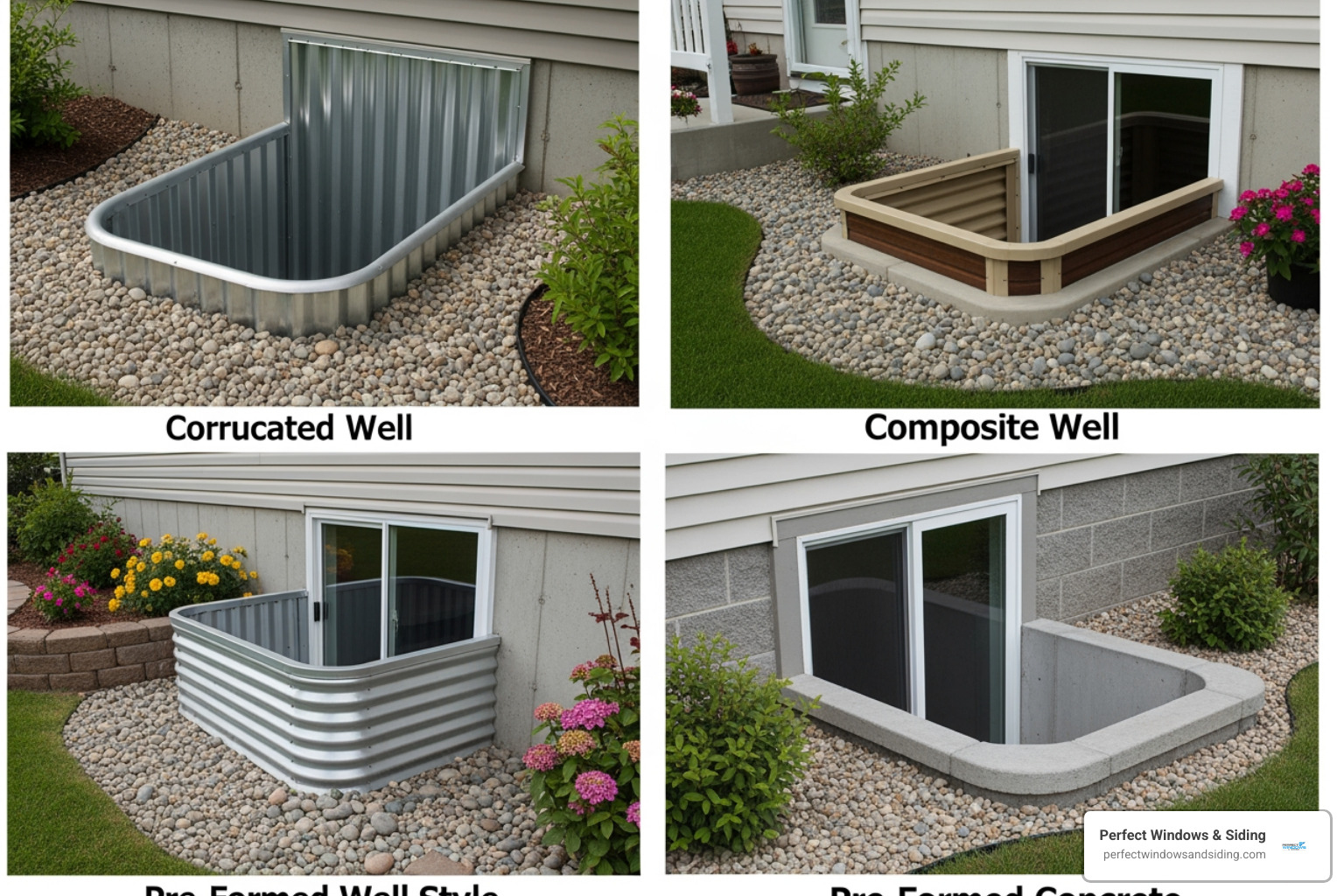
At Perfect Windows & Siding, we help clients find the right fit from our custom window options.
Types of Egress Windows
The window’s operating style is key to meeting code and maximizing light.
- Casement windows are the most popular choice. They are hinged on the side and crank outward, creating a large, unobstructed opening that easily meets egress requirements. They also seal tightly for excellent energy efficiency.
- Sliding windows open horizontally. They can work for egress but must be very wide to provide the necessary clear opening.
- Double-hung windows are less common for basement egress, as they require a very tall unit to meet opening size codes.
- In-swing windows open inward, which can obstruct the escape path within the window well. We generally advise against them for safety reasons.
We recommend high-performance vinyl and fiberglass windows with low-E coatings and argon gas fills. These features improve energy efficiency, keeping your basement comfortable and reducing utility bills.
Window Well and Cover Options
The window well is both a functional safety feature and a visual element of your home.
- Galvanized steel wells are a durable and cost-effective option, offering a clean, functional look that stands up to Chicago winters.
- Polyethylene wells are sturdy composite units available in various colors and textures, some mimicking natural stone. They are rust-proof and have a finished appearance.
- Custom stone or timber wells offer the highest aesthetic appeal, blending seamlessly with your landscaping and looking like an original feature of your home.
A quality window well cover is also essential.
- Grate covers are metal grids that keep out debris and animals while allowing light and air in. They are designed for easy removal from the inside.
- Clear polycarbonate covers are sloped, transparent tops that maximize sunlight while keeping out rain, snow, and leaves. They keep the well clean and bright, and are also designed for quick emergency removal.
Frequently Asked Questions about Egress Windows
As experts in egress window installation across the Chicagoland area for over 20 years, we’ve answered hundreds of homeowner questions. Here are the most common ones.
How much does an egress window installation typically cost?
The typical cost for an egress window installation ranges from $3,000 to $8,000 per window. The final price depends on several factors, including:
- Foundation Type: Cutting poured concrete is more labor-intensive than cutting concrete block.
- Window & Well: The size and style of the window and the material of the well (e.g., steel vs. custom stone) affect material costs.
- Excavation Complexity: Difficult soil conditions or tight access can increase labor time.
- Drainage Needs: The extent of integration with your existing sump pump or drain tile system.
Our quotes are comprehensive, including all materials, labor, permits, and our lifetime warranty, so there are no surprises.
How do you finish the interior after an egress window is installed?
While our primary focus is the structural and exterior work, we can discuss your interior finishing needs. The process typically involves framing the new opening, repairing any disturbed drywall, and adding insulation. We then install interior trim and casing to match your basement’s style, whether modern or traditional. You can find inspiration in resources like The Family Handyman’s guide to installing window trim. The final step is painting, which transforms the area into a polished, inviting space.
What long-term maintenance is required for an egress window?
Properly installed egress windows require minimal maintenance to ensure longevity and performance.
- Regular Cleaning: Clean the glass and frame as you would any other window.
- Inspect Seals: Every few months, check the caulk and weatherstripping for gaps or cracks, especially after freeze-thaw cycles. Re-caulk as needed to maintain a watertight seal.
- Clear the Window Well: This is the most important task. Regularly remove leaves, dirt, and debris from the well to ensure the drainage system remains clear and prevents water buildup.
- Test Operation: A few times a year, open and close the window completely to ensure it operates smoothly and the locks engage properly. Make sure any cover can be easily removed from the inside for emergency access.
Conclusion
An egress window installation is a powerful investment, changing your basement into a bright, safe, and legal living space. It adds natural light, provides a crucial emergency escape route, and can increase your home’s resale value by $15,000 to $25,000. The process is complex, involving excavation, foundation cutting, and expert waterproofing, which is why professional installation is essential.
At Perfect Windows & Siding, we have over 20 years of experience installing egress windows throughout Chicagoland. Our team manages every detail, from permits to final drainage integration, ensuring a high-quality result backed by a lifetime warranty. We turn dark basements into the bright, valuable spaces our clients love.
Ready to bring light and safety to your basement? Contact us for your professional egress window installation and let’s start planning your project together.