

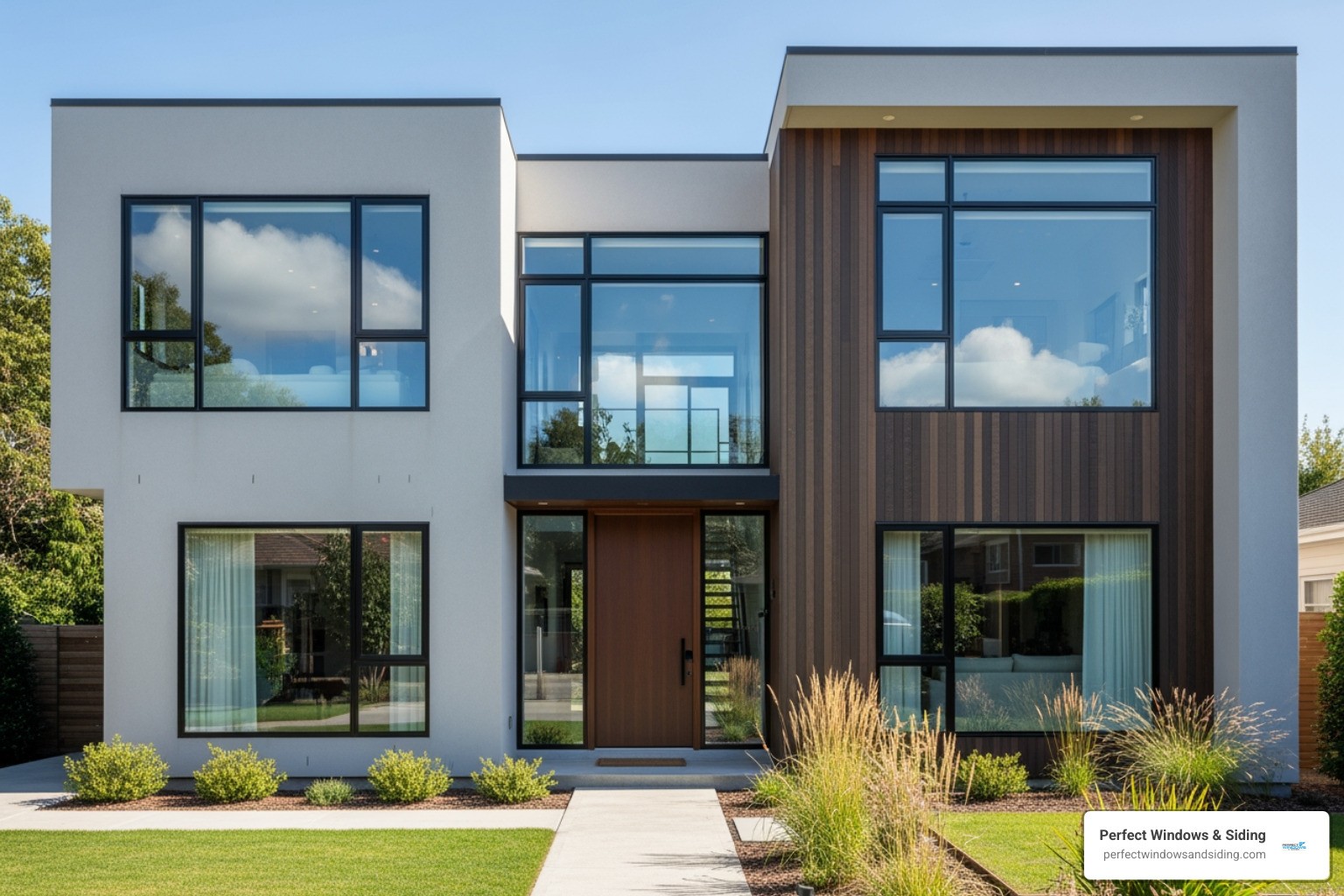
Why Invest in New Windows? The Key Benefits
Window Replacement is one of the most impactful home improvements you can make, offering benefits that go far beyond aesthetics. Whether your windows are drafty, outdated, or simply not performing well, replacing them can transform your home’s comfort, energy efficiency, and value.
According to the U.S. Department of Energy, heat gain and loss through windows are responsible for 25-30% of residential heating and cooling energy use. This is why upgrading is such a smart investment. I’m Voytek Glab, owner of Perfect Windows & Siding, and I’ve been helping Chicagoland homeowners with Window Replacement decisions for over 20 years. From selecting the right window style to ensuring a perfect installation, I’ve personally overseen hundreds of successful projects across the area.

Similar topics to Window Replacement:
Investing in new windows is a smart decision that pays dividends in comfort, savings, and home value. Here’s a summary of the key benefits for Chicago-area homeowners:
-
Lower Utility Bills: Upgrading to ENERGY STAR certified windows can significantly reduce heating and cooling costs. For us in the Chicago area, replacing old single-pane windows can lead to average savings of $568 per year.
-
Increased Home Value: A window replacement project is an investment in your property. Homeowners can recoup an average of 67% of the cost at resale, making it a financially sound upgrade that also boosts curb appeal.
-
Improved Home Comfort: Modern, well-sealed windows eliminate drafts and uneven temperatures, creating a consistent and comfortable indoor climate year-round. They also provide excellent noise reduction, creating a quieter, more peaceful home.
-
Improved Protection & Security: New windows come with advanced locking mechanisms for better security. Many also feature Low-E coatings that block harmful UV rays, protecting your furniture, flooring, and artwork from fading.
-
Reduced Maintenance: Modern materials like vinyl and fiberglass require very little upkeep compared to older wood windows. Many styles also feature tilt-in sashes, making cleaning a breeze.
Choosing the right windows for your Park Ridge home or any Chicagoland property involves understanding these benefits. For more insights, check out our guide on 6 Ways to Choose the Right Windows for Your Park Ridge Home.
A Homeowner’s Guide to Choosing Replacement Windows
Choosing replacement windows doesn’t have to be overwhelming. Once you understand the basics, the decisions become much clearer. When planning a window replacement, you’ll need to consider four main elements: the style, the frame material, the glazing options, and how our Chicago climate impacts these choices.

Common Window Styles and Their Uses
The style you choose affects natural light, ventilation, and ease of use. Here are the most popular options for Chicago-area homes.
- Double-hung windows: A classic choice where both sashes slide vertically for flexible ventilation. Most modern versions tilt in for easy cleaning.
- Casement windows: Hinged on the side, they swing open with a crank, providing excellent airflow and a tight seal when closed, making them very energy-efficient.
- Awning windows: Hinged at the top, they push out from the bottom, allowing for ventilation even during light rain. Ideal for basements and bathrooms.
- Picture windows: These fixed windows don’t open. Their purpose is to maximize views and natural light, offering high energy efficiency due to their airtight seal.
- Sliding windows: Gliding horizontally on a track, they are easy to operate and work well in spaces with limited depth, like over kitchen counters.
- Bay and bow windows: These project outward from the house, adding interior space and architectural character. They create bright nooks and improve curb appeal.
- Garden windows: A small box-like window, usually in a kitchen, that’s perfect for growing herbs and small plants, bringing in lots of light.
Comparing Window Frame Materials
The frame material impacts cost, appearance, and maintenance. Here’s a breakdown of your options.
- Vinyl windows: The most popular choice due to their affordability, durability, and low maintenance. They offer excellent insulation and never need painting.
- Wood windows: Offer timeless beauty and great insulation. They require regular maintenance (painting or staining) but can be protected with exterior aluminum or vinyl cladding.
- Fiberglass windows: Incredibly strong and durable, they resist warping and swelling in extreme temperatures, making them ideal for Chicago’s climate. They are low-maintenance and can be painted.
- Composite windows: A premium blend of materials, like wood fibers and polymers, offering the strength of fiberglass and the look of wood with minimal upkeep.
Pocket vs. Full-Frame Window Replacement
There are two main installation methods for a window replacement.
- Pocket replacement (or insert windows) involves placing a new window unit into the existing frame. It’s faster, more affordable, and less disruptive, making it ideal when your current frames are in good condition.
- Full-frame replacement involves removing the entire window and frame down to the rough opening. This is necessary if the old frame is rotted or damaged. It costs more but allows for new insulation and maximizes the glass area. The Building America Solution Center offers technical guidance on this method.
Climate Considerations for Your Chicago Home
Chicago’s weather demands high-performance windows. Here are the key ratings to understand.
- U-Factor: Measures how well a window prevents heat from escaping. A lower number is better, keeping your home warmer in winter.
- Solar Heat Gain Coefficient (SHGC): Measures how much solar heat a window lets in. A lower number is better for keeping your home cool in the summer.
- Condensation Resistance: Indicates how well a window resists moisture buildup. A higher number is better, especially in our humid climate.
The Efficient Windows Collaborative provides recommendations for our Northern Zone, emphasizing the right balance of U-Factor and SHGC for year-round performance.
Decoding Energy Efficiency: Understanding Window Ratings
Understanding energy efficiency ratings is the key to choosing windows that will lower your energy bills and improve comfort. These standardized measurements allow for objective, apples-to-apples comparisons, ensuring you select a product that can handle our Northern Illinois climate.
The Role of Glazing, Gas Fills, and Low-E Coatings
The real magic of modern windows happens in the layers. Glazing refers to the panes of glass. Double-pane glass is the standard for any window replacement, creating an insulating airspace. Triple-pane glass offers even greater efficiency and noise reduction, a worthy upgrade for Chicago’s harsh winters.
This airspace is filled with a dense, inert gas like Argon or Krypton to slow heat transfer even further. The final piece is the Low-E coating, a microscopically thin, transparent metallic layer that reflects heat. In our climate, it helps keep heat inside during winter and outside during summer. It also blocks damaging UV rays, protecting your home’s interior from fading. For a deeper dive, see More on Low-E Coatings.
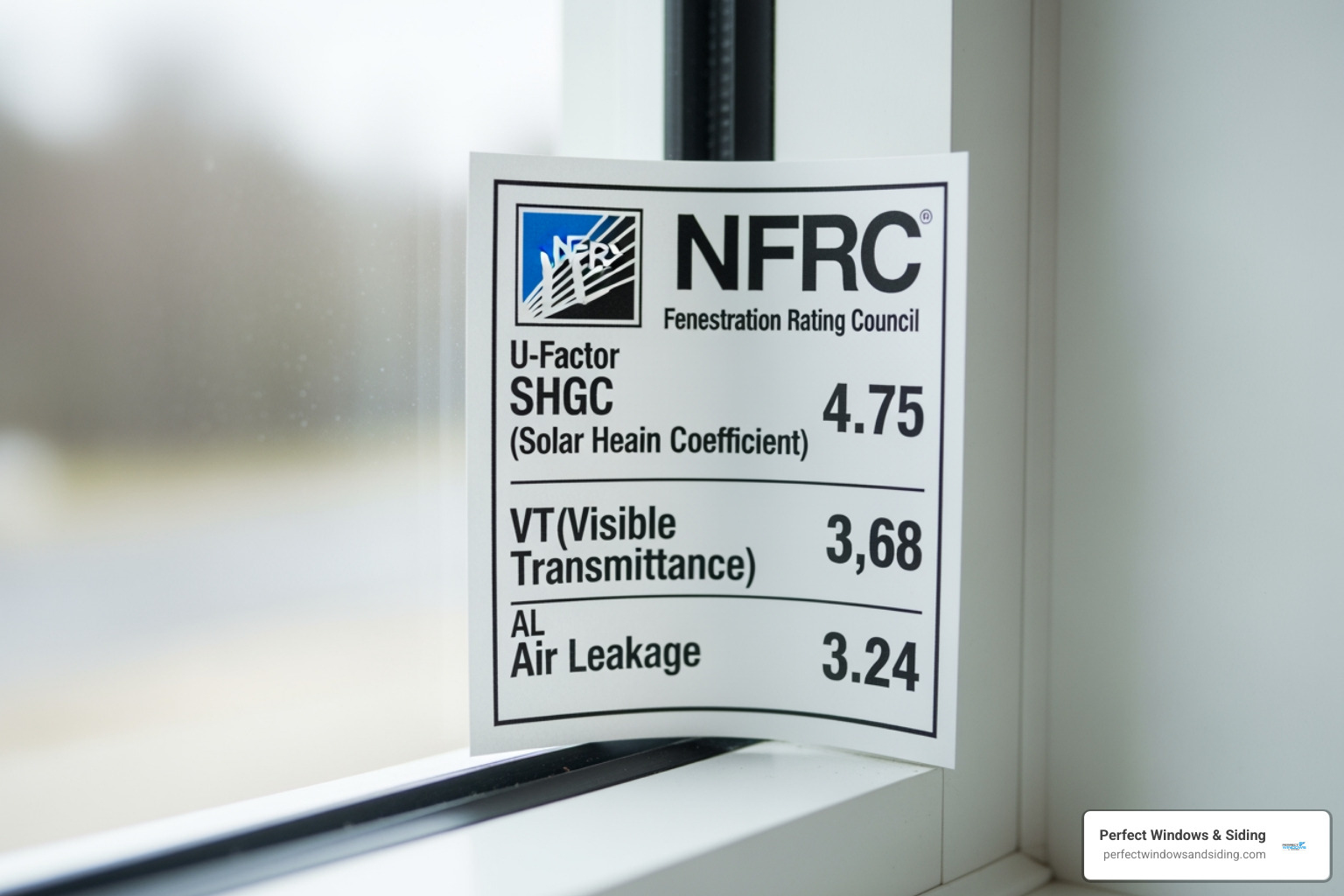
How to Read the NFRC Label
The National Fenestration Rating Council (NFRC) provides the standardized energy performance label for windows. Here’s what to look for:
- U-factor: Measures heat loss (insulation). The lower the number, the better a window is at keeping heat in. This is critical for Chicago winters.
- Solar Heat Gain Coefficient (SHGC): Measures how much heat from the sun passes through. A lower number means less solar heat, which helps keep your home cooler in summer.
- Visible Transmittance (VT): Measures how much natural light comes through. A higher number means more daylight.
- Air Leakage (AL): Measures how much air passes through the window assembly. A lower number means fewer drafts.
For more details, visit Interpreting the energy performance label.
What the ENERGY STAR Label Means for You
The ENERGY STAR label, a program from the U.S. EPA, certifies that a product meets strict energy efficiency guidelines. For windows, these requirements are custom to specific climate zones. A window with the ENERGY STAR label for our Northern Zone is verified to perform well in both our cold winters and hot summers.
Choosing certified windows can save the average homeowner about 13% on energy bills. Furthermore, installing select ENERGY STAR Most Efficient windows may qualify you for a 30% federal tax credit (up to $600). This makes high-performance windows an even smarter investment. You can review the criteria at ENERGY STAR product criteria.
The Window Replacement Process: From Cost to Installation
Starting on a Window Replacement project requires careful planning, from budgeting to installation. With clear communication, you can feel confident every step of the way.

Budgeting for Your Window Replacement Project
The cost of a Window Replacement varies, but it’s best viewed as an investment. Our guide on How Much Do New Windows Cost? has full details, but here’s a quick overview.
The national average for one professionally replaced window is around $800, with a range of $300 to $3,000 depending on the window. Key factors include:
- Material Costs: Vinyl is typically the most budget-friendly, while wood and fiberglass cost more. Features like Low-E coatings and custom sizes also affect the price.
- Labor Costs: Labor generally runs $100 to $300 per window. Full-frame replacements or projects requiring structural repairs will have higher labor costs.
This investment offers a strong return on investment (ROI). Vinyl window replacements recoup about 67% of their cost at resale, not including the monthly energy savings and improved comfort. For a local estimate, see Window Replacement Cost Near Me.
The Importance of Professional Window Installation
Even the best window will fail if installed improperly. Professional installation is essential to ensure your windows perform as designed and your investment is protected.
Key benefits of hiring a pro include:
- Proper Sealing: Experts create airtight and watertight seals to prevent drafts and water damage, which is crucial in Chicago’s climate.
- Maximized Performance: Professionals understand how to integrate the window with your home’s insulation and weather barriers for optimal energy efficiency.
- Safety and Expertise: Certified contractors are trained to handle challenges like hidden rot or lead paint (common in homes built before 1978) safely and effectively.
- Warranty Protection: Many manufacturer warranties are voided by DIY installation. Professional work protects your warranty and your investment.
When choosing an installer, look for a proven track record, professional certifications, and a comprehensive bid. Our Window Installation Service Chicago page explains our approach, and these 10 Questions to Ask Your Window Contractor can help you vet potential hires.
Understanding Window Warranties
A solid warranty is your peace of mind. Most Window Replacement projects come with two types of coverage:
- Product Warranty: This comes from the manufacturer and covers defects in the window itself (frame, glass, hardware). Read the fine print, as “lifetime” coverage can have different definitions.
- Installation Warranty: This comes from your installer and covers the quality of the workmanship. It’s crucial, as it protects you from issues caused by improper installation.
Look for warranties that are transferable to a new owner, as this adds value to your home. Always understand what is covered, what is excluded, and what actions might void your coverage.
Frequently Asked Questions about Window Replacement
After two decades of Window Replacement in Chicagoland, we’ve found that homeowners often have the same key questions. Here are the answers to the most common concerns.
What time of year is best to replace windows?
Window Replacement can be done year-round. While spring and fall are popular for their mild weather, our professional crews are equipped to work efficiently in any season. Summer offers long daylight hours for faster project completion. Winter is also a great time, as we use techniques to seal off work areas and keep your home comfortable. An added benefit of a winter installation is that you’ll start saving on heating bills immediately.
Can I replace just one window at a time?
Absolutely. While replacing all windows at once ensures aesthetic consistency and may offer bulk pricing, phasing the project is a great way to manage your budget. You can prioritize the most problematic windows first. We help you select a window style and keep detailed records, so when you’re ready for the next phase–whether it’s months or years later–the new windows will be a perfect match.
How long does a typical window installation take?
The timeline depends on the number and type of windows. However, for most residential projects, our professional crews can install between one and five windows in a single day. A typical whole-home project of 10-15 windows usually takes just one to two days to complete. We work efficiently, protect your home, and perform a thorough cleanup to minimize disruption.
Conclusion
If you’ve read this far, you’re serious about making a smart investment in your Chicagoland home. We’ve covered how to choose the right style and material, and how to decode energy ratings for our climate. You now know that a window replacement can cut energy bills, improve comfort, and boost your home’s value.
We’ve explored options from versatile Double Hung Windows and efficient Casement Windows to light-maximizing Picture Windows. But the most important takeaway is this: even the highest-rated window will fail without professional installation.
Proper sealing and expert handling are what turn a good window into a great, long-lasting investment. That’s where our two decades of experience serving Chicagoland families truly counts. As a local, family-owned business, we’re not just installing windows; we’re building relationships with our neighbors, backed by a lifetime warranty and a commitment to personalized service.
Ready to see what new windows can do for your home’s comfort, beauty, and energy bills? We’d love to help you create a solution that’s perfect for your home.
Start Your Window Replacement Project Today and let’s make your vision a reality.