

Are Alpine Triple Pane Windows Worth It in Cold Climates?
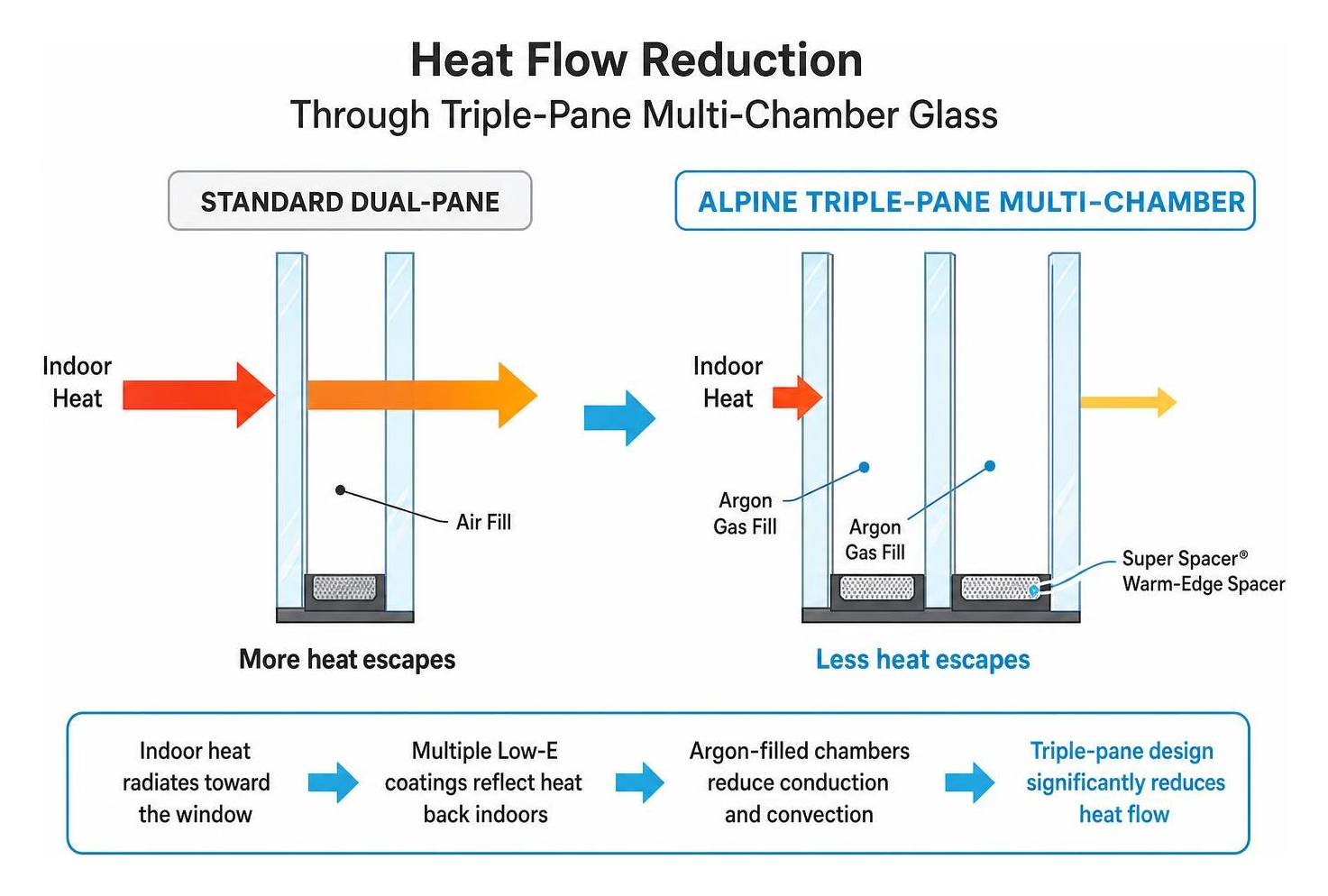
Alpine triple pane windows are worth considering for Chicago-area homes where winter comfort is a priority. Alpine’s SolarTherm PriME package uses three panes, Low-E coatings, two argon-filled spaces, and a warm-edge spacer to slow heat loss through the glass. Before choosing it, compare the whole-window U-factor and performance ratings for the exact window style you want. Glass alone does not determine how a window will perform.
A good installation matters, too. Gaps around even a well-insulated window can leave a room feeling drafty.
I’m Voytek Glab, owner of Perfect Windows & Siding. I’ve spent more than 20 years installing windows across Chicagoland, and I use that hands-on experience to help homeowners assess options such as Alpine triple pane windows.
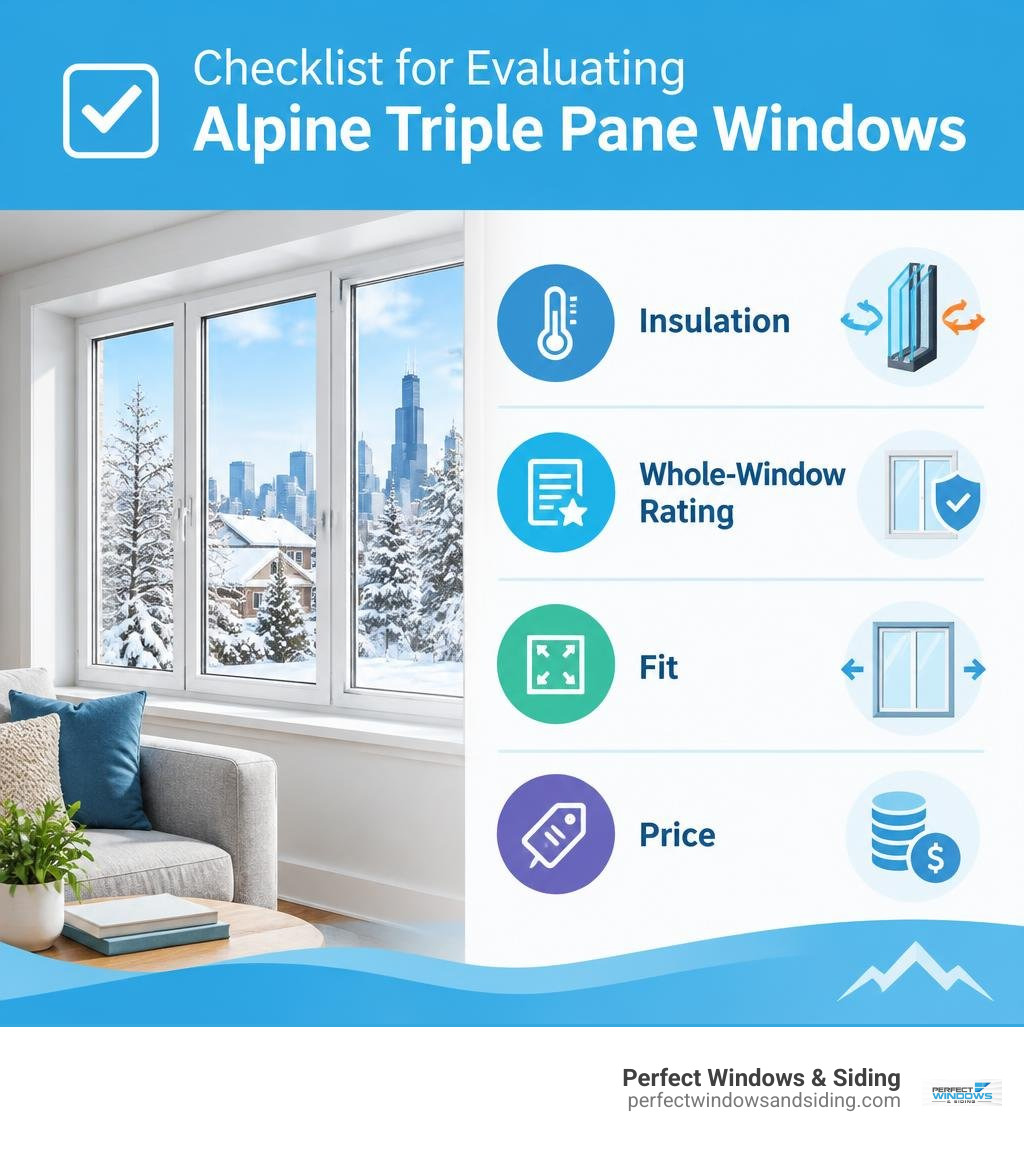
Alpine triple pane windows terms to remember:
Introduction

Living in Northern Illinois means preparing your home for dramatic temperature swings. When sub-zero winds sweep across Lake Michigan into communities like Park Ridge, Glenview, and Morton Grove, standard glass units struggle to maintain indoor comfort. A window accounts for roughly 80% glass by area, making the glazing package the single most important barrier against seasonal weather extremes.
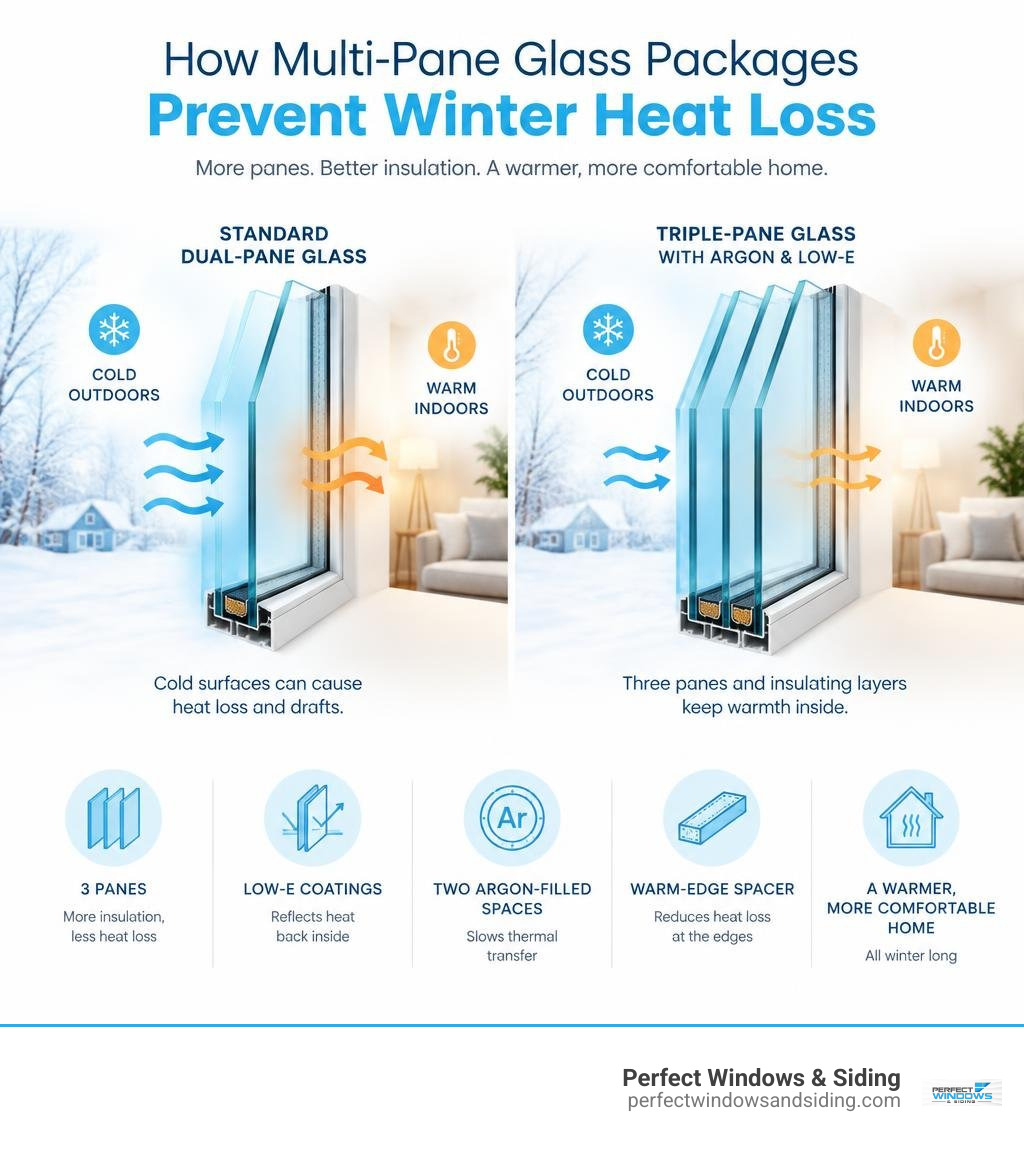
When standard dual-pane glass gets cold, interior air hits the chilly pane, cools rapidly, and drops to the floor, creating uncomfortable convective drafts. By upgrading your home’s exterior envelope through an energy efficient window replacement, multi-pane glass systems help eliminate cold interior surfaces, stop thermal bridging, and maintain consistent indoor temperatures all winter long.
Understanding Alpine Triple Pane Windows and Glass Technology
Modern high-performance windows rely on specialized insulated glass units (IGUs) engineered to slow thermal transfer. Alpine’s advanced SolarTherm® PriME insulated glass package pairs three lites of double-strength glass with dedicated insulating chambers. Rather than relying on simple air pockets, each chamber is filled with dense argon gas.
Argon gas is significantly denser than ambient air, which greatly suppresses convective heat transfer inside the sealed unit. When paired with microscopic, multi-layer Low-E metallic coatings, the glass reflects interior radiant heat back into living spaces during freezing months while turning away harsh solar heat during humid Midwestern summers.
Anatomy of Alpine Triple Pane Windows: Panes, Coatings, and Spacers
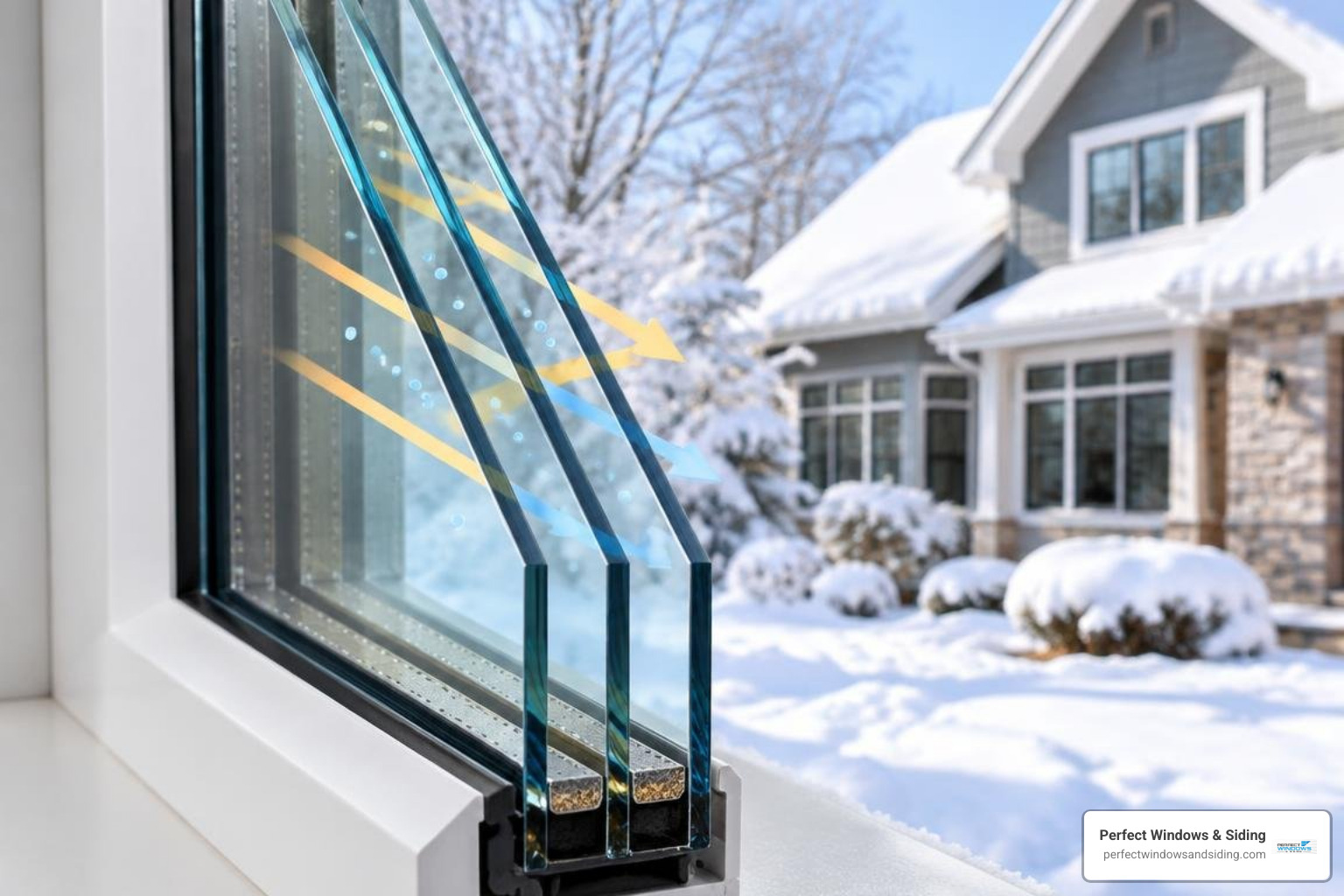
To understand why multi-pane systems excel, it helps to examine how the layers work together:
- Outer Glass Pane: Built with double-strength glass to resist heavy wind loads and outdoor elements.
- First Low-E Coating Layer: Applied to an inner surface to bounce ambient outdoor heat away during hot weather.
- Primary Argon Chamber: Slows conduction and convection between the outer and center panes.
- Center Suspended Pane: Creates two independent thermal barriers instead of one.
- Secondary Argon Chamber: Further insulates the core of the IGU.
- Inner Low-E Coatings: Positioned to redirect indoor furnace heat back into the home.
- Super Spacer® Structural Foam: A non-metallic, warm-edge perimeter spacer that eliminates edge-of-glass condensation and thermal leaks.
Window Styles That Can Use Triple-Pane Glass
Multi-pane glass packages integrate seamlessly across a variety of window operating styles. High-performance vinyl framing systems are engineered with multi-chambered, fusion-welded extrusions that carry multi-pane units without warping or bowing over time. Whether you choose double-hung, slider, picture, or casement styles, precision vinyl window installation ensures the frame and sash remain plumb, square, and completely sealed against air infiltration.
Thermal and Acoustic Performance: U-Factor, R-Value, and Noise Reduction
Evaluating window performance requires looking at verified metrics from the National Fenestration Rating Council (NFRC). The two most critical thermal measurements are:
- U-Factor: Measures the rate of heat loss (lower numbers mean better insulation).
- R-Value: Measures overall thermal resistance (higher numbers mean better insulation).
| Glass Package Type | Average Center-of-Glass U-Factor | Whole-Window R-Value Range | Sound Transmission (STC) | Primary Climate Benefit |
|---|---|---|---|---|
| Standard Dual-Pane Clear | 0.48 – 0.52 | R-2.0 to R-2.2 | 26 – 28 | Basic weather shelter |
| Dual-Pane Low-E / Argon | 0.26 – 0.30 | R-3.3 to R-3.8 | 28 – 31 | Moderate seasonal efficiency |
| Alpine SolarTherm® PriME Triple-Pane | 0.18 – 0.22 | R-4.5 to R-5.5 | 32 – 36 | Exceptional deep-freeze protection |
| Ultra-High Performance Thin-Triple/Quad | 0.10 – 0.15 | R-7.0 to R-10.0 | 36 – 44 | Passive House / maximum acoustic barrier |
Understanding the best triple pane window benefits for Chicago homes allows homeowners to target cold rooms, eliminate perimeter frost, and dramatically reduce energy waste. For additional context on how these ratings are established, the National Fenestration Rating Council provides independent certification and labeling for window performance.
Winter Insulation and Summer Solar Heat Control
Under the strict ENERGY STAR® 7.0 standards implemented for Northern climate zones, replacement windows must achieve stringent U-Factors to qualify as top-tier performers. In freezing temperatures, high-performance glass keeps the inside pane warm to the touch. This eliminates the “radiant chill” felt when sitting near older windows. In summer, the spectrally selective coatings block infrared heat and damaging UV rays while still allowing clear, natural light into your rooms, helping you save energy on windows across all four seasons.
Acoustic Benefits of Multi-Pane Windows in Urban Climates
Beyond thermal control, multi-pane assemblies offer outstanding sound isolation. Sound waves lose energy each time they pass through varying densities of glass and gas spaces. Windows with triple-sealed gaskets and multiple panes improve Sound Transmission Class (STC) and Outdoor-Indoor Transmission Class (OITC) ratings. Upgrading to dedicated noise cancelling windows dampens busy street traffic, commuter train noise, and neighborhood commotion throughout bustling Chicago suburbs.
Advanced Glass Innovations in Traditional Triple-Pane Units
As window manufacturing evolves, multi-pane assemblies use advanced engineering to balance thermal performance with sash longevity. Traditional triple-pane IGUs use three full-thickness lites of glass. While these units provide remarkable thermal barriers, they require durable sashes and heavy-duty balance hardware to operate smoothly for decades. The structural demands of these systems are well documented by industry resources such as the Efficient Windows Collaborative, which explains how glazing layers and frame design work together to maintain long-term performance.
Weight, Sash Load, and Durability in Alpine Triple Pane Windows
A standard triple-pane IGU can weigh up to 50% more than a basic dual-pane unit. That extra weight places continuous demand on balances, rollers, and pivot pins. This is why professional window installation is essential; experienced installers ensure framing sills are perfectly leveled, shimmed, and fastened to carry structural sash loads without frame sag or hardware bind over time.
Spacer Durability: Structural Foam vs. Thermoplastic TPS
The perimeter spacer plays a vital role in preventing seal failure and insulating the glass edge. Traditional aluminum box spacers act as thermal bridges, drawing cold directly to the perimeter where condensation and frost typically collect.
Modern systems use advanced warm-edge designs:
- Super Spacer® Structural Foam: Uses a thermoset silicone matrix with an integrated multilayer vapor barrier. It flexes naturally with atmospheric temperature changes, virtually eliminating perimeter seal stress while keeping gas trapped securely inside the unit.
- Thermoplastic Spacers (TPS): Applied as a continuous, robotic warm-edge bead that bonds directly with the glass surfaces to deliver outstanding gas retention and thermal resistance.
Frequently Asked Questions About Alpine Triple Pane Windows
Do Alpine triple-pane windows qualify for federal energy tax credits?
Yes. Glass packages such as SolarTherm® PriME meet the rigorous ENERGY STAR® Most Efficient criteria in Northern climate zones. Meeting these strict U-Factor and Solar Heat Gain Coefficient (SHGC) benchmarks allows homeowners to qualify for federal energy efficiency tax incentives. For current eligibility details, the ENERGY STAR website outlines the requirements for windows in cold-climate regions.
How much heavier are traditional triple-pane windows compared to dual-pane units?
Traditional triple-pane units are roughly 30% to 50% heavier than standard double-pane windows because of the added center pane and extra spacer assembly. This structural weight requires reinforced vinyl profiles and heavy-duty sash balances to ensure smooth, effortless operation over decades of use.
What makes structural foam spacers superior to traditional aluminum spacers in freezing weather?
Structural foam spacers provide true warm-edge thermal performance because foam does not conduct heat or cold like aluminum. By insulating the perimeter edge of the glass, structural foam reduces perimeter condensation, stops seal degradation caused by thermal expansion, and keeps indoor humidity from turning into ice along the sash bottom.
Conclusion
Upgrading your home with triple-pane windows delivers remarkable indoor comfort, eliminates cold winter drafts, and reduces year-round energy loss across Chicagoland. With over 20 years of experience serving homeowners throughout Des Plaines, Park Ridge, Morton Grove, and surrounding suburbs, our licensed, insured, family-owned team delivers precision craftsmanship backed by a lifetime warranty. Explore our selection of high-performance replacement windows and discover the lasting value of expert installation.
Schedule your consultation or Get a free estimate today to start planning your home improvement project with Perfect Windows & Siding.