

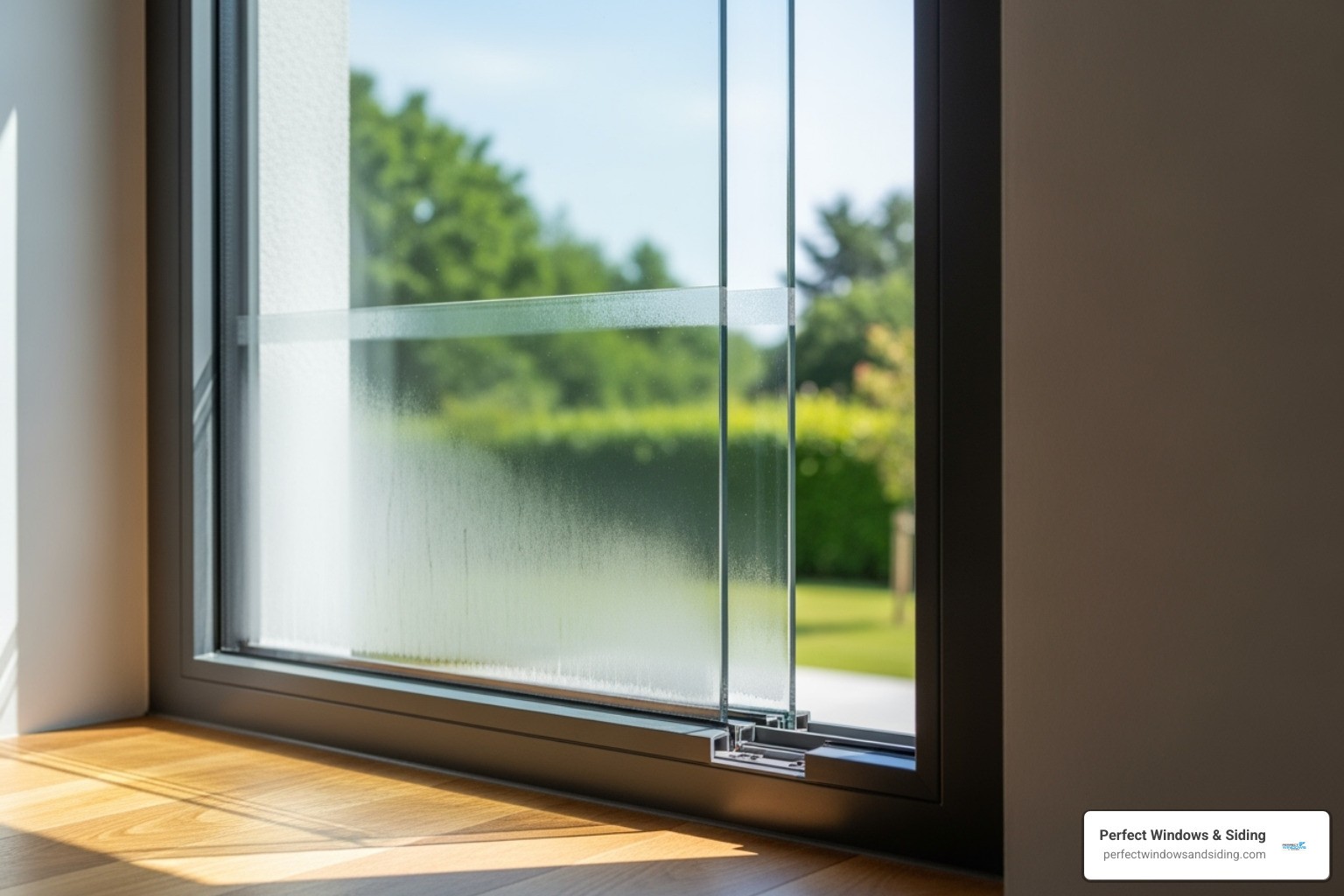
Why Energy-Efficient Windows Are Your Home’s Best Investment
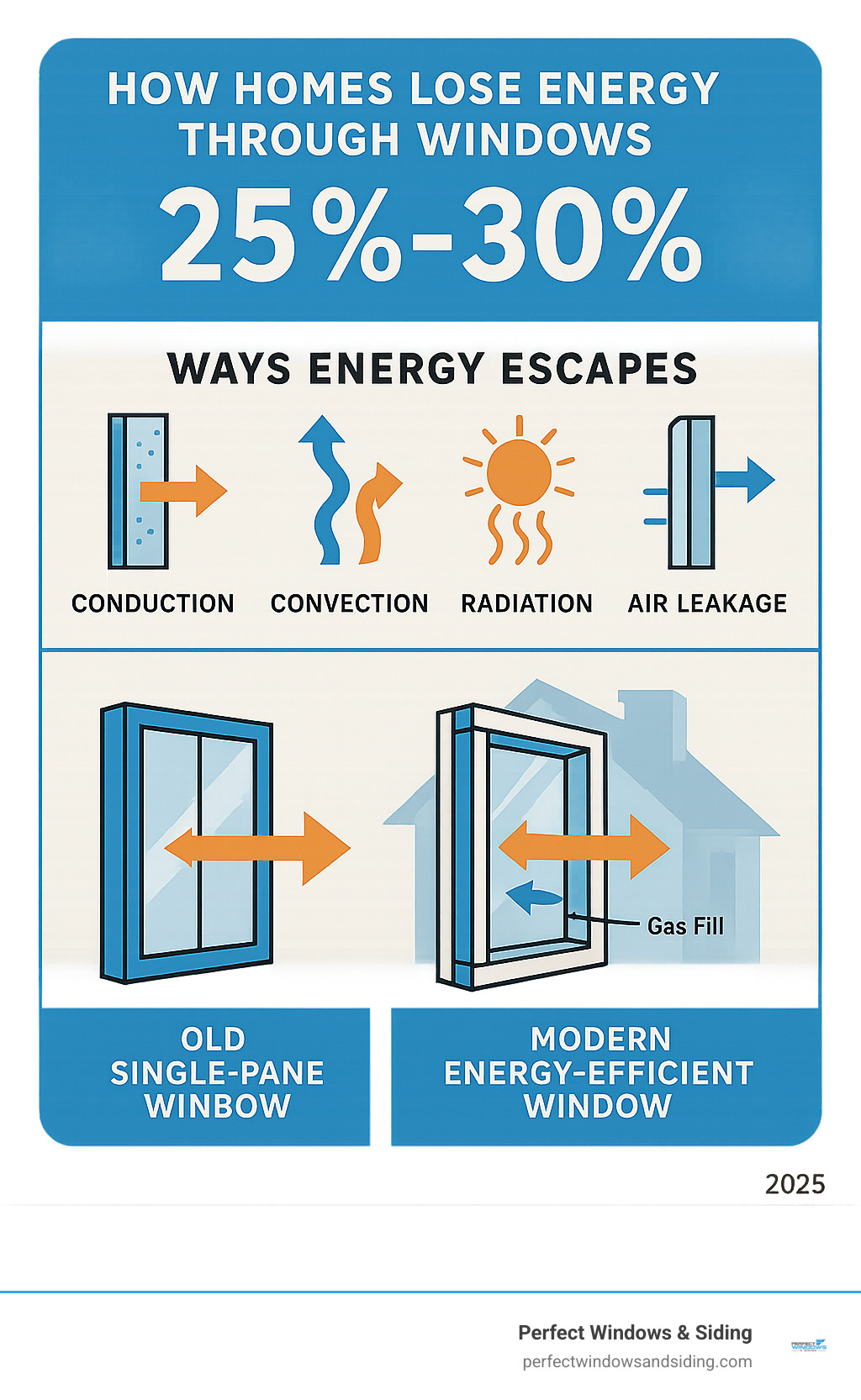
Save energy windows account for 25-30% of a home’s heating and cooling energy use, making them one of the most impactful upgrades you can make. Inefficient windows mean you’re literally watching money fly out the window—hundreds of dollars each year in Chicago’s extreme climate.
Quick Answer: What Are Save Energy Windows?
- Double or triple-pane glass with insulating gas between panes
- Low-E coatings that reflect heat
- Insulated frames made from vinyl, fiberglass, or wood
- ENERGY STAR certification for verified performance
- Professional installation to prevent air leaks
If you feel drafts, see condensation between glass panes, or watch your energy bills climb, your windows are costing you money. The good news is that replacing old windows with ENERGY STAR certified models can save up to 13% on your heating and cooling costs—an average of $101-$583 per year for Chicago-area homes.
Beyond energy savings, new windows also reduce outside noise, protect furniture from UV damage, eliminate uncomfortable drafts, and can increase your home’s value.
I’m Voytek Glab, and for over 20 years, I’ve helped Chicago homeowners choose and install save energy windows that improve comfort and cut utility bills. My experience shows that the right windows, properly installed, are one of the smartest investments a homeowner can make.
The Science Behind How Windows Lose Energy
Inefficient windows can be responsible for up to 35% of your home’s total heat loss. This energy escapes through four main culprits:
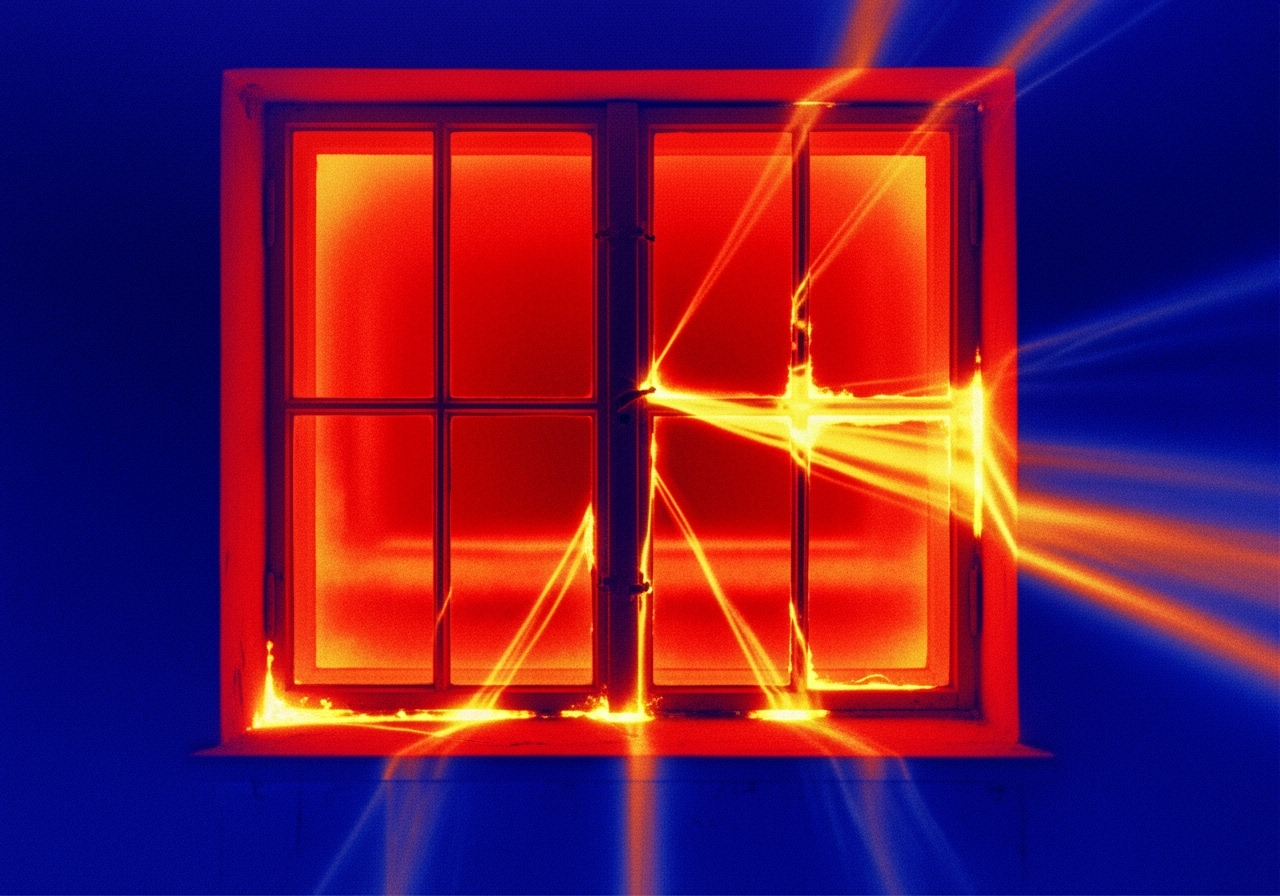
Conduction: Heat travels directly through window materials. Single-pane glass is a poor insulator, acting like a heat highway.
Convection: Gaps around windows create drafts as warm air rises and escapes while cold air sinks and enters.
Radiation: In winter, indoor heat radiates through the glass. In summer, the sun’s heat radiates in, overworking your air conditioner.
Air leakage: Gaps and poorly sealed frames let conditioned air leak out and outside air pour in.
Single-pane windows are the worst offenders, causing up to 25% of your heating and cooling costs to vanish. If you have obvious window problems, a repair might be a temporary solution. Check out our guide on window repair to see if it’s an option.
What Makes a Window Energy-Efficient?
Modern save energy windows are engineered to stop energy loss with a high-tech barrier of components.
- Multiple glass panes create insulating air pockets to slow heat transfer.
- Low-E coatings are invisible films that reflect heat but let light through.
- Gas fills like argon or krypton are denser than air, creating a superior insulating barrier.
- Insulated frames (vinyl, fiberglass, wood) prevent heat from escaping through the frame.
- Warm-edge spacers prevent cold spots at the window’s edge where condensation forms.
Double-Pane vs. Triple-Pane Windows
Both double- and triple-pane windows offer massive insulation improvement and sound reduction over single-pane windows.
Double-pane windows are the standard for most Chicago homes, offering excellent performance and value. With two panes of glass and an argon gas fill, they are highly effective at keeping heat where it belongs.
Triple-pane windows are the premium choice for Chicago’s harsh winters. The third pane creates two insulating chambers for maximum efficiency. The upfront cost difference is significant, but the superior insulation and soundproofing are worth considering for extreme weather or noise.
Due to Chicago’s climate suitability, triple-pane is a smart investment for maximum comfort. Argon gas is standard, while krypton gas offers slightly better performance at a higher cost.
Our double hung windows come in both double- and triple-pane configurations to match your needs.
Anatomy of an Energy-Efficient Window
An energy-efficient window is a system of engineered components working together. Understanding these parts shows why save energy windows are a smart investment.
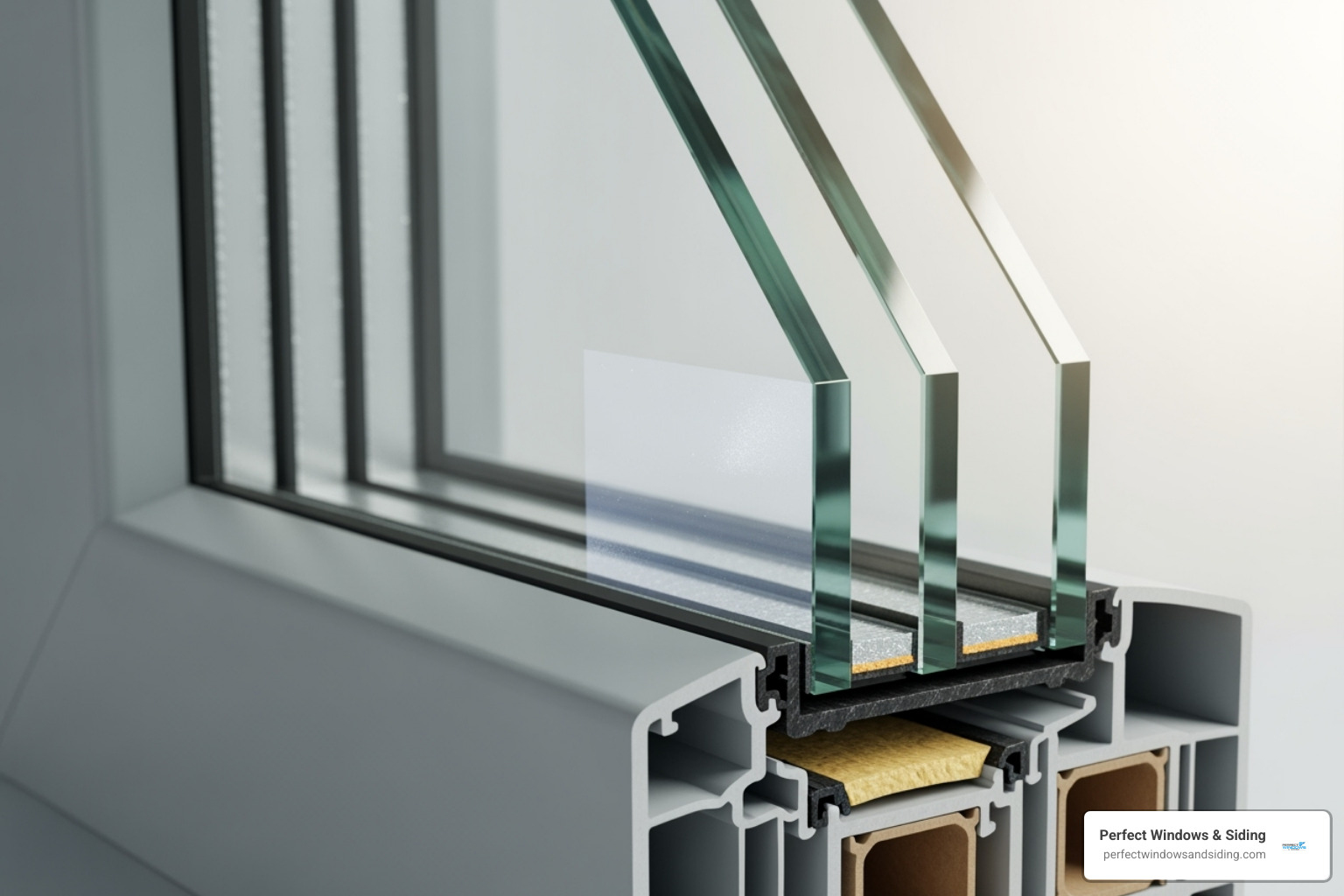
At Perfect Windows & Siding, we ensure every element works in harmony. The frame materials provide a thermal barrier, glazing technology controls heat, spacers prevent thermal bridging, and high-quality seals ensure an airtight fit. A window is only as strong as its weakest component, so we select every part for maximum performance.
The Power of Low-E Glass and Gas Fills
Low-emissivity (Low-E) coatings and gas fills are an invisible shield against energy loss.
Low-E coatings are microscopic layers that reflecting infrared light (heat) while letting visible light through. In winter, they keep heat inside; in summer, they reflect the sun’s heat away. Low-E coatings can reduce heat loss and gain by up to 50% and block up to 75% of harmful UV rays, protecting your furniture from fading. Learn more at Window Technologies: Low-E Coatings.
Instead of air, gas fills use argon gas or krypton gas between panes. These dense gases are better at reducing heat transfer. Argon is the standard, offering excellent performance at a reasonable cost. Krypton provides slightly better insulation but is more expensive. For most Chicago homes, argon is ideal.
Why Window Frame Materials Matter
The frame is a critical part of your window’s thermal performance. A poorly insulating frame undermines the benefits of advanced glass.
- Vinyl frames: Offer excellent insulation and durability. They are low-maintenance, corrosion-resistant, and come at a reasonable cost.
- Fiberglass frames: Provide superior insulation and stability, resisting warping in Chicago’s climate. They are extremely durable, low-maintenance, and have a higher cost than vinyl.
- Wood frames: Natural insulators with timeless aesthetics. They are durable but require regular maintenance (painting/staining) to prevent rot.
- Aluminum frames: Very durable but conduct heat, making them poor insulators without thermal breaks. Not ideal for Chicago’s climate.
For most Chicago homeowners, vinyl and fiberglass offer the best combination of efficiency, durability, and value. We can help you find the perfect fit for your home with our Explore Custom Window Designs Chicago options.
How to Choose the Right Save Energy Windows for Your Home
Choosing save energy windows is straightforward once you understand the basics. The key is knowing how to read the official labels.
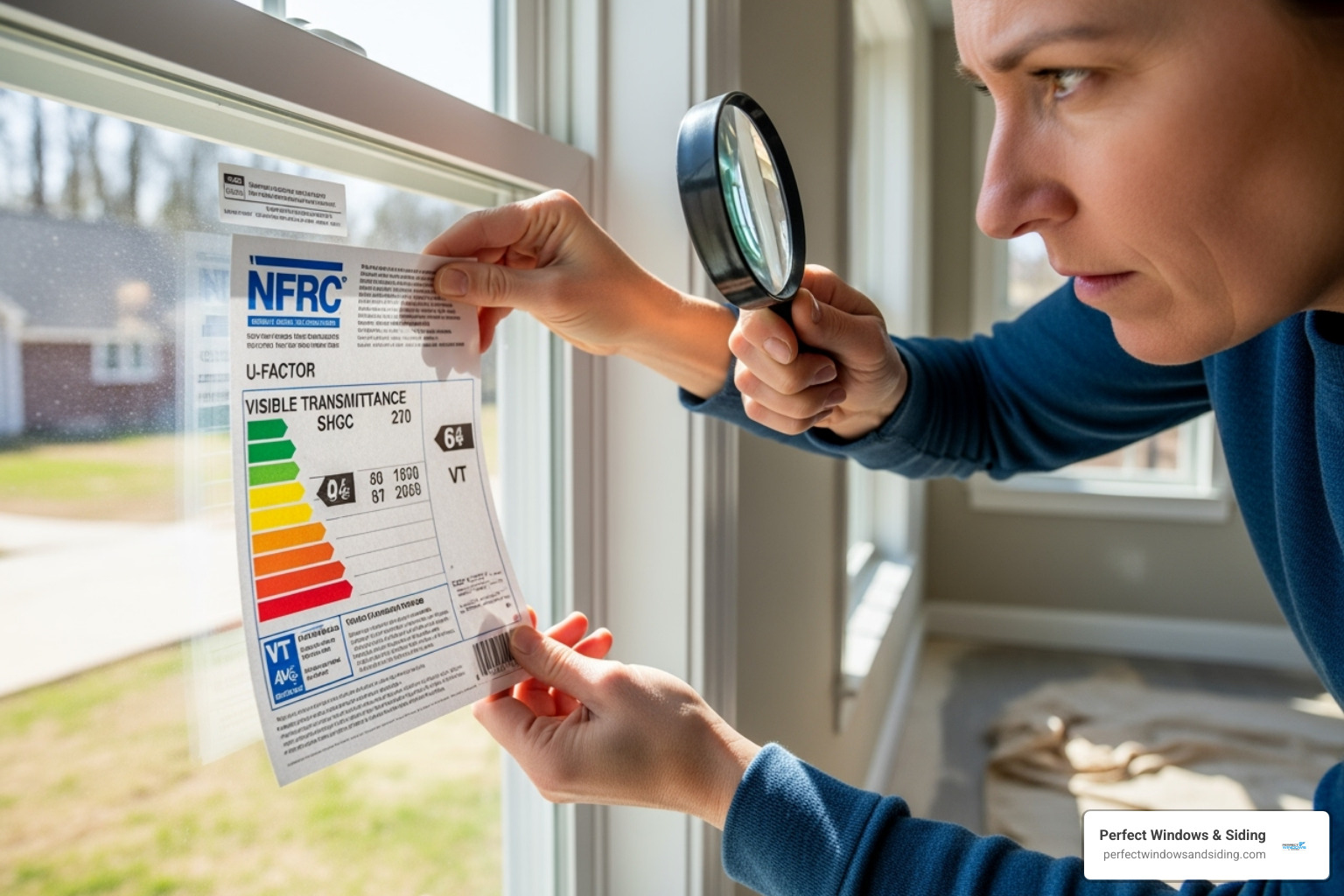
The two most important certifications are ENERGY STAR and the National Fenestration Rating Council (NFRC) label. These independent testing standards verify that a window delivers real energy savings. For more guidance, see our Tips for Buying Energy Efficient Windows guide.
Decoding the Labels: Your Guide to Finding Save Energy Windows
Every quality window has an NFRC label with key performance ratings. Always check the whole-unit performance, not just the center-of-glass numbers.
- U-factor: Measures how well a window prevents heat from escaping. The lower the U-factor, the better the insulation. For Chicago, look for a U-factor of 0.30 or lower.
- Solar Heat Gain Coefficient (SHGC): Measures how much solar heat passes through. Lower numbers mean less solar heat enters your home, which is crucial for hot summers.
- Visible Transmittance (VT): Measures how much natural light comes through. Higher numbers mean brighter rooms.
- Air Leakage (AL): Shows how much air passes through cracks. Lower numbers mean fewer drafts.
For a technical breakdown, the NFRC offers a guide on Understanding the energy performance label.
Matching Windows to Your Climate
Chicago’s climate features bone-chilling winters and sweltering summers, so your save energy windows must handle both extremes.
- For winter: Prioritize thermal resistance with a low U-factor (0.30 or lower). Triple-pane windows with gas fills are ideal for minimizing heat loss.
- For summer: Keep the sun’s heat out with a low SHGC (0.25 or lower for south-facing windows). Low-E coatings are essential for reflecting heat.
The best windows for Chicago have both low U-factors and low SHGCs to ensure year-round comfort and savings. Our recommendations are custom for local conditions in neighborhoods from Des Plaines to Wilmette. The Climate Zone Recommendations from Efficient Windows Collaborative provides additional technical guidance that aligns with our experience.
The Final Step: Professional Installation and Long-Term Value
Even the highest-rated save energy windows will fail if not installed correctly. Poor installation can negate all the benefits of a premium window.
Signs your current windows are failing include condensation between the glass panes, noticeable drafts, warped or rotting frames, difficulty opening or closing, and climbing energy bills. Replacing failing windows is one of the smartest investments for your home. Our guide on 10 Questions to Ask Your Window Contractor can help you choose the right partner.
Why Proper Installation is Crucial
Improper installation can cause significant heat loss, rendering even the best windows ineffective. Professional installation is critical for several reasons:
- Airtight Seal: We use insulating foam to seal every gap, preventing air leakage.
- Water Damage Prevention: Proper flashing and sealing protect your home from moisture and mold.
- Manufacturer Warranty: Most warranties require installation by certified professionals to remain valid.
- Level and Square Installation: Proper alignment ensures smooth operation and a correct seal, preventing leaks and premature wear.
We follow manufacturer guidelines and best practices developed over decades in the Chicagoland area. For more details, review the standards for complete window and frame replacement.
Understanding the Costs and Savings of New Save Energy Windows
While new windows are an investment, the returns are significant. Replacement windows can start around $400 per window including installation and go up depending on features.
- Energy Savings: Reduce your energy bills by up to 13% annually, which can mean savings of up to $465 per year for an average Chicago home.
- Increased Home Value: New windows boost curb appeal and market value, offering a solid return on investment.
- Reduced HVAC Strain: Efficient windows help maintain consistent temperatures, reducing wear on your heating and cooling systems and extending their lifespan.
- Financial Incentives: Federal tax credits can cover 30% of the cost (up to $600) for qualifying windows, and local utilities may offer additional rebates.
Save energy windows pay for themselves over time through savings and increased home value. For a custom estimate, see our guide on How Much Do New Windows Cost?.
Frequently Asked Questions about Energy-Efficient Windows
How much can I really save with energy-efficient windows?
Actual savings depend on your current windows, home size, and climate, but the numbers are encouraging. Most homeowners see average savings of 10-13% on annual heating and cooling bills after upgrading to ENERGY STAR certified save energy windows. If you’re replacing old single-pane windows, your savings could be even more dramatic, potentially between $101-$583 per year in the Chicagoland area. The worse your current windows are, the more you stand to save.
Are triple-pane windows worth the extra cost?
For Chicago’s extreme climate, triple-pane windows are often worth the extra investment. They offer superior insulation (lower U-factors) that creates a more effective barrier against cold, which is critical during our harsh winters. Beyond energy savings, triple-pane windows provide excellent soundproofing, a noticeable benefit if you live near a busy street. While the upfront cost is higher, the long-term energy savings and improved comfort provide a strong return on investment in a climate like ours.
How do I know if my windows need to be replaced?
Your windows will give you clear warning signs. It’s time for a replacement if you notice:
- Visible damage: Cracks in the glass, or frames that are rotting, soft, warped, or discolored.
- Difficulty opening or closing: Windows that stick, are painted shut, or won’t stay open indicate failing mechanisms or a warped frame.
- Condensation between panes: Moisture or fog trapped between the glass layers means the seal has failed and the insulating gas has escaped.
- Noticeable drafts: Feeling cold air near a closed window is a sure sign of air leaks.
- Rising energy bills: If your bills are climbing without a change in usage, inefficient windows are a likely culprit.
Conclusion
Over the past 20 years, I’ve seen how new save energy windows transform Chicago homes. Homeowners in Glenview have seen their heating bills drop significantly, while others in Park Ridge finally enjoy peace and quiet thanks to the soundproofing of triple-pane windows.
Investing in energy-efficient windows is one of the smartest decisions for your home. It’s about eliminating drafts, shrinking energy bills, and creating a more comfortable home while increasing its value. The bottom line is simple: modern windows with Low-E coatings, gas fills, and insulated frames save you money and improve your quality of life.
In Chicagoland’s extreme climate, high-performance windows are a necessity, not a luxury. From Des Plaines to Wilmette, the right windows make all the difference.
At Perfect Windows & Siding, we are a local, family-owned business that understands Chicago weather. Our lifetime warranty is our commitment to you, our neighbor. Your investment today will pay you back in cost savings, improved comfort, and increased home value for years to come.
Ready to stop watching money fly out your inefficient windows? Let’s talk about changing your home.