

Understanding the 3 Pane UPVC Window: Construction and Technology
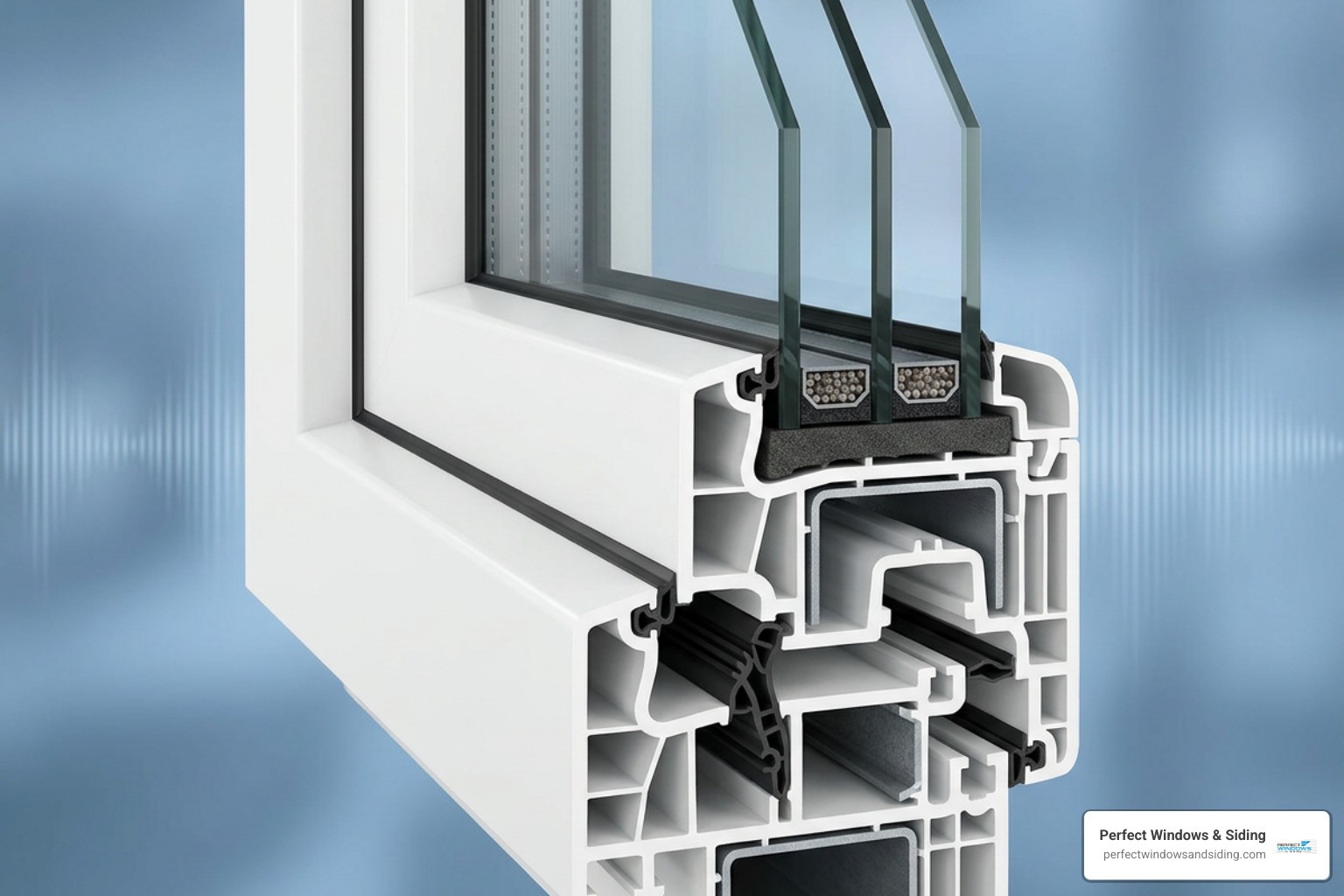
The construction of an advanced 3 pane upvc window blends precise material science with robust mechanical design. Think of it like a triple-decker sandwich: every extra layer provides more substance, stability, and satisfaction. Rather than relying on simple glass sheets held in a basic sash, modern units use high-grade unplasticized polyvinyl chloride engineered with multiple internal chambers to resist twisting, warping, and weather degradation.
When three distinct panes of glass are integrated into a single insulated glass unit (IGU), the overall profile depth increases. This added depth requires an uncompromising frame system. Precision German engineering principles ensure that the window profile delivers exceptional structural rigidity while maintaining slim sightlines for ample natural daylighting.
Anatomy of a Multi-Chamber UPVC Frame
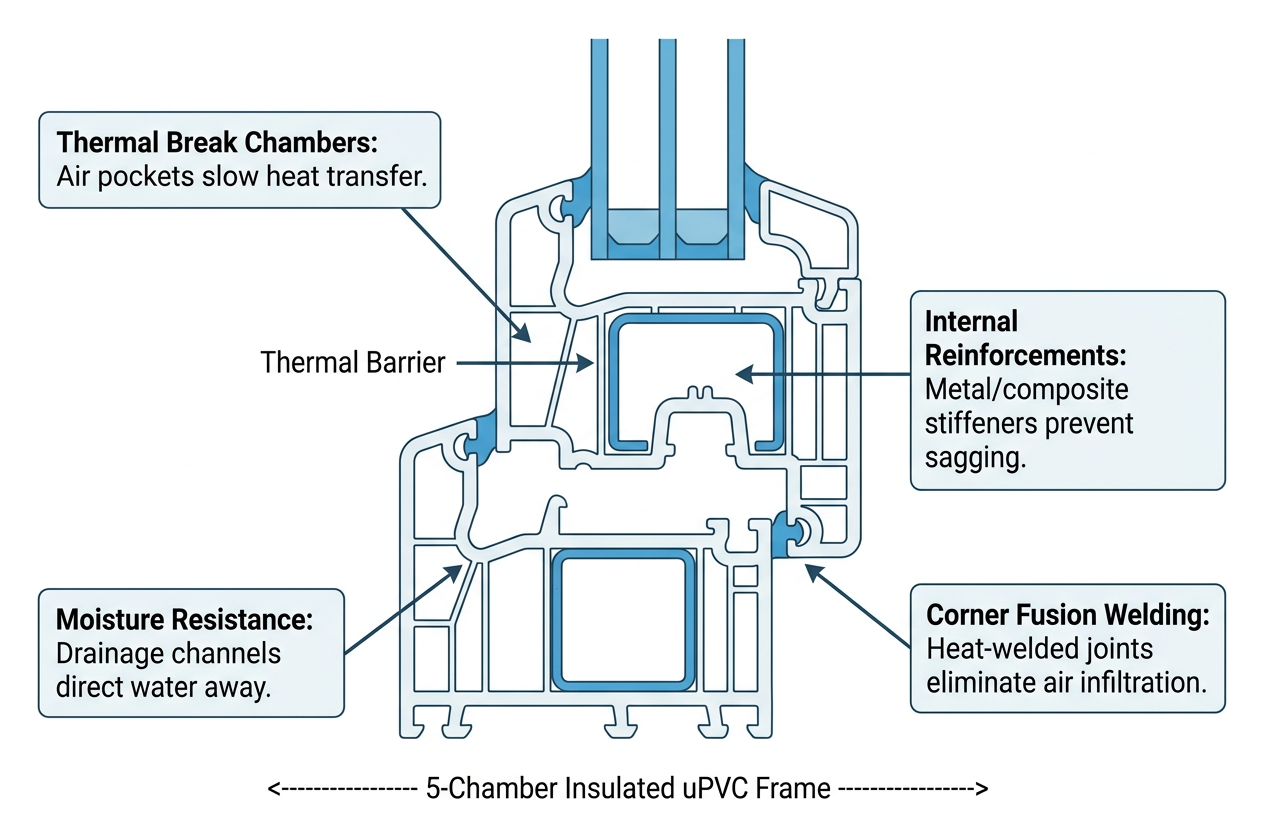
A standard hollow frame cannot handle the thermal demands or weight of multiple glass layers. High-performance systems utilize 70 mm frame profiles equipped with five dedicated internal chambers:
- Thermal Break Chambers: The individual air pockets trap standing air, drastically slowing down conductive heat transfer across the frame exterior to the interior.
- Moisture Resistance: Engineered drainage channels direct water away from the glazing bead, preventing moisture collection and internal condensation.
- Corner Fusion Welding: UPVC profiles are heat-welded at the joints, creating an impermeable seal that eliminates air infiltration and corner separation over decades of use.
- Internal Reinforcements: Strategic metal or composite stiffeners within the central chambers protect the sash against long-term sagging or alignment loss.
Glass Coatings, Spacers, and Gas Fills
The glass package inside the frame acts as your home’s thermal shield. Low-Emissivity (Low-E) coatings reflect long-wave infrared energy, keeping indoor heat inside during the winter while reflecting exterior radiant heat in the summer.
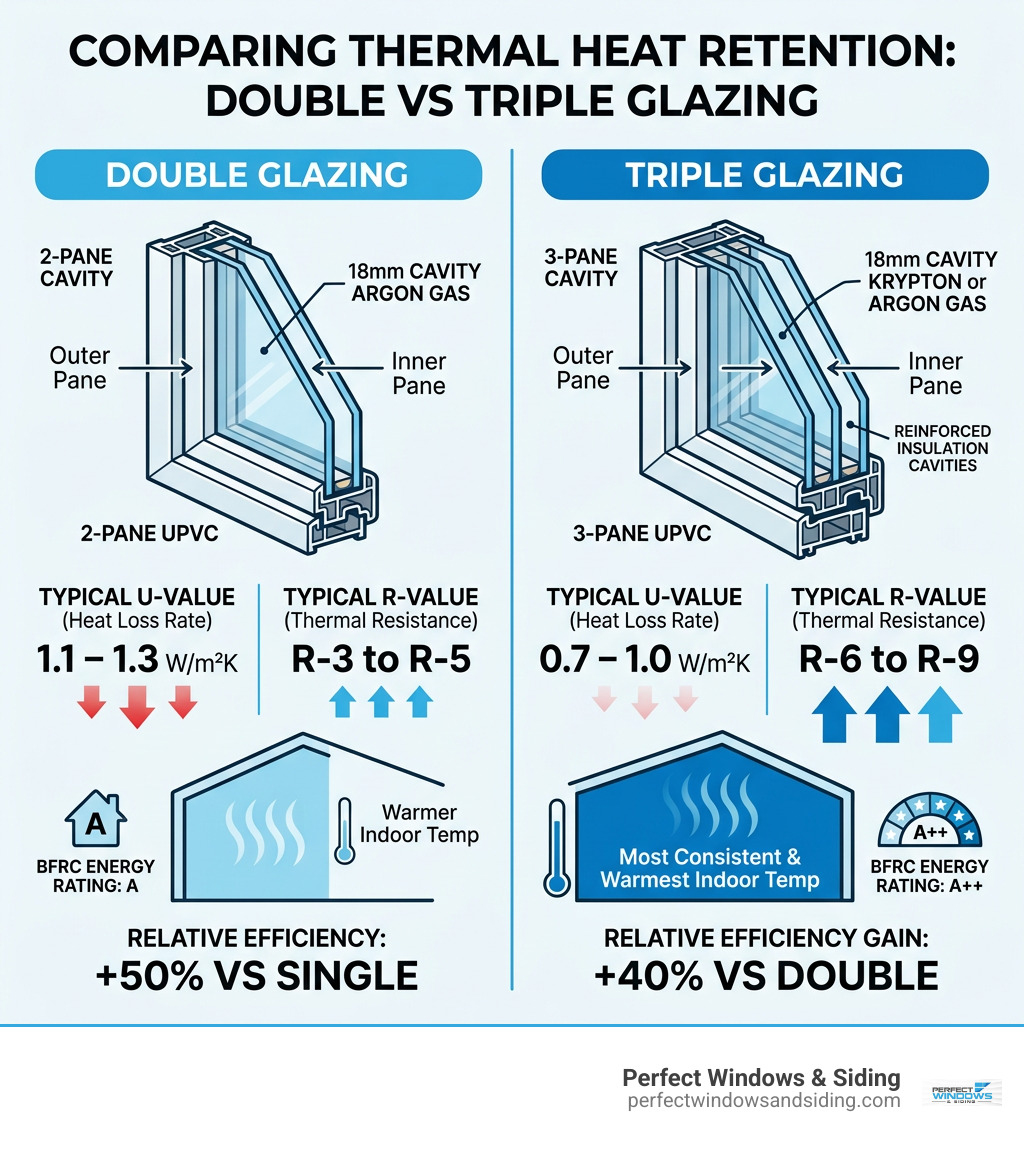
Between the three sheets of glass, warm-edge composite spacers separate the panes, eliminating the traditional metallic thermal bridge that often leads to perimeter condensation. The dual 18 mm cavities are filled with inert gases:
- Argon Gas: A dense, non-toxic gas that slows convection within the unit, offering standard-setting insulation performance.
- Krypton Gas: An even denser gas fill often used in slimmer glass profiles to deliver ultra-low thermal transmittance.
Homeowners exploring Triple Pane Windows quickly realize that combining multi-chamber frames, dual gas cavities, and reflective coatings provides a complete thermal barrier against harsh outdoor elements.
Comparing Double-Pane vs. Triple-Pane Window Performance
The jump from two layers of glass to three provides noticeable improvements across all primary performance metrics. Whether living near busy transit routes in Niles or braving chilly winds in Morton Grove, understanding these performance differences ensures you select the right glass configuration for your home.
| Metric / Feature | Single-Pane | Double-Pane | Triple-Pane |
|---|---|---|---|
| Typical U-Value (W/m²K) | 5.8 | 1.1 – 1.3 | 0.7 – 1.0 |
| Typical R-Value | R-1 | R-3 to R-5 | R-6 to R-9 |
| Sound Insulation (dB) | ~25 dB | 32 – 35 dB | 37+ dB |
| BFRC Energy Rating | E – G | A | A++ |
| Relative Efficiency Gain | Baseline | +50% vs Single | +40% vs Double |
| Condensation Resistance | Very Low | Moderate | Excellent |
Thermal Insulation: R-Values, U-Values, and Energy Efficiency
Thermal efficiency is measured using two key standards: U-value (the rate of non-solar heat loss) and R-value (the measure of thermal resistance). Lower U-values and higher R-values indicate superior insulation.
While a dependable double-glazed unit achieves a U-value of approximately 1.1 W/m²K (R-3 to R-5), a high-tier triple-glazed system can achieve a U-value as low as 0.7 W/m²K with an R-value reaching R-9. This level of insulation earns an A++ rating on the British Fenestration Rating Council (BFRC) energy chart.
Choosing certified Energy Efficient Windows ensures that your home meets stringent building envelope standards, significantly reduces continuous thermal loss, and maintains a consistent indoor temperature year-round.
Acoustic Comfort and Sound Transmission Loss
Street noise, barking neighborhood dogs, and nearby rail lines can disrupt peaceful home environments. Glass mass and varied cavity thicknesses dampen sound vibrations before they penetrate your living space.
- Standard Double Glazing: Typically delivers sound reduction around 32 to 35 dB.
- High-Performance Triple Glazing: Features asymmetrical pane thicknesses and dual gas barriers to achieve acoustic insulation ratings of 37 dB or higher.
Homeowners residing near heavy traffic corridors in Park Ridge or Glenview often upgrade to Noise Cancelling Windows to create quiet, restful interior spaces.
Weight, Structural Loads, and Frame Requirements
Because a triple-pane unit includes a third sheet of solid float or laminated glass, the insulated glass unit weighs roughly 50% more than a double-glazed counterpart. Standard lightweight window frames can buckle under this load over time.
To ensure long-term durability:
- Heavy-Duty Sash Hardware: Corner hinges, pivot pins, and multi-point locking gear must be rated for heavier loads.
- Structural Anchoring: Proper fasteners must secure the window frame directly to sound structural framing members rather than simply hanging on drywall or trim.
- Rigid Frame Construction: Multi-chamber UPVC provides the necessary flexural strength to prevent sash sagging.
Our professional vinyl window installation ensures that rough openings are assessed, shimmed, and fastened to handle these structural loads without long-term operational issues.
Popular Architectural Styles for a 3 Pane UPVC Window
A high-performance window should complement your home’s exterior character while delivering optimal ventilation and natural light.

Choosing a 3 Pane UPVC Window for Bay and Bow Openings
Bay and bow configurations project outward from the exterior wall, making them particularly vulnerable to wind exposure and heat loss. Using triple-glazed multi-chamber UPVC frames in these architectural features provides a deep, insulated interior sill, panoramic sightlines, and excellent thermal comfort.
Read our detailed guide on Why 3 Pane Bow Windows Are the Ultimate Home Upgrade to discover how angled installations enhance curb appeal without creating cold draft zones in your living areas.
Configurations for Casement, Tilt-and-Turn, and Roof Sashes
Advanced UPVC systems can be adapted to several operational configurations:
- Casement and Top-Guided Windows: Open outward with precision friction stays, providing clear views and effortless cleaning access.
- Tilt-and-Turn Sashes: Tilt open at the top for secure, draft-free ventilation or swing inward like a door for easy glass maintenance.
- Integrated Trickle Vents: Provide controlled fresh air exchange without compromising structural security or thermal performance.
Long-Term Value: Is Triple Glazing Worth the Investment?
Upgrading your home’s building envelope is a long-term investment in structural protection, thermal stability, and indoor comfort.
Long-Term Efficiency and Home Comfort Gains
While triple-glazed units demand higher manufacturing precision and structural hardware, their long-term value is evident in reduced wear on heating and cooling equipment. Triple-pane windows are approximately 40% more energy-efficient than standard double-pane alternatives, maintaining comfortable indoor temperatures year-round.
For actionable guidance on optimizing your window choices, review our Tips for Buying Energy Efficient Windows.
Climate Suitability and Cold-Weather Performance
In regions subject to sub-zero winter temperatures, exterior glass panes freeze quickly. On standard windows, this chill radiates into the home and creates convection drafts across the floor.
A triple-pane configuration isolates the inner pane from the outdoor freeze. The inside glass surface stays warm to the touch, virtually eliminating the interior condensation that can damage window trim and drywall. Homeowners across Des Plaines and surrounding areas find these performance advantages essential; explore The Best Triple Pane Window Benefits for Chicago Homes for an in-depth breakdown of seasonal advantages.

Frequently Asked Questions About 3 Pane UPVC Windows
How much more energy-efficient is triple glazing compared to double glazing?
Triple glazing is roughly 40% more energy-efficient than standard double glazing. By utilizing two sealed gas chambers, dual Low-E coatings, and a 5-chamber frame, it lowers U-values down to 0.7 W/m²K, significantly reducing heating and cooling loss.
Will the extra weight of three glass panes damage standard window frames?
Standard, low-grade frames can sag under the weight of three glass panes. However, purpose-built multi-chamber UPVC frames engineered with internal structural ribs and heavy-duty hardware are designed to support triple-glazed units without warping or operational binding.
Do triple-pane windows eliminate exterior noise completely?
While no window eliminates 100% of sound transmission, triple-pane windows can achieve sound insulation ratings of 37 dB or higher. This multi-layered barrier noticeably reduces high-frequency traffic, aircraft, and street noises compared to single or standard double glazing.
Conclusion
Choosing the right window system transforms the day-to-day comfort, quietness, and efficiency of your home. A multi-chamber 3 pane upvc window provides the thermal insulation, acoustic performance, and weather resistance necessary to withstand severe seasonal shifts.
At Perfect Windows & Siding, we bring over 20 years of craftsmanship to Chicagoland homeowners. As a local, family-owned business, we are fully licensed and insured, providing custom-fitted installations backed by a lifetime warranty.
Schedule your consultation or get a free estimate today through our expert window replacement team to explore our complete line of high-performance window systems.