

Why a 3 Pane Bow Window Could Be Your Home’s Best Upgrade
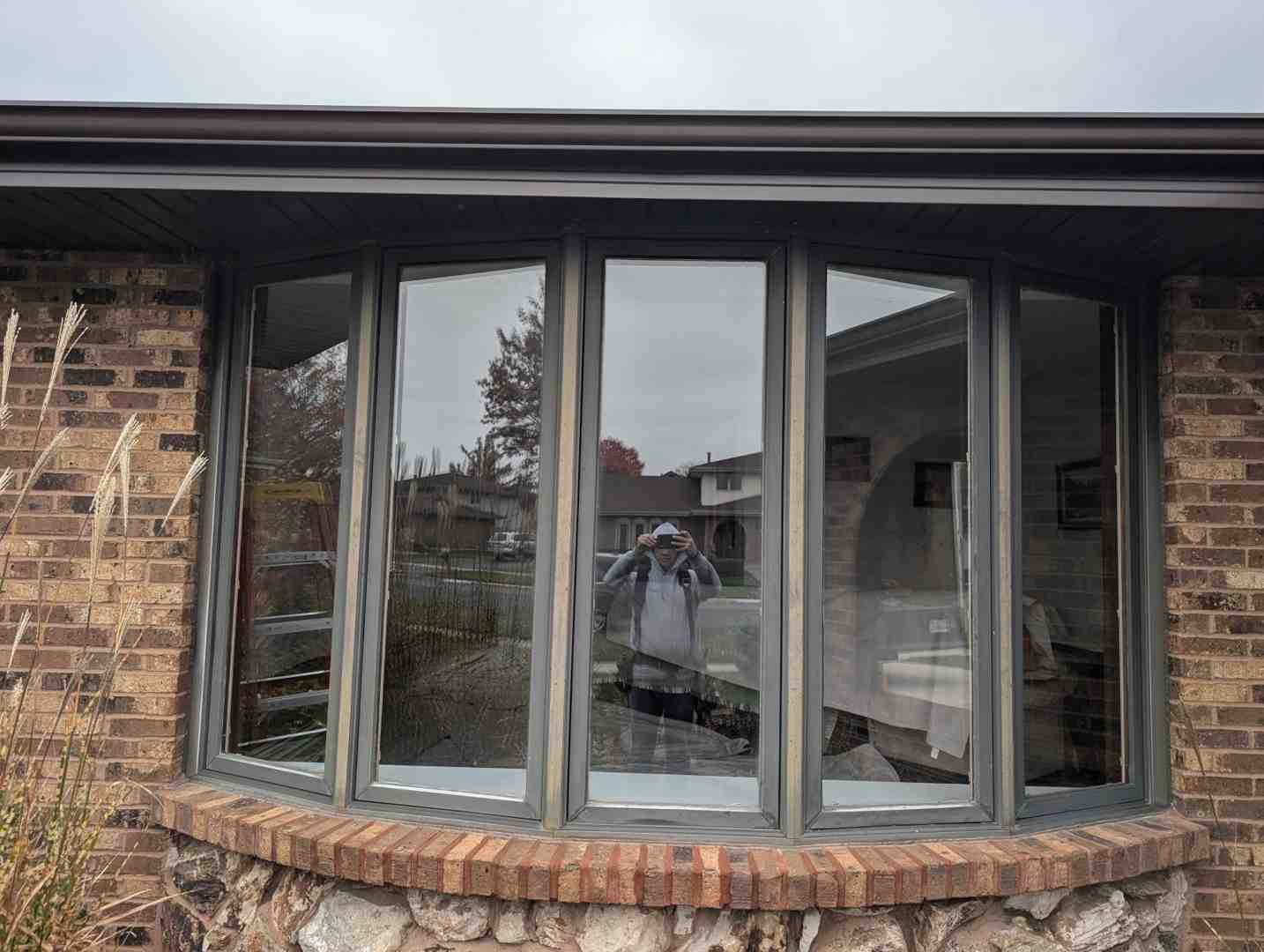
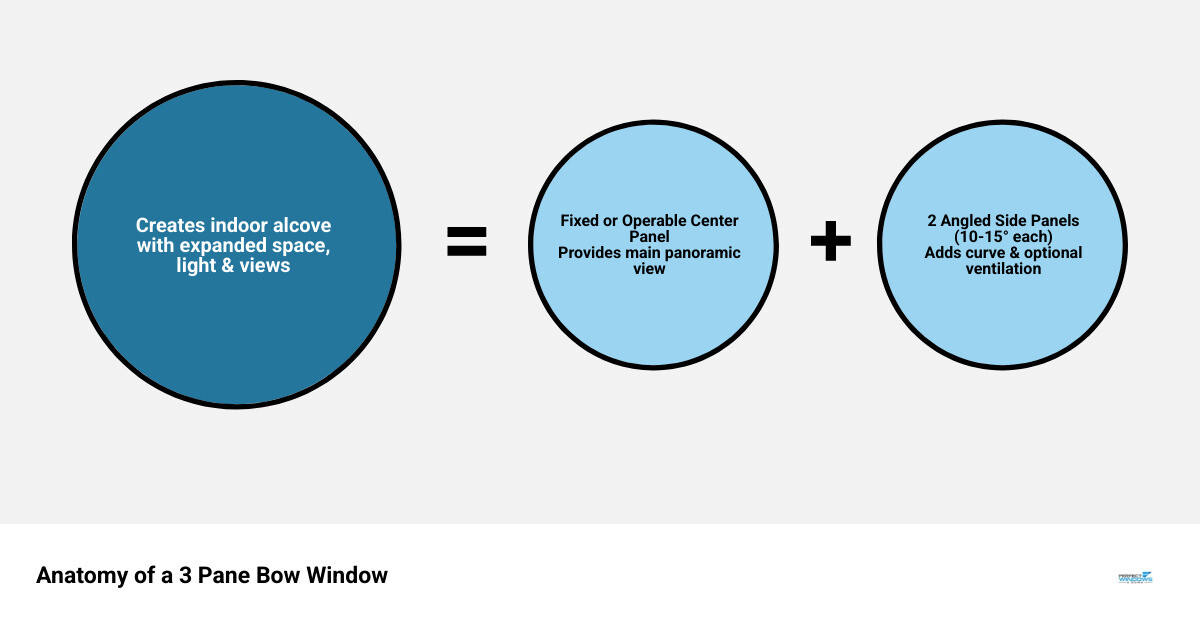
A 3 pane bow window is a projection window made up of one large central panel flanked by two angled or gently curved side panels, all working together to push outward from your home’s exterior wall and bring in more light, more views, and more architectural character.
Here’s a quick breakdown of what makes this window type stand out:
| Feature | 3 Pane Bow Window |
|---|---|
| Number of panels | 3 (center + 2 sides) |
| Typical angle | 10-15 degrees per panel |
| Typical width range | 4’5″ to 9’5″ (135-287 cm) |
| Typical height range | 2’2″ to 6’2″ (66-188 cm) |
| Common materials | uPVC, aluminum, wood |
| Glazing options | Double or triple glazing |
| Best for | Living rooms, dining rooms, front elevations |
| Side panels | Fixed or operable (casement) |
This window style sits in an interesting middle ground. It has the curved, sweeping look of a traditional bow window, but with just three panels it’s more compact and practical than larger 4- or 5-panel bow configurations. That makes it a smart fit for homes with moderate wall space and homeowners who want to make a statement without a full architectural overhaul.
Bow windows have been a defining feature of Victorian and Edwardian homes for well over a century. Today, they work just as beautifully on modern builds — adding dimension, natural light, and genuine curb appeal no matter the home style.
I’m Voytek Glab, owner of Perfect Windows & Siding, and with over 20 years of hands-on window installation experience across the Chicagoland area, I’ve helped hundreds of homeowners choose and install the right 3 pane bow window for their specific home and goals. In this guide, I’ll walk you through everything you need to know — from configurations and materials to installation and performance.
Defining the 3 Pane Bow Window and Its Unique Appeal
When we talk about projection windows, we are describing any window system that extends beyond the exterior wall of the house. The 3 pane bow window is a specialized version of this. Unlike a flat window that sits flush with your siding, a bow window creates a new “alcove” of space inside your home.
The unique appeal of the three-pane configuration lies in its simplicity. Because it uses only three sections, it offers a cleaner, less obstructed view than a five-pane bow, while still providing that elegant, curved aesthetic that characterizes the “bow” style. These windows are typically set at shallower angles—often around 10 to 15 degrees—which creates a soft, graceful arc rather than the sharp, boxy corners of a standard bay.
For homeowners in suburbs like Wilmette or Hinsdale, where architectural integrity is highly valued, the 3 pane bow window offers a way to honor Victorian heritage while embracing modern performance. Whether you are looking for a panoramic view of your backyard or want to add architectural interest to a plain front facade, this window serves as a focal point. You can learn more about how we approach these projects in our custom window design complete guide.
How a 3 Pane Bow Window Differs from a Standard Bay
One of the most common questions we hear in Park Ridge and Glenview is: “What’s the actual difference between a bay and a bow?” It usually comes down to the number of panels and the angle of the projection.
A standard bay window traditionally consists of three panels: a large fixed center picture window and two smaller “flanker” windows at the sides. These sides are usually angled sharply at 30 to 45 degrees. In contrast, a 3 pane bow window uses panels of more equal size and connects them at much shallower angles (usually 10 to 15 degrees). This creates a gentle curve rather than a sharp protrusion.
According to Bow Window Dimensions & Drawings, these units can range in width from roughly 4.5 feet to over 9 feet. Because the curve is more gradual, a bow window often requires more horizontal wall space than a bay window to achieve the same level of projection. This structural depth allows for a wider field of vision, essentially giving you a “wrap-around” view of your surroundings.
Versatility in 3 Pane Bow Window Configurations
We believe that every home in the Chicago area is unique, and your windows should reflect that. The 3 pane bow window is incredibly versatile. You aren’t stuck with a single “look.”
- Fixed Center Panes: Most homeowners opt for a fixed center pane to maximize the unobstructed view. This is perfect for watching the seasons change in your garden.
- Operable Side Sections: To get the best of both worlds, we often install casement flankers on the sides. These hinge outward, catching breezes and directing fresh air into your home.
- Symmetrical Design: Unlike some bay windows where the center is much larger, a bow window often uses three panels of equal or near-equal width. This creates a sense of balance and symmetry that is very pleasing to the eye.
Because we specialize in custom sized windows, we can tailor the height and width to fit your existing rough opening or create an entirely new architectural feature. You can even choose specific hardware finishes—like brushed nickel, oil-rubbed bronze, or classic white—to match your interior decor.
Premium Materials and Customization Options
Choosing the right material for your 3 pane bow window is about balancing aesthetics, durability, and maintenance. In our 20+ years of experience serving Chicagoland, we’ve found that three main materials lead the pack: uPVC, Aluminum, and Wood.
- uPVC: This is a favorite for many of our clients in Des Plaines and Morton Grove. Modern uPVC is incredibly durable, resists fading, and provides excellent thermal insulation. It doesn’t rot or warp, making it a “set it and forget it” option for busy families.
- Aluminum: For a sleek, modern look, aluminum is hard to beat. We often recommend profiles like the Smart System’s Alitherm Heritage profile for those who want ultra-slim frames that maximize the glass area. Aluminum is exceptionally strong, allowing for larger panes without bulky supports.
- Wood: Nothing beats the classic warmth of real timber. Wood frames, often made from pine, oak, or mahogany, offer a traditional feel that is perfect for historic homes. While they require more maintenance (painting or staining), their beauty is unmatched.
When we handle a window installation, we ensure the materials are treated with fade-resistant finishes. We can even offer RAL color matching for aluminum frames or woodgrain foils for uPVC, giving you the look of wood with the maintenance-free benefits of vinyl.

Choosing the Right Glass for Your 3 Pane Bow Window
The glass is the most significant part of your window, especially in the Chicago climate where winters are harsh and summers are humid. We never settle for standard single-pane glass; it simply isn’t enough for our local weather.
We recommend triple pane replacement windows for maximum energy efficiency. Triple glazing adds an extra layer of glass and a second insulating air gap, which significantly reduces heat transfer.
Key glass features to look for include:
- Low-E Coatings: These microscopic layers reflect heat back to its source—keeping heat inside during winter and outside during summer.
- Argon Gas Fill: Replacing the air between panes with Argon gas (which is denser than air) provides superior insulation.
- Solar Heat Gain Control: This ensures your home doesn’t turn into a greenhouse during July.
We ensure our products meet high standards, often referencing the British Fenestration Rating Council (BFRC) energy verification or similar domestic standards to guarantee that your new windows will help manage your energy usage effectively.
Aesthetic Enhancements and Decorative Features
A 3 pane bow window is already a statement piece, but decorative touches can truly make it yours. We love helping homeowners explore options like Georgian bars or leaded glass patterns to add a touch of “Old World” charm.
One of the most functional enhancements is the internal cill or “head and seat board.” Because the window projects outward, it creates a shelf. Many of our clients choose to reinforce this area to create a window seat. It’s the perfect spot for a reading nook or a place for your pets to sunbathe. You can see examples of how this transforms a room in our guide on adding a bay or bow window.
Other decorative options include:
- Decorative Sash Horns: These give uPVC windows the authentic look of traditional joinery.
- Custom Hardware: From vintage-style cranks to modern minimalist locks.
- Internal Grilles: Placed between the glass for easy cleaning while maintaining a classic divided-light look.
Performance Features: Energy Efficiency and Security
In a city like Chicago, a window has to do more than just look pretty; it has to perform. A 3 pane bow window from Perfect Windows & Siding is engineered to be a fortress against both the elements and intruders.
Energy Efficiency: By utilizing multi-chambered frames and advanced weatherstripping, these windows eliminate draughts. Research shows that high-quality uPVC or thermally broken aluminum windows can save up to 30% in heat loss compared to older, leaky units. We ensure all our installations meet rigorous standards, similar to FENSA building regulation compliance, to ensure long-term performance.
Security: Because bow windows are often located on the ground floor at the front of the house, security is paramount. We use multi-point locking systems that secure the window at several points along the frame with a single turn of the handle. Additionally, internal glazing beads prevent the glass from being removed from the outside, providing extra peace of mind.
Sound Insulation: Living near O’Hare or a busy Chicago street? The multiple layers of glass and gas fills in a 3 pane bow window act as a powerful acoustic barrier. We use BBA-certified products and quality standards to ensure that your home remains a quiet sanctuary. For more on how we serve the local area, check our page on replacement windows in Chicago.
Installation Considerations for Chicago Homeowners
Installing a 3 pane bow window is a complex task that requires more than just a ladder and a drill. Because the window hangs out past the exterior wall, it is heavy and requires specialized structural support.
- Support Systems: We use mandatory cable systems or heavy-duty brackets to “tie” the window back to the structural framing of your home. This prevents the window from sagging over time.
- Head and Seat Boards: We typically use 1-inch thick birch or oak for the top and bottom boards. These aren’t just for looks; they provide the structural platform for the window units.
- Weatherization: In areas like Park Ridge, Des Plaines, and Morton Grove, we have to be extremely careful with flashing and sealing. We use advanced weatherization barriers to ensure no water can seep behind your siding or into your wall cavity.
When you look for window installation near me, you want a team that understands local building codes. We are a family-owned business with 20 years of experience in these specific neighborhoods. We also align our practices with the TrustMark quality framework to ensure every job is done to the highest standard of craftsmanship.
Frequently Asked Questions about Bow Windows
Do I need planning permission for a 3 pane bow window?
In most Chicago suburbs, if you are replacing an existing bow window with one of the same size, you generally do not need special planning permission, though a standard building permit is usually required. However, if you are cutting a new opening into a wall to add a window where there wasn’t one before, or if you live in a designated historical conservation area, the rules can be stricter. We always recommend checking local ordinances. For residents in Park Ridge, we have a specific guide on bow windows in Park Ridge that covers local considerations.
How do I measure for a new bow window installation?
Measuring for a bow window is a bit more scientific than measuring a flat window. You need to account for:
- The Back Span: The total width of the opening from the inside.
- The Projection: How far out you want the window to extend from the wall.
- The Arc: The specific curve or angle (usually 10-15 degrees for a 3-pane setup).
We always perform a professional measurement before ordering any custom unit. You can get a head start on understanding the process by reading our 2025 window replacement guide.
What maintenance is required for different frame materials?
- uPVC: Just a wipe down with soapy water once or twice a year. It’s the easiest material to maintain.
- Aluminum: Similar to uPVC, but check the powder coating for any scratches that might need a touch-up.
- Wood: Requires regular inspection for peeling paint or moisture ingress. You may need to re-stain or repaint every 3-5 years depending on sun exposure.
We often look to the Glass and Glazing Federation (GGF) for the best technical advice on maintaining the longevity of your window seals and frames.
Conclusion
Upgrading to a 3 pane bow window is one of the most impactful changes you can make to your home. It’s not just about getting a new view; it’s about expanding your living space, flooding your rooms with natural light, and increasing the overall value of your property.
At Perfect Windows & Siding, we bring over 20 years of Chicago-based expertise to every project. As a family-owned business, we treat your home like our own, offering premium craftsmanship and a lifetime warranty that gives you total peace of mind. From the initial measurement to the final structural support check, our team ensures your new windows are built to last.
Ready to transform your home’s exterior and interior? Schedule your consultation with us today, and let’s find the perfect window solution for your Chicagoland home. We provide free estimates for all our neighbors from Evanston to Naperville and everywhere in between.