


Your Home’s New Armor: Why Professional Installation Matters
When you hire a siding installer, you’re looking for someone to transform your home’s exterior while protecting it from Chicago’s harsh weather. A professional handles every step: measuring and cutting materials, removing old siding, inspecting the structure, installing protective house wrap, and ensuring panels are properly nailed to allow for expansion and contraction while complying with local codes.
Key qualifications to look for include:
- Minimum 3 years of installation experience
- Knowledge of various materials (vinyl, fiber cement, engineered wood)
- Understanding of building codes and safety procedures
Whether you’re considering DIY installation or hiring a professional, understanding the siding installation process helps you make informed decisions about your home’s protection and curb appeal.
The difference between a well-installed siding system and a problematic one is technique. Research shows that while vinyl siding protects over 60% of US homes, improper installation can cause warping, moisture damage, and costly repairs.
In Chicago’s climate, choosing the right installer is even more critical, as temperature fluctuations can cause poorly installed siding to warp and fail prematurely.
I’m Voytek Glab, and with over 20 years in exterior remodeling, I’ve seen how proper siding installer techniques prevent expensive problems. My experience has taught me that every step of the installation process matters, from initial planning to the final inspection.
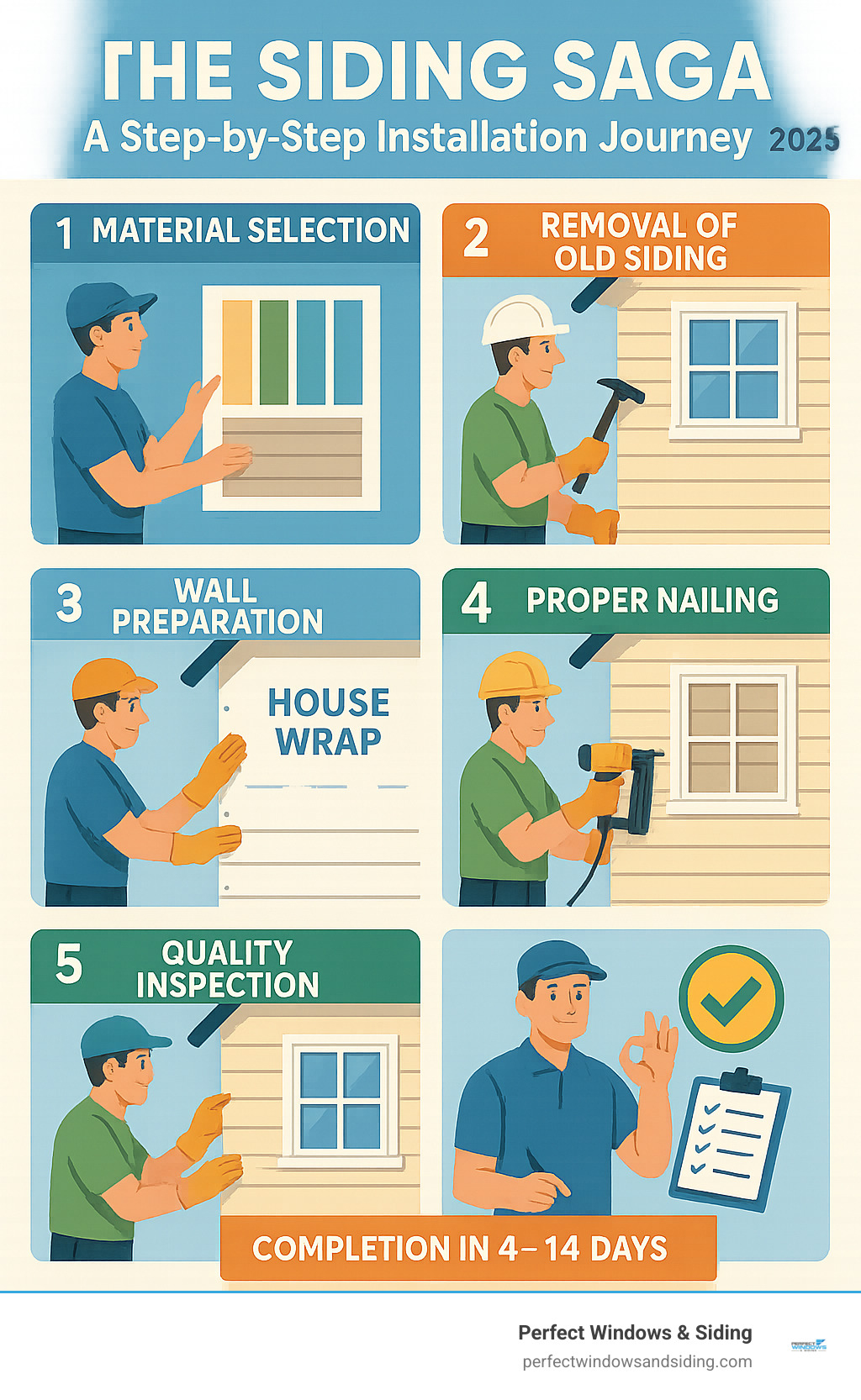
Step 1: Planning and Preparation – The Blueprint for Success
Proper planning is the first step to a successful siding project, preventing expensive headaches later. A solid plan accounts for your home’s layout, your budget, the timeline, and Chicago’s weather. Choosing the right siding is also a smart financial move that increases home value and energy savings, often providing a significant return. For more on this, see Why New Siding is Worth the Investment.
Timeline expectations are also key. Most installations take 4 to 14 days, depending on your home’s size, the material, and weather. Planning for these variables from the start reduces surprises.
Choosing Your Siding Material
Walking into siding materials can feel overwhelming, but each material has clear strengths that make the choice easier once you know what matters most to you.
Let’s break down your main options:
| Siding Material | Durability | Cost (Avg. per sq ft, installed) | Maintenance | Aesthetics |
|---|---|---|---|---|
| Vinyl Siding | Good (10-15 years, can warp if improperly installed) | $6 – $11 | Low (occasional wash) | Wide variety of colors & textures (clapboard, Dutch lap, shake) |
| Fiber Cement | Excellent (30-50+ years, pest, fire, moisture resistant) | $9 – $14 | Low (occasional wash) | Mimics wood grain, vast color options (James Hardie ColorPlus) |
| Engineered Wood | Very Good (20-30+ years, improved durability) | $8 – $13 | Moderate (periodic painting/sealing) | Natural wood look, but more resilient |
| Insulated Vinyl | Good (10-15 years, improved R-value) | $8 – $12 | Low (occasional wash) | Similar to vinyl, with added insulation |
| Metal Siding (Steel & Aluminum) | Excellent (40-70 years, fireproof, insect-resistant) | Varies, higher end | Low | Modern, sleek, industrial look |
| Brick Veneer & Stone | Excellent (50-100+ years, great insulation) | Higher end | Very Low | Classic, timeless, rustic |
Vinyl siding is the most popular choice, protecting over 60% of American homes. It’s affordable, dependable, and available in many styles and colors, from classic clapboard to charming shake. It stands up well to Chicago’s weather extremes. Learn more about its advantages at Benefits of Vinyl Siding for Illinois Homes.
Fiber cement siding, from brands like James Hardie, is built for longevity, offering 50+ years of protection. Made from sand, cement, and wood fiber, it resists pests, fire, moisture, and temperature swings. Its durability may even earn you an insurance discount. Explore this premium option with our Hardie Board Siding Installation services.
Engineered wood siding offers the classic look of wood with improved durability and less maintenance. It’s ideal for those who love the natural aesthetic but want more resilience. Find experienced professionals on our Engineered Wood Siding Contractors Near Me page.
Measuring and Ordering
Precise measurements are critical to avoid problems. We calculate your home’s total exterior square footage, carefully accounting for windows and doors. Always order 5-10% extra material to cover cuts, potential mistakes, and future repairs. A complete order includes panels plus all supporting pieces: starter strips, corner posts, J-channels, soffit, fascia, and trim.
A professional siding installer will handle the measuring and ordering for you. For DIY projects, essential tools include a tape measure, tin snips, a circular saw, a nail gun, a level, and a chalk line. Safety glasses and gloves are mandatory.
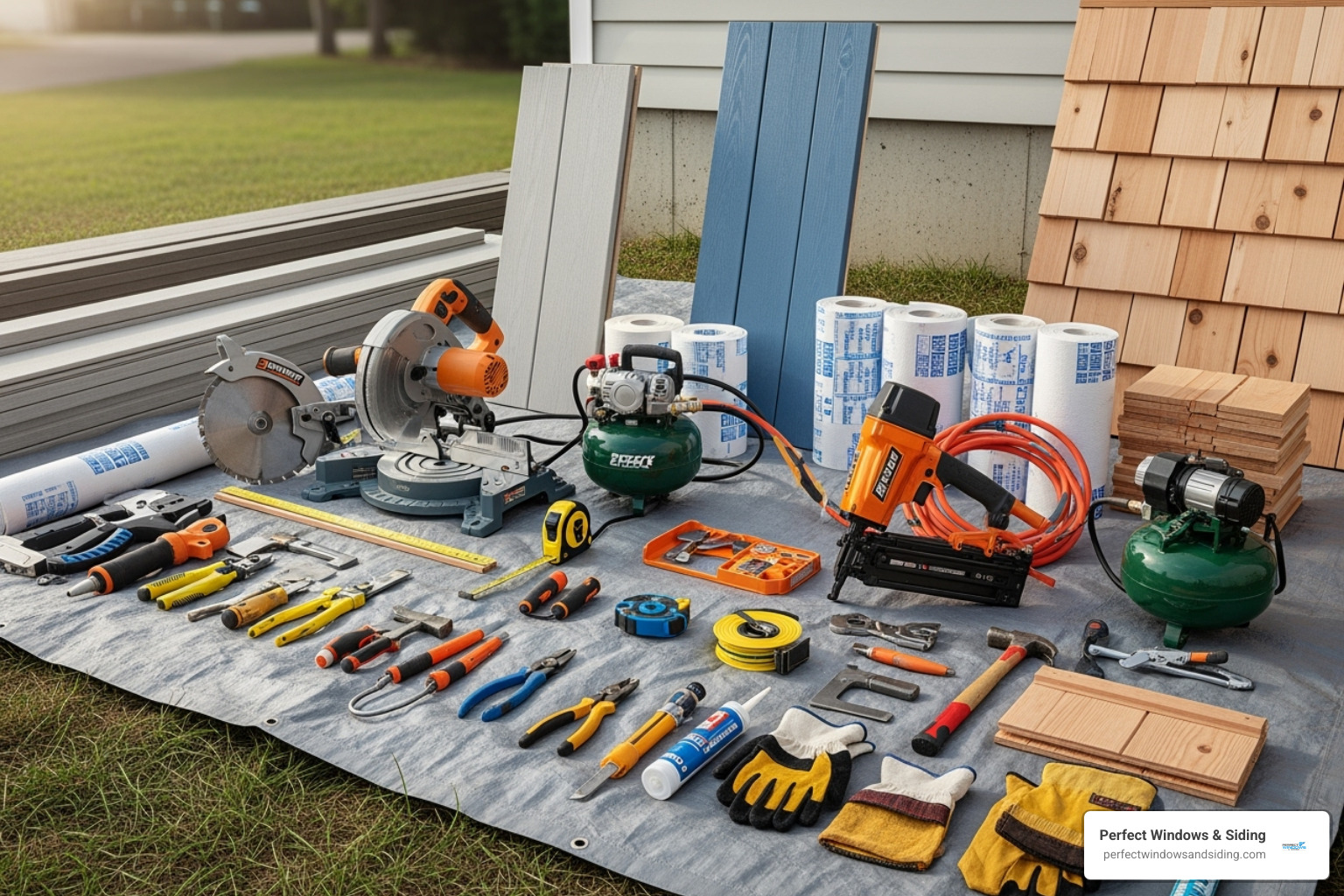
Step 2: The Installation Process – From Old to New
This is the change phase, where careful planning pays off. We begin by carefully removing your existing siding and conducting a thorough wall inspection. This critical step, which separates professionals from amateurs, allows us to find and address hidden issues like rot or water damage, saving you thousands in future repairs.
Next, we install a protective underlayment or house wrap. This barrier acts like a raincoat for your home, blocking water while allowing moisture vapor to escape. Finally, we install flashing around all windows and doors to direct water away from vulnerable areas and prevent leaks.
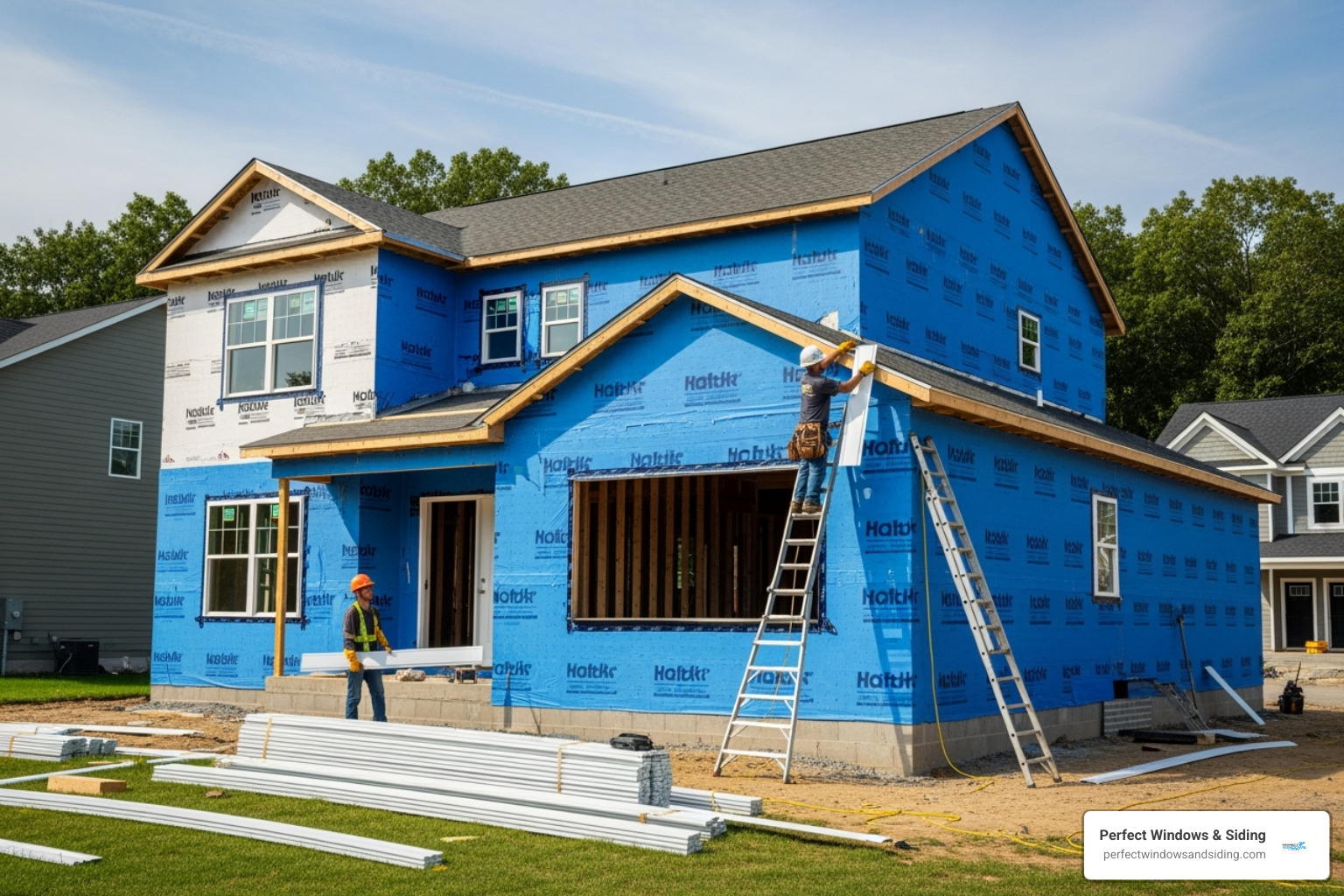
The Perils of Improper Installation
Hiring an experienced siding installer is crucial to avoid costly mistakes. Warping and a wavy appearance are the most common disasters. Vinyl siding is designed to expand and contract; if nailed too tightly, it can’t move and will buckle.
Poor nailing techniques are the primary cause—nails must be centered in the slots and not driven tight. Material quality is also key. We only use siding certified by the Vinyl Siding Institute; you can check the Official list of VSI-certified vinyl siding products.
Darker colors require special care as they absorb more heat and are more prone to warping. Beyond aesthetics, improper installation creates serious moisture problems, leading to rot, mold, and pests. These issues often require a complete Siding Replacement Chicago project, which is far more expensive than doing it right the first time.
Installing the Panels
Once your walls are properly prepped and protected, the real artistry begins. Installing siding panels requires precision, patience, and years of experience to get right.
We start with starter strips along the bottom edge of your home. These might seem like small details, but they’re the foundation everything else builds on. Get the starter strip wrong, and every row above it will be off.
Corner posts come next, both inside and outside corners. These aren’t just decorative – they’re engineered transition pieces that handle the expansion and contraction of your siding system while creating clean, finished edges where walls meet.
J-channels go around every window, door, and opening. These trim pieces create neat edges and, more importantly, direct water away from vulnerable areas. Poor J-channel installation is one of the fastest ways to create leak problems.
The actual panel installation is where experience really shows. We “hang” vinyl panels rather than nailing them down tight. Each nail goes straight and centered in those oval slots, allowing the panel to move freely with temperature changes. We never, ever nail through the face of the siding – that’s a rookie mistake that guarantees problems.
Cutting siding requires the right tools and techniques. For vinyl, we use specialized snips or utility knives for clean cuts. Fiber cement demands diamond blades and dust collection equipment. Each material has its own requirements.
Finishing touches include installing soffit under your eaves, fascia along the roofline, and any decorative trim. Every seam needs to be neat, every piece of flashing secure, and the entire system properly sealed.
This methodical approach ensures your new siding looks fantastic and protects your home for decades. For more detailed information about our vinyl installation process, visit our Vinyl Siding Installation page.
Step 3: The Professional Siding Installer: Skills, Trends, and Why Experience Matters
Think about it this way: you wouldn’t trust just anyone to perform surgery on you, right? The same principle applies when it comes to protecting your home with new siding. While the process might look straightforward, successful siding installation requires a unique blend of technical skills, physical capability, and years of hands-on experience.
A professional siding installer does far more than simply attach panels to your home’s exterior. They’re craftspeople who work with diverse materials like vinyl, fiber cement, engineered wood, and metal siding. Their expertise extends to precise measuring and cutting, installing critical components like flashing and trim, and ensuring every detail meets local building codes.
This isn’t desk work – it’s a physically demanding profession that requires working outdoors in all weather conditions, often at significant heights. The attention to detail needed for a professional finish is remarkable. One small mistake in measurement or technique can lead to problems that won’t show up for months or even years.
Most skilled siding installers start their careers as helpers or apprentices, learning through rigorous on-the-job training. While a high school diploma is typically required, the real education happens in the field. Many also pursue formal training through vocational schools or specialized apprenticeship programs to deepen their understanding of building science and installation techniques.
Understanding building codes and regulations is absolutely essential. These standards exist to protect homeowners, and a qualified installer must ensure every installation complies with both local and national requirements.
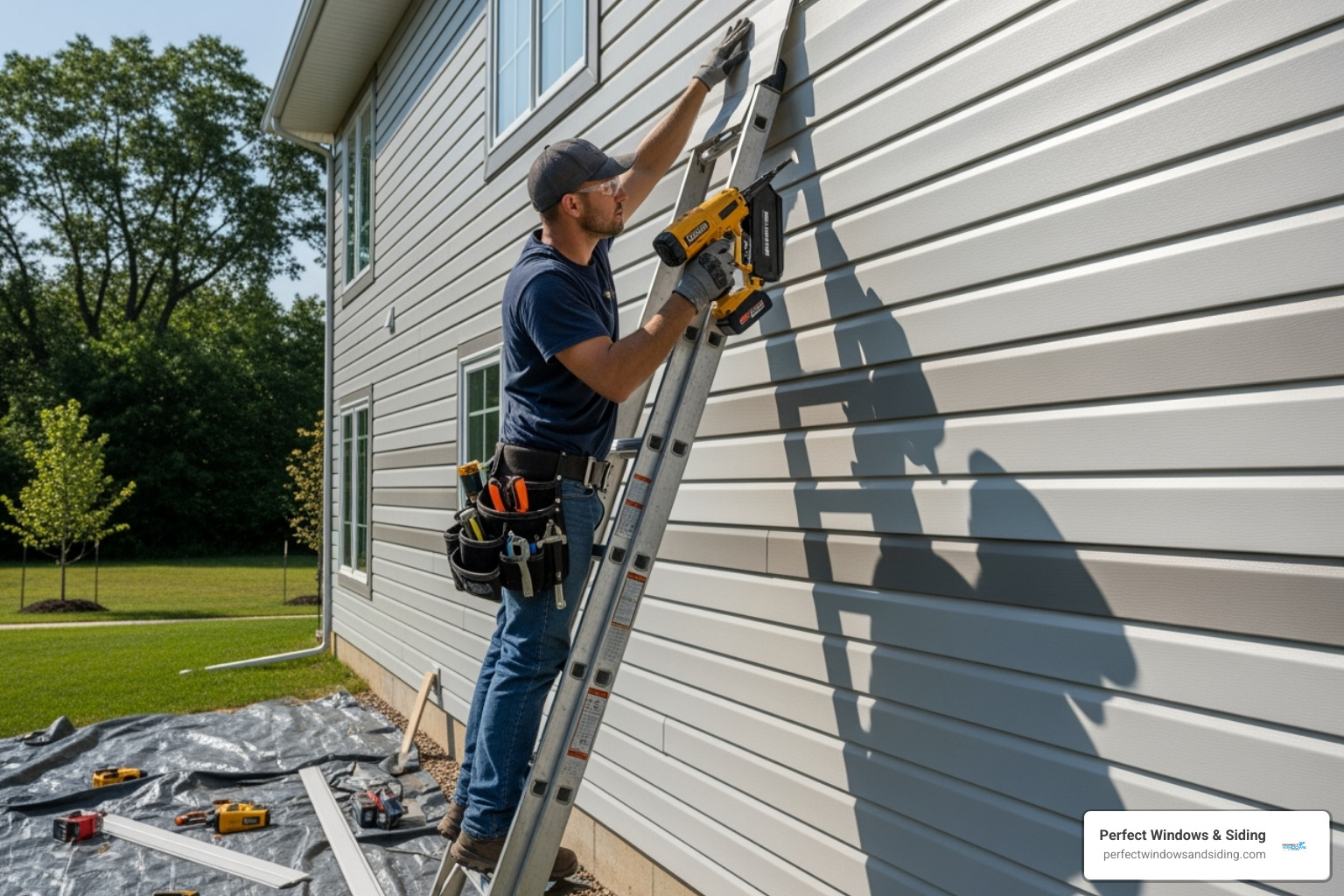
What to Look for in a Qualified Siding Installer
When you’re ready to invest in new siding for your home, choosing the right siding installer can make the difference between a beautiful, long-lasting installation and costly headaches down the road. Here’s what we recommend focusing on during your search.
Years of experience matter tremendously in this field. While some companies might accept installers with just two years of experience, we believe a minimum of three years is essential for handling the complexities that arise in real-world installations. At Perfect Windows & Siding, our team brings over 20 years of experience to every project. This means we’ve encountered and successfully solved virtually every challenge that Chicago’s diverse housing stock can present.
Licensing and insurance should be non-negotiable requirements. A properly licensed contractor demonstrates their commitment to industry standards and regulations. Comprehensive insurance protects both you and the installation crew if accidents occur or damage happens during the project. Never work with an installer who can’t provide proof of both.
Customer reviews and reputation offer invaluable insights into how a company actually performs. Look for consistently positive feedback about work quality, professionalism, and customer service. Online reviews can reveal patterns – both good and concerning – that help you make an informed decision.
Warranties reveal how confident an installer is in their work. Quality contractors stand behind their installations with comprehensive coverage on both materials and labor. At Perfect Windows & Siding, we’re so confident in our craftsmanship that we offer a lifetime warranty on our work. This isn’t just marketing speak – it’s our commitment to your peace of mind.
Portfolio of completed work should be readily available from any reputable installer. Quality contractors are proud to show examples of their projects, allowing you to assess their craftsmanship and see if their style matches your vision for your home.
Finding the right partner for your siding project becomes easier when you explore established Siding Companies Chicago with proven track records in the area.
The Role of a Modern Siding Installer in Home Energy Efficiency
Today’s siding installer plays a crucial role that extends far beyond creating beautiful curb appeal. Modern siding installation directly impacts your home’s energy efficiency, potentially saving you hundreds of dollars annually on heating and cooling costs.
Insulation properties have become a major consideration in siding selection and installation. Many materials now offer impressive R-values – the measure of thermal resistance. Insulated vinyl siding and fiber cement, when properly installed, create a continuous thermal barrier that helps maintain comfortable indoor temperatures year-round.
Reducing thermal bridging requires technical expertise that experienced installers bring to every project. Thermal bridging occurs when heat travels through materials like wall studs that conduct temperature more readily than insulation. Professional installers know how to create continuous insulation layers that minimize these energy-stealing pathways.
Sealing air leaks might be invisible work, but it’s absolutely critical for energy efficiency. The house wrap and meticulous flashing that professional installers apply seal countless tiny gaps and cracks. These seemingly minor openings can account for significant energy loss – imagine leaving a window cracked open all winter, and you’ll understand the impact.
Soffit and fascia installation often gets overlooked, but these components are integral to your home’s energy envelope. Properly installed soffit provides essential attic ventilation, preventing dangerous heat buildup and moisture problems. Quality fascia protects your roof’s edge and supports your gutter system, contributing to overall weather protection.
The synergy between high-performance siding and quality windows creates an incredibly effective barrier against energy loss. When these systems work together, homeowners often see dramatic improvements in comfort and utility bills. Learn more about this powerful combination at Windows and Siding.
2025 Siding Trends
The exterior design world never stands still, and skilled siding installers stay current with emerging trends that blend stunning aesthetics with improved performance and sustainability.
Eco-friendly materials are gaining tremendous momentum as homeowners prioritize environmental responsibility. Recycled vinyl siding reduces waste while maintaining durability and affordability. Fiber cement made from sustainable materials offers longevity with a smaller environmental footprint. Engineered wood siding provides natural beauty with improved sustainability compared to traditional lumber.
Bold colors are making a dramatic comeback in 2025. Homeowners are moving away from safe, muted tones toward statement-making choices. Deep ocean blues and forest greens create sophisticated modern looks. Rich earthy tones like terracotta and chocolate brown connect homes to their natural surroundings. High-contrast combinations – think dramatic black siding with crisp white trim – create striking architectural statements.
Mixed materials allow homeowners to achieve truly custom looks that reflect their personal style. Combining fiber cement with natural stone veneer creates beautiful texture variations. Metal siding paired with warm wood accents balances industrial and organic elements. Classic brick veneer complementing modern vinyl offers timeless appeal with contemporary performance.
Advanced weather resistance has become essential as climate patterns become increasingly unpredictable. Impact-resistant fiber cement withstands strong winds and flying debris during storms. Hurricane-rated vinyl siding provides superior protection against heavy rain and sustained winds. Metal siding with specialized anti-corrosion coatings performs exceptionally well in coastal areas or regions with high moisture levels.
These trends demonstrate how modern siding represents far more than simple exterior covering. Today’s materials and installation techniques create conscious choices for style, sustainability, and superior protection. For homeowners interested in cutting-edge options, exploring Metal Siding Installers Near Me can reveal exciting new possibilities for their homes.
Frequently Asked Questions about Siding Installation
After 20 years in the business, I’ve heard just about every question homeowners have about siding installation. Let me share answers to the most common ones that come up during our consultations here in Chicago.
How long does a typical siding installation take?
Most homeowners are pleasantly surprised to learn that a typical siding installation takes 4 to 14 days to complete. I know that’s quite a range, but several factors influence the timeline for your specific project.
Project scope plays the biggest role. A full home re-siding naturally takes longer than replacing a damaged section on one wall. We’ve completed smaller repair jobs in just a few days, while comprehensive whole-home installations might stretch closer to two weeks.
Home size and complexity matter tremendously. A simple ranch-style home goes much faster than a Victorian with multiple gables, bay windows, and intricate trim work. Those beautiful architectural details that give your home character require extra time and precision from our siding installer team.
The siding material you choose also affects timing. Vinyl siding installs relatively quickly because it’s lightweight and easy to cut. Fiber cement takes a bit longer due to its weight and the specialized cutting techniques required, but the extra durability makes it worth the wait.
Weather delays are always a wildcard, especially here in Chicago! Strong winds, heavy rain, or extreme temperatures can halt work for safety reasons. We never compromise on safety, so if Mother Nature isn’t cooperating, we’ll pause until conditions improve.
What is the best time of year to install siding?
Living in Chicago, timing your siding project around our weather patterns makes a huge difference. The sweet spots are spring and fall, when temperatures are milder and more predictable.
Milder weather benefits both the materials and our installation team. Vinyl siding needs to be installed within specific temperature ranges to allow for proper expansion and contraction. When it’s too hot, the material expands; when it’s too cold, it contracts. Installing during moderate temperatures reduces the risk of panels warping or buckling later.
Spring and fall also typically bring less severe weather. While we can work around light rain, heavy storms or high winds create safety hazards and can damage materials. Avoiding extreme temperatures isn’t just about comfort – it’s about ensuring your siding performs properly for decades to come.
That said, we do work year-round when weather permits. Sometimes homeowners need emergency repairs that can’t wait for perfect conditions, and we’re always ready to help.
How often should siding be replaced?
The lifespan of your siding depends heavily on the material you choose and how well it’s maintained. Let me break down what you can expect from different options.
Vinyl siding typically serves homeowners well for 10 to 15 years. High-quality vinyl can last even longer with proper care, but you might start noticing some fading or minor wear after this timeframe. The good news is that vinyl requires very little maintenance during its lifespan.
Fiber cement is the marathon runner of siding materials, often lasting 30 to 50+ years. Some installations we’ve seen are still going strong after five decades! This incredible durability is why many homeowners choose fiber cement despite the higher upfront cost.
Engineered wood siding falls somewhere in between, typically lasting 20 to 30 years with good maintenance. It offers the natural beauty of wood with improved resistance to moisture and pests.
Watch for signs of wear that indicate replacement time is approaching. Cracks, chips, or holes are obvious red flags. Warping, buckling, or a wavy appearance often signal installation problems that need professional attention. Fading or discoloration might be purely cosmetic, but it affects your home’s curb appeal.
Loose panels, signs of rot or mold, and increased energy bills all suggest your siding isn’t protecting your home effectively anymore. If you notice any of these issues, it’s worth having a professional assessment.
For specialized materials, our team at LP Siding Contractors Near Me can evaluate your specific situation and recommend the best course of action.
Quality installation extends the life of any siding material significantly. That’s why choosing an experienced siding installer matters so much – proper installation techniques prevent many common problems that lead to premature replacement.
Conclusion: Completing Your Home’s Change
When you step back and admire your newly sided home, you’ll feel the satisfaction that comes from making one of the smartest investments a homeowner can make. Your siding project represents far more than just a fresh exterior – it’s a complete change that protects your family while boosting your home’s value and curb appeal.
The journey from planning to completion showcases why choosing the right siding installer matters so much. Every detail we’ve covered – from selecting the perfect material for Chicago’s demanding climate to ensuring proper installation techniques that prevent warping and moisture damage – contributes to your home’s long-term success.
Your home now stands stronger than ever. The new siding acts as armor against harsh winter winds, driving rain, and scorching summer heat. You’ll likely notice lower energy bills as your home maintains temperature more efficiently. And when it comes time to sell, you can expect to recoup a significant portion of your investment through increased property value.
At Perfect Windows & Siding, we’ve spent over 20 years perfecting our craft because we understand what Chicago homes need. As a local, family-owned business, we take pride in delivering custom solutions that fit each homeowner’s unique vision and budget. Our lifetime warranty isn’t just a promise – it’s proof of our confidence in every installation we complete.
Whether you’re dealing with faded vinyl that’s seen better days, or you’re ready to upgrade to premium fiber cement for maximum durability, the right siding installer makes all the difference. Poor installation leads to costly repairs, but professional installation provides decades of worry-free protection.
Ready to give your home the armor it deserves? For expert guidance and a flawless finish on your Chicago home, explore our professional siding services. You can also find local options through our Siding Installation Near Me page.
Your home’s change is just a phone call away. Let us help you complete this exciting change with the quality and care your family deserves.