

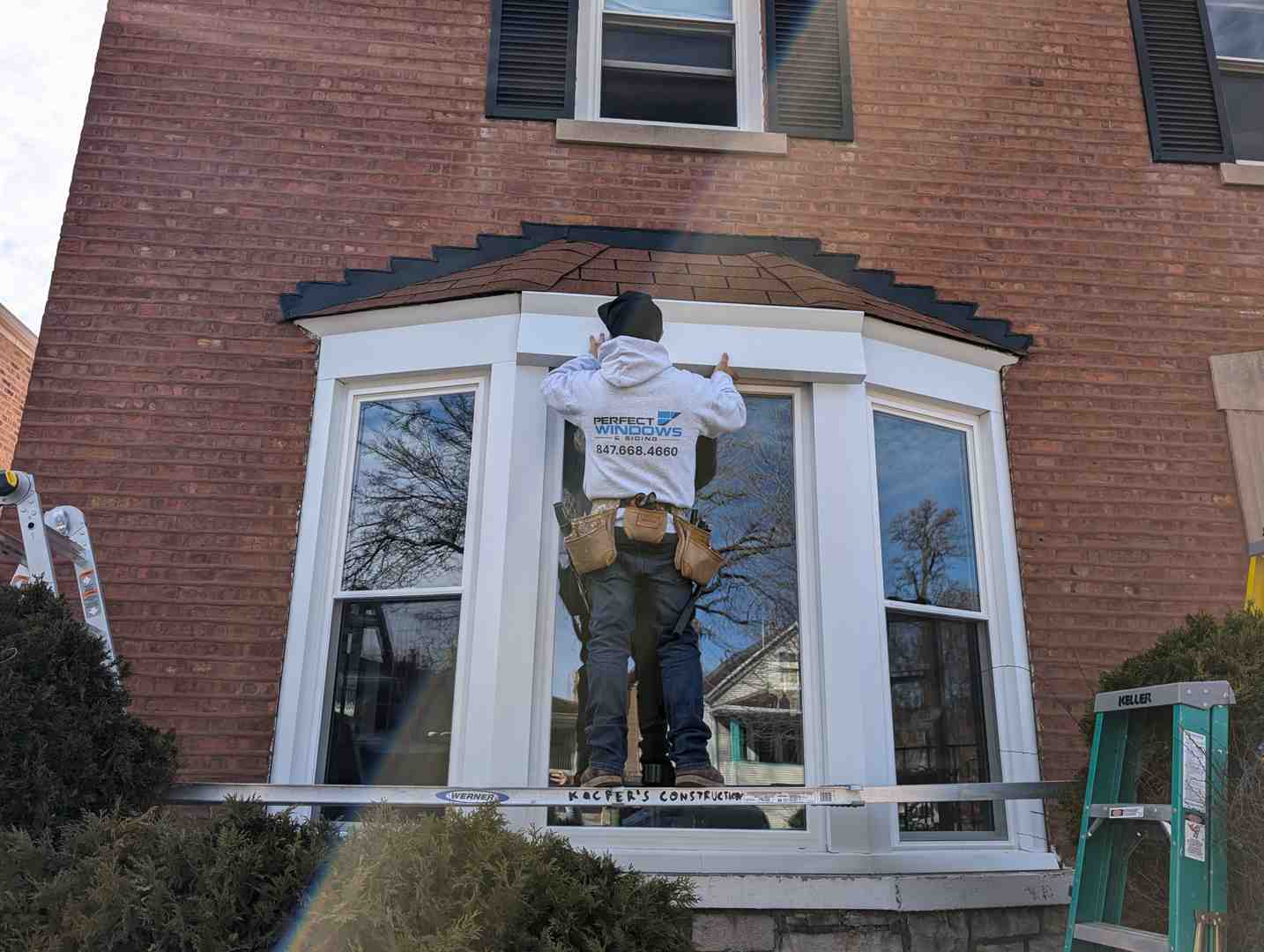
Why DIY Bay Window Installation Transforms Your Home (And What It Really Takes)
DIY bay window installation is a challenging but achievable project for experienced homeowners — here’s a quick overview of what it involves:
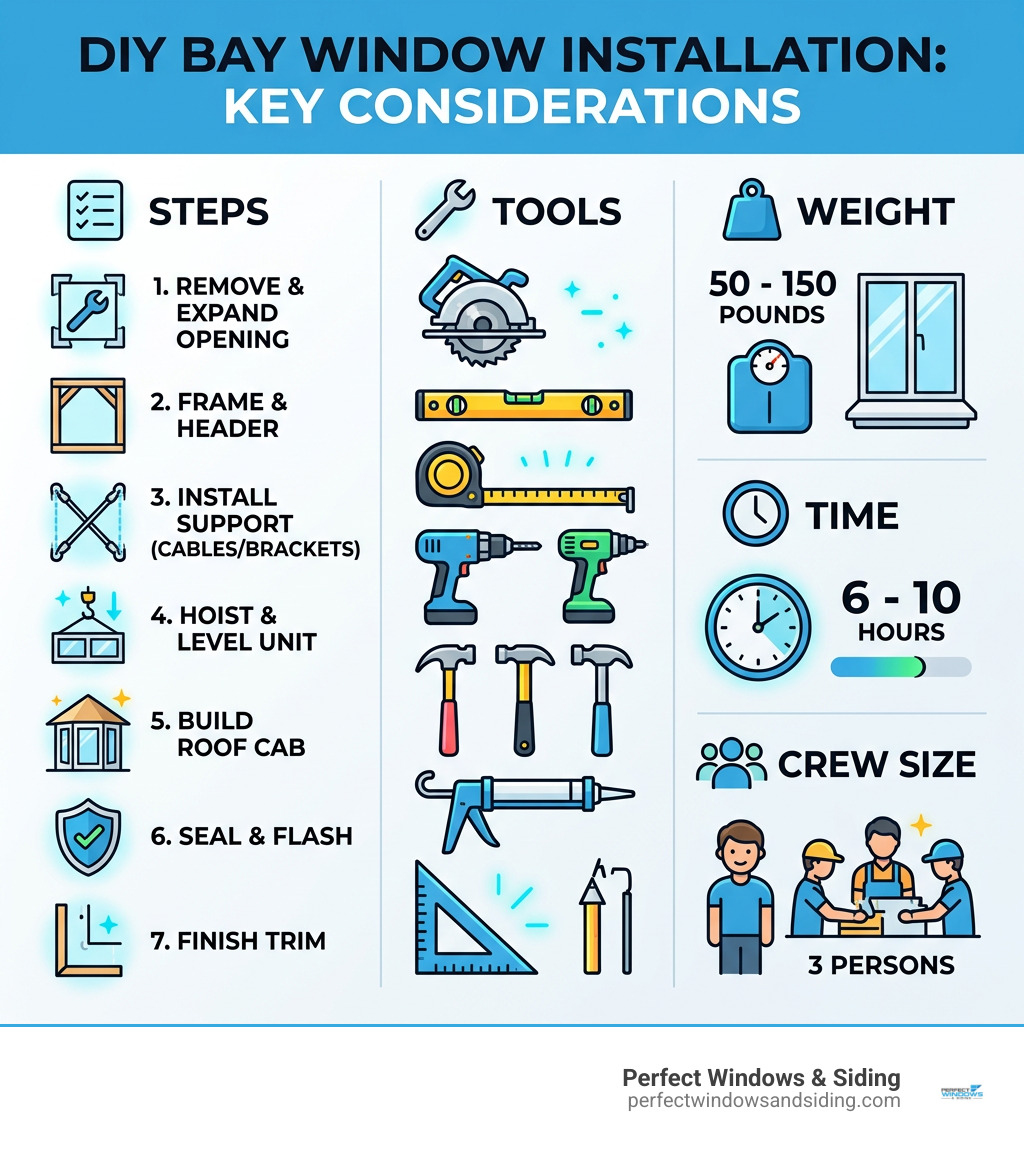
- Remove the existing window and expand the rough opening
- Frame the new opening with king studs, jack studs, and a reinforced header
- Install support cables or brackets to carry the window’s weight
- Hoist and level the bay window unit with at least 2-3 helpers
- Build or install a roof cab over the unit
- Seal and flash all edges to prevent water intrusion
- Finish with interior trim, insulation, and exterior cladding
A bay window does more than improve curb appeal. It pulls natural light deep into a room, creates an interior alcove for seating or storage, and adds real architectural character to your home. That’s why so many Chicago-area homeowners consider making the upgrade.
But this is not a beginner project. A typical bay window unit weighs 50 to 150 pounds, requires a reinforced structural header, a custom-built roof, and precise leveling on all sides. Expect to spend 6 to 10 hours on installation with a crew of three — and that’s when everything goes smoothly.
The good news? With the right preparation, tools, and guidance, a skilled DIYer can pull it off.
I’m Voytek Glab, owner of Perfect Windows & Siding, and with over 20 years of hands-on window installation experience across the Chicagoland area, I’ve seen every variation of DIY bay window installation — the wins and the costly mistakes. In this guide, I’ll walk you through exactly what it takes to do this job right.
Simple guide to diy bay window installation terms:
Understanding the Structural Requirements for diy bay window installation
Before you grab a sledgehammer, we need to talk about physics. Unlike a standard flat window that sits flush within your wall, a bay window projects outward. This creates a “lever” effect, putting significant stress on your home’s exterior wall.
In the Chicagoland area, our homes face heavy wind loads and snow accumulation. If your structural support isn’t spot on, the window can sag, leading to cracked glass, stuck sashes, or even structural failure of the wall itself.
Distinguishing Bay Windows from Bow Windows
It is common to hear these terms used interchangeably, but for a successful diy bay window installation, you must know the difference.
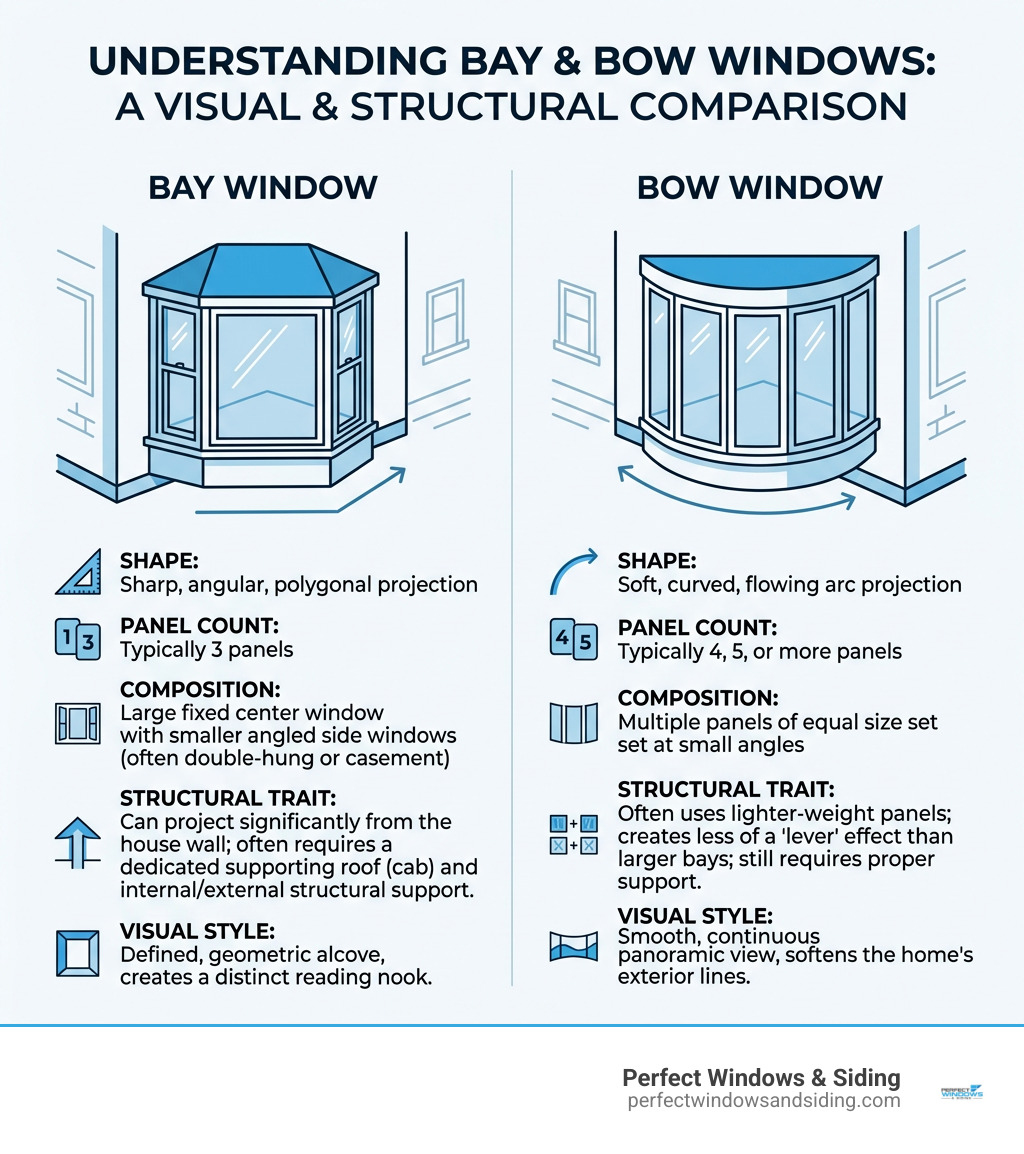
- Bay Windows: Usually consist of three panels. A large center picture window is flanked by two smaller windows (often double-hung or casement) set at 30-degree or 45-degree angles. This creates a sharp, polygonal shape that is perfect for a classic reading nook.
- Bow Windows: These use four, five, or even six window panels of equal size set at smaller angles (like 10 degrees). This creates a gentle, curved appearance.
Assessing the Need for Professional Support
Because a bay window can weigh up to 150 pounds, you cannot do this alone. You will need a minimum of two capable helpers to hoist the unit into place. Furthermore, if you are cutting into a load-bearing wall to expand an opening—which is common in older homes in Park Ridge or Hinsdale—you must ensure your header is beefy enough to carry the weight of the roof above it.
Safety is paramount. When working on a second-story installation, you must follow OSHA fall protection standards. We often recommend renting scaffolding or pump jacks rather than relying on ladders, as they provide a much more stable platform for maneuvering a heavy window unit. If the structural complexity feels overwhelming, it may be time to look into professional window installation services.
Essential Tools and Preparation for Your Project
Success in a diy bay window installation is 90% preparation. You don’t want to be halfway through a hole in your house when you realize you’re missing a critical tool.
Your Tool Checklist:
- Reciprocating saw (for cutting through old frames and studs)
- Circular saw
- 4-foot and 6-foot levels (precision is non-negotiable)
- Power drill and impact driver
- Shims (composite is better than wood for moisture resistance)
- Flashing tape and high-grade silicone sealant
- Galvanized roofing nails and structural screws
- Hammer and pry bar
Before ordering your window, ensure you know how to measure a window for replacement. For a bay window, you aren’t just measuring a flat hole; you’re measuring the rough opening that must accommodate the entire projection.
Preparing the Rough Opening for diy bay window installation
Once the old window is out, you’ll likely need to modify the framing. This involves installing “king studs” (full-height studs) and “jack studs” (which support the header). The header itself acts as a bridge over the window. For a large bay window, we often build a “club sandwich” header—three 2x8s sandwiched with plywood—to prevent the wall from bulging outward under the weight.
Leveling the sill before the window arrives is a pro tip that saves hours. Rather than trying to level a 150-pound window while holding it in the air, shim your sill plate until it is perfectly level across the entire span. You can find more detailed framing tips in our Window Installation Guide 2025.
Removing the Existing Window Safely
Safety first: remove the glass sashes from the old window before prying the frame. This lightens the load and prevents dangerous shards if the frame twists. Use your reciprocating saw to cut the nails between the window frame and the studs. Carefully pry away the exterior trim—if you’re lucky and careful, you might be able to reuse some of it, though we usually recommend fresh trim for a better seal.
Step-by-Step Guide to a Successful Installation
The moment of truth arrives when you lift the window. This is where your helpers earn their keep.
Hoisting and Securing the Unit
- Dry Fit: Before applying sealant, lift the window into the opening to ensure it fits.
- Apply Sealant: Run a thick bead of high-grade caulk along the mounting flange or the rough opening.
- The Lift: With one person inside and two outside on scaffolding, lift the window onto the pre-leveled sill.
- Temporary Secure: Drive a single screw through the top jamb into a stud. This acts as a pivot point and keeps the window from falling while you fine-tune the alignment.
- Plumb and Square: Check the side jambs with your level. Use shims behind the screw locations to ensure the frame doesn’t bow when you tighten the fasteners.
Check out our Window Replacement Complete Guide 2025 for more on perfecting the fit.
Finalizing Your diy bay window installation with Trim and Insulation
Once the window is screwed in, don’t just slap on the trim. You need to insulate the “dead space” around the frame. We recommend using low-expansion spray foam. Standard “Great Stuff” can expand too much and actually bow your window frame, making it impossible to open the sashes.
Inside, you’ll install the seat board and head board. These are the horizontal surfaces at the bottom and top of the alcove. If you want a cozy reading nook, ensure the seat board is reinforced to hold the weight of a person. You can see some beautiful examples of this in our gallery of Adding a Bay Window: Before and After.
Advanced Support Systems and Weatherproofing
A bay window cannot just “hang” off the side of your house. It needs a support system to prevent sagging over time.
| Support Type | Best Use Case | Pros | Cons |
|---|---|---|---|
| Cable System | Most modern bay windows | Hidden, highly adjustable | Requires attachment to house header |
| Support Brackets | Heavy wood windows | Traditional look, very strong | Visible from the exterior |
Support cables are usually installed at a 45-degree angle, connecting the window’s seat board to the house framing above the window. This creates tension that pulls the window up and back against the house. For homeowners looking to maximize efficiency, remember to learn about federal tax credits that might apply to your new energy-efficient unit.
Building a Weather-Tight Roof Cab
Unless your bay window sits directly under a deep eave, it needs its own roof. Many DIYers find this the hardest part of diy bay window installation. You’ll need to frame a small hip roof with a center common rafter and two hip rafters that bisect the 45-degree corners at 22.5 degrees.
Once framed, cover it with plywood, then ice-and-water shield, and finally shingles that match your home. Proper flashing where the window roof meets the house wall is critical to prevent leaks that can rot your wall studs. If you’re considering a curved look instead, you might want to read about Bow Windows in Park Ridge.
Sealing Against the Chicago Elements
In locations like Des Plaines or Glenview, the winter wind is relentless. We always recommend triple-pane glass with Argon gas fill and Low-E coatings. This prevents the “cold spot” often associated with older bay windows. Use flashing tape around the entire perimeter, overlapping layers like shingles so water always flows down and away from the opening.
Frequently Asked Questions about Bay Window Installation
How long does a typical installation take?
For a pro crew, it’s a one-day job. For a diy bay window installation, plan for a full weekend. Day one is for demolition, framing, and getting the window “dried in” (secured and weather-protected). Day two is for roofing, exterior siding, and interior trim.
Do I need a permit for a new bay window?
In most Chicagoland municipalities, including Chicago, Skokie, and Wilmette, yes. Because you are often modifying the structural framing of a wall and adding a projecting structure, a building permit is required. Check with your local building department before starting.
What are the most common installation mistakes?
- Out-of-Level Sills: If the bottom isn’t level, the side casements will never close properly.
- Poor Flashing: Water is a bay window’s worst enemy. Skipping the drip cap or ice-and-water shield on the roof will lead to rot within five years.
- Insufficient Support: Relying on nails alone to hold a 150-pound window is a recipe for disaster. Always use a cable system or structural brackets.
Conclusion
Mastering a diy bay window installation is a badge of honor for any home improver. It requires carpentry, roofing, and finishing skills, but the reward—a sun-drenched nook and a stunning exterior—is well worth the effort.
At Perfect Windows & Siding, we’ve spent two decades perfecting this process across the Chicago suburbs. We believe in doing it right the first time, using only the highest quality materials and offering a lifetime warranty on our craftsmanship. Whether you need a bit of advice or decide the structural work is better left to the pros, we’re here to help. Schedule your consultation for a bay window in Park Ridge or any of our surrounding service areas today!