

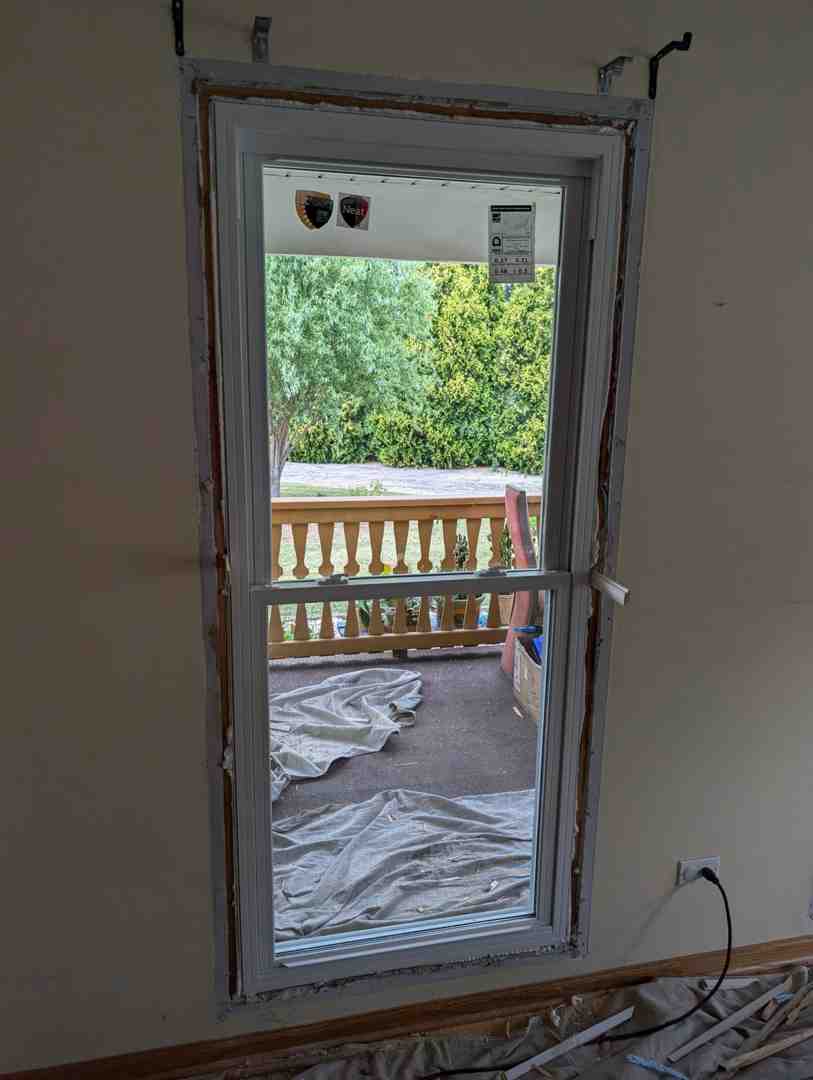
What Does a Window Replacement Estimate Actually Cost?
A window replacement estimate typically ranges from $430 to $1,450 per window, including installation. Here’s a quick breakdown to help you budget:
| Project Size | Estimated Cost Range |
|---|---|
| Single window | $430 – $1,450 |
| 10 windows (full house) | $8,000 – $11,000 |
| 20 windows (2,000 sq ft home) | $17,000 – $25,000 |
| Premium/top-tier windows | Up to $1,905+ per window |
The biggest cost drivers are:
- Window style (casement, double-hung, picture, etc.)
- Frame material (vinyl, wood, fiberglass, composite)
- Glass type (single, double, or triple-pane)
- Installation method (retrofit vs. full-frame replacement)
- Your home’s specific conditions (brick exterior, upper stories, frame damage)
Most Chicago-area homeowners replacing a standard 2,000 sq ft home’s windows should budget $15,000 to $25,000 for a mid-tier project using vinyl frames with double-pane glass.
Getting your estimate right from the start saves you from nasty surprises down the road. The difference between a rough ballpark and an accurate quote can easily be thousands of dollars — and that gap is what this guide is here to close.
I’m Voytek Glab, owner of Perfect Windows & Siding, and after 20 years of hands-on window installation across Chicagoland, I’ve helped hundreds of homeowners understand exactly what goes into a fair, accurate window replacement estimate. In this guide, I’ll walk you through every factor that affects your price so you can plan your project with confidence.
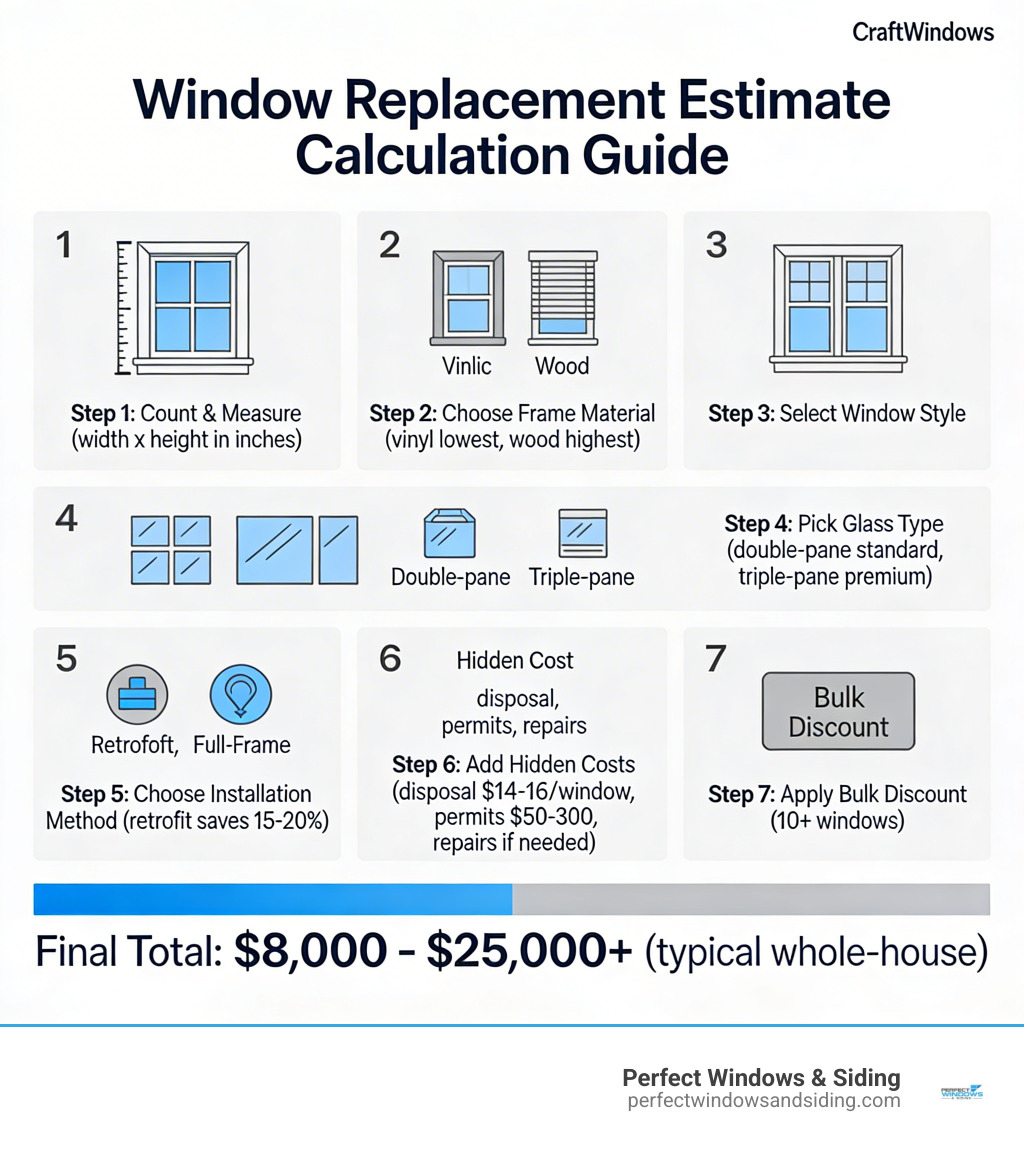
Window replacement estimate terminology:
Primary Factors Influencing Your Window Replacement Estimate
When we sit down with a homeowner in Addison or Glenview to discuss a window replacement estimate, the first thing we look at is the “skeleton” of the window: the frame material. The material you choose dictates not just the upfront price, but how much you’ll spend on maintenance over the next 20 years.

Choosing Your Frame Material
- Vinyl Frames: These are the most popular choice in the Chicago suburbs because they offer the best “bang for your buck.” In the Northeast and Midwest, a standard vinyl window usually costs between $300 and $400 for the unit itself, with installation bringing the total to about $800–$900 per opening. They are low-maintenance and provide excellent insulation.
- Wood Frames: For historical homes in Wilmette or Hinsdale, wood is often the go-to for aesthetics. However, wood frames can cost 40% to 60% more than vinyl. You’re looking at $1,250 to $3,000 per window installed. They require regular sealing and painting to prevent rot.
- Fiberglass: This is a premium material that resists expansion and contraction—perfect for Chicago’s “frozen one day, humid the next” weather. Expect to pay $1,300 to $1,800 per window.
- Composite Materials: These blend the strength of wood with the low maintenance of vinyl. While proprietary versions exist, they generally sit in the premium price tier.
| Frame Material | Durability | Maintenance Level | Estimated Cost (Installed) |
|---|---|---|---|
| Vinyl | High | Very Low | $400 – $1,200 |
| Wood | Moderate | High | $1,250 – $3,000 |
| Fiberglass | Very High | Low | $1,300 – $1,800 |
| Aluminum | Moderate | Low | $1,200 – $1,700 |
For more detailed breakdowns on material assumptions, you can refer to the Replacement Window Estimates – 2026 Common Options.
Understanding the Window Replacement Estimate for Different Styles
The way a window opens (or doesn’t) significantly impacts the complexity of its manufacturing and, consequently, your how-much-does-window-replacement-cost final tally.
- Double-Hung and Single-Hung: These are the bread and butter of American homes. Double-hung windows, which allow both sashes to move, typically cost between $400 and $1,400.
- Casement and Awning Windows: Because these use a crank mechanism and a compression seal, they are about 15% to 20% more expensive than sliders. A casement window can range from $650 to $2,500 depending on the size and glass package.
- Picture Windows: Since they don’t open, they have fewer moving parts and are often the most affordable per square foot—starting around $650—unless they are massive architectural statements.
Impact of Window Size and Custom Shapes
It sounds obvious, but size matters. A large window requires more glass and a sturdier frame. However, the labor to install a small window versus a medium window is often the same.
Where costs really climb is with custom mulling (joining multiple windows together) or architectural shapes like half-rounds or octagons. If you are unsure of your sizes, learning how-to-measure-a-window-for-replacement can help you get more accurate ballpark figures before a professional arrives.
Installation Methods: Retrofit vs. Full-Frame Replacement
One of the biggest variables in a window replacement estimate is how we actually put the window into your wall. There are two primary methods, and choosing the wrong one for your home’s condition can lead to future headaches.
Retrofit (Insert) Installation Costs
Also known as “pocket” installation, this method involves sliding a new window unit into your existing wooden frame. We only do this if your current frames are square, level, and free of rot.
- Pros: It preserves your interior and exterior trim and costs 15% to 20% less than full-frame replacement.
- Cons: You lose a small amount of “glass space” because the new frame sits inside the old one.
- Cost: Labor for window-installation in a retrofit scenario typically starts around $75–$200 per window.
Full-Frame (Brick-to-Brick) Installation Benefits
In a full-frame replacement, we strip everything down to the rough opening—the “bricks” or studs. This is essential if you have moisture damage, rot, or if you want to maximize your viewing area.
- Pros: It allows us to inspect for hidden water damage and install new insulation and flashing. It’s the only way to ensure 100% structural integrity.
- Cons: It is more invasive and requires new interior casings and exterior brickmould.
- Cost: This method increases labor costs by $250–$500 per window. You can find more about these differences in our window-replacement-complete-guide-2025.
Calculating the Cost of Energy Efficiency
In Chicago, we don’t just buy windows for looks; we buy them to survive January. Energy-efficient upgrades will increase your initial cost-to-replace-a-window, but they pay dividends in comfort and lower utility bills.
Comparing Double-Pane and Triple-Pane Pricing
- Double-Pane: The modern standard. These can reduce heat loss by up to 42% compared to old single-pane units. Expect to pay $300 to $800 per window.
- Triple-Pane: These add a third layer of glass and a second chamber of insulating gas (usually Argon or Krypton). They are up to 14% more efficient than double-pane and offer superior noise reduction—great if you live near O’Hare or a busy Metra line.
- The Premium: Triple-pane usually adds $200 to $400 per window to your estimate.
Regional Climate Considerations for Chicago Homes
For our local climate, we recommend windows with a U-factor of 0.27 or lower. This measures how well the window keeps heat inside. We also look for Low-E (Low Emissivity) coatings, which are invisible metallic layers that reflect heat. During a Chicago summer, these coatings keep the sun’s heat out; in the winter, they keep your furnace’s heat in.
Check out the ENERGY STAR tax credit details to see how you can recoup up to 30% of your costs (up to $600) through federal incentives. You can also explore how-much-do-new-windows-cost for more on efficiency ROI.
Hidden Costs and Budgeting for Your Project
A common mistake homeowners make is only budgeting for the windows themselves. A professional window replacement estimate should be “all-in.”
What Else Are You Paying For?
- Disposal Fees: Getting rid of 20 old windows isn’t free. Expect to pay $14 to $16 per window for removal and hauling.
- Permits: Depending on whether you’re in Des Plaines, Park Ridge, or Chicago proper, permits can cost anywhere from $50 to $300.
- Lead Paint Testing: If your home was built before 1978, we are required by law to test for and safely handle lead-based paint, which can add to the labor cost.
- Structural Repairs: If we pull out an old window and find the “jack studs” are rotted from years of leaks, that wood must be replaced before the new window goes in.
How to Get an Accurate Window Replacement Estimate
To get the best price, we always recommend:
- Bulk Discounts: Replacing 10 or more windows at once is almost always more economical. You save on “mobilization” costs (getting the crew and equipment to your house).
- Detailed Itemization: Ensure your quote breaks down labor, materials, and disposal.
- Off-Season Scheduling: While we install year-round, scheduling in the late fall or winter can sometimes lead to more competitive pricing.
For local pricing trends, see our guide on window-replacement-cost-near-me.
Return on Investment and Home Value
According to the 2024 Cost vs. Value report, new vinyl windows recoup about 67.1% of their cost upon resale. For a typical project, that adds over $14,000 to your home’s value. Beyond the money, you get “curb appeal” and the peace of mind that your home is sealed tight.
Frequently Asked Questions about Window Estimates
What is the average cost to replace 20 windows in a 2,000 sq ft house?
In the Chicago area, replacing 20 standard-sized vinyl windows usually falls between $17,000 and $25,000. If you opt for premium wood frames or triple-pane glass, that number can climb to $40,000 or more.
Is it more cost-effective to replace all windows at once?
Yes. Whole-house projects typically see a 15% to 30% lower per-window cost compared to doing them one by one. This is due to labor efficiencies and bulk material pricing. It also ensures all your windows match in style and age.
How long does a typical window replacement project take?
For a standard home with 10–20 windows, the on-site installation usually takes 1 to 3 days. However, the entire process—from the initial measurement to the custom manufacturing of your windows—typically takes 4 to 8 weeks.
Conclusion
Getting a window replacement estimate doesn’t have to be a high-pressure experience. At Perfect Windows & Siding, we believe in transparent, “no-nonsense” pricing. As a family-owned business serving Chicagoland for over 20 years, we know the local architecture and the local weather.
Whether you’re in a brick bungalow in Niles or a modern home in Schaumburg, we provide custom solutions backed by a lifetime transferable warranty. We don’t just “drop in” windows; we ensure your home’s envelope is protected for decades to come.
Ready to see the numbers for your specific home? Schedule your residential window consultation in Chicago and let us help you get a clear view of your next home improvement project.