

Why Choosing the Right Types of Siding for Home Exteriors Matters
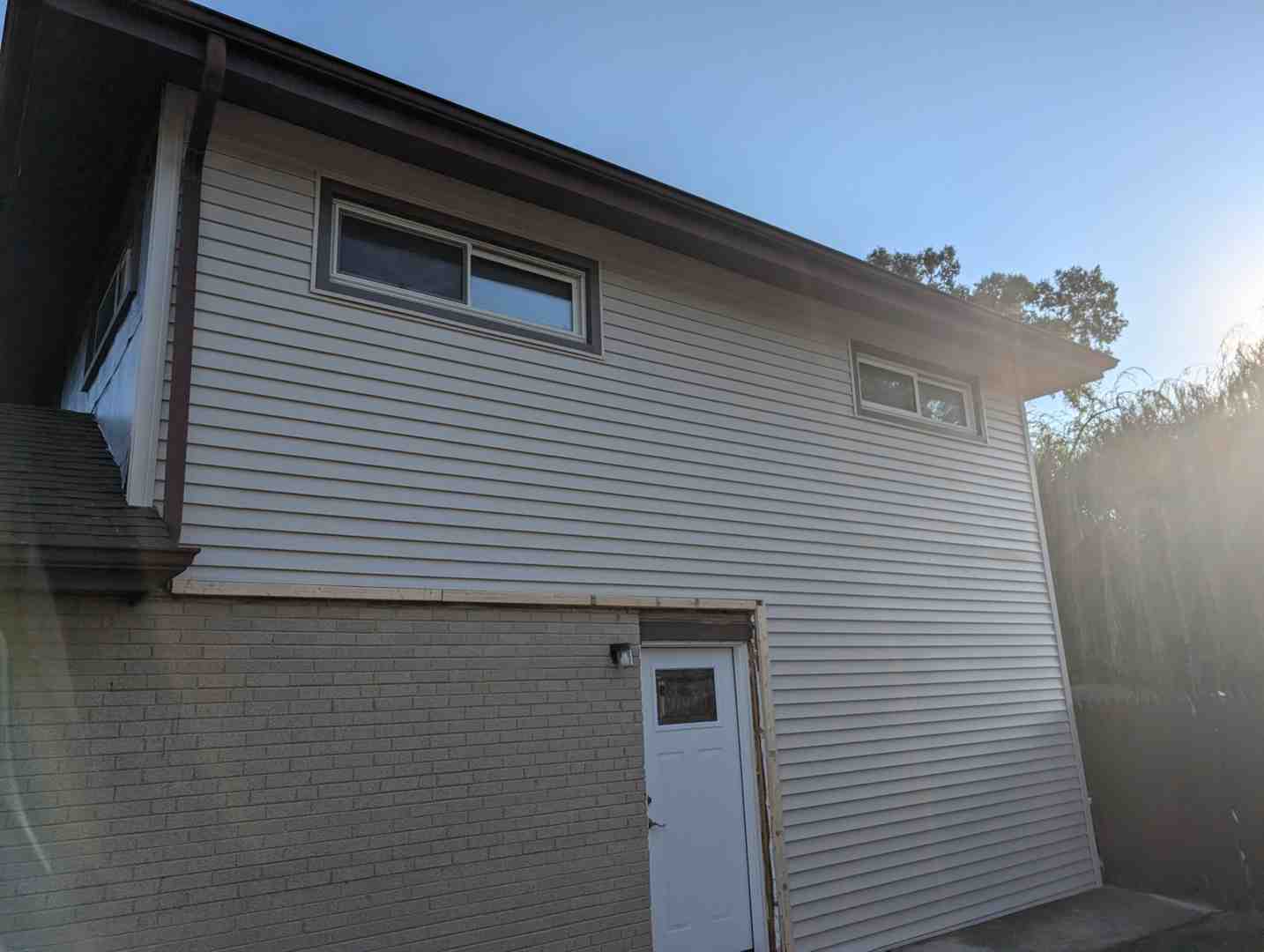
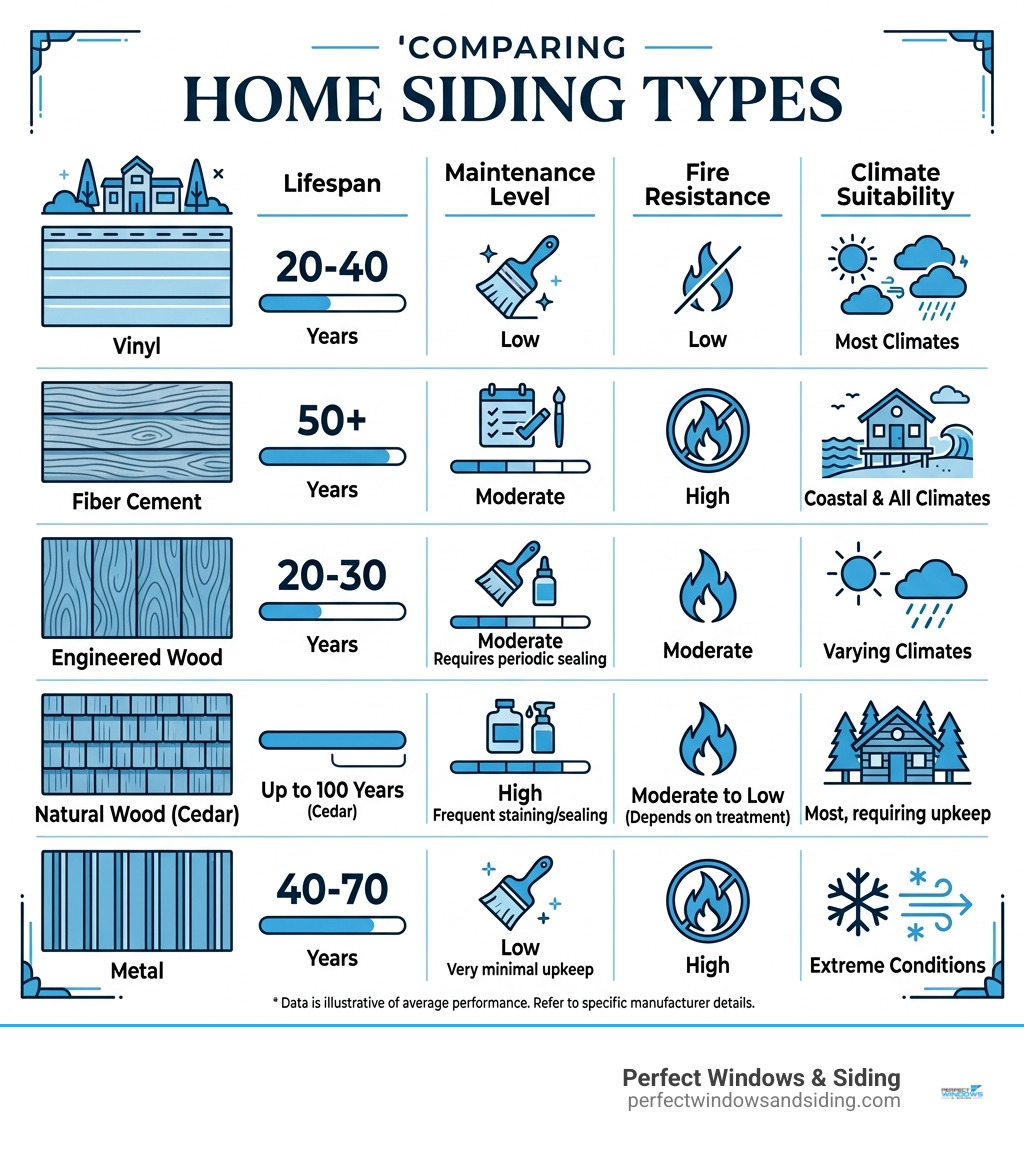
The types of siding for home exteriors available today give homeowners more choices — and more decisions — than ever before. Here’s a quick look at the most common options:
| Siding Type | Best For | Lifespan |
|---|---|---|
| Vinyl | Low maintenance, wide color range | 20-40 years |
| Fiber Cement | Durability, fire resistance, resale value | 50+ years |
| Engineered Wood | Wood look, moderate durability | 20-30 years |
| Natural Wood | Classic aesthetics, curb appeal | Up to 100 years (cedar) |
| Metal | Modern look, recyclable, energy efficient | 40-70 years |
| Stone Veneer | Premium aesthetics, lower weight than full stone | 50+ years |
| Stucco | Warm climates, traditional style | 50-100 years |
Your siding does more than make your home look good. It shields your home from rain, wind, UV rays, and — especially here in the Chicago area — brutal freeze-thaw cycles. It also plays a real role in how well your home holds heat in winter and stays cool in summer.
Get this decision wrong and you’re looking at premature repairs, higher energy bills, and a hit to your home’s resale value. Get it right, and your siding can last decades with minimal upkeep.
Not all siding materials perform the same way in every climate or on every home style. That’s why comparing your options carefully — before you commit — is so important.
I’m Voytek Glab, owner of Perfect Windows & Siding, and after 20+ years installing and replacing types of siding for home exteriors across the Chicagoland area, I’ve seen how the right material choice makes all the difference. In this guide, I’ll walk you through everything you need to make a confident, informed decision.
Comparing the Most Popular Types of Siding for Home
When you drive through neighborhoods in Park Ridge, Glenview, or Hinsdale, you’ll notice a vast array of textures and styles. Choosing between these materials requires a balance of aesthetic preference and long-term performance goals. According to the Best Siding Buying Guide – Consumer Reports, the right choice can significantly improve your home’s protection against the elements.
Material durability is our top priority at Perfect Windows & Siding. Whether you are looking at traditional horizontal laps, modern vertical panels, or rustic shakes, each material offers unique weather protection characteristics. For a successful Siding Installation, it is vital to understand how these materials interact with the environment.
Durable Fiber Cement and Engineered Wood Types of Siding for Home
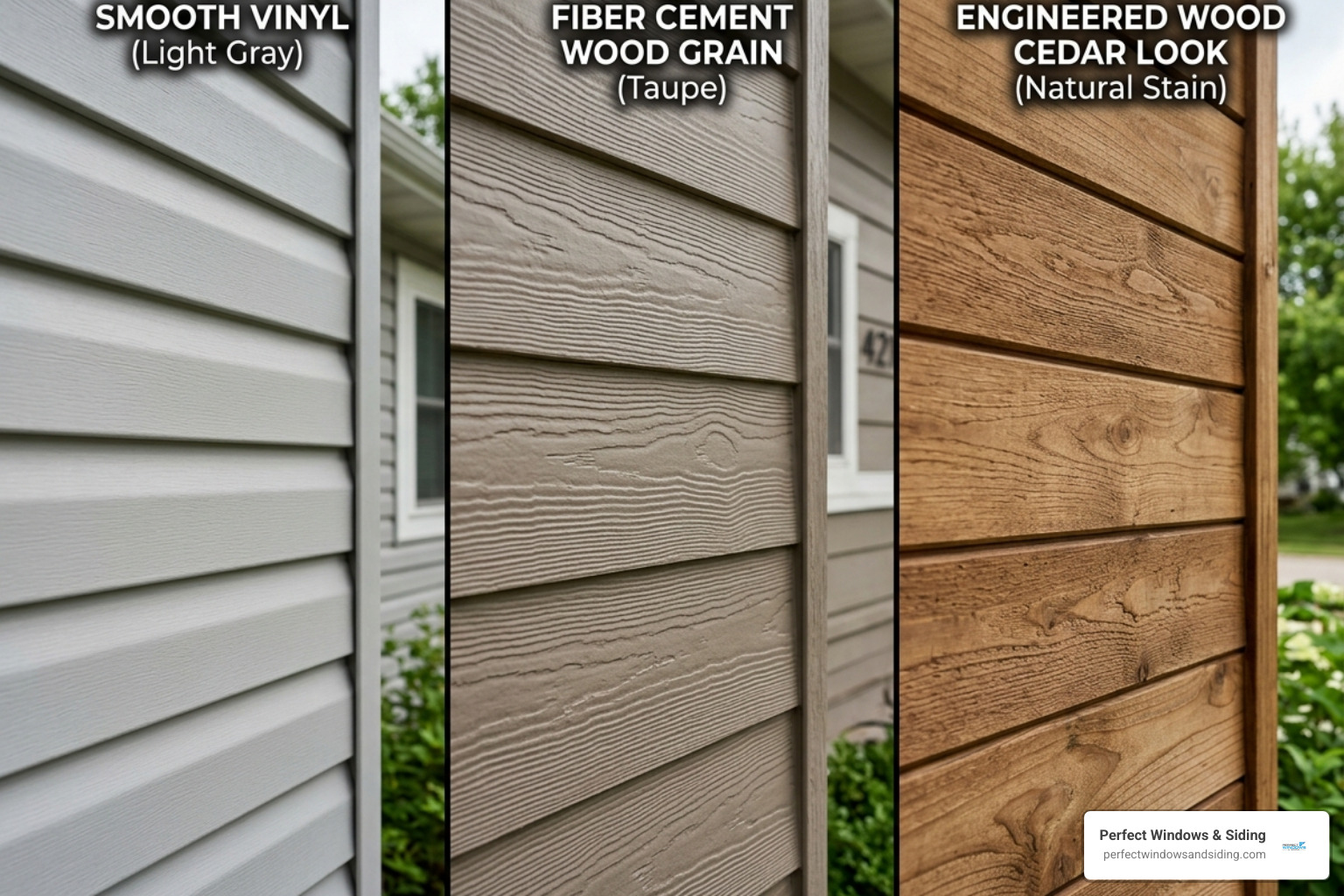
For homeowners seeking the ultimate in longevity and protection, fiber cement is often the gold standard. Composed of a mixture of Portland cement, sand, cellulose fibers, and water, it is virtually indestructible compared to traditional materials. It is a top-tier choice for Fiber Cement Siding Replacement because it does not rot, resists pests like termites and woodpeckers, and offers incredible fire resistance. In fact, fiber cement is non-combustible, which provides an extra layer of safety for your family.
Engineered wood is another strong contender. Brands like LP SmartSide use wood strands treated with zinc borate and bonded with water-resistant resins to create a product that looks like real wood but performs much better. While it is more susceptible to moisture than fiber cement if not properly sealed, it is highly impact-resistant. If you are searching for Engineered Wood Siding Contractors Near Me, we specialize in ensuring these panels are installed with the precise gapping and flashing required to prevent buckling.
Low-Maintenance Vinyl and Metal Types of Siding for Home
Vinyl remains the most popular choice across the United States, used on over 25% of single-family homes. Made from PVC resin, it is valued for its versatility and the fact that it never needs painting. Modern vinyl options often include titanium oxide to help resist UV fading, which is essential for maintaining curb appeal over its 20-to-40-year lifespan. You can learn more about the specific Benefits Of Vinyl Siding For Illinois Homes on our dedicated guide.
Metal siding, including aluminum and steel, is seeing a resurgence in modern residential architecture. It is incredibly durable, fireproof, and 100% recyclable, making it an eco-friendly choice. Steel panels are particularly resistant to the heavy hail we sometimes see in the Chicago suburbs. As experienced Metal Siding Installers Near Me, we often recommend metal for its clean lines and high energy efficiency, especially when paired with rigid foam insulation.
Performance and Durability: Choosing Siding for the Chicago Climate
In the Chicagoland area, our siding has to work harder than in almost any other part of the country. We deal with “The Big Three”: extreme humidity in the summer, sub-zero temperatures in the winter, and constant freeze-thaw cycles that can crack inferior materials. When evaluating Types of Siding, you must consider how moisture management and wind resistance will play out over thirty years of Illinois weather.
For Siding Chicago Il, we prioritize materials that can withstand 150 mph wind gusts and the impact of wind-borne debris. Fiber cement and heavy-gauge vinyl are excellent performers in this regard, as they don’t become brittle in the cold like some older plastics might.
Natural Wood and Stone Veneer Aesthetics
If your goal is pure, timeless curb appeal, natural wood is hard to beat. Cedar shakes and pine planks offer a warmth and character that synthetic materials strive to mimic. Cedar, in particular, contains natural oils that resist rot and can last up to 100 years if meticulously maintained. However, it does require repainting or restaining every 5 to 7 years. For those who want that rustic look without the heavy lifting, Wood Shingle Siding Replacement often involves modern composites that capture the texture perfectly.
Stone veneer is another premium option that adds immense value. It provides the look of a solid stone structure but is much lighter and easier to install. We often use it for half-walls or accent gables to create a sophisticated, multi-textured exterior that stands out in neighborhoods like Wilmette or Hinsdale.
Impact Resistance and Longevity
Durability isn’t just about how long a material lasts; it’s about how it looks while it’s getting there. Hail protection is a major factor for Illinois homeowners. While vinyl is a “safe” and popular choice, it can crack under heavy impact from hail or even a stray baseball. Fiber cement and steel offer superior impact resistance.
When considering Siding Replacement Chicago, we look at the UV resistance of the finishes. You want a product that won’t fade or “chalk” after a few summers of direct sunlight. High-quality factory finishes, like those found on James Hardie products, are designed to stay vibrant for decades.
Maximizing Home Value and Energy Efficiency
Replacing your siding is one of the smartest investments you can make. Research shows that replacing vinyl siding can recoup 97% of its cost at resale, while fiber cement can recoup a staggering 114%. But the value isn’t just in the resale; it’s in the monthly savings.
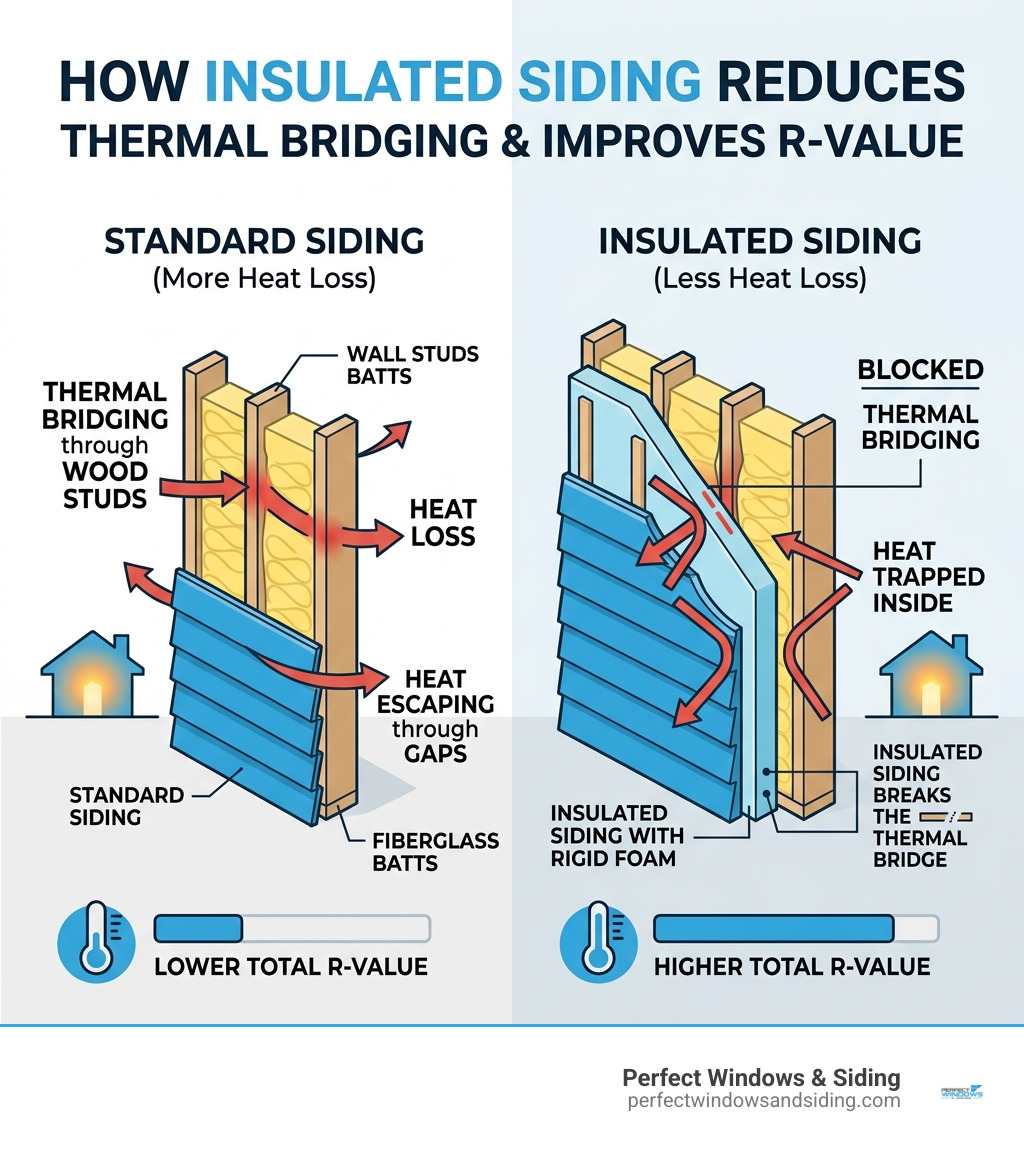
Insulated siding acts like a blanket for your home. By adding a layer of rigid foam behind the panels, we can break the “thermal bridge” — the process where heat escapes through the wooden studs of your walls. This significantly improves your home’s R-value. Many homeowners choose Hardie Board Siding Installation specifically because it combines this efficiency with world-class durability. Our Exterior Siding Solutions are always designed with these energy-saving goals in mind.
Professional Installation Standards
Even the best types of siding for home exteriors will fail if they aren’t installed correctly. As a leading Siding Contractor In Chicago, we have seen the disasters that happen when “pros” cut corners. Common mistakes include:
- Nailing too tight: Siding needs to “float” to allow for expansion and contraction.
- Poor flashing: This leads to water getting behind the siding, causing rot and mold.
- Skipping the moisture barrier: A high-quality house wrap is essential for long-term wall health.
We follow strict manufacturer guidelines and use premium accessories like Hardiewrap Pro Flashing to ensure your home remains bone-dry through every thunderstorm and blizzard.
Maintenance and Long-Term Care
To get the most out of your investment, a little care goes a long way. Most modern siding just needs a gentle wash with soapy water and a soft brush once or twice a year. We strongly advise against high-pressure power washing, as it can force water into the gaps and behind the panels, leading to trapped moisture.
Regular inspections are also key. Check your caulk joints around windows and doors every spring. If you notice any damage, our Siding Repair Services can help you address small issues before they become expensive replacements. Most of our products come with industry-leading warranties, including 30-year limited warranties on fiber cement and 50-year warranties on engineered wood, providing you with total peace of mind.
Frequently Asked Questions About Home Siding
| Feature | Vinyl | Fiber Cement | Engineered Wood | Metal |
|---|---|---|---|---|
| Maintenance | Very Low | Moderate (Painting) | Moderate (Sealing) | Low |
| Fire Rating | Combustible (Melts) | Non-Combustible | Combustible | Non-Combustible |
| Pest Resistance | High | Excellent | High (Zinc Borate) | Excellent |
| Eco-Friendly | Low | Moderate | High | Excellent |
What is the longest-lasting siding material?
While natural cedar can last 100 years with perfect maintenance, fiber cement and stone veneer are widely considered the longest-lasting “low-maintenance” options, easily exceeding 50 years of service.
How does siding impact home insulation?
Standard siding provides very little insulation on its own. However, when paired with contoured foam backing or rigid foam sheathing, it can significantly increase your home’s R-value, reducing energy loss through “thermal bridging.”
Which siding is best for fire-prone areas?
Fiber cement is the clear winner here. It is non-combustible and will not ignite even when exposed to direct flame, unlike vinyl (which melts) or traditional wood (which burns).
Conclusion: Selecting the Right Siding for Your Property
Choosing the right types of siding for home exteriors is a journey that ends with a more beautiful, durable, and valuable house. At Perfect Windows & Siding, we take pride in being a local, family-owned business that understands the specific needs of Chicago homeowners. From the historic charm of Evanston to the modern builds in Schaumburg, we provide custom solutions backed by over 20 years of expertise and a lifetime warranty on our craftsmanship.
Whether you are interested in the rugged durability of fiber cement or the classic ease of vinyl, we are here to guide you. We serve the entire Chicagoland area, including Des Plaines, Morton Grove, and Park Ridge.
Ready to transform your home’s exterior? Schedule your consultation today and get a free estimate from our expert team.