

Why Understanding Siding Costs Matters for Your Home Investment
A Siding Cost Guide is essential for planning one of your home’s most important exterior upgrades. Here’s a quick overview:
Quick Cost Overview:
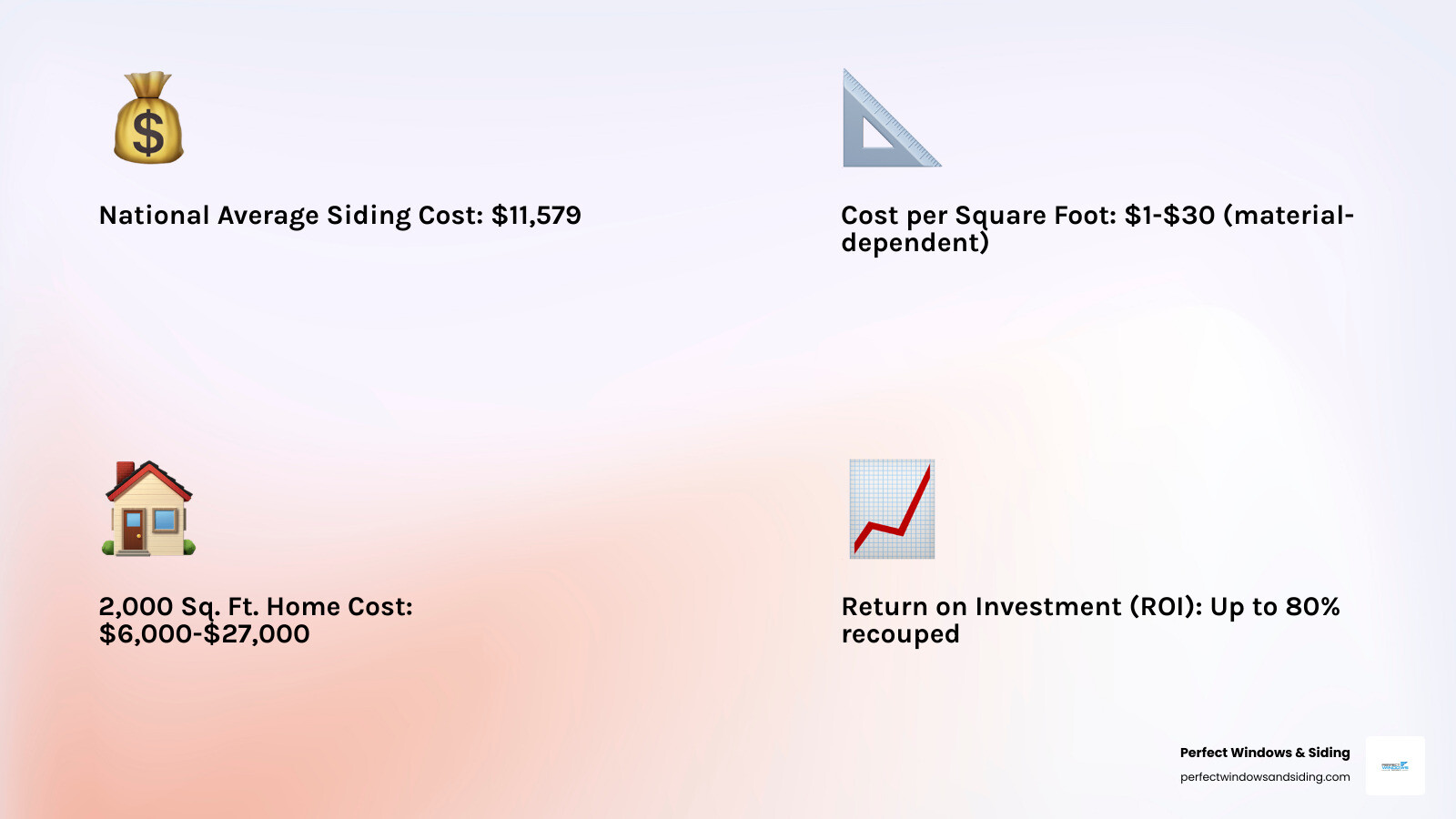
- National Average: $11,579 (typical range: $5,568–$17,707)
- Cost per Square Foot: $1–$30 depending on material
- 2,000 sq. ft. Home: $6,000–$27,000 for standard materials
- Return on Investment: Up to 80% recouped at resale
Top Cost Factors:
- Material type (vinyl, fiber cement, wood, brick, stone)
- Home size and architectural complexity
- Labor rates in your area
- Old siding removal and repairs
- Permits and prep work
If you’re considering new siding to refresh your home’s exterior or boost its value, understanding the costs is crucial. Replacing siding is a major investment, with prices varying based on material, home size, and underlying repairs. In 2025, most homeowners spend between $5,500 and $17,700, though premium materials like stone can cost much more.
The good news is that new siding pays you back. It protects your home from Chicago’s harsh weather, cuts energy bills, and can return up to 80% of your investment at resale.
This guide breaks down every cost factor, from materials and labor to hidden expenses like permits and old siding removal. You’ll learn what drives prices, how materials compare, and how to budget effectively.
I’m Voytek Glab, owner of Perfect Windows & Siding. For over 20 years, I’ve helped Chicagoland homeowners steer exterior remodeling. My goal is to provide the same honest, straightforward information I give every customer, ensuring your siding project is a success.
National Average Siding Costs in 2025
Understanding national average costs provides a helpful baseline for your siding project. However, your specific project in the Chicagoland area will have unique costs.
The average cost to replace siding in 2025 falls between $5,568 and $17,707, with most projects averaging around $11,579. This wide range reflects the diverse options and complexities involved.
Siding costs can range from $1 to $30 per square foot. For a typical 2,000 square foot home, expect to pay from $6,000 to $27,000 for standard materials. High-end materials like natural stone or brick can increase this cost significantly, potentially reaching $100,000 or more.
Our experience in Chicago, Naperville, and Aurora shows that while national averages are a good starting point, local factors are paramount. We help clients understand these nuances to align their budget with their vision.
Key Factors That Influence Siding Installation Costs
This section details the variables that determine your final project price, from your home’s architecture to the specifics of the installation job. Understanding these factors is crucial for accurately using any Siding Cost Guide.
House Size and Complexity
The size and architectural complexity of your home are major cost drivers. It’s not just the total square footage but the actual surface area needing siding.
- Square footage: We recommend adding 10% to your total square footage to account for trimming and waste.
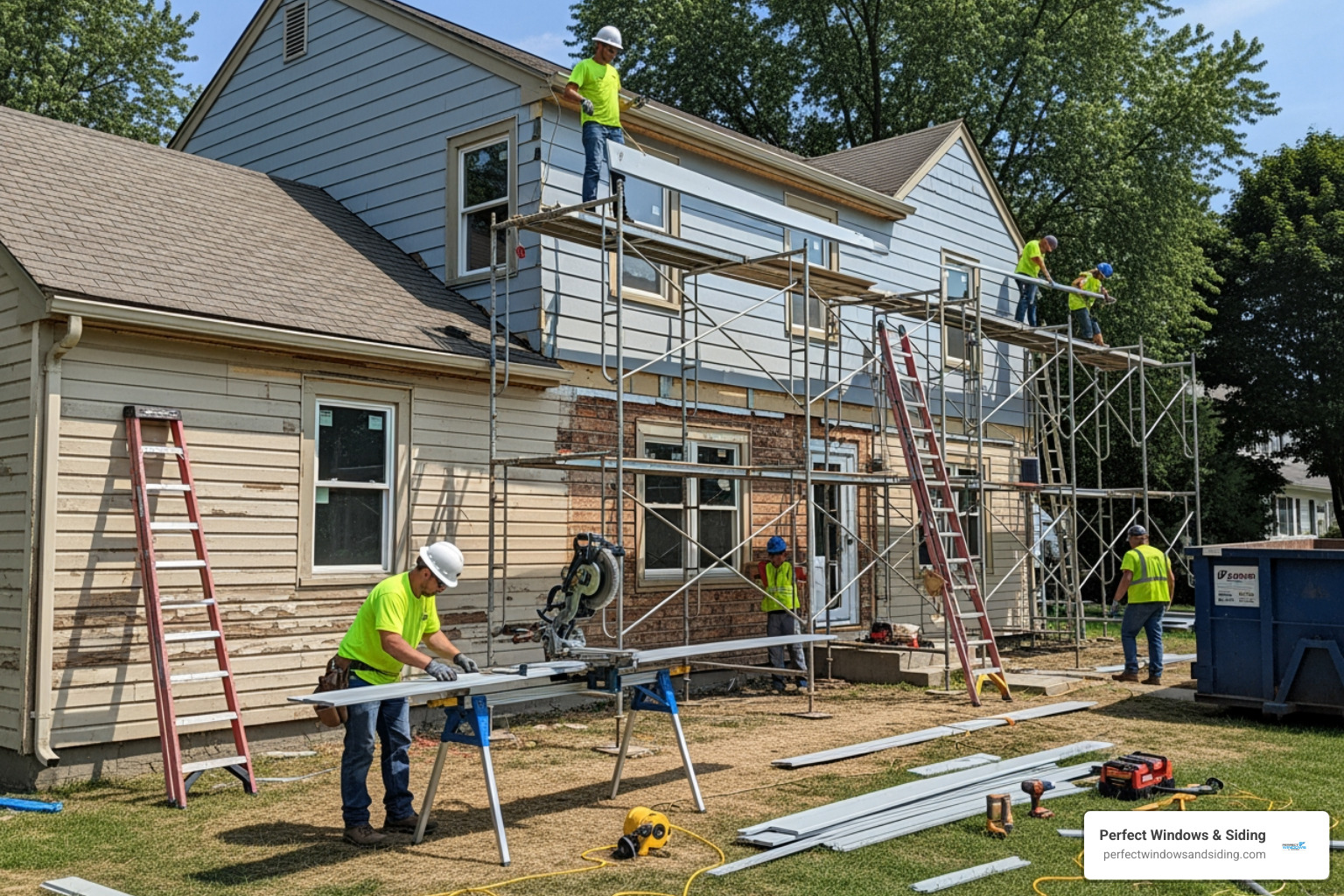
- Number of stories: Multi-story homes cost 15-30% more to side than single-story homes due to scaffolding, safety measures, and increased labor.
- Architectural details: A simple rectangular house is less expensive to side than a home with turrets, gables, dormers, and numerous corners. Each angle and feature requires precise cuts and more labor, increasing material waste and overall cost.
- Roof pitch: Steep gables can make installation more challenging and time-consuming.
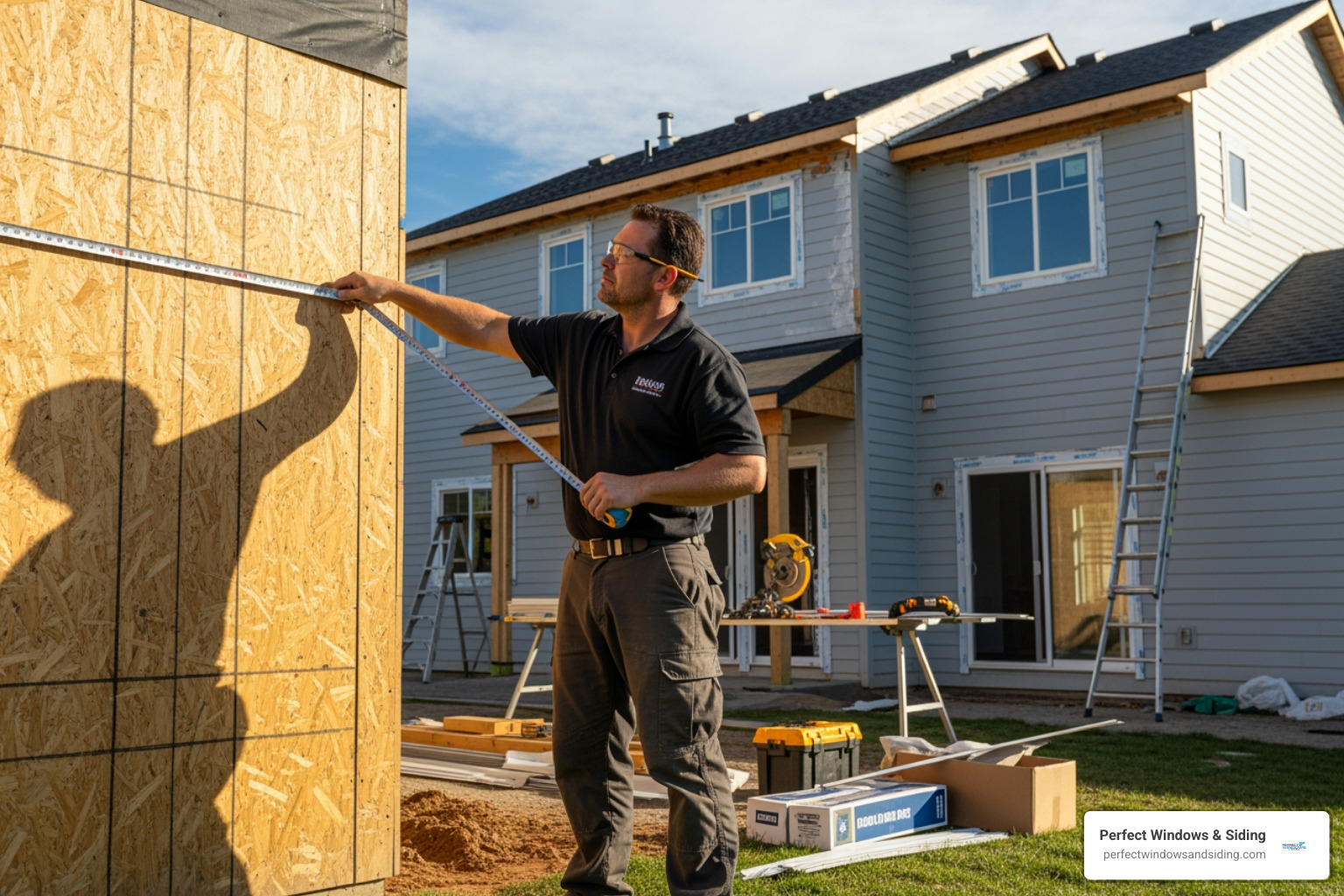
For example, a 1,200 sq. ft. ranch might need 1,400 sq. ft. of siding, while a 2,000 sq. ft. two-story home could require 2,480 sq. ft. This highlights why a precise assessment is vital.
Labor and Location
Labor often accounts for 50% of the total project cost. Several factors influence this expense.
- Regional cost differences: Labor rates vary by location. In the Chicagoland area (including Chicago, Naperville, and Aurora), costs differ from national averages due to local demand and wages. Chicago’s average siding costs often range from $6,700 to $18,700.
- Average labor rates: Labor for siding installation generally ranges from $1 to $4 per square foot, or $40 to $75 per hour. Specialized materials or complex jobs can increase these rates.
- Contractor experience and reputation: Reputable contractors like our team at Perfect Windows & Siding may charge more, but their expertise prevents costly mistakes. A low price can indicate inferior work, so always evaluate a contractor’s reputation. You can learn more about finding preferred contractors and evaluating their labor prices by visiting resources like the James Hardie Contractors page.
- Project timeline: A typical siding project takes 7 to 14 days. Longer projects increase labor expenses.
Condition of Existing Siding and Prep Work
Preparatory work can significantly impact your overall cost. Before new siding is installed, old siding must be removed and underlying issues addressed.
- Siding removal costs: Tearing off old siding can add $1,000 to $3,000 ($0.25 to $0.75 per sq. ft.). Confirm if this is included in your quote.
- Debris disposal fees: Proper disposal of old materials typically costs $200 to $600.
- Repairing underlying damage (rot, pests): Any rot, pest damage, or moisture issues in the sheathing or framing must be repaired before installing new siding. Ignoring this can lead to structural problems and void your warranty. Repair costs vary based on the extent of the damage.
- House wrap installation: Installing a moisture barrier is a best practice that protects your home and improves energy efficiency. It typically costs $0.50 to $2 per square foot.
- Adding insulation: Adding rigid board insulation before siding can improve energy efficiency and lower utility bills.
- Asbestos abatement: Homes built before 1980 may have siding containing asbestos. Professional abatement is required and can add an average of $3,200 to your project.
Project Timing and Permits
The time of year and local regulations can also influence your siding costs.
- Off-season installation: Scheduling your project during a contractor’s off-season (late fall, early winter, or sometimes summer) may lead to cost savings as contractors offer discounts to keep crews busy.
- Contractor availability: High demand drives up prices. Booking during less busy times can lead to better rates.
- Building permit fees: Most siding projects in Chicagoland require a permit, with fees ranging from $50 to $1,500 depending on your municipality. Check with local authorities in areas like Chicago, Naperville, or Arlington Heights for specific requirements.
- Local regulations and codes: Your city, county, or HOA may have specific building codes or restrictions on materials and installation methods that can affect costs. We ensure all our projects comply with local regulations.
Siding Cost Guide by Material
The material you choose is the single biggest factor in your siding budget. Here’s a comparison of the most popular options, detailing their costs, benefits, and drawbacks. We work with a variety of these materials to provide custom solutions for your home.
| Siding Material | Average Cost/Sq. Ft. Installed | Lifespan | Maintenance Level |
|---|---|---|---|
| Vinyl | $3 – $12 | 20-40 years | Low |
| Fiber Cement | $5 – $14 | 50 years | Moderate |
| Wood | $1 – $15 | 20-40 years | High |
| Engineered Wood | $1 – $6 | 20-40 years | Moderate |
| Aluminum | $3 – $10 | 20-40 years | Low |
| Steel | $4 – $16 | 50 years | Low |
| Stucco | $6 – $15 | 50+ years | Moderate |
| Brick (full) | $10 – $20 | 100+ years | Very Low |
| Brick Veneer | $3 – $10 | 70-100 years | Very Low |
| Stone (full) | $7 – $30 | 100+ years | Very Low |
| Stone Veneer | $5 – $11 | 20-75 years | Low |
Vinyl Siding
Vinyl siding is a perennial favorite in the Midwest for good reason.
- Cost per sq. ft.: As a budget-friendly choice, vinyl averages $3 to $8 per square foot installed, with premium options reaching $12 or more. Materials alone are often $4 to $5 per sq. ft., with labor adding $2 to $5 per sq. ft.
- Pros: It’s affordable, low-maintenance, and available in many colors and styles. Its durability and low cost make it popular for Illinois homes, protecting against harsh winters. Learn more about the Benefits of Vinyl Siding for Illinois Homes.
- Cons: It can crack in extreme cold or melt from high heat. While some vinyl is recyclable, it’s not the most eco-friendly option.
- Our expertise: We specialize in Vinyl Siding Installation, using proper techniques to maximize its lifespan and appeal.
Fiber Cement Siding
Fiber cement, often known by the brand James Hardie, balances durability with a premium look.
- Cost per sq. ft.: Expect to spend $5 to $14 per square foot installed, with James Hardie products often in the $6 to $13 range.
- Pros: It’s incredibly durable and resistant to rot, pests, fire, and harsh weather, making it perfect for the Chicagoland climate. It can mimic wood, stucco, or masonry with greater resilience. You can read more about Fiber cement siding pros and cons.
- Cons: It is heavier than vinyl, making installation more labor-intensive and expensive. It also requires periodic painting and annual cleaning.
- Our expertise: We are experienced in Hardie Board Siding Installation, ensuring your home gets the best protection and aesthetic.
Wood and Engineered Wood Siding
For a classic, timeless aesthetic, wood siding remains a popular choice.
- Natural wood cost: Ranges from $1 to $15 per square foot installed. Cedar clapboard often costs $5 to $10 per sq ft, while cedar shake is $6 to $18 per sq ft.
- Engineered wood cost: A budget-friendly alternative, engineered wood typically costs $1 to $6 per square foot.
- Pros: Both offer a classic, natural look. Wood can be painted or stained, while engineered wood provides a similar look with improved durability.
- Cons: Natural wood requires significant maintenance and is vulnerable to rot, insects, and fire. Engineered wood can be susceptible to moisture if not installed correctly.
- Our expertise: We work with various wood and Engineered Wood Siding Contractors Near Me to offer solutions that balance aesthetics with longevity.
Brick, Stone, and Veneers
For unparalleled durability and a luxurious look, brick and stone are exceptional choices.
- Natural stone/brick cost: These are among the most expensive options. Full brick siding costs $10 to $20 per square foot, and natural stone ranges from $7 to $30 per square foot, with some premium options costing up to $48.
- Veneer cost: Brick veneer ($3 to $10 per sq ft) and stone veneer ($5 to $11 per sq ft) offer a similar look at a reduced cost. Stone veneer can provide a high ROI, sometimes nearly 105% in the Chicago area.
- Pros: Extremely durable (100+ year lifespan), virtually maintenance-free, excellent insulation, and a premium look. They are resistant to rot, insects, and fire.
- Cons: The highest upfront cost and a complex, labor-intensive installation.
Metal and Stucco Siding
Metal and stucco offer distinct, modern looks and benefits.
- Aluminum/Steel cost: Aluminum siding costs $3 to $7 per square foot. Steel siding ranges from $4 to $16 per square foot.
- Stucco cost: Stucco typically costs $6 to $9 per square foot to install.
- Pros: Aluminum is lightweight and weather-resistant. Steel is waterproof, pest-proof, and extremely durable. Stucco offers great insulation and a unique aesthetic.
- Cons: Aluminum can dent, and its color may fade. Steel can also dent and requires a rust-resistant coating. Stucco is susceptible to cracks in wet areas. Installation often requires specialized labor.
- Our expertise: We work with skilled Metal Siding Installers Near Me to provide robust and stylish solutions.
Understanding Your Siding Replacement Budget
A successful project requires more than just choosing a material; it involves planning for all associated expenses and understanding the long-term value. This section of our Siding Cost Guide helps you look at the bigger picture.
A Complete Siding Cost Guide Breakdown
We provide clear estimates detailing where your money goes. A typical siding project’s costs are allocated as follows:
- Materials percentage: Approximately 50% of the total cost. This includes siding panels, trim, soffit, fascia, and fasteners.
- Labor percentage: Roughly 50% of the total cost, covering removal, preparation, installation, and cleanup.
- Additional costs: Other expenses can include permits, old siding removal, underlying repairs, house wrap, insulation, disposal fees, and equipment rental.
- Hidden costs: We strive for transparency, but unexpected issues like severe rot or asbestos can arise after removal. We discuss these possibilities upfront and address them efficiently.
Is New Siding a Good Investment?
Absolutely. Replacing your siding is one of the smartest investments for your home, especially in a competitive market like Chicago.
- Return on Investment (ROI) up to 80%: Most homeowners recoup up to 80% of their investment at resale. High-quality options like stone veneer can offer an ROI of nearly 105% in our local market.
- Increased curb appeal and home value: A fresh exterior instantly boosts your home’s aesthetic appeal and tangible value by protecting its structural integrity.
- Improved energy efficiency: Modern siding and house wrap reduce heat loss in winter and heat gain in summer, leading to noticeable savings on energy bills.
- Better home protection: New siding is a robust shield against wind, rain, snow, and UV radiation. It deters pests and prevents moisture intrusion, protecting your home from costly damage.
For a deeper dive, check our article on Why New Siding Is Worth The Investment.
How to Save Money and Finance Your Project
Here are strategies to manage siding replacement costs without compromising quality:
- Get multiple quotes: Contact at least three reputable contractors to compare pricing and ensure a fair deal.
- Schedule during the off-season: Booking during lower demand periods (like late fall or early winter) can sometimes lead to better pricing.
- Choose cost-effective materials: Vinyl and engineered wood offer excellent value, balancing budget and performance.
- Use premium materials as accents: Use expensive materials like stone or brick for accents on the front facade and a more affordable material for the rest of the house.
- DIY removal (with caution): Handy homeowners could save on labor by removing old siding, but this is a demanding task with potential hazards like asbestos. We recommend professional removal for safety.
- Financing options: Explore home equity loans, personal loans, or refinancing. We also offer flexible Siding Window Financing options to make your project more manageable.
Frequently Asked Questions about Siding Costs
Here are answers to some of the most common questions homeowners have when budgeting for a siding project, further enhancing this Siding Cost Guide.
What’s the difference between DIY and professional installation costs?
While DIY siding installation may seem to save money on labor ($1-$4 per sq. ft.), it comes with significant risks and hidden costs.
- Hidden Costs: You’ll need to rent or buy specialized tools like siding cutters, nail guns, and scaffolding.
- Risks: Improper installation can lead to moisture intrusion, mold, rot, and a shortened siding lifespan. It can also void material warranties, which often require professional installation.
- Time: A professional crew can finish in 1-2 weeks, while a DIY project can take months, leaving your home exposed.
For these reasons, we recommend hiring experienced professionals. Our Siding Companies Chicago team ensures your project is done right, efficiently, and is backed by our lifetime warranty.
How can a siding cost calculator help me budget?
A siding cost calculator is a helpful preliminary tool for budgeting, but it’s not a substitute for a professional quote.
- What it does: It provides a rough cost estimate based on your home’s square footage, desired material, and location. This helps you compare material costs and set realistic expectations.
- Limitations: Calculators rarely account for your home’s specific architectural complexity, the condition of existing siding, or local market fluctuations.
Always use a calculator as a starting point, then get a detailed, on-site consultation from a professional for an accurate price.
What is the cheapest vs. most durable siding material?
This is a classic trade-off between upfront cost and long-term value.
- Cheapest: Vinyl siding is the most budget-friendly option (starting at $3/sq. ft. installed) with a 20-40 year lifespan. It offers good performance for its cost but may need replacement sooner than other materials.
- Most Durable: Brick and natural stone are the champions of durability, lasting 100+ years with minimal maintenance. However, their upfront cost is significantly higher ($20-$30+/sq. ft.).
- Best Balance: Fiber cement siding offers an excellent middle ground. It’s more expensive than vinyl ($5-$14/sq. ft.) but is incredibly durable (50-year lifespan) and resistant to fire and pests, making it a strong long-term investment.
The “best” choice depends on your budget, aesthetic goals, and maintenance tolerance. We help Chicagoland homeowners weigh these factors to find the perfect solution.
Conclusion
Choosing the right siding is a balance of budget, aesthetics, and long-term performance. While costs can range from $5,500 to over $17,000, a well-planned project is one of the best investments you can make in your home. For homeowners in the Chicago area looking for quality craftsmanship and a lifetime warranty on their investment, the experts at Perfect Windows & Siding provide custom solutions to fit your home and budget. Explore your options and ensure your project is done right.
Visit our Siding page to learn more and get started on your home change today.