

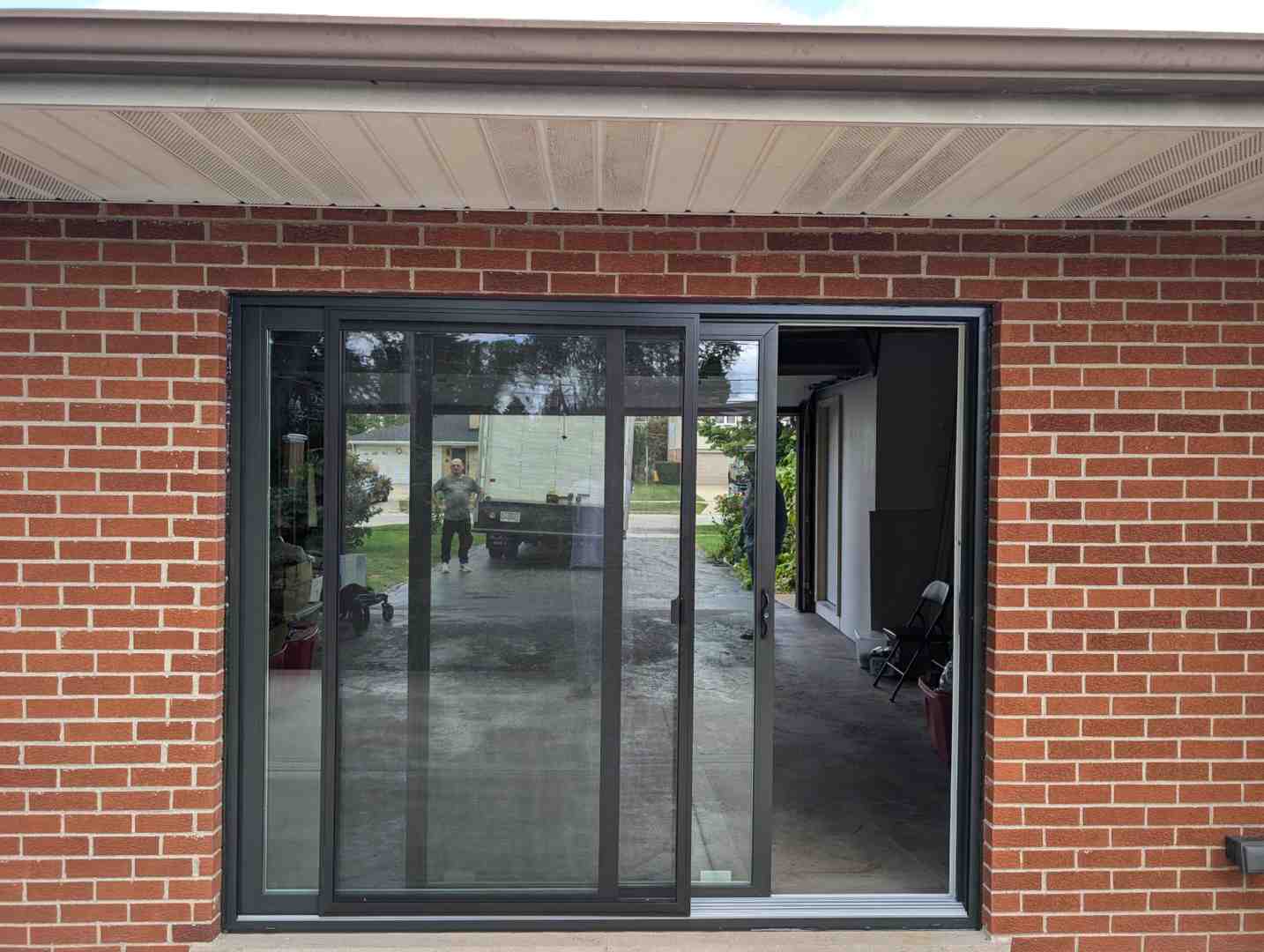
When Your Sliding Door Lock Fails, Here’s What to Do
Aluminium sliding door lock replacement is something many Chicago-area homeowners face — often at the worst possible time.
Here’s a quick overview of the process:
- Identify the problem — sticky latch, loose handle, broken mechanism, or misaligned strike plate
- Measure your existing lock — note hole spacing (commonly 3-15/16 in.), faceplate width, and lock type
- Choose the correct replacement — mortise, hook latch, or multi-point lock that matches your door’s specs
- Remove the old lock — unscrew the handle set and slide out the mortise body
- Install the new lock — insert the new mechanism, adjust the tailbar, and secure the chassis
- Align the strike plate — test the latch and adjust until the door closes smoothly and locks securely
Most standard lock replacements are a manageable DIY project. But if your door frame has shifted — which is common in older Chicago homes after years of freeze-thaw cycles — getting the alignment right can be tricky.
A broken or worn-out lock isn’t just an inconvenience. It’s a real security gap. And with aluminium sliding patio doors being a common entry point for forced entry, the lock mechanism matters more than most homeowners realize.
This guide walks you through the entire process — from spotting the warning signs to installing and aligning your new lock correctly.
I’m Voytek Glab, owner of Perfect Windows & Siding, and with over 20 years of hands-on exterior remodeling experience across the Chicagoland area, I’ve seen how a worn or misaligned lock can compromise both the security and energy efficiency of an aluminium sliding door. Whether you’re tackling aluminium sliding door lock replacement yourself or deciding when to call in a professional, this guide gives you everything you need to make the right call.
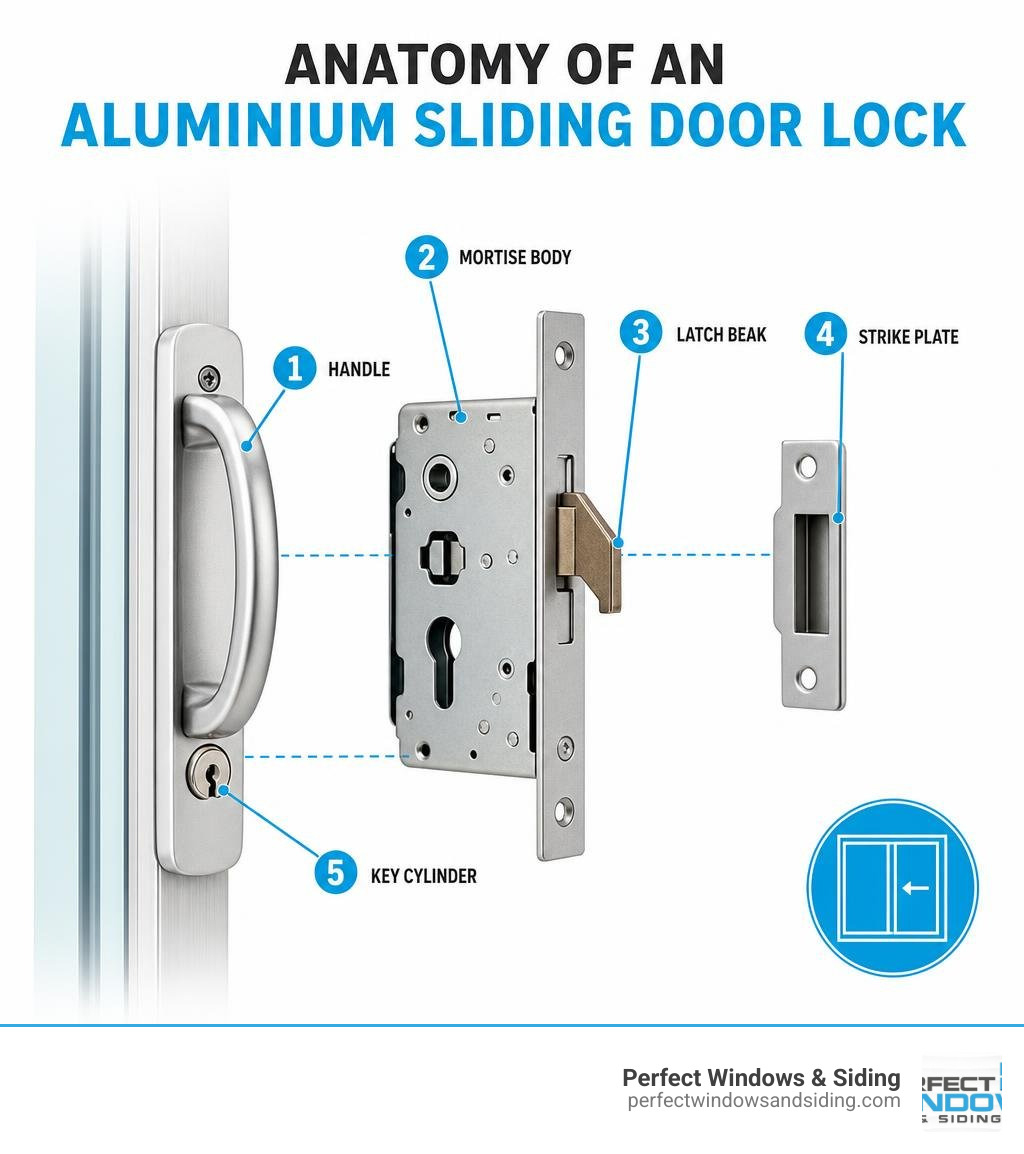
Simple guide to aluminium sliding door lock replacement terms:
Signs You Need an Aluminium Sliding Door Lock Replacement
How do you know when it is time to retire your old sliding door lock? Sometimes the lock completely fails, leaving you unable to secure your home. Other times, the warning signs are more subtle, whispering that a breakdown is just around the corner.
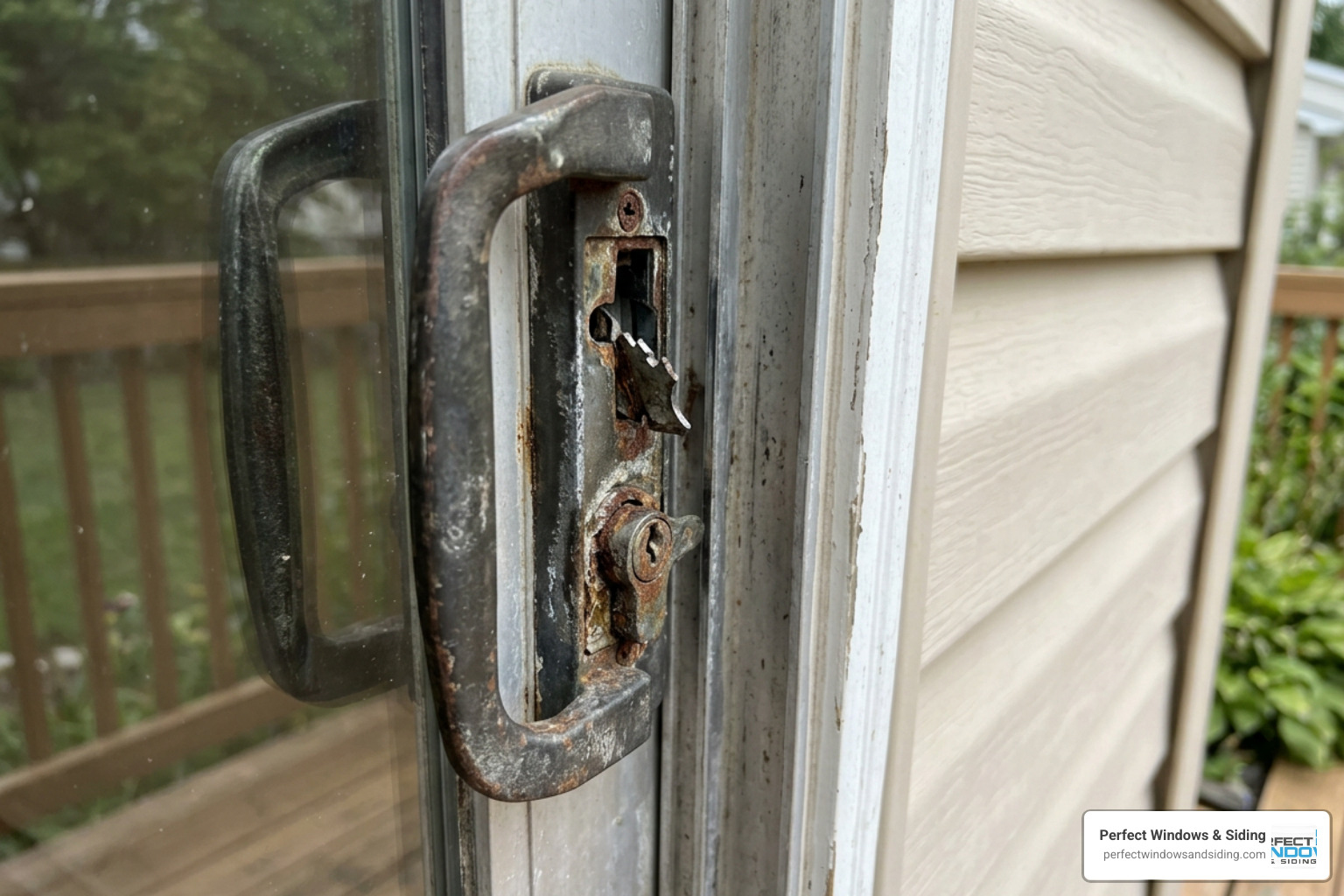
Here are the most common indicators that your lock is ready for replacement:
- Sticky or Stubborn Keyways: If inserting, turning, or removing your key feels like a workout, the internal pins are likely worn or corroded. Chicago’s humid summers and freezing winters can cause moisture to build up inside the lock cylinder, leading to rust.
- Loose or Wobbly Handles: When you grab the handle and it wiggles or feels disconnected from the door frame, the internal chassis or mounting screws have likely stripped. Over time, the constant pulling force weakens the metal.
- Difficulty Latching or Hooking: If you have to lift, push, or slam the door to get the latch to engage with the strike plate, something is seriously misaligned.
- Structural Shifting and Chicago Weather: In our service areas like Des Plaines, IL and Park Ridge, IL, homes experience significant shifting due to the seasonal freeze-thaw cycles. This movement can warp the door frame, throwing the lock and keeper completely out of alignment.
- Worn Rollers Mimicking Lock Issues: Often, homeowners think their lock is broken when the real culprit is a pair of worn-out bottom rollers. If the door does not slide smoothly, it drops in height, causing the lock beak to miss the strike plate entirely. For more details on diagnosing this, check out our guide on sliding door roller issues.
How to Choose the Right Replacement Lock
Choosing a replacement lock is not a one-size-fits-all situation. Sliding doors use highly specific mechanical configurations. A fraction of an inch can make the difference between a secure lock and an expensive paperweight.
| Lock Type | Description | Best For | Security Level |
|---|---|---|---|
| Mortise Lock | Fits entirely inside a pocket (mortise) carved into the door stile. Features adjustable hooks. | Standard residential aluminium and vinyl doors | High |
| Hook Latch (Surface Mount) | Mounts directly on the inside surface of the door frame. Clamps onto a keeper. | Older aluminium doors or thin-profile frames | Moderate |
| Smart Lock (Narrow Profile) | Keyless electronic lock designed specifically for slim aluminium stiles. | Modern homes, keyless convenience | Very High |
When selecting your lock, look for advanced security features designed to resist physical attacks:
- Anti-Lift Beaks: These are opposing hooks that grab the strike plate from both top and bottom. They prevent intruders from using a crowbar to lift the sliding panel out of its tracks.
- Anti-Slam Pins: This feature prevents the locking beaks from extending unless the door is fully closed. It protects the lock mechanism from accidental damage if someone slams the door while the lock is engaged.
- LockAlert Indicators: High-quality locksets, such as the Yale Albany Endeavour Lockset, feature visual status indicators that show at a glance whether the door is securely deadlocked.
Measuring for Your Aluminium Sliding Door Lock Replacement
Before you head to the hardware store or order parts online, you need exact measurements. Grab a tape measure and document the following dimensions:
- Hole Spacing (Center-to-Center): Measure the distance between the installation screw holes on your handle. The industry standard for residential sliding doors is 3-15/16 inches (or 99mm), though some models use 4-15/16 inches. Surface-mounted locks often rely on a 125mm fixing hole spacing.
- Faceplate Width and Length: If you have an internal mortise lock, measure the metal faceplate on the edge of the door. Common widths include 1/2″, 3/4″, 7/8″, and 1″.
- Backset and Lock Depth: This is the distance from the edge of the door to the center of the keyway or thumb turn. Make sure the new lock chassis will fit inside the existing door pocket without hitting the glass.
- Pitching Centers: High-quality systems like Lockwood Sliding Door Hardware often use an 82mm pitching center standard, which simplifies retrofitting across different brands.
Understanding Lock Types: Mortise vs. Hook Latch
The two main physical configurations you will encounter are mortise locks and surface-mounted hook latches.
- Mortise Locks: These are concealed inside the door frame. They are highly secure because the locking mechanism is protected by the aluminium stile itself. They typically use adjustable, spring-loaded hook latch projections.
- Surface-Mount Hook Latches: These sit on the interior face of the door. They are easier to install but are more visible. If you are converting a non-keyed sliding door to a keyed system, an option like the Easilok A10 Sliding Door Lock offers a durable, keyed exterior pull with a robust 90-degree mortise lock design that resolves common locking difficulties.
Step-by-Step Guide to Aluminium Sliding Door Lock Replacement
Replacing your lock is a straightforward process if you have the right tools and take your time.
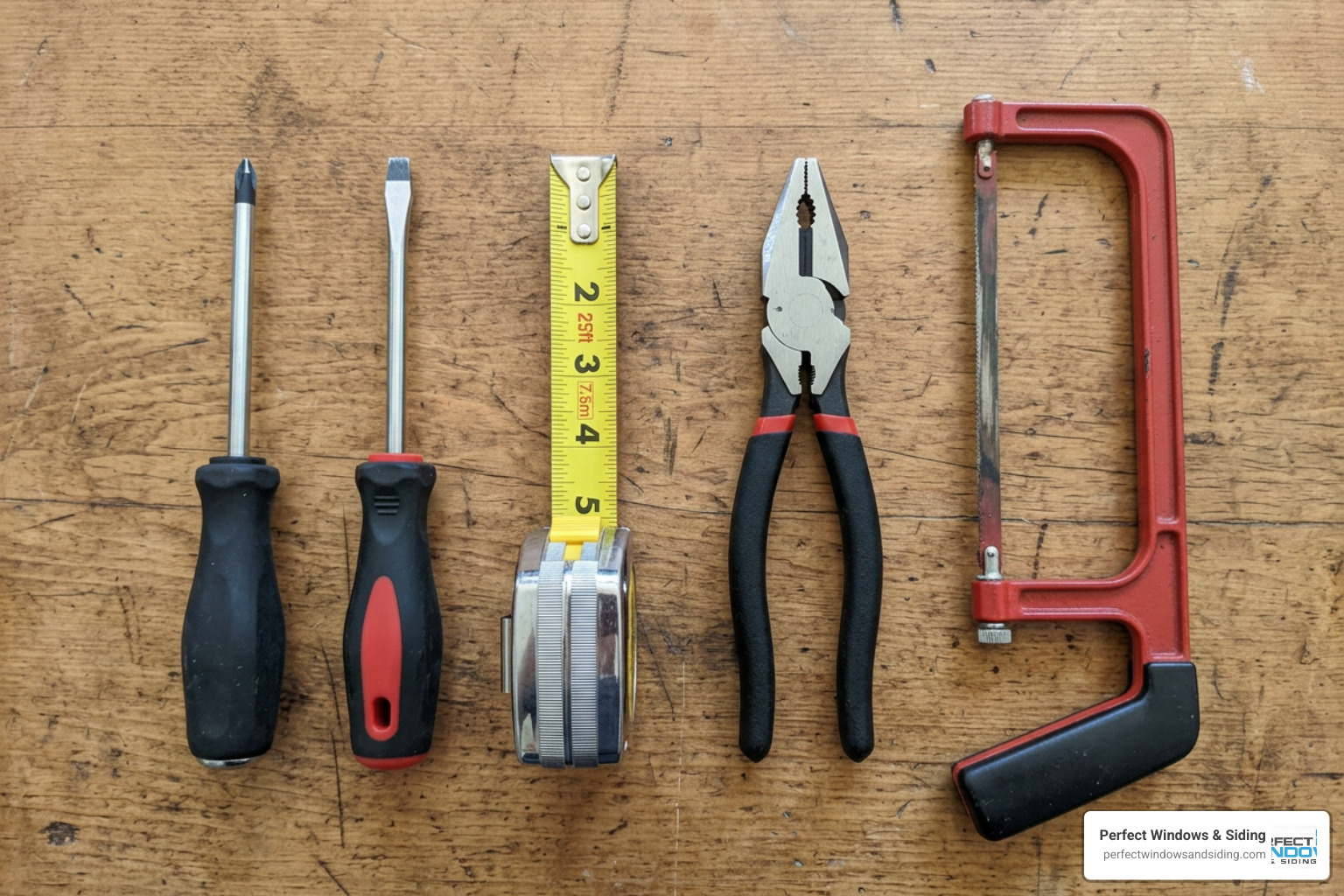
Before starting, gather these essential tools:
- Phillips head and flathead screwdrivers
- Tape measure
- Pliers or a hacksaw (for trimming the tailbar)
- Safety glasses
- Painter’s tape (to hold loose parts in place)
If you are also adjusting the door’s fit, you can find more info on fitting patio doors to ensure the entire assembly operates smoothly.
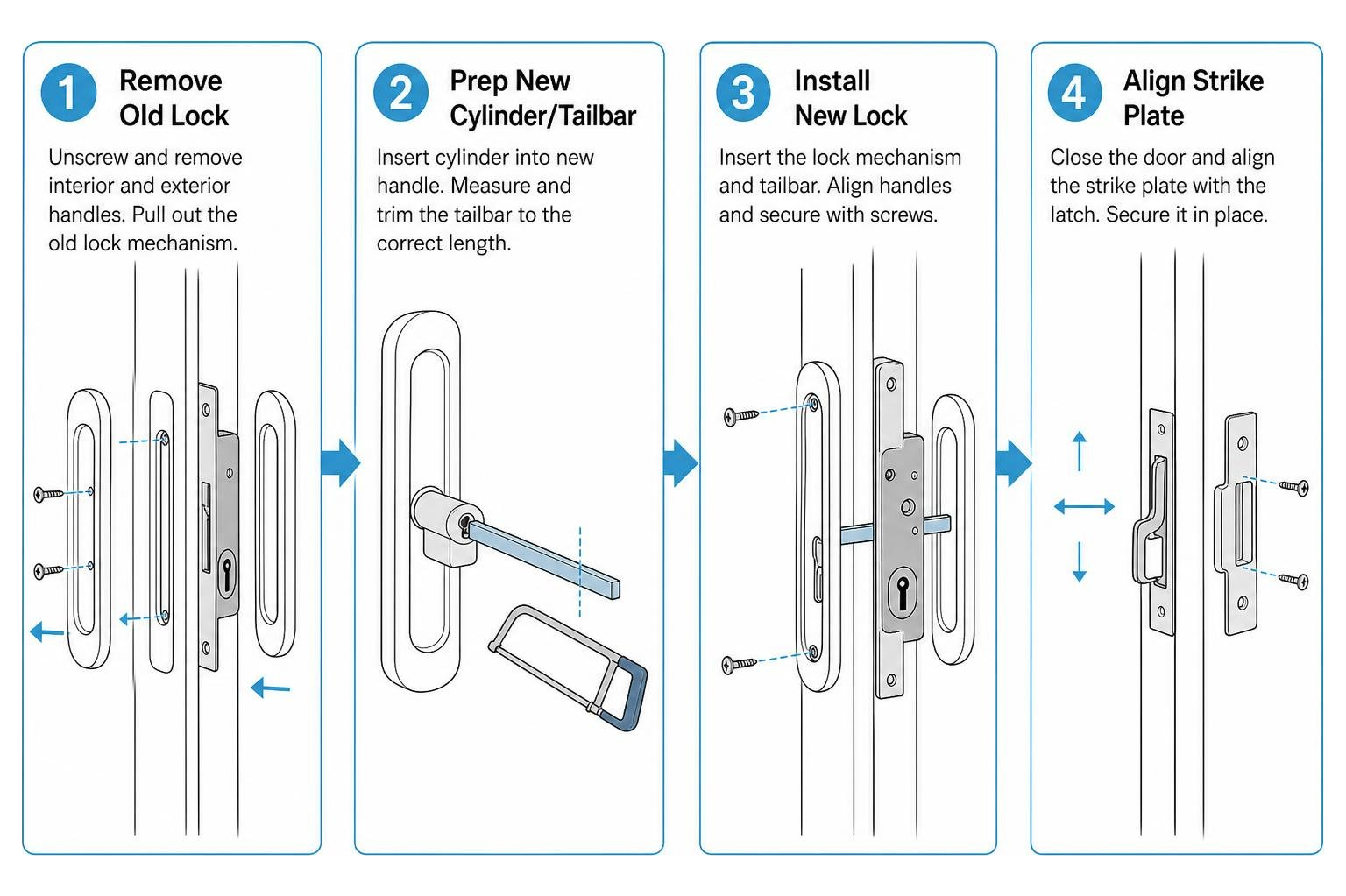
Removing the Old Lock Mechanism
- Secure the Door: Open the sliding door halfway and use painter’s tape or a wedge to keep it from moving while you work.
- Unscrew the Handle: Locate the mounting screws on the interior handle. Remove them completely. Keep a hand on the exterior handle so it doesn’t fall and damage your patio or deck.
- Remove the Handles: Gently pull the interior and exterior handles away from the door stile.
- Extract the Mortise Lock: Locate the screws on the edge of the door that hold the mortise lock body in place. Remove these screws and slide the mortise lock out of its pocket.
- Clean the Pocket: Use a dry cloth or a small brush to clean out any metal shavings, dust, or old lubricant from inside the door pocket. Inspect the frame for any hidden damage.
Installing Your New Aluminium Sliding Door Lock Replacement
- Insert the New Mortise Lock: Slide the new mortise lock body into the pocket on the edge of the door. Secure it with the provided screws, but do not tighten them completely yet.
- Adjust the Tailbar (Spindle): The metal bar (tailbar) that connects the key cylinder or thumb turn through the door must be the correct length. Measure your door thickness. If the tailbar is too long, use pliers or a hacksaw to break or cut it at the marked notches. It should protrude exactly 15mm to 17mm from the inside face of the door.
- Orient the Chassis: Ensure the lock chassis is facing the correct direction. The locking beaks should face the door jamb, and any visual indicators (like red locked indicators) should be at the top.
- Mount the Handles: Position the exterior and interior handles over the mounting holes. Pass the screws through the interior handle, through the door frame and lock chassis, and into the exterior handle.
- Tighten with Care: Tighten the screws evenly using a hand screwdriver. Avoid using a power drill here, as overtightening can warp the aluminium stile or bind the internal locking mechanism.
Aligning the Strike Plate for Smooth Operation
An incredibly secure lock is useless if it cannot engage with the strike plate (also called the keeper) on the door jamb.
- Mark the Alignment: Close the door slowly and observe where the locking hooks meet the strike plate.
- Adjust the Keeper: Most strike plates have vertical slots that allow up to 4mm of adjustment. Loosen the screws, slide the strike plate up or down until it is perfectly centered with the lock hooks, and tighten the screws.
- Test the Latching Force: Close the door and engage the lock. It should operate smoothly without requiring you to push or pull the door frame. Industry standards suggest the latching force should feel effortless.
- Ensure a Tight Seal: A properly aligned lock will pull the door panel snugly into the weatherstripping on the jamb. This prevents drafts and maintains your home’s energy efficiency during harsh Chicago winters.
Troubleshooting Common Installation Issues
Even with careful measurements, you might run into a few bumps during your DIY installation.
Here is how to solve the most common troubleshooting scenarios:
- Screw Holes Do Not Align: If the mounting holes on your new handle set are off by a fraction of an inch, do not force the screws. This can strip the threads. Instead, check if the lock set came with adjustable mounting pillars, or use a file to slightly widen the holes in the aluminium frame.
- The Lock is Hard to Turn: If the key or thumb turn feels stiff after installation, loosen the handle mounting screws slightly. Overtightening can pinch the lock chassis. If that doesn’t work, ensure the tailbar is not too long and binding inside the cylinder.
- Door Frame Warping and Over-Shimming: During original door installations, over-shimming the frame can bow the jamb, causing the lock and strike plate to sit at odd angles. If the frame is warped, you may need to adjust the bottom rollers to tilt the door panel slightly. For severe structural issues, read more info on glass door replacement to see if a complete frame reset is necessary.
Frequently Asked Questions
How do I know if my sliding door lock is secure?
High-security locks are certified under forced entry resistance standards, such as ASTM F588-14. Look for locks constructed of heavy-duty materials like Zamak alloy or 304 stainless steel. Features like opposing anti-lift beaks prevent intruders from prying the door open. For added peace of mind, you can install secondary security devices, such as an adjustable aluminium security bar (ranging from 28 to 48 inches) in the door track.
Can I upgrade my manual sliding door lock to a smart lock?
Yes! Modern smart locks are designed specifically for narrow-profile aluminium sliding doors. These locks integrate with smart home ecosystems (like TTLock or Tuya) and offer fingerprint access, IC cards, and temporary access codes. When upgrading, ensure you choose a smart lock with a narrow mortise size (such as 3085 or 3585) to fit the slim stile of your aluminium door, and verify it has a mechanical key override in case the batteries die.
What should I do if my new lock doesn’t align with the strike plate?
First, check your door rollers. Over time, dust and hair clog the rollers, causing the door to sag. Adjusting the roller screws at the bottom of the door to raise or lower the panel often solves alignment issues instantly. If the door is perfectly plumb and square but the lock still misses, loosen the strike plate on the jamb and adjust its vertical position.
Conclusion
A secure, smoothly operating sliding door is essential for your home’s safety, insulation, and peace of mind. While a basic aluminium sliding door lock replacement is a manageable weekend project, structural shifting, warped frames, or legacy hardware can turn a simple job into a frustrating ordeal.
If you find yourself struggling with alignment, or if your sliding door is drafty, hard to slide, and showing its age, we are here to help.
At Perfect Windows & Siding, we bring over 20 years of dedicated craftsmanship to homeowners across Chicagoland, including Chicago, Des Plaines, Park Ridge, Glenview, and Morton Grove. We specialize in custom door solutions, utilizing high-performance materials designed to withstand local weather extremes, all backed by our lifetime warranty.
Skip the DIY frustration and ensure your home is perfectly secure. Schedule your consultation for professional window and door replacement with our family-owned team today, and let us help you find the perfect, high-security solution for your home.