

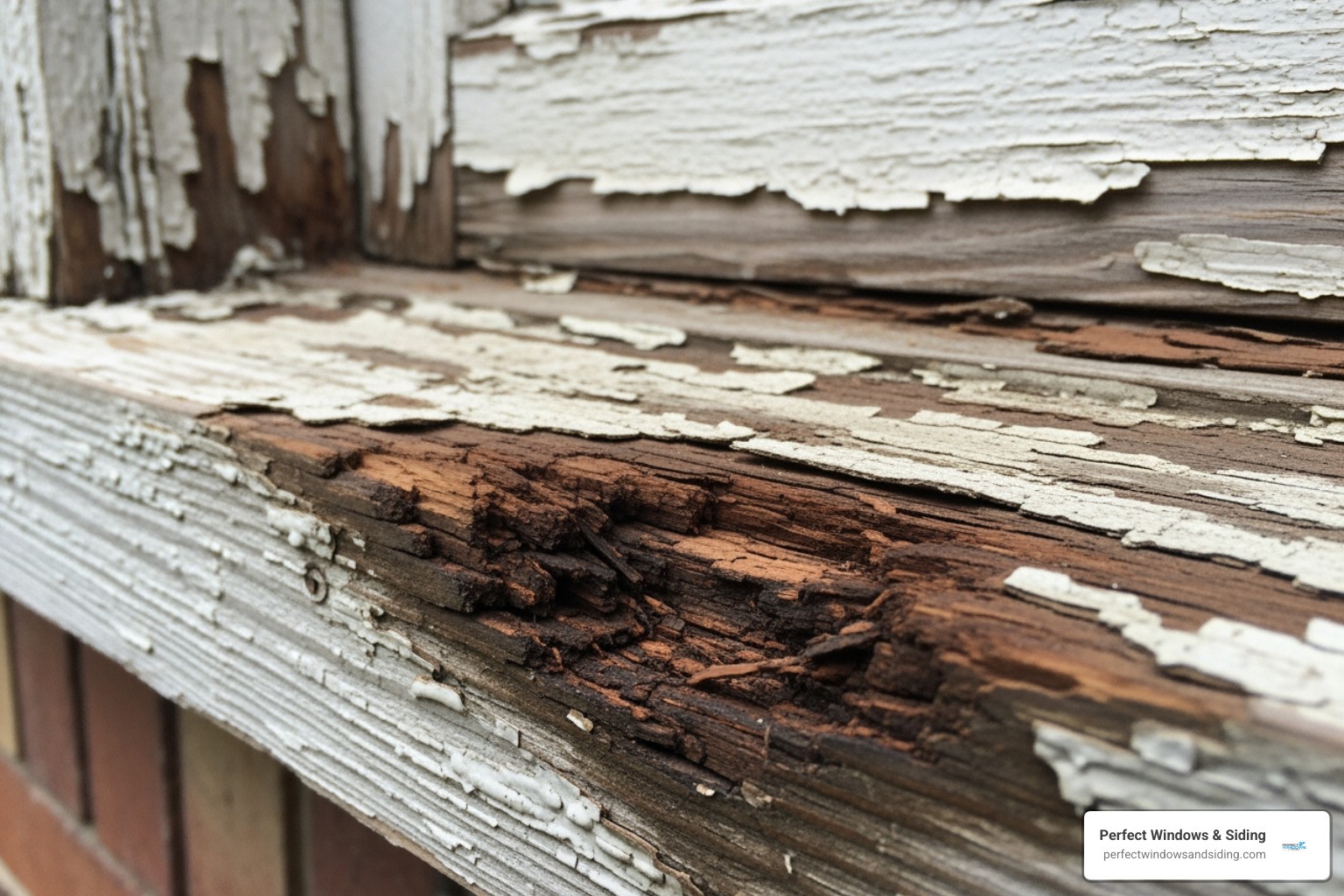
Why Exterior Window Sill Replacement Matters for Your Home
Exterior window sill replacement is a critical repair that protects your home from water damage, improves energy efficiency, and restores curb appeal. Constantly exposed to rain, snow, and UV rays, your sills are a primary defense against the elements. When they fail, water can seep into your walls, causing rot that spreads to the window frame and surrounding structure.
Quick Answer: When to Replace Your Exterior Window Sill
- Soft or spongy wood that yields when pressed
- Peeling paint or dark discoloration indicating moisture
- Visible cracks, splits, or gaps where water can enter
- Mold or mildew growth on the surface
- Drafts or increased energy bills from air leaks
Typical Costs:
- DIY: Under $100 per window (materials only)
- Professional: Several hundred dollars per window
A damaged sill leads to higher heating and cooling bills, potential mold growth inside walls, and can compromise the entire window, turning a simple repair into a full window replacement. The good news is that exterior window sill replacement is a manageable project with immediate benefits. A new sill made from durable PVC, traditional wood, or composite material creates a watertight barrier that protects your home for years.
I’m Voytek Glab, owner of Perfect Windows & Siding. With over 20 years of experience in Chicagoland, I’ve seen how proper sill maintenance saves homeowners thousands. This guide will walk you through everything you need to know.

Essential exterior window sill replacement terms:
Identifying the Problem: When to Replace Your Window Sill
Your window sill is a hardworking shield, deflecting water away from your walls. When it fails, water intrusion, higher energy bills, and structural weakness can follow. The key question is whether to repair a small crack or perform a full exterior window sill replacement. If rot has spread or damage is more than superficial, replacement is the only way to prevent larger problems. If you have other window issues, our window repair services can provide a comprehensive solution.
What Causes Window Sill Rot and How to Prevent It
In Chicagoland, window sill rot is common. It occurs when water and wood meet, allowing fungi to break down the material. Key causes include:
- Poor flashing: Incorrectly installed barriers trap water against the sill.
- Clogged gutters: Overflowing gutters dump water directly onto sills.
- Cracked caulk: Gaps around the frame allow moisture to seep in.
- Unsealed wood: Bare wood absorbs water like a sponge.
Prevention is straightforward. Conduct regular inspections to catch problems early. Keep sills painted and sealed with exterior-grade products, and refresh caulk every few years to maintain a watertight barrier. Finally, keep your gutters clean so water flows away from your windows.
Common Signs Your Window Sill Needs Replacement
Learning to spot warning signs early can save you from expensive repairs. Look for:
- Spongy or soft wood: Gently press a screwdriver against the sill. If it sinks in, rot has set in.
- Peeling or bubbling paint: This indicates moisture is trapped underneath the paint.
- Visible cracks or splits: These are direct pathways for water to enter your home.
- Dark spots or discoloration: Black or brown stains signal long-term water damage.
- Mold or mildew growth: This means the sill is staying wet for extended periods.
- Drafts around your window: A deteriorated sill can create gaps that let air leak through.
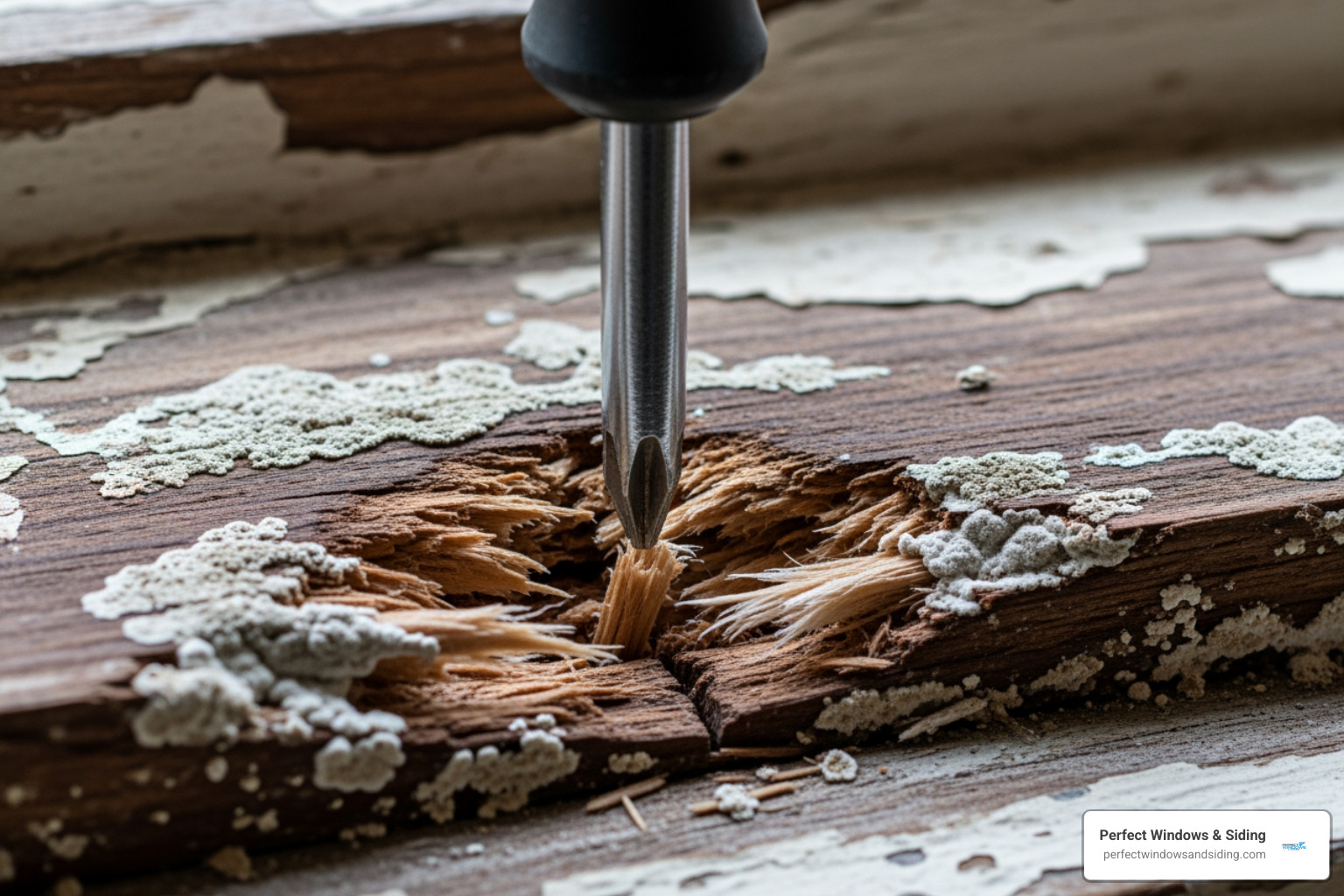
If you see these signs, it’s time to consider an exterior window sill replacement.
Sill Repair vs. Full Window Replacement
The right choice depends on the extent of the damage and the window’s overall condition.
Sill replacement alone is cost-effective when damage is confined to the sill. If the window frame and surrounding wall are solid, and the window operates well, just replacing the sill is the best solution. As a rule, if more than 10% of the sill is rotted, replace it rather than attempting a patch.
Consider a full window replacement if damage extends into the window frame or wall. If the window is old, inefficient, difficult to operate, or has condensation between the panes (a sign of seal failure), replacing the entire unit is more sensible. A modern energy efficient window replacement can significantly cut heating and cooling costs.
Understanding the Costs: DIY vs. Professional Exterior Window Sill Replacement
The cost of exterior window sill replacement varies based on who does the work.
- DIY: Expect to spend under $100 per window for materials like the sill, fasteners, caulk, and paint. This doesn’t include your time or the cost of tools like an oscillating multi-tool.
- Professional: Hiring a pro typically costs several hundred dollars per window, covering materials, labor, and expertise. The price depends on the sill material, installation complexity, and local labor rates.
While DIY saves money upfront, a professional ensures the job is done correctly, preventing future water damage that could lead to more expensive repairs.
Gearing Up: Tools, Materials, and Sill Options
Proper preparation is key to a successful exterior window sill replacement. Gathering the right tools and materials beforehand prevents frustrating mid-project interruptions. Safety is the top priority, so work gloves, safety goggles, and a dust mask are essential. If you’re unsure about measurements, our guide on how to measure a window for replacement can help.

Essential Tools and Materials
Gather the following before you begin:
Tools:
- Safety Gear: Goggles, work gloves, dust mask, ear protection
- Demolition: Pry bar, hammer, oscillating multi-tool, reciprocating or circular saw, chisel, putty knife
- Measuring & Fitting: Tape measure, level, hand plane, sander
- Installation: Drill, caulk gun, paint brushes
Materials:
- Replacement sill
- Exterior-grade screws or nails (galvanized or stainless steel)
- Wood filler or two-part epoxy
- Wood or plastic shims
- High-quality, paintable exterior-grade caulk
- Exterior-grade primer and paint (for wood sills)
- Sandpaper (e.g., 120-grit)
- Minimal-expansion foam sealant
Choosing Your New Sill Material for an Exterior Window Sill Replacement
The material you choose impacts durability, maintenance, and appearance. Here are the most common options for the Chicago climate:
-
Wood: Offers a classic, customizable look. It’s easy to work with for DIY projects but requires regular painting or sealing to prevent rot. Best for historic homes or those who prefer a traditional aesthetic and don’t mind the upkeep.
-
PVC or Vinyl: A low-maintenance champion. PVC is waterproof, will never rot, and doesn’t require painting. It’s a durable, cost-effective choice, though color options are limited and it can become brittle in extreme cold. Ideal if you want to install it and forget it.
-
Composite: The best of both worlds. Made from recycled materials, composites resist weather and mimic the look of wood without the high maintenance. They cost more than wood or PVC but offer a great balance of durability and aesthetics.
-
Stone or Concrete: Virtually indestructible and maintenance-free, offering a high-end look. However, these materials are heavy, expensive, and typically require professional installation.
-
Stainless Steel: Provides unbeatable durability with a modern aesthetic. It’s immune to rot and maintenance-free but is very expensive and doesn’t suit all home styles.
In Chicagoland, PVC and composite sills are popular for their ability to handle freeze-thaw cycles and resist moisture with minimal maintenance. The right material depends on your budget, home style, and how much time you want to spend on future upkeep.
The Step-by-Step Exterior Window Sill Replacement Process
With your tools and materials ready, it’s time to begin. This process transforms a damaged sill into a protective barrier for your home. Before starting, double-check your safety gear. Always work in dry weather, as moisture can compromise the adhesion of sealants and adhesives, leading to future problems.
Step 1: Removing the Old Window Sill
Patience is key to avoiding damage to the window frame or siding.
- Cut Caulk Seals: Use a utility knife to slice through the caulk where the sill meets the window frame and siding.
- Remove Exterior Trim: Gently pry off the casing around the window and the apron below the sill with a flat pry bar. Set them aside if you plan to reuse them.
- Cut the Old Sill: Use an oscillating multi-tool to cut through fasteners. For a rotted sill, cut it into smaller, manageable sections with a reciprocating or circular saw.
- Pry Out Sections: Use a pry bar to carefully lever out the cut sections of the old sill. A hammer and chisel can help with stubborn pieces.
- Clean the Opening: Remove all protruding nails and screws to create a clean workspace. For a visual guide, This Old House offers excellent instructions.
Step 2: Preparing the Window Opening
With the old sill gone, inspect the area to assess the true extent of any damage.
- Clean Thoroughly: Use a shop vacuum and scraper to remove all debris, old caulk, and wood chips.
- Inspect for Rot: Scrape away any soft or rotted wood from the frame until you reach solid material. Carefully check the exposed window frame and sheathing for dark stains or soft spots.
- Repair Minor Damage: If damage is minimal, use a high-quality exterior-grade wood filler or two-part epoxy to fill any voids. Allow it to cure completely as per the manufacturer’s instructions.
- Level the Base: Use a level to check the sill space. If it’s uneven, use shims to create a solid, level foundation for the new sill.
Step 3: Cutting and Fitting the New Sill
Precision is crucial for a watertight fit. Measure twice, cut once.
- Measure and Mark: Use the old sill as a template if possible. Otherwise, carefully measure the length, width, and depth of the opening. Account for the overhang (sill nose) and side extensions (horns).
- Cut the New Sill: Transfer your measurements to the new material. Use a circular saw for straight cuts and a jigsaw for notches.
- Create a Slope: The sill must have a 5- to 15-degree downward slope to shed water away from the house. Match the slope of the old sill or use a protractor to set the angle.
- Notch and Dry-Fit: Carefully cut the notches for the horns to ensure a snug fit around the window jambs. Test-fit the sill repeatedly, making small adjustments with a hand plane or sander until it slides in smoothly and has the correct slope.
Step 4: Installing and Securing the New Sill
Proper installation ensures your exterior window sill replacement will last for decades.
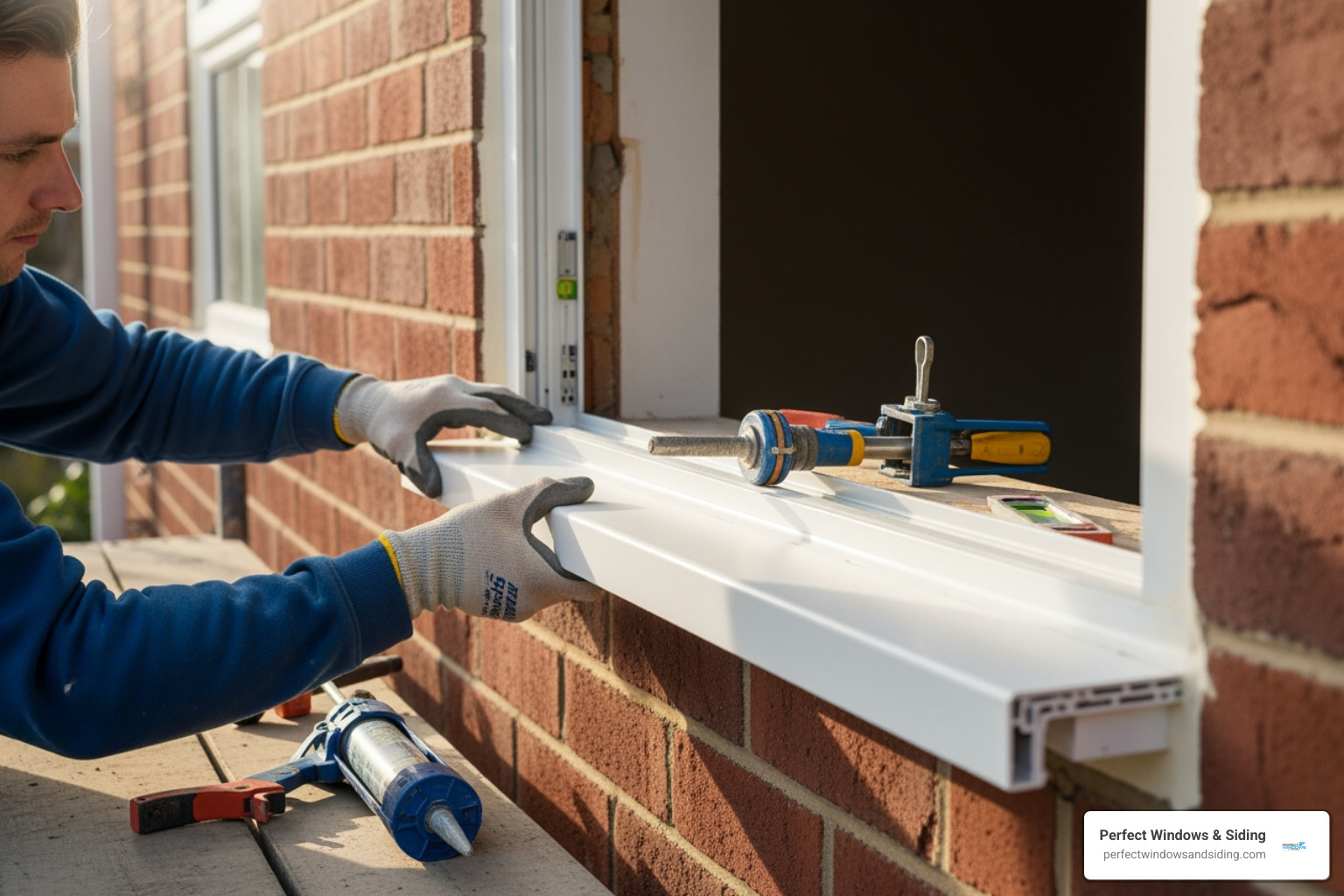
- Apply Adhesive: Run a generous bead of waterproof construction adhesive along the prepared sill space.
- Position the Sill: Carefully slide the new sill into place, pressing it firmly into the adhesive. Ensure it is seated properly.
- Check for Level and Slope: Use a level to verify the sill is horizontal from side to side while maintaining its downward slope from back to front. Adjust with shims if needed.
- Fasten the Sill: Drill pilot holes to prevent splitting. Secure the sill with 3.5-inch exterior-grade deck screws, spaced about 16 inches apart. Drive the screw heads slightly below the surface to be filled later.
Achieving a Professional and Lasting Finish
These finishing touches are not optional; they are the critical barrier that protects your new sill and home from the weather. This final stage separates a good repair from a great one.
Weatherproofing and Sealing Your New Sill
Caulk is your home’s raincoat. Without a proper seal, even a perfectly installed sill will fail.
- Apply Exterior Caulk: Use a high-quality, paintable exterior caulk to apply a continuous bead along every joint where the sill meets the window frame and siding.
- Tool the Caulk: Immediately after application, use a caulking tool or a wet finger to press the caulk into the joint. This creates a smooth, clean, and effective seal.
- Fill Fastener Holes: Use exterior-grade wood filler to cover any screw or nail holes. Once dry, sand the spots flush with the surface for a professional look.
Finishing and Painting for Maximum Protection
This step armors your new exterior window sill replacement against moisture and UV damage.
For wood sills, lightly sand the entire surface with 120-grit sandpaper after all fillers and caulk have cured. Then, apply an exterior-grade primer to all exposed wood surfaces, including the top, front, and underside. Finish with two coats of high-quality exterior paint, ensuring complete coverage. This paint layer is the sill’s primary defense against the elements.
For PVC or composite sills, painting is not usually required. However, check the manufacturer’s recommendations, as a UV-protective coating may be beneficial for sills with intense sun exposure.
Finally, once everything is completely dry, carefully reinstall any exterior trim you removed. Secure it with galvanized nails and fill the nail holes with caulk for a seamless finish.
Long-Term Maintenance for Your New Window Sill
A little attention will ensure your new sill has a long lifespan.
- Inspect Twice a Year: Check for cracked paint or failing caulk in the spring and fall.
- Clean Regularly: Wash sills with mild detergent and water to prevent dirt and moisture buildup.
- Check Caulk Every Few Years: Scrape out and reapply any caulk that is cracking or pulling away.
- Touch Up Paint (for wood): Sand and repaint any chipped or bare spots immediately to maintain the protective barrier.
Following these steps will help your exterior window sill replacement withstand Chicago’s weather. For more tips, see our fall maintenance tips for your windows and siding.
Frequently Asked Questions about Window Sills
What is the difference between a window sill and a window ledge?
Though often used interchangeably, these terms refer to different parts. The window sill is the exterior, structural component at the bottom of the window frame. Its functional purpose is to shed water away from the wall. The window ledge (also called a stool) is the decorative interior trim piece at the bottom of the window, where you might place a plant. An exterior window sill replacement deals specifically with the functional outdoor piece.
Can I replace just the sill without removing the entire window?
Yes, in most cases, you can replace only the exterior window sill without removing the entire window, which saves significant time and money. The process involves carefully cutting the old sill away from under the window frame and sliding a new one in. However, this is only feasible if the rot or damage is confined to the sill itself and has not spread to the main window frame or surrounding wall. Some modern windows have integrated sills that cannot be replaced separately. If damage is extensive, a full window replacement may be the more cost-effective solution.
What is a “sill nose” and why is it important?
The sill nose (or nosing) is the front edge of the exterior window sill that overhangs the siding. This small feature is critical for water management. It acts as a drip edge, forcing rainwater to drop to the ground instead of running down the face of your siding. Without a properly designed nose, water could seep behind the siding or pool at the base of the window, leading to moisture damage. During an exterior window sill replacement, ensuring the nose extends about 1/2 to 3/4 of an inch beyond the siding is crucial for protecting your home.
Conclusion
Your window sills are a critical defense against Chicago’s weather. When they fail, the consequences range from rising energy bills to serious water damage. An exterior window sill replacement is a direct solution that restores your home’s protection, improves curb appeal, and seals energy-wasting gaps.
For the hands-on homeowner, this is an achievable project. With the right materials and careful attention to the steps outlined, you can complete a professional-quality installation. However, if you find rot that has spread into the window frame or wall, the repair becomes more complex.
If you lack the time or tools, or if the damage is extensive, professional help is the best course of action. For complex jobs or a full window replacement, the experienced team at Perfect Windows & Siding brings over 20 years of expertise to homes throughout the Chicago area. Whether you do it yourself or call us, addressing a failing sill promptly is key to protecting your home from more significant problems down the road.