

What to Expect When Installing a Sliding Glass Door in 2026
Installing a sliding glass door is one of the most impactful upgrades homeowners can make to enhance their patio space — and the scope of the project depends heavily on your home’s unique structure.
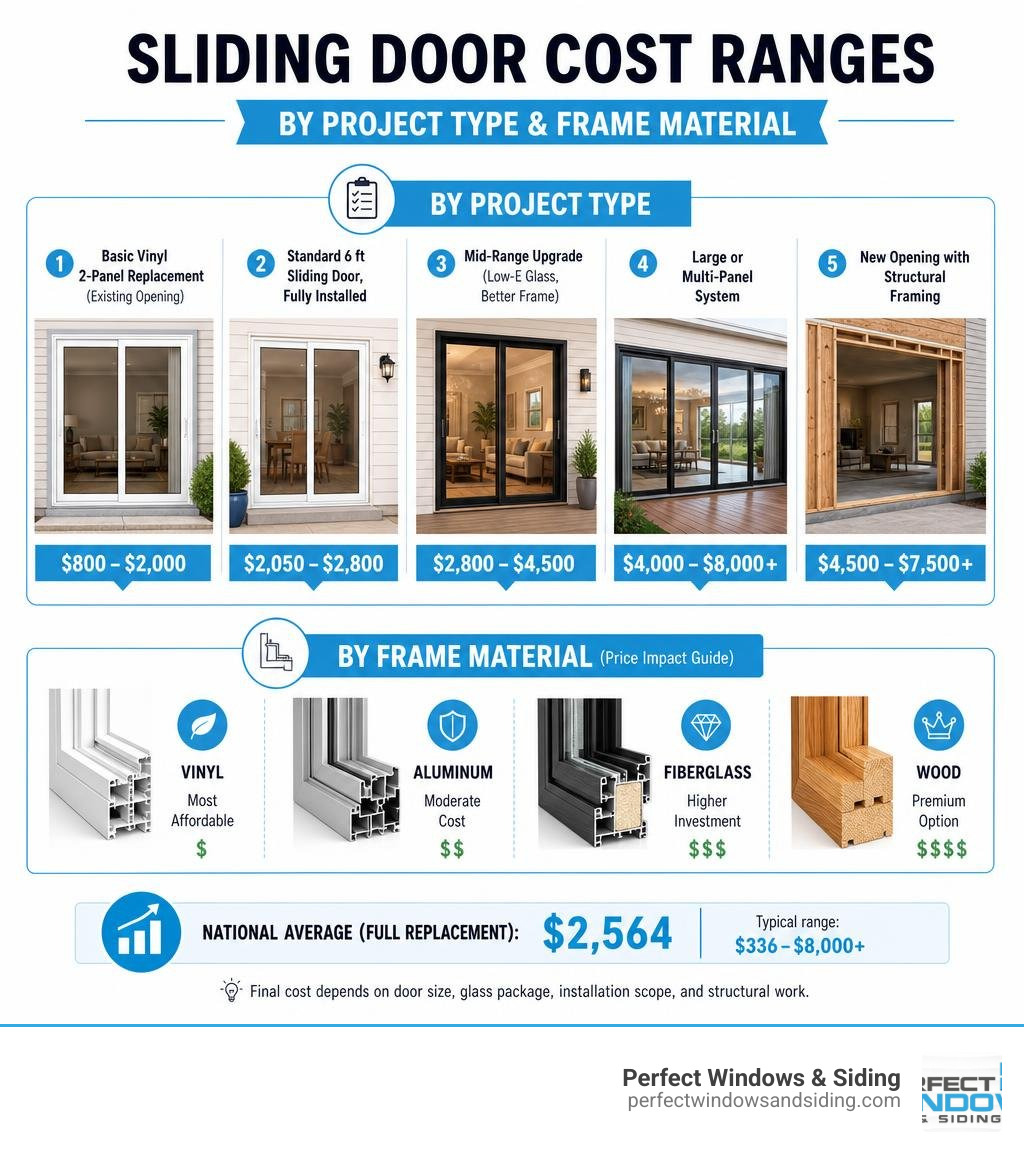
Here’s a quick snapshot of different project types and what they entail:
| Project Type | Key Considerations |
|---|---|
| Basic vinyl 2-panel replacement (existing opening) | Straightforward swap, preserves existing trim and siding |
| Standard 6 ft sliding door, fully installed | Standard sizing, focuses on energy-efficient glass upgrades |
| Mid-range upgrade (Low-E glass, better frame) | Enhanced thermal performance and durable frame materials |
| Large or multi-panel system | Maximizes natural light, requires robust structural support |
| New opening with structural framing | Involves cutting new walls, adding headers, and full integration |
A successful installation depends on several factors, including the installation scope, frame material, glass package, and whether structural work is involved.
To ensure your project is completed to the highest standards, it is essential to understand the craftsmanship and planning required. This guide breaks down exactly what goes into a professional installation — so you can plan your project with confidence.
I’m Voytek Glab, owner of Perfect Windows & Siding, and with over 20 years of hands-on exterior remodeling experience across the Chicagoland area, I’ve helped hundreds of homeowners understand the installation process and choose the best solutions for their homes. Let’s walk through what actually drives a successful installation.
Sliding door terms to learn:
What Dictates the Scope of Sliding Door Projects?
When planning a home improvement project in the Chicago suburbs, the scope of work is the single largest variable. Homeowners are often surprised by how much two seemingly identical doors can differ in installation complexity.
The primary distinction lies in whether your project is a straightforward replacement or a new-construction installation:
- Replacement (Existing Opening): If you are swapping an old, drafty door for a new one of the exact same size, the structural opening is already there. The crew removes the old panels and frame, inspects the subfloor for water damage, prepares the opening, and slides the new unit in. This is highly efficient and preserves your interior drywall and exterior siding.
- New-Construction Installation (New Opening): Creating an indoor-outdoor transition where a solid wall or standard window currently exists is a major structural undertaking. This requires engineering a header to support the weight of the wall above, cutting through exterior siding, rerouting electrical wiring, and completely rebuilding the surrounding wall.
In the freeze-thaw climate of Chicagoland—from Des Plaines to Park Ridge—structural integrity is paramount. Heavy snow loads mean headers must be sized precisely to prevent the wall from sagging and crushing your new sliding door frame.
To explore different configurations based on your specific project parameters, you can use this interactive sliding door calculator to see how different setups alter your project requirements.
How Material Selection Impacts Sliding Door Performance
The material you choose for your door frame dictates the door’s lifetime performance, thermal efficiency, and maintenance requirements.

Here is how the four primary frame materials compare:
Vinyl Frames
Vinyl is the most popular residential choice, representing roughly 60% of sliding glass door sales. It is highly valued for its moisture resistance, excellent thermal insulation, and the fact that it never requires painting. High-quality vinyl frames utilize multi-chambered profiles to trap air and prevent heat transfer, making them excellent for keeping Chicago winters outside. If you are looking for a reliable, standard size that delivers great thermal performance, a 5ft sliding glass door option installation is an excellent starting point.
Fiberglass Frames
Fiberglass is the gold standard for durability and longevity. Unlike vinyl, fiberglass expands and contracts at virtually the same rate as the glass panes it holds. This matching thermal expansion rate prevents seal failures and keeps the frame perfectly square for decades. Fiberglass is incredibly strong, allowing for slimmer frame profiles and larger glass areas. To understand why so many homeowners in areas like Lake Zurich and Hawthorn Woods are upgrading, read our detailed guide on fiberglass patio doors.
Wood Frames
Wood offers unmatched classic beauty and natural insulating properties. It provides a warm, high-end aesthetic for traditional homes in Wilmette and Hinsdale. However, wood frames require routine staining or painting to protect them from moisture damage, rot, and warping. Many homeowners choose wood-clad options, which feature a real wood interior paired with a protective aluminum or fiberglass exterior shell.
Aluminum Frames
Aluminum is lightweight, structurally rigid, and ideal for massive multi-slide or stacking door systems. However, because metal conducts heat quickly, standard aluminum frames perform poorly in cold climates. To use aluminum in northern Illinois, you must select thermally broken frames, which feature an insulating barrier between the interior and exterior metal frames to prevent frost buildup and energy loss.
Structural Modifications and Sliding Door Openings
When you modify the structure of your home, the labor and material requirements naturally scale. A standard sliding door cannot simply be popped into a newly cut hole in your wall. The structural physics of your home require careful engineering.
Here is what our professional crews address during a structural installation:
- Load-Bearing Headers: The header is a heavy horizontal beam that spans the top of the door opening, transferring the weight of the roof and upper floors to the side studs. For standard 5-foot or 6-foot openings, double-layered lumber headers are common. For wider multi-slide or stacking doors (8 feet to 16 feet), we must install engineered laminated veneer lumber (LVL) beams to support the massive span.
- Waterproofing and the Shingle Principle: Cutting into your home’s exterior envelope means disrupting the water-resistive barrier (housewrap). We apply self-adhering flashing tape starting from the bottom sill and working upward, ensuring each layer overlaps the one below it. This “shingle principle” guarantees that driving rain cannot seep behind your siding.
- Drywall, Siding, and Trim Integration: Once the door is structurally secured, the interior drywall must be patched, taped, sanded, and painted. On the outside, your siding (whether vinyl, wood, or fiber cement) must be neatly trimmed back, flashed, and finished with color-matched exterior casing.
Because these tasks involve advanced carpentry, structural engineering, and precision sealing, they require a highly skilled team. You can learn more about our comprehensive structural approach by visiting our dedicated page on exterior door installation Chicago.
Key Factors Influencing Your Sliding Door Selection
Beyond frame materials and structural framing, several customizable options will influence your final installation project.
Glass Packages and Energy Efficiency
Since a sliding door is essentially a giant wall of glass, your choice of glazing has a massive impact on your home comfort and utility bills. Single-pane glass is obsolete for exterior use. Today’s standard is double-pane glass, but triple-pane glass is increasingly popular for maximum sound reduction and thermal insulation.
- Low-E (Low-Emissivity) Coatings: This microscopic metallic layer is applied to the glass surfaces. It reflects infrared heat, keeping your furnace heat inside during winter and blocking solar heat gain during summer.
- Argon Gas Fill: Inserting dense argon gas between the glass panes provides far superior insulation compared to plain air, reducing convective heat transfer.
Security and Hardware Upgrades
A sliding door is a primary entry point, making security a top priority. Standard latches can sometimes be vulnerable, which is why we recommend multi-point locking systems that secure the door into the frame at multiple heights. Additional security features like foot locks, heavy-duty security bars, and impact-resistant glass provide peace of mind.
To help you compare your frame options, here is a breakdown of how the materials perform across key categories:
| Frame Material | Thermal Efficiency | Maintenance Level | Structural Strength | Longevity |
|---|---|---|---|---|
| Vinyl | Excellent | Very Low | Moderate | 20–25 Years |
| Fiberglass | Outstanding | Very Low | Extremely High | 30–50 Years |
| Wood (Clad) | Great | Moderate | High | 30+ Years |
| Thermally Broken Aluminum | Moderate | Low | Extremely High | 30–40 Years |
To customize your project scope and view regional installation details, you can refer to the Homewyse installation estimator, which outlines labor and material distributions for various zip codes.
Why Professional Installation Outperforms DIY
While a skilled homeowner can handle many weekend projects, installing an exterior sliding glass door is a task best left to licensed professionals. Sliding doors are heavy, awkward, and require absolute precision to function correctly.
Here is why professional craftsmanship makes all the difference:
1. The Importance of Sill Pans and Flashing
The number one cause of sliding door failure isn’t the door itself—it’s water damage beneath the door. Without a sloped PVC sill pan and flexible flashing tape installed at the rough opening, water will eventually find its way into your subfloor, rotting out joists and creating mold. Our team ensures a completely waterproof barrier before the door frame is ever set.
2. Perfect Alignment and Squareness
If a sliding door frame is out of plumb or level by even 1/16 of an inch, the heavy glass panels will not slide smoothly. They will bind, drag, wear out the rollers prematurely, and prevent the locking mechanism from engaging securely. We use precision levels, shims spaced every 12 to 18 inches, and continuous checks to ensure the frame is perfectly square.
3. Avoiding the High-Expansion Foam Trap
Standard expanding foam insulation can exert immense pressure as it cures. If an installer uses high-expansion foam around a door frame, it will bow the vinyl or wood jambs inward, binding the door and permanently ruining the unit. We use specialized low-expansion polyurethane foam designed specifically for windows and doors.
4. Protecting Your Lifetime Warranty
Most premium door manufacturers will void their product warranty if the door is installed incorrectly. By partnering with an experienced, licensed, and insured contractor, you protect your investment. At Perfect Windows & Siding, we back our craftsmanship with a lifetime warranty, ensuring your home remains protected.
If you want to ensure your installation is handled by experienced professionals who understand the unique structural demands of Chicagoland homes, explore our services for door replacement Chicago.
Frequently Asked Questions about Sliding Door Installation
How long does a professional sliding door installation take?
For a standard replacement in an existing opening, a skilled two-person crew can complete the installation in 4 to 8 hours. This includes removing the old door, preparing the opening, waterproofing, setting the new unit, insulating, and installing the interior and exterior trim.
If your project requires structural modifications—such as cutting a new opening, framing a new header, or rerouting utilities—the process typically takes 1.5 to 3 days to ensure structural integrity and a flawless finish.
What are the signs that a sliding door needs to be replaced rather than repaired?
While minor issues like worn-out rollers can sometimes be addressed with a simple repair, certain signs indicate that a full replacement is necessary:
- Draftiness and High Utility Bills: If you feel cold air rushing in during winter, the seals have likely failed.
- Condensation Between the Panes: Fogging or moisture trapped inside the glass indicates that the insulated glass seal is broken, destroying its energy efficiency.
- Structural Warping: If the frame has warped or sagged, the door will remain difficult to operate regardless of roller adjustments.
If you are experiencing minor sticking issues on an otherwise solid door, you can review our guide on diy sliding door roller replacement made simple to see if a quick fix is possible.
Does a new sliding glass door improve home energy efficiency?
Yes, dramatically. Older sliding doors are often major sources of energy loss due to single-pane glass, worn weatherstripping, and uninsulated metal frames. Modern sliding doors feature advanced thermal breaks, multi-pane glass packages, Low-E coatings, and argon gas fills.
Upgrading to an Energy Star-certified sliding door can significantly reduce your monthly heating and cooling demands. For a look at the top-performing, climate-specific options designed to withstand the extreme temperature swings of our region, check out our guide on the best patio and sliding doors for Chicago.
Conclusion
Investing in a new sliding glass door is one of the most impactful ways to elevate your home’s comfort, security, and natural light. However, the key to long-term satisfaction lies in combining a high-quality door frame with flawless, professional installation.
At Perfect Windows & Siding, we bring over 20 years of dedicated local experience to every project. As a family-owned business, we don’t believe in one-size-fits-all solutions. We provide custom-tailored installations, premium materials, and a lifetime warranty to give you absolute peace of mind.
Whether you are in Des Plaines, Park Ridge, Morton Grove, or anywhere else in the Chicagoland area, we are here to help you make the right choice for your home.
Ready to take the next step? Schedule your consultation with our expert team today to get a free estimate for your sliding door project.