

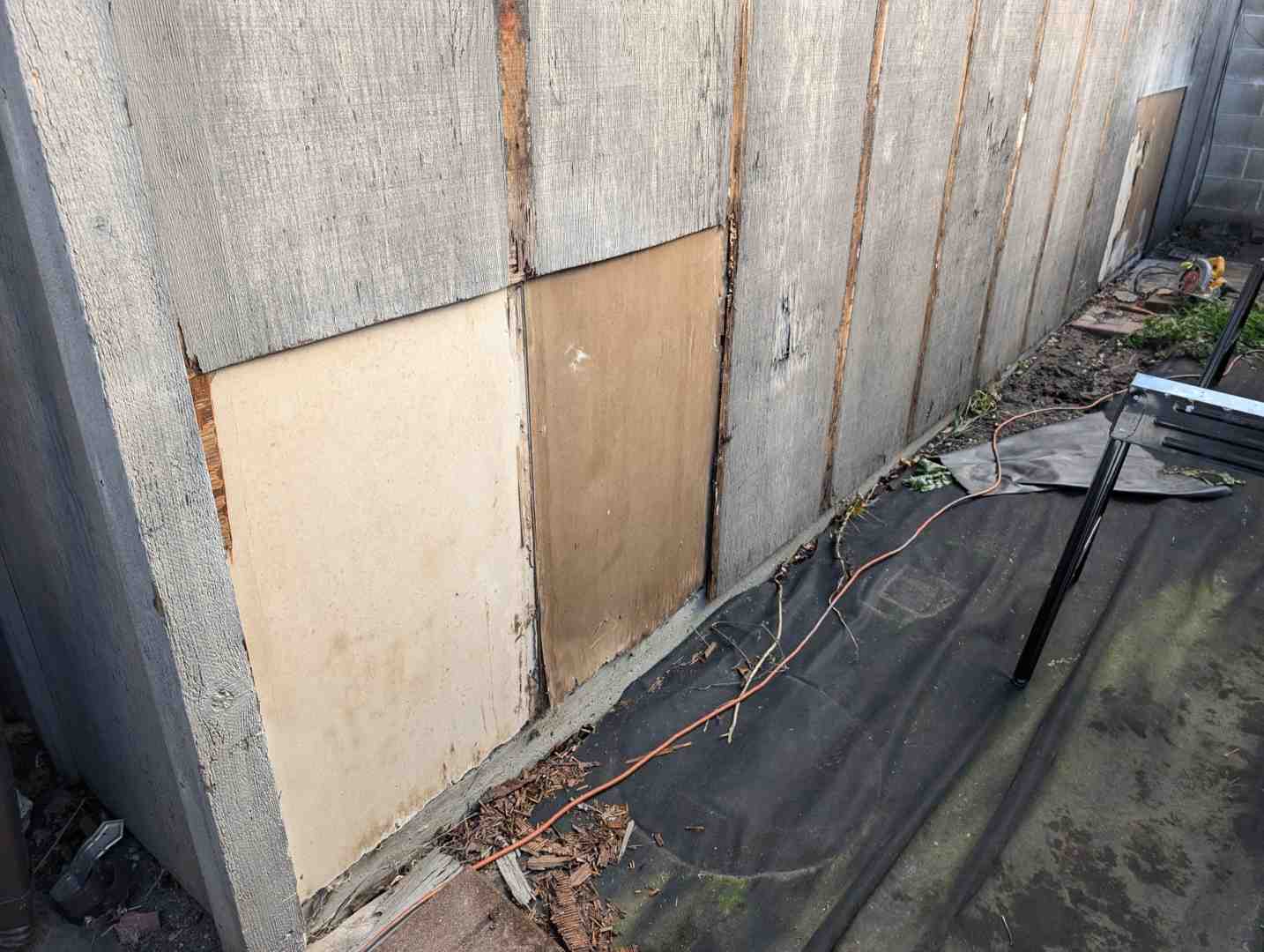
Why Replacing Broken Siding Is More Urgent Than It Looks
Replacing broken siding is something most homeowners can tackle themselves — if the damage is small, isolated, and caught early.
Here’s a quick summary of how it works:
- Assess the damage — Is it a small hole, a cracked panel, or widespread warping?
- Choose repair or replacement — Holes under 1 inch can often be patched. Larger damage usually means swapping the whole panel.
- Gather your tools — You’ll need a zip tool, pry bar, tin snips, replacement panel, and siding nails.
- Remove the damaged panel — Unlock the panel above it, pull the nails, and slide out the broken piece.
- Cut and install the new panel — Leave room for expansion. Never nail it tight.
- Relock the upper panel — Snap it back into place and check the alignment.
That’s the short version. The full guide below walks you through every step in detail.
A small crack or a quarter-sized hole might not seem like a big deal. But left alone for even one season, that opening becomes a path for water, insects, and mold to move in behind your walls. In the Chicago area, where freeze-thaw cycles put constant stress on exterior materials, even minor siding damage can escalate fast.
The good news? A single broken panel is one of the more manageable home repairs a homeowner can do. You don’t need a full crew or specialized equipment — just the right tools, the right technique, and an honest look at what’s behind the wall.
I’m Voytek Glab, owner of Perfect Windows & Siding, and after 20+ years of hands-on siding work across the Chicagoland area, I’ve seen how replacing broken siding early prevents severe structural damage down the road. This guide covers everything I’d tell a homeowner before they pick up a zip tool.
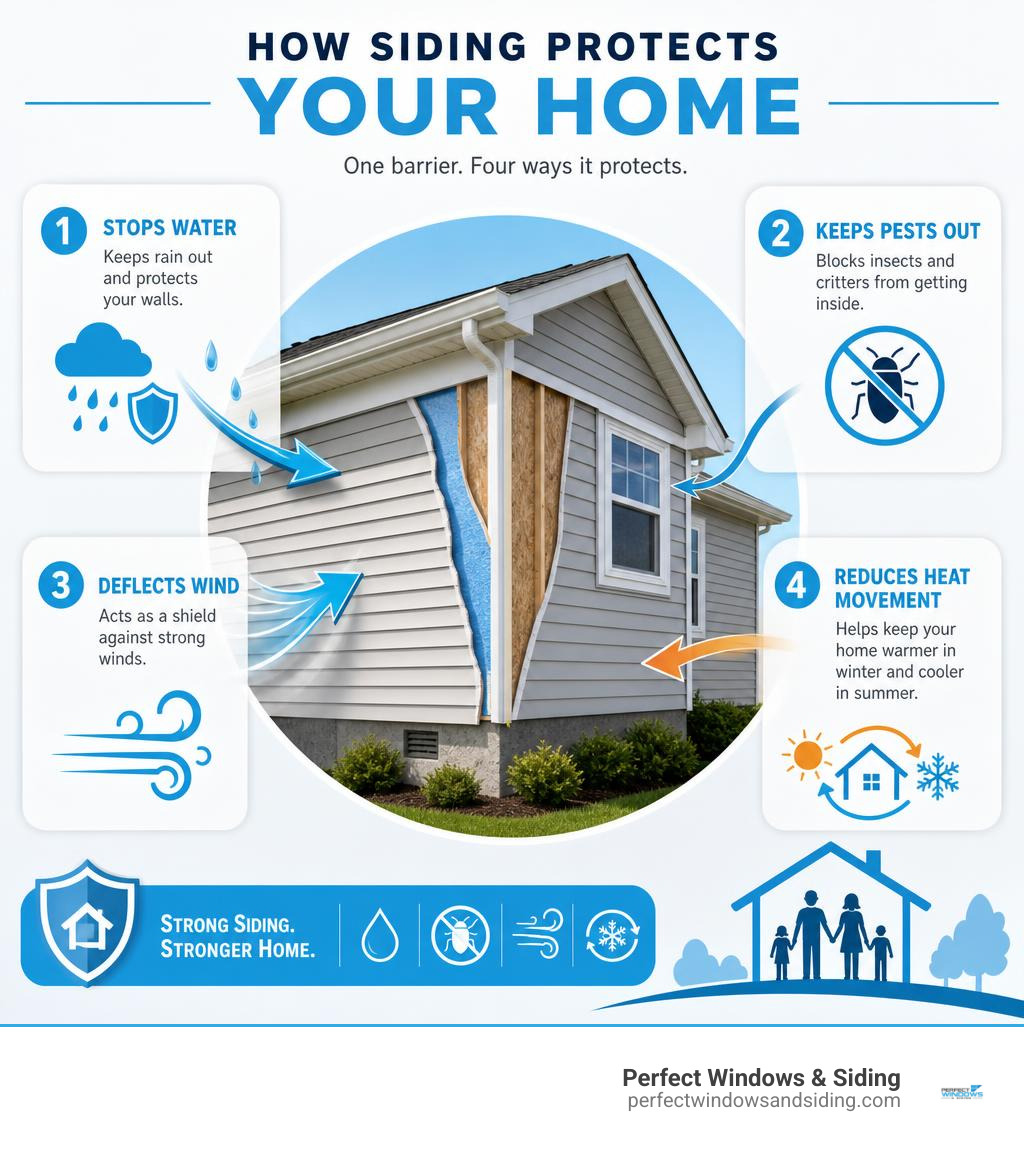
Basic replacing broken siding glossary:
Inspect the Damage Before You Start
Before you remove anything, slow down and inspect the wall like a detective. Siding damage is not always limited to the piece you can see. A cracked vinyl panel may be simple impact damage, or it may be a clue that the wall behind it has moisture, movement, or fastening issues.
Look for:
- Cracked or split panels
- Hail dents or punctures
- Warped or wavy siding
- Loose seams or panels that rattle in the wind
- Gaps near windows, doors, corners, hose bibs, and vents
- Pest entry points
- UV fading or brittle siding
- Melted or distorted panels from grills or reflected heat
- Staining, mold marks, or swelling near the damaged area
If the damage is isolated and the surrounding siding still feels flexible, a DIY panel replacement may be reasonable. If panels crumble when touched, the wall feels soft, or you see moisture staining, pause before continuing. That may be a bigger exterior envelope issue.
For more guidance on deciding whether a repair is part of a larger exterior improvement, see our Siding Repair Upgrades resource.
Most Common Causes of Vinyl Siding Damage
Vinyl siding is durable, but it is not invincible. In Chicagoland, we commonly see damage caused by:
- Hail and wind-driven debris: Storms can crack panels or knock seams loose.
- Tree branches: Branches scraping the wall can gouge or break the siding.
- Sports and everyday impacts: Baseballs, ladders, bikes, garbage cans, and lawn equipment all leave their mark.
- Grill heat: A grill placed too close to the house can warp or melt vinyl.
- Reflected window heat: Concentrated sunlight reflecting from nearby glass can distort panels.
- Freeze-thaw stress: Water gets behind loose areas, freezes, expands, and makes damage worse.
- Improper fastening: Vinyl needs to move. If it is nailed too tightly, it can buckle.
- UV exposure and age: Older siding becomes more brittle and more likely to crack.
- Moisture behind the siding: Poor flashing or damaged house wrap can lead to hidden wall problems.
One broken panel is often just one broken panel. But when several panels are warped, faded, loose, or brittle, the siding system may be reaching the end of its useful performance.
When to Patch a Hole vs Replace the Whole Panel
Not every ding requires a full panel replacement. The right choice depends on the size and type of damage.
A patch may work when:
- The hole is very small, generally under 1 inch
- The panel is still flexible and otherwise intact
- There are no splits through the locking edge
- The profile is not distorted
- The location is not taking direct water exposure
- The repair can be sealed cleanly with exterior-grade filler or caulk
Replacement is usually better when:
- The hole is larger than 1 inch
- The panel is cracked across its face
- The top or bottom locking edge is broken
- The panel is warped, melted, or buckled
- There are multiple cracks in the same piece
- The vinyl feels brittle
- Water may be getting behind the wall
- The damage is highly visible and patching would stand out
Think of patching as a bandage and replacement as a new piece of armor. If the siding can no longer shed water properly, replace the panel.
Check for House Wrap, Sheathing, and Moisture Problems
Once you open the wall, inspect what is behind the broken siding. This is the step many DIY repairs skip, and it is also the step that prevents repeat damage.
Check for:
- Torn house wrap or building paper
- Loose or missing seam tape
- Damp sheathing
- Soft spots in plywood or OSB
- Mold-like staining
- Rot near trim, windows, doors, and corners
- Failed caulk around penetrations
- Flashing gaps above windows, doors, vents, and trim
Use a screwdriver or awl to gently probe suspicious sheathing. Solid wood should resist pressure. If it feels soft, spongy, or crumbly, stop the cosmetic repair and address the moisture problem first.
House wrap repairs should overlap in a shingle style: upper layers over lower layers so water sheds downward and outward. Use compatible house wrap tape to seal tears. Do not trap moisture behind plastic, caulk, or tape without understanding where water will drain.
Tools, Materials, and Safety Prep for a Clean Repair
A clean siding repair starts with the right tools. Vinyl siding is designed to lock together, so forcing it with the wrong tool can crack nearby panels.

Tools and materials for replacing a vinyl siding panel:
- Zip tool or vinyl siding removal tool
- Flat pry bar or nail puller
- Hammer
- Tin snips
- Utility knife with sharp blades
- Speed square
- Tape measure
- Replacement siding panel
- Corrosion-resistant siding nails
- Exterior-grade caulk, if needed around trim or penetrations
- House wrap tape
- Work gloves
- Safety glasses
- Dust mask or respirator when cutting dusty materials
- Stable ladder or platform scaffold
- Helper, especially for higher wall sections
If you are repairing vinyl because a larger installation issue exists, our Vinyl Siding Installation guide explains how proper fastening, alignment, and expansion space affect long-term siding performance.
Safety Precautions and Best Practices
Siding repair is approachable, but it still involves ladders, sharp tools, and wall systems that keep water out of your home. Do not rush it. The siding will still be broken in 10 minutes. Your fingers may not be as forgiving.
Safety checklist:
- Wear safety glasses when cutting or pulling nails.
- Use work gloves to protect against sharp vinyl, metal, and fasteners.
- Work in dry weather so ladders and wall surfaces are stable.
- Set ladders on firm, level ground.
- Avoid working near overhead power lines.
- Use platform scaffolding when the repair area is wide or high.
- Have a helper hold unlocked panels when removing nails.
- Do not overreach from a ladder.
- Use hand tools carefully around windows, electrical outlets, and utility penetrations.
- Avoid replacing vinyl in extreme cold, when panels are more brittle.
- Cut slowly and away from your body.
- Keep children and pets away from the work area.
For second-story repairs, steep grades, or damage near electrical equipment, we strongly recommend calling a licensed and insured siding professional.
How to Choose a Matching Replacement Panel
A replacement panel should match more than just color. You also need the right:
- Profile
- Width
- Thickness
- Texture
- Exposure height
- Locking shape
- Manufacturer style, when possible
Start by checking the garage, attic, basement, or shed for leftover siding from the original installation. Saved panels are gold. Not literal gold, unfortunately, but close when you are trying to match 20-year-old siding.
If you do not have leftovers, remove a small sample from a hidden area, such as behind a downspout or from a less-visible wall, and compare it at a siding supplier. Compare in natural daylight, not just under store lighting.
Existing siding may have faded from sun and weather exposure. A new panel can look brighter at first. In some cases, it will blend over time. In others, you may need to use a less-visible wall, a trim break, or a larger section replacement to make the repair look intentional.
Step-by-Step Guide to Replacing Broken Siding Safely
This process focuses on vinyl because it is one of the most common siding materials and one of the most DIY-friendly for isolated repairs. For another helpful reference, see this Detailed vinyl panel walkthrough.
If you would rather have experienced installers inspect the wall and perform the work, our Siding Repair Services team serves Chicago and surrounding suburbs including Des Plaines, Park Ridge, Morton Grove, Glenview, Mount Prospect, Skokie, Schaumburg, and nearby communities.
Step 1: Unlock the Panel Above the Damaged Area
Vinyl siding panels interlock. To remove the broken panel, you first need to unlock the panel directly above it.
- Find the seam or lower lip of the panel above the damaged piece.
- Insert the zip tool under the lower edge.
- Hook the tool onto the lip.
- Pull gently downward and outward.
- Slide the tool along the length of the panel to release the lock.
Do not yank. Older vinyl can crack, especially in cold weather. If the panel resists, work from a seam and move gradually. The goal is to separate the upper panel without damaging the courses around it.
Step 2: Remove Nails and Pull Out the Broken Panel
Once the panel above is unlocked, you should see the nailing flange of the damaged panel.
- Lift the upper panel slightly.
- Use a pry bar or nail puller to remove the nails from the damaged panel.
- Support the upper course as you work so it does not bend sharply.
- Remove old fasteners carefully.
- Slide or pull the broken panel out of the lower locking channel.
Do not force the panel if it is caught at a corner, J-channel, or overlap. Vinyl siding is flexible, but not magical. Check where it is hanging up before applying more pressure.
This is also the right moment to inspect the wall behind the panel for house wrap damage, moisture, insects, or soft sheathing.
Step 3: Measuring and Cutting Panels When Replacing Broken Siding
Accurate measuring is where a neat repair is won or lost.
Measure the length of the removed panel or the space where the new panel will fit. Your new piece must allow for overlap and thermal movement.
Key measuring and cutting rules:
- Match the original panel exposure and profile.
- Keep the replacement long enough to overlap adjacent siding.
- Standard lap is often about 1 to 1-1/4 inches.
- Leave room at ends for expansion and contraction.
- Cut square using a speed square as a guide.
- Use tin snips for clean cuts or score with a utility knife and snap carefully.
- Avoid cutting off the wrong end if one side needs to preserve a factory overlap.
- If needed, trim back a small section of nailing flange near the end so the panel can move freely.
Vinyl expands and contracts with temperature. That movement is normal. If the panel is cut too tight, it may buckle in summer or pull apart in winter.
Step 4: Install the New Panel Without Restricting Movement
Now slide the replacement panel into place.
- Hook the bottom edge into the locking channel of the panel below.
- Make sure the panel sits flat and follows the same line as the surrounding courses.
- Center nails in the nailing slots.
- Fasten every 12 to 16 inches, unless the product instructions say otherwise.
- Leave a tiny gap, about 1/32 inch, between the nail head and the nailing flange.
- Do not drive nails tight.
- After fastening, slide the panel left and right slightly to confirm it can move.
Use corrosion-resistant siding nails and fasten into solid backing. Do not use a nailer carelessly on vinyl siding. Overdriven fasteners are one of the fastest ways to create waves, buckling, and future cracks.
Step 5: Relock the Upper Panel and Test the Repair
After the replacement panel is secured, reconnect the panel above it.
- Pull the lower lip of the upper panel down with the zip tool.
- Press it into the top lock of the new panel.
- Work along the panel until the entire length snaps into place.
- Check that all seams overlap in the correct water-shedding direction.
- Step back and inspect the wall from several angles.
- Confirm the new panel is flat, aligned, and able to move slightly.
A properly installed panel should not be pinched, bowed, or rattling loose. It should look boring. In siding work, boring is beautiful.
Common Mistakes to Avoid When Replacing Broken Siding
Avoid these common DIY errors:
- Nailing vinyl tight to the wall
- Cutting the panel too short
- Cutting the wrong end and losing the overlap
- Forgetting expansion space
- Using a panel with the wrong profile
- Ignoring torn house wrap
- Sealing weep paths or drainage gaps
- Caulking areas that are supposed to drain
- Working in extreme cold
- Forcing brittle panels
- Using incompatible fasteners
- Skipping the moisture inspection
- Assuming a color match will be perfect
- Repairing one panel when the wall has widespread failure
The biggest rule: siding is not just decoration. It is part of a water-management system. If your repair blocks drainage or hides moisture, it can create bigger problems later.
Color Matching, Material Differences, and When to Call a Pro
Not all siding repairs work the same way. Vinyl, wood, fiber cement, and aluminum each require different tools and techniques. Matching the material matters just as much as matching the color.
| Siding material | Typical repair approach | Key concerns | Best practices |
|---|---|---|---|
| Vinyl | Unlock with zip tool, remove nails, replace panel | Expansion, brittleness, color fading | Nail loosely, match profile, allow movement |
| Wood | Cut out damaged section, prime, fasten, paint | Rot, insects, moisture absorption | Back-prime all sides and cut ends, avoid trapping water |
| Fiber cement | Remove damaged plank, cut replacement, fasten properly | Dust, cracking, flashing, fastener type | Use dust control, corrosion-resistant fasteners, follow manufacturer guidelines |
| Aluminum | Remove or patch dented section, replace panel where needed | Dents, sharp edges, oxidation | Handle carefully, match profile, use proper metal-compatible methods |
For wood siding details, this Material-specific wood repair guidance explains steps such as cutting out damaged areas, repairing the weather barrier, and priming exposed edges.
For professional material-specific help, see our pages on Fiber Cement Siding Replacement, Wood Shingle Siding Replacement, and Aluminum Siding Contractor Ultimate Guide.
How to Handle a New Panel That Does Not Perfectly Match
Color matching older siding can be tricky. Sun exposure, weather, oxidation, and product batch changes all affect appearance.
Options when the new panel does not match perfectly:
- Use leftover original siding if available.
- Take a sample from a hidden area for better matching.
- Move an older panel from a less-visible wall to the visible repair area.
- Put the new panel on a side or rear elevation where mismatch is less noticeable.
- Replace a larger section between trim breaks so the change looks intentional.
- Use shutters, trim, corners, or architectural breaks to separate old and new areas.
- Allow time for new siding to weather slightly, if the difference is minor.
Be cautious with painting vinyl. It requires vinyl-safe exterior paint and the right color selection. Dark colors on light vinyl can absorb too much heat and cause warping.
Vinyl vs Wood vs Fiber Cement vs Aluminum Repairs
Here is how the main siding types differ during repair:
Vinyl siding
Vinyl is usually the easiest for isolated panel replacement. A zip tool unlocks the course above, and the new panel is fastened loosely through nailing slots. The main risk is restricting movement.
Wood siding
Wood repairs require moisture control. Damaged wood should be cut back to solid material. Replacement boards should be primed on the front, back, edges, and cut ends before installation. Never seal the bottom edge in a way that traps moisture.
Fiber cement siding
Fiber cement is durable but heavier and more brittle than vinyl. Cutting can create harmful dust, so dust control and protective equipment matter. Fasteners should be corrosion-resistant, and installation should follow the manufacturer’s instructions.
Aluminum siding
Aluminum can dent and crease. It also has sharp edges when cut. Repairs often require careful removal to avoid bending surrounding panels. Color matching can be difficult because older aluminum may chalk or oxidize over time.
Material-specific warranties may also be affected by incorrect fastening, cutting, sealing, or painting. When in doubt, check the product instructions or bring in a qualified siding contractor.
When DIY Is Not the Right Choice
A single first-floor vinyl panel may be a good DIY project. But some situations call for a professional.
Call a licensed and insured contractor if:
- The damage is on the second story or above
- Multiple panels or elevations are affected
- You see moisture stains inside the home
- The sheathing is soft or rotten
- There is mold-like growth behind the siding
- Trim, flashing, or window details are involved
- Damage keeps returning in the same area
- The siding is brittle throughout the wall
- You suspect asbestos-containing materials on an older home
- Electrical, gas, or utility penetrations are involved
- You want warranty-backed professional workmanship
In Chicago, Des Plaines, Park Ridge, Morton Grove, Glenview, Mount Prospect, Skokie, Schaumburg, and nearby suburbs, weather can be tough on exterior materials. Freeze-thaw cycles, wind-driven rain, snow, ice, humidity, and summer heat all test your siding system. Professional installation helps ensure the repair does more than look good on day one.
Frequently Asked Questions About Replacing Broken Siding
Can I replace just one broken siding panel?
Yes, you can often replace just one broken siding panel if the damage is isolated, the surrounding siding is in good condition, and you can find a matching panel. This works best when the house wrap and sheathing behind the panel are intact.
Single-panel replacement is a good option when:
- Only one panel is cracked or punctured
- The siding is not brittle
- The panel profile is still available
- The wall behind it is dry and solid
- Adjacent seams and locks are not damaged
If several panels are warped, loose, or faded, a larger section may provide a cleaner and more reliable result.
What if I find torn house wrap or soft wood behind the siding?
Stop before installing the new panel. Torn house wrap should be repaired with compatible tape or patched so it sheds water properly. If the sheathing is soft, damp, stained, or rotted, the moisture source must be fixed first.
Steps to take:
- Let the area dry if it is damp.
- Probe the sheathing to determine how far damage extends.
- Replace compromised sheathing where needed.
- Repair or replace torn house wrap.
- Tape seams with shingle-style overlaps.
- Check nearby flashing, caulk joints, windows, and trim.
- Reinstall siding only after the wall is sound.
Covering damaged sheathing with a new siding panel is like putting a fresh shirt over a wet sweater. It may look better, but the problem is still there.
Is replacing broken siding different in cold Chicago weather?
Yes. Cold weather changes how vinyl behaves. It becomes less flexible and more likely to crack when bent or struck. If you must repair siding in cold conditions, handle panels gently, avoid forcing locks apart, and maintain proper expansion space.
Chicago-area freeze-thaw cycles also make moisture control especially important. Water that enters behind siding can freeze, expand, and worsen gaps or cracks. Winter ladder safety is another concern, especially around snow, ice, and frozen ground.
Whenever possible, perform vinyl repairs in mild, dry weather. If the repair cannot wait, use extra caution and consider professional help.
Conclusion
Replacing broken siding early protects more than curb appeal. It helps defend your home against water intrusion, pests, wind, and long-term wall damage. For a small, isolated vinyl repair, a careful homeowner can often handle the job with a zip tool, matching panel, proper fasteners, and patience.
The most important details are simple:
- Inspect before you repair.
- Check the house wrap and sheathing.
- Match the profile, not just the color.
- Leave room for expansion and contraction.
- Never nail vinyl siding tight.
- Call a professional when moisture, height, rot, or complex trim is involved.
At Perfect Windows & Siding, we bring more than 20 years of local exterior remodeling experience to homes across Chicago and the surrounding suburbs. As a local, family-owned company, we focus on quality craftsmanship, custom siding solutions, durable materials, and long-term protection backed by our lifetime warranty.
If your siding damage is more than a simple DIY fix, schedule your consultation or get a free estimate from our licensed and insured team.