

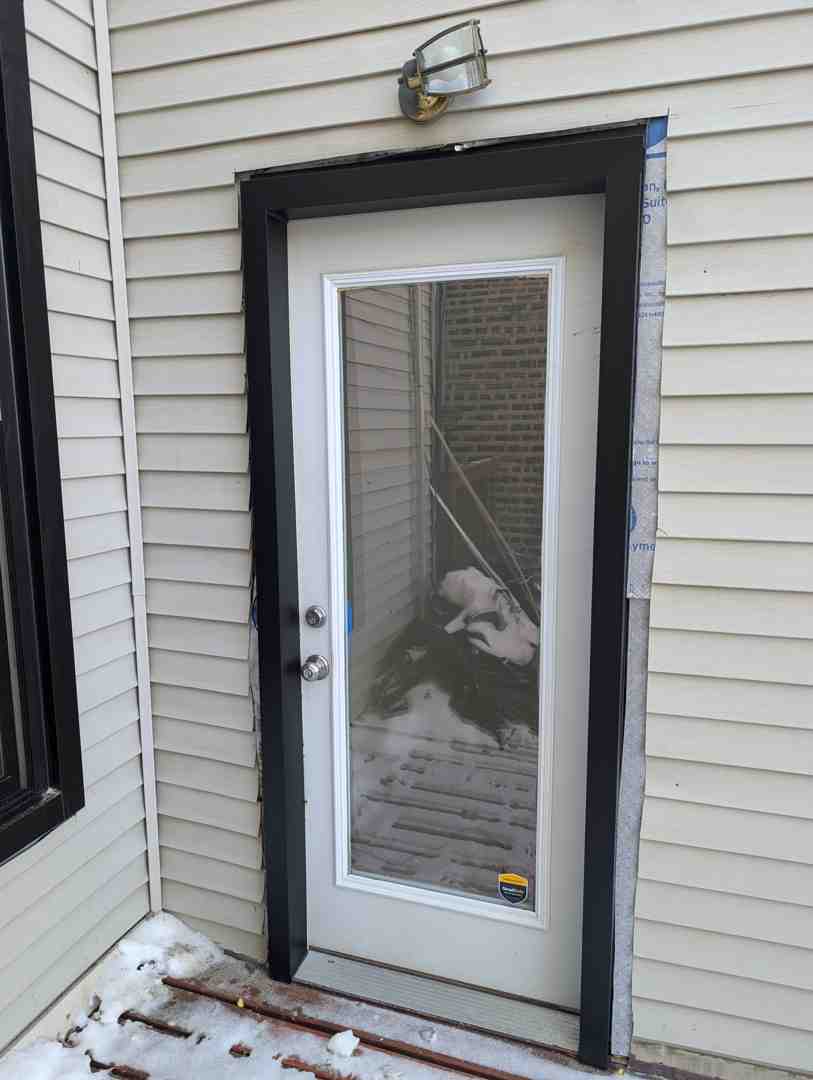
Is a Composite Front Door Supply and Fit Service Worth It?
Composite front doors supplied and fitted represent one of the most impactful upgrades you can make to your home’s security, energy efficiency, and curb appeal — all in a single day’s work.
Here’s a quick summary to answer what most homeowners want to know upfront:
| Question | Quick Answer |
|---|---|
| What is included? | Survey, manufacturing, delivery, installation, old door removal and disposal |
| How long does it take? | Most installations are completed within a few hours to a full day |
| How durable are they? | Built to last at least 35 years with minimal maintenance |
| Are they secure? | Yes — multipoint locking systems meet UK Police security standards |
| Are they energy efficient? | Yes — U-values as low as 1.0, reducing heat loss significantly |
Choosing a composite door isn’t just about looks. It’s about getting a door that performs — in cold Chicago winters, driving rain, and everything in between.
But with so many styles, materials, and installers to evaluate, it’s easy to feel overwhelmed before you even get started.
I’m Voytek Glab, owner of Perfect Windows & Siding, and with over 20 years of hands-on entry door installation experience across the Chicagoland area, I’ve guided hundreds of homeowners through the process of getting composite front doors supplied and fitted the right way. Let’s walk through everything you need to know to make a confident, informed decision.
What Are Composite Front Doors Supplied and Fitted?
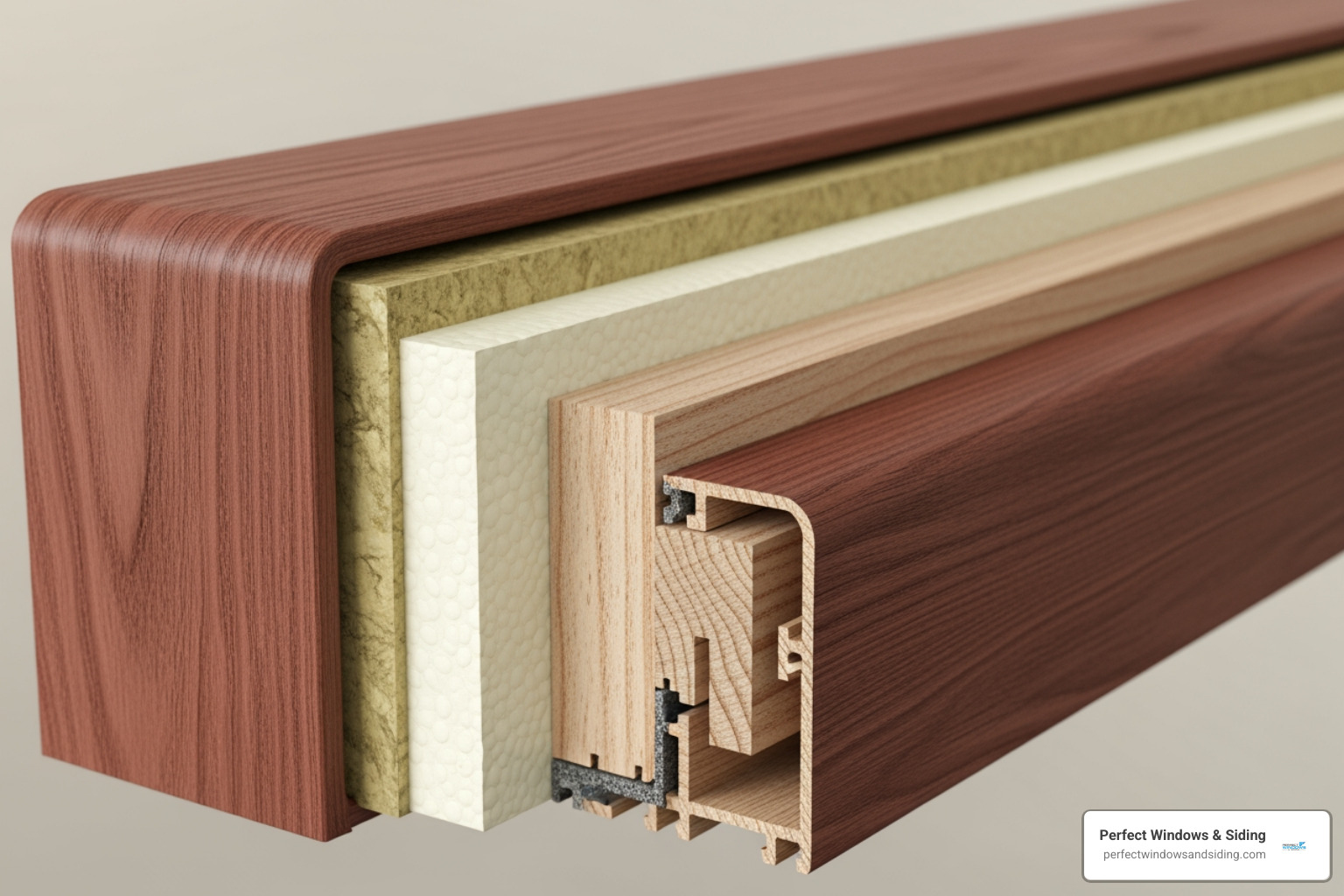
A composite front door is a door made from multiple materials working together rather than one single material doing all the heavy lifting. That is the whole point of the word “composite.” Each layer is chosen for a reason: strength, insulation, weather resistance, stability, or appearance.
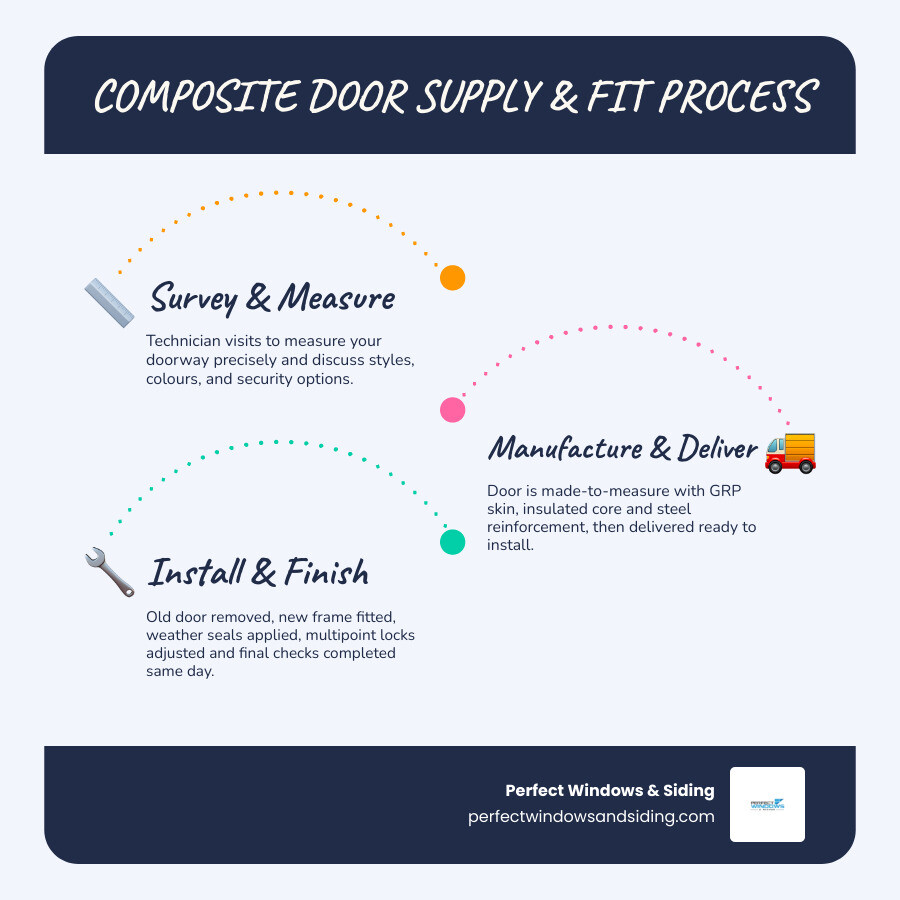
When we talk about composite front doors supplied and fitted, we mean the whole package: measuring, ordering the correct door, delivering it, installing it properly, replacing the frame if needed, weather-sealing everything, and making sure the door closes like it should instead of fighting you every morning.
What composite front doors are made from
Most high-quality composite doors combine several of the following materials:
- GRP, or glass-reinforced plastic, on the outer skin for weather resistance and impact strength
- A solid timber core or insulated core for strength and thermal performance
- A uPVC or reinforced subframe for structural stability
- Steel reinforcement or mesh in key areas for added rigidity and security
- High-performance glazing in glazed designs
- Weather seals around the frame and threshold to limit drafts and water entry
Some premium doors use a 48mm solid core. Others may use foam-insulated cores. Either way, the goal is the same: a door that looks sharp, stays stable, and does not warp or swell the way older timber doors often can.
What “supplied and fitted” actually includes
A proper supply-and-fit service is much more than dropping a door on your porch and wishing you luck. It usually includes:
- A site survey and precise measuring
- Door design and specification selection
- Manufacturing the door to the opening
- Delivery to the property
- Removal of the existing door and often the old frame
- Installation of the new frame and door slab
- Alignment of hinges, lock, threshold, and seals
- Finishing trims inside and outside
- Cleanup and disposal of old materials
- Final adjustment and operation checks
If you want a deeper look at the process, see our guide to exterior door installation.
Why professional fitting matters for performance
Composite doors are only as good as the installation. A premium door installed poorly can still let in drafts, stick in humid weather, or leave weak points around the lock side.
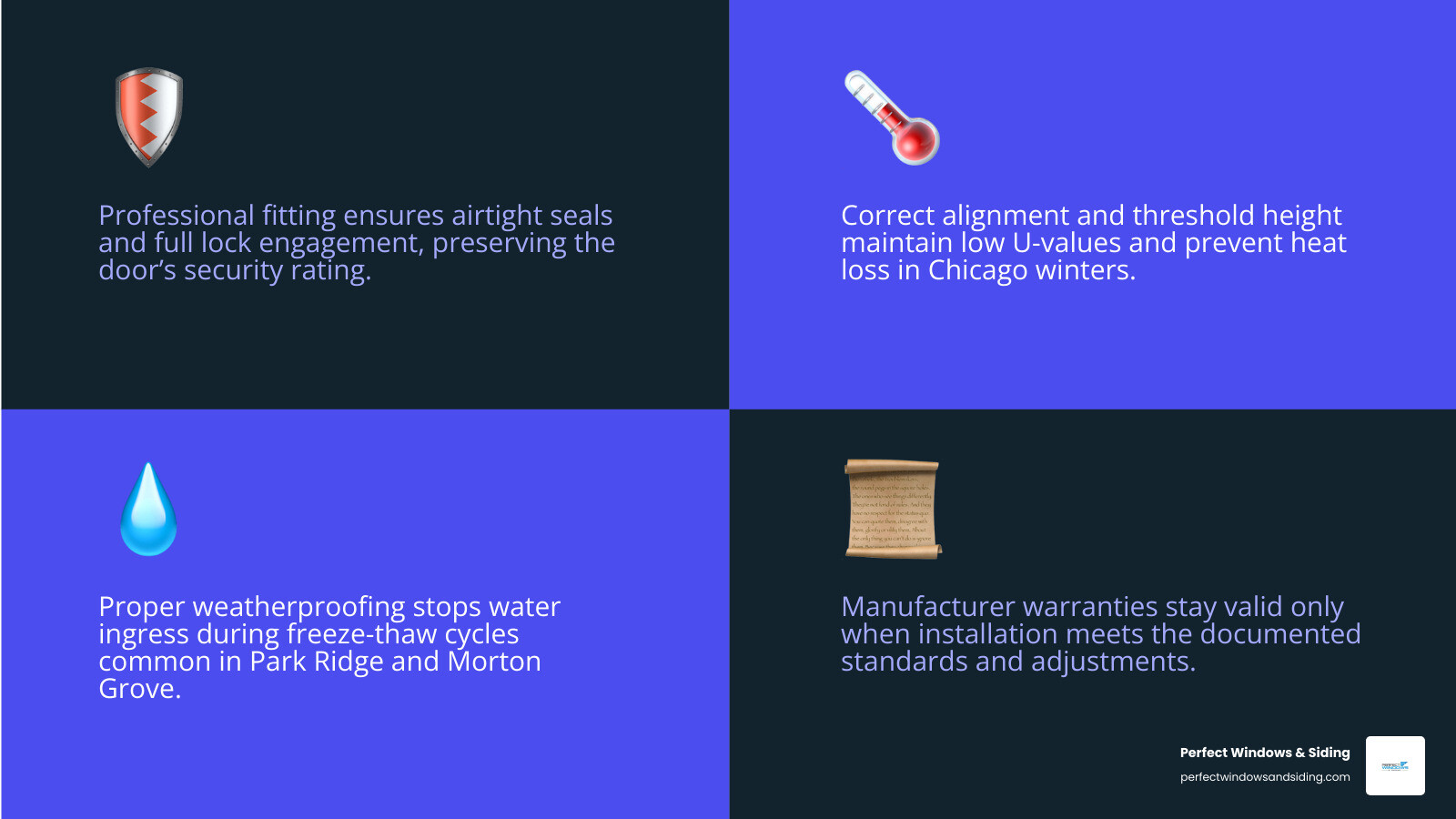
Professional fitting matters because it affects:
- Airtightness and thermal performance
- Smooth opening and closing
- Correct threshold height
- Water resistance during heavy rain
- Lock engagement and security
- Long-term durability
- Warranty protection
In Chicago, Des Plaines, Park Ridge, Morton Grove, and nearby suburbs, installation details matter even more because freeze-thaw cycles, wind, and temperature swings are not exactly gentle.
Why Homeowners Choose Composite Front Doors Supplied and Fitted
Composite doors have become popular for a simple reason: they solve a lot of problems at once. Homeowners want a front door that looks good, feels solid, helps with comfort, and does not become a maintenance hobby.
Research consistently points to key benefits such as a lifespan of at least 35 years, low maintenance, strong weather resistance, and thermal performance with U-values as low as 1.0 on some models.
Composite front doors supplied and fitted vs uPVC, timber, and steel
Here is the practical comparison:
| Door type | Main strengths | Common drawbacks |
|---|---|---|
| Composite | Strong, stable, low maintenance, energy efficient, many styles | Higher specification choices require careful installer selection |
| uPVC | Simple, lightweight, low upkeep | Usually less robust, less premium look, often lower security feel |
| Timber | Traditional character, can be beautiful | More upkeep, can swell, warp, crack, or need repainting |
| Steel | Strong security, durable skin | Can dent, may offer fewer design looks depending on product line |
Compared with uPVC, composite doors are generally stronger, better insulated, and more convincing visually if you want a woodgrain appearance.
Compared with timber, composite doors give you much of the classic look without the sanding, repainting, or moisture-related drama.
Compared with steel, composite doors often offer broader style flexibility and a warmer appearance while still delivering strong security performance.
Security standards and break-in resistance
Security is one of the biggest reasons homeowners upgrade. Modern composite doors often include:
- Multipoint locking systems
- Reinforced frames
- Anti-snap cylinders
- Secure hinges
- Laminated or toughened glazing options
- Hardware designed to resist common forced-entry methods
Some composite doors meet standards such as PAS 24 and Secured by Design, which is associated with police-backed security guidance in the UK. Research also highlights anti-snap protection and even a £2,000 security guarantee on certain systems against cylinder snapping. Not every door includes every feature, so it is worth asking exactly what lock package and cylinder specification you are getting.
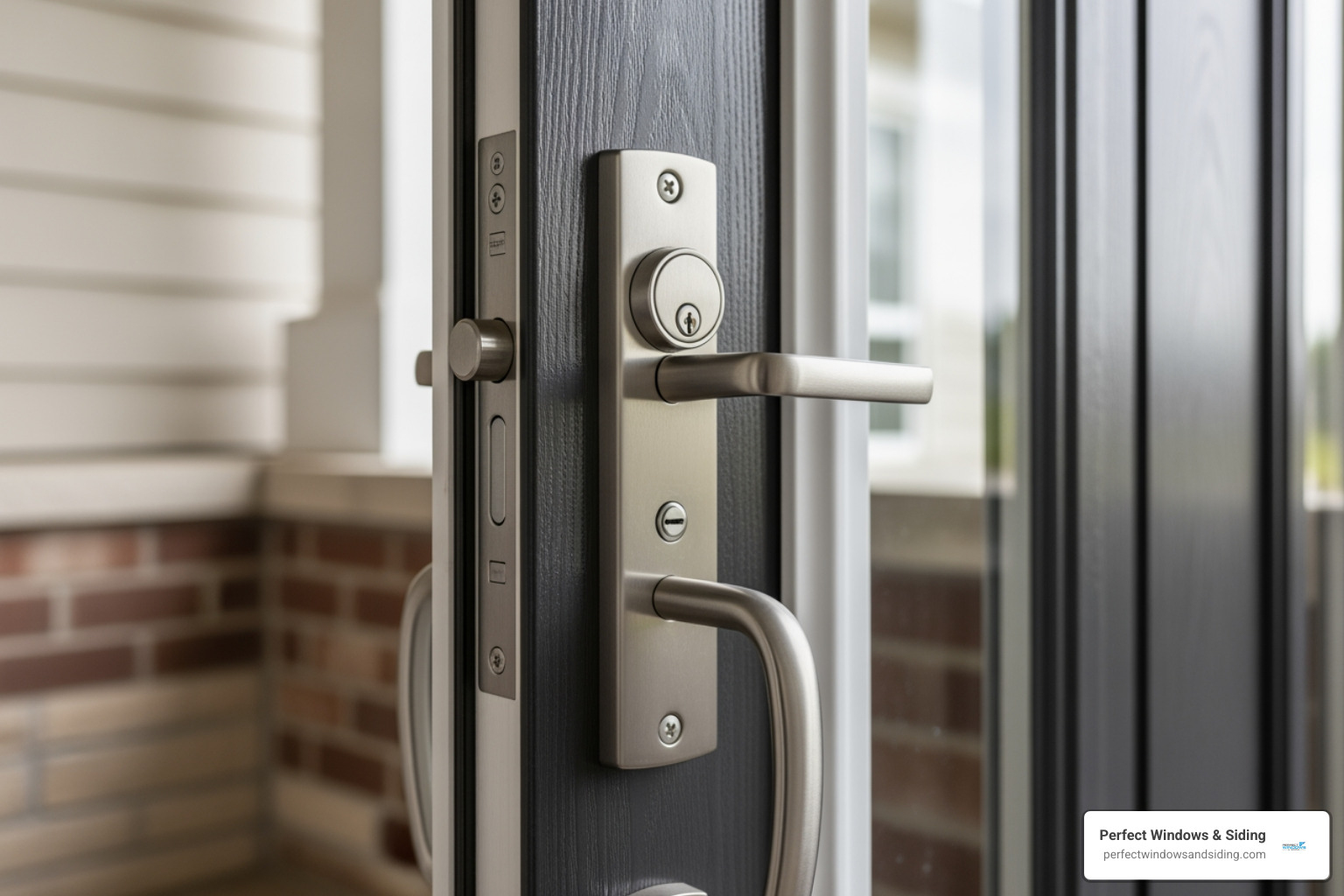
For homeowners in the Chicago area, we always recommend focusing on complete security as a system:
- Strong door slab
- Properly anchored frame
- Quality locking hardware
- Correct hinge setup
- Professional installation
A great lock in a poorly installed frame is a little like putting a race car engine in a shopping cart.
Energy efficiency and comfort benefits
Composite doors are also chosen because they help with comfort. High-performing models can achieve U-values as low as 1.0, which indicates strong thermal insulation. In everyday terms, that means less heat loss through the entryway.
Benefits include:
- Reduced drafts
- Better heat retention in winter
- Less unwanted heat gain in summer
- Improved weather resistance
- Better sound reduction than many older doors
If your current front door feels cold to the touch, whistles on windy days, or lets hallway temperatures swing wildly, a properly fitted composite door can make a noticeable difference.
Styles, Colours, and Custom Features for Composite Front Doors
One reason composite doors work for so many homes is design flexibility. Whether your house is classic brick in Park Ridge, a more contemporary build in Schaumburg, or a cottage-style home in Glenview, there is usually a design that fits.
Popular design options for every home style
Common style families include:
- Contemporary slab and linear-panel designs
- Traditional six-panel and heritage-inspired doors
- Cottage-style doors with glazing details
- Solid privacy-focused doors
- Part-glazed and fully glazed feature doors
- Woodgrain finishes that mimic painted or stained timber
Popular looks include anthracite grey for modern homes, black for high contrast, white for clean curb appeal, and softer heritage shades such as green or cream for older properties.
For inspiration on design direction, you can browse examples like the Debonaire urban composite front door inspiration or this Cottage composite front door inspiration.
Colours, finishes, and hardware choices
Many composite door ranges offer broad customization, including more than 30 colours in some product lines. Options may include:
- Standard factory finishes
- Woodgrain textures
- Smooth modern finishes
- Custom RAL or BS colour matching on some lines
- Matching or contrasting frame colours
Hardware choices often include:
- Lever handles
- Pull handles
- Knockers
- Door numerals
- Spyholes
- Letter plates
- Hinges in coordinated finishes
Popular hardware finishes include black, chrome, brushed stainless, and brass-style looks depending on the design. The best results usually come from coordinating the door color with trim, brick tone, and existing exterior accents.
Can composite doors include cat flaps, letter plates, or sidelights?
Yes, many can.
Depending on the door construction and design, homeowners can often add:
- Cat flaps or pet doors
- Letter plates
- Spy viewers
- Decorative glazing
- Obscured privacy glass
- Sidelights
- Toplights or transoms
The key is planning these features at the specification stage rather than trying to improvise later. For example, sidelights can dramatically brighten an entryway while maintaining privacy with frosted or patterned glass. If that is the look you want, our page on custom entry doors with sidelights is a good next step.
Real-world style inspiration
If you like a modern entry, look for:
- Clean lines
- Minimal panel detailing
- Vertical glazing
- Dark neutral finishes such as anthracite grey
If you prefer a cottage or heritage look, consider:
- Traditional panel layouts
- Decorative central glazing
- Woodgrain texture
- Heritage colours like green, cream, or blue
The nice thing about composite doors is that you do not have to choose between “secure” and “good-looking.” You can have both. We fully support a front door that can impress the neighbors and keep the wind where it belongs.
Installation Timeline, Maintenance, and Long-Term Performance
Composite doors are popular partly because they are easier to live with once installed. They do not ask for much, which is more than can be said for some houses.
How long supply and installation usually take
The process usually follows these steps:
- Initial consultation and measuring
- Final specification and ordering
- Manufacturing lead time
- Delivery and installation appointment
- Fitting, sealing, and testing
- Final walkthrough
Installation itself is often completed in a few hours to a full day. Lead times before installation depend on the door style, finish, glazing, and manufacturer schedule. Some research points to lead times around 10 to 15 days on certain lines, while more customized products may take longer.
On installation day, the crew should:
- Protect nearby flooring and entry areas
- Remove the old door and frame as needed
- Fit the new frame square and level
- Install and align the door
- Insulate and seal around the perimeter
- Test locking points and hardware
- Finish trims neatly
- Remove debris
How to maintain a composite front door
Maintenance is refreshingly simple:
- Wipe down the slab and frame with mild soapy water
- Clean glazing with a non-abrasive glass cleaner
- Lubricate locks and hinges periodically
- Check weather seals occasionally
- Keep the threshold clear of dirt and debris
- Avoid harsh solvents or abrasive pads
That is usually enough to keep a composite door looking and working well for years. Unlike timber, you generally are not dealing with regular sanding and repainting.
Warranties and guarantees to expect
Many composite doors come with around a 10-year product warranty, and some ranges include separate hardware or parts warranties. Security-related guarantees may also apply on selected locking systems.
At Perfect Windows & Siding, we pair strong product selection with craftsmanship and the confidence of our lifetime warranty. If you are comparing providers, ask for warranty details in writing and make sure you understand:
- What the product warranty covers
- What workmanship warranty applies
- Whether finish, glass, hardware, and locks are covered separately
- What maintenance is required to keep coverage valid
For more on our approach, visit entry door installation Chicago.
Signs it’s time to replace your current front door
Your current front door may be due for replacement if you notice:
- Drafts around the frame
- Difficulty locking or latching
- Sticking, swelling, or rubbing
- Condensation issues around glazing
- Worn seals
- Faded or damaged finish
- Security concerns
- Noise transfer from outside
If opening your front door feels like negotiating with a stubborn mule, that is usually not a good sign.
How to Choose the Right Installer for Composite Front Doors Supplied and Fitted Near Me
A good product matters. A good installer matters just as much.
What to look for in a reputable supplier and fitter
Look for a company that offers:
- Experience with entry door replacement, not just general handyman work
- Clear product knowledge
- Accurate measuring and surveying
- Licensed and insured installation
- Clean finishing details
- Written scope of work
- Reliable communication
- Strong local reputation
- Ongoing aftercare support
We believe local homeowners should expect more than a box and an install date. They should get guidance, precision, and workmanship that holds up through Chicago weather.
If you are researching options, our related pages on door installers chicago and door replacement chicago can help.
Questions to ask before you book
Before choosing an installer, ask:
- Will you measure the opening before ordering?
- Are you replacing the frame as well as the slab?
- What locking system is included?
- Is the glass tempered or laminated where required?
- How will you weather-seal the opening?
- Will you remove and dispose of the old door?
- What warranty applies to the product and workmanship?
- How are post-installation adjustments handled?
- Do you serve my area in Chicagoland?
Good answers should be specific, not vague. If someone gets slippery when talking about measuring, sealing, or warranty coverage, keep looking.
Why local expertise matters in Chicago-area installations
Chicago-area entry systems deal with real weather pressure:
- Freeze-thaw cycles
- High winds
- Blowing rain
- Summer humidity
- Winter temperature swings
That means installers need to understand proper flashing, insulation, threshold setup, and seasonal movement. What works in a mild climate does not always hold up in Des Plaines, Park Ridge, Niles, Wilmette, or Mount Prospect.
As a local, family-owned company with over 20 years of experience, we understand what doors here are up against and how to install them for long-term performance.
Frequently Asked Questions About Composite Front Doors Supplied and Fitted
Are composite front doors secure enough for modern homes?
Yes. A well-made composite door with a reinforced frame, multipoint lock, anti-snap cylinder, and quality installation is a strong choice for residential security. If available, look for products tested to standards such as PAS 24 or Secured by Design-style specifications.
Are composite front doors energy efficient in winter and summer?
Yes. Composite doors are designed to reduce heat transfer and air leakage. With insulated cores, good weather seals, and proper fitting, they help improve indoor comfort year-round. Research shows top-performing models can reach U-values as low as 1.0.
Can I customize glazing, colour, and accessories on a fitted composite door?
Absolutely. Many composite door systems can be customized with:
- Decorative or privacy glass
- Custom colours
- Woodgrain or smooth finishes
- Different handles and knockers
- Letter plates
- Spyholes
- Sidelights
- Pet access options
If you are looking for more design flexibility, see our pages on custom entry doors Chicago and custom exterior doors.
Conclusion
Choosing composite front doors supplied and fitted is really about choosing peace of mind. You get a door that is built for security, designed for energy efficiency, easier to maintain, and flexible enough to suit almost any home style.
At Perfect Windows & Siding, we bring that together with personalized service, custom solutions, local Chicagoland expertise, and a lifetime warranty that reflects how seriously we take our work.
If you are ready to upgrade your entry door in Chicago or the surrounding suburbs, explore our exterior door installation service or get a free estimate from our team.