

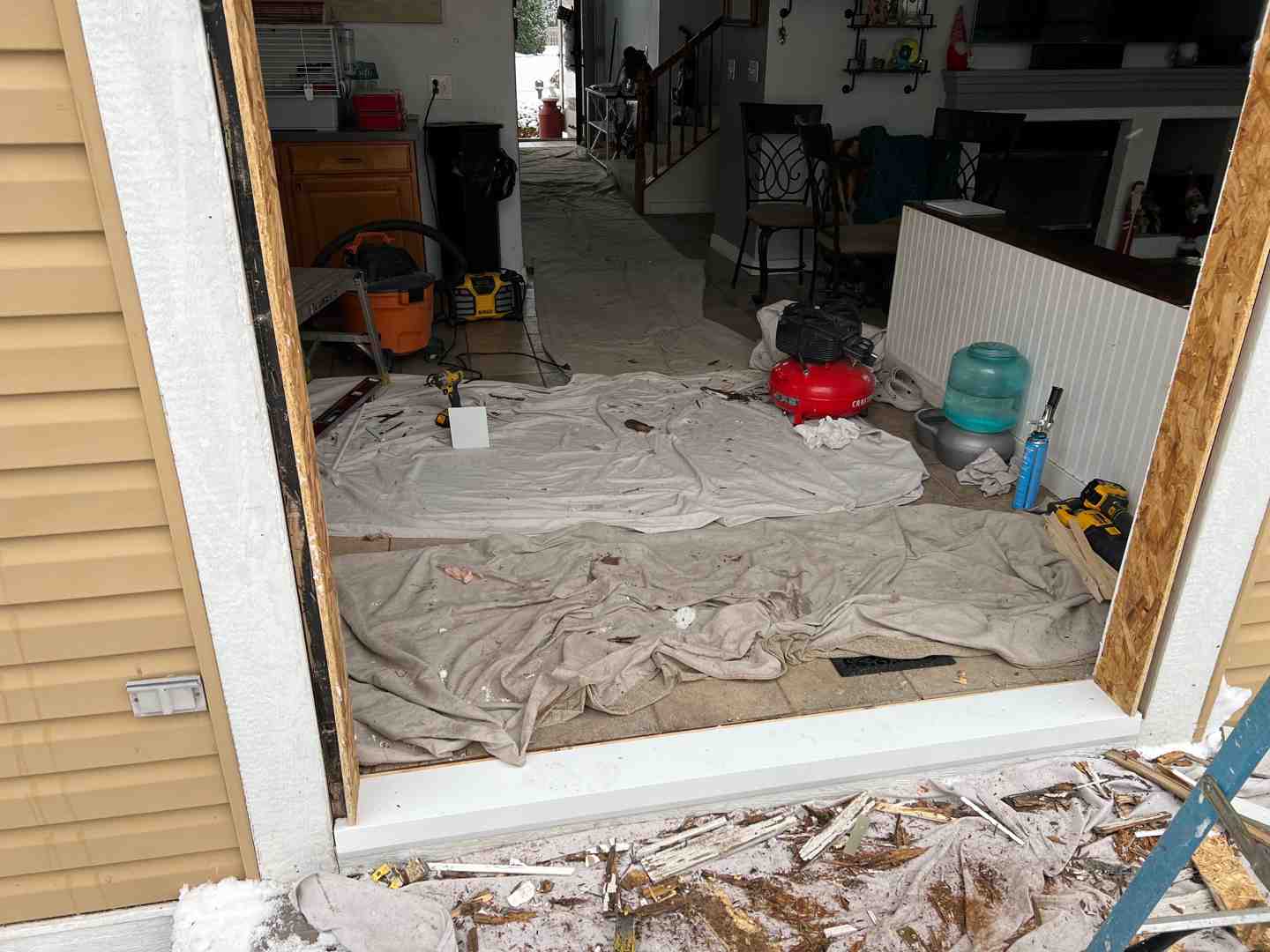
Why Exterior Door Weather Stripping Installation Is One of the Smartest Home Fixes You Can Make
Exterior door weather stripping installation is the process of sealing the gaps around your door frame to block drafts, moisture, pests, and energy loss — and it typically takes less than an hour to complete.
Here’s a quick overview of how to do it:
- Remove the old, worn weather stripping from the door jamb and threshold
- Clean the frame thoroughly with isopropyl alcohol to remove old adhesive and debris
- Measure the top, sides, and bottom of your door frame
- Cut your new weather stripping to size
- Install the seals — press or nail strips into the jamb, screw the door sweep to the bottom
- Test the seal using the dollar bill test (more on this below)
That cold breeze you feel near your front door in a Chicago winter? It’s not just uncomfortable — it’s costing you money. Worn or shifted weather stripping can drop your home’s energy efficiency by as much as 20%, and it can also let in moisture and pests.
The good news: this is one of the easiest home improvement fixes you can tackle yourself. Most installations take 30 minutes to an hour, require only basic tools, and the materials are widely available.
I’m Voytek Glab, owner of Perfect Windows & Siding, and with over 20 years of hands-on exterior door installation experience across the Chicagoland area, I’ve seen how proper exterior door weather stripping installation can transform a home’s comfort and energy performance. In this guide, I’ll walk you through everything you need to do it right.
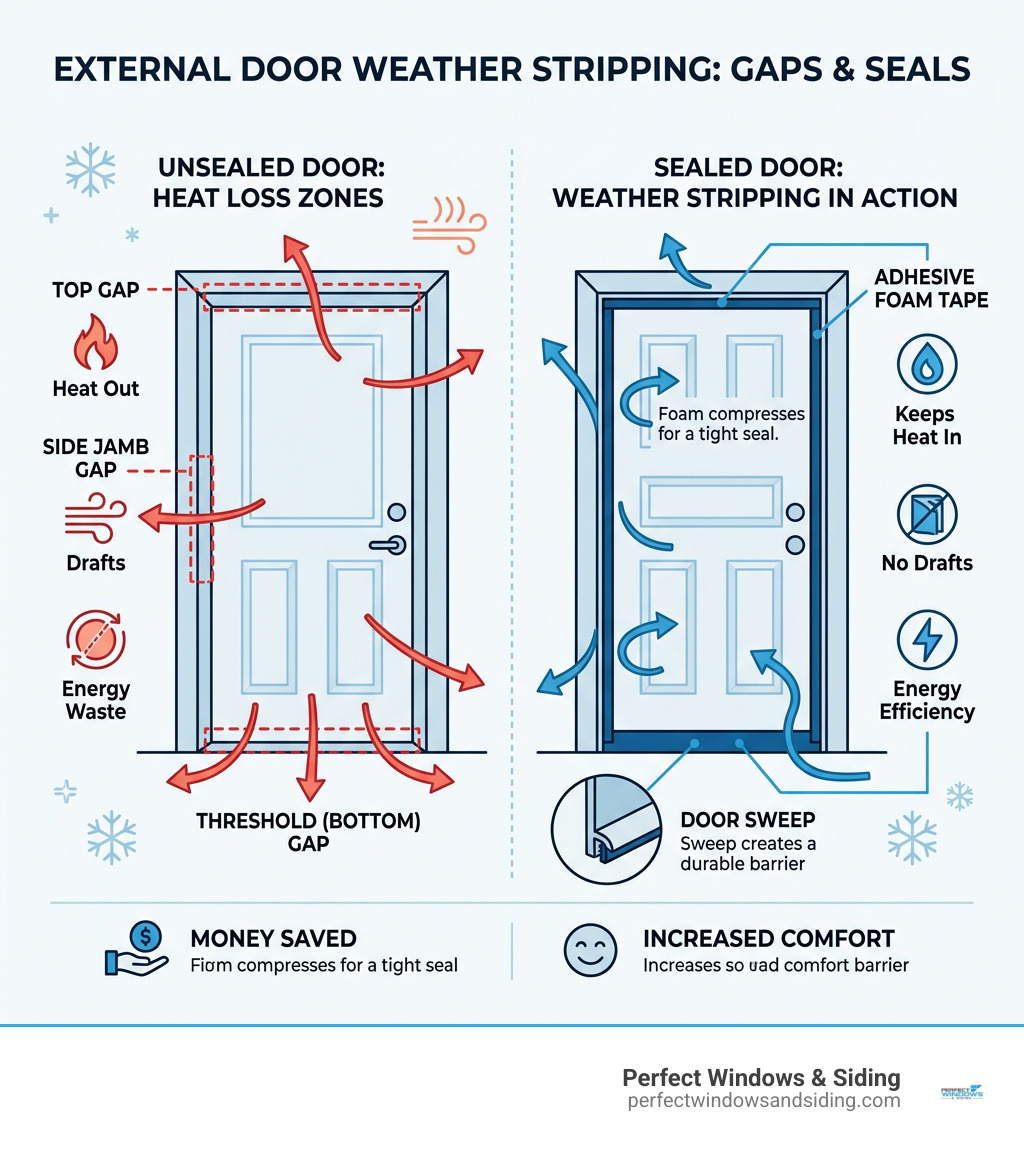
Understanding the Importance of a Proper Door Seal
In our line of work, we often see homeowners in Park Ridge and Glenview wondering why their heating bills are climbing even though they have a high-efficiency furnace. The answer is frequently “air infiltration.” When your door isn’t sealed properly, it acts like a giant straw, sucking cold air in and blowing warm air out.
Beyond just the temperature, a proper seal provides:
- Climate Control: It keeps your indoor environment consistent, preventing those “hot spots” or “cold zones” near the entryway.
- Moisture Protection: In Chicago, we deal with driving rain and melting snow. Without a tight seal, water can seep into your subfloor, leading to rot and structural damage.
- Pest Control: If light can get through a gap, a spider or a beetle certainly can. Weather stripping is your first line of defense against unwanted six-legged guests.
- Noise Reduction: A thick, high-quality seal can actually dampen the sound of traffic or wind, making your home feel more like a sanctuary.
If you find that your door is significantly warped or the frame itself is rotting, weather stripping might only be a temporary band-aid. In those cases, you might want to look into More info about exterior door replacement to ensure your home is truly protected. For most, however, a fresh exterior door weather stripping installation is exactly what the doctor ordered. You can also learn more about the technical aspects of sealing from experts like How to Weatherstrip an Exterior Door.
Choosing the Right Materials for Your Exterior Door Weather Stripping Installation
Not all weather stripping is created equal. The type you choose depends on the material of your door (wood, steel, or fiberglass), the size of the gaps, and how much traffic that door sees. In busy households in Arlington Heights or Schaumburg, you need something that can take a beating.
| Seal Type | Durability | Best Application | Ease of Installation |
|---|---|---|---|
| Tension Seals (V-Strip) | High | Sides and top of door jambs | Moderate |
| Vinyl-Clad Foam | Very High | Modern pre-hung doors (kerf-in) | Easy |
| Magnetic Strips | High | Steel doors (works like a fridge) | Moderate |
| Silicone/Rubber Gaskets | High | Uneven gaps; high-end seals | Moderate |
| Felt | Low | Low-traffic, indoor-only use | Very Easy |
| Door Sweeps | High | Bottom of the door to seal the threshold | Moderate |
When you are ready to gather your supplies, you can find high-quality Vinyl Door Weatherstrip Supplies that are designed to withstand the rigors of our local climate.
Selecting the Best Seal for Your Gap Size
The “gap” is the space between the door slab and the frame. If the gap is consistent, a V-strip or tension seal works wonders. These fold into a “V” shape and create tension against the door.
For larger or uneven gaps—common in older homes in Wilmette or Evanston—foam tape or vinyl-clad foam is often better. These materials “compress” to fill the space. A pro tip we always share: choose a material that compresses by about 25% to 50% when the door is closed. If it doesn’t compress enough, air gets through. If it compresses too much, the door will be hard to latch. If you are unsure about the process, check out our guide on How to replace door weather stripping.
High-Performance Options for Chicago Climates
Living in the Chicagoland area means our doors have to handle 95-degree summers and -20 degree winters. Cheap foam tape often becomes brittle and peels off after one season. For a long-lasting exterior door weather stripping installation, we recommend:
- Silicone Gaskets: They remain flexible in extreme cold and won’t crack.
- Neoprene: This is a heavy-duty synthetic rubber that is excellent for moisture resistance.
- Aluminum-Backed Sweeps: For the bottom of the door, an aluminum housing protects the rubber seal from being torn by ice or debris.
You can find specialized Door Sweep Supplies that are specifically rated for high-performance use in cold regions.
Essential Tools and Preparation for a Successful Seal
Before you start pulling things apart, make sure you have your “battle kit” ready. Most of these items are likely already in your garage in Des Plaines or Mount Prospect.
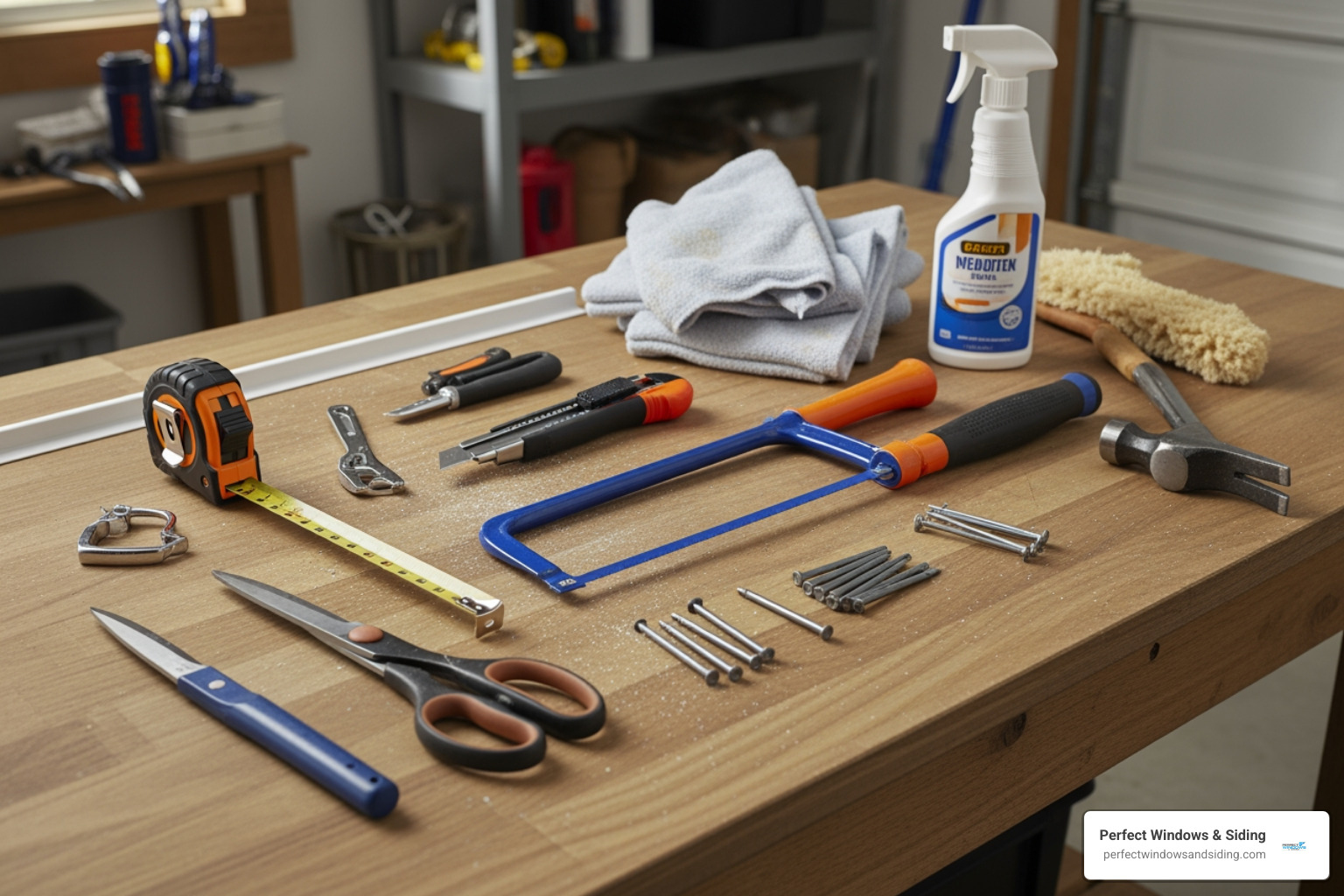
Your Tool Checklist:
- Measuring Tape: Accuracy is everything.
- Utility Knife or Heavy-Duty Scissors: For cutting foam and vinyl.
- Hacksaw: Necessary if you are installing a metal door sweep.
- Hammer and 1-inch Finish Nails: For reinforced or wood-backed strips.
- Putty Knife or Scraper: To remove old, stuck-on adhesive.
- Isopropyl Alcohol and a Rag: To prep the surface for a clean bond.
- Drill and Small Bits: For pilot holes if installing a screw-on sweep.
Preparation is the most overlooked step. If you stick new adhesive weather stripping over old, dusty glue, it will fall off by next Tuesday. For a professional-grade Install door weather stripping project, the surface must be “hospital clean.”
Removing Old Seals and Cleaning the Frame
Start by prying off any old, nailed-in weather stripping with your putty knife. If it’s the “kerf-in” type (the kind that is tucked into a groove in the frame), simply grab it with pliers and pull it out. It should slide right out of the slot.
Once the old material is gone, use your scraper to get rid of any residual foam or glue. Follow this up by wiping the entire jamb with isopropyl alcohol. This removes oils and dust, ensuring your new exterior door weather stripping installation stays put for years. If you find gaps in the very corners of your door, you may also need Door Corner Seal Supplies to finish the job properly.
Step-by-Step Guide to Sealing Your Entryway
Now for the main event. We’re going to seal the three sides of the frame (the header and the two side jambs) and then tackle the bottom.
Step 1: The Top Header
Always start at the top. Measure the width of the top jamb. Cut your weather stripping to this exact length. If you are using adhesive-backed foam, peel a few inches of the backing at a time and press it firmly into the corner where the door stop meets the frame.
Step 2: The Side Jambs
Measure from the top header down to the threshold. Cut two pieces of weather stripping—one for the hinge side and one for the strike side (where the lock is). Voytek’s Pro Tip: Ensure the side pieces butt up tightly against the top piece. Any gap here is an invitation for a draft.
Step 3: Kerf-In Installation
If your door frame has a “kerf” (a thin slit or groove), you won’t use adhesive. Instead, you’ll take the “barb” of the new weather stripping and press it into that groove. It’s incredibly satisfying and creates a very tight seal. If you have a metal door, you might need an Exterior metal door bottom seal replacement specifically designed for those units.
Step-by-Step Exterior Door Weather Stripping Installation Guide
When installing, alignment is key. You want the weather stripping to compress slightly when the door is closed, but not so much that you have to shoulder the door shut.
- Test Fit: Before removing the adhesive backing or nailing, hold the strip in place and close the door.
- Nailing Pattern: If you are using reinforced strips, space your nails about every 12 inches. Start 2 inches from the ends to prevent the wood from splitting.
- Compression Check: Close the door and look for “puckering.” The seal should look smooth and consistent all the way around.
For a more detailed breakdown of different door types, our Entry door installation guide can provide further technical insights.
Installing the Door Sweep and Corner Seals
The bottom of the door is where most heat escapes. A door sweep is a long strip of metal or plastic with a rubber or brush bottom.
- Measure the Door Width: Cut the sweep with a hacksaw to fit the width of the door slab.
- Positioning: With the door closed, hold the sweep against the bottom. The rubber fin should just barely touch the threshold. If it’s too low, it will drag and wear out. If it’s too high, it won’t seal.
- Pilot Holes: Mark the screw holes, drill small pilot holes, and then screw the sweep into place.
Don’t forget the corner seals! These are small, wedge-shaped pieces of foam that stick to the bottom of the jamb. They fill that tiny, pesky gap where the side weather stripping meets the threshold. This is a staple of any Entry door installation Chicago project we handle.
Testing and Maintaining Your New Door Seal
Once you’ve finished your exterior door weather stripping installation, it’s time to see if your hard work paid off. We use three classic tests:
- The Dollar Bill Test: Close the door on a dollar bill. Try to pull it out. You should feel a slight tug or resistance. If it slides out easily, the seal isn’t tight enough. Do this at the top, sides, and bottom.
- The Light Test: At night, turn off the lights inside and have someone shine a flashlight around the door from the outside. If you see beams of light peeking through, you have a gap.
- The Incense/Smoke Test: Hold a lit incense stick or a smoke puffer near the edges of the door on a windy day. If the smoke wafts inward, you still have an air leak.
To keep your seals in top shape, we recommend a quick cleaning every spring and fall. Wipe them down with a damp cloth to remove grit and salt (especially important in places like Skokie or Niles where we use a lot of road salt). If you’re looking for professional help or a full upgrade, searching for Entry door installation near me will lead you to our expert team.
Troubleshooting Common Exterior Door Weather Stripping Installation Mistakes
Even the best DIYers can run into hiccups. Here’s how to fix the most common issues:
- Door Won’t Latch: This usually means the weather stripping is too thick or wasn’t pushed far enough into the corner. Try adjusting the strike plate or choosing a slightly thinner material.
- Adhesive Peeling: This is almost always due to poor cleaning. You may need to remove the strip, re-clean with alcohol, and use a fresh piece.
- Gaps at the Corners: If you didn’t “miter” the corners (cutting them at an angle) or butt them tightly, you’ll have a leak. Use a small dab of clear silicone caulk to plug tiny holes in the corners.
- Over-tightening Screws: On door sweeps, over-tightening can warp the metal track, causing the rubber seal to wavy. Keep them “snug,” not “crushed.”
Frequently Asked Questions about Door Sealing
How often should I replace my door’s weather stripping?
On average, expect to replace your weather stripping every 2 to 5 years. However, in our harsh Chicago climate, you should inspect it at the start of every season. If you live in a high-wind area like Lake Zurich or Buffalo Grove, the friction and pressure might wear it out faster. If it looks flattened, cracked, or is peeling away, it’s time for a change.
Can weather stripping fix a warped exterior door?
Not really. Weather stripping is designed to fill small, consistent gaps (usually up to 1/4 inch). If your door is warped like a potato chip, no amount of foam will create a perfect seal. A warped door often requires a professional assessment to see if the hinges can be adjusted or if a full replacement is necessary to protect your home’s envelope.
How do I know if my weather stripping is failing?
Look for these “red flags”:
- Visible Light: Seeing daylight around the door edges.
- Drafts: Feeling a cold breeze when the door is shut.
- Rattling: If the door rattles in the frame during a windstorm, the seal isn’t tight enough.
- Moisture/Ice: Finding condensation or frost on the inside of the door jamb.
- Pests: Finding an unusual number of “crawlies” near your entryway.
Conclusion
At Perfect Windows & Siding, we know that home comfort starts at the entryway. A proper exterior door weather stripping installation is a small project that yields big results in energy efficiency and coziness. Whether you are in Hinsdale, Lombard, or right in the heart of Chicago, taking the time to seal your doors is an investment that pays for itself in lower utility bills and a more comfortable home.
As a local, family-owned business with over 20 years of experience, we pride ourselves on providing the Chicagoland area with high-quality, custom solutions. We back our work with a lifetime warranty because we believe in the craftsmanship of our licensed and insured installers. From Elk Grove Village to Winnetka, we are here to help you keep the cold out and the cozy in.
If your door needs more than just a new seal, or if you’re ready to upgrade to a modern, energy-efficient entryway, we invite you to reach out.
Schedule your consultation with Perfect Windows & Siding today and get a free estimate on your next home improvement project!