

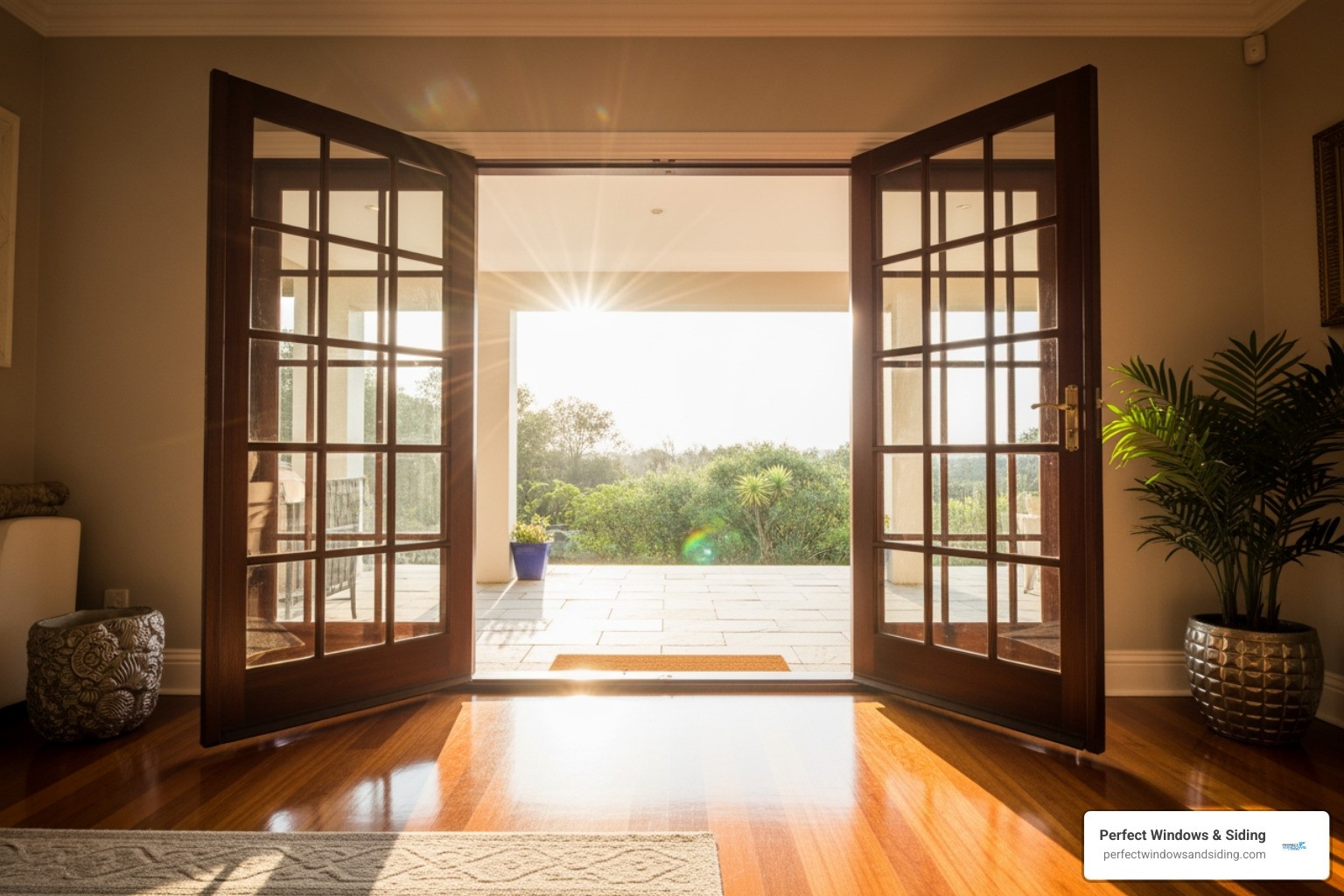
Why French Door Installation Transforms Your Home
French door installation can transform your home by adding natural light, architectural style, and better flow between spaces. Whether connecting a kitchen to a patio or adding elegance between interior rooms, installing French doors is a rewarding project that requires careful planning and precise measurements.
Quick Overview: French Door Installation Steps
- Measure and prepare – Verify the rough opening is square, level, and plumb
- Choose your door type – Pre-hung units are easiest; slab doors require more skill
- Install the frame – Use shims to ensure proper alignment and support
- Hang the doors – Mount on hinges and adjust for even gaps
- Seal and weatherproof – Apply caulk, flashing, and foam insulation
- Install hardware – Add locksets, strike plates, and finishing touches
DIY French door installation typically costs around $1,326 for materials, while professional installation ranges from $3,000 to $3,500. The project takes 4-6 hours for experienced installers, though first-timers should expect it to take longer.
As Voytek Glab, owner of Perfect Windows & Siding, I’ve spent 20 years ensuring flawless French door installations in the Chicagoland area. My hands-on experience guarantees an understanding of the precise measurements, sealing techniques, and structural details that ensure a door not only looks beautiful but performs for decades.
Preparation is Key: Choosing Doors, Tools, and Materials
Proper planning is the most important part of a successful French door installation. Taking the time to select the right doors and gather your tools makes all the difference between a frustrating weekend and a project you’ll be proud of for years.
Types of French Doors
Choosing the right French doors involves considering their function, materials suitable for Chicago’s weather, and your own skill level.
Pre-hung vs. Slab Doors
This is your first major decision. Pre-hung French doors come with the frame pre-assembled and hinges mounted, making them the best choice for most DIYers. This saves significant time and reduces the risk of improper alignment.
Slab doors are just the panels, requiring you to build the frame, mortise hinges, and drill for hardware. This option is best left to experienced carpenters with specialized tools.
| Feature | Pre-hung Doors | Slab Doors |
|---|---|---|
| Ease of Install | High (frame pre-assembled) | Low (frame, hinges, hardware all separate) |
| Skill Level | Intermediate DIYer | Experienced DIYer / Professional |
| Tools Required | Basic carpentry tools, shims, level | Specialized tools for mortising, routing, drilling |
| Cost | Generally higher upfront (includes frame) | Lower upfront (just door panels) |
In-swing vs. Out-swing
The swing direction is a key decision. In-swing doors open into the room, offering better security for exterior use as the hinge pins are inside. They also simplify adding storm or screen doors. Out-swing doors save interior space but require special attention to security and weatherproofing on the exterior.
Interior vs. Exterior Considerations
Interior French doors are ideal for separating spaces like a home office from a living room while maintaining an open feel. They don’t require the heavy-duty weatherproofing of exterior doors. Exterior French doors must withstand Chicago weather, requiring insulated glass, robust weatherstripping, and materials that won’t warp or rot.
Material Choices That Matter
- Wood: Offers classic beauty and insulation but requires regular maintenance.
- Fiberglass: A popular low-maintenance option that mimics wood and resists rot, warping, and dents.
- Steel: Provides excellent security but can dent or rust if damaged.
- Aluminum: Lightweight and affordable but offers less insulation.
- MDF (Medium-Density Fiberboard): A smooth, paintable surface ideal for interior doors.
Glass Options and Energy Efficiency
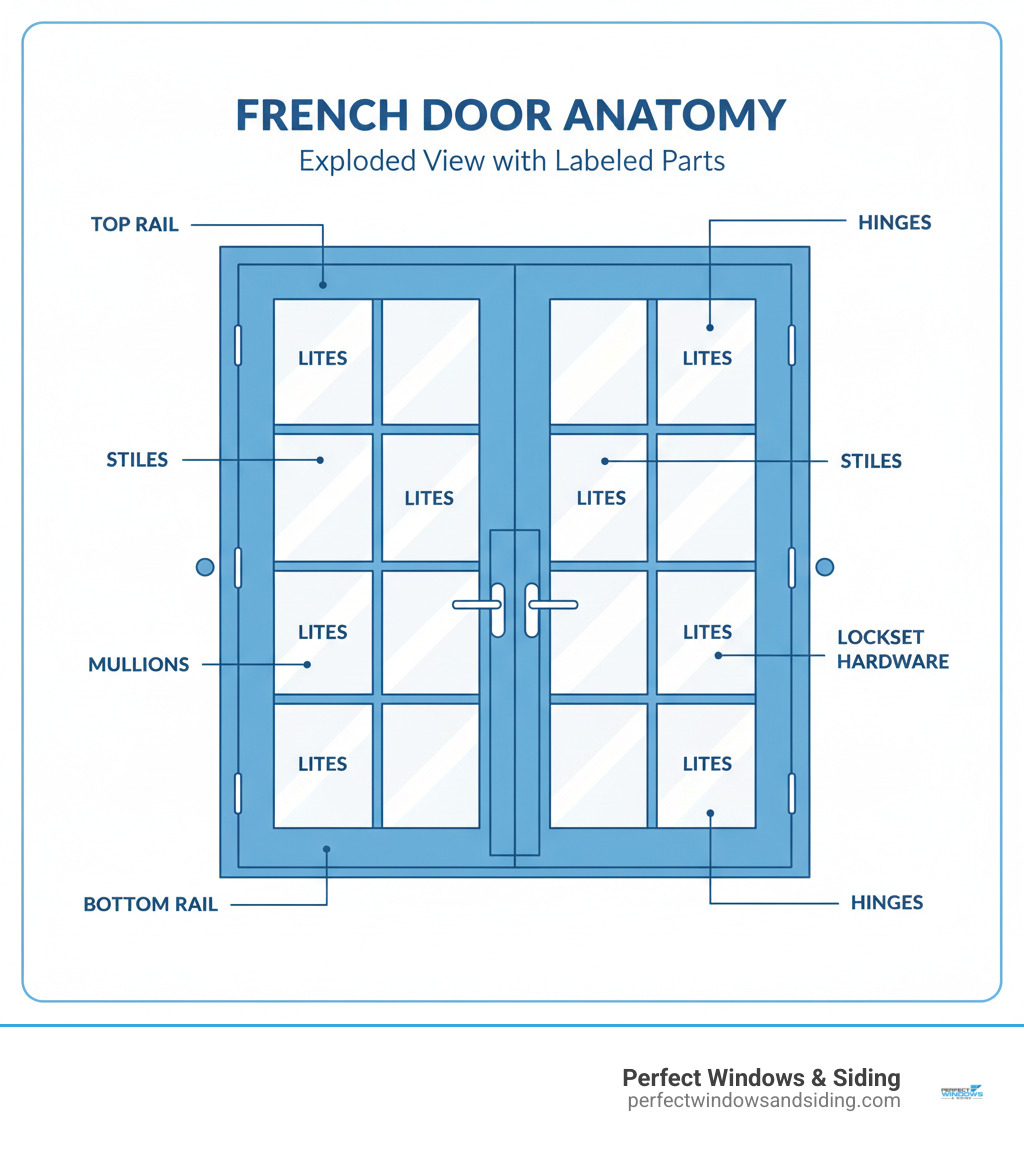
Since French doors are mostly glass, this choice impacts aesthetics and performance. Clear glass maximizes light and views, while frosted or textured glass offers privacy. The number of lites (individual panes) defines the door’s style. For exterior doors in Chicago, Low-E coated, double-pane glass with argon gas is essential for energy efficiency. Building codes often require tempered glass for safety near the floor.
If you’re considering a complete home update, exploring Custom Entry Doors Residential options can help you create a cohesive look.
Essential Tools and Materials for Installation
Having everything ready beforehand ensures a smooth process.
Your Tool Kit
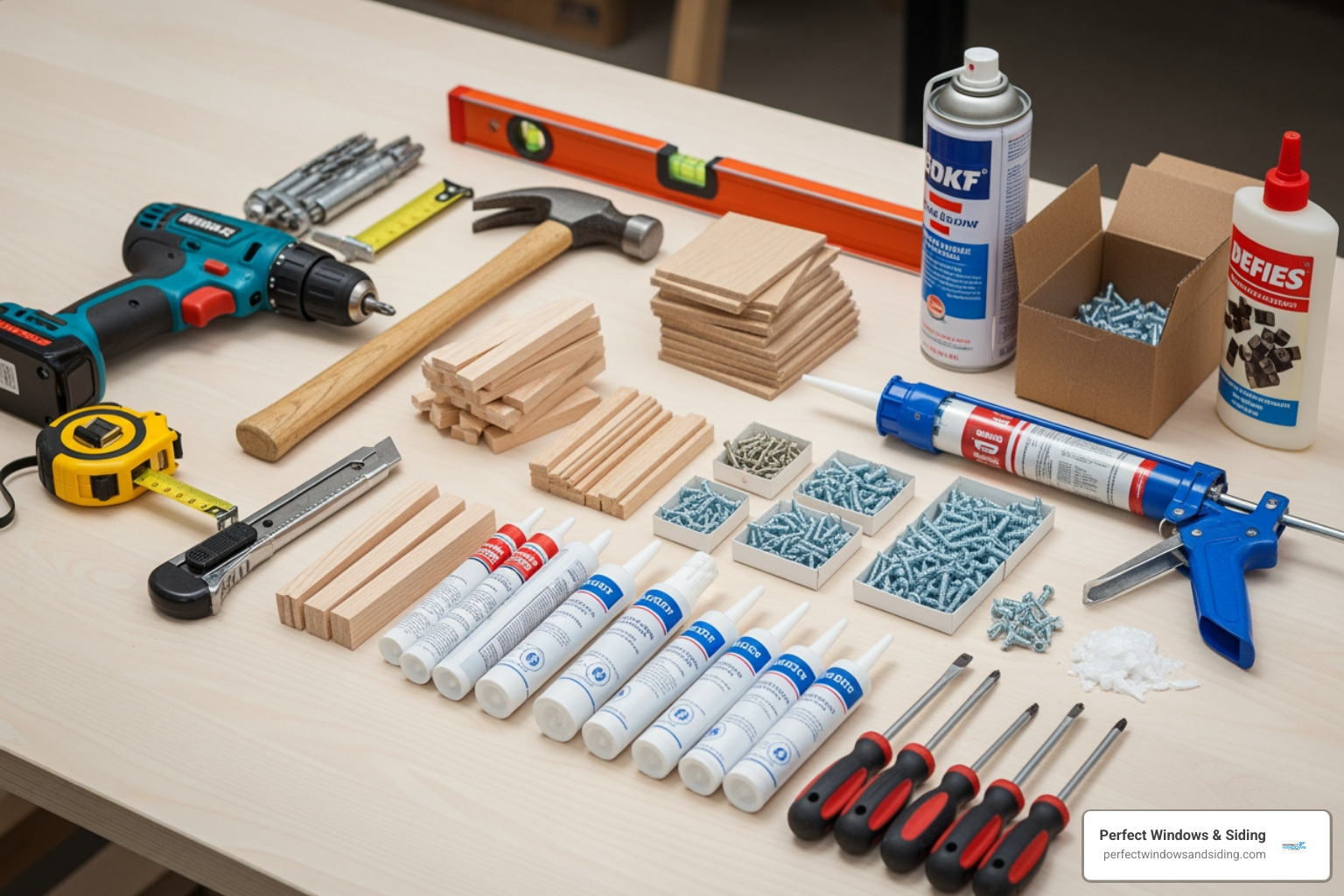
Gather a 4-foot level, tape measure, power drill, hammer, pry bar, caulk gun, circular or reciprocating saw, and a carpenter’s square. For slab doors, you’ll also need a chisel. Don’t forget screwdrivers, a utility knife, and essential safety gear like glasses, gloves, and a dust mask.
Materials You’ll Need
Your primary material is the French door kit (pre-hung or slab). You’ll also need cedar shims, #8 x 3-inch screws for the frame, and finishing nails for trim. For sealing, gather waterproof exterior-grade caulk, low-expansion spray foam, self-adhesive flashing tape, and a sill pan (for exterior doors). Finally, have your weatherstripping, lockset/hardware, and paint or stain ready.
A Step-by-Step Guide to French Door Installation
Now for the installation. This section walks you through the process, from preparing the opening to securing the doors. Patience and precision in these steps are the key to a door that performs beautifully for decades.
Preparing the Rough Opening
A perfect French door installation starts with a properly prepared rough opening. An incorrect foundation will compromise the entire project, so take your time to get this step right.
Removing the Old Door and Trim
Score any caulk or paint along the trim with a utility knife to prevent wall damage. Gently use a pry bar to remove the trim, then take out the old door and frame. If creating a new opening, that framing work must be completed first.
Inspecting for Damage
With the opening clear, inspect the framing for rot, water damage, or structural issues, especially in older Chicago homes. Replace any damaged wood before proceeding.
The Critical Measurements
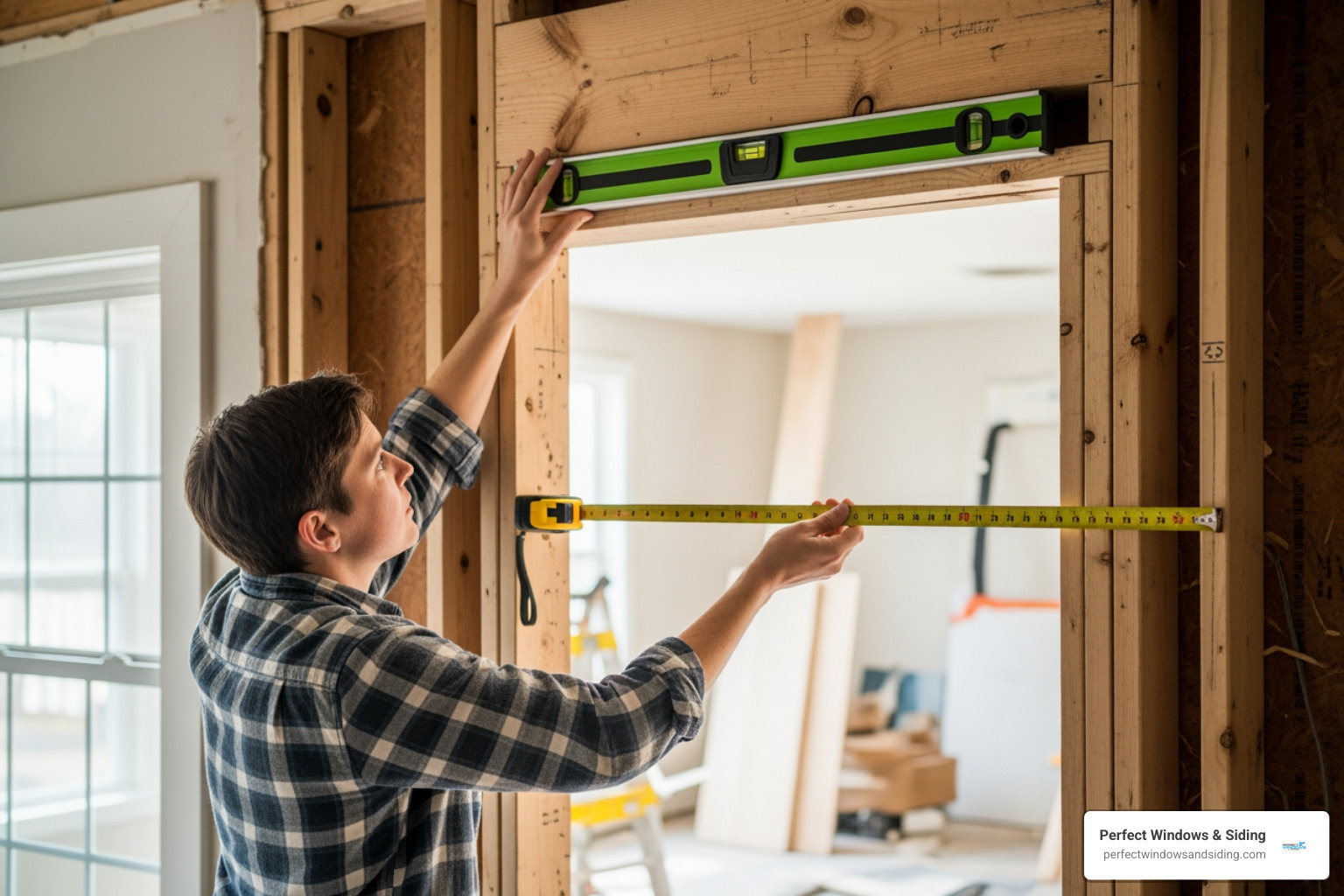
Your rough opening must be plumb (vertical), level (horizontal), and square (90-degree corners). Use a 4-foot level and carpenter’s square to check all sides and corners. Measure the width and height at three points each; they should be consistent. The opening should be 1/2 to 3/4 inch larger than the door unit to allow for shimming.
A Guide to Prehung French Door Installation
Pre-hung doors are recommended for most homeowners because the doors are already mounted in the frame, simplifying the process.
Starting with a Dry Fit
With a helper, lift the pre-hung unit and place it in the rough opening. This “dry fit” helps you spot any potential issues before applying sealants.
The Sill Pan Makes All the Difference
For exterior doors, a sill pan is your primary defense against water. Apply waterproof caulk to the subfloor, press the sill pan firmly into it, and cover it with self-adhesive flashing tape that extends up the sides of the opening.
Setting the Door
For exterior doors, apply a continuous bead of waterproof caulk along the bottom of the opening and the back of the door frame. With a helper, tilt the unit into the opening, ensuring it’s seated on the sill pan and centered.
Shimming: Where Precision Meets Patience
Start on the hinge side. Place pairs of shims behind each hinge location. Use your level to ensure the hinge-side jamb is perfectly plumb, then drive 3-inch screws through the jamb and shims into the wall studs, but don’t fully tighten them yet. Repeat on the latch side, shimming at the top, bottom, and behind the latch location.
Achieving the Perfect Reveal
Close the doors and check the gap, or “reveal.” It should be a consistent 1/8 inch between the panels and the frame, and where the two doors meet. Adjust shims until the gap is even and the doors operate smoothly.
Final Securing
Once everything is plumb, level, and has an even reveal, drive 3-inch screws through the jambs into the wall studs every 8 inches. For added strength, replace one short screw in each hinge with a 3-inch screw that anchors into the wall stud.
For professional Door Replacement Chicago services, our team follows these exact steps to ensure your doors perform flawlessly for decades.
A Guide to Slab French Door Installation
Installing slab doors (panels only) is a job for experienced carpenters. It involves building and squaring a frame, precisely cutting mortises for hinges, and drilling for the lockset. The complexity and need for specialized tools mean there is a high risk of costly errors. For these reasons, we recommend leaving slab door installation to professionals to save time and ensure a perfect fit.
Achieving a Flawless Finish: Sealing, Adjusting, and Weatherproofing
Your French doors are in place, but the job isn’t done. Proper sealing, adjustments, and weatherproofing are what separate a good installation from a great one, protecting your investment and maximizing energy efficiency.
How to Hang and Adjust for Smooth Operation
Even with a plumb and level frame, your doors will likely need fine-tuning for smooth operation.
Check the gap, or “reveal,” around the doors. It should be a consistent 1/8 inch between the panels and the frame, and where the doors meet. If the gap is uneven, adjustments are needed.
Adjusting the hinges is the common solution. Tighten any loose screws or add a thin shim behind a hinge leaf to nudge a door into position. The goal is for both doors to meet perfectly at the center without rubbing.
Next, install the strike plates and shoot bolts. Mark where the latch hits the jamb, create a shallow mortise for the plate, and screw it in place. For added security on the inactive door, install shoot bolts at the top and bottom, which slide into strike plates in the head jamb and threshold.
Finally, test everything. Open and close the doors repeatedly to ensure they swing freely and latch smoothly. Make small adjustments until the operation is perfect.
Best Practices for Weatherproofing and Sealing
In Chicago, proper weatherproofing is essential for protecting your home from harsh weather and high energy bills.
The sill pan and flashing installed earlier are your first defense against water. This system channels any moisture safely away from your home’s structure.
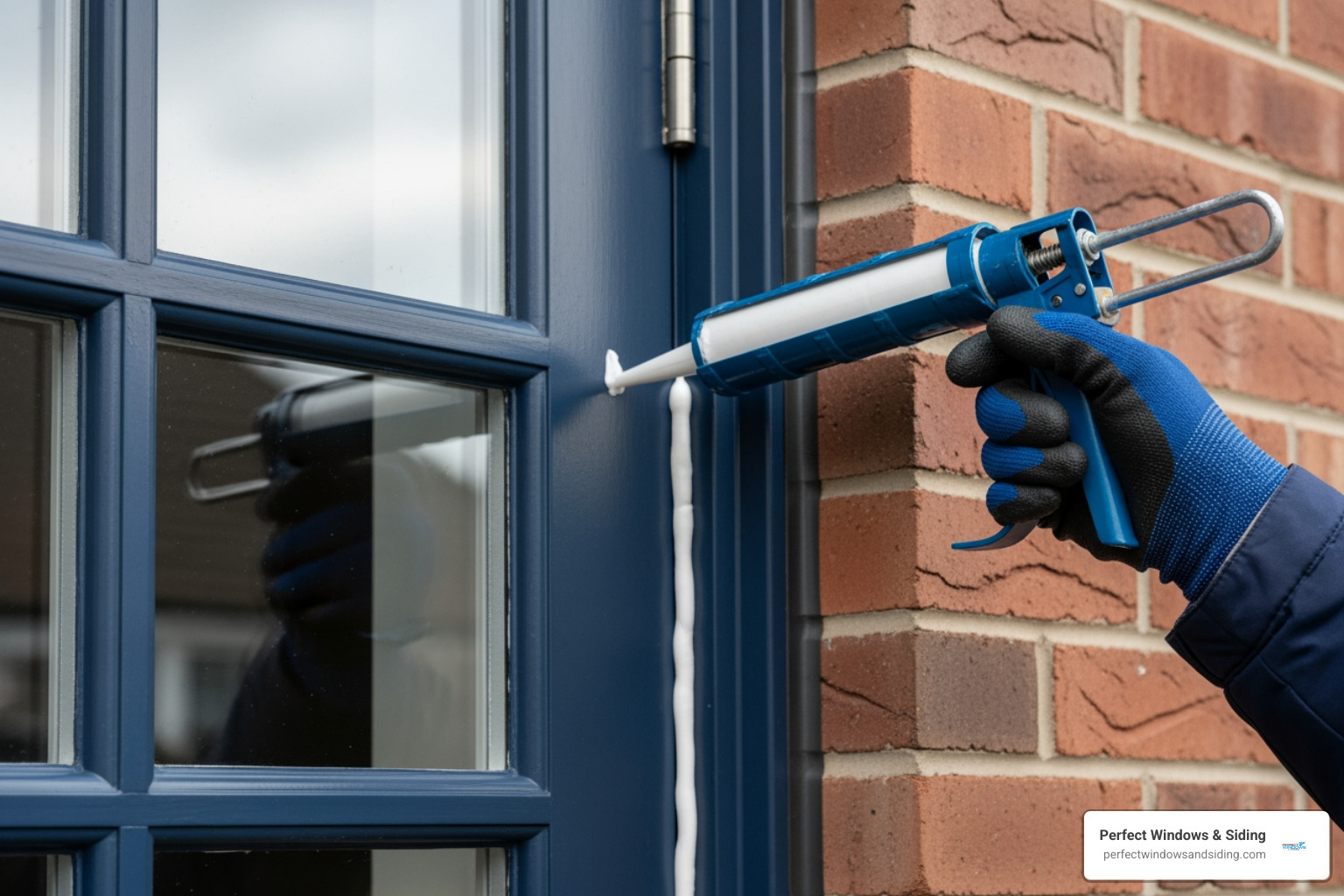
Once the frame is secured, apply a continuous bead of high-quality exterior caulk where the frame meets the siding. This creates a weathertight seal. Let it cure for 24 hours before reinstalling exterior trim.
Ensure your weatherstripping is in good condition. This material creates a tight seal to block drafts, noise, and insects. Check out how to Install Door Weather Stripping properly for maximum effectiveness.
On the interior, fill the gap between the jamb and rough opening with low-expansion spray foam. This creates an air seal for insulation. Crucially, use only low-expansion foam, as regular foam can expand too forcefully and warp the door frame.
Finally, install a drip cap above exterior doors. This metal flashing directs rainwater away from the top of the door, preventing water intrusion. For more tips, see these Details on sealing exterior doors.
Properly sealing your French door installation transforms it into a professional-grade upgrade that will protect your home for years.
Troubleshooting and Long-Term Care
Even with a careful French door installation, issues can arise. Knowing how to troubleshoot common problems and perform simple maintenance will keep your doors functioning flawlessly for decades.
Overcoming Common Installation Challenges
- Doors Sticking or Not Closing: This usually indicates an alignment issue. Re-check that the frame is plumb and square. You may need to loosen the jamb screws, adjust the shims, and re-tighten. Sometimes, a simple hinge adjustment is all that’s needed.
- Uneven Gaps: If the reveal around the doors isn’t a consistent 1/8 inch, your shimming needs adjustment. This requires patience but is critical for a professional look and proper function.
- Drafts or Leaks: For exterior doors, this points to a gap in your weatherproofing. Inspect and re-apply exterior caulk as needed. Check that your weatherstripping is intact and creating a tight seal.
- Non-Square Openings: Minor issues can be fixed by using shims to make the door frame square within the imperfect opening. Significantly out-of-square openings may require re-framing, which is often a job for a professional.
- Adjusting Shims Post-Installation: It’s fine to make adjustments later. Carefully loosen the screws in the problem area, adjust the shims, and re-tighten without bowing the jamb.
Maintaining Your French Doors for Longevity
A little regular maintenance will protect your investment and keep your doors operating smoothly.
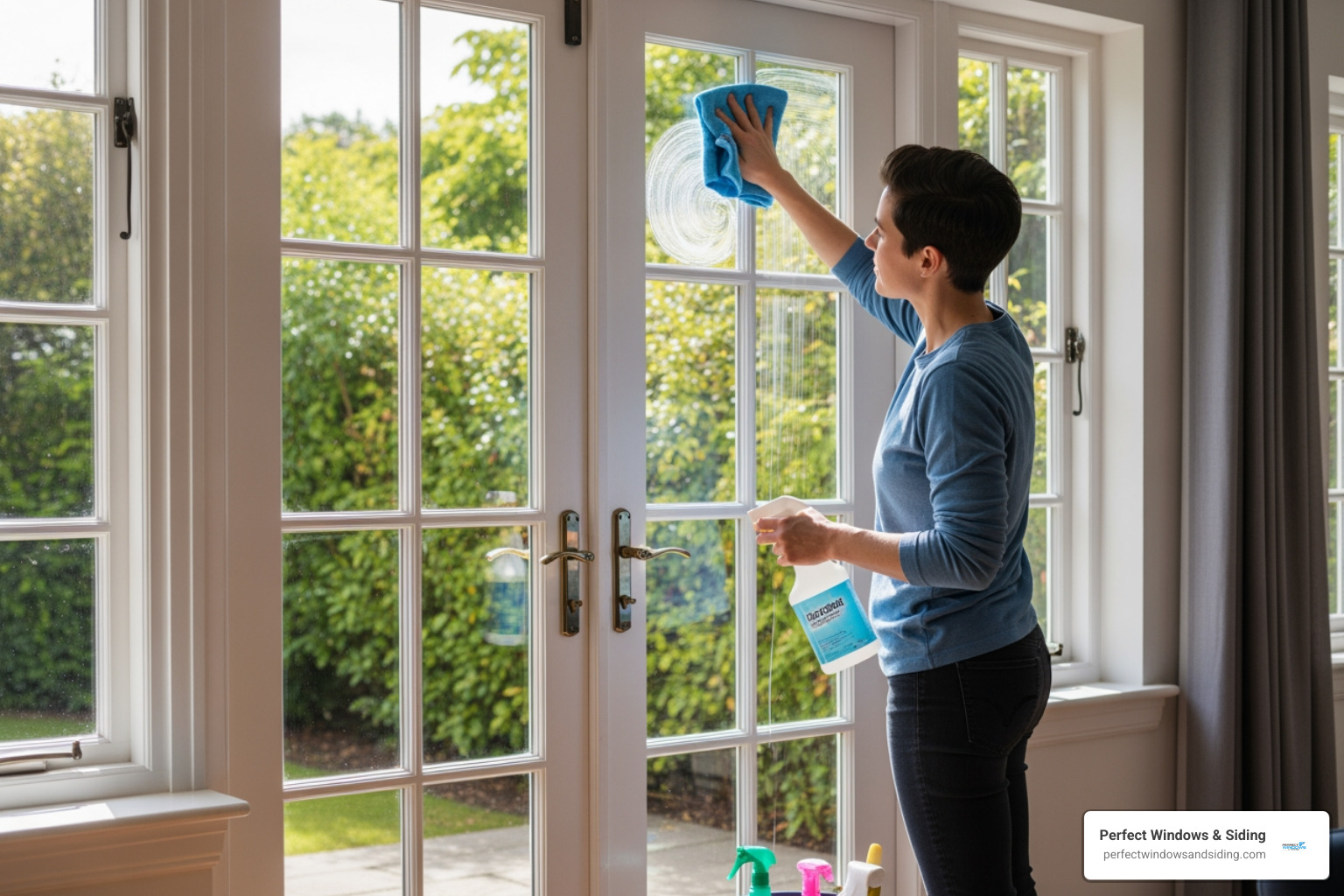
- Regular Cleaning: Use a streak-free glass cleaner on the panes and a mild soap-and-water solution on the frames. Avoid abrasive cleaners that can damage the finish.
- Annual Lubrication: Apply a silicone-based lubricant to hinges, latches, and lock mechanisms annually to prevent squeaks and ensure smooth operation.
- Inspect Seals: Annually check weatherstripping and exterior caulk, especially in a climate like Chicago’s. Replace any cracked or compressed sections to maintain energy efficiency.
- Touch-up Finish: Protect wood or painted doors by periodically inspecting the finish and touching up any chips or cracks to prevent weather damage.
Frequently Asked Questions about French Door Installation
After two decades of French door installation projects in the Chicago area, we at Perfect Windows & Siding have answered a lot of questions. Here are the most common ones.
Should French doors swing in or out?
The best swing direction depends on the door’s location and your priorities.
For interior doors, the swing direction depends on your room’s layout and furniture placement to ensure clear walkways. For exterior doors, an in-swing design is generally more secure because the hinge pins are protected inside your home. In-swing doors also make it easier to add screen or storm doors.
Out-swing doors are a good option for saving interior floor space, but they require special security hinges and careful weatherproofing on the exterior.
Do French doors add value to a home?
Yes, absolutely. French doors are a premium feature that adds significant value.
They improve aesthetic appeal, flood rooms with natural light, and create a seamless connection between indoor and outdoor living spaces. These qualities are highly sought after by homebuyers and can increase your home’s resale value. In our experience across Chicagoland, homes with well-installed French doors attract more interest and often command higher prices.
What’s the difference between a French door and a double door?
While people often use the terms interchangeably, there is a key distinction.
French doors are a type of double door defined by large glass panes (lites) that run nearly the full length of each panel, designed to maximize light and views. Traditional double doors are typically solid or have only small decorative glass sections, prioritizing privacy and substance over transparency.
Essentially, if you want to maintain a visual connection between spaces, choose French doors. If you need privacy and a more solid barrier, traditional double doors may be a better fit.
If you’re considering a French door installation for your Chicago-area home, our team at Perfect Windows & Siding can help. You can also explore options for Door and Window Replacement Near Me to see how we can transform your space.
Conclusion
Completing a French door installation is one of the most satisfying home improvement projects, changing a space with light, style, and an open feel.
This guide has covered the essential steps for a successful installation, from selection and preparation to final sealing and weatherproofing. It’s a project where attention to detail pays off. The three keys to success are: measure accurately, ensure everything is level and plumb, and seal thoroughly to protect your home from Chicago’s weather and improve energy efficiency.
While a DIY approach can be rewarding, French door installation is often complex, especially in older homes. For peace of mind and a professional result, sometimes an expert is the best choice.
That’s where we come in. At Perfect Windows & Siding, we’ve served the Chicagoland area for over 20 years. As a local, family-owned business, we offer custom solutions backed by a lifetime installation warranty. Our experienced team handles every challenge to ensure a perfect result.
Whether you’re ready for a French door installation or considering other improvements, we’re here to help. Visit our Door and Window Replacement Near Me page to learn more about our professional services.