

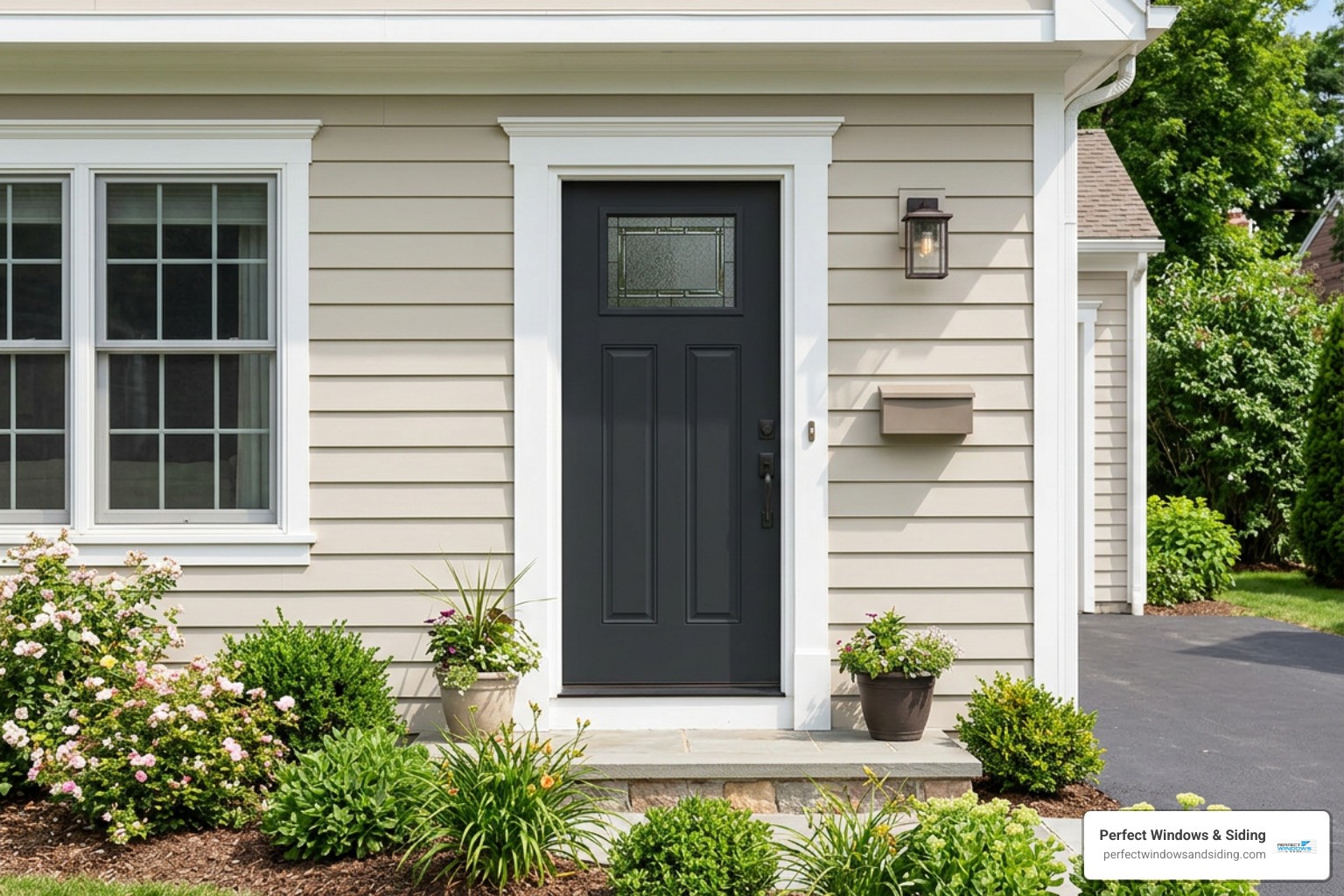
An Essential Guide to Barrington Energy Efficient Front Doors
Start With a Tightly Sealed, Insulated Front Door
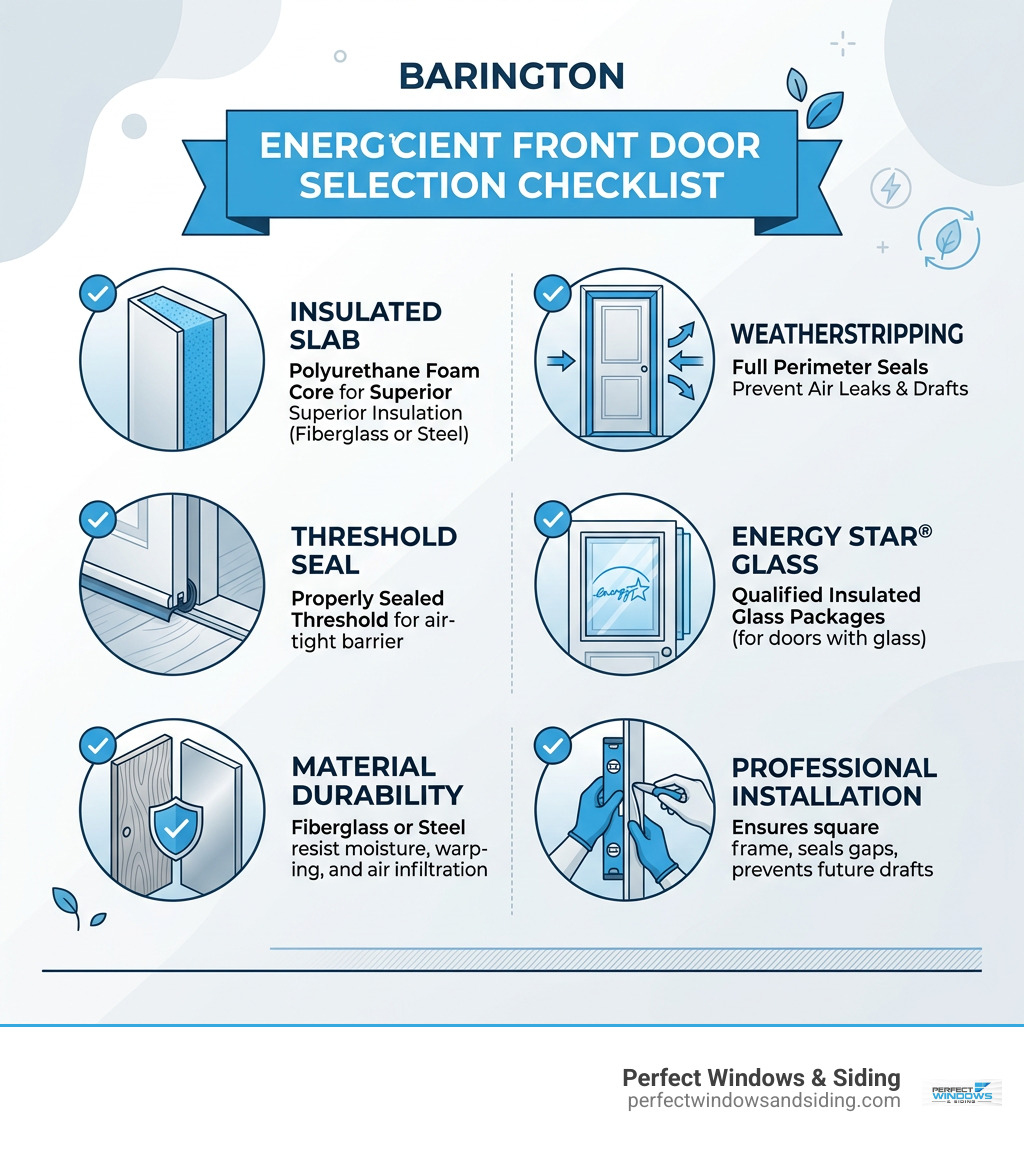
A Barrington energy-efficient front door should have an insulated fiberglass or steel slab, full perimeter weatherstripping, a properly sealed threshold, and an ENERGY STAR-qualified glass package if it includes glass. These features reduce air leaks that make an entryway feel cold in winter and sticky in humid summer weather, helping your heating and cooling system maintain a steadier indoor temperature.
When choosing a replacement, focus on:
- Fiberglass with a polyurethane foam core for strong insulation, moisture resistance, and low upkeep.
- Insulated steel for security, durability, and reliable thermal performance.
- Professional installation to keep the frame square, seal gaps, and prevent drafts around the sill and jambs.
- A style that fits the home, such as a Colonial-inspired panel door, Craftsman details, or insulated sidelights with low-emissivity glass.
Wood can offer a classic look, but it generally needs more maintenance in changing Midwest weather. Modern fiberglass and steel doors are built to resist warping, moisture, and air infiltration while improving comfort at one of the home’s most used openings.
I’m Voytek Glab, owner of Perfect Windows & Siding, with more than 20 years of hands-on experience installing doors, windows, and siding across the Chicagoland area. In this guide to Barrington energy efficient front doors, I’ll explain how material, design, and careful installation work together for lasting comfort and protection.
Basic Barrington energy efficient front glossary:
Why Upgrade to a Barrington Energy Efficient Front Door System
An entryway is more than just a welcoming focal point for your home; it serves as a critical component of your home’s thermal envelope. When an exterior entry system fails to create an airtight seal, it forces your heating and cooling equipment to work overtime. Replacing an aging, drafty front door with an advanced, insulated system resolves air infiltration issues and helps stabilize indoor temperatures throughout the year.
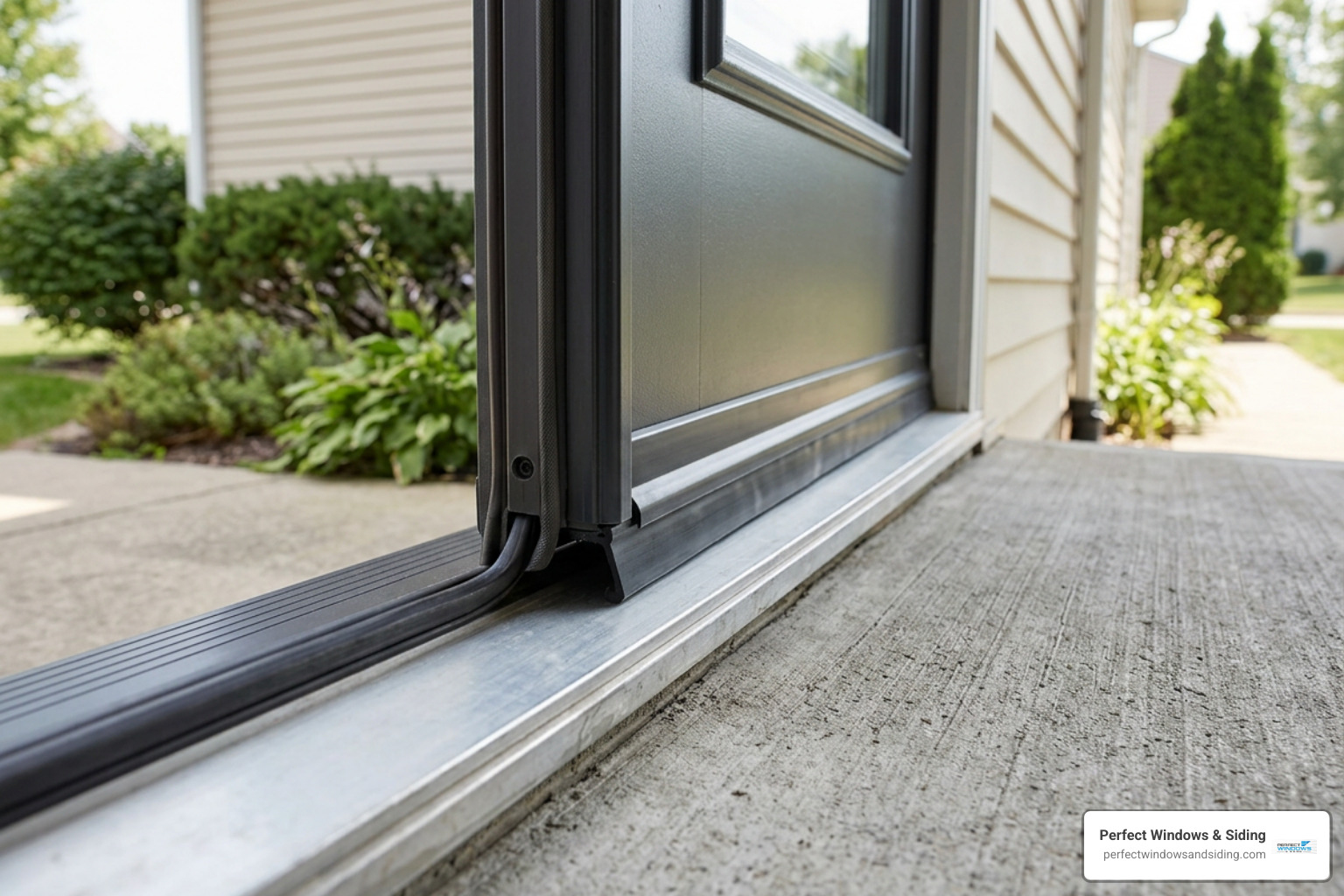
When evaluating whole-home performance, energy specialists frequently emphasize the importance of continuous air barriers. Partnering with certified professionals for energy audit best practices often reveals that traditional solid wood slabs or poorly fitted jambs account for a substantial percentage of total air leakage. Modern engineered doors integrate multi-finned bottom sweeps, compression weatherstripping, and insulated frames to eliminate these thermal vulnerabilities completely.
Climate Challenges: Managing Barrington Winters and Humid Summers
The climate in Barrington, IL, and surrounding Chicago suburbs presents distinct seasonal challenges. Winters bring sub-zero wind chills, heavy snowfall, and deep freezes, while summers deliver intense heat and heavy humidity. Traditional entry materials often react poorly to these extreme swings:
- Thermal Contraction and Expansion: Natural wood swells during humid July afternoons, leading to sticking latches, and shrinks during dry January freezes, leaving noticeable gaps around the frame.
- Air Leakage and Drafts: Gaps created by shifting materials allow cold air to rush in during winter storms, chilling your foyer and driving up furnace runtime.
- Moisture Infiltration: High humidity levels can lead to condensation, rotting wood frames, peeling paint, and structural warping over time.
Modern engineered door systems eliminate these seasonal headaches through internal thermal breaks, rot-proof composite jambs, and dimensionally stable materials that remain unchanged regardless of outdoor weather extremes.
Maximizing Return on Investment and Long-Term Energy Savings
Upgrading your entrance delivers one of the highest returns on investment of any exterior home improvement project. According to industry remodeling reports, high-grade steel entry door replacements can return approximately 236% of their value when selling a home. This impressive return stems from the immediate enhancement of curb appeal combined with verified energy performance.
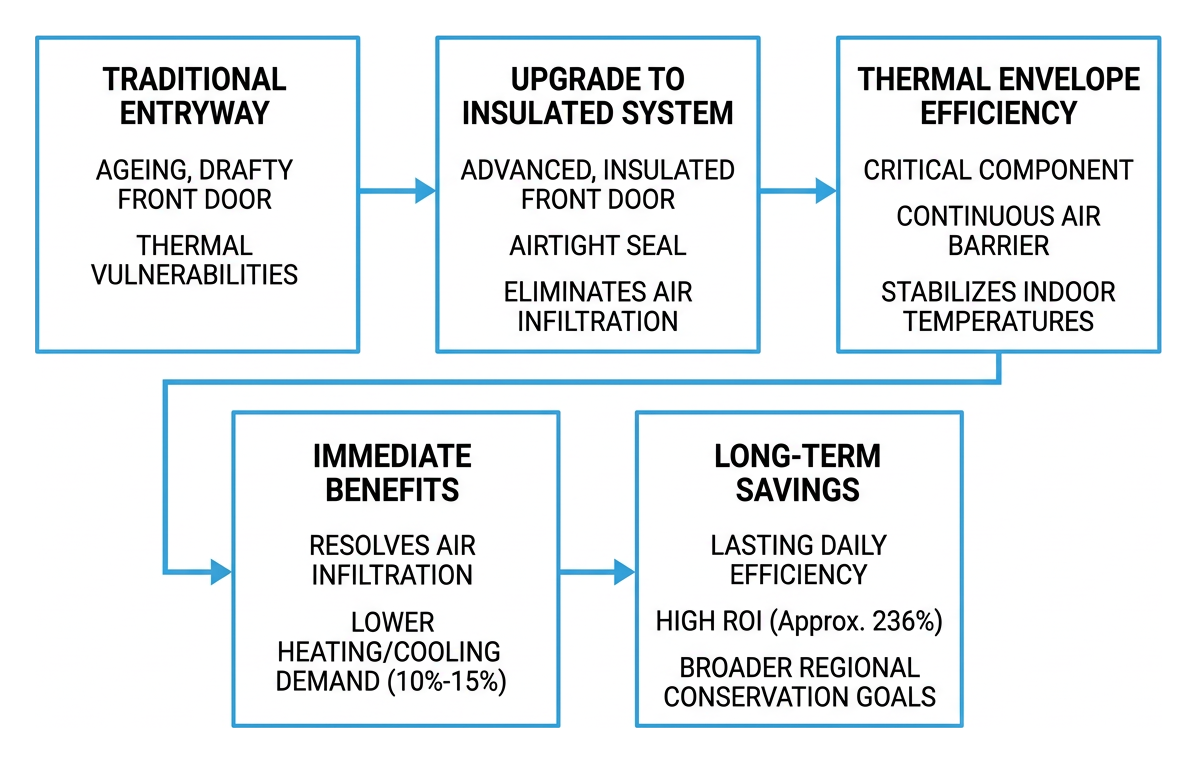
Beyond resale value, an insulated entry system delivers lasting daily efficiency by lowering heating and cooling demands by 10% to 15%. Forward-looking communities throughout northern Illinois continue to prioritize sustainability initiatives, from municipal solar arrays to community conservation guidelines. For homeowners interested in local green initiatives, exploring sustainability resources provides valuable insights into how neighborhood-level efficiency updates contribute to broader regional conservation goals.
Material Comparison: Fiberglass vs. Steel vs. Wood Entry Doors
Selecting the right door slab material is the foundation of high-performance exterior remodeling. The three primary options—fiberglass, steel, and wood—offer distinct characteristics in terms of insulation value, maintenance requirements, and long-term durability.
| Feature | Fiberglass Entry Doors | Steel Entry Doors | Solid Wood Entry Doors |
|---|---|---|---|
| Insulation Core | High-density polyurethane foam | Polyurethane or polystyrene core | Natural solid wood fibers |
| Thermal Resistance (R-Value) | High (up to R-6.0) | High (up to R-5.5) | Low to Moderate (R-1.5 to R-2.5) |
| Moisture & Rot Resistance | Excellent; impervious to water | High; requires intact paint layer | Low; vulnerable to moisture and decay |
| Maintenance Level | Minimal; wipe clean | Low; occasional touch-up paint | High; frequent staining or sealing |
| Dimensional Stability | Superior; will not swell or shrink | Superior; maintains rigid shape | Poor; expands and contracts seasonally |
| Architectural Versatility | Smooth or realistic woodgrain | Sleek, modern, or paneled | Traditional, custom carved |
Engineering Behind Barrington Energy Efficient Front Fiberglass Doors
Fiberglass entry systems have become the gold standard for homeowners seeking the warmth of natural wood combined with state-of-the-art thermal engineering. Inside every premium fiberglass slab is an advanced polyurethane foam core that provides exceptional insulating properties—up to five times the thermal resistance of standard solid wood.
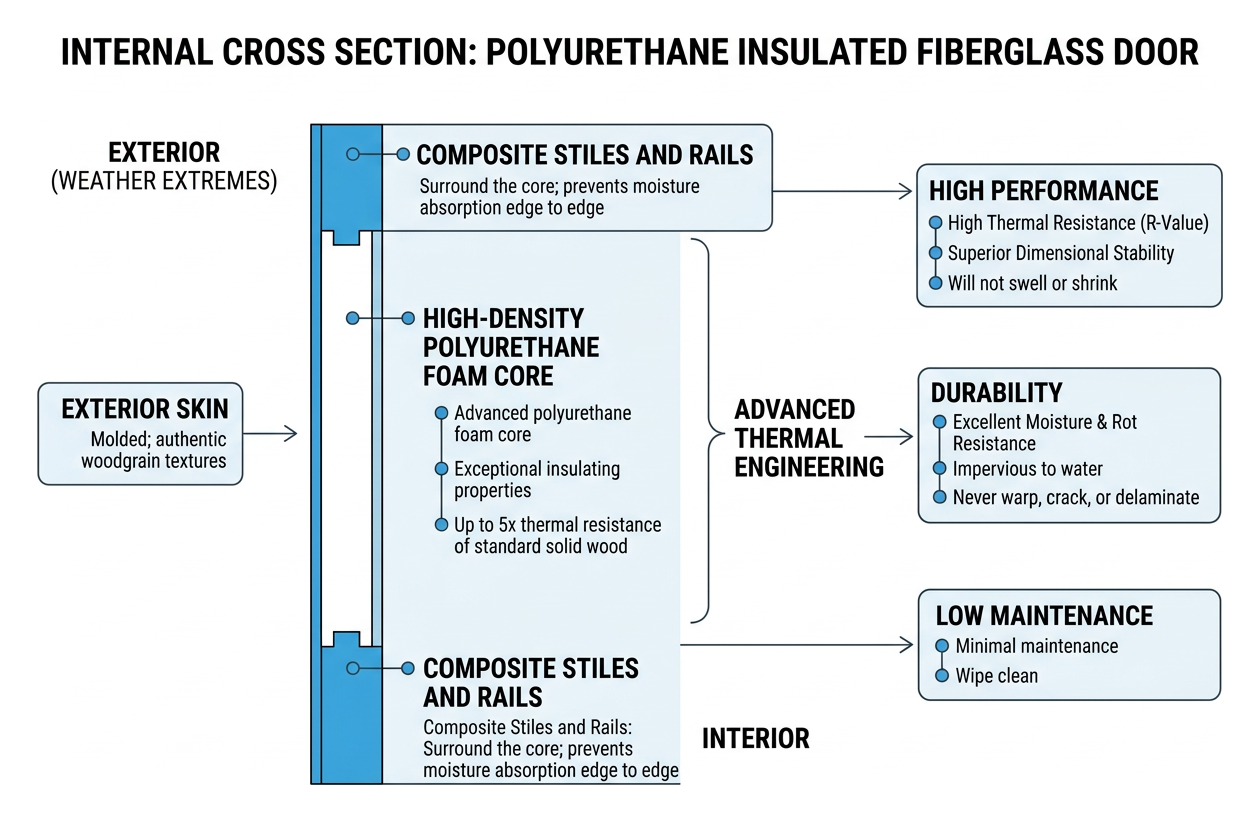
Surrounding this dense insulating core are composite stiles and rails that prevent moisture absorption from edge to edge. The exterior skin is molded with authentic woodgrain textures—such as oak, mahogany, or fir—offering classic elegance without the routine sanding, staining, or sealing required by organic timber. These systems never warp, crack, or delaminate, ensuring a reliable weather seal across decades of Chicagoland winters.
The Strength and Efficiency of Modern Steel Doors
For homeowners who prioritize maximum security alongside thermal performance, heavy-gauge steel entry doors provide an unbeatable solution. Constructed from galvanized steel wrapped around a rigid insulating foam core, these systems offer exceptional structural integrity and impact resistance.
Modern steel doors feature built-in thermal breaks that prevent the transfer of outdoor cold through the metal skin into the home interior. When paired with high-performance magnetic weatherstripping, the door latches into place with an airtight seal similar to a refrigerator door. This combination of structural strength and thermal protection makes steel systems a premier choice for durability and high investment return.
Architectural Styles and Color Palettes for Barrington Homes
A front entrance sets the tone for your entire home. Barrington architecture features a rich blend of traditional Colonial estates, Craftsman residences, mid-century ranch homes, and modern custom builds. Upgrading to an energy-efficient entry door does not mean compromising on classic architectural character.
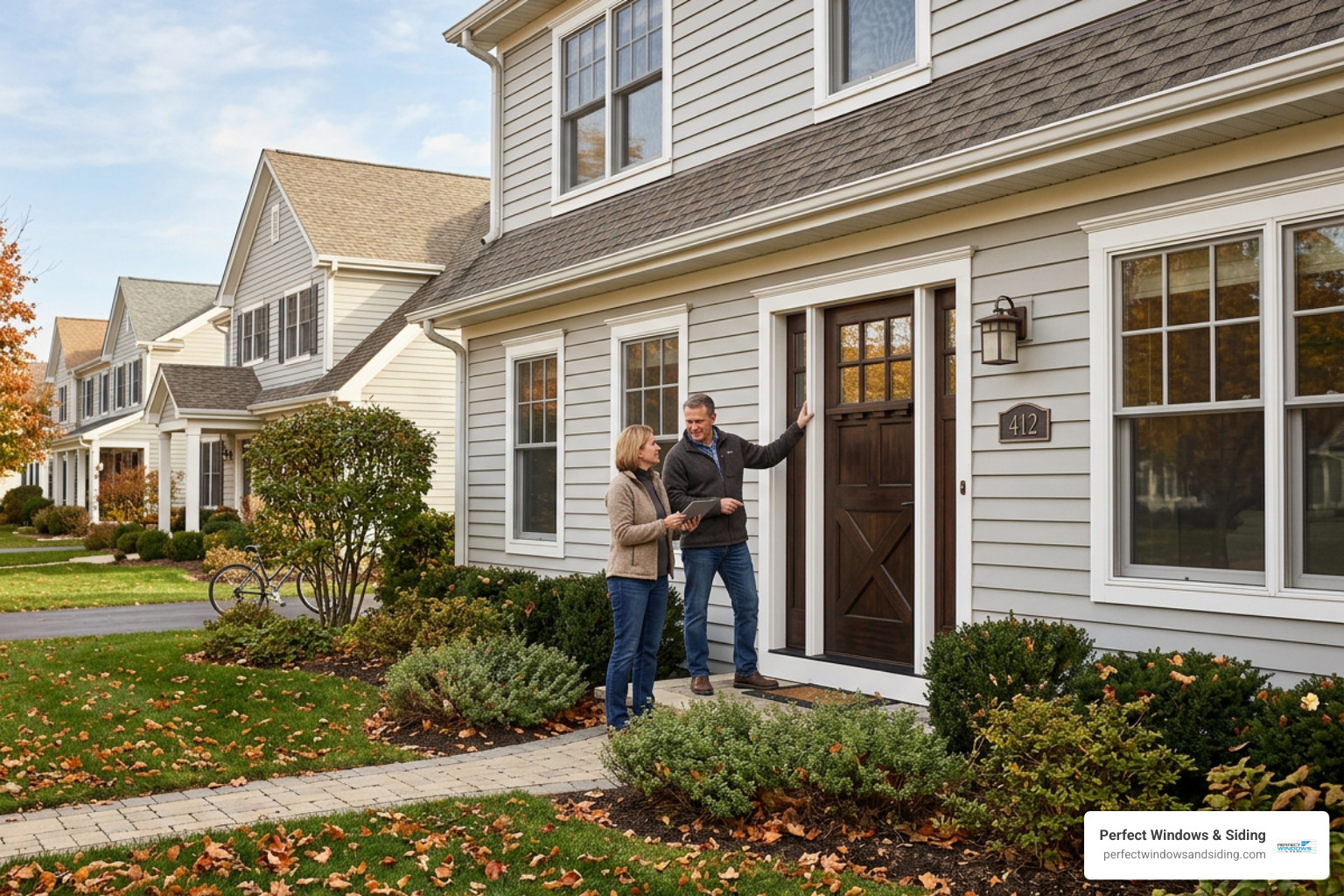
Popular color selections across our local communities include:
- Timeless Neutrals: Deep slate gray, rich charcoal, soft linen, and classic black create a distinguished, elegant presence.
- Earthy Tones: Forest green, warm espresso, and dark walnut woodgrain stains harmonize beautifully with surrounding natural landscapes and brick exteriors.
- Bold Accents: Navy blue, deep crimson, and heritage cranberry offer an inviting pop of personality while highlighting entry architecture.
Selecting Styles for Barrington Energy Efficient Front Entrances
To maintain historical continuity and aesthetic balance, your new front door should reflect the architectural lines of your home.
- Colonial and Traditional Homes: Opt for four-panel or six-panel configurations with classic raised moldings, satin nickel hardware, and decorative glass transoms.
- Craftsman and Prairie Styles: Choose doors featuring dentil shelves, flat Shaker-style recessed panels, and upper third insulated glass with geometric grid patterns.
- Modern and Contemporary Designs: Select smooth-finish steel or fiberglass slabs with minimalist horizontal glass inserts, brushed chrome accents, and clean, unadorned frames.
If your entryway includes sidelights or transoms, ensure they feature double- or triple-pane Low-E insulated glass units. For additional interior light control and insulation, cellular honeycomb shades can be integrated to trap air pockets, providing an extra layer of defense against seasonal temperature swings.
The Critical Role of Professional Installation and Sealing
Even the highest-rated door slab will underperform if it is installed improperly. Energy efficiency relies entirely on creating a continuous, unbroken barrier between your interior living space and the outdoor elements. Professional installation ensures that every component of the entryway system works in perfect harmony.
Our installation process follows meticulous building-envelope standards:
- Square and Plumb Framing: We inspect and prepare the rough opening, ensuring the door frame is plumb, level, and square so weatherstripping compresses evenly on all four sides.
- Integrated Sill Flashing: A specialized sill pan flashing system is installed under the threshold to direct water away from subfloors, preventing hidden rot and structural damage.
- Low-Expansion Insulating Foam: We seal the perimeter cavity between the door jamb and wall framing using dedicated low-expansion foam that fills every void without distorting the frame.
- High-Grade Elastomeric Sealants: Precision exterior caulking seals exterior trim, establishing a durable defense against wind-driven rain and air infiltration.
This exacting attention to detail prevents thermal bridging, eliminates cold air drafts, and guarantees smooth, effortless latching year after year.
Incentives, Financing Options, and Energy Tax Credits
Investing in a high-performance entry door is an investment in your home’s long-term comfort, structural protection, and sustainability. Because every home features unique architectural dimensions, entry configurations, and custom finish requirements, project scopes are tailored individually to each property.
Homeowners can also take advantage of modern energy-efficiency incentives. Federal initiatives under the Inflation Reduction Act allow qualifying ENERGY STAR-certified exterior doors to be eligible for federal energy-efficiency tax credits, reducing your overall tax liability. Additionally, communities throughout the Chicagoland area regularly highlight regional efficiency incentives; exploring regional energy efficiency programs provides helpful information on sustainability programs that support energy-conscious home improvements.
Frequently Asked Questions About Barrington Front Doors
How much can an energy-efficient front door save on heating and cooling bills?
An ENERGY STAR-certified front entry system can reduce household heating and cooling energy use by approximately 10% to 15%. By stopping uncontrolled air drafts and minimizing conductive heat loss, your HVAC system operates under reduced strain, maintaining consistent indoor comfort while extending equipment lifespan.
What makes fiberglass more energy efficient than solid wood in Illinois?
Solid wood is an organic, porous material that naturally conducts heat and reacts to seasonal moisture changes by swelling, warping, and shrinking. In contrast, fiberglass doors are engineered with a high-density polyurethane foam core that provides up to five times greater insulation than solid wood. Additionally, fiberglass does not expand or contract during Midwest weather shifts, preserving its airtight perimeter seal all year long.
Are federal tax credits available for installing energy-efficient doors in 2026?
Yes. Under federal energy-efficiency guidelines in 2026, homeowners who install certified ENERGY STAR exterior doors may qualify for energy tax credits on eligible improvements. These credits help offset project expenses when you upgrade to systems that meet strict thermal performance and U-factor thresholds.
Conclusion
Upgrading your home’s entrance is one of the most effective ways to elevate curb appeal, boost security, and lower daily energy consumption. At Perfect Windows & Siding, we take immense pride in being a local, family-owned business serving Barrington and communities across the Chicagoland area for over 20 years. Our team of licensed, insured, and experienced craftsmen is dedicated to delivering custom door solutions built to the highest standards of quality, backed by our reassuring lifetime warranty protection.
Ready to transform your home with a beautiful, high-performance entrance? Schedule your consultation or get a free estimate by contacting us today to begin your custom exterior door installation.