

Understanding What You’ll Invest in Your Home’s Protection
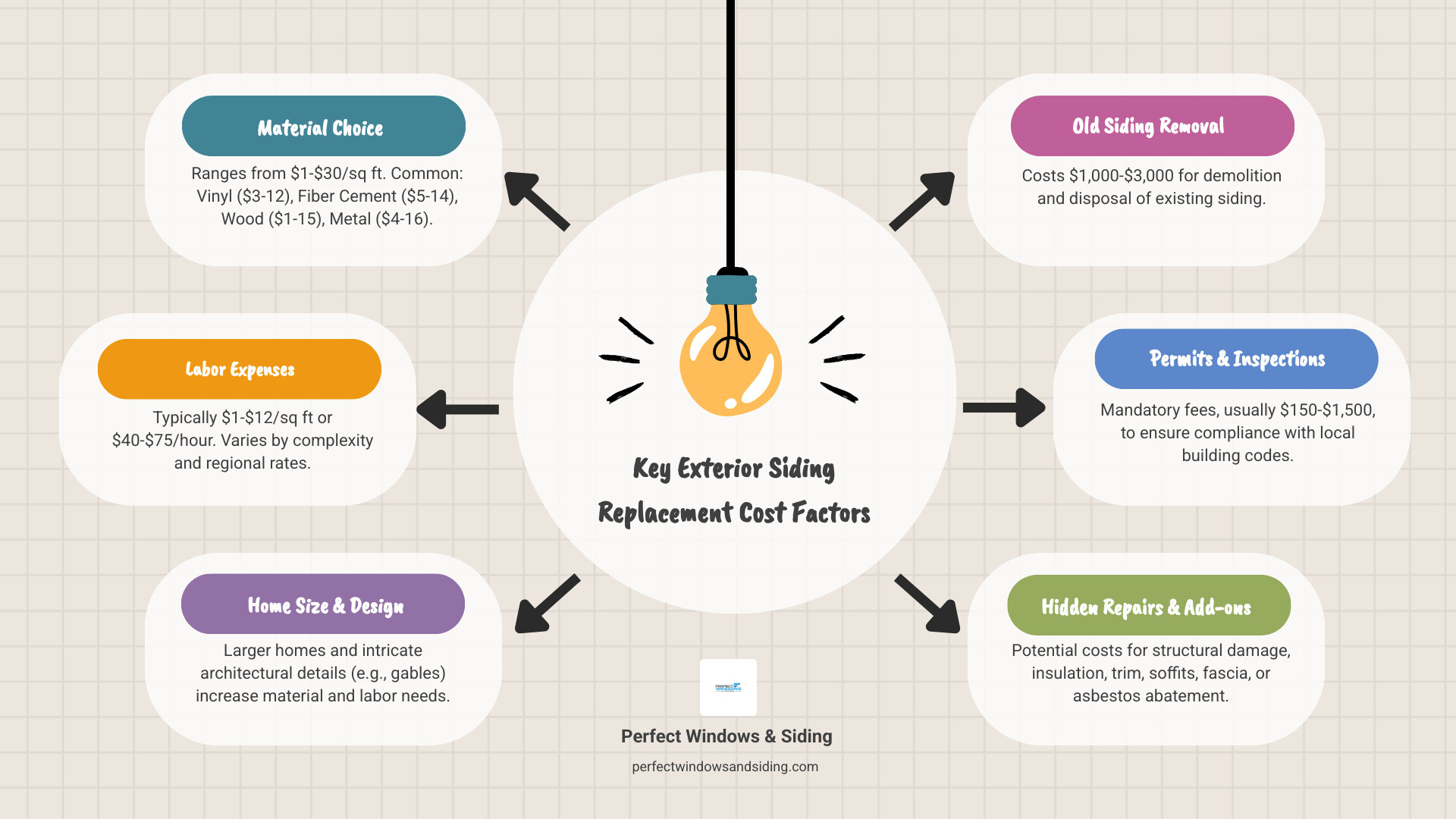
When considering a home improvement project, one of the most impactful upgrades you can make is replacing your siding. It’s not just about aesthetics; it’s a crucial investment in your home’s protection and value. The exterior siding replacement cost can vary significantly, typically ranging from $5,500 to over $25,000, with the national average hovering around $11,532. This wide range is influenced by several key factors that every homeowner should understand before diving in.
First and foremost, the material choice is the biggest driver of cost. Options range from budget-friendly vinyl, which can be as low as $1 per square foot, to premium materials like stone or high-end fiber cement, which can exceed $30 per square foot. The size of your home is another major factor; a sprawling two-story house will naturally require more material and labor than a small bungalow. For example, a 1,000-square-foot home might cost anywhere from $1,000 to $50,000 to re-side, depending on the material chosen.
Labor costs also play a significant role, typically ranging from $1 to $12 per square foot or an hourly rate of $40 to $75. This can fluctuate based on the complexity of the job, the experience of the crew, and your geographic location. Don’t forget to budget for additional expenses like the removal and disposal of old siding, which can add another $1,000 to $3,000 to the total. You may also need to factor in the cost of permits, which can range from $150 to $1,500, and any necessary repairs to the underlying structure of your home.
While the initial investment might seem substantial, it’s important to consider the long-term benefits. New siding is more than just a facelift for your house; it’s a protective shield against the elements. In a place like Chicago, with its harsh winters and unpredictable weather, having robust and well-installed siding is essential for maintaining your home’s structural integrity. Furthermore, a quality siding replacement can yield a significant return on investment, often up to 80%, when you decide to sell your home. Modern siding materials also offer improved energy efficiency, which can lead to a noticeable reduction in your heating and cooling bills, sometimes by as much as 10-20% annually.
My name is Voytek Glab, and as the owner of Perfect Windows & Siding, I’ve spent over two decades helping homeowners in the Chicagoland area steer the complexities of exterior renovations. My hands-on experience in every aspect of siding installation, from initial consultation to final inspection, has given me a deep understanding of what drives project costs and how to maximize value for our clients. We’re here to guide you through every step of the process, ensuring you make the best choice for your home and your budget.
Key Terms to Know:
- Hardie Plank Siding: A popular brand of fiber cement siding known for its durability and aesthetic appeal.
- Wood Shingle Siding: A classic siding option that offers a natural, rustic look. It requires more maintenance than other materials but provides excellent insulation.
Understanding the Average Exterior Siding Replacement Cost
Let’s talk real numbers. When I sit down with homeowners in Chicago, the first question is always the same: “What’s this going to cost me?” The exterior siding replacement cost varies quite a bit, but I can give you some solid benchmarks to work with. Nationally, most homeowners spend between $5,561 and $17,645 for a complete siding replacement, with the sweet spot around $11,532. However, it’s crucial to understand that this is just an average. Your actual cost will depend on several key factors that can significantly influence the final price tag.
Material choice makes the biggest difference. You’ll find a wide spectrum of options, from budget-friendly vinyl, which can start as low as $2 per square foot, to premium materials like natural stone or high-end composites that can exceed $50 per square foot. In my experience, most Chicago homeowners gravitate toward materials in the $4.50 to $30 per square foot range. For example, vinyl siding, a popular and cost-effective choice, typically runs between $5 and $9 per square foot installed. Wood siding, prized for its natural beauty, can range from $13 to $20 per square foot. Fiber cement, a durable and versatile option, generally falls between $14 and $22 per square foot.
Home size directly impacts your budget. It’s a simple equation: a larger home requires more materials and more labor, which translates to a higher overall cost. A cozy 1,000-square-foot ranch might cost anywhere from $4,000 to $14,000 for a full siding replacement, depending on the chosen material. In contrast, a larger 2,500-square-foot, two-story home could see costs ranging from $7,000 to $35,000 or even more. The more exterior wall surface you have, the more you can expect to invest.
Labor costs are a significant component of the total price. On average, you can expect labor to account for $1 to $12 per square foot. Some contractors may charge an hourly rate, which typically falls between $40 and $75 per hour. The complexity of your home’s architecture plays a huge role here. A simple, rectangular house is much easier and faster to side than a home with multiple gables, dormers, and intricate architectural details. These features require more precise cutting, specialized equipment, and additional time, all of which contribute to higher labor costs and potentially more material waste.
Regional differences matter, too. Here in the Chicagoland area, we have a strong demand for skilled labor, which can influence the overall cost of your project. Additionally, local building codes, the cost of transporting materials, and even the unpredictable Midwest weather can all play a part in the final price. While Chicago’s costs generally align with national averages, you might find slight variations depending on your specific suburb and the local market conditions.
Timing can be a factor in your favor. The peak season for exterior renovations is typically spring and summer. If you have the flexibility, scheduling your siding replacement during the off-season, like late fall or winter, can sometimes lead to more competitive pricing from contractors. However, Chicago winters can present challenges, such as shorter daylight hours and potential weather delays, so plan accordingly.
Ready to explore your options and get a more precise estimate for your home? Check out our Siding Installation Near Me services to learn more about how we can help you transform your home’s exterior.
How to Calculate Your Estimated Exterior Siding Replacement Cost
Want to get a ballpark figure before you start calling contractors? Here’s a simple method I often share with homeowners to help them estimate their exterior siding replacement cost. While this won’t replace a professional, on-site assessment, it will give you a solid starting point for your budget.
1. Calculate Your Home’s Exterior Square Footage:
- Measure the perimeter: Walk around your house and measure the length of each exterior wall. Add these measurements together to get the total perimeter.
- Measure the height: Determine the average height of your walls from the foundation to the roofline. For multi-story homes, you’ll need to measure each level.
- Calculate the total wall area: Multiply the perimeter by the height. For example, a rectangular house that is 50 feet long and 30 feet wide has a perimeter of 160 feet (50 + 30 + 50 + 30). If the walls are 10 feet high, the total wall area is 1,600 square feet (160 x 10).
- Account for gables and dormers: For triangular areas like gables, measure the base and the height, then use the formula: (base x height) / 2. Add this to your total square footage.
- Factor in waste: It’s standard practice to add 10-15% to your total square footage to account for cuts, waste, and potential mistakes. So, for our 1,600 sq. ft. example, you’d actually need to purchase around 1,760 to 1,840 sq. ft. of siding.

2. Calculate Material Costs:
Once you have your total square footage, multiply it by the cost per square foot of your chosen siding material. For example, if you’re considering vinyl siding at $7 per square foot for a 2,500 square foot project, your material cost would be approximately $17,500.
3. Factor in Labor Expenses:
Labor costs can vary, but a good estimate is to multiply your total square footage by the average labor rate in your area. In the Chicago area, this is typically between $4 and $8 per square foot. For our 2,500 sq. ft. project, this would add $10,000 to $20,000 to the total cost.
4. Don’t Forget Removal and Additional Costs:
- Siding Removal: Removing and disposing of your old siding can cost between $1,000 and $3,000. This cost can increase if the existing material is difficult to remove, like stucco, or if hazardous materials like asbestos are present.
- Permits and Inspections: Depending on your local municipality, you may need to obtain permits for your project, which can add several hundred dollars to the cost.
- Repairs: It’s not uncommon to find underlying issues like rot or water damage once the old siding is removed. Be sure to budget for potential repairs to the sheathing or framing.
- Extras: Don’t forget to account for additional materials like house wrap, insulation, trim, and soffits, which are essential for a complete and professional installation.
Here’s a simplified formula to help you estimate your total project cost:
Total Estimated Cost = (Square Footage × Material Cost per sq. ft.) + (Square Footage × Labor Cost per sq. ft.) + Removal Cost + Additional Expenses
This calculation will give you a realistic starting point for your siding replacement project. Every home is unique, so it’s always best to get a detailed, on-site estimate from a qualified professional. They can provide you with an accurate quote based on the specific needs of your home.
How Siding Materials Drive Your Project’s Budget
The choice of siding material is arguably the single biggest factor influencing your exterior siding replacement cost. Each material comes with its own price tag, installation requirements, lifespan, and maintenance needs. It’s a balance between initial investment and long-term value. Let’s look at some popular options:
| Material Type | Cost/Sq. Ft. (Installed) | Lifespan | Maintenance | Pros “`