


How do you install 4×8 sheet siding correctly?
Identify whether the sheet is engineered wood, plywood or fiber cement before choosing an installation method. Prepare and flash the wall, support panel joints and follow the selected product instructions for fastening, clearances and finishing. A single nail-spacing or joint-sealing rule does not apply to every 4×8 siding panel.
Why Installing 4×8 Sheet Siding is the Smart Choice for Your Home
Installing 4×8 sheet siding offers homeowners a time-saving way to protect and beautify their exterior walls. Instead of installing individual boards one by one, these large panels go up much faster while providing the same durability and weather protection your home needs.
Quick Installation Guide for 4×8 Sheet Siding:
- Prepare the wall – Install water-resistive barrier and flashing
- Install starter strip – Level and secure at the bottom of the wall
- Place first panel – Align flush with corner, check for square
- Secure with nails – 6″ spacing on edges, 12″ in field areas
- Continue upward – Overlap panels, install Z-flashing between courses
- Finish with trim – Seal all gaps and paint exposed edges
The key advantage of sheet siding is efficiency. As one industry expert noted, “panels can be a great time-saver when putting siding on a house because the sheets – typically 4 by 8 feet – go up much faster than individual boards.”
But there’s a catch. Proper installation is critical for long-term performance. Poor technique can lead to moisture problems, warping, and costly repairs down the road. That’s why understand the right methods before you start.
I’m Voytek Glab, owner of Perfect Windows & Siding, and I’ve spent over 20 years specializing in exterior remodeling across the Chicagoland area. Through countless projects installing 4×8 sheet siding, I’ve learned that taking time to do it right the first time saves homeowners thousands in future repairs.
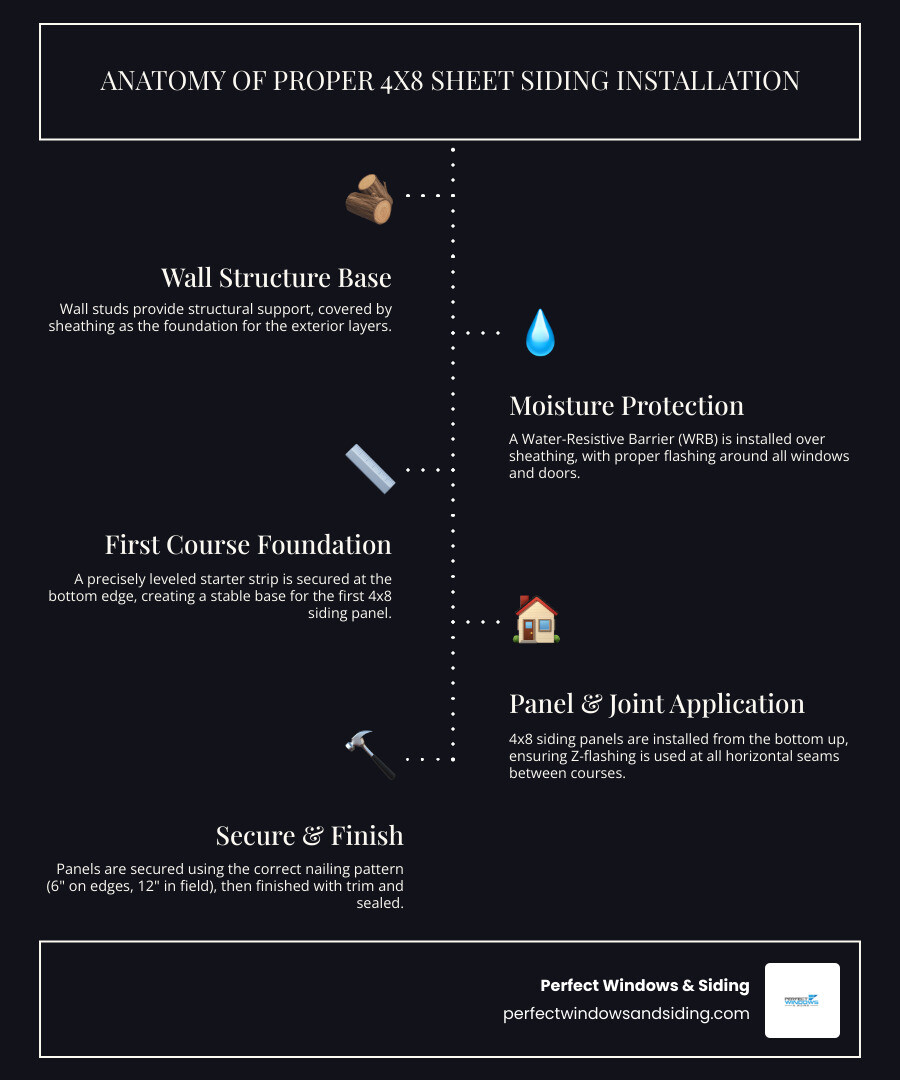
Installing 4×8 sheet siding terms to learn:
Step 1: Planning, Materials, and Wall Preparation
The secret to installing 4×8 sheet siding that lasts is prep work. Many siding problems I fix stem from rushed planning or skipped preparation.
Before starting, check local building codes. Requirements for materials and installation methods can vary, especially in high-wind or moisture-prone zones.
Safety is always first. Don’t skip the basics; your project can wait.
If you’re overwhelmed, our team of experienced Engineered Wood Siding Contractors Near Me can help Chicago homeowners steer technical requirements and local codes.
Choosing Your 4×8 Sheet Siding
Not all sheet siding is created equal. In my two decades of experience, I’ve learned each type has unique properties.
Engineered wood siding (e.g., LP SmartSide) is my top recommendation. Made from wood strands, fibers, and resins, it’s durable and resists moisture, rot, and insects common in Chicago. It’s also lighter than fiber cement, making installation faster.
Fiber cement siding is extremely durable. Made of cement, sand, and cellulose fibers, it’s fire- and pest-resistant and can last 50+ years. However, it’s very heavy and creates silica dust when cut, requiring safety gear and special blades.
Plywood siding (e.g., T1-11) is a classic, budget-friendly option. It offers a vertical plank look and is easy to work with, but requires regular maintenance.
OSB siding is a good middle-ground choice. Made of compressed wood strands, it resists warping and often comes pre-primed.
Here’s how these materials stack up in real-world use:
| Material | Durability | Cost | Weight | Maintenance |
|---|---|---|---|---|
| Engineered Wood | Excellent (resists rot, insects, impact) | Mid-Range | Moderate | Low (often pre-primed, good paint adhesion) |
| Fiber Cement | Superior (fire, pest, moisture resistant, 50-yr+) | Higher | Heavy | Low (long-lasting color, minimal upkeep) |
| Plywood (T1-11) | Good (when properly maintained) | Lower | Moderate | Higher (requires regular sealing/painting) |
| OSB Siding | Good (stable, resists warping) | Lowest | Moderate | Moderate (pre-primed, needs painting) |
Essential Tools and Materials
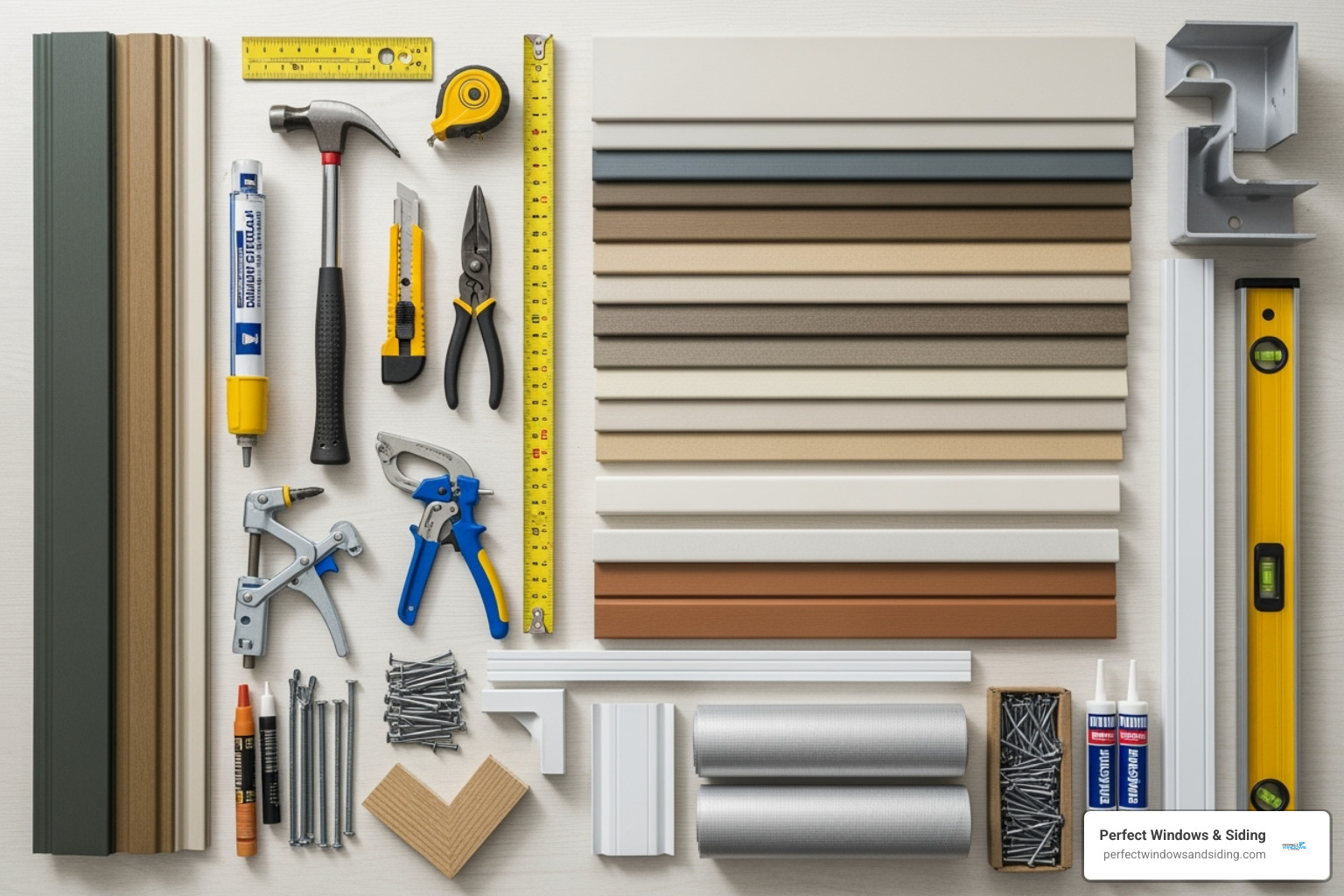
The right tools make installing 4×8 sheet siding much easier. Here’s my essential list.
Safety gear is not optional. Always wear safety goggles and gloves.
For cutting, use a circular saw for straight cuts and a jigsaw for details. A siding nailer speeds up the job significantly; set it to drive nails flush, not countersink them.
Essential measuring tools include a measuring tape, pencil, 4-foot level, chalk line, and speed square. Accuracy is crucial.
Key materials include 8d galvanized nails, Z-flashing for horizontal seams, a water-resistive barrier, exterior caulk to seal gaps, and an exterior primer for cut edges.
Measuring and Preparing the Wall Surface
Patience in this step prevents costly mistakes.
To calculate square footage, measure the width and height of each wall section. For gables, use the formula for a triangle (base x height / 2). Always add 10% for waste to avoid running short.
If replacing siding, remove it completely. This allows you to inspect the structure underneath for hidden problems.
Inspect the sheathing for rot, mold, or damage and replace any questionable sections. Your new siding needs a solid base. This is also a good time to check insulation.
Installing the water-resistive barrier is non-negotiable. Start at the bottom and work up, overlapping rows by several inches to shed water. Secure it per the manufacturer’s instructions.
Proper flashing around windows and doors is critical. Apply self-adhering flashing tape in shingle fashion (bottom, sides, then top) to direct water away from the wall cavity.
A solid foundation protects your investment for decades, especially in Chicago’s variable weather. For complete projects, our Siding Replacement Chicago team handles every detail.
Choosing siding for your Chicagoland home? Explore the options and discuss your installation project with our team.
Step 2: The Complete Guide to Installing 4×8 Sheet Siding
Now for the installation of your 4×8 sheet siding. This step is where careful planning pays off and separates pro work from amateur results.
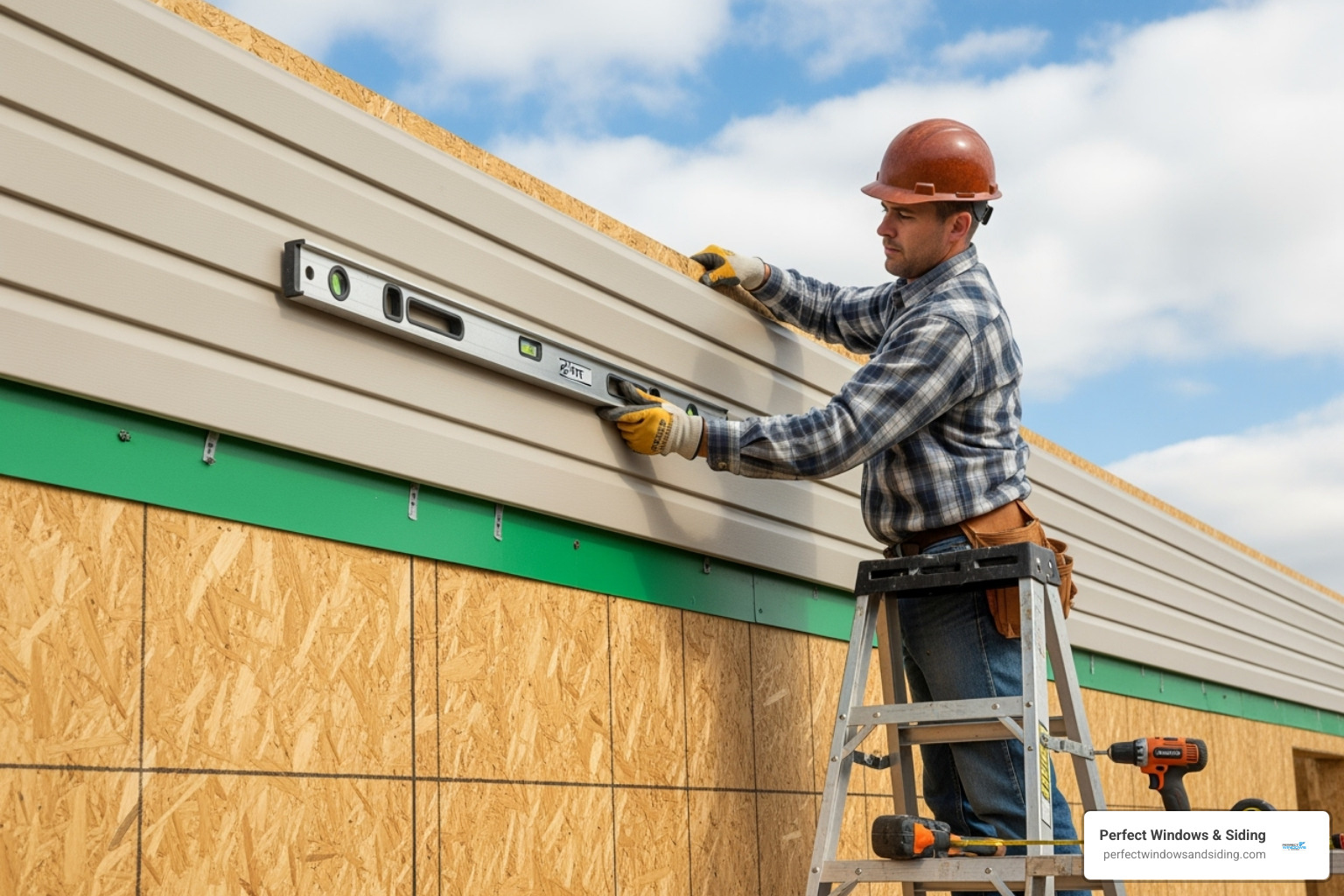
The golden rule is to always work from bottom to top. Start by installing a starter strip at the bottom of the wall. Snap a chalk line to ensure it’s perfectly level, as even a small error here will compound with each row.
Once the starter strip is nailed to the studs, position the first panel flush against the corner trim. Check that it’s plumb with your level before nailing. Our Siding Replacement Chicago team applies this same detail to every project.
Best Practices for Cutting and Fitting Panels
Patience is key here: measure twice, cut once.
For straight cuts, use a circular saw with a guide. For fiber cement, use a diamond-tipped blade and wear a respirator to avoid inhaling silica dust.
Notching around windows and doors requires a jigsaw. Measure carefully and transfer dimensions to the panel, leaving a 1/8-inch gap for adjustments, as frames are rarely perfectly square.
A commonly skipped but critical step is sealing cut edges. Immediately prime all cut edges to prevent swelling, delamination, and rot.
Remember to leave 3/16-inch expansion gaps at vertical joints and where siding meets trim. This is crucial for handling temperature changes, especially in Chicago.
The Correct Method for Installing 4×8 Sheet Siding
When attaching panels, technique is more important than speed. Work methodically from a bottom corner across the wall.
Your nailing pattern must be precise: nails every 6 inches on vertical edges and every 12 inches in the field, ensuring all nails hit studs.
Proper nail depth is a mark of professional work. Nails should be flush with the siding surface. Overdriving crushes the material, while underdriving leaves the head exposed. A pneumatic nailer helps achieve this consistency.
Unlike Vinyl Siding Installation, sheet siding is fastened securely, but you still need expansion gaps at the joints. Check each panel for plumb after installation.
Advanced Techniques: Gable Ends and Horizontal Seams
These areas can be intimidating but are manageable with the right approach.
For walls over 8 feet high, you’ll have horizontal seams. Install Z-flashing over the top edge of the lower course. The next course of siding will cover the flashing’s upper leg, creating a channel that directs water away from the seam.
Gable ends require precise angle cuts. Measure your roof pitch, mark the angle on the siding sheet, and make the cut on the ground for safety and accuracy. With grooved siding like T1-11, ensure groove alignment between the gable pieces and the siding below for a seamless look.
A weatherproof seal requires proper flashing and caulking at every joint to prevent water intrusion. Following these methods ensures your installing 4×8 sheet siding project will result in a durable, beautiful exterior.
Step 3: Finishing Touches and Avoiding Common Mistakes
You’re in the home stretch. Finishing touches transform a functional installation into a professional one. Attention to detail here helps avoid costly mistakes.
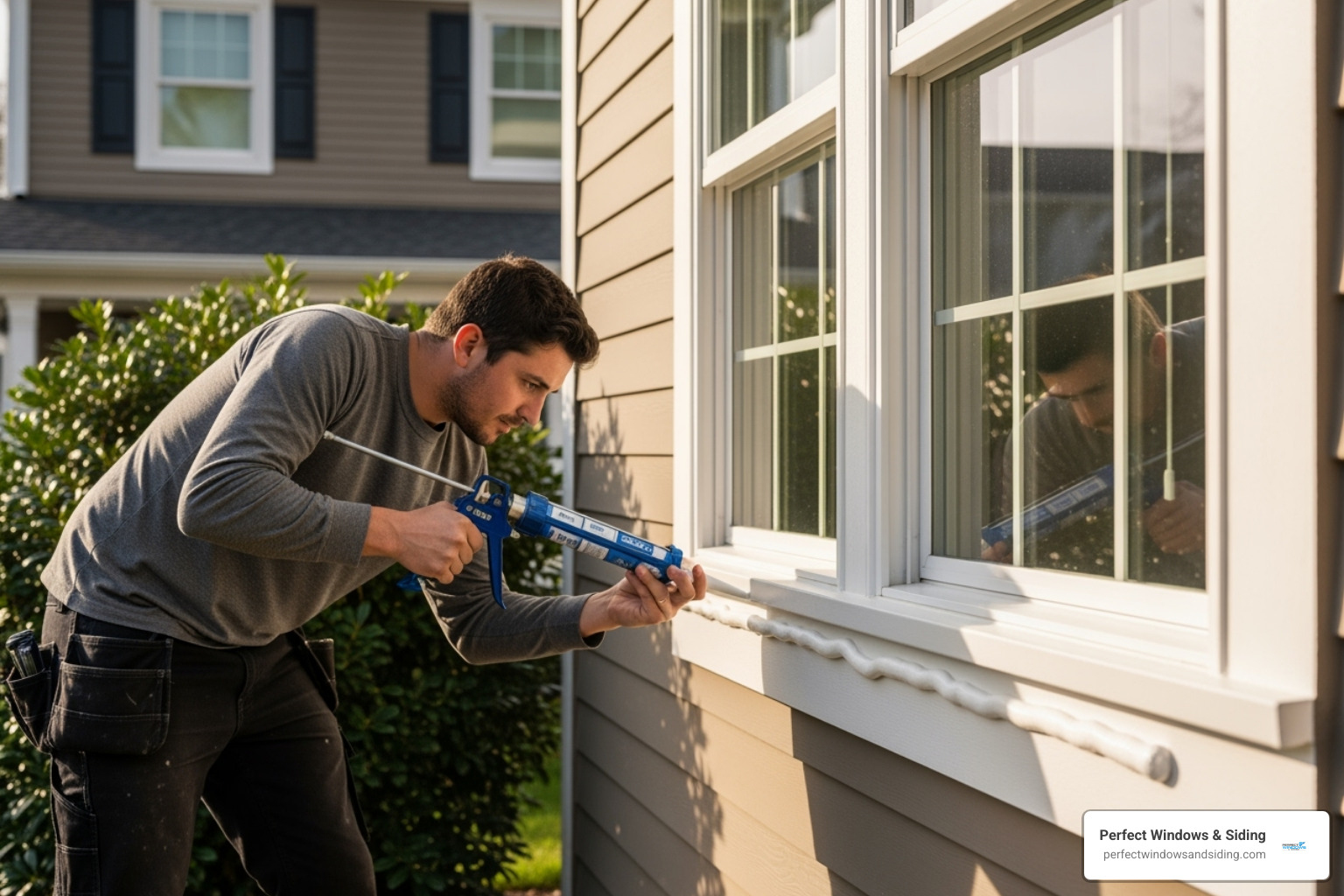
The final phase of installing 4×8 sheet siding includes installing corner, window, and door trim, plus painting or finishing. Install corner trim first to cover vertical joints, ensuring it’s plumb. Then, carefully measure and cut window and door trim to create weathertight seals.
Painting is your siding’s primary defense. All exposed surfaces, especially primed cut edges, need a quality exterior paint. This is vital for engineered wood and plywood sidings. Understanding Why New Siding is Worth the Investment highlights the importance of these details, as quality finishing can add decades to your siding’s life.
Common Mistakes When Installing 4×8 Sheet Siding
I’ve seen the same preventable mistakes on many Chicago siding projects.
Improper flashing is a top cause of failure. Flashing around openings and at horizontal seams (Z-flashing) is not optional; prevent moisture intrusion, rot, and mold.
Nailing problems include overdriving (crushing the siding), underdriving (exposing nail heads), or missing studs. Aim for flush nailing into the framing.
Unsealed cut edges are a major vulnerability. Unprimed edges on engineered wood or plywood will absorb moisture, leading to swelling, delamination, and failure.
Ignoring expansion gaps leads to problems. Without the required 3/16-inch gap, panels can buckle or crack during temperature changes.
Out-of-level installation looks unprofessional and is hard to fix. It usually starts with a crooked starter strip. Ensure the first course is perfect.
Inadequate wall preparation undermines the entire project. Always inspect sheathing, repair damage, and properly install the water-resistive barrier before installing new siding.
Tips for Installing Siding by Yourself
Installing 4×8 sheet siding solo is tough. The panels are large and heavy, and a helper is always recommended for safety and efficiency. If you must work alone, take these precautions:
Panel lifts or temporary supports are essential. Adjustable lifts or simple T-shaped supports (“dead men”) can hold a panel while you fasten it.
Temporary support cleats (scrap 2x4s) screwed to studs can create a ledge to rest panels on. Remove them as you work your way up.
Proper scaffolding provides a stable platform for upper sections and is much safer than makeshift solutions.
The challenge of solo installation includes a higher risk of measurement errors, alignment issues, and safety incidents. Fatigue and wind increase the difficulty.
Safety comes first when working alone. Use proper gear, ensure ladders are stable, and avoid working in windy or poor weather conditions. While solo installation is possible, having a helper or hiring professionals saves time and stress, justifying the cost.
Frequently Asked Questions about Sheet Siding
After helping hundreds of Chicago homeowners with their siding projects, I’ve heard just about every question you can imagine about installing 4×8 sheet siding. Let me share the answers to the three questions that come up most often.
How much of a gap should I leave for expansion and contraction?
This is probably the most technical question we get, and it’s a great one because getting this wrong can ruin an otherwise perfect installation.
Leave a 3/16-inch gap at all vertical joints where two panels meet side-to-side. You’ll also want this same gap where your siding meets trim, windows, or doors.
I know it might seem like a tiny detail, but this small gap is your insurance policy against Mother Nature. When temperatures swing from Chicago’s frigid winters to our humid summers, your siding will expand and contract. Without that breathing room, panels can buckle, warp, or even crack.
Think of it like wearing a suit that’s too tight – eventually, something’s going to give. The same principle applies to your siding.
Can I install new sheet siding over my old siding?
I get this question a lot, usually followed by “It would save so much time!” I totally understand the appeal, but I have to be the bearer of bad news here.
We strongly recommend against installing new siding over old siding, even though it might seem like a shortcut. Here’s why removing the old stuff first is worth the extra effort:
Hidden problems love to hide. Once we peel off that old siding, we often find rot, mold, or structural damage that would have gotten worse under your beautiful new installation. It’s like putting a fresh coat of paint over rust – looks good for a while, but the problem just keeps growing underneath.
Your house needs to breathe properly. Installing a new water-resistive barrier is crucial for keeping moisture out. This protective layer can’t be installed correctly over existing siding, leaving your home vulnerable to water damage.
Flat surfaces matter. Old siding creates bumps and dips that will show through your new installation, giving you a wavy, unprofessional look that screams “DIY gone wrong.”
Taking the time to strip everything down to the sheathing gives you a clean slate and peace of mind that your investment is properly protected.
What is Z-flashing and why is it important?
Z-flashing might sound like something from a superhero movie, but it’s actually one of the most important components in installing 4×8 sheet siding properly.
Z-flashing is a Z-shaped piece of metal (usually aluminum or galvanized steel) that gets installed horizontally over the top edge of your bottom row of panels before you put up the next row. Picture the letter “Z” turned sideways – that’s the shape.
This little piece of metal is your water management superhero. When rain hits your siding, some water will inevitably find its way behind the panels. Z-flashing catches that water and directs it right back out, away from the horizontal seam where two courses meet.
Without Z-flashing, water sits in that seam like a puddle on a flat roof. Over time, that trapped moisture leads to rot, mold, and the kind of expensive repairs that make homeowners wish they’d done things right the first time.
I’ve seen too many beautiful siding jobs fail prematurely because someone skipped this “small” detail. Trust me, spending a few extra dollars on Z-flashing now saves thousands in repairs later.
A Professional Finish You Can Be Proud Of
Congratulations! You’ve just completed a major home improvement project. Successfully installing 4×8 sheet siding transforms not just how your home looks, but how well it’s protected from the elements for decades to come.
Let’s recap what we’ve covered together. We started with choosing the right materials – whether that’s durable engineered wood, ultra-tough fiber cement, or budget-friendly plywood options. Then we moved into the crucial wall preparation phase, where installing that water-resistive barrier and proper flashing sets you up for success.
The actual installation process requires patience and precision. Starting with a perfectly level starter strip, maintaining those critical 3/16-inch expansion gaps, and following the proper nailing pattern (6 inches on edges, 12 inches in the field) – these details separate a professional-looking job from one that’ll cause headaches later.
Proper technique truly is everything. When we see homeowners skip steps like sealing cut edges or forget Z-flashing at horizontal seams, we know they’re setting themselves up for moisture problems down the road. Those shortcuts that seem to save time today often cost thousands in repairs tomorrow.
After over 20 years serving Chicago-area homeowners, I’ve learned that some projects really do benefit from professional expertise. Complex rooflines, tricky architectural details, or homes that need extensive repairs before siding installation – these situations call for experienced hands.
The value of professional installation goes beyond just getting the job done faster. It’s about having someone who’s seen every possible challenge and knows how to handle them properly. It’s about warranties that protect your investment. And honestly, it’s about peace of mind knowing the job was done right the first time.
At Perfect Windows & Siding, we’ve built our reputation on delivering that level of quality and care. Our lifetime warranty and personalized service mean you’re not just getting new siding – you’re getting a partner who stands behind their work.
Whether you tackle this project yourself or decide to bring in the professionals, the most important thing is that it gets done properly. Your home deserves protection that’ll last, and your family deserves the peace of mind that comes with a job well done.
Ready to explore what professional installation could mean for your home? Explore our expert Siding services for your Chicago home and let’s discuss how we can help you achieve the beautiful, durable exterior you’re dreaming of.
Sources and next steps
LP panel siding application resources. This library applies to LP products. For fiber cement panels, consult the James Hardie panel instructions linked in the related guide below.
Related reading: Get It Right: How to Install 4×8 Hardie Panels Like a Pro; LP Vertical Siding: A Fresh Take on Installation.
For help with a Chicago-area project, explore our siding installation services.