

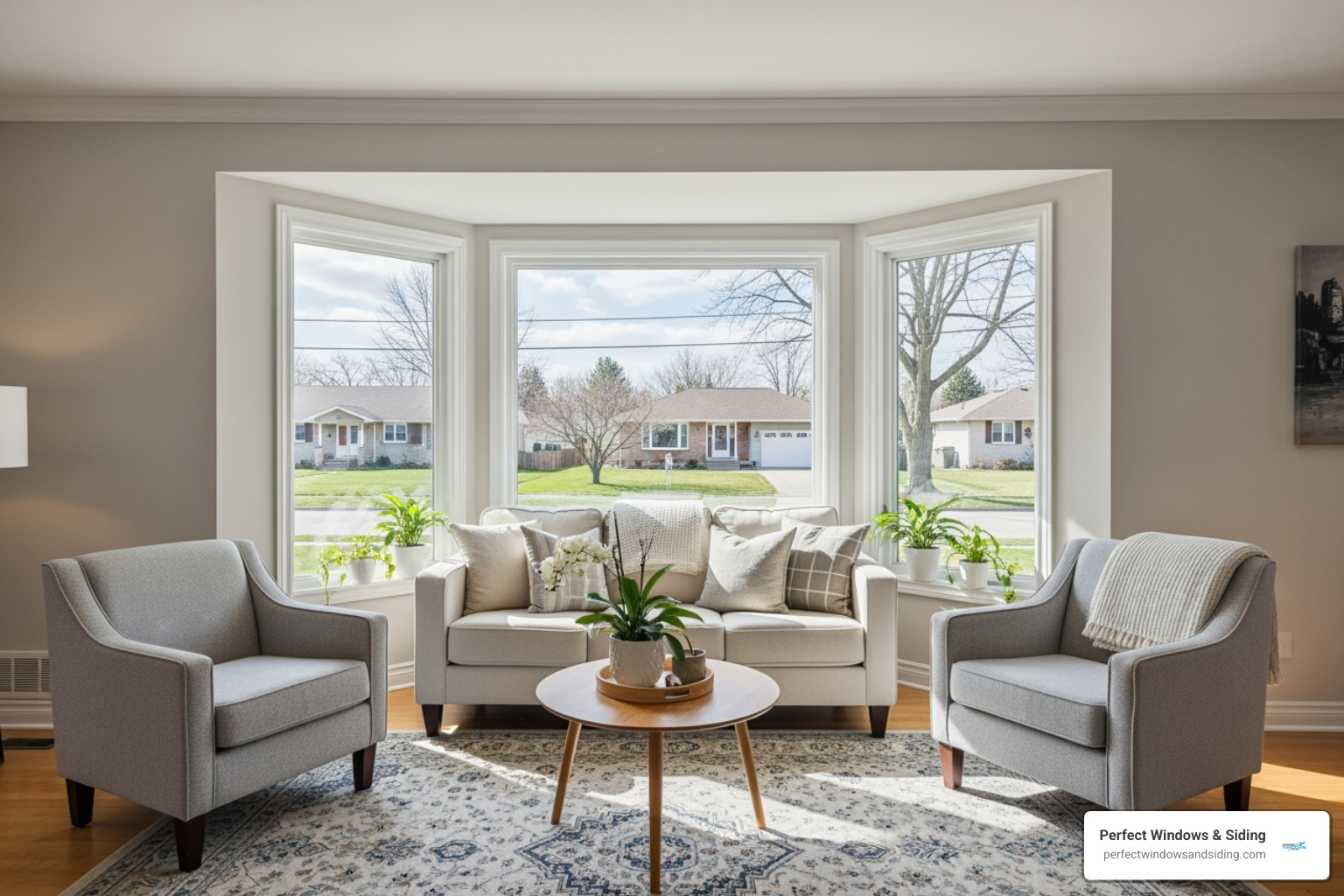
Why Bay Window Installation Transforms Your Chicago Home
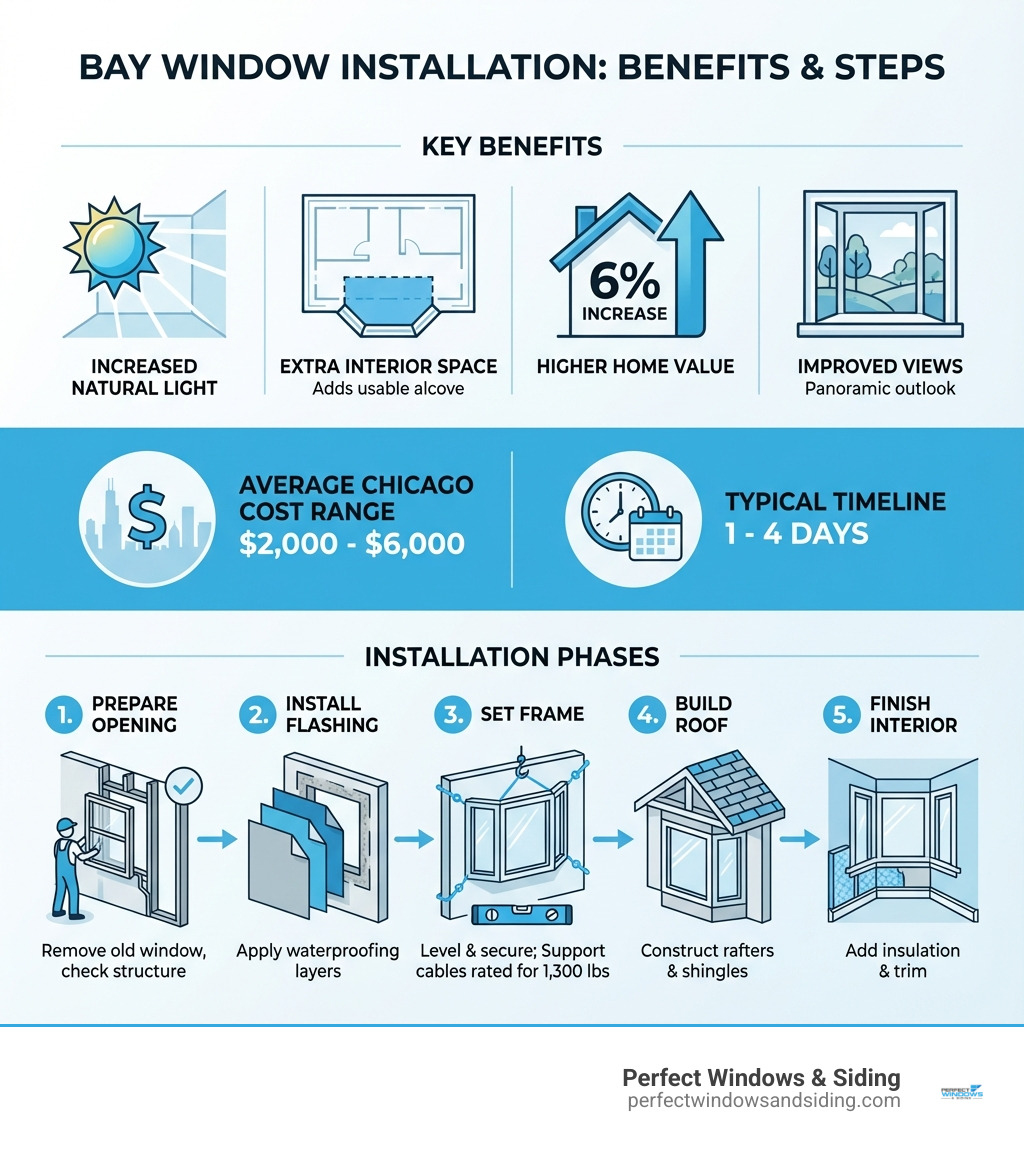
Bay Window Installation is a significant home improvement project that adds architectural beauty, natural light, and valuable living space to your home. Here’s what you need to know:
Quick Overview: Bay Window Installation
- What it is: A bay window projects outward from your home’s exterior wall, creating an interior alcove and adding dimension to your facade
- Main steps: Prepare the rough opening, install proper flashing, set and secure the frame, add support systems (cables or braces), build the roof structure, and finish the interior
- Typical cost in Chicago: $2,000 to $6,000 for most installations
- Timeline: 1-4 days depending on whether you’re replacing an existing bay window or adding a new one
- Key benefit: Increases home value by up to 6% while making rooms feel larger and brighter
Bay windows dramatically increase natural light, create cozy reading nooks, and make any room feel more spacious. As one experienced carpenter noted, “The addition of a bay window can make a room or house seem like an entirely new place.”
However, this isn’t a simple DIY project. Bay window installation involves significant structural work, including cutting into your home’s exterior, supporting the window’s weight (up to 1,300 lbs), and building a weathertight roof. Precision is critical at every stage, from preparing a perfectly sized and level opening to installing multi-layer flashing and support systems. The frame must be plumb, level, and square to ensure proper operation. An improper installation can lead to water damage, sagging, and other serious issues.
I’m Voytek Glab, owner of Perfect Windows & Siding, and I’ve personally overseen hundreds of Bay Window Installation projects across Chicagoland over the past 20 years. From structural assessments to final trim work, I ensure every installation is done right the first time with the attention to detail your home deserves.
Planning Your Bay Window Project
Before we even touch a tool, a successful Bay Window Installation begins with meticulous planning. This isn’t just about picking a pretty window; it’s about understanding how it integrates with your home’s structure, aesthetics, and budget.
Choosing Your Bay Window Style and Materials
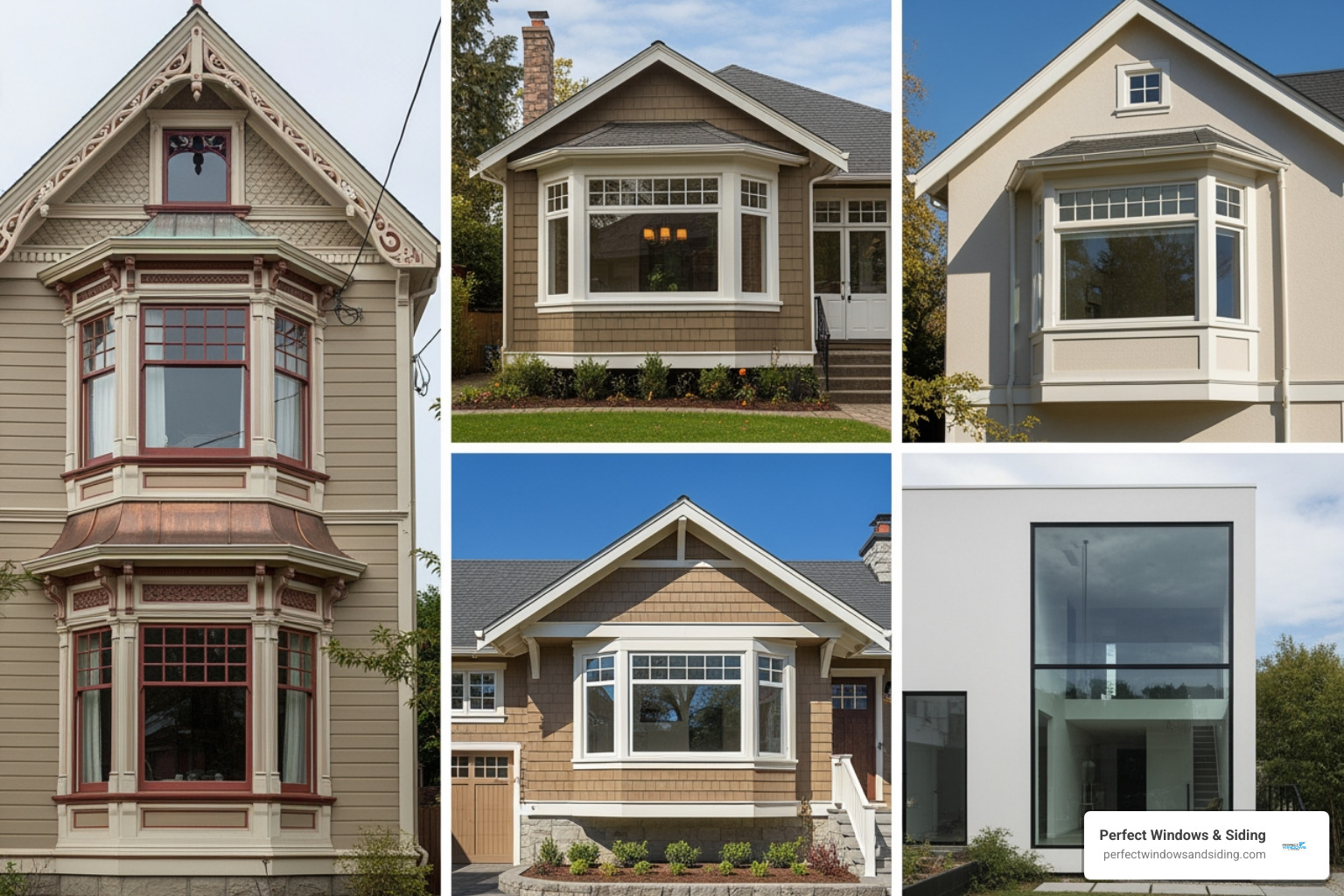
Bay windows come in several styles, each offering a unique aesthetic and affecting the installation process. Understanding these differences is key to making the right choice for your Chicagoland home.
- Canted Bay Windows: The most common style, featuring a large central window flanked by two smaller windows at a 30, 45, or 60-degree angle for a classic look and broad view.
- Box Bay Windows: Projecting from the wall at 90-degree angles, these offer a contemporary feel, maximize interior space, and can simplify framing.
- Bow Windows: A gentle arc of four to six equally sized windows, creating an expansive, curved view that requires a unique framing approach.
- Oriel Windows: Bay windows on upper floors, supported by decorative brackets for a “floating” appearance that adds historical charm and requires cantilevered support.
The materials for your bay window frame also play a significant role in its durability, maintenance, and cost. Here’s a quick comparison of the most popular options we offer:
| Frame Material | Cost (Materials) | Durability | Maintenance |
|---|---|---|---|
| Vinyl | $700 – $3,500 | Excellent | Low (no painting, staining, or sealing) |
| Wood | $1,100 – $6,000 | Good (if maintained) | High (regular sanding, painting, or staining) |
| Fiberglass | $900 – $4,500 | Excellent | Low (resists warping, cracking, and swelling) |
Vinyl frames are a bestseller in the Chicago area for their value and durability, while wood offers timeless elegance. Fiberglass combines the beauty of wood with the resilience of vinyl. For unique designs, explore our Custom Window Designs Chicago.
Budgeting for Your Project: Costs and Long-Term Value
The average cost for a Bay Window Installation in Chicago ranges from $2,000 to $6,000, with most projects falling between $2,500 and $3,600. However, several factors, including potential hidden costs, can influence the final price.
- Building Permits: Often required for new installations with structural changes, costing $50-$200. We handle all Chicagoland code compliance.
- Roof Additions: A mini-roof structure can add $1,800-$4,600, depending on materials.
- Siding Repair: Repairing surrounding siding can cost $200-$1,100.
- Structural Work: Adding a new bay window requires structural modifications averaging around $3,000 and adding 1-4 days to the project.
- Interior Finishing: Drywall, paint, and trim can add $200-$750+. A custom window seat can cost an additional $1,000-$6,000.
Despite these costs, a bay window is a smart investment, potentially increasing your home’s value by over 6%. Beyond the financial return, they flood rooms with natural light, create extra space, and offer panoramic views.
- Energy Efficiency: Modern bay windows with double-pane glass, Low-E coatings, and argon gas fillings reduce heat transfer, saving on energy bills. Since windows can account for 25-30% of home energy use, these upgrades make a significant impact. Low-E coatings also protect furnishings from UV fading. Learn more about Energy Efficient Window Replacement and check for federal tax credits to help offset your investment.
Replacing a Standard Window
Replacing a flat window with a bay window is a complex project that fundamentally alters your home’s structure. It requires a professional assessment to ensure safety and feasibility.
The primary structural modifications include:
- Enlarging the Opening: We must expand the existing opening by cutting into wall studs.
- Installing a New Header: A larger horizontal beam (header) is installed above the window to support the load from the roof and upper floors, which is critical in load-bearing walls.
- Building a Roof Structure: A bay window requires its own roof, which must be integrated with your home’s existing roof and siding.
- Finishing: The project requires extensive exterior (siding, flashing) and interior (drywall, insulation, trim) finishing work.
The Complete Bay Window Installation Process
Now that we’ve covered the planning, let’s dig into the actual Bay Window Installation. This is where precision, experience, and attention to detail truly shine.
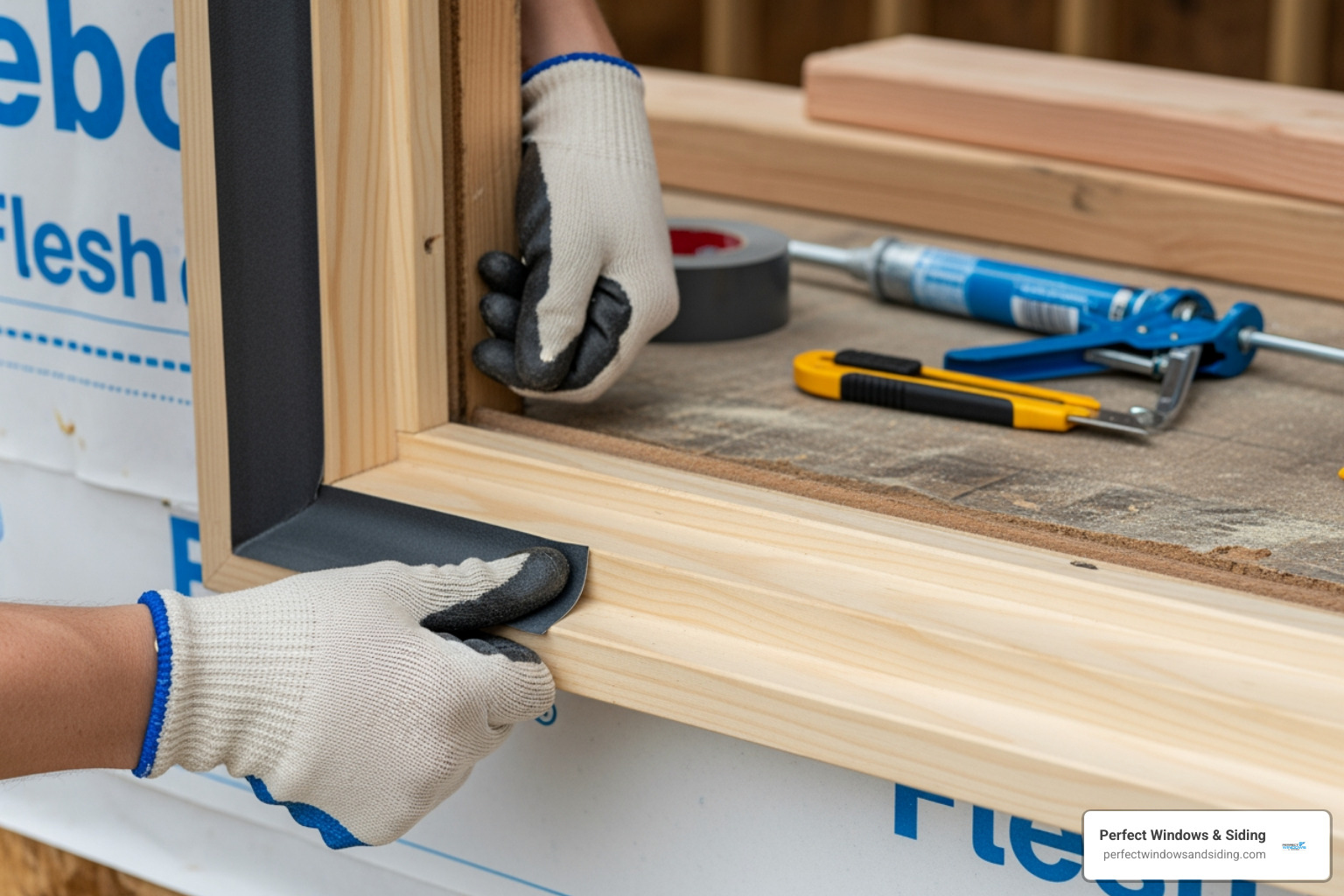
Step 1: Preparing the Rough Opening
The rough opening is the foundation of your bay window’s fit and performance. Getting this right is paramount.
- Remove Old Window: We carefully remove the old window, trim, and any surrounding siding.
- Inspect Framing: We thoroughly inspect the exposed framing for dry rot or water damage, replacing any compromised wood to ensure a solid base.
- Verify Structure: We confirm the wall and sill are sound and can support the new window’s weight, especially if new headers were installed.
- Size the Opening: The rough opening is sized precisely 3/4″ wider and taller than the bay window frame for proper shimming and insulation.
- Level the Sill: We ensure the sill is perfectly level, creating a flat, stable surface for the new frame.
Step 2: Flashing and Weatherproofing for a Watertight Seal
Water infiltration is the enemy of any window. Proper flashing and weatherproofing are non-negotiable to protect your home.
- Apply Water Barrier: We ensure a continuous water resistive barrier (house wrap) is properly installed around the opening.
- Install Sill Pan Flashing: We apply self-adhering flashing tape to the sill, extending it up the sides to create a pan that directs water outward.
- Layer Flashing: We apply flashing tape up the sides and then across the top, overlapping the layers shingle-style to shed water away from the opening.
- Integrate and Seal: All flashing is integrated with the house wrap. After installation, we use high-quality sealant on all exterior seams, and the roof is made watertight with drip caps, felt, and step-flashing.
Step 3: Setting, Shimming, and Fastening the Frame
This is where the bay window unit itself finds its home. It’s a heavy lift that requires careful handling.
- Lift and Position: Bay windows are heavy; we use a full crew and proper equipment to safely lift the unit into the opening, often after removing sashes to reduce weight.
- Brace and Level: We temporarily brace the window and use a level to ensure it is perfectly plumb, level, and square (corners at 90°, diagonals equal within 1/8″).
- Shim for a Snug Fit: We insert shims between the frame and the opening to achieve a snug fit and maintain a perfectly aligned frame.
- Fasten the Frame: We securely fasten the frame to the house structure using 3-inch screws through the head and seat boards into the framing. We use angled spacers and a precise screw pattern to prevent distortion and ensure a secure, weathertight fit. Learn more about our methods on our Window Installation Chicago page.
Step 4: Installing Support Systems and Sealing
Bay windows project outward, meaning they require robust support to prevent sagging over time.
- Install Support Cables: We attach factory-supplied stainless-steel support cables to solid wall framing (header or truss) capable of holding up to 1,300 lbs. The cables are set at an angle of at least 30 degrees to properly support the window and allow for future adjustments.
- Add Knee Braces (If Needed): For larger units (over 8 ft. wide) or those intended to bear extra weight (over 500 lbs on the seat), we install sturdy knee braces beneath the window for additional structural support.
- Insulate Gaps: We fill gaps between the window frame and the rough opening with low-expansion polyurethane foam. Using the correct foam is critical to prevent the frame from bowing, which would hinder window operation.
- Apply Final Sealant: We apply a continuous bead of high-quality, exterior-grade sealant around the entire perimeter where the window meets the siding, creating a final, durable barrier against air and moisture.
Advanced Steps: Roof Construction and Finishing
While the window itself is the star, the roof and interior finishing are critical for both protection and aesthetics.
Building and Attaching the Bay Window Roof
Building the bay window roof first, often on the ground, makes the entire Bay Window Installation process smoother and safer. It also reduces the time your home is exposed to the elements.
- Create a Template: We create a precise template from the bay window’s shape, including the desired overhang.
- Cut and Assemble Rafters: Using the template, we expertly cut and assemble the common, hip, and jack rafters on the ground. This pre-assembly ensures a perfect fit and minimizes exposure to the elements.
- Insulate and Sheath: We insulate the roof structure before attaching the sheathing.
- Install and Finish Roof: Once the assembled roof is secured to the house with structural screws, we install a drip edge and finish it with shingles or other materials to match your home’s existing roof.
A Guide to Interior Finishing for your Bay Window Installation
The interior finishing transforms the functional opening into a beautiful, integrated part of your home.
- Insulate Head and Seat: We install rigid insulation in the head and seat boards to improve thermal performance and prevent drafts.
- Repair Drywall: We repair and finish any surrounding drywall or plaster to blend seamlessly with your walls.
- Install Trim: We install interior trim and casing to match your home’s style, using durable options like cellular PVC.
- Build Window Seat (Optional): A custom window seat can be built to create a cozy nook with optional storage.
- Paint and Finish: The final step is painting or staining the new trim and caulking all gaps for a clean, polished look. For a complete home exterior makeover, consider our Windows and Siding Chicago IL services.
Costs, Maintenance, and Long-Term Value
Investing in a Bay Window Installation is a decision that pays dividends in enjoyment and home value. While we covered detailed budgeting in the planning section, key cost factors include window size, material, and the complexity of the installation.
Labor costs typically range from $500 to $2,500 but can increase for upper-floor installations or when significant structural work is needed to create a new opening. Replacing an existing bay window is generally less expensive than adding a new one. We provide transparent, detailed quotes for every project and encourage clients to explore our How Much Does Window Replacement Cost page and check the DSIRE database for local Illinois incentives.
Lifespan and Required Maintenance
A quality bay window, properly installed by our team, is designed to last 20 to 25 years or more. To ensure it reaches its full potential, regular maintenance is key:
- Routine Cleaning: Clean glass and frames with mild soap and water. Vacuum tracks and sills to prevent debris buildup.
- Inspect Seals and Caulking: Annually inspect weatherstripping and caulk around the frame. Re-caulk any cracked or deteriorating areas to maintain a weathertight seal.
- Hardware Adjustments: Occasionally, operating hardware like locks and cranks may need minor lubrication or adjustment.
- Address Issues Promptly: Fixing small issues early, like a failing seal (around $120) or hardware repair (around $75), can prevent more expensive problems like rotted frames or glass replacement down the line.
With consistent care, your bay window will remain a beautiful and functional feature of your home for decades.
Frequently Asked Questions about Bay Window Installation
Can I replace a regular window with a bay window myself?
While the DIY spirit is admirable, this project is best left to professionals. Here’s why:
- Structural Work: The job requires modifying your home’s structure, including enlarging the opening and installing a new, larger header to support the weight.
- Weight and Complexity: Bay windows are extremely heavy and require a team and specialized equipment to position safely.
- Technical Skill: Proper roof construction and multi-layer flashing are essential to prevent leaks and require expert precision.
- High Risks: Improper installation can lead to water damage, sagging, drafts, and even structural failure.
- Warranty: Most manufacturer warranties require professional installation.
For safety, code compliance, and long-term performance, we always recommend a professional Bay Window Installation.
How are bay windows supported to prevent sagging?
Preventing sag is critical for a projecting bay window. We use robust support systems:
- Steel Support Cables: Most modern units use industrial-strength steel cables that anchor into the home’s structural framing (header or studs). These cables are tensioned to hold the window level and must support up to 1,300 lbs.
- Structural Knee Braces: For larger windows (over 8 ft. wide) or those needing to support extra weight on the seat, we install sturdy knee braces underneath for additional support.
- Secure Anchoring: The entire window frame is also securely fastened into the structural framing of the rough opening with heavy-duty screws.
The window unit itself is not designed to be load-bearing; its weight must be managed by these dedicated support systems.
Do I need a permit for a bay window?
Permit requirements depend on the project scope and local Chicagoland regulations.
- New Openings: You will almost certainly need a permit if you are creating a new opening or significantly enlarging an existing one, as this involves structural changes.
- Replacements: A permit may not be needed when replacing an existing bay window with a new one of the same size, but it’s always best to check with your local municipality.
- Historic Districts: Homes in historic districts may have additional guidelines or require special approval.
As part of our service, we handle the permit process to ensure every Bay Window Installation is fully compliant with local building codes for safety and structural integrity.
Conclusion
A Bay Window Installation is a truly rewarding home improvement project, offering a unique blend of increased natural light, expanded interior space, and undeniable curb appeal. From changing a dull room into a vibrant oasis to adding significant value to your property, the benefits are clear.
However, as we’ve explored, this is a project that demands precision, structural expertise, and meticulous attention to detail, particularly when it comes to weatherproofing and support systems. Attempting a complex installation like this without the right experience can lead to costly errors and long-term problems.
For a high-quality, professional installation in the Chicago area, the experienced team at Perfect Windows & Siding ensures a perfect fit and lasting performance. We bring over 20 years of expertise to every project, guaranteeing your new bay window will be a beautiful and secure addition to your home. Explore our Bay Window Park Ridge services to get a detailed consultation for your home.