

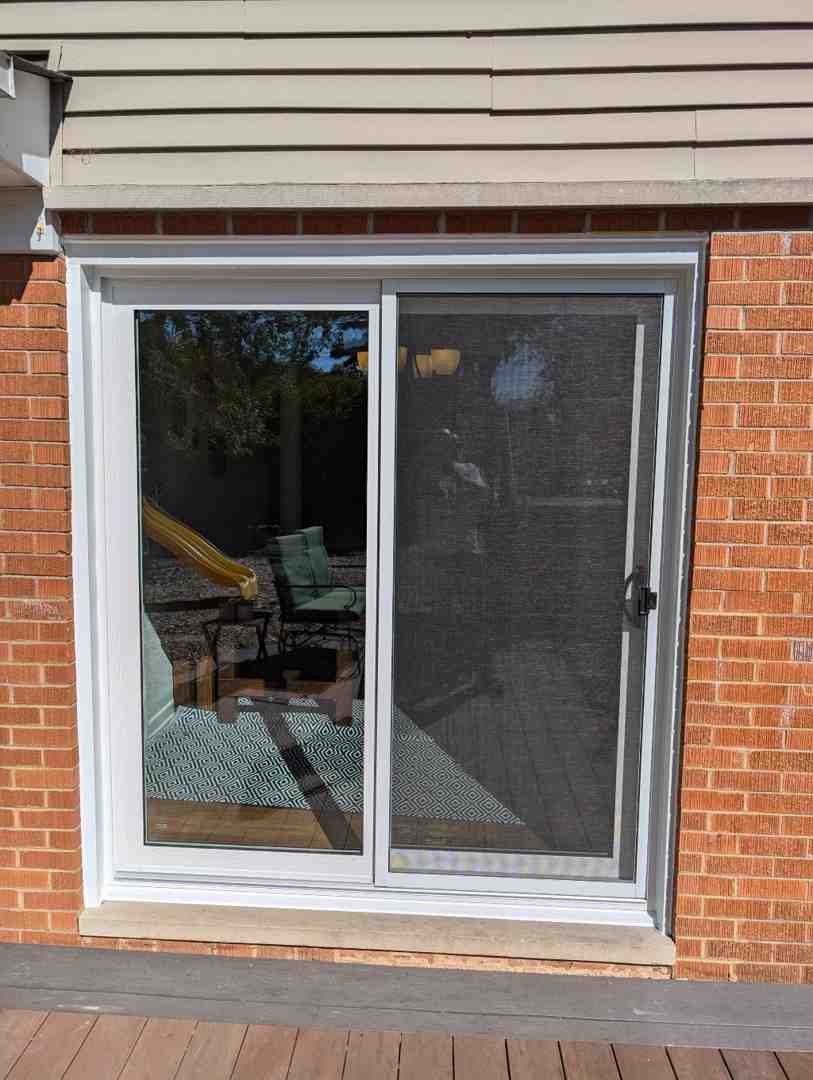
When Your Milgard Sliding Door Won’t Budge: What You Need to Know
Milgard sliding door track replacement is the fix most homeowners need when their patio door starts grinding, sticking, or dragging — and the process is more straightforward than you might think.
Here’s the quick answer:
- Remove the sliding door panel from the frame by adjusting the rollers down and lifting the panel out.
- Remove the damaged track and clean the sill area thoroughly.
- Install the new track by tapping it into place with a hammer and a block of wood.
- Reinstall the door panel and adjust the rollers for smooth operation.
- Test and lubricate the track before finishing.
Over 70% of Milgard sliding door problems come down to worn tracks and rollers — almost always caused by skipped maintenance. That means most homeowners are dealing with a preventable problem that snowballed into a real repair job.
If your door feels like it’s fighting you every time you open it, you’re not alone. A homeowner in Valencia, CA recently described the exact same situation — a 71×95 inch Milgard slider worn out from years of neglect by previous owners. The track and rollers had simply given up.
The good news? With the right parts and a clear process, this is a repair most handy homeowners can handle in an afternoon.
I’m Voytek Glab, owner of Perfect Windows & Siding, and with over 20 years of hands-on door and window installation experience across the Chicagoland area, I’ve seen every variation of Milgard sliding door track replacement — from quick DIY fixes to full patio door overhauls. Let’s walk through exactly what you need to know to get your door gliding smoothly again.
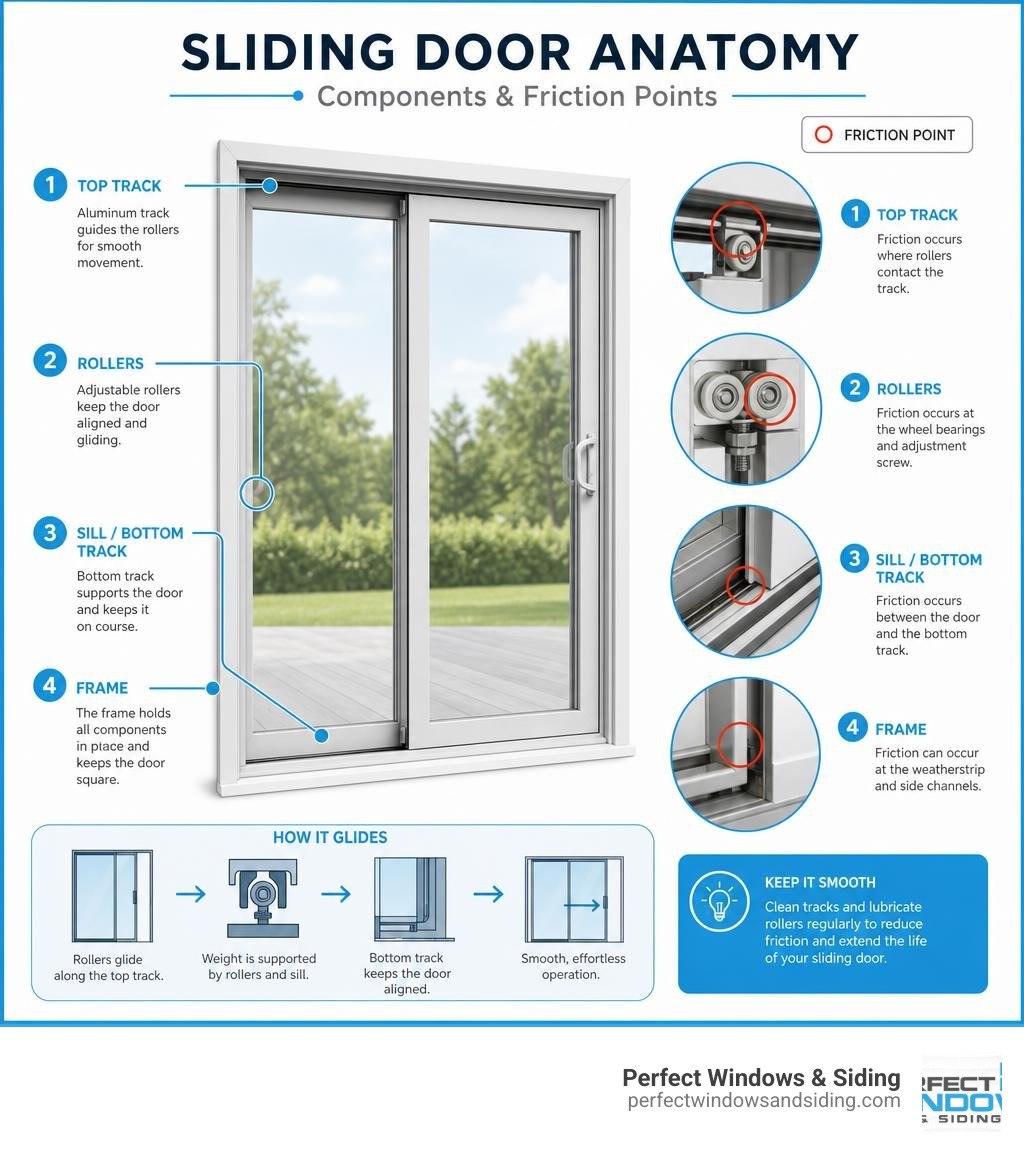
Milgard sliding door track replacement terms explained:
Troubleshooting Your Patio Door: Is It the Track or the Rollers?
When your sliding patio door starts acting like a stubborn mule, it is easy to assume the worst. You might think the entire frame has warped or that your home’s foundation has shifted. While foundation settlement can occasionally cause doors to stick asymmetrically, the culprit is usually much closer to the ground.
Before you dive headfirst into a full-scale milgard sliding door track replacement, you need to play detective. Is the track actually damaged, or are the rollers underneath the door panel simply worn out?
Friction is the ultimate enemy of any sliding system. Over time, dust, pet hair, outdoor dirt, and moisture combine to create a abrasive paste inside your door sill. As the rollers glide over this gritty mixture, they begin to wear down. If left unaddressed, the rollers stop spinning entirely and begin to drag. This dragging metal-on-metal or metal-on-vinyl action is what eventually destroys your door’s track.
If you want to dive deeper into how these components interact before starting, check out our guide on DIY Sliding Door Roller Replacement Made Simple.
Signs You Need a Milgard Sliding Door Track Replacement
How do you know if the track itself is beyond saving? Look for these telltale signs:
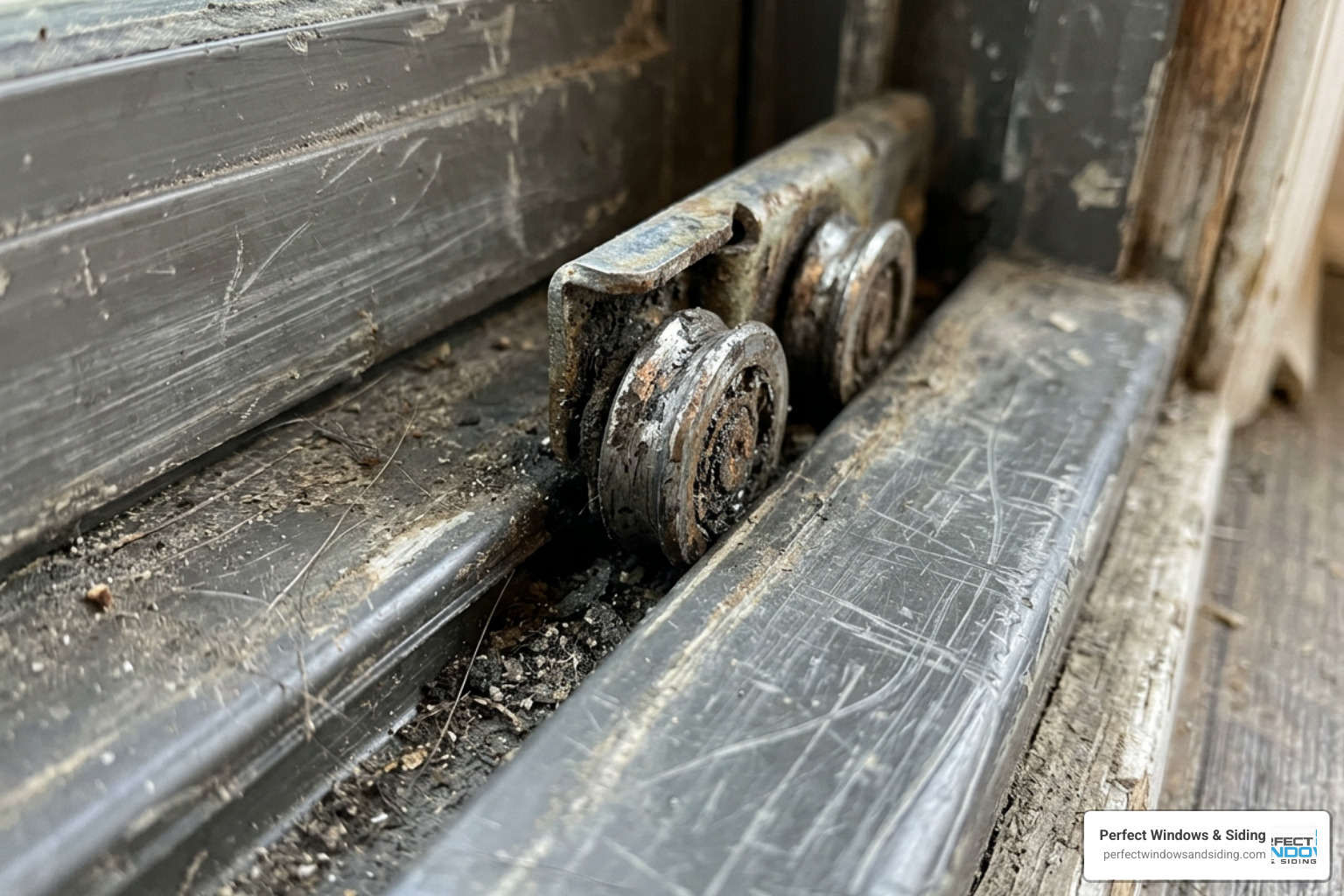
- A Persistent Grinding Noise: Unlike a squeak (which usually points to dry rollers), a deep, metallic grinding sound means your door is scraping directly against the track.
- Physical Dents and Gouges: Inspect the raised rib of the track. If you see flat spots, deep scratches, or physical dents from where the door was dropped or forced, the track must be replaced.
- Warped or Split Vinyl: On vinyl patio doors, extreme weather fluctuations and heavy use can cause the vinyl track cap to warp, split, or crack.
- Metal Shavings: If you notice fine silver or dark metallic dust accumulating along the bottom sill, your rollers are actively carving up your track.
If you are dealing with older Milgard models, tracking down the exact issue can be tricky. Homeowners on the Milgard Window Track – DoItYourself.com Community Forums often discuss how a missing or damaged bottom track causes sliding panes to fit and slide poorly, making a replacement track the only viable solution.
When to Replace Rollers and Tracks Together
We always tell our clients in the Chicago suburbs—from Des Plaines to Hinsdale—that replacing a track without replacing the rollers is like putting brand-new tires on a car with a broken axle. If your track is chewed up, your rollers are almost certainly damaged too.
Rollers can develop flat spots if they have been dragged across a dirty track for months. If you install a pristine new track but keep those old, flat-spotted rollers, they will ruin your new track in short order.
For a complete look at when it is time to overhaul your entire patio entry system, read our comprehensive Patio Door Replacement Guide 2026.
Step-by-Step Milgard Sliding Door Track Replacement Guide
If you have confirmed that your track is damaged, it is time to roll up your sleeves. Replacing a sliding door track is a highly rewarding DIY project, but it requires patience, precision, and a bit of muscle. Sliding glass panels are heavy, so we highly recommend having a partner nearby to help you lift and maneuver the glass safely.
Tools and Materials Required
Before you begin, gather the following tools and materials:
- Safety glasses and heavy-duty work gloves
- #2 Phillips-head screwdriver
- 4-inch putty knife or stiff scraper
- Vacuum cleaner with a narrow crevice attachment
- A solid block of wood (such as a scrap piece of 2×4)
- Hammer or rubber mallet
- Replacement Milgard track (or compatible aftermarket track)
- Replacement roller assemblies (highly recommended)
- Silicone-based lubricant (never use oil-based lubricants like WD-40, which attract dirt)
- Sawhorses or a padded work table
For official visual references on how these components fit together, you can also view Milgard’s official How-to Guide .
Sourcing Parts for Your Milgard Sliding Door Track Replacement
Finding the correct replacement parts is crucial. Milgard has manufactured several different door styles over the decades, using materials ranging from classic vinyl to fiberglass and aluminum.
To identify your door, look for the permanent AAMA (American Architectural Manufacturers Association) or NFRC (National Fenestration Rating Council) labels. These are often hidden behind snap-in covers on the interior frame or located in the upper corner of the glass pane.
If you have an older door—such as a circa 2004 vinyl model—exact original parts might be hard to find. However, the industry-standard 80-106 patio door track is a incredibly versatile stainless steel track cover that works beautifully across various older Milgard door styles. You can browse modern configurations and styles on the Sliding Glass Doors page or check out general options on Replacement Doors | MILGARD .
Removing the Door Panel and Installing the New Track
Follow these steps carefully to replace your track:
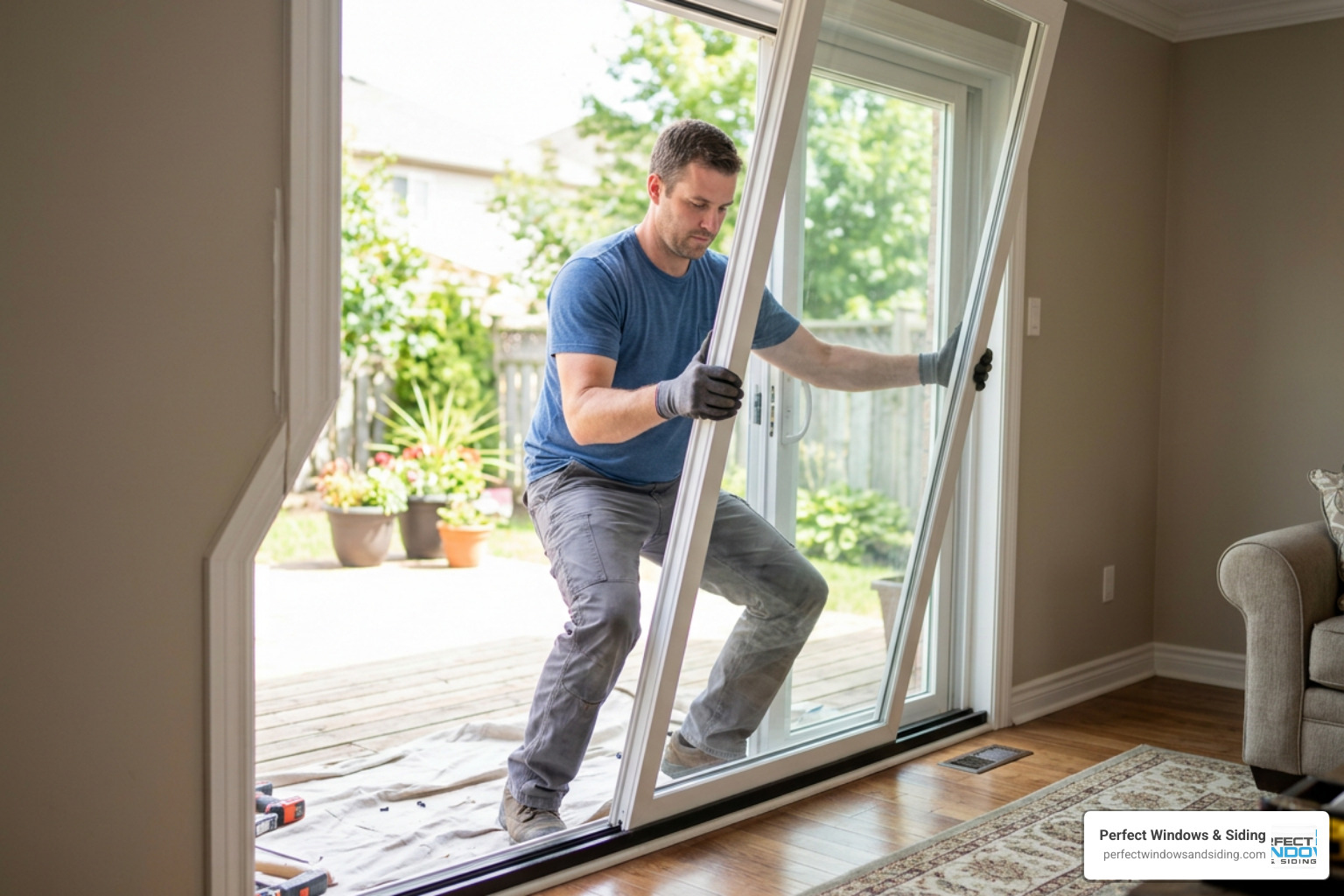
- Lower the Rollers: Locate the adjustment holes at the bottom of the operating panel on the interior face. Use your Phillips-head screwdriver to turn the adjustment screws counterclockwise. This retracts the rollers fully inside the door, giving you the clearance needed to lift the panel out. Tip: Have a helper gently lift the weight of the door panel while you turn the screws to prevent stripping the screw heads.
- Remove the Operable Panel: Open the door to about the 3/4 position. Stand on the inside of the house, grasp the sides of the door panel, and lift it straight up into the head (the top of the frame). Swing the bottom of the panel inward toward you, guiding the rollers safely past the bottom sill. Carefully set the panel down on your sawhorses or a padded surface.
- Extract the Old Track: Use your putty knife or a flat pry bar to carefully pry up the old, damaged track insert. If it is a snap-in vinyl track, it should pop out with moderate pressure. If it is a stainless steel track cover, you may need to slide it off the vinyl rib.
- Clean the Sill Thoroughly: This is the most important step! Vacuum all dirt, debris, pet hair, and old grease out of the channel. Wipe it down with a non-abrasive cleaner. Any leftover grit will prevent the new track from seating correctly.
- Install the New Track: Position your new stainless steel or vinyl track over the raised rib of the sill. Place a block of wood over the new track to protect it, and gently tap the wood with your hammer or mallet to press the track firmly into place. Work your way from one end to the other until the track is completely flush and secure.
- Reinstall and Adjust: Lift the door panel back into the top frame, swing the bottom over the new track, and let it rest gently. Access the roller adjustment holes and turn the screws clockwise to raise the door. Ensure the door is perfectly level and square within the frame.
For a printable, offline version of similar roller steps, you can refer to the official HOW TO INSTALL A VINYL SLIDING PATIO DOOR ROLLER document.
Pro-Tips to Prevent Future Wear and Tear
Now that your sliding door is gliding with the push of a single finger, you want to keep it that way. Regular maintenance is the secret to avoiding another milgard sliding door track replacement down the road.
Cleaning and Lubrication Best Practices
We recommend cleaning and lubricating your sliding patio door tracks at least once a year—or twice a year if you live in an area with high wind-blown dust or heavy seasonal pollen.
- Vacuum First: Always vacuum the track with a narrow crevice tool before applying any cleaners. Trying to clean a dusty track with liquid spray just creates a muddy mess.
- Use Non-Abrasive Cleaners: Spray the track with a mild de-greaser or soapy water and wipe it clean with a microfiber cloth.
- Smooth Rough Spots: If you notice any tiny burrs or rough spots on a metal track, gently smooth them out using fine steel wool.
- Apply the Right Lubricant: Only use a high-quality silicone-based lubricant or vinyl protectant. Spray a light coat along the track and weatherstripping. Avoid WD-40 or oil-based lubricants, as they act like a magnet for dirt and hair, quickly gumming up your new rollers.
For official guidance on keeping your door in top shape, check out the manufacturer’s HOW TO CLEAN AND LUBRICATE A SLIDING PATIO DOOR instructions.
If you find that your glass is drafty or foggy while performing this maintenance, it might be time to investigate further. Learn more in The Ultimate Guide to Double Pane Sliding Glass Door Replacement.
Common Mistakes to Avoid During Installation
Over our two decades of serving homeowners in Park Ridge, Morton Grove, and across Chicagoland, we have seen many well-intentioned DIY projects go awry. Avoid these common mistakes:
- Stripping the Adjustment Screws: Never force the adjustment screws if they feel stuck. Always lift the physical weight of the door panel to relieve pressure on the rollers before turning the screws.
- Forcing the Door Panel: If the door panel does not easily swing out of the frame, do not force it. Double-check that the rollers are fully retracted. Forcing the door can chip the vinyl frame or shatter the tempered glass.
- Ignoring the Weatherstripping: While the door is out, inspect the weatherstripping. If it is torn or flattened, replace it now. It is much easier to do while the panel is already removed!
Frequently Asked Questions
How do I identify my Milgard door model and year?
Milgard doors typically feature an AAMA or NFRC sticker on the inside of the frame or near the top of the glass. If these stickers are missing—which is common on older homes or doors from circa 2004—you can identify the door by measuring the exact thickness of the frame, inspecting the handle style, and taking detailed photos of the roller assembly once it is removed.
Can I use aftermarket tracks on older Milgard doors?
Yes! If your specific Milgard model is discontinued and OEM parts are unavailable, high-quality stainless steel track covers like the 80-106 track are designed to snap or press directly over the worn vinyl rib of older patio doors. These aftermarket covers are often stronger and more durable than the original vinyl surfaces.
When should I hire a professional for track replacement?
While replacing a track cap is highly doable for a handy homeowner, you should call in the professionals if:
- The glass panel is incredibly heavy or oversized (such as multi-panel systems).
- The actual structural aluminum or vinyl sill of the frame is cracked, bent, or warped.
- The door frame has settled significantly due to structural movement.
If you live in the Hinsdale or Mount Prospect areas, you can reach out to a professional team like Perfect Windows & Siding to handle the repair safely and efficiently, ensuring your patio door operates smoothly for years to come.
Conclusion
A sticky, squeaking sliding door can turn a beautiful patio view into a daily headache. Fortunately, with a little patience, the right tools, and a new track, you can restore your Milgard door to its original, whisper-quiet glory.
If the job feels a bit too heavy, or if you suspect your door has structural issues beyond a simple track replacement, we are here to help. At Perfect Windows & Siding, we have spent more than 20 years providing top-tier, custom window and door solutions to homeowners in Des Plaines, Park Ridge, Morton Grove, and throughout the Chicagoland suburbs. We stand behind our craftsmanship with an industry-leading lifetime warranty and personalized service you can trust.
Ready to get your patio door sliding effortlessly again? Schedule your consultation with our family-owned team today for a professional, hassle-free estimate!