

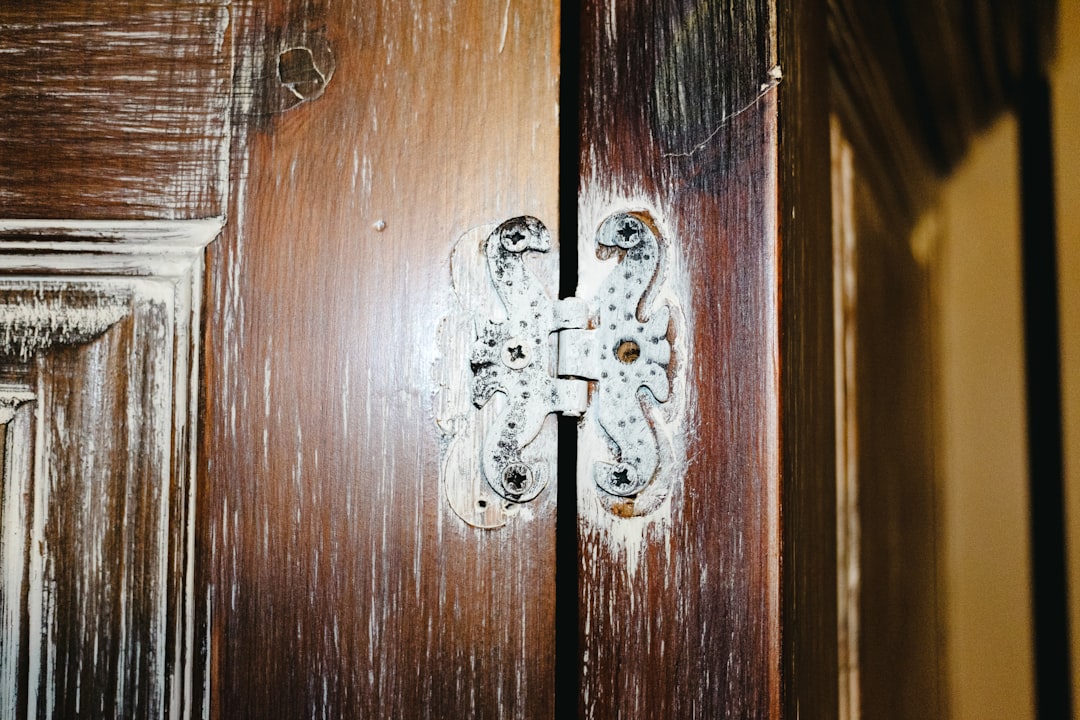
Why Installing Door Hinges Correctly Makes All the Difference
Installing door hinges is something most homeowners can do themselves — if they know the right steps. Here’s a quick overview of what the process involves:
- Choose the right hinge for your door’s weight and type (interior vs. exterior)
- Mark hinge positions — typically 7 inches from the top and 11 inches from the bottom of the door frame
- Cut a mortise so the hinge leaf sits flush with the door and frame surface
- Drill pilot holes to prevent wood splitting
- Attach hinges to the door first, then to the frame
- Test the swing and adjust as needed
Hinges might be the most overlooked part of any door. They’re small, simple-looking, and easy to ignore — until something goes wrong. A door that sticks, sags, squeaks, or swings on its own almost always traces back to a hinge problem.
The good news? With the right tools and a clear process, installing or replacing door hinges is a very manageable DIY project. Whether you’re hanging a brand-new door slab or swapping out worn hardware, this guide walks you through every step.
I’m Voytek Glab, owner of Perfect Windows & Siding, and with over 20 years of hands-on exterior remodeling experience across the Chicagoland area, I’ve seen how proper hinge installation affects the long-term performance and security of a door. Installing door hinges correctly is one of the most important — and most underestimated — parts of any door project.
Choosing the Right Hardware for Your Door
Before we pick up a hammer, we need to talk about the hardware itself. Not all hinges are created equal. If you’ve ever walked through a hardware store in Des Plaines or Schaumburg, you know the options can be overwhelming. Choosing the wrong type can lead to a sagging door or, worse, a security risk for your home.
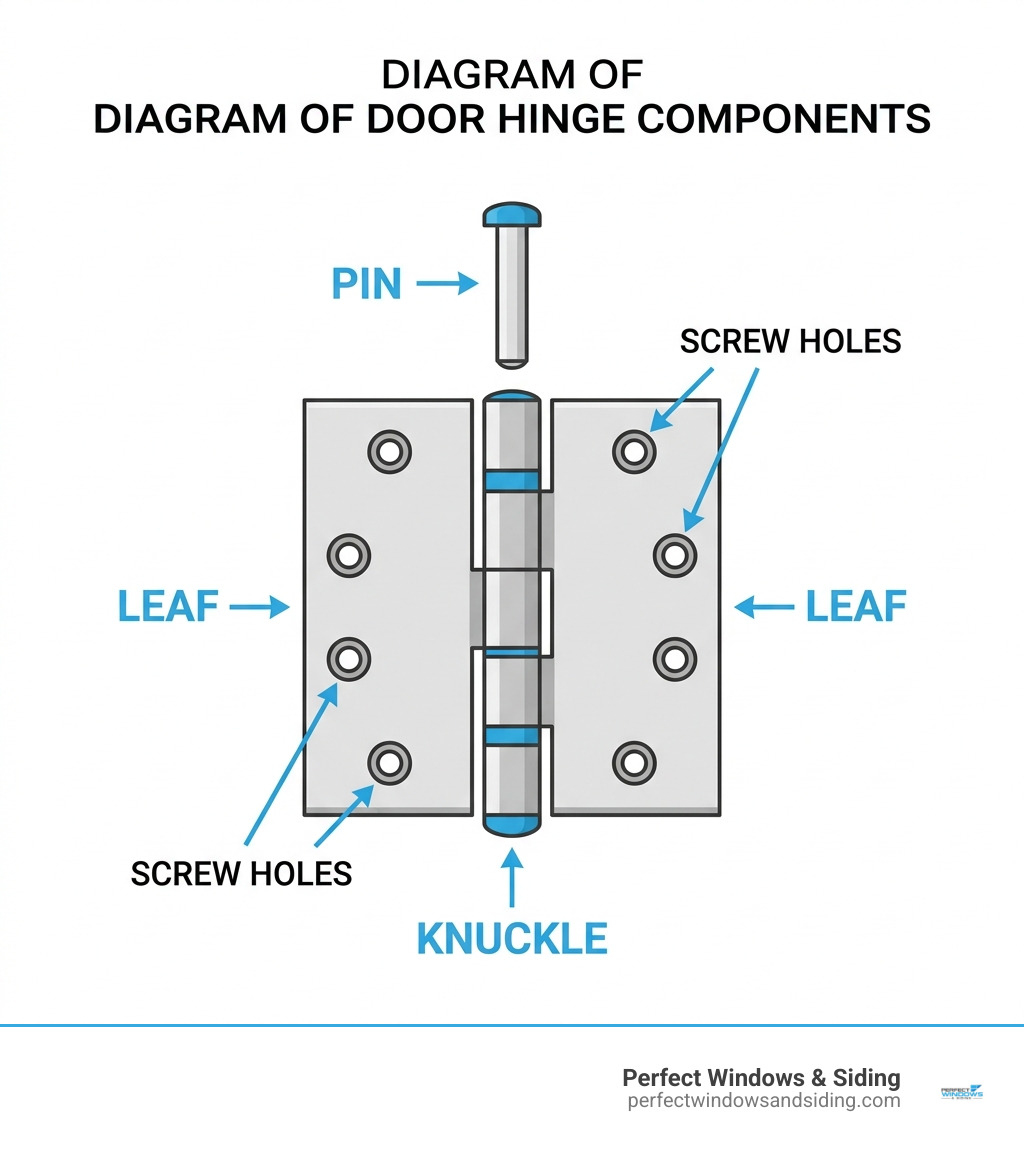
Most residential doors use butt hinges. These consist of two “leaves” that mesh together at a central “knuckle” held by a pin. However, the internal mechanics vary based on the door’s needs:
- Plain-Bearing Hinges: These are standard for lightweight interior doors (30 to 50 pounds). They rely on metal-to-metal contact, which is fine for a bedroom or closet door that doesn’t see heavy traffic.
- Ball-Bearing Hinges: These are the gold standard for heavy entry doors. They feature small hidden bearings between the knuckles to reduce friction. If you have a solid oak or metal exterior door that weighs over 100 pounds, ball-bearing hinges are a must for smooth, quiet operation.
- Spring Hinges: These are equipped with an internal spring that automatically pulls the door shut. In many Chicagoland building codes, these are required on doors leading to a garage to prevent exhaust fumes from entering the living space.
- Security Hinges: Designed for outward-swinging exterior doors, these feature non-removable pins (NRP) or security studs so an intruder can’t simply pop the pin and lift the door out of the frame.
Hinge Size and Capacity Comparison
| Hinge Type | Standard Size | Best Use Case | Weight Capacity (Per Pair) |
|---|---|---|---|
| Plain-Bearing | 3.5-inch | Interior hollow-core doors | Up to 50 lbs |
| Ball-Bearing | 4-inch | Heavy exterior/solid-core doors | 100+ lbs |
| Spring Hinge | 3.5 or 4-inch | Garage-to-house fire doors | Varies by tension |
| Security Hinge | 4-inch | Outward-swinging entry doors | 100+ lbs |
When to Use a Third Hinge
A common question we hear in Arlington Heights and Glenview is: “Do I really need three hinges?” While two hinges are standard for light doors, a third hinge is a smart investment for several reasons.
Industry standards recommend a third hinge if the door exceeds 75 pounds or is taller than 7 feet. In our variable Illinois climate, humidity can cause wood doors to warp over time. A middle hinge, centered exactly between the top and bottom ones, provides extra stability and helps distribute the weight evenly, preventing that annoying “ghosting” where a door swings open or closed on its own.
Security and Safety Considerations
When installing door hinges on an exterior door, security is paramount. For inward-swinging doors, ensure the hinge knuckles face the inside of the home. This keeps the pins inaccessible from the outside.
If you have an outward-swinging door, you must use security hinges with non-removable pins. Additionally, we recommend replacing at least one short screw in the top hinge with a 3-inch reinforcement screw. This anchors the hinge directly into the structural wall stud, making it much harder for someone to kick the door in. For more detailed safety steps, you can check out this guide on How to Install or Replace Door Hinges: 14 Steps (with Pictures).
Essential Tools and Materials for Installing Door Hinges
To get a professional-grade finish, you need the right kit. You don’t need a massive workshop, but a few specialized tools will make the job much easier.
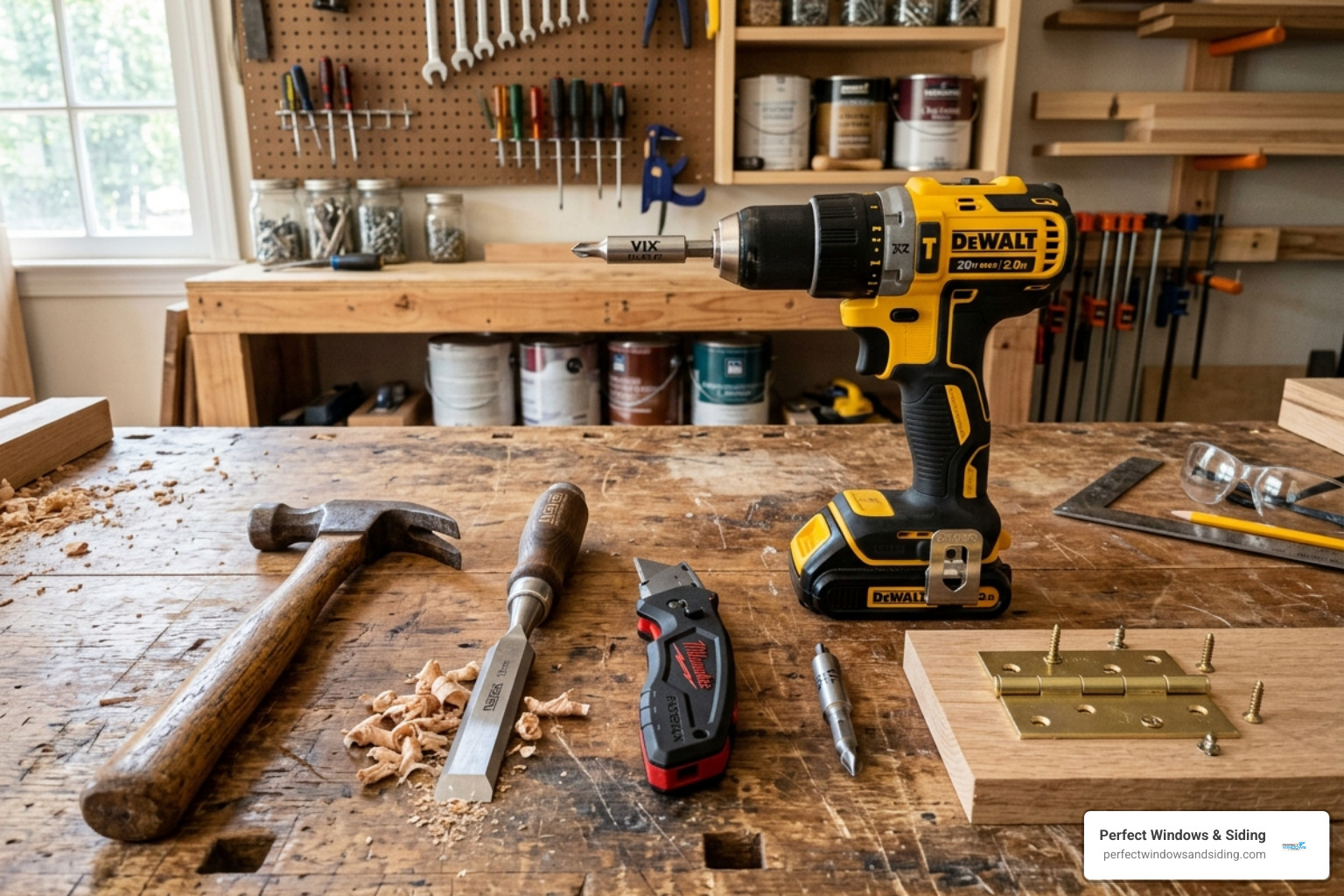
- Sharp Wood Chisel: This is the most important tool for “mortising” (cutting the recess for the hinge). A dull chisel will tear the wood fibers rather than slicing them.
- Hammer: Used to tap the chisel.
- Power Drill and Driver: For setting screws.
- Self-Centering (Vix) Bit: This is a pro secret. It ensures your pilot holes are perfectly centered in the hinge holes, preventing the hinge from shifting as you tighten the screws.
- Utility Knife: Great for scoring the outline of the hinge before you start chiseling.
- Tape Measure and Pencil: For precise layout.
- Wood Filler or Toothpicks: Essential for repairing old, stripped screw holes.
For a deeper dive into the toolset, Installing a Door Hinge: The Easy Way offers some great practical advice for beginners.
Step-by-Step Guide to Installing Door Hinges on a New Slab
If you’ve purchased a “slab” door (just the wood panel without the frame or hardware prep), you’ll need to perform a process called mortising. A mortise is a shallow notch that allows the hinge leaf to sit flush with the surface of the wood. If you don’t mortise, the hinges will be too thick, and the door won’t close properly.
Step 1: Marking and Installing Door Hinges on a New Slab
Start by placing the door on its side. We suggest laying down a towel to protect the finish.
- Mark the Positions: Standard placement is 7 inches from the top of the door to the top of the upper hinge, and 11 inches from the bottom of the door to the bottom of the lower hinge. If you’re using a third hinge, center it perfectly between the two.
- Trace the Outline: Hold the hinge leaf exactly on your marks and trace around it with a sharp pencil.
- Score the Wood: Use your utility knife to cut along the pencil lines. This prevents the wood from splintering when you start chiseling.
- Chisel the Mortise: Hold your chisel at a 45-degree angle and make a series of small “kerf” cuts across the area. Then, turn the chisel flat and pare away the waste. You want a depth of about 1/8 inch — just enough so the hinge sits perfectly flush.
- Drill Pilot Holes: Use your self-centering bit to drill holes for the screws. This prevents the wood from splitting, which is a common issue with seasoned wood in older Chicago homes.
Step 2: Attaching the Door to the Frame
Once the hinges are secured to the door, it’s time to hang it. This is usually a two-person job, especially for heavy exterior doors in places like Park Ridge or Wilmette.
- Align with the Jamb: Lift the door into the frame. Use shims at the bottom to hold the door at the correct height.
- Mark the Frame: Trace the hinge positions onto the door jamb. You will need to cut matching mortises into the frame just as you did on the door.
- Secure the Hinges: Screw the hinge leaves into the frame mortises.
- Insert the Pins: Align the knuckles and drop the hinge pins into place.
- Check for Plumb: Use a level to ensure the door is vertical. If it’s leaning, you may need to adjust the depth of your mortises slightly. For more on handling door blanks, see How to Install Hinges on a Door.
Professional Techniques for Replacing Existing Door Hinges
Replacing old, squeaky, or rusted hinges is one of the fastest ways to refresh a room. The “pro way” to do this is the one-at-a-time method. Instead of taking the whole door down, which is heavy and awkward, replace one hinge at a time while the door is closed and latched. This keeps the door aligned throughout the process.
Handling Stripped Screw Holes
In older homes throughout the Chicago suburbs, the wood inside the screw holes often becomes “punky” or stripped. When you go to tighten your new screws, they just spin.
Don’t panic! You can fix this by dipping a few wooden toothpicks or a small dowel in wood glue and tapping them into the hole. Once the glue dries, snip off the excess and drill a new pilot hole. It creates a fresh, solid “bite” for the new screw. While you’re at it, it’s a great time to check your door’s seals; learn more about How To Replace Door Weather Stripping to keep those winter drafts at bay.
Handling Different Hinge Sizes and Radii
When buying replacement hinges, you must match the “radius” of the corners. Hinges come in three shapes:
- Square Corners
- 1/4-inch Radius (Rounded)
- 5/8-inch Radius (More Rounded)
The Coin Test: If you aren’t sure which radius you have, use a coin. A dime usually matches a 1/4-inch radius, while a quarter matches the 5/8-inch curve. Matching this exactly ensures the new hinge fits perfectly into the old mortise without leaving ugly gaps.
Fine-Tuning and Adjusting Your Door for a Perfect Swing
Even with careful measurement, a door might not swing perfectly on the first try. Here is how to troubleshoot common issues:
- Ghosting: If the door swings open on its own, the hinges aren’t “plumb” (vertically straight). You can sometimes fix this by slightly bending one of the hinge pins with a hammer to create a tiny bit of friction.
- Sagging: If the door rubs at the top or bottom corner, it’s likely sagging. Replace the center screw of the top hinge with a 3-inch screw that reaches the wall framing. This pulls the top of the door tighter to the jamb.
- Binding: If the door is hard to close, the hinges might be recessed too deeply. You can place a thin piece of cardboard (like a cereal box) behind the hinge leaf to shim it out slightly.
For exterior doors, ensuring a perfect swing is also about maintaining your energy efficiency. If the door doesn’t sit right, your seals won’t work. Check out our guide on Exterior Metal Door Bottom Seal Replacement for more tips on weatherproofing.
Expert Tips for Installing Door Hinges with Professional Precision
- Lubrication: Use white lithium grease on the pins before inserting them. Avoid WD-40, as it can attract dust and eventually cause more squeaking.
- Low Torque: When driving screws, use a low torque setting on your drill. It is very easy to strip out the wood in a door jamb.
- Paint First: If you are painting your door, do it before installing door hinges. Getting paint inside the hinge knuckles causes friction and makes the paint chip.
- Gap Check: Aim for a “reveal” (the gap between the door and the frame) of about 1/8 to 3/16 of an inch all the way around.
For more professional insights on achieving a perfect fit, How to Install Door Hinges on Any Door in Your Home is a fantastic resource.
When to Call a Professional for Door Hinge Installation
While installing door hinges is a great DIY project for interior doors, exterior doors can be a different beast. Entry doors in the Chicagoland area often feature complex weatherstripping, heavy glass inserts, or high-security multi-point locking systems.
At Perfect Windows & Siding, we’ve spent two decades serving homeowners in Des Plaines, Naperville, and across the Chicago suburbs. If you’re dealing with a heavy, custom entryway or a frame that has rotted or warped beyond simple repair, it might be time to bring in the experts. We offer custom door solutions and professional installation that includes a lifetime warranty, ensuring your home stays secure and energy-efficient for years to come. If you’re looking to upgrade your entire entryway, we can also help you Install Door Weather Stripping to maximize your home’s comfort.
Frequently Asked Questions about Door Hinges
What is mortising and why is it important?
Mortising is the process of cutting a shallow recess into the door or frame so the hinge sits flush. It is important because it provides structural strength and ensures the door can close tightly without the hinges getting in the way.
How do I determine the correct placement for hinges?
On a standard door, place the top hinge 7 inches from the top of the frame and the bottom hinge 11 inches from the floor. For doors over 75 pounds, add a third hinge centered between the two.
Can I install hinges on the outside of an exterior door?
For security reasons, you should avoid this. If the hinges are on the outside, an intruder can easily remove the pins and enter your home. Always install hinges so the knuckles face inward, or use specialized security hinges with non-removable pins.
Conclusion
Installing door hinges correctly is a blend of precision and patience. Whether you’re a DIY enthusiast in Mount Prospect or a homeowner in Morton Grove looking to improve your home’s security, understanding the mechanics of your door hardware is the first step toward a successful project. From choosing the right ball-bearing hinges for a heavy oak slab to mastering the art of the wood chisel, these small details ensure your doors operate smoothly for decades.
If you find yourself facing a tricky installation or simply want the peace of mind that comes with professional craftsmanship, we’re here to help. Schedule your consultation with Perfect Windows & Siding today, and let our 20+ years of local experience work for you. We’ll make sure your next door project is a “swing and a hit!”