

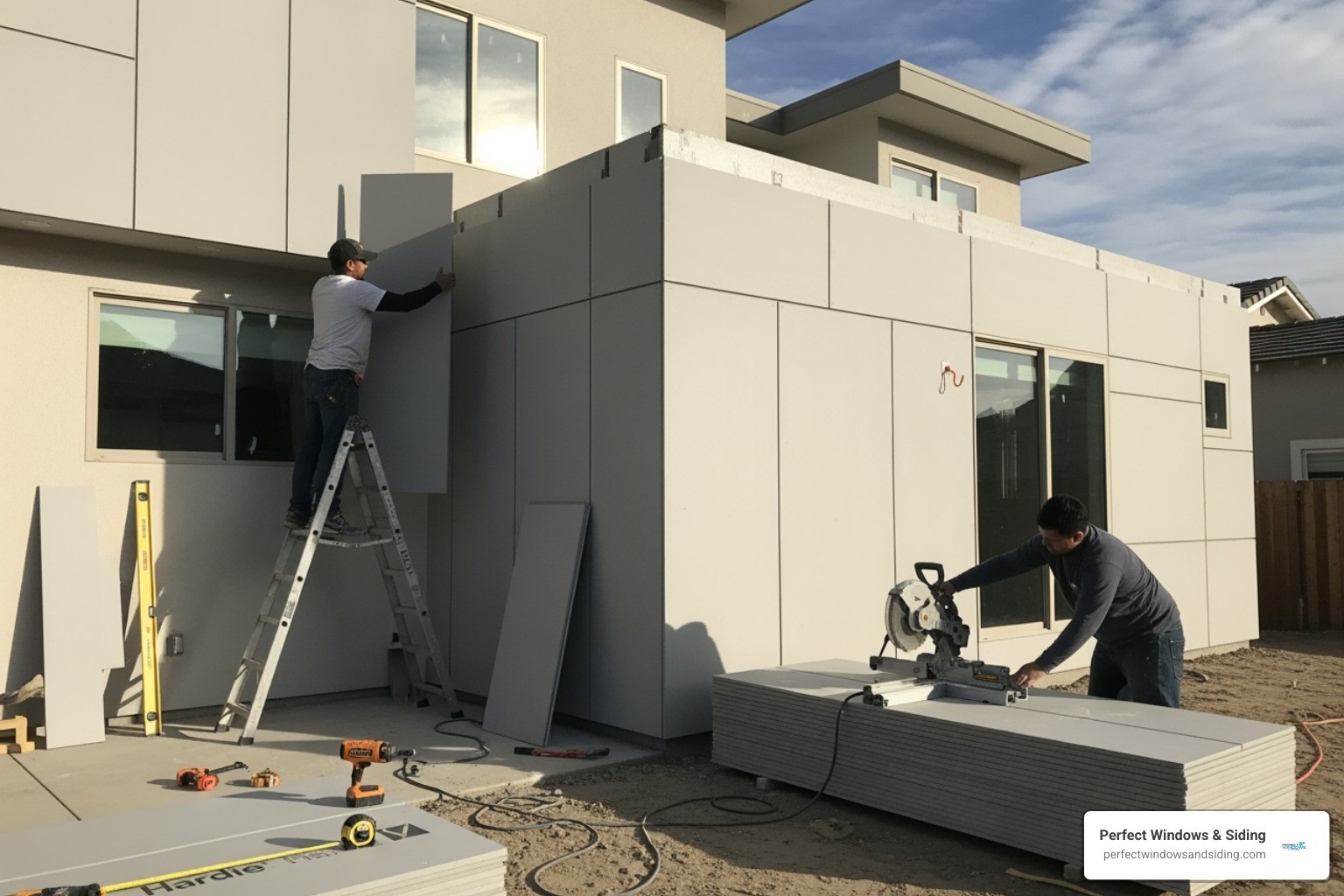
What matters most when installing 4×8 Hardie panels?
Start with the correct Hardie Panel product, a sound wall assembly and a layout that provides the required support at panel joints. Confirm fastening, clearances, flashing, finishing and dust-control requirements in the applicable James Hardie instructions. The measurements in this guide are not a substitute for the instructions for your panel and installation location.
Why Professional 4×8 Hardie Panel Installation Makes All the Difference
Manufacturer reference for 4×8 HardiePanel installation: Use the James Hardie technical documents for Hardie Panel siding and select the instructions for your product and installation location before choosing fasteners, clearances or joint treatment. Hardie Panel and Hardie Architectural Panel are separate product systems; their instructions should not be substituted for one another.
A professional 4×8 hardie panel installation can transform your home’s exterior with durable, fire-resistant fiber cement siding that stands up to Chicago’s harsh weather. A successful installation involves several key stages:
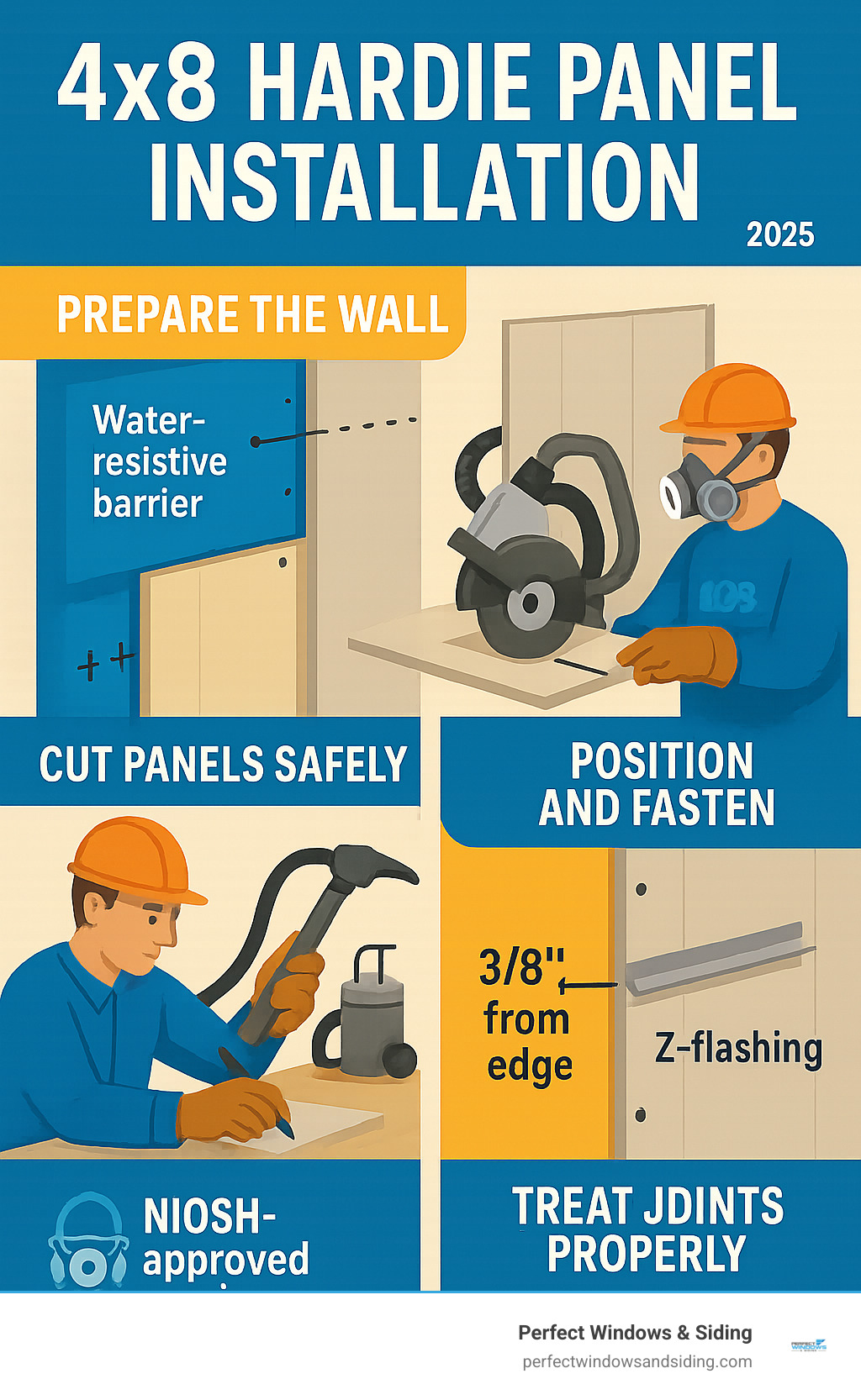
Essential Steps for 4×8 Hardie Panel Installation:
- Wall Preparation: Install a water-resistive barrier and mark stud locations.
- Safe Cutting: Use dust collection and a proper respirator for silica protection.
- Positioning and Fastening: Place fasteners 3/8″ from edges, driving them snug and flush.
- Joint Treatment: Install Z-flashing at horizontal joints and maintain 1/4″ gaps.
- Sealing and Finishing: Caulk vertical joints, then prime and paint within 180 days.
Installing 4×8 HardiePanel vertical siding requires careful attention to manufacturer specifications. As one forum user noted, “The panels are extremely heavy and hard to hold in order to get the 1/4” vertical gaps”—highlighting why proper technique and an extra pair of hands are essential.
These 5/16″ thick panels are engineered to resist fire, moisture, and pests while providing excellent curb appeal. They can be installed over braced wood or steel studs (max 24″ on center) or directly to minimum 7/16″ OSB sheathing.
I’m Voytek Glab, owner of Perfect Windows & Siding. With over 20 years of hands-on carpentry experience in the Chicagoland area, I ensure every 4×8 hardie panel installation meets manufacturer specifications for maximum durability and warranty protection.
Relevant articles related to 4×8 hardie panel installation:
Before You Begin: Essential Tools, Materials, and Wall Prep
Proper preparation is crucial for a smooth 4×8 hardie panel installation. Rushing this stage can lead to problems later. Start with your wall foundation. Your existing sheathing must be solid, flat, and free of rot or damage, as the rigid Hardie panels will reveal any imperfections.
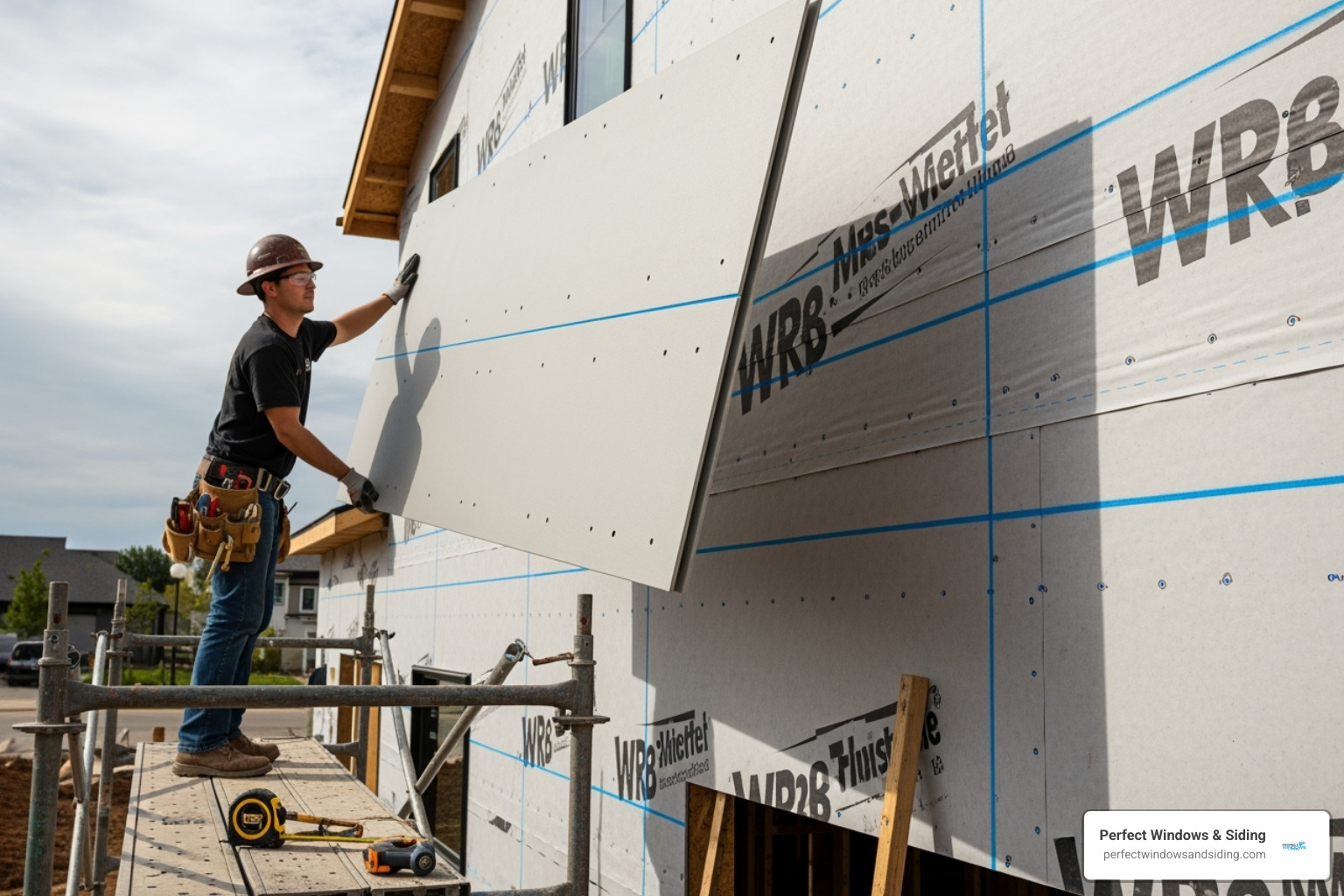
Next, install the water-resistive barrier (WRB). This is more than just house wrap; it’s a critical drainage system. For Chicago’s climate, we recommend a rainscreen system with at least a 3/8-inch air gap between the WRB and siding to allow moisture to escape and prevent mold.
Marking stud locations is also critical. The heavy panels need solid wood for fastening, and every vertical joint must land on a stud. Use a bright chalk line. We sometimes install double studs at panel joints to ensure proper fastener spacing.
Finally, consider material handling. These 4×8 panels are heavy and awkward. Store them flat, keep them dry, and always carry them on edge to prevent cracking. For more professional guidance on siding projects, check out our Siding Installation Near Me page.
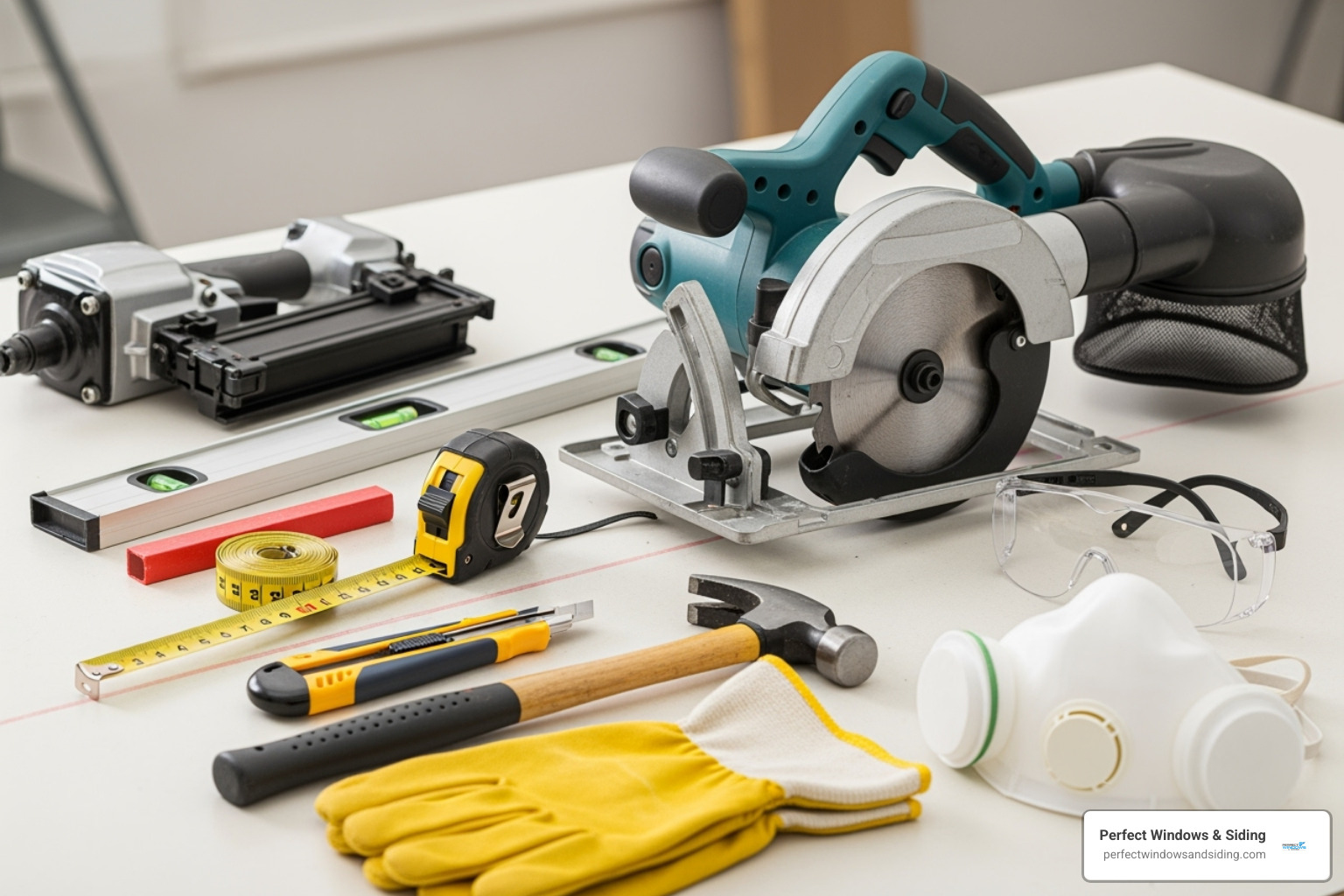
[LIST] of Essential Tools and Materials
Using the right tools for a 4×8 hardie panel installation ensures safety and quality. Here’s a list of essentials:
- Safety Gear: NIOSH-approved N-95 respirator (for silica dust), safety glasses, ear protection, and work gloves.
- Cutting Tools: A circular saw with a HardieBlade® and dust collection, fiber cement shears for low-dust cuts, and a utility knife for scoring and snapping.
- Layout Tools: Measuring tape, 4-foot and 6-foot levels, a chalk line, and a pencil.
- Fastening Tools: A pneumatic nailer with a flush mount attachment and corrosion-resistant fasteners (hot-dipped galvanized or stainless steel).
- Lifting Aid: A geared panel lift (a modified drywall lift) is a highly recommended rental to safely handle heavy panels.
- Finishing Materials: Z-flashing for horizontal joints, ASTM C920 compliant elastomeric caulk, and 100% acrylic exterior paint for cut edges.
Essential Preparation for 4×8 Hardie Panel Installation
Proper prep work is what separates a 10-year job from a 30-year job. The preparation phase of your 4×8 hardie panel installation sets the stage for a durable, long-lasting finish.
- Inspect and Repair Sheathing: Check for soft spots, loose boards, or moisture damage. The sheathing must be sound to support panels designed to last for decades. Clean the surface to ensure proper WRB adhesion.
- Install Water-Resistive Barrier (WRB): Install the WRB with proper overlaps so upper layers shed water over lower ones. In the Chicago climate, this step is critical to prevent water intrusion.
- Plan Panel Layout: Map out panel placement to minimize waste and ensure all vertical joints land on studs. For textured panels like HardiePanel Sierra 8, be careful with joint placement to avoid nailing into grooves.
- Leverage Engineered for Climate®: James Hardie products are formulated for Midwest weather, resisting moisture in humid summers and cracking during freeze-thaw cycles.
- Mark Stud Locations: Use a chalk line to snap straight reference lines, ensuring every fastener hits solid wood. Consider adding blocking or double studs at panel joints for correct fastener spacing.
- Stage Materials: Keep panels flat and dry until use, and organize tools for an efficient workflow. This attention to detail leads to a smoother installation.
For more detailed information about professional installation techniques, visit our Hardie Board Siding Installation page.
Planning a fiber cement siding project in Chicagoland? Learn about our installation services and discuss the scope of your project.
The Core Steps of Your 4×8 Hardie Panel Installation
With preparation complete, it’s time to install the 4×8 hardie panels. This stage requires precision to ensure a professional result.
First, establish a starting line. Measure up from the foundation and snap a perfectly level chalk line across the wall. This reference is critical; any error here will be magnified as you move up the wall.
Panel placement is a two-person job due to the weight and size of 4×8 hardie panels. A panel lift is also a great asset. Working from the bottom up, lift each panel into position, aligning it with your chalk line and adjacent panels.
Fastening must be done carefully. Secure panels to studs with corrosion-resistant fasteners placed exactly 3/8 inch from the edges and no closer than 2 inches from corners. Drive each fastener snug and flush with the panel surface. Over-driving can crack the panel, while under-driving compromises weather resistance.
Joint treatment is key for water management. For vertical joints, options include butting panels together (moderate contact) or covering seams with battens for a board-and-batten look. For horizontal joints, Z-flashing is mandatory. Install it at every horizontal seam, leaving a 1/4 inch gap above the flashing for drainage.
Constant attention to water management, from drainage planes to flashing around openings, is what makes a 4×8 hardie panel installation last for decades.
For comprehensive exterior upgrades, explore our complete Windows and Siding services.
Best Practices for Cutting Hardie Panels
Cutting fiber cement safely is a top priority during a 4×8 hardie panel installation. The main concern is respirable crystalline silica dust, which can cause serious lung problems with prolonged exposure. Always use proper safety equipment and dust control.
- Power Cutting: For outdoor cuts, use a circular saw with a HardieBlade® connected to a vacuum dust collection system. This method provides clean cuts while minimizing airborne dust. Always wear a NIOSH-approved N-95 respirator, safety glasses, and hearing protection.
- Low-Dust Methods: For indoor work or to reduce dust, use fiber cement shears or the score-and-snap method. Shears create clean, straight cuts with almost no dust. To score and snap, use a utility knife to make a deep score and then snap the panel along the line.
- Pro-Tip: Use blue chalk for marking cut lines, as red chalk can stain and bleed through paint.
- Cleanup: Never dry sweep silica dust. Use wet cleanup methods or a HEPA vacuum. Whenever possible, perform power cuts outdoors.
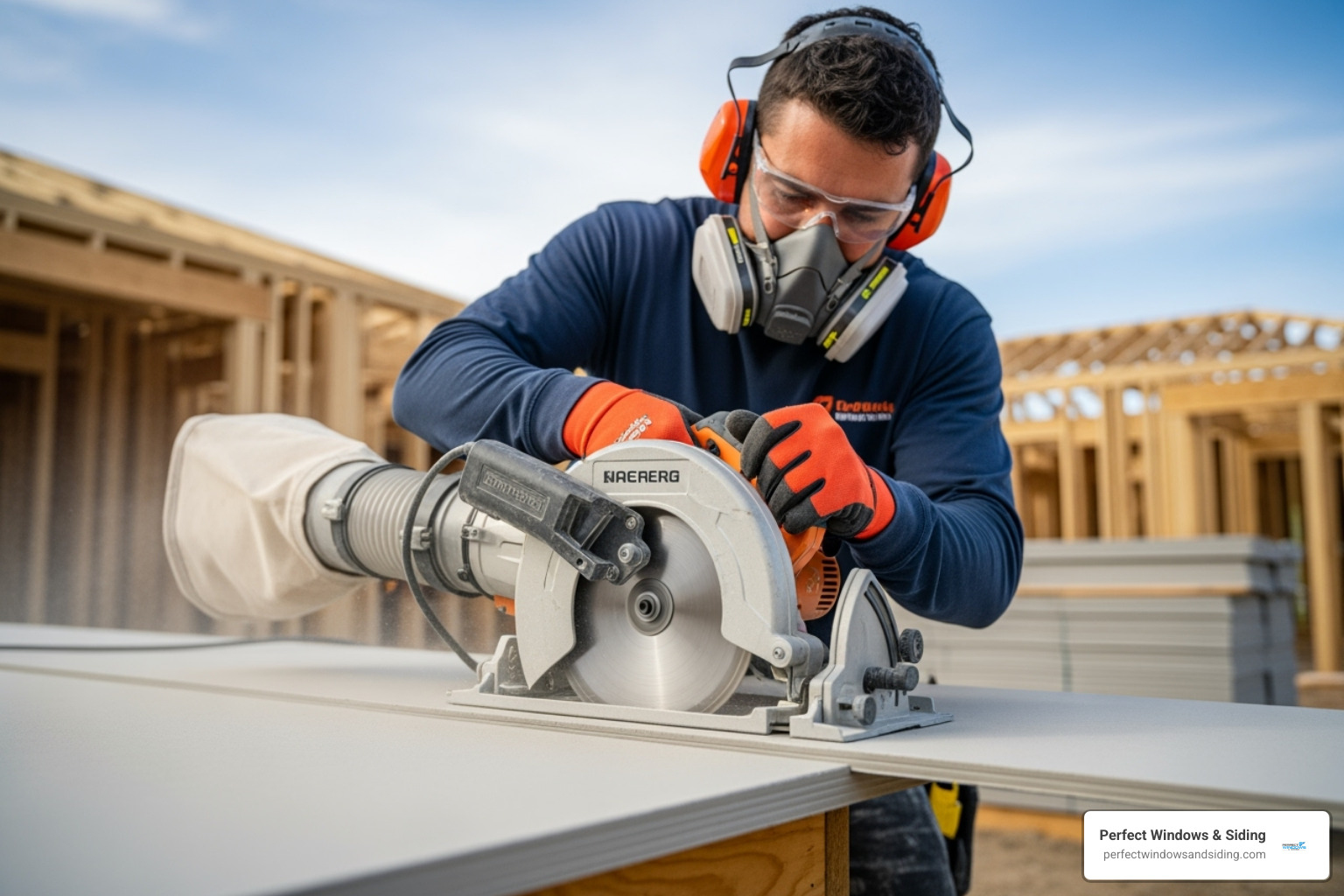
These safety practices are essential for your long-term health. For comprehensive safety information, we recommend you Learn more about Silica Safety from JHInsite®.
Fastening Techniques for a Secure 4×8 Hardie Panel Installation
Correct fastening is critical for a successful 4×8 hardie panel installation. This involves choosing the right fasteners, placing them correctly, and using the proper driving technique.
- Fastener Type: Always use corrosion-resistant fasteners. Hot-dipped galvanized nails are standard, but stainless steel is recommended for humid or coastal climates to prevent rust stains.
- Fastener Placement: Follow manufacturer specifications strictly. Place fasteners 3/8 inch from panel edges and at least 2 inches from corners to prevent cracking. All vertical joints must land on a stud. For some textured panels, double studs may be needed at joints to ensure proper nailing.
- Driving Technique: Fasteners must be driven snug and flush with the panel surface. Over-driving can crack the panel, while under-driving looks unprofessional and compromises weather resistance.
- Pneumatic Nailer Use: For consistency, use a pneumatic nailer with a flush mount attachment. Adjust the air pressure to prevent over-driving. If a fastener is countersunk, fill the hole and drive a new one nearby.
- Steel Studs: When fastening to steel studs (16-20 gauge), use appropriate screws, pre-drilling if necessary.
Managing Joints and Ensuring Water Resistance
Proper joint management in a 4×8 hardie panel installation is crucial for both aesthetics and long-term water resistance.
Vertical Joints: Your choice depends on the desired look.
- Moderate Contact: Panels are butted together for a clean, modern seam.
- Batten Strips: 1×3 battens are installed over joints for a classic board-and-batten style.
- H-Channel Jointers: Metal or PVC moldings cover the joint for a distinct look.
- Caulking: A 1/8-inch gap can be caulked on primed panels, but this is not recommended for ColorPlus® products.
Horizontal Joints: These require meticulous water management.
- Z-Flashing: This is mandatory at all horizontal joints. The flashing goes behind the upper panel and over the lower one.
- Drainage Gap: A 1/4 inch gap must be left between the bottom of the upper panel and the Z-flashing to allow for drainage. Use shims to maintain this gap during installation.
Flashing Openings: Pay close attention to windows, doors, and other penetrations. Use proper flashing materials and maintain a 1/4-inch gap between the panel and trim. Also, install kickout flashing where roofs meet sidewalls to divert water away from the wall.
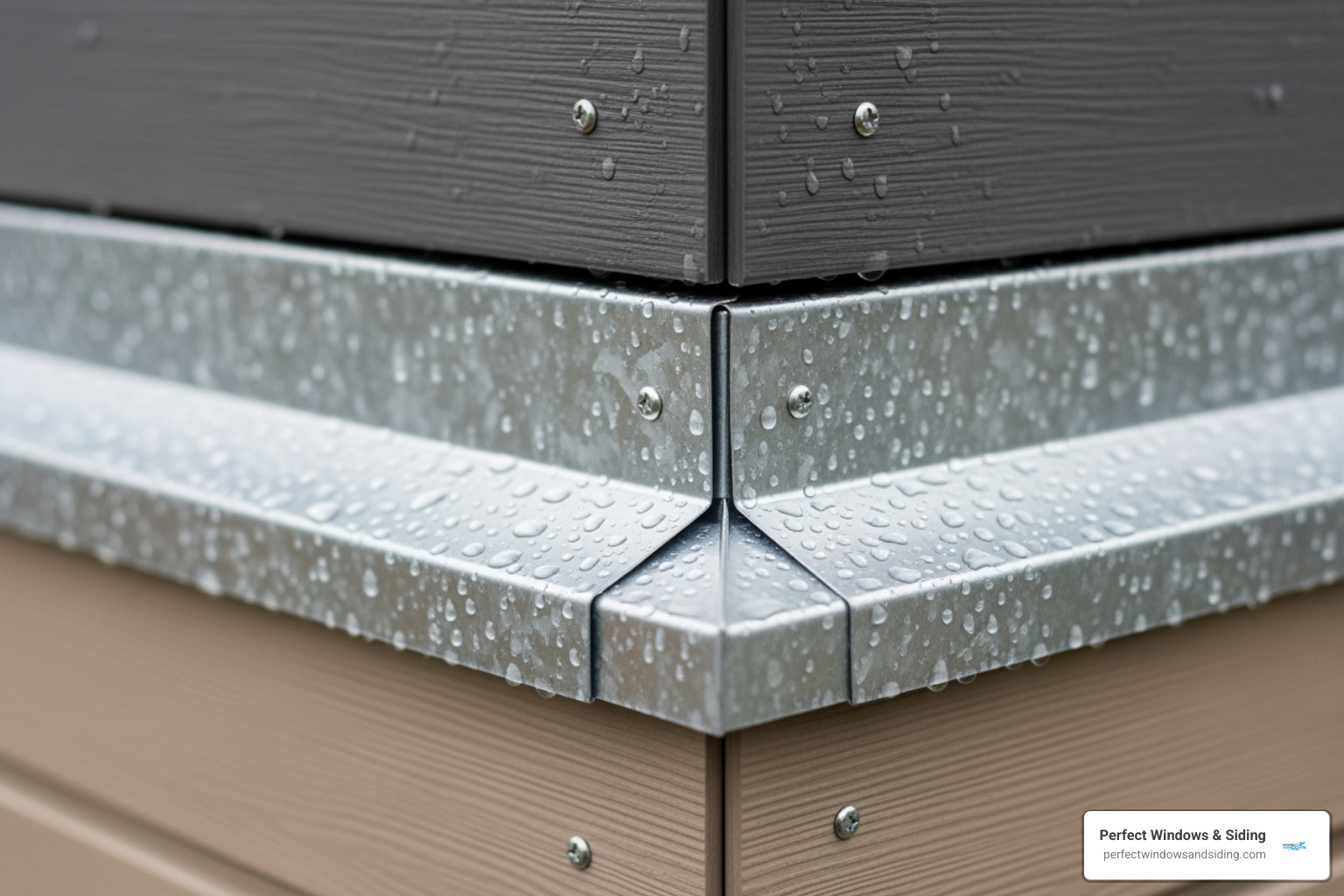
A comprehensive approach to joints and flashing ensures your 4×8 hardie panel installation will protect your home from moisture for years.
Achieving a Professional Finish: Caulking and Painting
The final stages of your 4×8 hardie panel installation—caulking and painting—are where the project comes together. This finishing work is critical for both appearance and long-term protection, ensuring your siding performs as designed and your warranty remains valid.
Proper finishing keeps moisture out and provides a beautiful, durable result. Whether using factory-primed panels or James Hardie’s ColorPlus® Technology products, following the specific requirements is key to a professional outcome. After investing in quality siding, these final steps must be done right. For more insights on maximizing your investment, check out Why New Siding Is Worth the Investment.
Sealing Gaps for a Watertight Finish
Proper caulking creates a flexible, long-lasting seal that completes your home’s weather barrier. It must accommodate your home’s movement through Chicago’s temperature swings without failing.
- Choose the Right Sealant: Use an ASTM C920 compliant elastomeric sealant. This high-performance caulk is designed to remain permanently flexible.
- Application Areas: Apply a consistent bead to vertical panel joints (if not using battens or H-channels), around window and door trim, and where siding meets other materials.
- ColorPlus® Pro-Tip: Do not caulk ColorPlus® nail heads. This can trap moisture and look uneven. For minor touch-ups on ColorPlus products, use the manufacturer’s specific touch-up kits sparingly.
- Tooling the Bead: For a professional look, tool the caulk bead with your finger or a caulk tool to create a smooth, slightly concave surface that sheds water. Clean up excess caulk with a damp rag before it dries.
Painting and Touching Up Your New Siding
Fiber cement holds paint exceptionally well, providing a long-lasting, beautiful finish.
- Paint Type and Timing: For factory-primed panels, you must paint within 180 days of installation. Use only 100% acrylic exterior paint to comply with the warranty; oil-based paints are not recommended.
- Treat Field-Cut Edges: This step is mandatory. Any cut edge exposes the fiber cement core and must be sealed. Prime and paint cut edges on primed panels. For ColorPlus® products, use the matching edge coater to protect the core and maintain the finish.
- ColorPlus® Touch-Ups: These panels feature a durable, baked-on finish. If touch-ups are needed, use the official ColorPlus® touch-up kits sparingly, as over-application can be noticeable.
- Surface Prep: Before painting, ensure the surface is clean, dry, and free of dust. When spraying paint, back-rolling is recommended to improve adhesion and achieve a uniform finish.
A quality paint job protects your investment and keeps your 4×8 hardie panel installation looking great for years. For comprehensive exterior makeovers in our area, explore our Siding Replacement Chicago services.
Frequently Asked Questions about Hardie Panel Installation
We know that a 4×8 hardie panel installation can spark a lot of questions, especially if you’re new to working with this fantastic material. That’s totally normal! We often hear similar inquiries from homeowners just like you. So, let’s dive into some of the most common questions we get, sharing our expert insights to help you feel confident and informed.
How heavy are 4×8 Hardie panels and can one person install them?
These panels are substantial and quite heavy. As one person noted, “The panels are extremely heavy and hard to hold.” This makes solo installation extremely difficult and unsafe. Trying to align a heavy panel while keeping it plumb, level, and maintaining proper gaps is a recipe for mistakes and potential injury. We always recommend having a helper; it’s essential for safety and accuracy. For extra assistance, a geared panel lift (a modified sheetrock lift, often available for rent) is a back-saver that makes positioning panels much easier.
What is the best way to treat the vertical joints between panels?
The best way to treat vertical joints during a 4×8 hardie panel installation depends on your desired aesthetic and whether you’re using ColorPlus® products. Your options include:
- Moderate Contact: Panels are butted together for a clean, modern look.
- Batten Strips: 1×3 battens are installed over the joints for a classic board-and-batten style.
- H-Channel Jointers: Metal or PVC moldings cover the joints for a distinct, finished look.
- Caulking: For primed (non-ColorPlus) panels, you can leave a 1/8-inch gap and caulk it. This is not recommended for ColorPlus® products as it can mar the factory finish.
For some textured panels like Sierra 8, we may use a double stud at vertical joints to ensure proper nailing away from decorative grooves, which maintains the panel’s integrity and appearance.
How do I avoid cracking the panels when fastening them?
Cracking panels during a 4×8 hardie panel installation is avoidable with the right technique. Since fiber cement is rigid, precision is key.
- Proper Fastener Placement: Place fasteners 3/8 inch from panel edges and no closer than 2 inches from corners. Nailing too close to the edge is a common cause of cracking.
- Drive Fasteners Straight and Snug: Drive fasteners perpendicular to the panel so they sit flush with the surface. Do not over-drive them, as this creates stress points and can cause cracks.
- Use Proper Tools: When using a pneumatic nailer, adjust the air pressure correctly and use a flush mount attachment to prevent over-driving.
- Avoid Angled Fasteners: Drive fasteners straight to ensure even pressure on the panel.
Following these steps will help you avoid cracked panels!
Conclusion: When to DIY and When to Call the Pros
We’ve covered the key steps for a successful 4×8 hardie panel installation, from preparation and cutting to fastening and finishing. This project demands precision, safety, and attention to detail to achieve a durable, attractive result.
A DIY installation can be rewarding, but proper technique is critical. It ensures your James Hardie siding performs as intended, protects your home from Chicago’s weather, and maintains its 30-year limited warranty. Cutting corners can lead to moisture problems, structural issues, and a voided warranty.
This demanding project isn’t for everyone. It requires specialized tools, significant time, and the physical stamina to handle heavy panels with precision. If you’re not prepared for the challenge, it’s best to call a professional.
For a guaranteed professional result in the Chicagoland area, trust the experts at Perfect Windows & Siding. With over 20 years of experience, our family-owned business is committed to quality, offering custom solutions and a lifetime warranty for your peace of mind. We’ll handle the heavy lifting and intricate details of your 4×8 hardie panel installation, so you can enjoy a beautiful, worry-free exterior.
Ready to transform your home with stunning Hardie panels? Contact us for your professional siding project today.
Sources and next steps
James Hardie technical documents. Choose the applicable panel system and installation location; Hardie Panel and Hardie Architectural Panel use different details.
Related reading: Don't Cut Corners: Your Guide to Installing 4×8 Sheet Siding; Siding Swap: Your Step-by-Step Guide to Hardie Plank Replacement.
For help with a Chicago-area project, explore our fiber cement siding installation.