

Vinyl Siding Installation in Chicago
Perfect Windows & Siding
Let’s Work Together!
Perfect Windows & Siding
Let’s Work Together!
Perfect Windows & Siding provides vinyl siding installation in Chicago and surrounding suburbs. To plan your project, tell us which exterior walls need attention, the existing siding material and the finish you would like to achieve. Include photographs of corners, trim and any visible damage when requesting an estimate.
Review our siding services and siding replacement pages to compare the project scope. If you are considering a different material, see fiber cement siding installation. Ask which removal, wall preparation, weather-protection and trim details are included in the proposed work.
View our completed project gallery and request a free estimate. Share the property location and approximate wall area so your enquiry can be discussed in the context of your home. Our service areas page provides local service information.
Vinyl siding installation is the process of attaching interlocking PVC panels to the exterior wall assembly of a home — over a prepared substrate, correctly flashed at all penetrations, and properly overlapped and spaced to allow for thermal expansion. The panels interlock along horizontal courses from the bottom of the wall to the top, creating a continuous weather barrier that sheds water, resists wind, and protects the wall assembly behind it.
In Chicago, vinyl siding is the most requested exterior cladding material in the residential market. The reasons are specific to this climate. Vinyl does not rot. It does not rust. It does not require painting or seasonal treatment. It handles freeze-thaw cycling without the structural degradation that affects wood, and without the oxidation and denting that limits aluminum. In a market where the exterior of a home is subjected to sustained below-zero cold, heavy snow loads, summer heat, and hundreds of freeze-thaw cycles over a service life, those characteristics matter more than they would in a moderate climate.
This page covers vinyl siding installation in Chicago in full — what vinyl siding does for a Chicago home, how long it lasts in this climate, whether installation over existing siding is appropriate for your situation, how the installation process works and how long it takes, and what impact vinyl siding has on home value in Chicago’s residential market. It is written for homeowners who are close to a decision and need accurate, climate-specific information before they act.
We install vinyl siding throughout Chicago and the surrounding suburbs. Free estimates are available — call us to schedule yours.
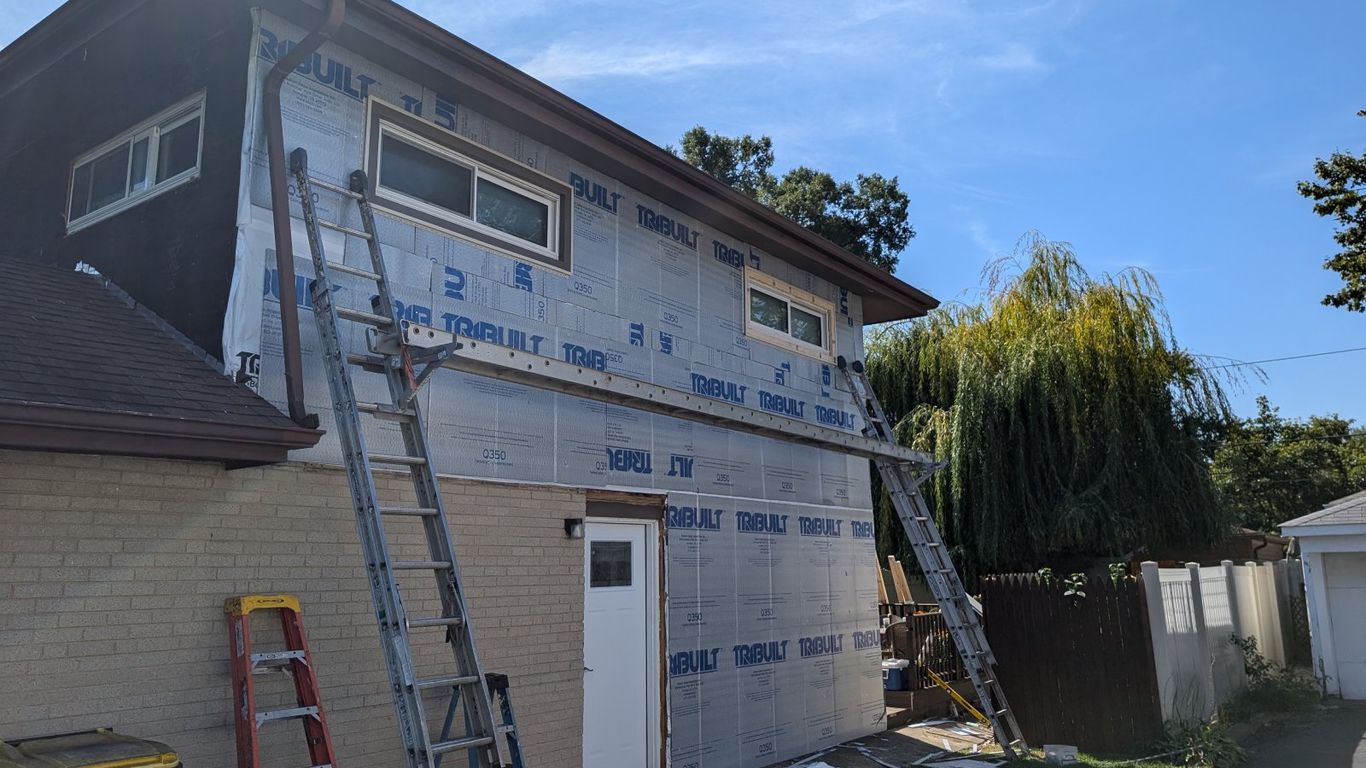
Vinyl siding performs two functions simultaneously: it protects the wall assembly behind it from weather infiltration, and it provides the exterior appearance of the home. Those two functions are related but distinct, and understanding both helps homeowners evaluate the investment accurately.
Weather protection The primary function of vinyl siding is to create a continuous barrier against wind-driven rain, snow, ice, and the moisture that all three carry. A home’s exterior wall assembly — sheathing, insulation, framing — is not designed to tolerate sustained moisture exposure. The siding is what keeps that moisture away from the wall. When siding fails — when it cracks, pulls away from the wall, develops gaps at seams, or allows water infiltration at penetrations around windows and doors — moisture enters the wall assembly and begins degrading it.
In Chicago’s climate, that degradation happens faster than in moderate markets. Moisture that enters a wall assembly in October will freeze in November. Frozen moisture expands, widening gaps and accelerating damage. By the time visible interior symptoms appear — water staining, soft drywall, mold — the underlying damage to framing and sheathing is typically significant.
Vinyl siding installed correctly creates a weather barrier that prevents that moisture infiltration cycle from beginning. The panels shed water. The J-channel at windows and doors redirects water away from those penetrations. The moisture barrier behind the panels catches anything that gets past the siding itself. The wall assembly stays dry, and the freeze-thaw cycle that would otherwise degrade it has no moisture to work with.
Appearance and maintenance The secondary function of vinyl siding is exterior appearance — and in Chicago’s residential market, appearance has direct financial implications. A home with failing, faded, or visibly deteriorating siding creates a negative first impression that affects buyer perception, appraiser assessment, and neighborhood standing regardless of the home’s interior condition.
Vinyl siding restores a clean, consistent exterior finish and holds that finish without the maintenance requirements that other materials impose. Wood siding requires painting every five to seven years in Chicago’s climate — longer intervals produce peeling, cracking, and moisture infiltration at the exposed wood surface. Aluminum siding oxidizes, chalks, and dents without a repair or refinishing pathway. Vinyl siding requires neither painting nor staining. Periodic washing — a garden hose and a soft brush — is the complete maintenance requirement for a correctly installed vinyl siding system.
Chicago’s mid-century housing stock — the aluminum-sided bungalows and ranch homes of Jefferson Park, Norwood Park, and the Northwest Side — was clad in a material that has reached the end of its practical service life across most of those homes. The aluminum has oxidized. The paint has chalked beyond touch-up. The panels have dented and cannot be refinished. Vinyl siding replacement eliminates those failure modes permanently and is available in profiles that match or improve the original horizontal lap appearance those homes were built with.
Correctly installed vinyl siding in Chicago has a service life of 20 to 40 years. The range is wide because service life depends on three variables that vary significantly across installations: product specification, installation quality, and maintenance. All three are within the homeowner’s control at the time of the original installation decision.
Product specification Not all vinyl siding is the same product. Panel thickness ranges from approximately 0.040 inches in budget products to 0.046 inches or more in premium products. Thicker panels have greater impact resistance — relevant in Chicago’s climate where hail, wind-driven debris, and thermal stress all impose mechanical loads on the siding surface. Thicker panels also have greater dimensional stability across the temperature range Chicago produces, cycling less dramatically between their summer and winter dimensions and imposing less cumulative stress on the installation fasteners and trim components.
Insulated vinyl siding — panels with an EPS foam backer bonded to the rear face — adds a layer of thermal resistance to the wall assembly and provides additional rigidity that reduces the visual waviness sometimes visible in thinner uninsulated panels. It also adds impact resistance by backing the panel surface with a continuous rigid layer. Insulated vinyl has a longer expected service life than uninsulated vinyl of equivalent face thickness in Chicago’s climate.
Installation quality Installation quality is the most consequential variable in vinyl siding service life in Chicago — more consequential than product specification. A premium panel installed incorrectly will fail faster than a standard panel installed correctly. The failure mechanism is thermal expansion.
Vinyl siding panels expand in summer heat and contract in winter cold. The expansion coefficient for PVC is significant — a 12-foot panel will expand and contract by approximately 3/8 inch across Chicago’s full temperature range. Panels installed without adequate thermal expansion allowance at the J-channel and trim components have nowhere to go when they expand. They buckle outward, distorting the wall surface and creating gaps at the panel edges. Panels installed with excessive allowance rattle in wind and gap visibly at the trim.
Correct thermal expansion allowance — nailing at the center of the nail slot, leaving a specific gap at each trim component — is the installation variable that determines whether vinyl siding performs correctly across 30 years of Chicago temperature cycling or begins showing distortion within a few winters. It is not a difficult requirement, but it requires a crew that has installed vinyl siding in this climate consistently and understands why the specification exists.
Maintenance Vinyl siding maintenance requirements are minimal but not zero. Annual or biannual washing removes the atmospheric dirt, organic growth, and chalking that accumulate on the panel surface over time. Washing is not merely cosmetic — organic growth on the panel surface can retain moisture and accelerate surface degradation if left in place for extended periods. A garden hose, a mild cleaning solution, and a soft brush applied from bottom to top constitutes adequate maintenance for a correctly installed vinyl siding system.
Homeowners in Glenview, Park Ridge, and the older northwest suburbs who are evaluating vinyl siding as a 30-year investment should understand that the service life figures cited for vinyl assume periodic maintenance was performed. A correctly installed panel system on a home that has never been washed will show surface degradation at the lower end of the service life range. The same system with periodic maintenance will perform at the upper end.
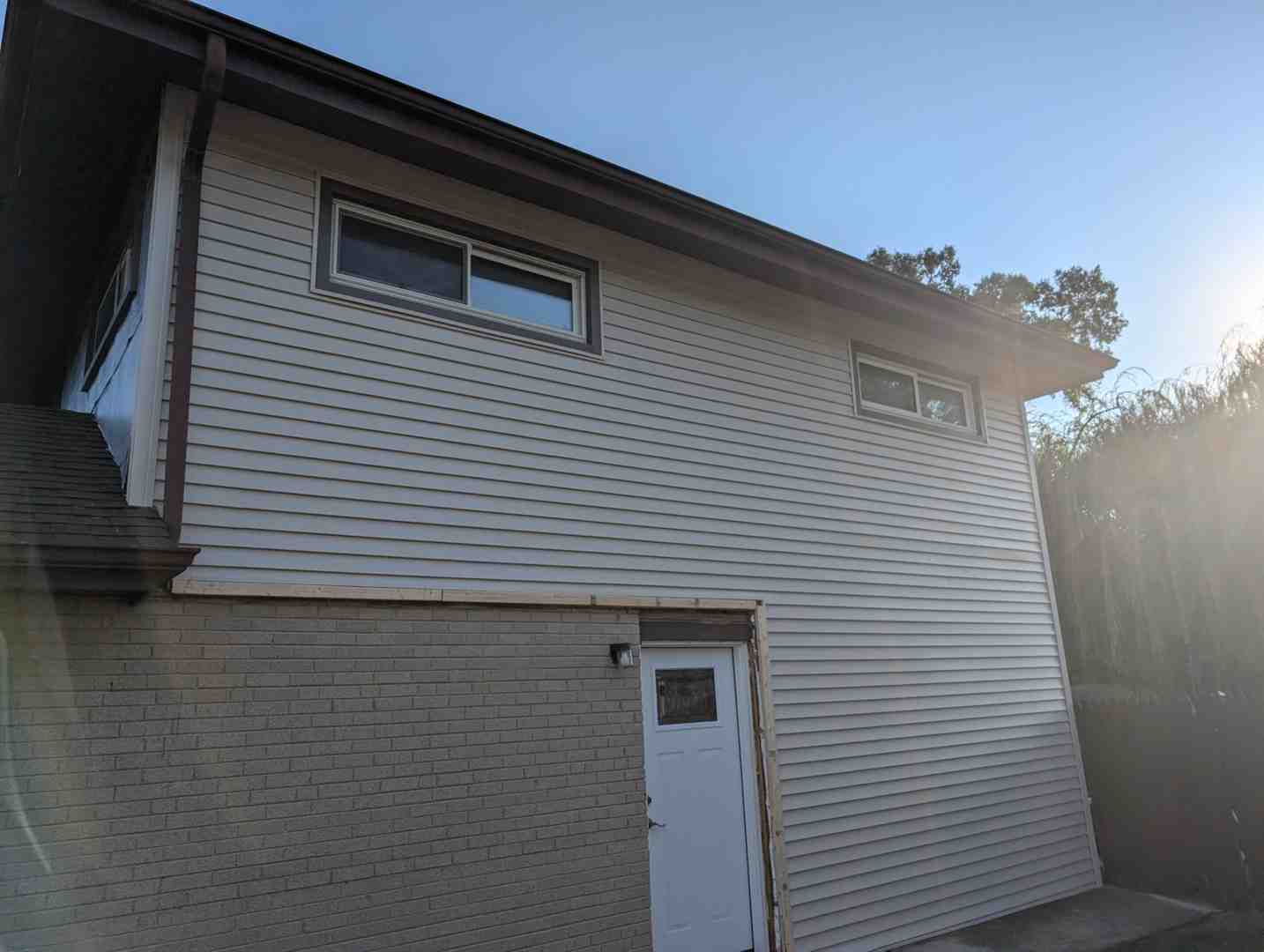
The question of whether vinyl siding can be installed over existing siding is one of the most consequential pre-installation decisions in Chicago’s residential exterior market. The technically correct answer is: sometimes, under specific conditions. The practically correct answer is: only after an on-site assessment that rules out the conditions that make installation over existing siding inappropriate.
When installation over existing siding is appropriate Installation over existing siding is appropriate when three conditions are simultaneously met: the existing siding is flat, the existing siding is structurally sound, and there is no moisture behind the existing siding. When all three conditions are confirmed, the existing siding can serve as a substrate for the new vinyl installation. The new panels go over the old material, the wall thickness increases slightly, and the existing substrate provides a nailing surface for the new installation.
This approach is most common when the existing siding is a single layer of material in good structural condition — wood lap siding or aluminum siding that has not allowed moisture infiltration — and the homeowner wants to minimize project scope and disruption. When the conditions are met, it is a technically sound approach.
When installation over existing siding is not appropriate Installation over existing siding is not appropriate in three circumstances that are common in Chicago’s housing stock.
First, when the existing siding surface is uneven — warped panels, buckled sections, or multiple layers of old siding already in place — the unevenness telegraphs through the new vinyl panels. The finished surface shows a wavy, inconsistent appearance that does not correct itself over time and is visible from the street. In Rogers Park, Avondale, and older Chicago neighborhoods where homes have been re-sided once or twice already, multiple existing siding layers are common enough to make tearoff the default approach.
Second, when moisture is present behind the existing siding. This is the most consequential condition in Chicago’s climate. Chicago’s mid-century aluminum-sided homes present a specific and frequently encountered assessment problem: the aluminum surface may appear intact — no visible holes, no obvious penetrations — while moisture has infiltrated behind it over decades through failed caulking at windows and doors, gaps at the bottom course, or ice dam infiltration during severe winters. That moisture has been sitting against the wall sheathing, and in many cases has produced rot and mold that is invisible from the exterior.
Installing vinyl siding over compromised aluminum in that condition traps the existing moisture against the wall assembly. The new vinyl barrier prevents the trapped moisture from drying to the exterior. The rot and mold that were already occurring continue — and accelerate — behind a new surface that conceals them completely until the damage is severe enough to produce interior symptoms.
Third, when the existing substrate requires inspection or repair before new siding is appropriate. A home that has shown water infiltration symptoms — interior staining, soft walls near windows, musty smell in exterior wall cavities — should not have new siding installed over the existing material until the wall assembly has been opened, the damage assessed, and the repair completed. New siding over a damaged wall assembly is concealment, not correction.
The on-site assessment conducted during a free estimate determines which approach is correct for each home. We do not recommend installation over existing siding in Chicago’s older housing stock without first confirming that moisture infiltration behind the existing siding can be ruled out. In many cases it can be. In the cases where it cannot, tearoff and substrate inspection is the correct protocol — and the homeowner is better served by knowing that before the new siding goes on.
Vinyl siding installation follows a defined sequence that is not variable by crew preference or project timeline. Each step in the sequence determines the performance of the steps that follow. A correctly installed moisture barrier that is then compromised by incorrect J-channel work produces a system that fails at the penetration regardless of how well the field panels are installed. The sequence matters, and every step in it is executed before the next one begins.
The installation sequence — in order:
Timeline: A standard single-family Chicago home — typically 1,200 to 1,800 square feet of exterior wall area — takes two to four days for a complete vinyl siding installation. Larger homes, tearoff projects with substrate repair, or homes with complex architectural features — bay windows, multiple gable ends, decorative trim detailing — take longer. We provide a specific timeline during the free estimate based on the home’s actual scope and condition.
Chicago’s climate creates practical seasonal considerations for vinyl siding installation. Late spring through early fall — approximately April through October — provides the most favorable installation conditions. Panels are easier to handle and cut in moderate temperatures. The installation can proceed without the precautions required for cold-weather work. Projects scheduled in this window have the most predictable timelines and the lowest risk of weather-related delays.
Fall installation is possible and common — many homeowners schedule siding projects in September and October to complete exterior work before winter arrives. Projects scheduled in late October should be timed with adequate lead time to complete before sustained cold and frozen ground conditions arrive, as those conditions affect staging and scaffolding setup on some projects.
Winter vinyl siding installation is possible but requires specific precautions. Vinyl panels are more brittle in sustained cold — they are more susceptible to cracking during handling and at cut edges. Cutting speed and blade selection are adjusted for cold-temperature work. Staging and access equipment require different setup protocols on frozen ground. We manage these conditions as standard practice for winter projects and will advise on scheduling during the estimate.
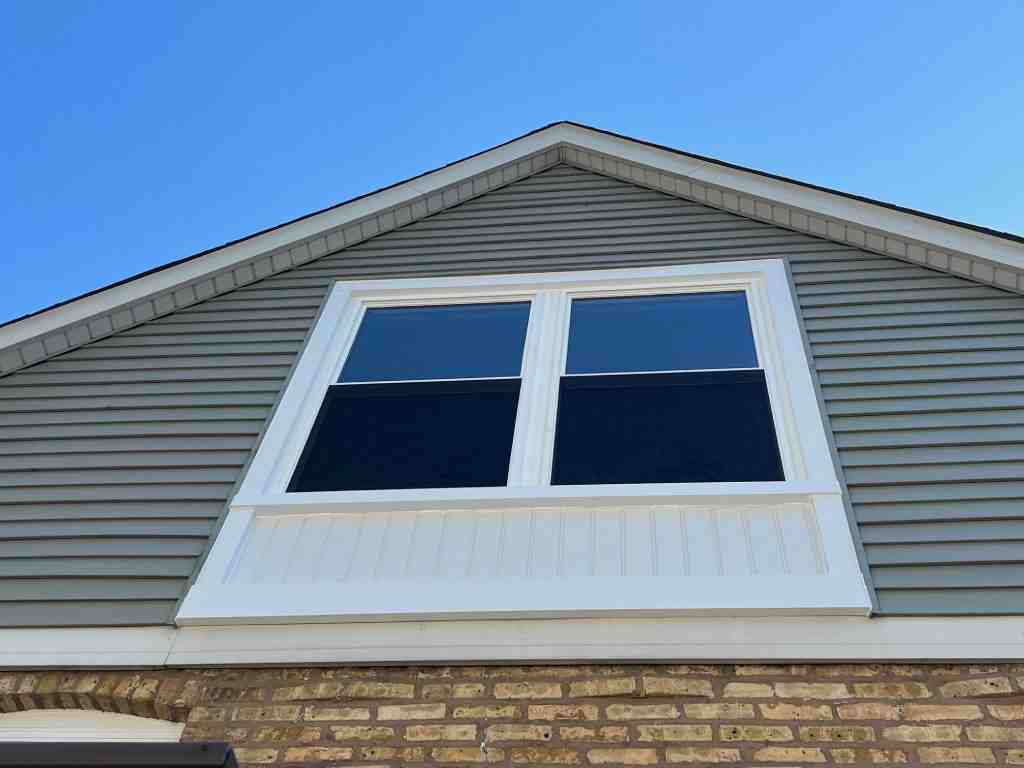
Vinyl siding replacement has a direct, measurable relationship to home value in Chicago’s residential market — operating through two distinct channels that reinforce each other.
Appraisal impact Appraisers assess exterior condition as a component of overall property condition, which affects the appraised value of the home. A home with failing, faded, or visibly deteriorating original siding will receive a lower condition rating than a comparable home with a recently updated exterior. In Chicago’s market — where comparable sales are the primary basis for appraisal and where two otherwise identical homes can differ by tens of thousands of dollars based on condition — exterior condition has direct financial consequences.
Vinyl siding replacement addresses the exterior condition component of an appraisal directly. A home that was rated in average or below-average condition due to failing siding receives an improved condition rating after replacement. The magnitude of that improvement depends on the overall condition of the home and the local comparable sales — but the direction is consistent.
Buyer perception The buyer perception channel operates before the appraisal — at the moment a prospective buyer first sees the home. Curb appeal influences buyer behavior at every price point in Chicago’s residential market. A home with a failing exterior generates buyer risk perception — the assumption that if the exterior has been neglected, the interior and mechanical systems may have been neglected as well. That perception reduces the pool of interested buyers, reduces offer amounts, and increases the likelihood of buyer requests for price reductions after inspection.
A home with recently installed vinyl siding presents as maintained, protected, and lower-risk. It generates a different first impression — one that produces more showings, stronger offers, and fewer inspection-driven negotiations. In Chicago’s competitive residential market, that first impression has financial value that is difficult to measure precisely but consistently observable in transaction outcomes.
Chicago market context Vinyl siding replacement consistently ranks among the highest return-on-investment exterior improvement projects in national remodeling cost-vs-value analyses. Chicago’s market context amplifies that return. The city’s established neighborhoods — the northwest suburbs, the inner-ring communities of Evanston and Park Ridge, and the established bungalow neighborhoods across the Northwest Side — have a high concentration of mid-century homes where the original exterior cladding is at or past end of life across entire blocks. In those neighborhoods, comparable properties with updated exteriors command premiums over properties with original failing siding that are visible in the transaction data.
Homeowners in Evanston, Winnetka, and the higher-value northwest suburbs considering vinyl siding before a sale should understand that exterior condition affects both the appraised value and the buyer negotiating position — and that the investment in new siding reduces buyer leverage at the inspection table by removing the most visible deficiency from the home’s exterior presentation.
The primary benefits are weather protection, elimination of painting and seasonal maintenance, long service life in Chicago’s freeze-thaw climate, and resistance to the failure modes — oxidation, rot, denting — that limit aluminum and wood siding. Vinyl siding also restores exterior appearance and holds that appearance without the ongoing maintenance that other materials require in Chicago’s climate.
Correctly installed vinyl siding in Chicago has a service life of 20 to 40 years. Service life depends on three variables: product specification, installation quality — particularly correct thermal expansion allowance — and maintenance. Correctly installed premium panels with periodic washing will perform at the upper end of that range. Budget panels installed without correct thermal expansion allowance will show distortion and failure well before the lower end.
Sometimes. Installation over existing siding is appropriate when the substrate is flat, structurally sound, and free of moisture infiltration. It is not appropriate when moisture is present behind the existing siding — a condition common in Chicago’s mid-century aluminum-sided homes — or when the existing surface is uneven enough to telegraph through the new panels. An on-site assessment determines the correct approach. We do not recommend installation over existing siding in Chicago’s older housing stock without first confirming that moisture infiltration can be ruled out.
Two to four days for a standard single-family home. Larger homes, tearoff projects, or projects requiring substrate repair take longer. We provide a specific timeline during the free estimate based on the home’s actual scope and condition. Late spring through early fall is the preferred installation period in Chicago’s climate — fall projects should be scheduled with adequate lead time to complete before sustained cold arrives.
Yes — through two channels. Vinyl siding replacement improves the exterior condition rating that affects appraisal value, and it removes the buyer risk perception that failing original siding creates in buyer negotiations. In Chicago’s established neighborhoods where mid-century homes with original failing siding are common, comparable properties with updated exteriors command measurable premiums in the transaction data.
Yes. We serve Chicago and the full Chicagoland area — including Des Plaines, Park Ridge, Morton Grove, Niles, Glenview, Winnetka, Naperville, Evanston, Hoffman Estates, and surrounding communities. Call us to schedule a free on-site estimate at your home.
Vinyl siding installation in Chicago requires an on-site assessment before scope, approach, and product specification can be determined accurately. Substrate condition, existing siding layer count, moisture infiltration status, and wall area all affect the correct installation approach — and none of those variables are assessable from photographs or an interior walkthrough alone.
📞 Call us today to schedule a free consultation today!
2026 Perfect Windows & Siding Powered by Wizerunek w Sieci - web development & SEO | Privacy | Accessibility | Terms and Conditions
This site is protected by reCAPTCHA and the Google Privacy Policy and Terms of Service apply.