

Residential Siding Services in Chicago: Materials, Process, and What to Expect
Perfect Windows & Siding
Let’s Work Together!
Perfect Windows & Siding
Let’s Work Together!

Residential siding services cover the supply and installation of exterior cladding on single-family homes, townhomes, and multi-unit residential properties — from material selection and substrate preparation through installation and finishing. The scope of a residential siding project is determined by the condition of the existing exterior, the homeowner’s material and performance priorities, and the specific characteristics of the home’s wall assembly and architectural profile.
In Chicago, residential siding projects address a housing stock that is more varied than in most U.S. markets. 1920s brick bungalows. Mid-century aluminum-sided ranches. Vintage two-flats with original wood clapboard. Newer vinyl-clad two-stories in the suburbs. Each starting condition requires a different assessment, a different material recommendation, and a different installation approach. A generalized estimate produced without an on-site assessment of the specific home produces an inaccurate scope — and an inaccurate scope produces either an underbid that creates problems at installation or an overbid that does not reflect what the project actually requires.
This page covers residential siding services in Chicago in full — the siding types available for Chicago residential homes, how new siding affects energy efficiency, how it affects home value, how the consultation process works, and what a realistic project timeline looks like. It is written for homeowners who are evaluating their options carefully before committing to a contractor or a material.
We provide residential siding services throughout Chicago and the surrounding suburbs. Free consultations are available — call us to schedule yours.
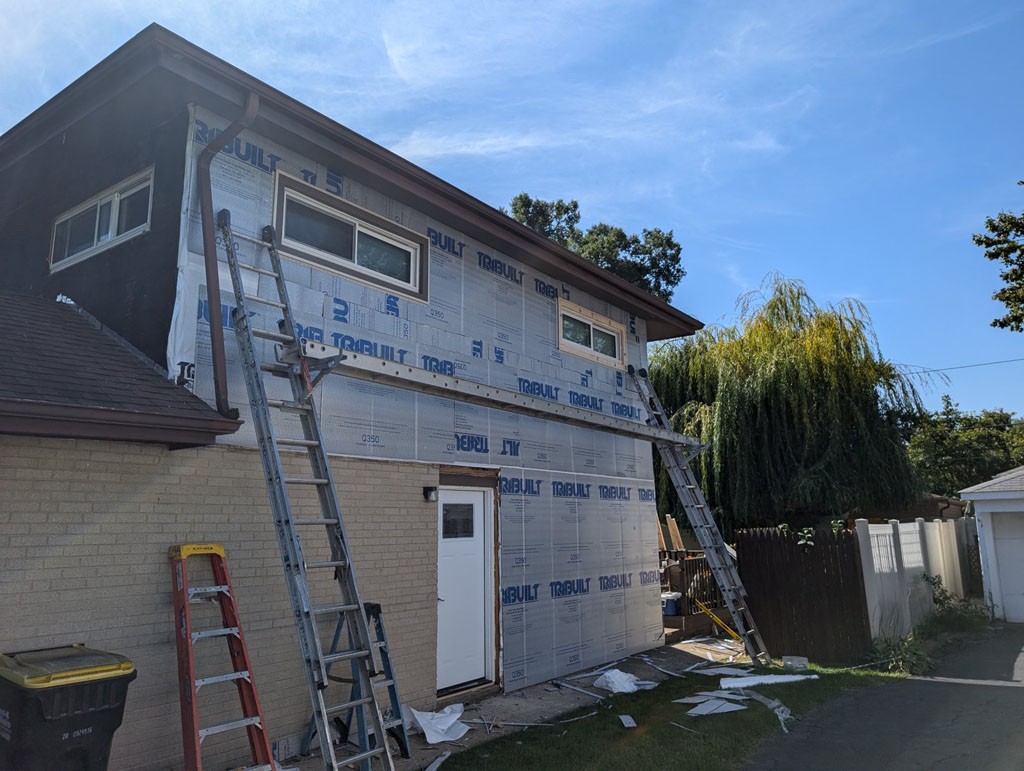
Two materials cover the substantial majority of Chicago residential siding installations: vinyl and fiber cement. Both are appropriate for this climate. Both are available in profiles and colors that suit Chicago’s residential architectural character. The correct choice between them is determined by the homeowner’s priorities — not by a universal recommendation that ignores what those priorities actually are.
Vinyl siding
Vinyl siding is the most commonly installed residential siding material in Chicago’s market. Its dominance is not accidental — it addresses the specific combination of performance requirements and maintenance preferences that Chicago homeowners most frequently express.
Vinyl handles Chicago’s freeze-thaw cycling without the structural degradation that affects wood, and without the oxidation and denting that limits aluminum siding’s service life. It requires no painting, no staining, and no seasonal treatment. Periodic washing is the complete maintenance requirement. It is available in a wide range of profiles — horizontal lap in multiple exposure widths, vertical board and batten, Dutch lap, and shingle styles — and in a full range of colors including both standard and custom options.
Insulated vinyl siding — panels with an EPS foam backer bonded to the rear face — adds a layer of continuous thermal resistance to the wall assembly that standard vinyl does not provide. For older Chicago homes with minimal wall insulation, insulated vinyl is the only siding-level intervention that adds meaningful R-value without opening the wall cavity. It also adds panel rigidity and impact resistance relative to uninsulated vinyl of equivalent face thickness.
Vinyl’s primary limitation is appearance fidelity. Vinyl profiles replicate the geometry of wood siding — the shadow lines, the overlap, the profile dimensions — but the surface texture and the way paint ages on a cement-based substrate are not replicable in an extruded polymer. At street distance, correctly installed vinyl reads as lap siding. In close inspection, the material is identifiable as vinyl. For homeowners in Jefferson Park, Norwood Park, and established Northwest Side neighborhoods where architectural character and appearance quality within the streetscape matter, that distinction is relevant to the material decision.
Fiber cement siding
Fiber cement siding is a composite of Portland cement, sand, and cellulose fiber manufactured into panels, planks, and trim profiles. It is harder than vinyl, non-combustible, more impact-resistant, and produces a more convincing wood appearance at both street distance and close inspection. It has a longer service life than vinyl — 30 to 50 years versus vinyl’s 20 to 40 years — and its paint retention on the cement-based substrate significantly exceeds what the same paint achieves on wood.
Fiber cement’s trade-offs relative to vinyl are real and should be understood before specification. It is heavier, requires more time to install, and must be painted — either with a factory-applied color coat or with field-applied primer and color coat at installation. Factory-finished products carry recoat intervals of 15 years or more. Field-painted installations require color coat application on-site and are subject to temperature and humidity conditions that narrow Chicago’s painting window to late April through mid-October.
Fiber cement is the correct specification for Chicago homeowners who prioritize appearance quality, long-term durability, and fire resistance over vinyl’s no-paint maintenance advantage. In Chicago’s densely built residential neighborhoods — Logan Square, Ukrainian Village, Pilsen — where frame construction homes sit on narrow lots and fire spread between structures is a documented risk, fiber cement’s non-combustibility is a specification consideration that vinyl cannot address.
The material selection process
Material selection for a Chicago residential siding project is confirmed during the on-site consultation — not in a phone conversation, not from a website, and not from a catalog. The home’s existing conditions, wall assembly characteristics, architectural profile, and the homeowner’s stated priorities all inform the correct material recommendation. We do not apply a default material recommendation regardless of those variables.
New siding improves energy efficiency in Chicago homes through two mechanisms that operate independently and additively. The first applies to any correctly installed new siding system. The second applies specifically to insulated siding products.
Air infiltration elimination
Failing original siding creates air infiltration pathways — gaps at failed seams, cracks in brittle panels, openings at window and door perimeter trim that has separated from the siding surface, and holes at penetrations where caulking has failed. Air moving through those pathways carries conditioned air out of the home in winter and unconditioned exterior air in during both heating and cooling seasons.
The energy cost of that air infiltration in Chicago’s climate is not trivial. A home with significant siding-level air infiltration is conditioning air that escapes through the wall before it contributes to interior comfort. The heating system runs longer than it would in a well-sealed home. The home feels drafty near exterior walls regardless of interior thermostat settings. Rooms on the windward side of the home — typically north and west elevations in Chicago — feel consistently colder than rooms on sheltered elevations.
Correctly installed new siding eliminates those air infiltration pathways. The new panels are intact. The J-channel and trim at windows and doors are correctly sealed. The penetrations are flashed and caulked. The moisture barrier behind the new siding is repaired or replaced. The result is a continuous, sealed exterior envelope that does not allow the uncontrolled air movement that failing siding permits.
This benefit applies to vinyl, fiber cement, and any other siding material correctly installed over a sound substrate and moisture barrier. It is a benefit of correct installation, not of any specific material.
Continuous insulation addition
The second energy efficiency mechanism applies specifically to insulated vinyl siding with EPS foam backing. Standard vinyl siding — and fiber cement siding — does not add meaningful R-value to the wall assembly. The panels themselves have negligible thermal resistance. The energy efficiency benefit of standard siding replacement is limited to the air infiltration elimination described above.
Insulated vinyl siding adds a layer of continuous insulation to the exterior of the wall assembly. The EPS foam backing — typically R-2 to R-4 depending on foam thickness — covers the full wall surface without the thermal bridging that occurs at stud locations in cavity insulation systems. In an older Chicago home where the wall cavity contains minimal or degraded insulation, the continuous insulation layer added by insulated vinyl siding is a meaningful improvement to the wall assembly’s total thermal resistance.
The homes that benefit most from this mechanism are the older frame and stucco-over-frame homes of Rogers Park, Avondale, and the older northwest suburbs — structures built before insulation requirements were part of the building code and where the wall cavity contains either no insulation or a degraded original installation. For those homes, insulated vinyl siding is the only intervention that adds wall insulation without the disruption and cost of opening the wall cavity.
Chicago’s six-month heating season means that energy efficiency improvements from new siding reduce heating costs continuously across every day of that period — not only during extreme cold events. The efficiency benefit is present every day from November through April, compounding across the installation’s full service life.
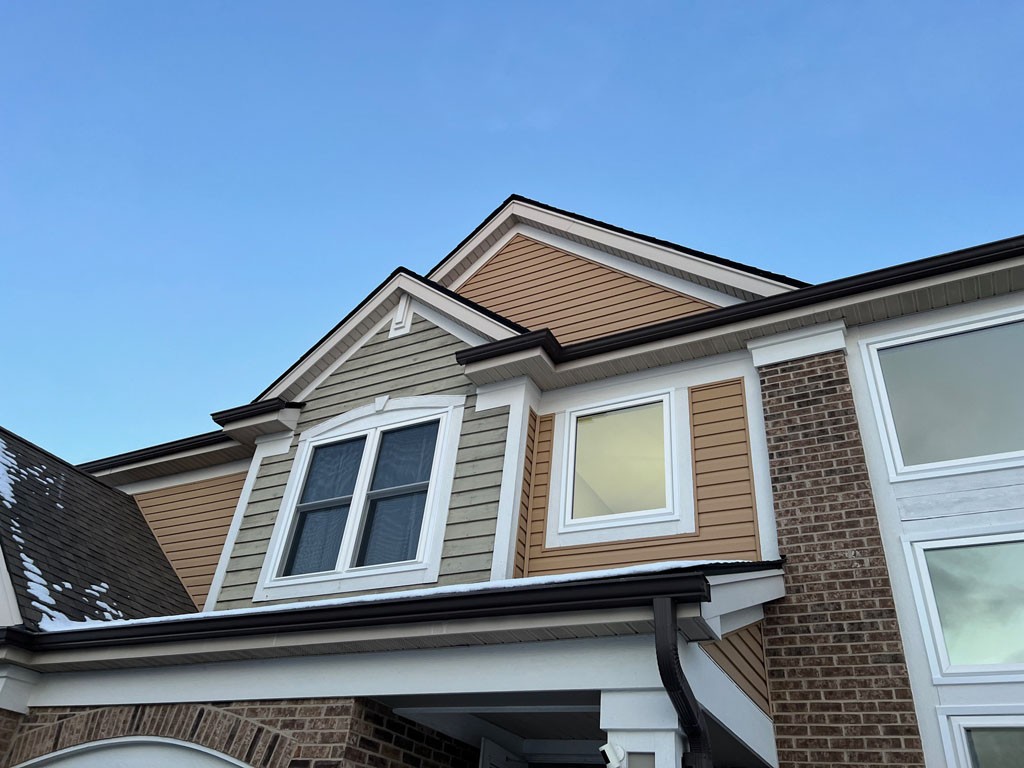
New siding affects home value in Chicago’s residential market through two distinct channels that operate simultaneously and reinforce each other. Understanding both channels helps homeowners evaluate the investment accurately rather than relying on a single metric — return on investment — that captures only part of the picture.
Appraisal impact
Residential appraisals assess exterior condition as a component of overall property condition, which directly affects the appraised value of the home relative to comparable sales. A home with failing, faded, or visibly deteriorating original siding receives a below-average condition rating that reduces its appraised value relative to a comparable property in better exterior condition.
The magnitude of that reduction depends on the severity of the siding condition and the local comparable sales — but the direction is consistent. Failing siding impairs appraised condition ratings. New siding improves them. In Chicago’s residential market, where comparable sales drive appraisal outcomes and where two otherwise similar homes can differ by meaningful amounts based on condition, exterior condition has direct financial consequences that appear in the appraisal.
Vinyl siding replacement and fiber cement siding replacement both consistently rank among the highest return-on-investment exterior improvement projects in national remodeling cost-vs-value analyses. Chicago’s market context — a large stock of mid-century homes where original exterior cladding is at or past end of life — amplifies that return because the starting condition gap between a home with failing original siding and a home with recently updated siding is larger here than in markets with newer housing stock.
Buyer perception impact
The buyer perception channel operates before the appraisal — at the moment a prospective buyer first views the property, whether in a listing photograph or in person. Curb appeal is not a soft metric in Chicago’s residential market. It is a documented driver of buyer behavior that affects how many buyers schedule showings, what offers those buyers submit, and how aggressively they negotiate after inspection.
A home with failing exterior siding generates specific buyer risk perceptions: that the exterior has been neglected, that the interior and mechanical systems may have received equivalent neglect, and that the inspection will reveal deficiencies that require price concessions. Those perceptions reduce the pool of interested buyers, reduce submitted offer amounts, and increase the leverage buyers exercise in post-inspection negotiations — regardless of the home’s actual interior condition.
New siding removes those risk perceptions. A home with a recently installed exterior presents as maintained, protected, and lower-risk. It generates more buyer interest, stronger offers, and less negotiating leverage for buyers at inspection — because the most visible exterior deficiency has been removed from the property’s presentation.
In established Northwest Side neighborhoods and northwest suburb communities where comparable properties with updated exteriors are common — Evanston, Park Ridge, Winnetka — a home with failing original siding faces a measurable competitive disadvantage relative to those comparables. New siding closes that gap and positions the home correctly within its competitive set.
The residential siding consultation is the starting point for every project we undertake — not a sales conversation designed to close an appointment, but a substantive on-site assessment that produces a specific, actionable recommendation before any commitment is made.
What the consultation involves
The consultation begins with an exterior walkthrough of the home. We assess the condition of the existing siding — identifying areas of failure, moisture infiltration, impact damage, and any sections where the existing material has allowed water access to the wall assembly behind it. We evaluate the condition of the window and door perimeter trim and caulking, which are the most common air and water infiltration points in any siding system. We assess the substrate condition where it is accessible — at areas of visible deterioration in the existing siding, at known moisture problem areas, and at any locations the homeowner has identified as concerns.
Where existing siding condition suggests possible moisture infiltration behind the panels, we discuss the tearoff assessment process — the on-site inspection of substrate and moisture barrier condition that occurs when the existing siding is removed — and what findings at that stage could affect the project scope.
We then discuss material options based on the home’s specific conditions and the homeowner’s stated priorities. We do not present all available materials as equally appropriate for every home — we present the options that are correct for the specific starting conditions and the specific priorities the homeowner has expressed.
At the end of the consultation, the homeowner has a specific recommendation: which material, which installation approach, what the scope of work involves, and what the project timeline looks like. That recommendation is not conditional on immediately scheduling the project — it stands as the basis for the homeowner’s decision on whatever timeline makes sense for them.
What the consultation does not involve
The consultation is not a high-pressure sales event. We do not use limited-time offers, urgency tactics, or multi-tiered pricing structures designed to push an immediate decision. We provide accurate information and a specific recommendation. The homeowner decides when and whether to proceed.
Who the consultation is designed for
Chicago homeowners are research-oriented buyers — they read reviews, compare contractors, check credentials, and want to speak with someone knowledgeable before making a commitment. The consultation is designed for that buyer. It delivers expert on-site assessment and specific recommendations without the pressure to proceed that some contractors apply. Homeowners in Glenview, Des Plaines, and the northwest suburbs who have never been through a residential exterior renovation before benefit most from the consultation’s clarity — it converts a complex material and process decision into a specific, understandable recommendation.
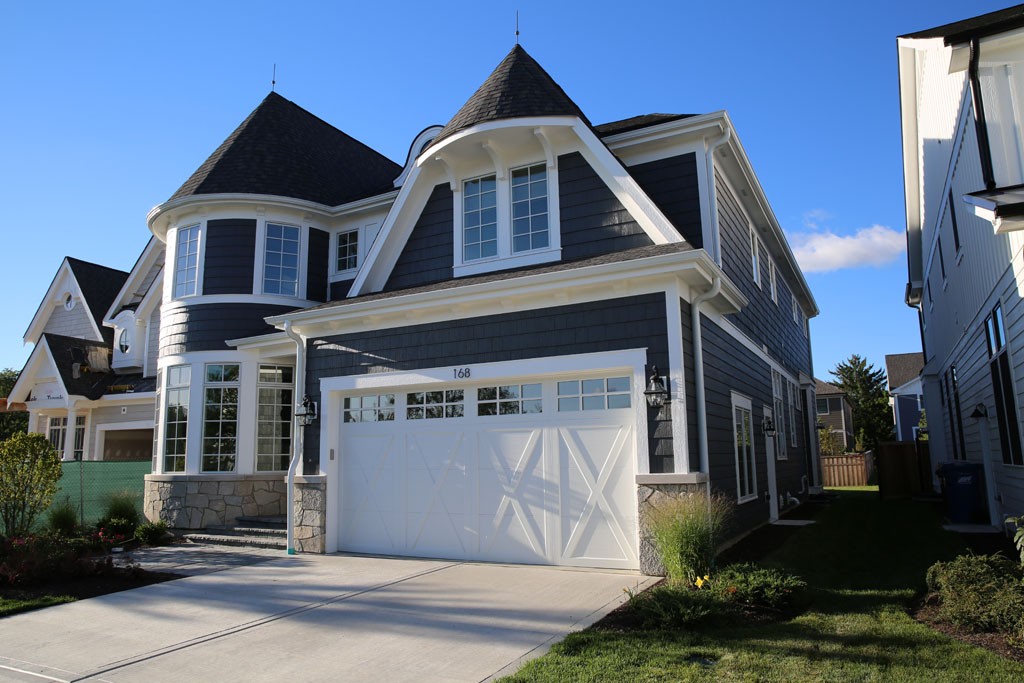
Residential siding project timelines in Chicago vary by material, scope, home size, and substrate condition. Providing an accurate timeline requires knowing those variables — which is why the free consultation, not a phone estimate, is the correct starting point for timeline planning.
Vinyl siding installation
A standard single-family Chicago home — approximately 1,200 to 1,800 square feet of exterior wall area — takes two to four days for vinyl siding installation. That range accounts for the variation in architectural complexity that Chicago’s residential stock presents — a straightforward ranch with minimal penetrations and no complex gable ends installs faster than a two-story with multiple dormers, bay windows, and detailed trim work.
Tearoff projects — where the existing siding must be removed before the new installation begins — add time to the schedule for the removal itself and for the substrate inspection that follows. The substrate inspection step cannot be scheduled in advance because what it finds is not known until the existing siding is removed. A clean substrate with an intact moisture barrier allows installation to proceed immediately. A substrate with moisture damage or rot requires repair before installation continues — and the extent of that repair depends on what is found.
Fiber cement siding installation
A standard single-family Chicago home takes four to seven days for fiber cement installation with field painting. The additional time relative to vinyl reflects the material’s weight and two-person handling requirements, the different cutting tools and techniques fiber cement requires, and the painting step — both application time and the dry time that must elapse between the primer and color coat and before the installation is considered weather-resistant.
Factory-finished fiber cement installations — where the color coat is applied at the factory rather than on-site — are faster: typically three to five days for the same wall area. The painting step is eliminated from the on-site schedule, and the project timeline is not subject to the temperature and humidity conditions that constrain field paint application.
Scheduling in Chicago’s climate
Late spring through early fall — approximately April through October — is the preferred scheduling window for Chicago residential siding projects. This period provides the most favorable installation conditions, the widest scheduling availability, and — for fiber cement with field painting — the most reliable weather conditions for paint application.
Fall projects should be scheduled with adequate lead time to complete before sustained cold and early snow events create installation conditions that require specific precautions. We discuss scheduling during the consultation and advise on the timing implications of different material choices relative to Chicago’s seasonal patterns.
For homeowners in Chicago’s northwest suburbs coordinating a siding project with other exterior work — window replacement, door installation, soffit and fascia replacement — project sequencing affects the overall timeline and should be discussed during the consultation before any individual trade is scheduled independently.
We install vinyl siding and fiber cement siding for Chicago residential projects. Vinyl is the most commonly specified material — no painting, handles Chicago’s freeze-thaw cycling correctly, wide color and profile selection. Fiber cement is specified where higher durability, fire resistance, and wood appearance quality are priorities. Material selection is confirmed during the on-site consultation based on the home’s conditions and the homeowner’s stated priorities.
Yes — through two mechanisms. Any correctly installed new siding eliminates air infiltration pathways that exist in failing original siding, reducing uncontrolled air movement through the wall. Insulated vinyl siding with EPS foam backing additionally adds continuous R-value to the wall assembly — the only siding-level intervention that improves wall insulation without opening the wall cavity. In Chicago’s six-month heating season, both benefits reduce heating costs across every day of the heating period.
Yes — through appraisal condition improvement and buyer perception impact. Failing siding reduces appraised condition ratings and creates buyer risk perception that reduces offers and increases inspection-driven negotiation. New siding removes both effects. Residential siding replacement consistently ranks among the highest return-on-investment exterior improvements in national cost-vs-value analyses, and Chicago’s large stock of mid-century homes with original failing siding amplifies that return relative to newer markets.
Yes. Every residential siding project begins with a free on-site consultation with no obligation to proceed. During the consultation we assess existing siding condition, evaluate substrate and moisture barrier condition where accessible, present material options appropriate for the home’s specific conditions, and define the scope of work before any product is ordered. The consultation produces a specific recommendation — not a range of options requiring the homeowner to make technical decisions without adequate information.
Yes. We are licensed and insured for residential exterior remodeling work in Illinois. We have been operating in Chicago’s residential market for over 20 years. Licensing and insurance documentation is available on request during the consultation.
We serve Chicago and the full Chicagoland area — including Des Plaines, Park Ridge, Morton Grove, Niles, Glenview, Winnetka, Naperville, Evanston, Hoffman Estates, and surrounding communities. Call us to schedule a free on-site consultation at your home.
Residential siding projects in Chicago require an on-site assessment before scope, material, and timeline can be determined accurately. Existing siding condition, substrate integrity, wall area, architectural complexity, and scheduling relative to Chicago’s seasonal patterns all affect the correct project plan — and none of those variables are assessable without a site visit.
📞 Call us today to schedule a free consultation today!
2026 Perfect Windows & Siding Powered by Wizerunek w Sieci - web development & SEO | Privacy | Accessibility | Terms and Conditions
This site is protected by reCAPTCHA and the Google Privacy Policy and Terms of Service apply.