

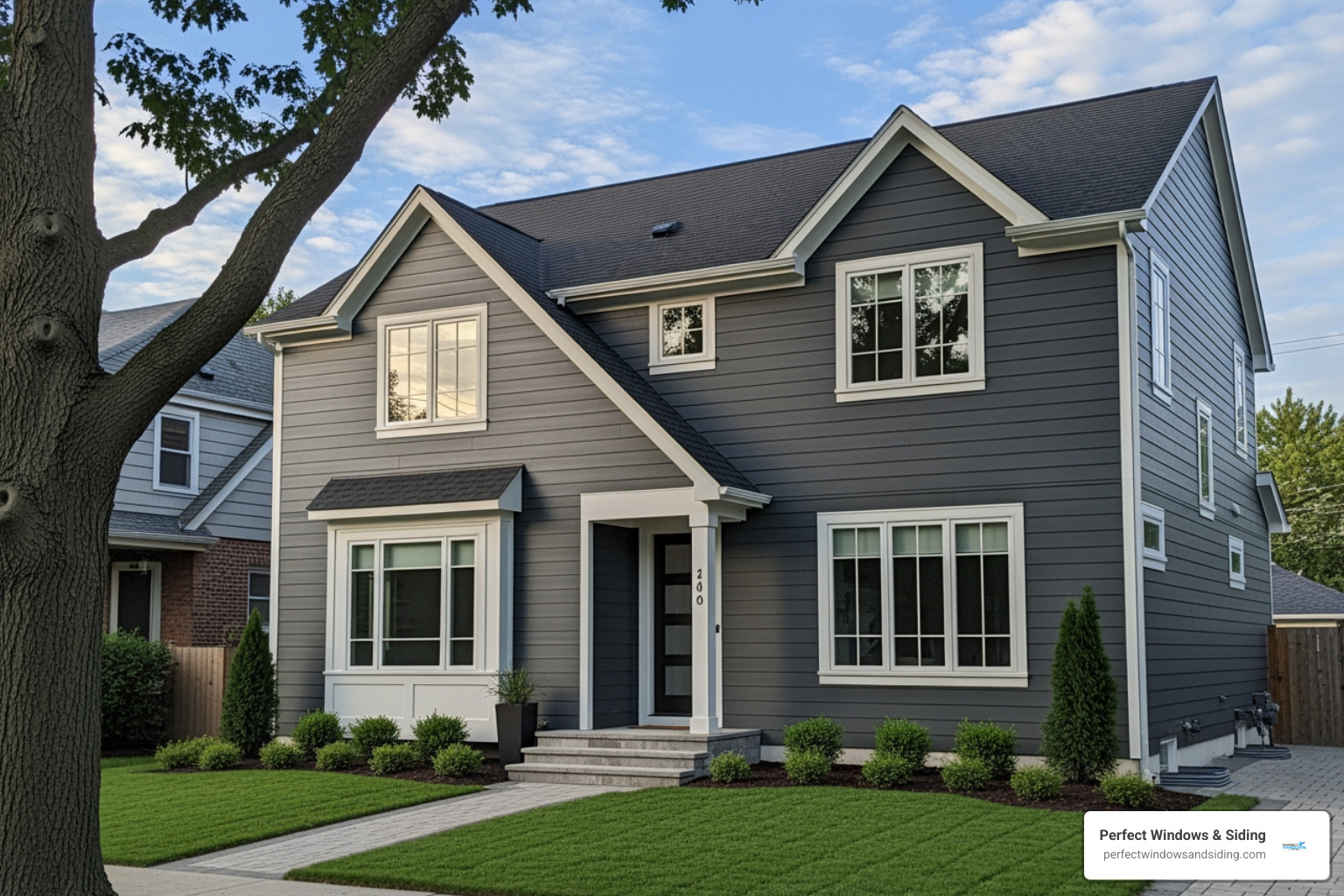
Why Chicago Homeowners Are Choosing New Siding Now
New siding Chicago homeowners invest in offers more than just curb appeal—it’s a critical defense against the city’s punishing weather, from sub-zero winters to sweltering summers. If you’re searching for siding installation services in the Chicago area, here’s what you need to know:
Top Siding Options for Chicago Homes:
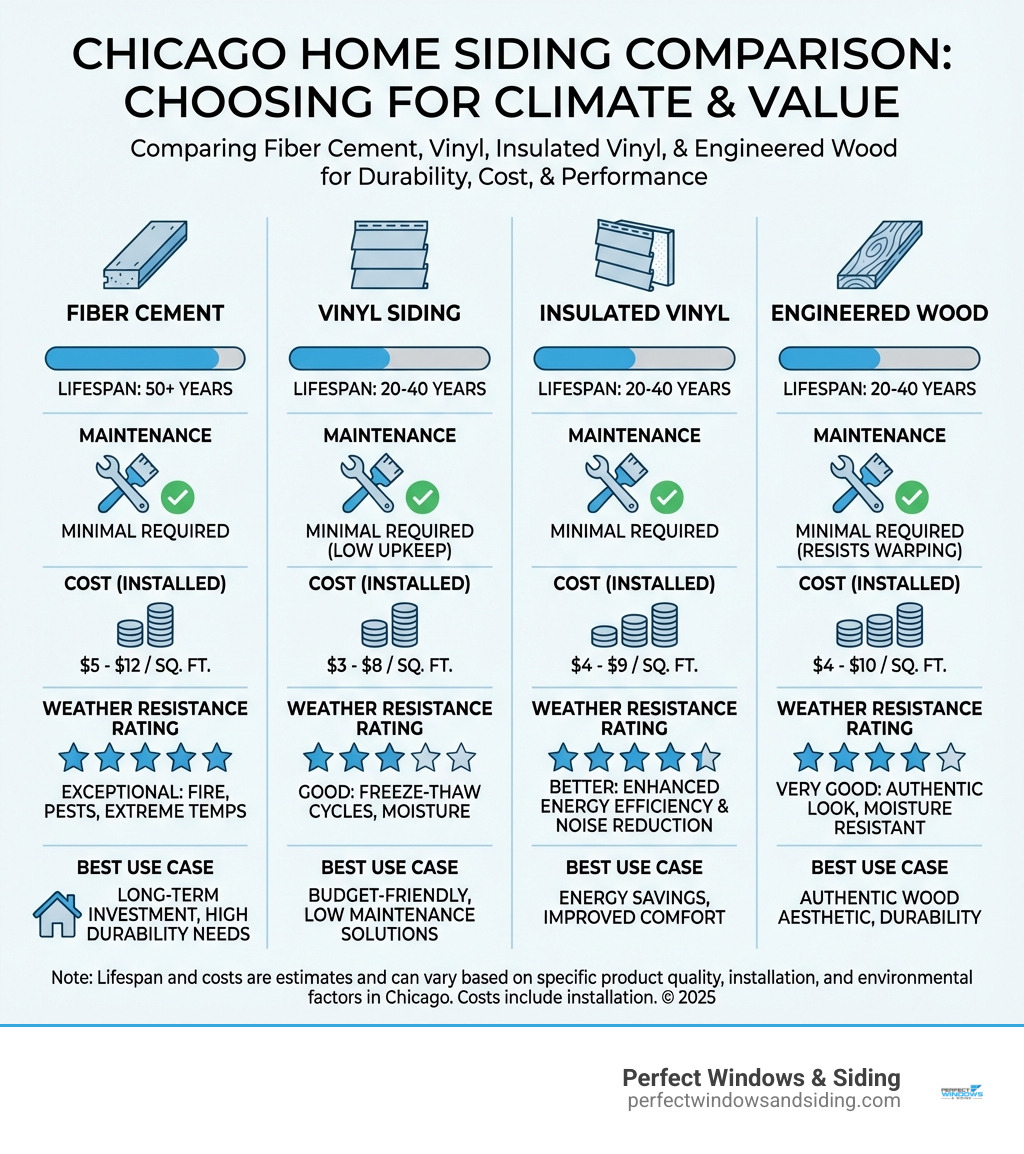
- Fiber Cement Siding – 50+ year lifespan, fire and pest resistant, $5-$12 per sq. ft. installed
- Vinyl Siding – 20-40 year lifespan, low maintenance, $3-$8 per sq. ft. installed
- Insulated Vinyl Siding – Improved energy efficiency, improved R-value, noise reduction
- Engineered Wood Siding – Authentic wood look, resists warping, $4-$10 per sq. ft. installed
Average Project Cost: $10,000 – $40,000 for a typical 2,000 sq. ft. Chicago home, with labor making up 40-60% of the total price.
Putting new siding on your home is a big deal. It’s not just about making the outside look good—it’s about protecting what matters most inside. Chicago’s extreme weather swings demand siding that can handle dramatic temperature shifts, heavy snow, ice buildup, and summer humidity without warping, cracking, or letting moisture seep into your walls.
The right siding material matters. Vinyl siding remains the most common choice for Chicago homeowners because it’s affordable and handles freeze-thaw cycles well. Fiber cement options like James Hardie are gaining popularity for their exceptional durability—standing up strong against our rough winters and lasting 50 years or more with minimal upkeep. Insulated vinyl is catching on too, especially with homeowners looking to cut down on energy bills by boosting their wall insulation value by up to 30%.
Beyond material choice, you’ll need to think about your home’s architectural style—whether it’s a classic Chicago bungalow, a greystone two-flat, or modern construction—and how different siding profiles, colors, and trim options will complement that look. You’ll also want to understand what drives project costs, from labor rates (which run higher in the Chicago metro area) to old siding removal and prep work.
I’m Voytek Glab, owner of Perfect Windows & Siding, and I’ve spent over 20 years helping Chicagoland homeowners steer new siding Chicago projects with honest advice and quality craftsmanship. I personally oversee every installation to ensure it’s done right the first time, treating your home like it’s my own.
Key Signs It’s Time for New Siding in Chicago
Your home’s siding is its first line of defense against the elements. Over time, even the most durable materials can show signs of wear and tear, especially in Chicago’s demanding climate. Ignoring these warning signs can lead to more significant, costly problems down the road. Here’s what to look for that tells us it might be time for new siding Chicago:
- Warping and Buckling: If your siding panels are no longer lying flat against your home, they could be warping or buckling. This often happens with vinyl siding that isn’t installed correctly, or with wood siding exposed to excessive moisture and temperature fluctuations. Warped panels create gaps, inviting moisture and pests inside.
- Water Damage and Rot: Soft spots, crumbling sections, or visible decay are clear indicators that moisture is penetrating your siding and potentially rotting the structure underneath. This is a serious issue that demands immediate attention to prevent structural damage.
- Higher Energy Bills: A sudden jump in your heating or cooling costs could be a red flag. When siding degrades, its insulating properties diminish, allowing outside air to infiltrate and conditioned air to escape. Your HVAC system works harder, and your wallet feels the strain. New, energy-efficient siding can significantly lower these costs.
- Faded or Peeling Paint: While paint fading is often a cosmetic issue, peeling paint on wood siding can indicate moisture problems underneath. For painted fiber cement, consistent fading might mean it’s time for a refresh or replacement if the underlying material is also compromised. If you find yourself repainting every few years, it usually makes more financial sense to replace the siding.
- Cracked or Loose Boards: Panels pulling away from your home or showing visible cracks create openings for water, wind, and pests. These vulnerabilities can quickly escalate into larger issues, compromising your home’s integrity.
- Interior Moisture Issues: Peeling, bubbling, or water stains on interior walls, especially near exterior walls, are serious signs that moisture is penetrating through failed exterior siding. This problem requires immediate attention to prevent mold growth and extensive structural damage.
- Pest Damage: Holes, nests, or other signs of pest infestation within or behind your siding indicate that the material is no longer providing adequate protection. Pests like termites and rodents can cause significant damage to your home’s structure if left unchecked.
Considering these signs is crucial for both your home’s protection and its value. Investing in new siding is a smart move for any homeowner in Chicagoland. You can learn more about the benefits of upgrading your home’s exterior by checking out our page on Why New Siding is Worth the Investment.
Top Siding Materials for Chicago’s Demanding Climate
Chicago’s weather demands siding that isn’t just attractive, but genuinely robust. From the bitter cold and heavy snow of winter to the hot, humid summers, your home’s exterior needs to stand up to it all. When we help homeowners choose new siding Chicago, we focus on a balance of durability, maintenance levels, aesthetics, and cost considerations.
Fiber Cement Siding
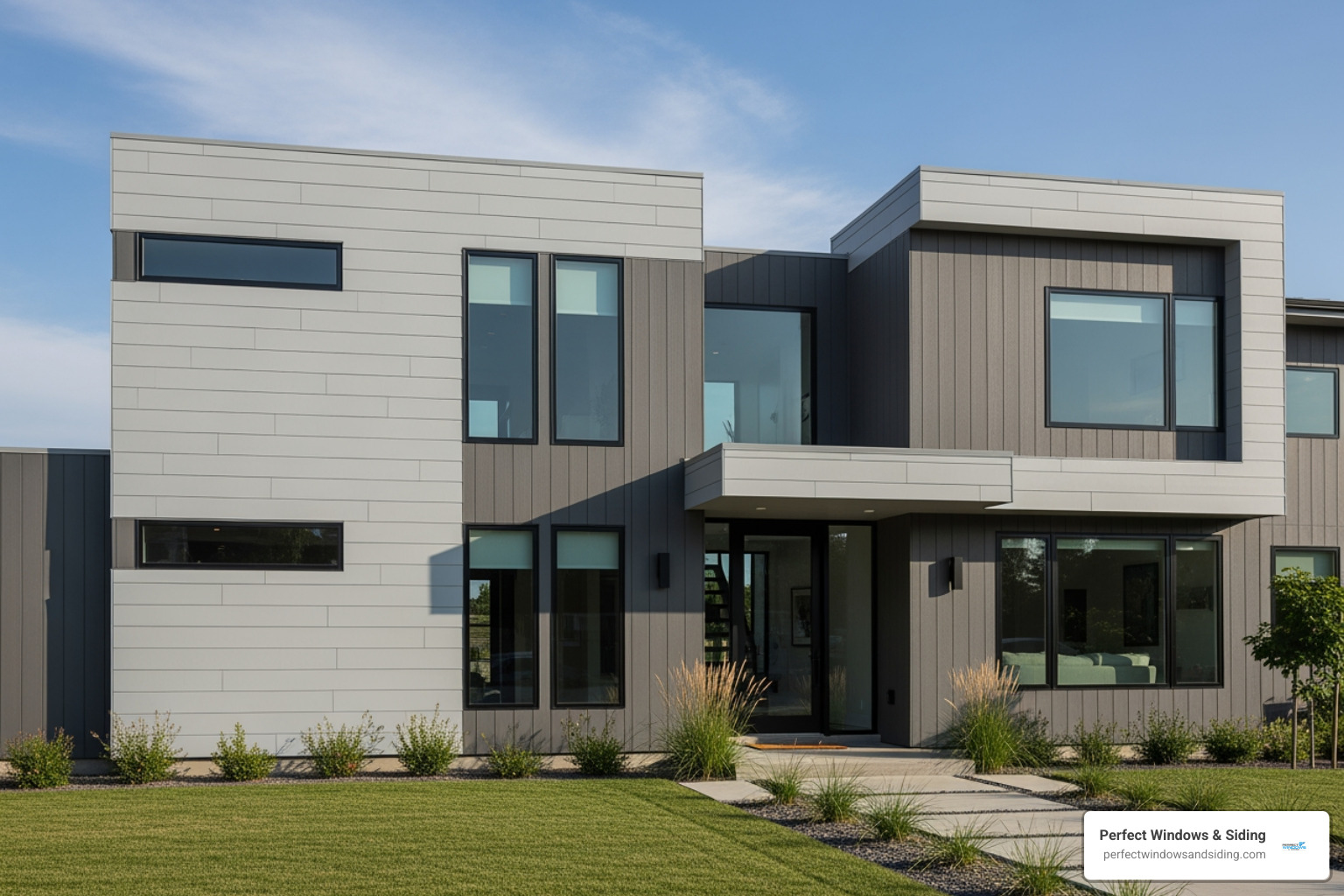
For homeowners seeking exceptional durability and a premium look, fiber cement siding is a fantastic choice. It’s often praised for having the performance of masonry, offering superior protection.
- Exceptional Durability: Made from a blend of cement, sand, and cellulose fibers, fiber cement is incredibly strong. It handles extreme temperatures, strong winds, and moisture without warping or cracking. It’s also non-combustible, offering a high fire safety rating, and is resistant to pests and rot. James Hardie siding, a leading brand, is known to last for 50 years or more with minimal upkeep.
- 50+ Year Lifespan: This long lifespan makes fiber cement a significant long-term investment, often outweighing its higher initial cost compared to other materials.
- Fire and Pest Resistant: Unlike wood, fiber cement is fire-resistant and termite-proof, offering added peace of mind.
- Mimics Wood Look: Fiber cement is available in a variety of designs, including beveled planks, shingles, shakes, and stucco panels, offering the classic appearance of wood without its vulnerabilities. It holds paint exceptionally well, often for up to 15 years.
- Cost: You can expect to pay between $5 and $12 per square foot installed for fiber cement siding.
We specialize in Hardie Board Siding Installation, ensuring your home gets the best protection and aesthetic appeal.
Vinyl Siding
Vinyl siding remains the most common choice for homeowners in Chicago and across Illinois, and for good reason! It strikes an excellent balance between affordability and performance.
- Cost-Effective: With an installed cost typically ranging from $3 to $8 per square foot, vinyl is one of the most budget-friendly siding options available.
- Low Maintenance: Vinyl siding never needs painting and can be easily cleaned with just soap and water. It’s resistant to pests and moisture, requiring minimal cleaning to keep it looking great.
- 20-40 Year Lifespan: Modern vinyl siding is engineered to last, with many products offering lifespans of 20 to 40 years or more, designed to withstand Chicago’s harsh climate without excessive fading or cracking.
- Wide Color Variety: Available in a vast array of colors, styles, and textures, vinyl siding allows for significant customization to match your home’s aesthetic. The color goes all the way through the material, making minor scratches less noticeable.
Find more about why this material is so popular in our region on our Benefits of Vinyl Siding for Illinois Homes page.
Insulated Vinyl Siding
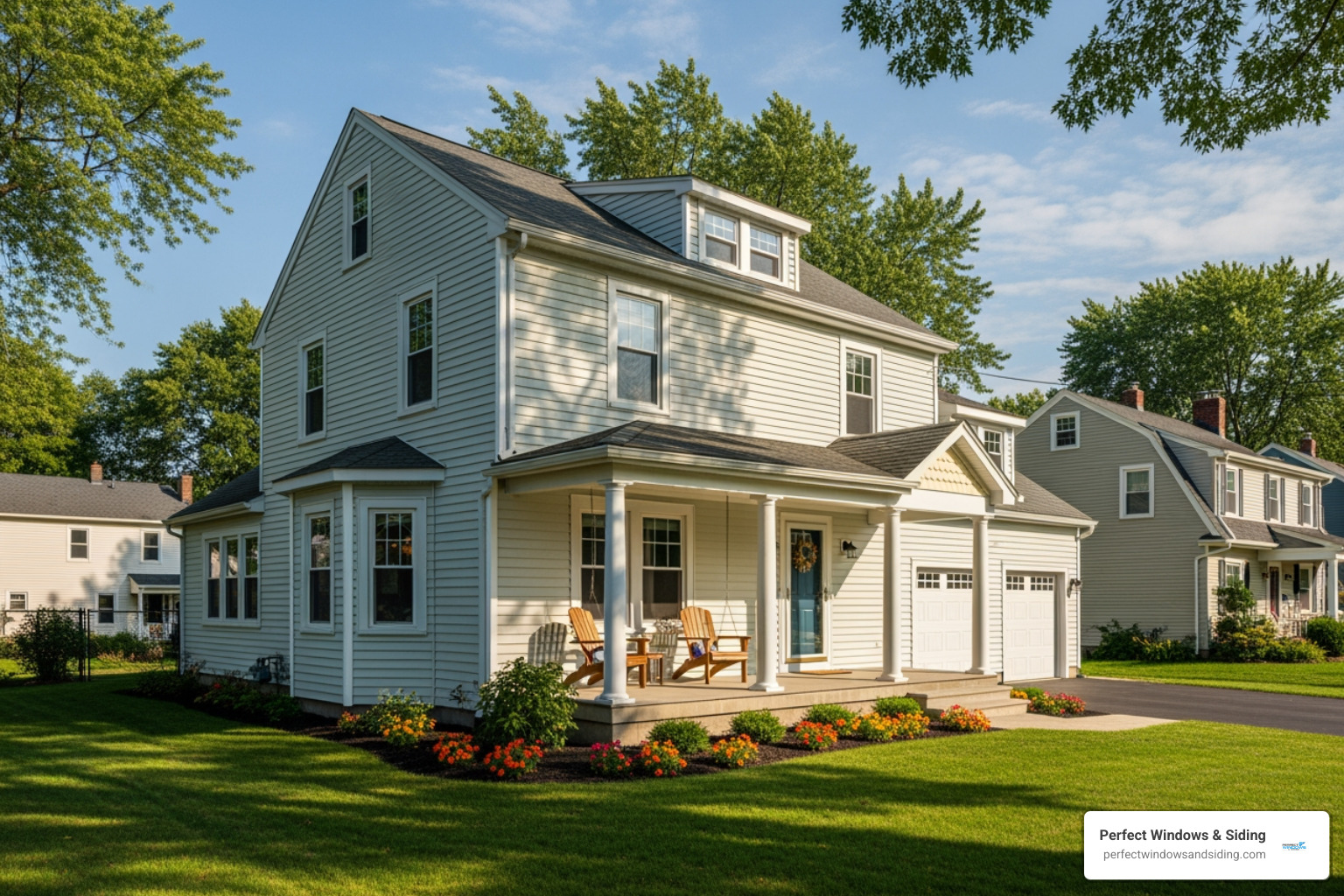
Taking the benefits of traditional vinyl a step further, insulated vinyl siding is an increasingly popular choice for Chicago homeowners focused on energy efficiency.
- Improved Energy Efficiency: This type of siding incorporates a foam backing, which significantly increases the insulation value of your exterior walls, sometimes by as much as 30%. This extra layer helps keep your home cooler in summer and warmer in winter, leading to noticeable reductions in your energy bills.
- Increased R-value: The added insulation directly contributes to a higher R-value for your home’s exterior envelope, improving its thermal performance.
- Noise Reduction: The molded foam insulation also acts as a sound barrier, making your home noticeably quieter by blocking out outside noise.
- Improved Impact Resistance: The foam backing adds support to the vinyl panel, making it stronger and more resistant to impacts and dents than traditional vinyl.
- Tighter Fit: Insulated vinyl tends to remain more rigid and flat, secured with a tighter fit that improves its overall durability and appearance.
Given Chicago’s harsh weather, the added value in terms of comfort and energy savings from insulated vinyl makes it a worthwhile investment. We offer expert Vinyl Siding Installation for both traditional and insulated options.
Engineered Wood Siding
For those who love the natural look of wood but want improved durability and less maintenance, engineered wood siding is an excellent alternative.
- Authentic Wood Appearance: Engineered wood products are designed to mimic the beauty and authentic look of real wood, complete with natural grain patterns, but without the imperfections like knots.
- Resists Warping and Cracking: Manufactured from various combinations of wood fibers, fillers, binders, and glue, these materials are heated and compressed to create a product that resists cupping, warping, and cracking—common issues with natural wood.
- Insect and Fungus Resistant: The manufacturing process helps protect against termite damage and fungal decay, extending the life of your siding.
- Cost: Engineered wood siding typically costs $4 to $10 per square foot installed.
Brands like LP SmartSide are leading the way in this category. For expert installation, explore our Engineered Wood Siding Contractors Near Me services.
Steel Siding
When extreme durability and low maintenance are paramount, steel siding emerges as a powerful contender, especially suited for Chicago’s challenging climate.
- Extremely Durable: Steel siding resists dents, fire, pests, and the harshest weather conditions, including high winds and hail. It’s a true workhorse for home protection.
- Low Maintenance: You won’t need to worry about repainting or sealing with steel siding, making it a virtually maintenance-free option.
- Sustainable: Often made from recycled materials and fully recyclable itself, steel siding is an environmentally conscious choice.
- Modern Look: Available in sleek, contemporary finishes, steel siding can give your home a distinctive, modern appeal.
- Cost: Steel siding generally costs between $7 and $15 per square foot installed.
Brick Veneer Siding
For a timeless, classic aesthetic combined with exceptional resilience, brick veneer siding is a popular choice that provides the rich, traditional look of actual brick without the structural demands and higher cost of full brick construction.
- Timeless Appeal: Brick veneer offers the classic look of fired clay, available in a range of colors from traditional red to various earth tones, providing a rich, traditional aesthetic.
- Exceptional Durability: This material withstands high winds, extreme temperatures, and moisture with ease. Actual brick has stood the test of time, with many homes lasting hundreds of years.
- Energy Efficient: Brick veneer offers natural insulation, helping to regulate indoor temperatures and contribute to energy savings.
- Low Maintenance: Generally, brick veneer requires minimal upkeep, often needing no maintenance for the first 20+ years beyond occasional inspection of mortar joints.
- Cost: Brick veneer siding typically ranges from $10 to $20 per square foot installed.
Cellular PVC Siding
A relatively newer addition to the Chicago market, cellular PVC siding is quickly gaining recognition for its unique combination of benefits.
- Best of All Worlds: It offers the durability and attractive appearance of fiber cement without the visible seams or strict installation precautions.
- No Painting, Easy Cleaning: Like vinyl, it never needs to be painted and can be easily cleaned. However, it avoids the issues of warping in heat or cracking in cold that can sometimes affect vinyl.
- Withstands Moisture: Cellular PVC has a proven track record on the East Coast for its ability to withstand moisture, making it an excellent option for Chicago’s variable climate.
Understanding the Cost of New Siding Chicago Projects
One of the first questions homeowners ask us is, “How much will new siding Chicago cost?” It’s a fair question, and while there’s a wide range, understanding the factors involved helps you budget smartly and avoid nasty surprises. In Illinois, with its wild weather swings, higher labor rates, and strict building codes, you can expect to pay somewhere between $10,000 and $40,000 for siding installation. For most 2,000-square-foot homes, the average cost typically falls around $20,000. It’s also important to know that labor often makes up 40 to 60 percent of the total siding price in Illinois.
We’re here to help you steer these costs and provide transparent estimates for your Siding Installation Chicago project.
Factors That Influence Your Final Price
The final cost of your siding project is influenced by several key elements. Here’s a breakdown of what impacts your investment:
| Cost Factor | Description – |
|---|---|
| Material Choice | The type of siding you select is the biggest cost driver. Vinyl is the most budget-friendly, while premium materials like fiber cement or brick veneer are at the higher end. – |
| Home Size & Complexity | A larger, multi-story home with complex architectural features like gables, dormers, and numerous corners will require more material and significantly more labor than a simple one-story ranch. – |
| Old Siding Removal | The cost to remove and dispose of your old siding typically ranges from $1.00 to $3.00 per square foot, depending on the material and the complexity of the job. – |
| Prep Work | Before new siding can be installed, your home’s sheathing (the layer underneath the siding) must be inspected. Any rotted or damaged sections will need to be repaired or replaced. Installing a new house wrap is also a critical step to ensure a proper weather barrier. |
How to Manage Your Siding Budget
- Schedule During Off-Peak Seasons: You might find more competitive pricing in the late fall or winter when demand is lower.
- Choose Mid-Grade Materials: High-quality vinyl or engineered wood can provide excellent durability and aesthetics without the premium price tag of fiber cement or brick.
- Simplify Your Design: While intricate trim and multiple siding styles look great, a simpler design can significantly reduce labor and material costs.
- Invest in Quality for Long-Term Savings: While it might be tempting to choose the cheapest option, investing in durable materials and professional installation will save you money on repairs, maintenance, and energy bills in the long run.
- Check for Rebates: Look into local or state programs that may offer rebates for energy-efficient home improvements.