

Exterior Siding Consultation in Chicago: What to Expect Before You Commit
Perfect Windows & Siding
Let’s Work Together!
Perfect Windows & Siding
Let’s Work Together!

If you’re thinking about new siding but not sure where to start — what material makes sense, what it should look like, whether you need to replace everything or just repair a section — a free on-site consultation is the right first step. Not a phone estimate. Not a catalog browse. An actual visit to your home, where someone who knows Chicago’s housing stock and climate walks your exterior with you and gives you straight answers.
In Chicago, the siding decision involves more variables than most homeowners expect. The material that performs well in a mild climate may not be the right call here. The freeze-thaw cycling, the moisture conditions, the age and construction type of your home, the energy efficiency implications — all of those factors affect the correct recommendation. A consultation that doesn’t account for those variables doesn’t produce a recommendation you can rely on.
We’ve been doing exterior siding consultations throughout Chicago and the surrounding suburbs for over 20 years. We know the housing stock — the bungalows, the two-flats, the mid-century ranches, the newer construction in the northwest suburbs. We know what holds up here and what doesn’t. And we give you a real recommendation at the end of the visit, not a brochure and a callback.
This page covers everything you need to know about the exterior siding consultation process — what happens during the visit, how material selection works, what color and style guidance you’ll get, whether energy efficiency is assessed, and how to prepare before we arrive. No obligation to proceed. Just good information before you make a decision.
Give us a call to schedule yours.
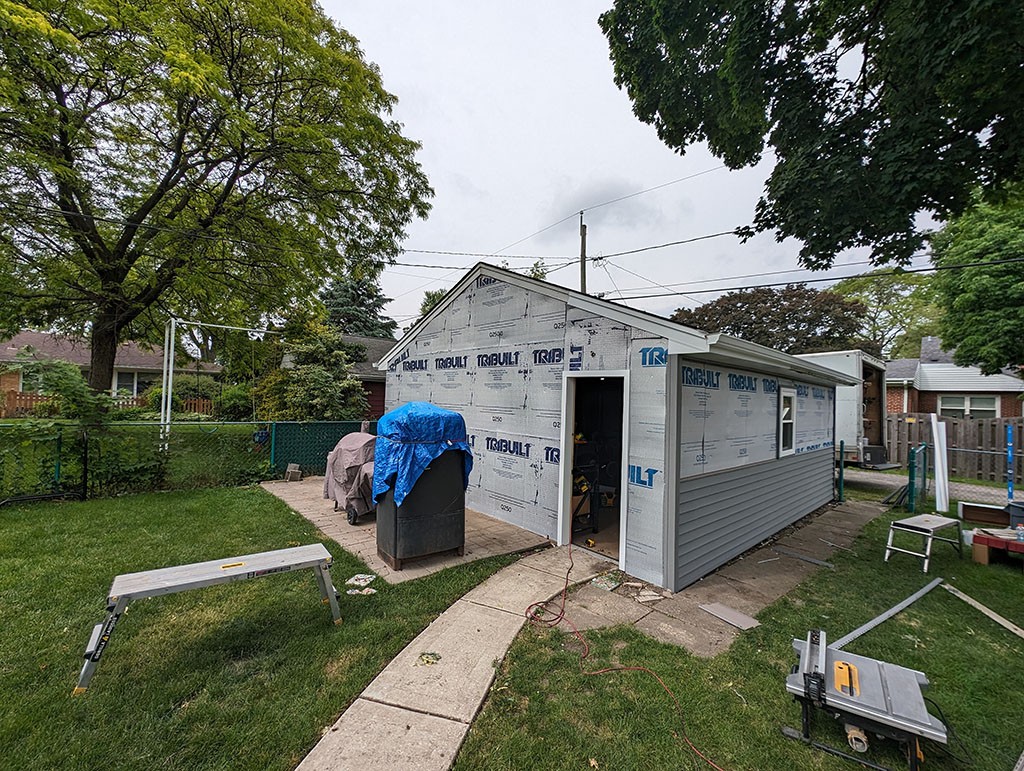
The consultation is an on-site visit. That’s the starting point — because everything that matters about the correct siding recommendation for your home depends on what we find when we’re actually there.
The exterior walkthrough
We start outside. We walk the full perimeter of your home and assess the condition of the existing siding — looking at each elevation for cracked or broken panels, buckled sections, failed seams, gaps at corners and trim, and any areas where the siding has pulled away from the wall. We look specifically at the window and door perimeter trim and caulking, which are the most common water entry points in any siding system and the areas most likely to show early moisture infiltration even when the siding panels themselves look intact.
Where the existing siding condition suggests possible moisture infiltration behind the panels — an area of discoloration, a section of siding that sounds hollow when tapped, a location the homeowner has identified as a known problem — we note it for the substrate assessment discussion. The full substrate inspection happens when panels are removed; the consultation identifies where to look and what we expect to find.
The condition assessment conversation
After the walkthrough, we sit down with you — inside, at the kitchen table, wherever is comfortable — and talk through what we found. We tell you what’s failing, what’s holding up, and what the underlying conditions suggest about the scope of work the home actually needs. If repair is the right answer rather than full replacement, we say so. If the siding is at end of life and repair is just postponing a larger project, we say that too.
Chicago homeowners are research-oriented. They’ve usually read reviews, compared contractors, and formed some preliminary opinions before we arrive. We respect that — and we add to it with specific findings from the actual home rather than general information that applies to any house anywhere.
Material options presentation
Once we understand the home’s conditions, we present the material options that are appropriate for those conditions and your stated priorities. For most Chicago homes, the discussion covers vinyl and fiber cement — the two materials that handle this climate correctly and cover the range of performance, appearance, and maintenance priorities that Chicago homeowners most commonly express.
We explain what each material does, how it performs in Chicago’s freeze-thaw cycling, what maintenance it requires, and what it looks like installed on a home similar to yours. We don’t present every available option regardless of fit — we present the options that are correct for your home and let you make an informed choice between them.
The recommendation
At the end of the visit, you have a specific recommendation — which material, which installation approach, what the scope of work involves, what the timeline looks like, and what the project sequence should be if you’re also replacing windows or doors at the same time. The recommendation is specific to your home, your conditions, and your priorities. It’s not a brochure-level overview you could have found on any contractor’s website.
You take that recommendation home and think about it. There’s no pressure to decide during the visit, no limited-time offer contingent on booking that day, and no follow-up designed to push you toward a faster decision than you’re ready for.
First-time buyers in the northwest suburbs
For homeowners in Glenview, Des Plaines, and the northwest suburbs who haven’t been through an exterior renovation before, the consultation’s most important function is often just clarity — converting a decision that felt complex and uncertain into a specific, understandable recommendation with a defined next step. That’s what we aim to deliver every time, whether the homeowner has been researching for six months or picked up the phone the same day they noticed something wrong.
Material selection is the first substantive decision in any Chicago siding project — and the one that has the most long-term consequences. Getting it right means matching the material’s performance characteristics to your home’s specific conditions, your climate’s specific demands, and your own maintenance preferences and appearance goals.
We work through that match during the consultation using a structured assessment that covers five variables.
Existing substrate condition
What’s behind the current siding affects which materials are appropriate for the replacement. A home with sound, dry sheathing and an intact moisture barrier is a candidate for either vinyl or fiber cement. A home where moisture infiltration has compromised the substrate needs that substrate addressed before any new siding goes on — and the scope of that substrate work affects the overall project recommendation.
We assess substrate condition through the exterior walkthrough and through the homeowner’s knowledge of the home’s moisture history. The full substrate inspection happens when panels are removed during installation; the consultation identifies what we expect to find based on visible indicators and the home’s history.
Home architectural profile
The home’s construction type and architectural character affect which siding profiles are visually compatible and which installation approaches are appropriate. A 1920s Chicago bungalow has different profile compatibility requirements than a mid-century ranch or a newer two-story. In neighborhoods like Logan Square, Ukrainian Village, and Pilsen where architectural character within the streetscape matters — and where some properties are subject to preservation guidelines — profile compatibility is a real specification constraint, not a subjective preference.
Climate performance requirements
Both vinyl and fiber cement perform correctly in Chicago’s climate when installed correctly. The climate-specific differentiation between them is in specific performance characteristics rather than in basic suitability.
Fiber cement’s non-combustibility is a relevant characteristic in Chicago’s dense residential neighborhoods where frame construction homes sit on narrow lots. Its greater impact resistance is relevant in Chicago’s hail corridors. Its longer service life is relevant for homeowners making a 40-plus-year investment decision.
Vinyl’s thermal expansion management requirements are more critical in Chicago’s temperature range than in moderate climates — correct installation technique is more consequential here than in a market that doesn’t produce the temperature swings Chicago does. Insulated vinyl’s continuous R-value addition is most relevant for Chicago’s older homes with minimal wall insulation.
Maintenance preference
Vinyl requires no painting. Fiber cement requires painting — either factory-applied with a 15-plus-year recoat interval or field-applied on-site. That distinction matters for homeowners who want to install siding and not think about it for 25 years versus homeowners who are prepared to maintain a painted surface on the correct schedule.
The maintenance preference question is one of the first things we cover during the material discussion — not because it’s the only relevant variable, but because it immediately narrows the field for homeowners who have a clear preference either way.
Appearance priorities
Fiber cement produces a more convincing wood appearance than vinyl at both street distance and close inspection. For homeowners in Lincoln Square, Andersonville, Evanston, and Winnetka where architectural appearance quality is a priority — where the home’s exterior is expected to read as traditional painted wood siding, not as contemporary manufactured siding — that distinction is a meaningful specification driver.
For homeowners whose primary appearance concern is that the siding looks clean, consistent, and well-maintained, vinyl delivers that outcome at lower installation complexity and with no painting requirement.
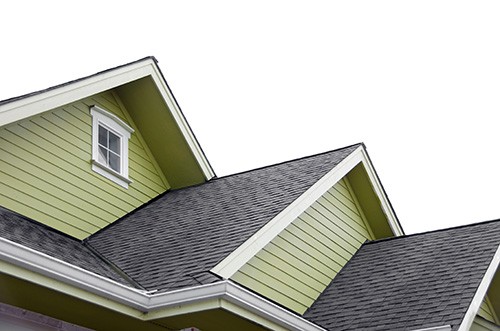
Color and style selection happens after the material determination — not before. The correct color and profile options depend on which material has been selected, and presenting color options before the material is confirmed produces a discussion that may not apply to the recommendation the consultation ultimately reaches.
Vinyl color and profile selection
Vinyl siding is manufactured in profiles that replicate horizontal lap siding in a range of exposure widths — the visible width of each panel course — as well as Dutch lap profiles with a curved cut at the top edge, board and batten configurations, and cedar shingle styles. Profile selection affects the visual character of the exterior more than any other single specification decision — a wider exposure creates a more contemporary appearance; a narrower exposure creates a more traditional look closer to original wood lap siding proportions.
Color selection for vinyl covers the manufacturer’s standard range — typically 25 to 40 colors depending on the manufacturer — plus any available custom color options. We bring physical samples to the consultation so you can see actual panel color in your home’s light conditions and against your existing trim, roofing, and masonry rather than making a color decision from a digital swatch.
Fiber cement color and profile selection
Factory-finished fiber cement arrives with a manufacturer-applied color coating and is available in a range of colors that varies by product line. Factory-finished options offer the convenience of a pre-applied, quality-controlled color coat with a 15-plus-year recoat interval.
Field-painted fiber cement gives you complete color selection flexibility — the primer is applied at the factory, and the color coat is applied on-site after installation using any Benjamin Moore or Sherwin-Williams color. If your home has specific trim, window, or masonry colors that you want the siding to coordinate with precisely, field painting allows that coordination without being constrained to a manufacturer’s pre-finished color palette.
Neighborhood compatibility and restrictions
In Chicago’s historic preservation districts — portions of Logan Square, Wicker Park, and several Evanston and north shore communities — siding material and appearance restrictions may apply. These restrictions typically govern visible profile changes, material substitutions from original construction materials, and sometimes color range. We identify whether the home is in a restricted area during the consultation and scope the color and profile options accordingly — so the recommendation we provide is compliant with applicable guidelines before anything is specified or ordered.
For homes in HOA-governed communities, the same process applies. If you have HOA guidelines that cover exterior siding material, color, or profile, bring them to the consultation or have them accessible during the visit — it allows us to present only compliant options rather than revisiting the selection after the fact.
Yes — energy efficiency is part of the consultation. It’s one of the most common secondary concerns Chicago homeowners bring to a siding discussion, and it’s a legitimate one. Chicago’s six-month heating season means that energy performance improvements from new siding produce real, continuous reductions in heating cost across every day of that period.
We cover three energy efficiency variables during the consultation.
Existing air infiltration pathways
Failing siding creates air infiltration pathways — gaps, cracks, failed seals — that allow conditioned indoor air to escape and unconditioned outdoor air to enter. In Chicago’s climate, those pathways impose energy cost every hour of every heating day until they’re sealed.
Any correctly installed new siding eliminates those pathways. The new panels are intact, the trim and caulking at windows and doors are correctly sealed, and the moisture barrier behind the panels is repaired or replaced. The air infiltration benefit applies to vinyl and fiber cement equally — it is a benefit of correct installation, not of any specific material.
During the consultation, we assess the existing siding for visible air infiltration indicators — gaps at seams, failed caulking at penetrations, sections of siding that have lifted from the wall — and include those findings in the energy efficiency discussion.
Wall assembly thermal resistance
The thermal resistance of the wall assembly — how well it resists heat transfer from inside to outside — is determined by the insulation in the wall cavity and any continuous insulation layers on the exterior. Standard vinyl siding and fiber cement do not add meaningful R-value to the wall assembly. The air infiltration benefit they provide is real, but the wall’s underlying thermal resistance is not changed by standard siding replacement.
We cover this distinction honestly during the consultation. If the home has adequate wall insulation and the energy performance concern is primarily about air infiltration, standard siding replacement addresses it correctly. If the home has minimal or no wall insulation — common in Chicago’s older bungalows and two-flats in Rogers Park, Avondale, and the Northwest Side — and the homeowner wants to improve the wall’s thermal resistance, the conversation moves to insulated siding.
Insulated siding as an upgrade option
Insulated vinyl siding with EPS foam backing adds a layer of continuous insulation to the exterior of the wall assembly — covering the full wall surface without the thermal bridging that occurs at stud locations in cavity insulation systems. For older Chicago homes with minimal wall insulation, this is the only siding-level intervention that adds meaningful R-value without opening the wall cavity.
We assess whether insulated siding is an appropriate recommendation for the specific home during the consultation — considering the existing wall insulation condition, the home’s heating cost history, and whether the project scope and timeline make the upgrade practical. We don’t recommend insulated siding as a default upgrade for every project; we recommend it when the home’s specific conditions make it the correct choice.

The honest answer is: not much. The consultation is structured to gather all the information we need on-site during the visit. You don’t need to measure anything, prepare a document, or make any decisions before we arrive. We’re there to assess your home and give you information — not to review homework you’ve done in advance.
That said, a few things are useful to have available if they exist.
Moisture and water history
If your home has had a documented moisture event — a known leak at a specific location, a water infiltration problem that was repaired previously, a section of interior wall that showed moisture staining — note the location and approximate timing before we arrive. That history helps us prioritize the on-site inspection at those areas and interpret what we find there in the context of what’s already happened.
HOA or historic district guidelines
If your property is subject to HOA guidelines or is located in a historic preservation district, have those guidelines accessible during the visit. They affect which material and color options are compliant, and knowing the applicable restrictions during the consultation allows us to present only options that work within them. Finding out after the consultation that a preferred option is restricted requires a follow-up — locating the guidelines before we arrive avoids that step.
Your priorities
Think about what matters most to you in this project before we arrive — not because we’ll ask you to submit a written summary, but because having your priorities clear in your own mind makes the consultation conversation more productive. Maintenance preference (do you want to paint, or would you rather not?), appearance goals (are you trying to match the neighborhood aesthetic, modernize the exterior, or restore original character?), timeline (is this a project you want to complete before winter, or are you planning for next spring?), and energy efficiency interest — knowing where you stand on those questions before the visit means we spend the consultation time on assessment and recommendation rather than on gathering background.
What you don’t need to prepare
You don’t need to know anything about siding materials before the consultation. You don’t need to have a preferred material in mind. You don’t need measurements of your home’s exterior. You don’t need to have collected quotes from other contractors. The consultation is designed for homeowners at every level of familiarity with the siding decision — from those who have been researching for months to those who picked up the phone the same day they noticed a problem.
Yes — completely free, with no obligation to proceed. No deposit required to schedule, no commitment attached to the visit, and no purchase required following the consultation. The recommendation we provide during the visit stands as the basis for your decision on whatever timeline makes sense for you.
Most consultations take 45 minutes to 90 minutes. Larger homes, homes with multiple known problem areas, or consultations that involve detailed color and style discussion may run longer. We allocate sufficient time to complete a thorough assessment and answer all questions during the visit — we don’t rush through the exterior walkthrough to get to a sales presentation faster.
None. The consultation produces a recommendation; you decide whether and when to proceed. We don’t use limited-time offers, urgency tactics, or follow-up designed to push a faster decision than you’re ready for. If you want a week to think it over, take a week. If you want to get multiple quotes before deciding, get them.
Availability varies by season — late spring through early fall is the busiest period for exterior remodeling consultations in Chicago’s market. Call us directly to check current availability. During peak season we typically schedule consultations within one to two weeks of initial contact.
Yes. Color, profile, and style selection is covered during the consultation after the material is determined. We bring physical samples so you can see actual panel colors in your home’s light conditions rather than making a decision from a digital swatch. HOA and historic district restrictions are identified and factored into the options presented.
We serve Chicago and the full Chicagoland area — including Des Plaines, Park Ridge, Morton Grove, Niles, Glenview, Winnetka, Naperville, Evanston, Hoffman Estates, and surrounding communities. Call us to schedule a free on-site consultation at your home.
If you’re thinking about new siding and want straight answers before you commit to anything, a free on-site consultation is the right first step. We’ll come out, walk your exterior, give you an honest assessment of what your home actually needs, and leave you with a specific recommendation you can act on at your own pace.
📞 Call us today to schedule a free consultation today!
2026 Perfect Windows & Siding Powered by Wizerunek w Sieci - web development & SEO | Privacy | Accessibility | Terms and Conditions
This site is protected by reCAPTCHA and the Google Privacy Policy and Terms of Service apply.